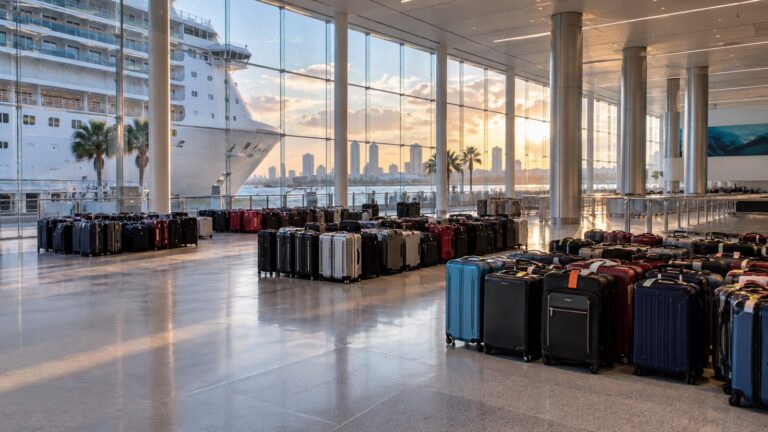
Why a Cruise Line Feels Different in Europe vs Caribbean
The same cruise line, and sometimes the same ship, can deliver two very different vacations in Europe and the Caribbean. The hardware may travel across the Atlantic, but the port rhythm, passenger mix, languages, weather risks, currency, age rules, and shore costs can all shift.
The useful comparison is not “Europe versus beach.” It is your exact ship and sailing against another exact ship and sailing, with every port transfer and likely shore expense included.
My quick take
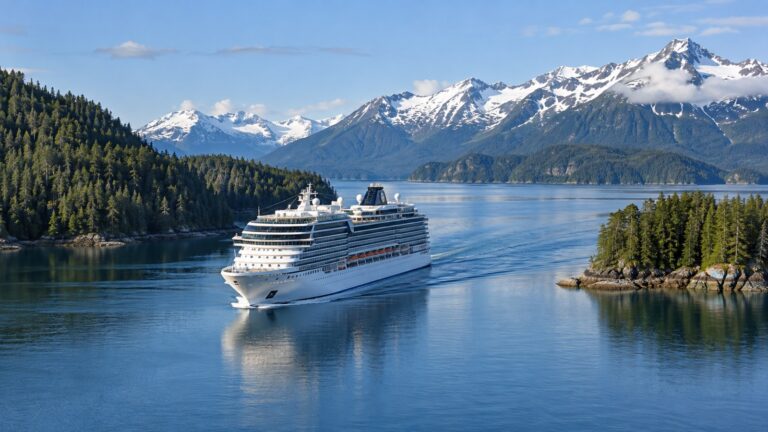
Choose the Caribbean when the ship, pool deck, beaches, and easier resort days are the main event. Choose Europe when the ports are the headline and you are happy for the ship to become a very pleasant moving hotel.
Neither region is automatically easier, cheaper, younger, or more accessible. A private-island-heavy Caribbean week differs from a southern Caribbean route, just as a Mediterranean city sprint differs from Norway or the Baltic.
The quick facts
- The ship can stay the same while the onboard mix changes: Homeport and school calendars affect who sails, and international lines may adjust language order, dining patterns, and programming. MSC says it uses six main communication languages and orders them by the number of guests in each language group.
- Onboard currency can change: MSC publishes euros for the Mediterranean, Northern Europe, Antilles, and several other markets, US dollars for the Caribbean and other listed regions, and British pounds for Southampton departures. Other lines may keep US dollars across regions, so check your sailing rather than copying MSC’s rule.
- Service charges can follow region and booking date: MSC currently lists $17 per night for guests age 2 and older on Caribbean, Alaska, and USA bookings made from May 11, 2026. For listed European-region bookings made after July 2, 2026, it publishes €12 per adult and €10 for ages 2 through 17, with different Yacht Club rates.
- Age rules can follow the departure region: Royal Caribbean sets 21 for alcohol on cruises originating in North America or the Caribbean and 18 on cruises originating in Europe, with separate rules for its private destinations and the right to raise the age when local law requires.
- Port intensity matters more than port count: Europe can mean city transfers, timed tickets, and long sightseeing days, while the Caribbean can mean beach transfers or private destinations. Both regions also have industrial berths, tenders, long piers, and ports worth exploring independently.
What stays the same on the same ship?
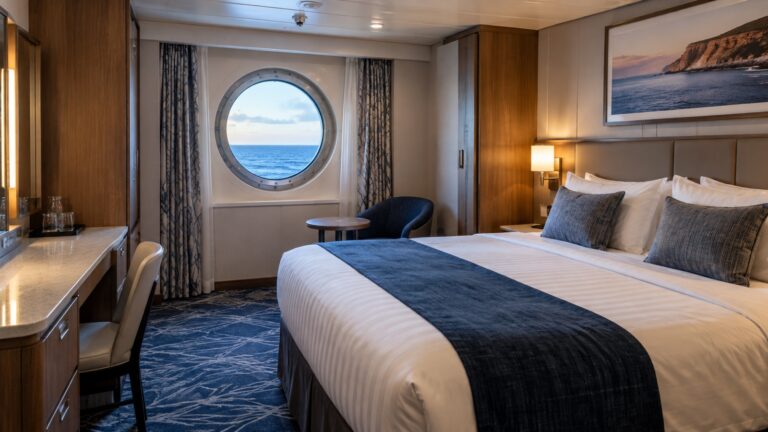
Cabin dimensions, deck plans, major venues, and most permanent accessibility features travel with the hull. A balcony does not shrink because the ship crossed to Barcelona, and the elevator bank is not suddenly feeling continental.
Even here, confirm the exact sailing because ships can enter dry dock, swap itineraries, or replace a venue between seasons. Entertainment casts, restaurant concepts, operating hours, and included activities can change without the steel changing at all.
Loyalty benefits usually follow the brand, but package prices and inclusions may be market-specific. Compare the version of the cruise line’s website, fare terms, and booking currency used for your reservation.
What changes onboard?
Homeport changes the mix of guests, and the onboard operation responds. Expect language order, meal timing, family programming, retail stock, sports coverage, and announcements to reflect the people aboard rather than a cartoon of the continent.
MSC is the clearest published example because its onboard information page names English, Italian, German, French, Spanish, and Brazilian Portuguese as its six main communication languages. It says the order depends on the proportion of guests in each language group and that menu-language order changes by region.
That does not mean every announcement will be six times as long, or that English disappears in Europe. It means an international sailing can feel more multilingual, while the exact mix can change from one departure date to the next.
Do not assume dining will work exactly as it did on your last ship in Florida. Check assigned-seating options, flexible-dining rules, restaurant hours, children’s programming, and showtimes for this sailing before building a minute-by-minute plan.
Money: ship currency, service charges, and card fees
The easiest surprise to prevent is a week of foreign-transaction fees. Check the onboard currency, the currency of your fare, and the currency used for precruise packages before choosing the card attached to your account.
MSC’s onboard payment page currently assigns euros to the Mediterranean, Northern Europe, Antilles, Dubai, Emirates, Oman, and certain Grand Voyages. It assigns US dollars to its listed Caribbean, Bermuda, Canada and New England, South America, South Africa, and several Asian markets, while Southampton departures use British pounds.
Notice that MSC lists the Antilles under euros but the Caribbean under dollars, which is a lovely little trap for anyone planning by map alone. Use the currency shown for your exact itinerary, then select a card whose foreign-transaction and conversion terms you understand.
MSC’s current hotel service charge also varies by region, age, cabin category, and booking date. Save the booking confirmation and current rate page, because a later ship or date change can move the reservation to a different published amount.
The European Union’s maritime emissions trading system applies to passenger ships of at least 5,000 gross tons, covering all emissions on voyages between EU ports and half on qualifying voyages between EU and non-EU ports. The European Commission says the phase-in reaches 100% for emissions reported for 2026, with allowances surrendered in 2027.
That rule affects a cruise line’s European operating costs, but it does not prove what portion appears in your fare or as a separate charge. Price the booking you can see instead of reverse-engineering the fuel desk.
Drinking age and other rules follow the sailing
Royal Caribbean’s current drinking-age policy is based on where a cruise originates. The minimum is 21 on North American or Caribbean departures and 18 on departures from Europe, South America, Asia, Australia, and New Zealand.
Royal lists 21 at Perfect Day at CocoCay, Royal Beach Club Paradise Island, and Labadee, and 18 at its Santorini and Lelepa private destinations. It can raise the age when local law requires, so a 19-year-old should read the policy for the sailing rather than assume every day works the same.
Other cruise lines set their own alcohol, casino, curfew, and unaccompanied-travel rules. The minimum age for babies is also line and itinerary specific, especially when a sailing includes several consecutive sea days.
Flights, documents, and embarkation day
For many Americans, a Caribbean cruise starts with a domestic flight or drive, while a European cruise starts with an overnight flight and a time-zone jump. Arriving in the European homeport at least one day early is sensible, and two can be kinder if missed connections or jet lag would ruin the first port.
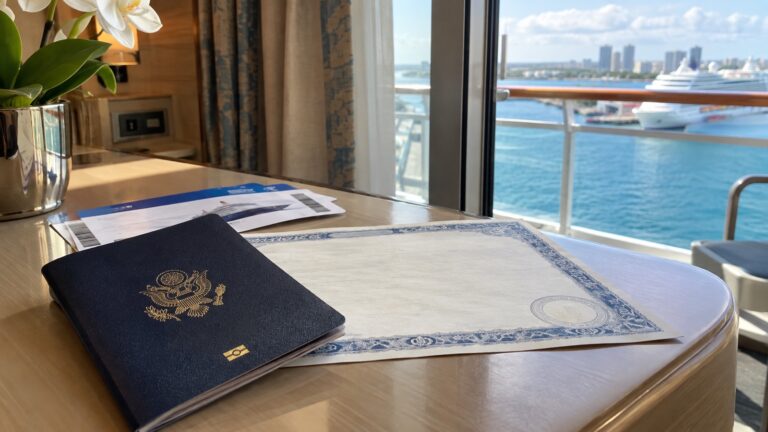
Do not assume a round-trip cruise has the same document rules in both regions. Passport validity, visas, transit requirements, and entry authorizations depend on nationality, residence, itinerary, and sometimes the airport connection as well as the cruise ports.
As of this September 2026 review, the European Union’s official ETIAS site says the system is not yet in operation. Check that official site again before travel and do not pay an unofficial application site for a system that has not opened.
Caribbean islands and territories do not share one immigration rulebook either. Check the cruise line’s document notice and the official government advice for every country on the itinerary, including a port where you expect to stay aboard.
Port days are the real regional difference

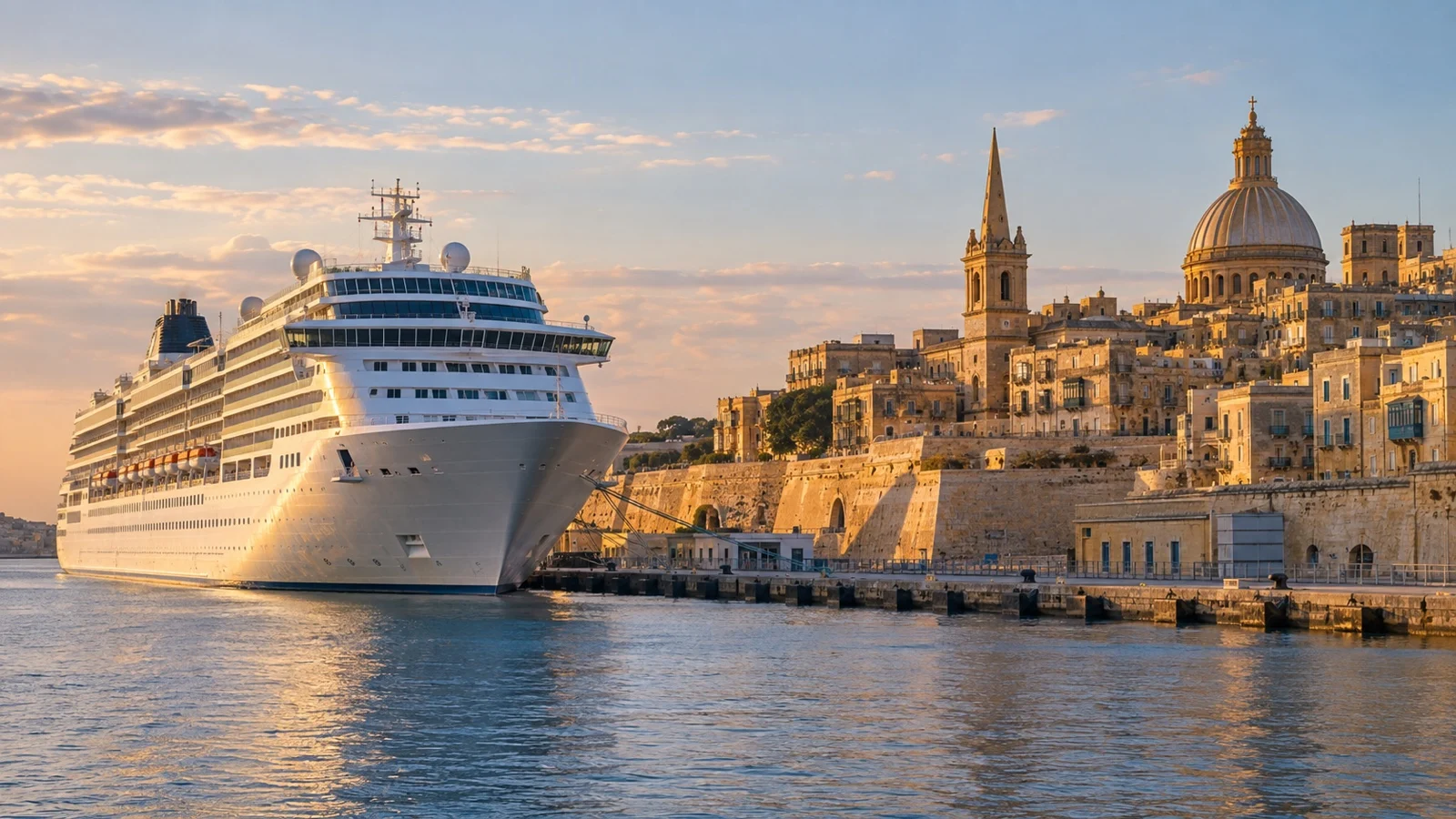
Many Mediterranean itineraries are port-heavy, and famous city names can disguise a transfer. Piraeus serves Athens, Civitavecchia serves Rome, and Livorno serves Florence and Pisa, so the attraction may be nowhere near the gangway.
Northern Europe behaves differently again, with central city berths on some sailings and fjord, industrial, or tender calls on others. “Europe” is not a transfer time, so inspect each berth and transport plan.
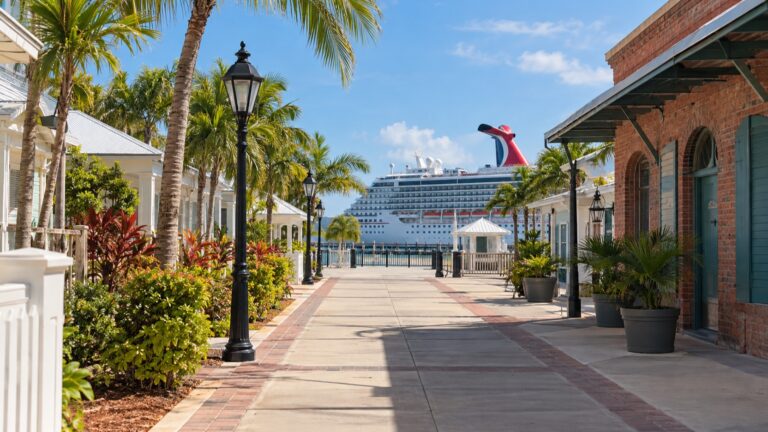
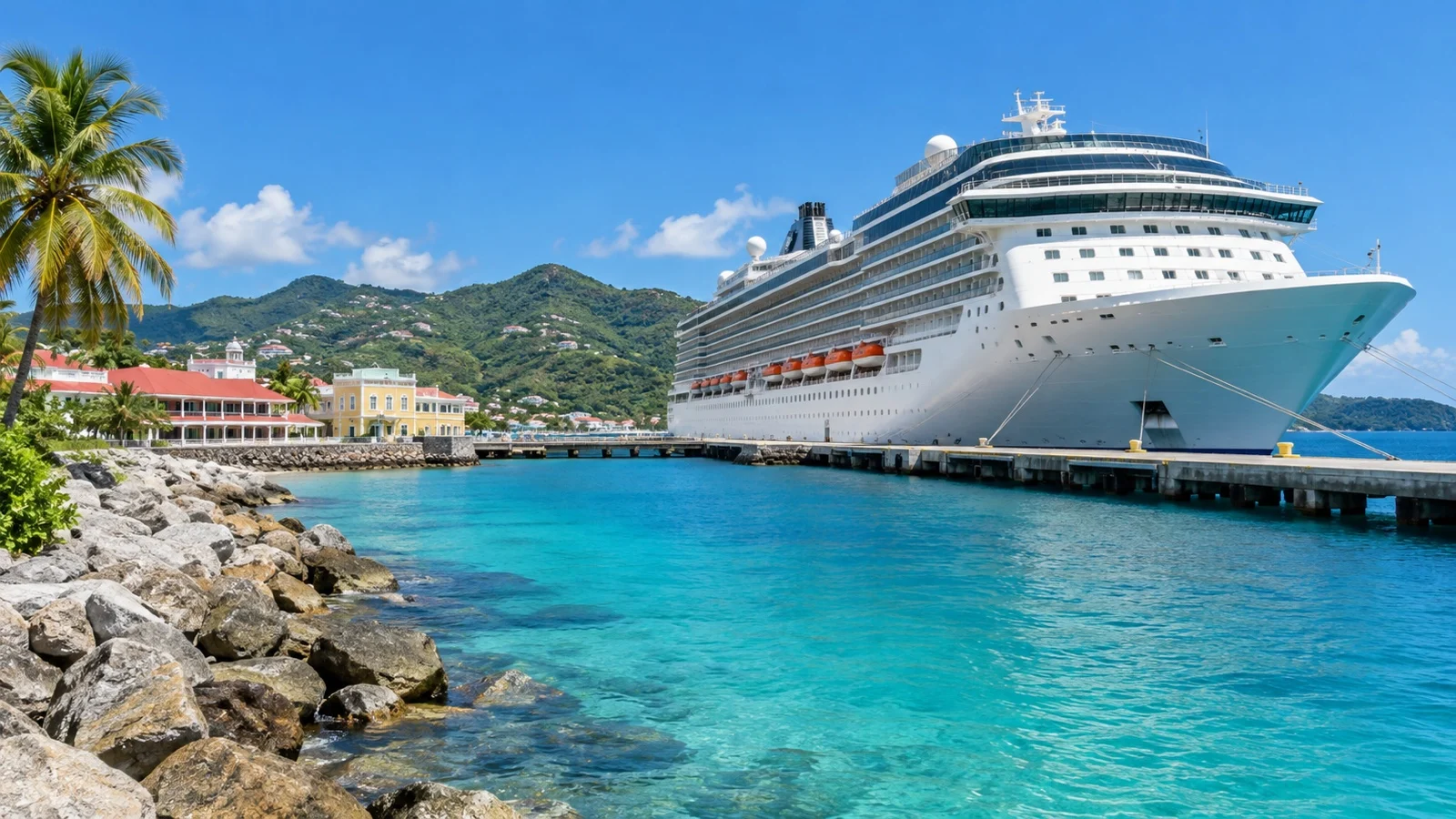
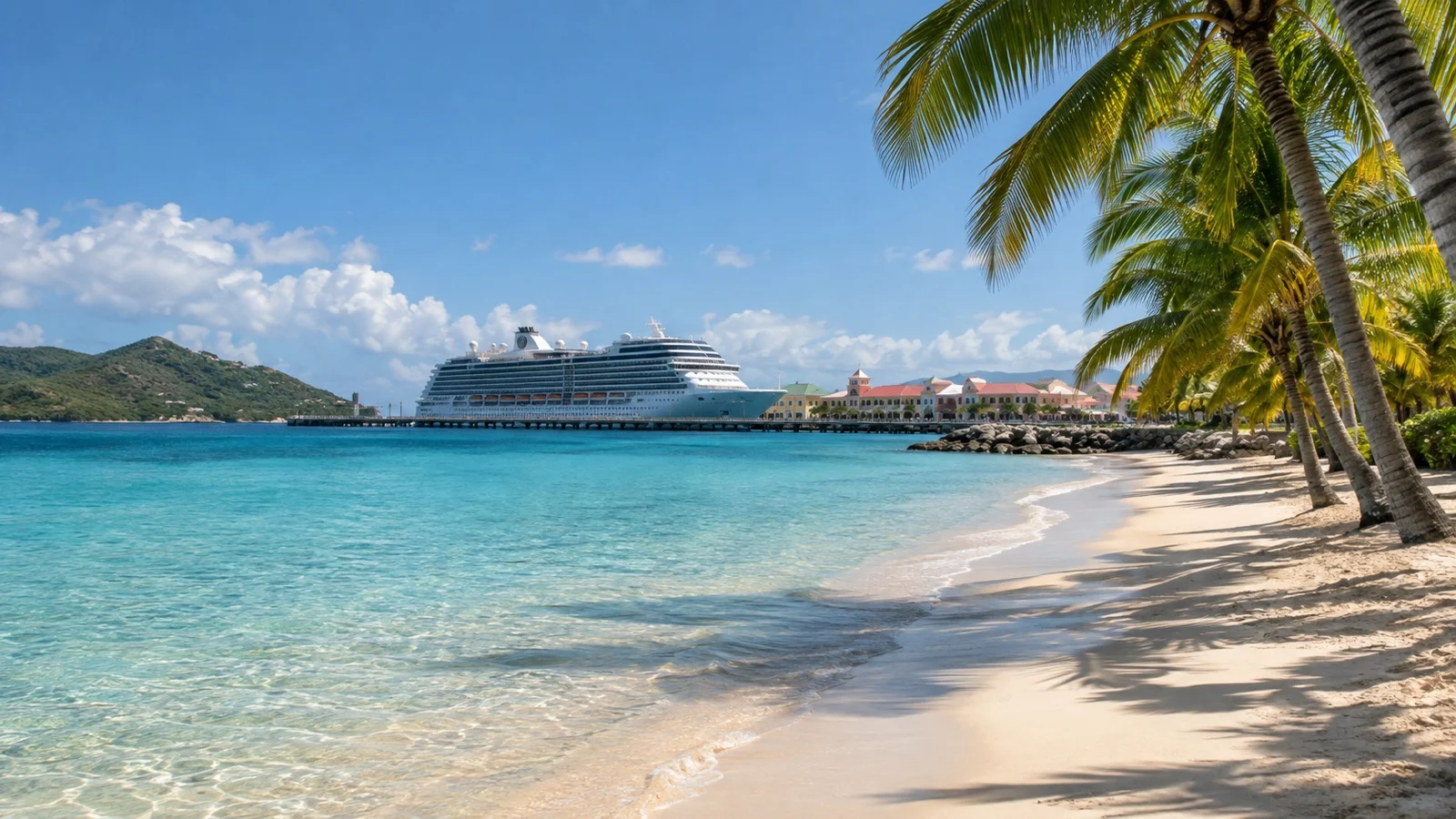
Caribbean routes can offer purpose-built cruise areas, private destinations, and beaches reached with a short transfer. They can also include tender operations, long piers, industrial docks, mountainous islands, and beach clubs that are much farther away than the brochure’s turquoise photo suggests.
Independent planning therefore changes shape rather than simply getting harder. Our guide to Caribbean ports that are easy without an excursion focuses on practical walk-off choices, while Mediterranean ports to explore independently emphasizes local transit, tickets, and return margins.
Open the itinerary and label every stop as walk-off, shuttle, local train, long transfer, tender, or ship excursion. Then read our regional overviews for Mediterranean cruise ports and Caribbean cruise ports before deciding which week looks relaxing.
Shore-excursion cost and return risk
A long European excursion may bundle a coach, licensed guide, reserved admission, and most of a day. A Caribbean beach transfer may be cheaper, but private-island cabanas, boat trips, and limited-capacity experiences can erase that advantage with impressive speed.
Compare what is included rather than the excursion title. Add transport, admissions, meals, equipment, gratuities, cancellation terms, and the cost of a safe return margin before calling one region expensive.
Independent travelers should work backward from all-aboard time and use the ship’s time, not whatever a phone decides after finding a tower. For a distant European city or a tender-dependent Caribbean call, build a larger buffer and identify a backup return route before leaving the pier.
Shopping and customs
“Duty free” on a storefront does not mean “nothing to declare” when you return home. Eligibility and personal exemptions depend on your residence, itinerary, time abroad, what you bought, and whether you have used an exemption recently.
US travelers should use Customs and Border Protection guidance for the actual trip instead of treating an old dollar figure as universal. Keep receipts and declare purchases honestly, because the friendly customs officer is not obligated to honor cruise-forum arithmetic.
Within Europe, tax and duty treatment also depends on the itinerary and where the goods are taken. Ask the shop for the rule that applies to your sailing and destination country rather than assuming every onboard purchase is tax-free.
A practical booking checklist
- Price the whole trip: Add flights, precruise hotel nights, ground transfers, service charges, foreign-transaction fees, shore transport, admissions, and realistic meals. The cheapest fare can be attached to the costliest week.
- Map the port effort: Count long transfers, tenders, timed-ticket days, and early starts rather than only counting ports. Leave at least one lighter day after the itinerary’s biggest outing when the schedule allows.
- Check region-sensitive rules: Verify onboard currency, drinking age, casino age, minor-travel rules, packages, and service charges for the exact departure. Save the answers with the booking.
- Check travel documents twice: Review official requirements when booking and again before final payment or travel. A rule that was “coming soon” when you paid the deposit may be operating by embarkation.
- Choose for your real priority: Favor the Caribbean when ship time, water, and simpler resort days lead the wish list. Favor Europe when history, food, cities, or scenery ashore justify earlier mornings and more planning.
How to decide between two sailings
Start by deciding whether the ship is the attraction or the transportation. A newer resort ship with calls such as Perfect Day at CocoCay can shine in the Caribbean, while a smaller or older ship can still be the right European choice when its berths and times maximize the cities you want.
Next, compare usable time ashore after transfers, not the printed arrival and departure. A ten-hour port call with four hours of round-trip travel can offer less sightseeing than a six-hour call beside the old town.
Finally, protect your energy. Six ambitious ports in seven days may sound glorious at home and feel like a group project by Thursday.
If pool time, easy meals, and fewer decisions restore you, weight the ship and sea days more heavily. If waking up near a different city is the thrill, accept that some shows, restaurants, and waterslides will remain beautifully unused.
A realistic word on accessibility
The ship’s permanent features may stay constant, but the shore chain can change at every stop. Gangway angle, tender use, pier length, terminal routes, accessible vehicles, cobbles, steps, heat, shade, and restroom access should be checked port by port.
Purpose-built Caribbean ports can be easier, but a long open pier or tender can cancel that advantage. European historic centers can be challenging, but some cities offer smooth promenades, accessible transit, and better options than a regional stereotype suggests.
Send the accessibility department the exact ship, date, ports, equipment dimensions, transfer needs, and excursion questions before final payment. Ask where assistance begins and ends, whether a tender is used, and whether an accessible vehicle is confirmed rather than merely requested.
Traveling with a dog adds government entry and animal-health rules that vary by destination, which our guide to service dogs in cruise ports explains in more detail. A dog welcomed aboard is not automatically cleared to go ashore.
Season and weather
The Caribbean sails year-round, but the official Atlantic hurricane season runs from June 1 through November 30 according to NOAA. A sailing can operate during that period, but ports and routes may change for safety, sometimes after your plans are neatly color-coded.
Peak Mediterranean deployment generally runs from spring through fall, with summer heat making exposed ruins and long city walks more demanding. Shoulder-season sailings can be more comfortable, but they can also bring shorter days, rain, wind, or rougher crossings.
Northern Europe has its own cooler and more changeable pattern, so do not apply Athens packing advice to a Norwegian fjord. Our cruise season calendar is the useful starting point, followed by a forecast close to departure.
Choose travel insurance and changeable shore plans for the risks that matter to your dates. No month guarantees flat seas, sunshine, uncrowded landmarks, or a specific port call.
Quick answers
Will the same cruise line feel more international in Europe?
Often, but not always, because homeport and sailing date shape the guest mix; MSC confirms that its language order follows the proportion of guests in each language group.
Is onboard currency different in Europe?
It can be because MSC uses euros on its listed Mediterranean and Northern Europe sailings while some US-focused lines retain dollars, so check the exact itinerary and booking documents.
Can an 18-year-old drink on a European Royal Caribbean cruise?
Royal currently sets 18 on cruises originating in Europe, but private-destination and local-law rules can differ, while North American and Caribbean departures use 21.
Are European port days always harder?
No, but long transfers, timed admissions, and consecutive city days can make some itineraries intense, while both regions also offer easy walk-off calls and more complicated tender days.
Is the Caribbean always cheaper?
No, because flights, ship generation, school dates, private-destination spending, excursions, packages, and service charges can outweigh the regional pattern.
Do Americans need ETIAS for Europe now?
The official European Union site says ETIAS is not operating at this September 2026 review, so recheck the official site for your travel date and avoid unofficial application pages.
The last word
The region does not replace the brand, but it changes how the brand is used. Compare the exact currency, rules, port transfers, weather window, and total shore budget before letting a familiar funnel logo make the decision.
For a ship-first vacation, the Caribbean often has the cleaner pitch. For a port-first vacation, Europe can be spectacular, provided you choose an itinerary your time, budget, mobility, and enthusiasm can actually carry.
How this guide was researched: Unless a first-hand visit is explicitly identified above, this guide is based on independent research using official government, European Union, and cruise-line sources. Currency, service charges, and languages were checked against MSC, while alcohol rules were checked against Royal Caribbean.
Maritime emissions were checked against the European Commission, hurricane dates against NOAA, and ETIAS status against the European Union’s official travel site. Policies and time-sensitive details were reviewed in September 2026.
See our Editorial Policy.
More on this topic: browse every guide on choosing a cruise.