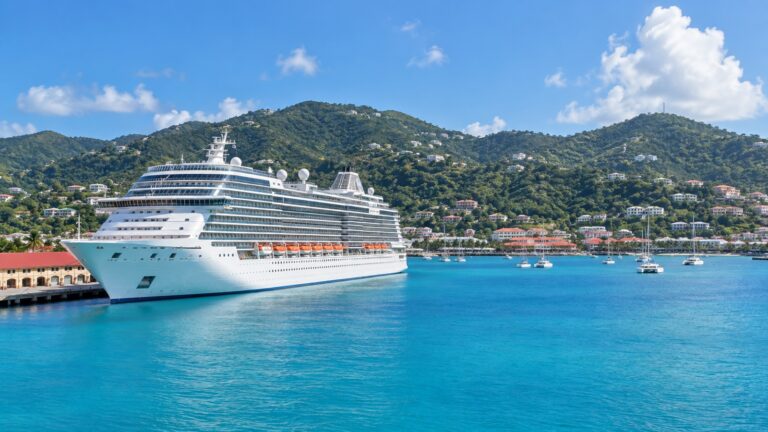
Sea Days or Port Intensive: Which Itinerary You Want
The verdict first: most people book too many ports and then enjoy too few of them.
A five port week costs more, tires you out faster, and gives you less of each place than a three port week with two sea days does.
The verdict up front
Three or four ports in seven nights, with two sea days, is the shape that works for most people most of the time. It leaves enough energy in the tank to actually use the ports you do get.
A five or six port week is the right buy in two situations: you are seeing a region for the first time and want the survey, or the ports sit close enough together that a short call still covers the town. The Greek islands and the eastern Caribbean both qualify.
What I would not do is buy a port-intensive itinerary because it looks like better value per day. Ports are where the money leaves your pocket, and five of them in a week is a bigger bill on a shorter fuse.
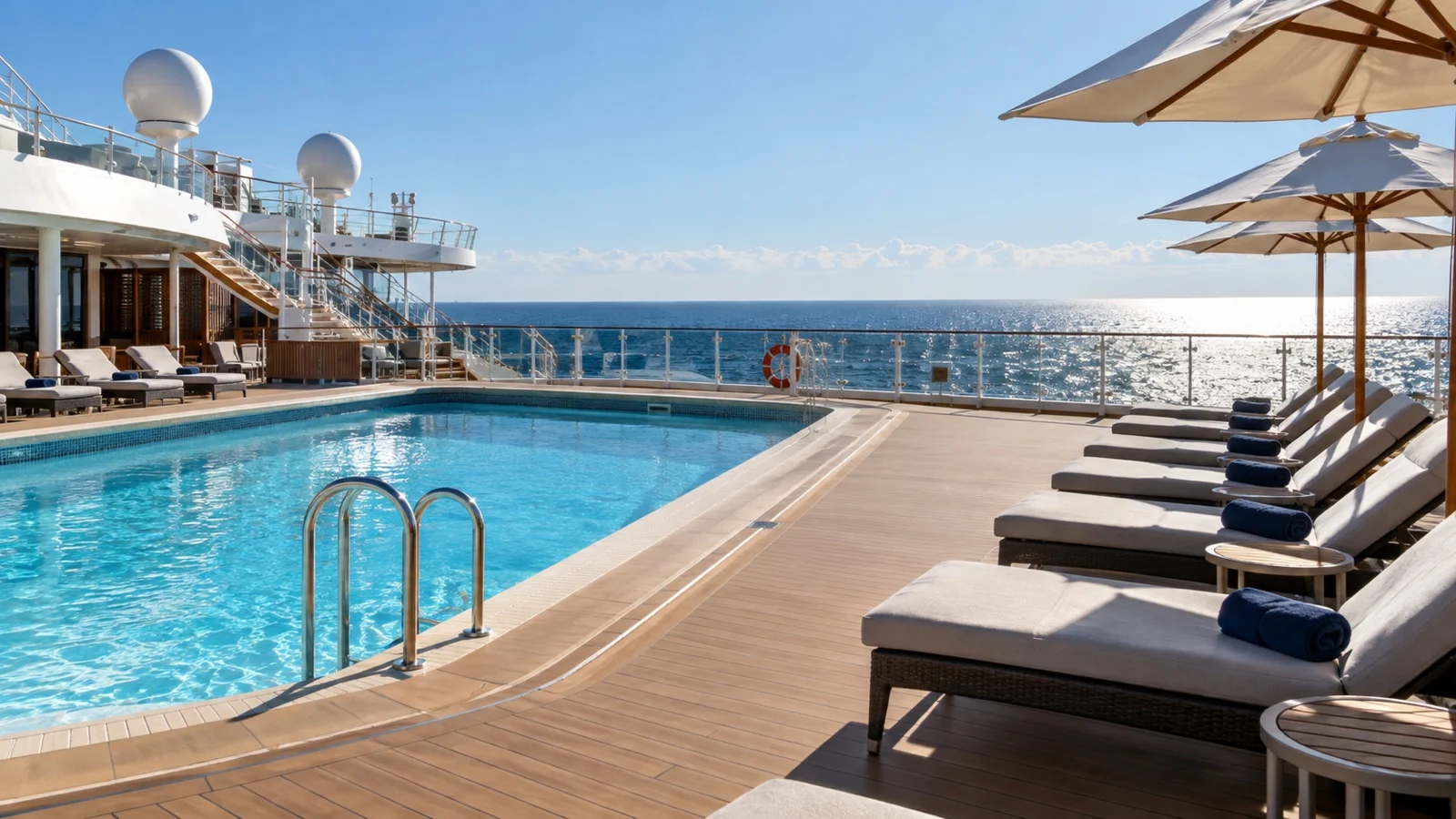
What actually differs
Five things separate these two itinerary shapes, and price per night is not one of them. They usually cost about the same before you spend a dollar ashore.
The first is hours ashore, which is not proportional to the port count. Every call loses the same fixed time at each end, so five short calls can deliver fewer usable hours than three long ones, and the berth and arrival hour move that total again.
The second is the excursion bill, which tracks ports rather than nights. The third is fatigue, which is real, cumulative and usually arrives on day four.
The fourth is what the ship is for. On a port-intensive week you sleep on it, and on a sea day itinerary you live on it.
The fifth is risk. Every port on the list is a port that can be dropped, so a five port itinerary gives you five chances to lose one.
The hours, and what five ports actually buys you
Seven nights is the industry default, and it is the length both shapes are usually squeezed into. The 2026 CLIA State of the Cruise Industry report puts the global average voyage at 7.0 days, with North America slightly shorter at 6.71.
Inside that week, a three port itinerary typically gives you three calls of nine to eleven hours. A five port itinerary usually gives you one or two long calls and three of six or seven hours, because the ship has to keep moving overnight.
Now do the subtraction the way the ship does, which starts with reading the arrival and departure hours properly. Each call loses roughly half an hour to clearance and gangway at the front, and an hour to the all aboard at the back, so a six hour call is nearer four and a half usable hours.
Three long calls can beat five short ones on total time ashore, and they will certainly beat them on time in any one place. My region guide to Caribbean cruise ports by region shows how the eastern, western and southern loops differ on exactly this.
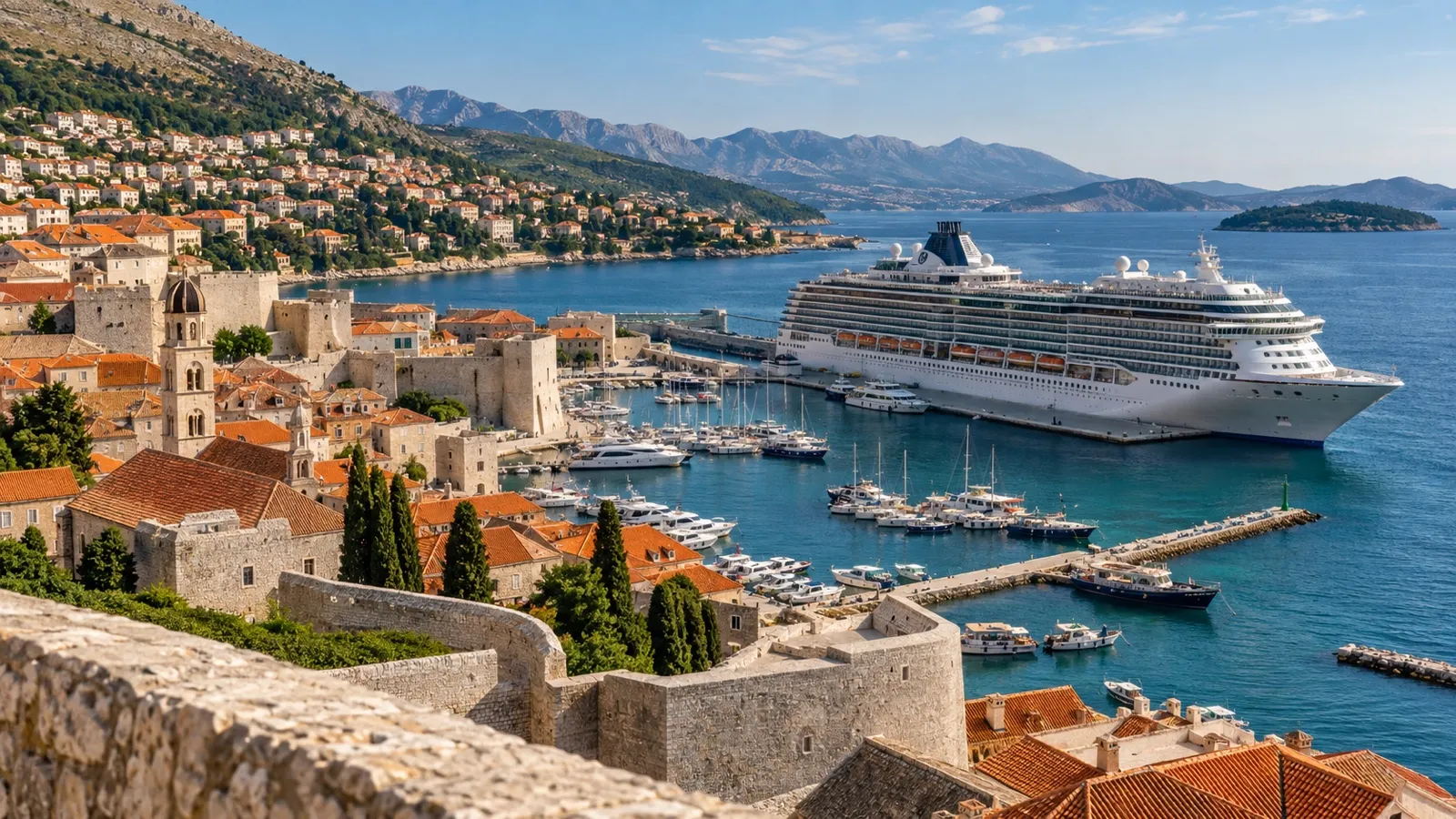
The excursion bill, which scales with the port count
Excursions are priced per port, not per cruise, and that is the line item nobody models before booking. Two ports means two decisions, five ports means five, and the fifth is rarely the one you would have picked on its own.
A port-intensive itinerary also pushes you toward ship tours, because a six hour call makes an independent plan feel risky. Ship tours cost more, and the cruise line’s published late-return assistance for its own tours is part of what the premium buys.
What I would do is set the excursion budget before comparing itineraries, then divide it by the number of ports. If that number will not buy a decent day in the most expensive port on the list, the itinerary has too many ports.
One great day beats four adequate ones, which is the whole argument of my post on which cruise port should get your excursion budget. The three port week makes that choice for you, and it is usually the right one.
Stamina, and the day it runs out
Port days start early. A 7 a.m. arrival means breakfast at 6:30, and four of those in a row is a work week with better scenery.
Fatigue is not a character flaw, and it is not evenly distributed across a group. Somebody in your party will hit the wall on day four, and on a five port itinerary that means paying for a tour they then sit out on the ship.
The Mediterranean is where this bites hardest, because the ports are dense, the transfers are long and the weekday you sail changes the crowds. Barcelona alone handled 701,192 cruise passengers in the first three months of 2026, and 226,686 of those were in transit rather than starting or ending a cruise, which is a lot of people doing a city in one day.
Fun fact: the itinerary shape is visible in the industry averages. CLIA puts the global average voyage at 7.0 days and the North American average at 6.71 days, while exploration and expedition itineraries average close to 13 days, because that product is mostly ocean with a scatter of remote landings at the end of it.
What the ship is worth on a sea day
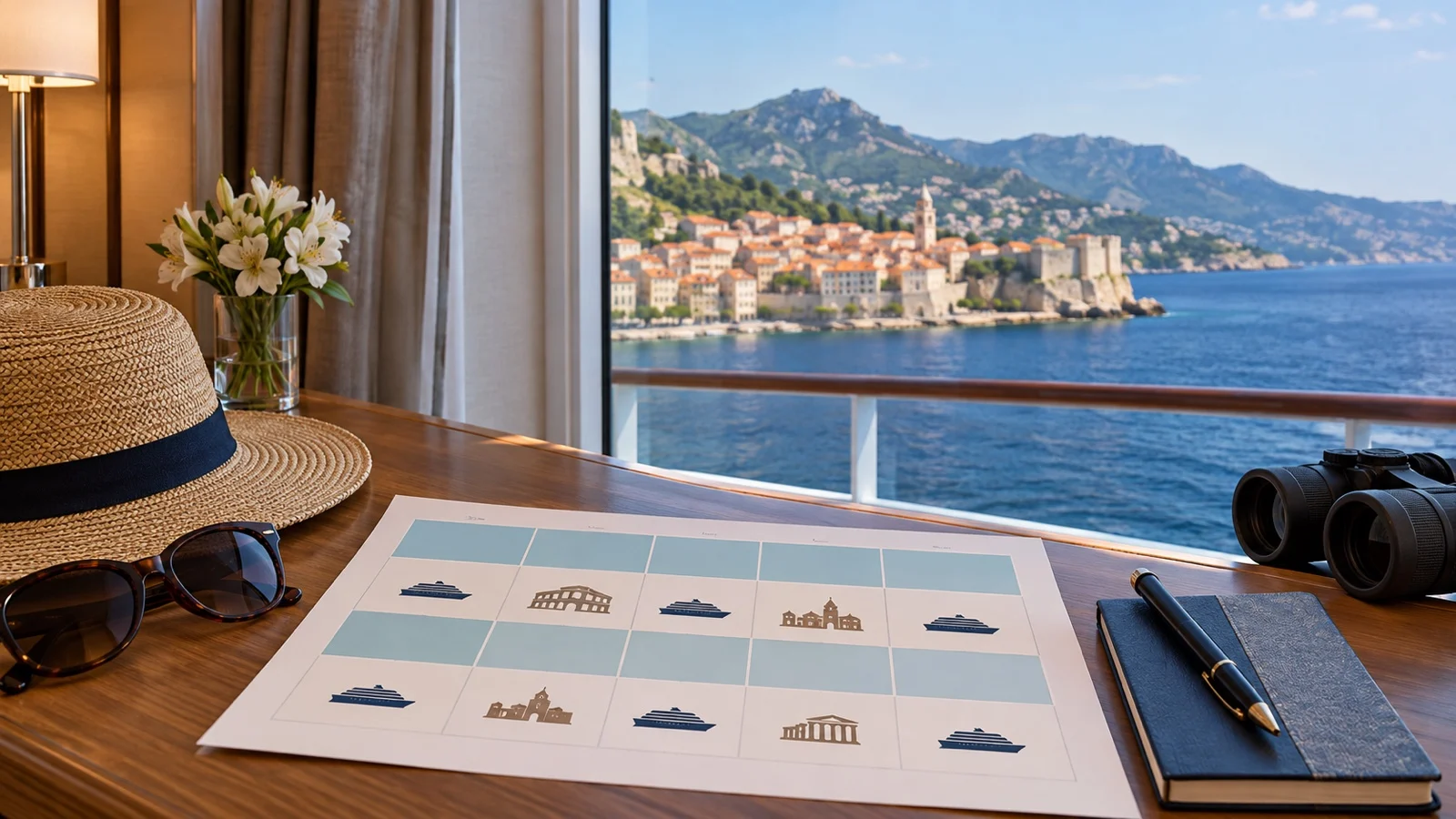
On a port-intensive week the ship is a hotel that moves at night. You will not use the spa, you will not see the production show, and you will eat dinner whenever the ship can fit you in.
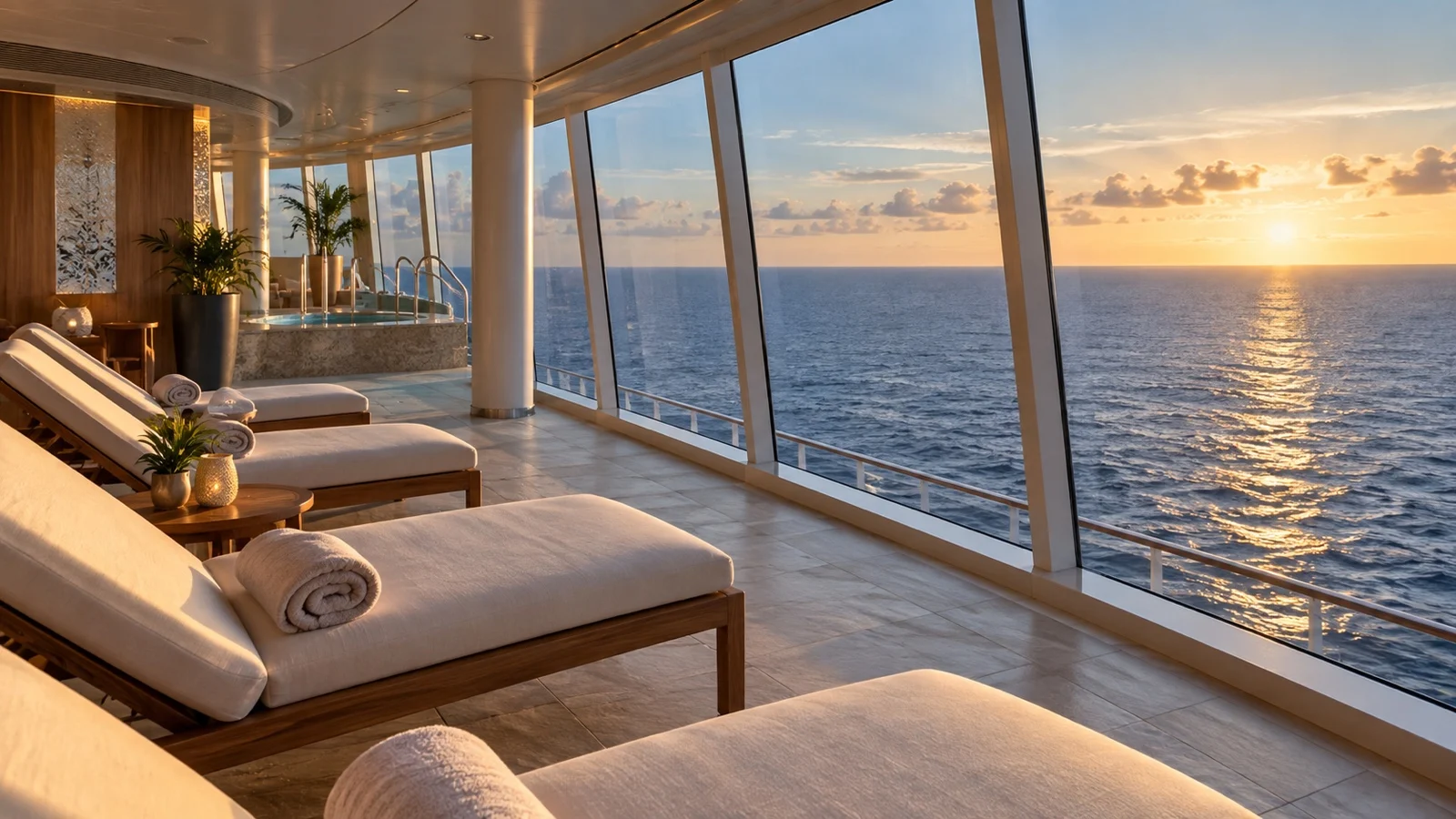
On a sea day itinerary the ship is the destination, which is when what a refurbishment actually changes starts to matter. Deck space per passenger, the number of quiet indoor rooms and whether the buffet can handle everyone at once all start to matter a great deal.
If you are buying a sea day heavy itinerary on a ship with a thin indoor plan, you are buying the wrong ship. Look at where three thousand people go when it rains, because on a crossing it will rain.
This cuts the other way in port, too. A ship with two thirds of its passengers ashore is the calmest it will ever be, which is the case I make in my post on the port days better spent on a nearly empty ship.
Repositioning and crossings, the far end of the scale
At the extreme end the sea days stop being a break and become the product. Cunard’s eastbound crossing leaving New York on September 12, 2026 has one embarkation day, six consecutive days at sea, and a single arrival at Southampton on September 19.
A repositioning sailing is a different animal even though it also sells sea days. It exists because the ship has to move between seasons, so it usually mixes long ocean stretches with a scatter of ports the line does not otherwise call at.
Those two products are not interchangeable, and the marketing blurs them constantly. I have written up the difference between a transatlantic crossing and a repositioning cruise because the price per night looks similar and the experience does not.
Both are strong value and both are a bad first move. Find out whether you like being at sea on a normal week before you buy six days of it in a row.

Who each one suits
- First time in a region: port intensive, without much hesitation. You are buying a survey so you can come back and do two of them properly, and the Greek islands and eastern Caribbean are built for exactly that.
- Coming back to somewhere you know: fewer ports, longer calls. Three good days in Kotor, Dubrovnik and Corfu will beat six hurried ones, and you already know which of them deserves the money.
- Anyone who tires easily, or travels with someone who does: sea days between port days, every time. The sea day is not a wasted day, it is the thing that makes the next port day possible.
- Families with small children: the port count is the wrong metric and the transfer time is the right one. Two easy walk-off ports beat five that all need a shuttle bus and a tender ticket.
- Independent travelers who plan their own days: longer calls, fewer of them. A nine hour call gives you room to use trains and local ferries, and a six hour call quietly forces you back onto ship tours.
- Anyone prone to seasickness: port intensive, and pick a route that hugs the coast. The Med and the Alaska Inside Passage are far kinder than an open ocean sea day in November.
The mistake I see most often
The mistake is treating the port list as a guarantee and the sea day as waste. The ticket contract disposes of the first half quickly.
Royal Caribbean states that it may, at any time and without prior notice, cancel, advance, postpone or deviate from any scheduled sailing or port of call, that it is not liable for any loss to guests, and that it is not required to refund any portion of the fare. Every major line publishes a version of the same clause.
So the five port itinerary you bought is really a four port itinerary with a good chance of staying at five. The three port itinerary has fewer moving parts and fewer ways to disappoint you.
The second half of the mistake is booking a sea day itinerary on a ship nobody in the party has looked at. On a port week the ship barely matters, and on a sea day week it is the entire purchase.
Quick answers
How many ports is too many in seven nights?
Five is the point where the calls start getting short and the transfers start eating the day. Six in seven nights is a survey rather than a vacation, and it only makes sense if the ports are close together and you have seen none of them.
Are sea days boring?
That depends almost entirely on the ship and not at all on the ocean. A ship with plenty of quiet indoor space, a real library and a decent enrichment schedule turns a sea day into the best day of the week.
Do port-intensive itineraries cost more?
The fare usually does not, but the trip does. You pay per port for tours, transfers, lunches and entry tickets, so the five port week can run several hundred dollars per person above the three port one.
Which shape is better for a first cruise?
Something in between, with three or four ports and one or two sea days. That mix tells you whether you actually enjoy sea days before you commit to a crossing or a repositioning sailing.
Is a repositioning cruise the same as a transatlantic crossing?
No, and they sail for different reasons. A crossing is a scheduled ocean voyage in its own right, while a repositioning sailing exists to move a ship between deployments and usually collects a few unusual ports on the way.
The last word
The port list is the part of the brochure designed to be counted, and counting it is the least useful thing you can do with it. Read the hours instead, then read what sits on either side of each call.
If you want more ports without more fatigue, the honest answer is usually a smaller ship rather than a busier schedule. My guide to the small ship cruise ports big ships cannot reach covers the trade you are making there.
Book the shape that matches your energy, not the one that looks generous on paper. Five ports you rushed is a worse souvenir than three you remember.
How this guide was researched: Unless a first-hand visit is explicitly identified above, this guide is based on independent research using official port, tourism, transit, government, and attraction sources where available. Voyage length and passenger volume figures were checked against the 2026 CLIA State of the Cruise Industry report, port passenger and transit counts against the Port de Barcelona traffic statistics for March 2026, crossing structure against Cunard’s published Queen Mary 2 voyage itinerary, and itinerary change rights against Royal Caribbean’s published guest policy; logistics and time-sensitive details were reviewed in September 2026; see our Editorial Policy.
More on this topic: browse every guide on choosing a cruise.