When the Cruise Terminal Is Far From Town: What That Does to Your Day
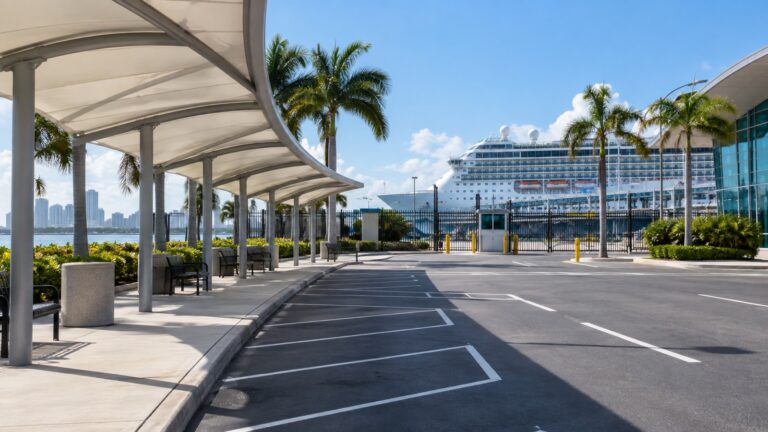
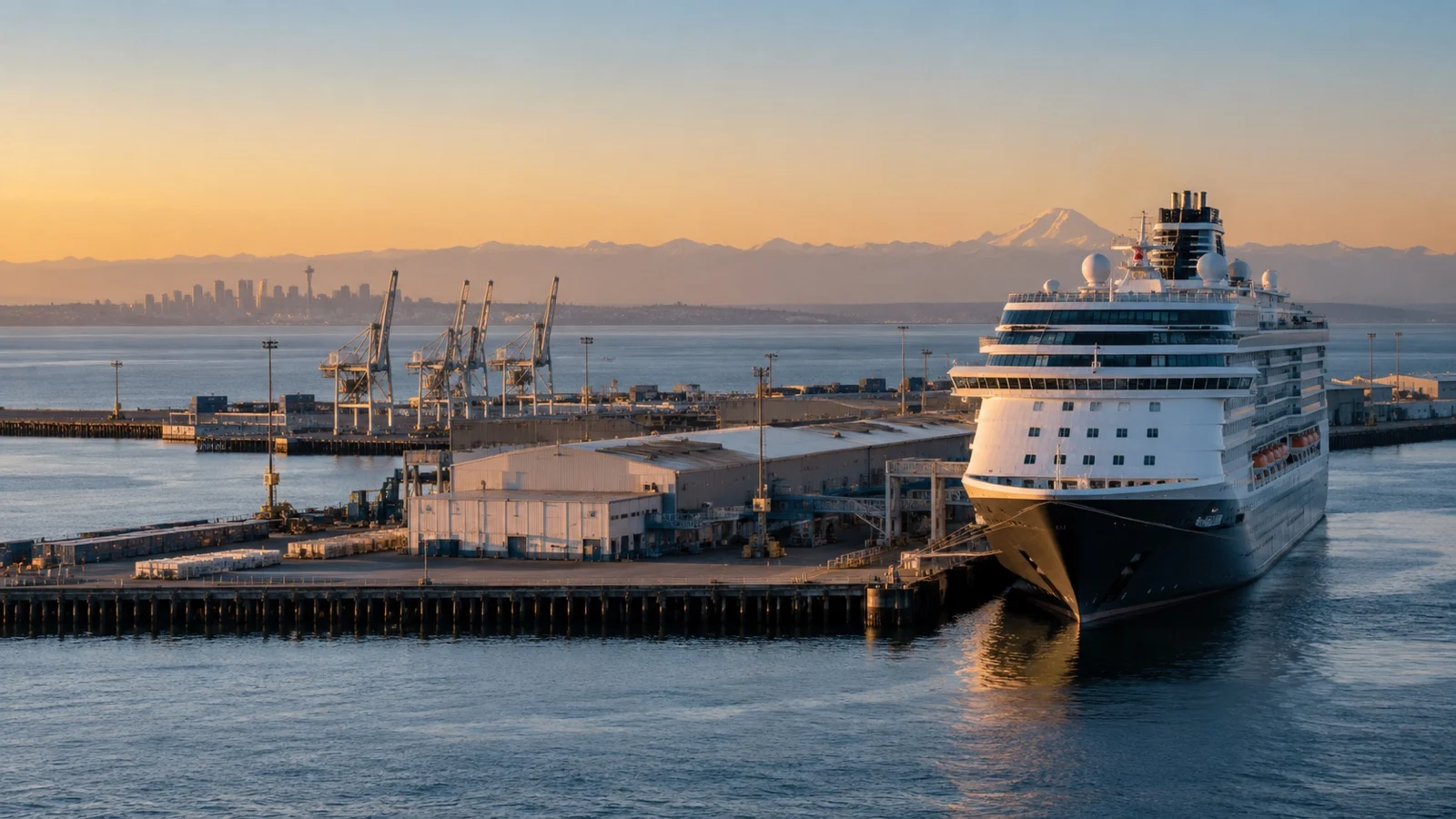
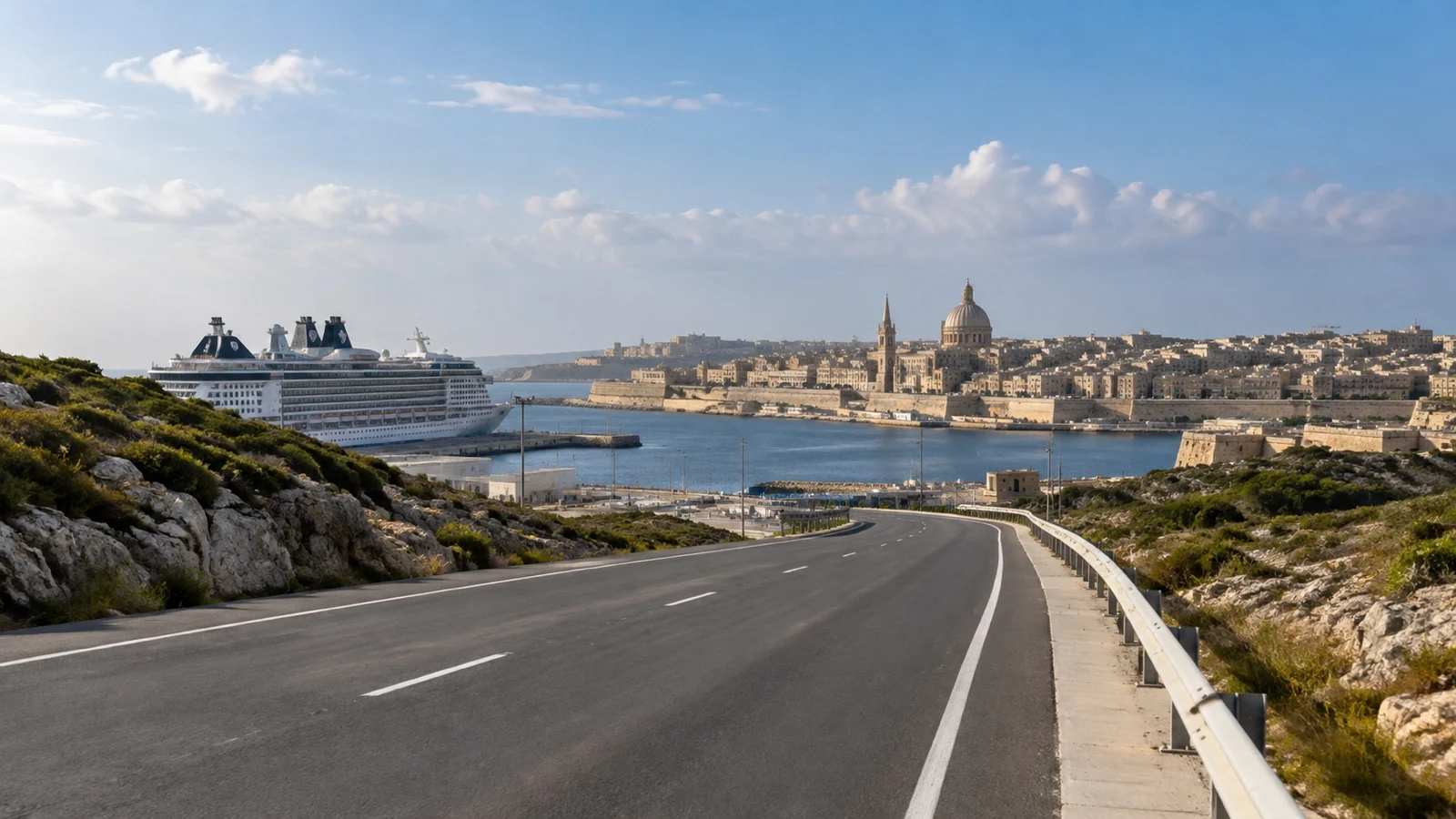
The brochure showed a medieval old town, but what you can see from the gangway is a fence, a parking lot, and a road heading inland. The good stuff is real, it is just eleven miles away.
My quick take
When the terminal is far from town, the question is not how to get there, it is whether going is the best use of your day. Sometimes the answer is genuinely no.
I work out the round-trip transit time first, subtract it from the port call, and look at what is left. If four hours of a nine-hour day goes on travel, I want a very good reason to spend it.
The quick facts
- Do the subtraction first: Port call length minus round-trip transit equals your real day.
- Under four hours left: Pick one thing, not an itinerary.
- Transit is not just distance: Shuttle waits and queues count too.
- Ship tours buy protection: The cruise line’s published late-return assistance applies to its own excursions.
- Staying local is a real option: Not a consolation prize.
Why so many ports are like this
Cities that grew as historic centers rarely have deep water at the doorstep. Ports capable of taking a modern cruise ship tend to be modern industrial facilities built where the water and the land allowed it.
So the port serves the city without being in it, and the gap gets covered by road. Barcelona is a clear illustration, with terminals ranging from a short walk to the old city out to a pier well removed from it, and that gap is a design feature of the port rather than an oversight.
The berth you get within that port changes the number too, which my guide to finding out which berth your ship will use covers in detail.
The arithmetic that decides your day
Start with the port call length, then subtract the round trip honestly. A ninety-minute drive each way out of a nine-hour call leaves six hours, and that is before queues, immigration, or a shuttle to the gate.
Then subtract the return buffer you would build anyway, using my guide to how early to return to your cruise ship. Five hours ashore is a real day, and three is a lunch and a photograph.
Write the number down before you decide anything. Almost every overambitious port day comes from skipping this step.
Your four ways in
The ship’s excursion costs most and usually offers the strongest late-return protection, because the cruise line’s published assistance applies to its own tours. Royal Caribbean’s shore excursion guidance is worth reading on that point, because on a distant city that assistance is a meaningful part of the product you are buying.
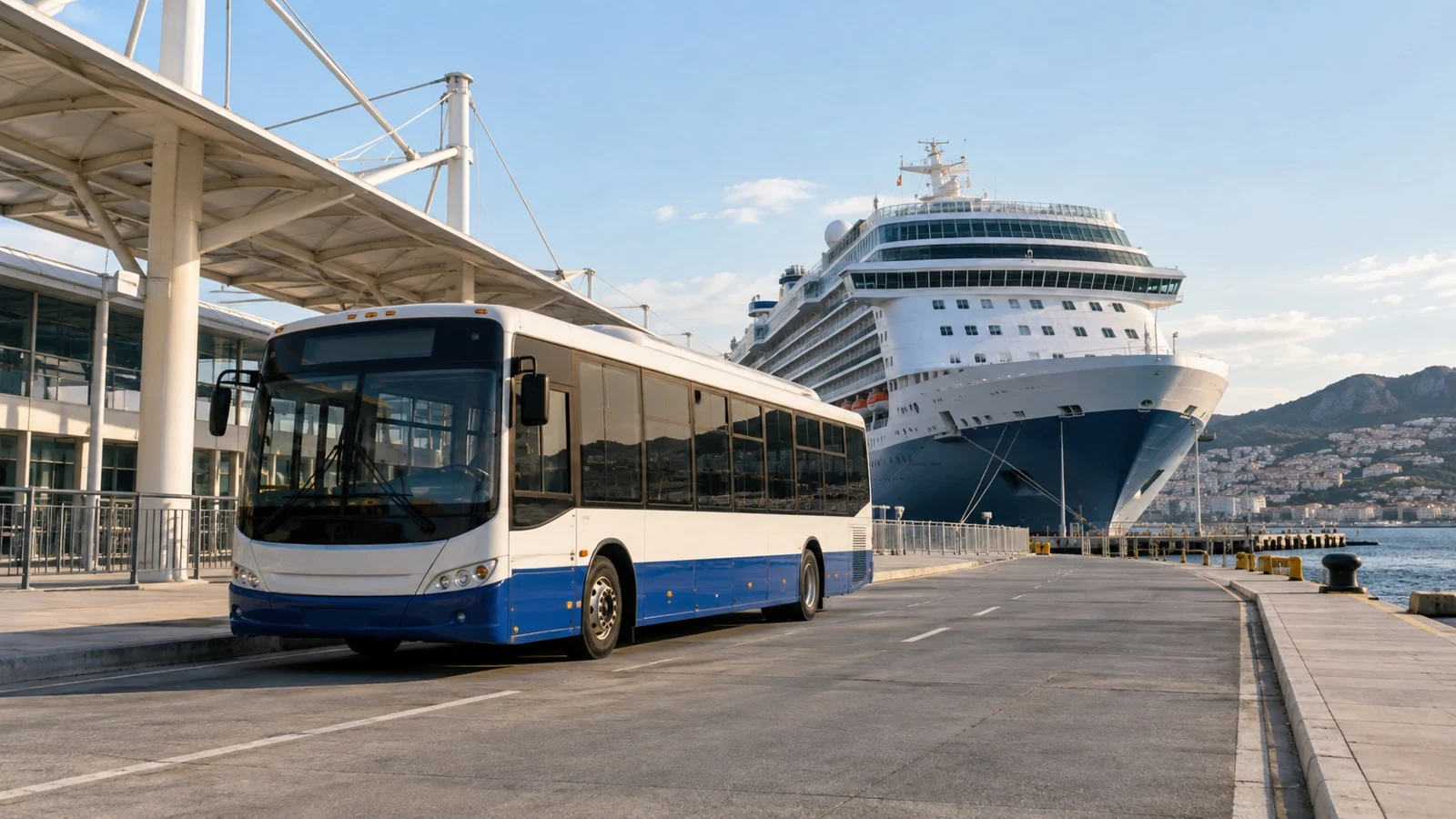
The port shuttle is cheaper and drops you at a fixed point on a fixed timetable, as covered in my guide to ports where the shuttle is not optional. A train is often the best value where one exists, which my guide to rail day trips from cruise ports gets into.
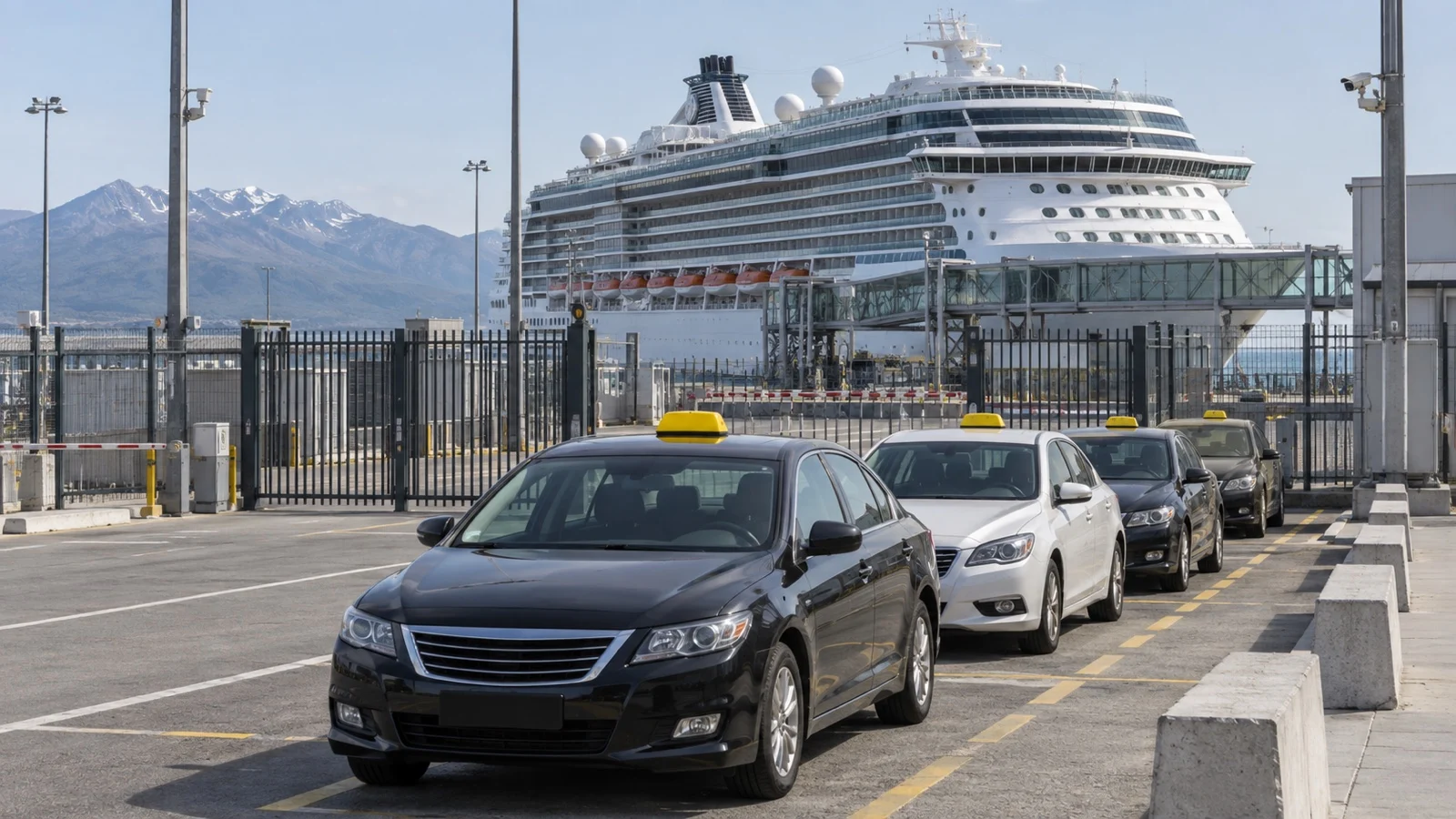
A private driver or taxi costs more but goes door to door on your schedule, which for a group of four is frequently the sensible answer. Each option trades money against flexibility against protection.
When the famous city is not worth it
Spending four hours in transit to spend three hours in a major city is a poor trade, and people make it constantly because the city is famous. You get a coach window, a queue, a rushed lunch, and a photograph.
A city that deserves three days does not become a good half-day. It becomes a stressful sampler that mostly teaches you what you missed.
My guide to choosing one major attraction or several smaller stops is the framework I use when the honest answer is that you cannot have both.
The case for staying local
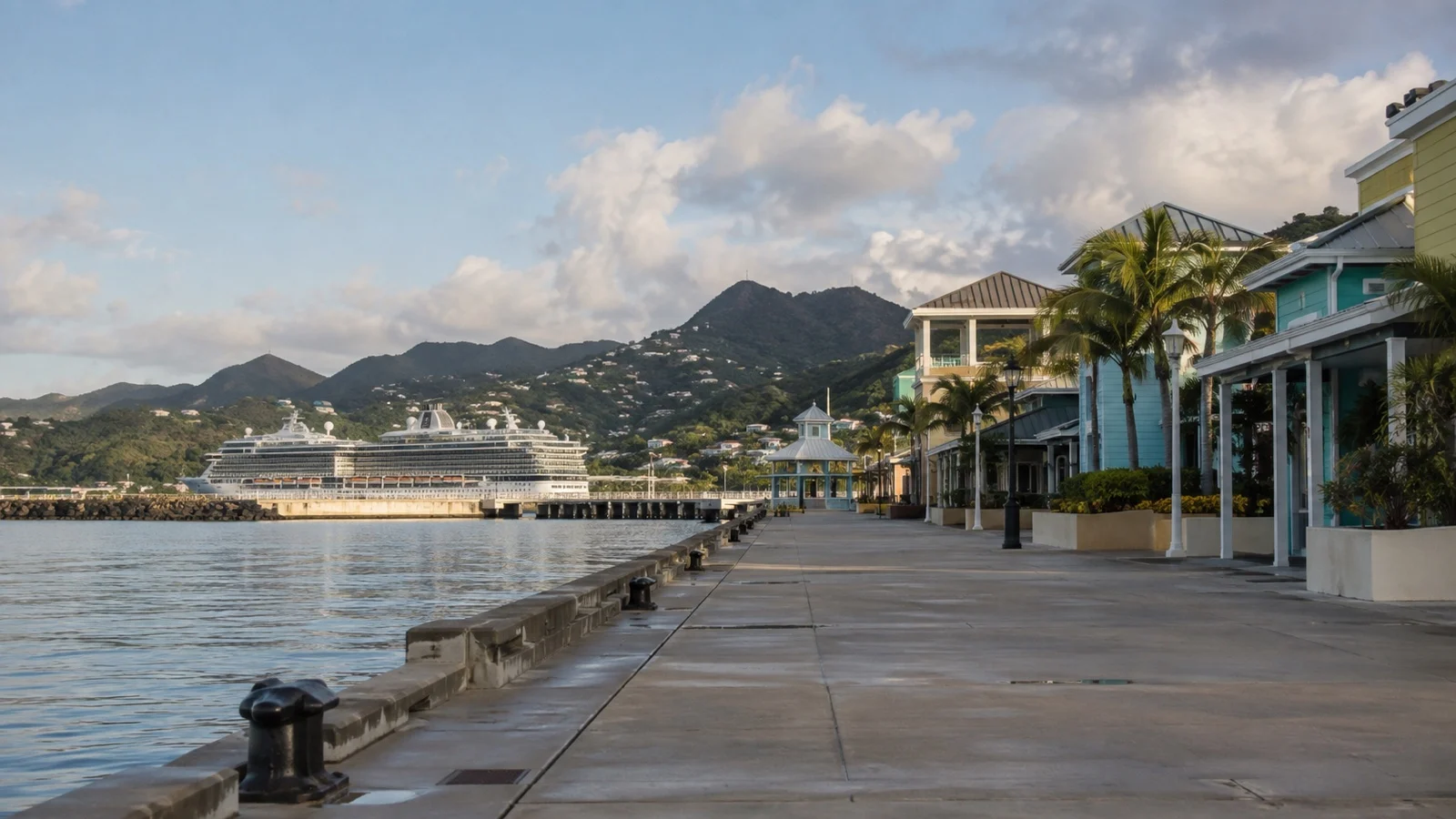
Port towns are frequently more interesting than their reputation, precisely because everyone leaves. The place absorbing three thousand day visitors is the distant city, not the harbor town those visitors abandoned at 8am.
A beach, a market, a fort, and lunch somewhere with locals is a genuinely good day. It is also relaxed, cheap, and carries almost no risk of missing the ship.
On an itinerary with several long transit days, alternating between ambitious and easy keeps the week enjoyable. My guide to port days better spent on a nearly empty ship takes that logic one step further.
Groups, mobility and the distance problem
Long transfers are hardest on the people least able to absorb them. Coach steps, limited restroom stops, and a fixed return time turn a distant city into a genuinely difficult day.
A private vehicle solves most of this and costs less than four excursion tickets in many ports. My guide to planning port days for someone who cannot walk far covers how I structure those days.
Splitting up is underrated. There is no rule that everyone has to make the same trade on the same day.
One group can take the long excursion while another has a slow morning near the ship. Everybody gets the day they actually wanted and you all compare notes at dinner.
Short port calls change everything
A distant city out of a six-hour call is usually not viable, and a ship’s excursion may be the only realistic way to attempt it. Two hours of transit out of six leaves four, minus the buffer.
My guide to what you can realistically do in a six-hour port call is the reality check worth reading before booking anything ambitious.
Questions worth asking before you book
- How far, in time, not miles: Traffic makes distance meaningless.
- What is the return frequency: A single afternoon shuttle is a hard deadline.
- Where does it drop you: The edge of town is not the center.
- What happens if we run late: The answer differs by transport type.
- Is there anything near the port: Often more than you assume.
Ask these before paying rather than after arriving. Every one of them changes the shape of the day.
Distance changes your risk, not just your comfort
Everything that can delay you is amplified by distance. A traffic jam thirty minutes from the pier is an inconvenience, and the same jam ninety minutes out is a genuine problem.
That is why independent travelers heading far inland should carry the ship’s contact details and the port agent’s number. State Department cruise guidance also recommends carrying your passport for exactly these situations, since being far from the ship is when you are most likely to need it.
My guide to missing the ship at a port of call covers what happens if the distance beats you. Reading it once is a good way to calibrate how much buffer a long transfer deserves.
What is usually near the port anyway
Even industrial ports tend to have something within a short taxi ride, because port towns are towns. A fort, a waterfront promenade, a fish market, a decent beach, or a small museum is the usual minimum.
Ask the shore excursion desk what is within twenty minutes rather than what tours they sell. Crew often give better answers to that question than any brochure does.
Local transport from the port gate frequently reaches these places for a couple of dollars. That is a far better ratio of experience to hours than a coach to a distant capital.
Quick answers
How do I know if a cruise terminal is far from town?
Check your ship’s berth against a map rather than the port’s general reputation. Distance varies by berth within the same port.
Is it worth visiting a city two hours away?
Only if the port call is long enough to leave five or six usable hours after the round trip and your return buffer. Otherwise you are buying transit, not sightseeing.
Should I book the ship’s excursion for a distant city?
It is the strongest argument for doing so. The cruise line’s published late-return assistance applies to its own tours, and that protection can be worth the premium when you are far away.
What if I skip the city entirely?
Port towns are often quieter and more pleasant precisely because everyone left. A relaxed local day is a legitimate choice, not a fallback.
Can I take a taxi instead of the excursion?
Usually, and for a group it can cost less. You lose the cruise line’s tour-specific late-return assistance, so build a larger buffer.
Final word
A distant terminal is not a ruined port day, it is a day with a smaller budget of hours. Spend them deliberately rather than on a round trip to somewhere you get forty minutes in.
Do the subtraction, pick one thing, and give yourself permission to stay near the ship when the math says so. The best port days I have had were often the least ambitious ones.
How this guide was researched: This guide was checked in August 2026 against published port authority terminal information and current guidance on cruise port transfers and shore excursion policies. Transfer times, shuttle timetables, and berth assignments vary by sailing, so confirm details with your ship’s daily program; see our Editorial Policy.
More on this topic: browse every guide on port logistics and timing.