Melk River Cruise Port, Durnstein and Spitz: Docking in the Wachau
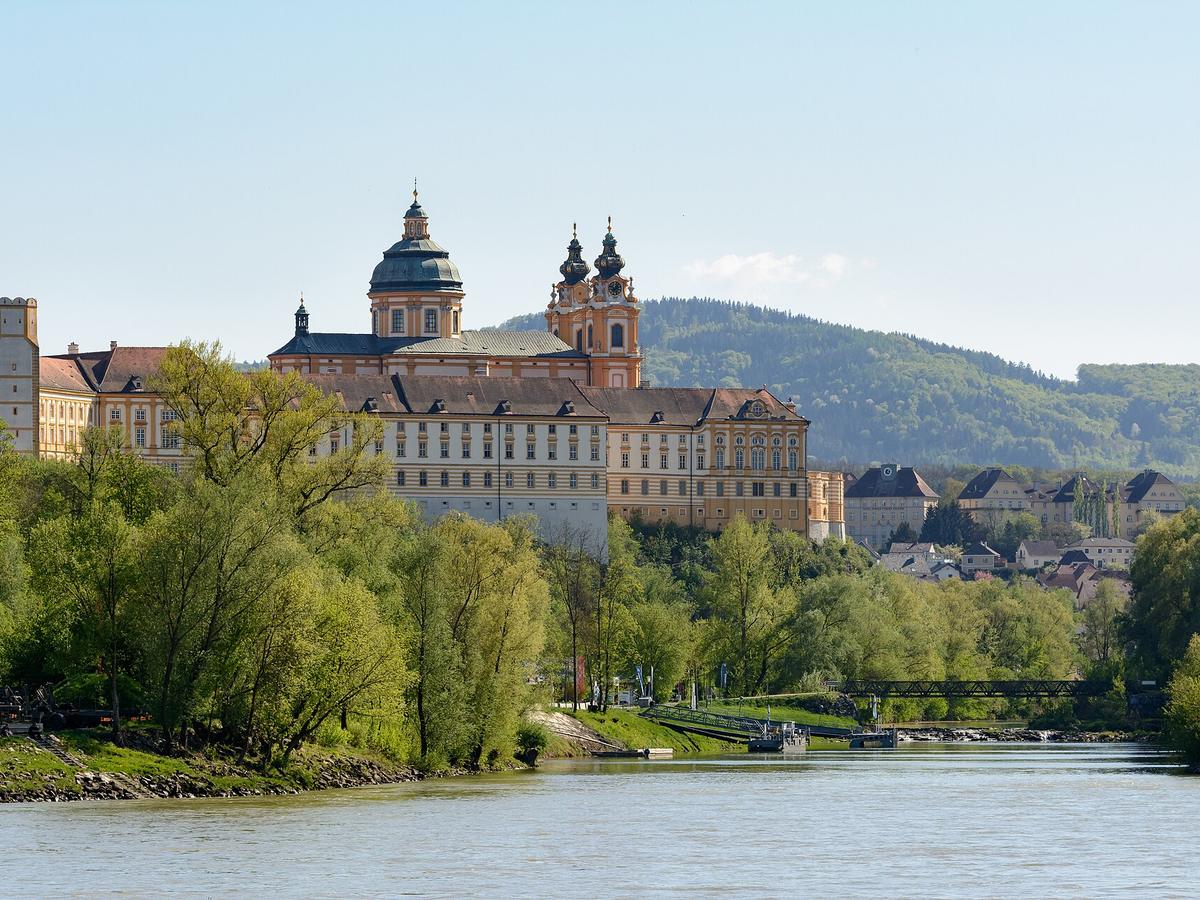
The Melk river cruise port is a quay, a lifting bridge and a thirty minute walk away from the thing you came to see. The abbey sits on its rock looking magnificent and unreachable from the gangway without either effort or a motorcoach seat.
That gap is the whole story of the Wachau. It is the prettiest 22 miles of the Danube, and it is also the stretch where the most ships fight over the shortest stretches of quay wall.
Quick take
The Wachau is a highlight of a Danube sailing, and much of its value is on the top deck rather than ashore. The valley is the attraction; the towns are the supporting cast.
If your itinerary gives you Melk, take the abbey and accept that it eats the morning. If it gives you Durnstein, take the walk up to the ruin instead of the wine shop line, because the view is the better souvenir.
Find out which hours of daylight cover the scenic stretch and plan around that, not around the excursion desk. A Wachau transit at dusk misses much of what makes the valley special.
Avoid booking a tour that pulls you out of the valley to Göttweig or Schallaburg if Wachau scenery is the priority. You came for a gorge lined with terraced vineyards, so stay in it.
The quick facts
- Where you land: the Wachau has moorings at Melk, Emmersdorf, Spitz, Weissenkirchen, Durnstein and Krems. Donau Schiffsstationen lists three numbered berths at Durnstein and two each at Spitz and Weissenkirchen, part of 37 stations it runs between Linz and Budapest.
- How you get ashore: a gangway onto a quay, always, because river ships never tender. The variable here is rafting, and two or three abreast is routine at Durnstein and Melk on a summer morning.
- Into town: The abbey’s own FAQ puts Melk pier to abbey at about 30 minutes on foot.
- Currency and language: The euro and German, with good English in the museums and patchier English in small shops.
- Getting around cost: most passengers never pay for local transportation here at all. If you go independent, bus 715 runs the north bank and 720 the south bank between Krems and Melk, and the Wachaubahn does Krems to Emmersdorf in about 45 minutes.
- Time zone: Central European Time, UTC+1, shifting to UTC+2 for daylight saving time across almost the entire cruising season.
- How often the call is missed: Low (under 5%): unusual local conditions can make safe entry impossible.
Melk river cruise port: the pier, the walk and the abbey
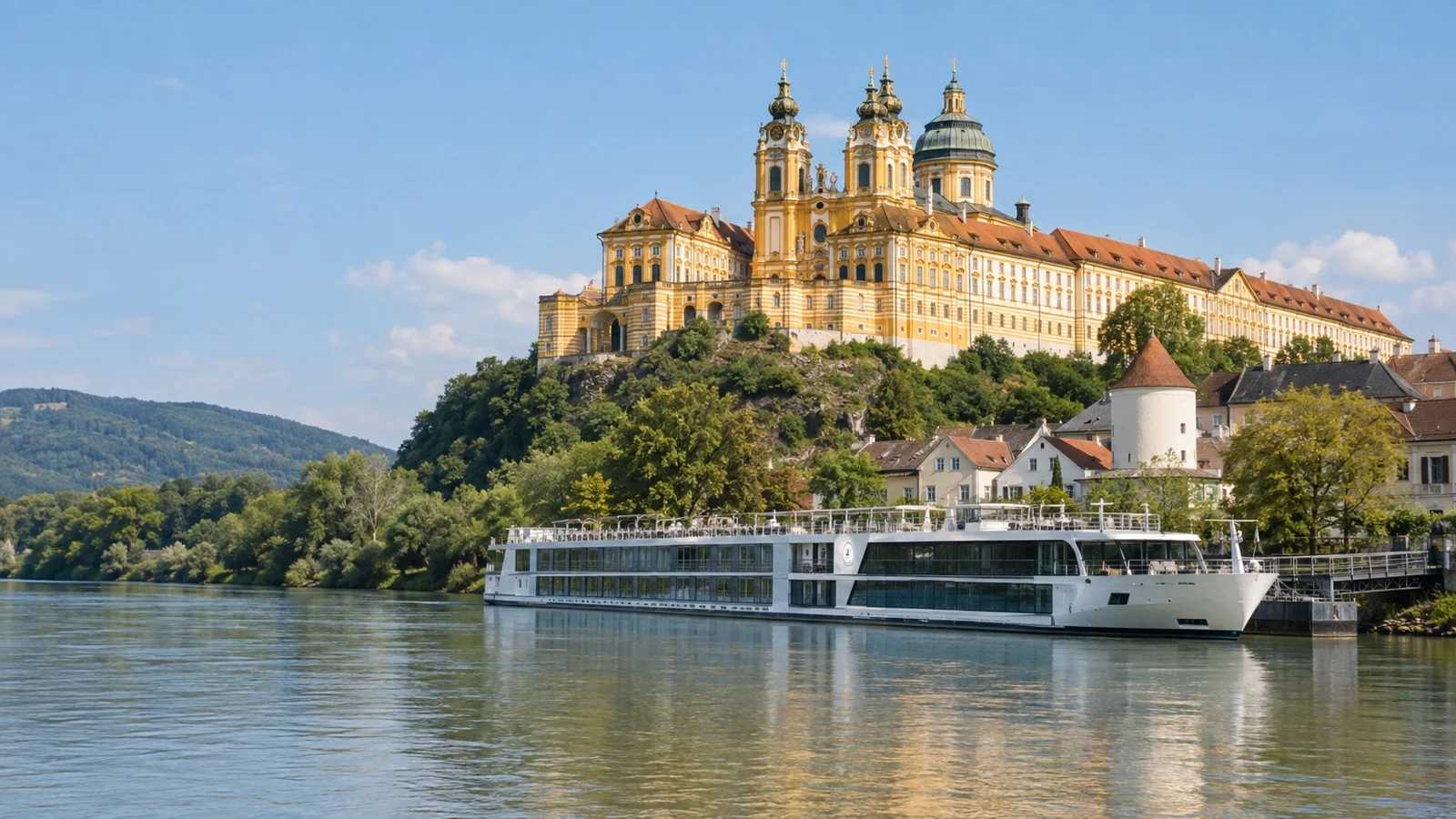
Melk moorings sit on the right bank at the official Danube kilometer 2036 navigation marker, below and downstream of the abbey. Donau Niederosterreich lists six numbered ship stations here, which sounds generous until three roughly 443-foot ships arrive at once.
The abbey looks close from the sun deck because it is high on its rock rather than near, and getting there means the lifting bridge and a walk through town. Almost every line runs a motorcoach for that reason, and this is one of the few river ports where the transfer earns its place.
On the ticket, Stift Melk publishes adult admission at 16.00 euros, a 4.00 euro supplement for a guided tour and 15.00 euros for groups of 20 or more. The abbey park alone is 5.50 euros.
Opening hours matter more than the price. From 1 April to 31 October the abbey runs 9.00 am to 5.30 pm with last admission at 5.00 pm, and from early November the weekday pattern collapses to guided tours only at 11.00 am, 1.30 pm and 3.00 pm.
That rule catches Christmas market passengers, so confirm you are on a fixed slot rather than assuming you can wander in. Emmersdorf, opposite on the left bank, is the alternate berth when Melk fills up, and it also means a motorcoach rather than a walk.
Durnstein, Spitz and Weissenkirchen
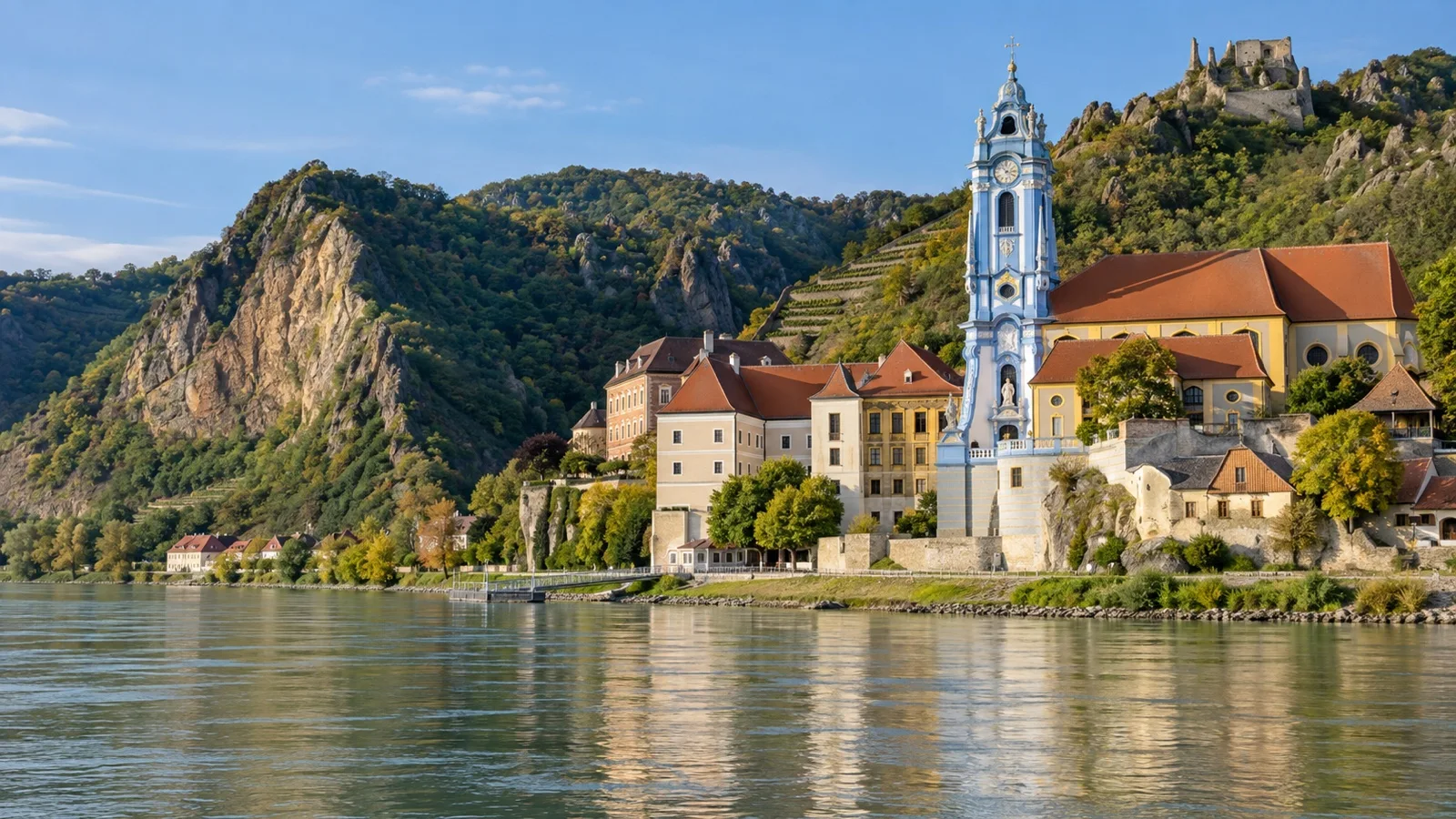
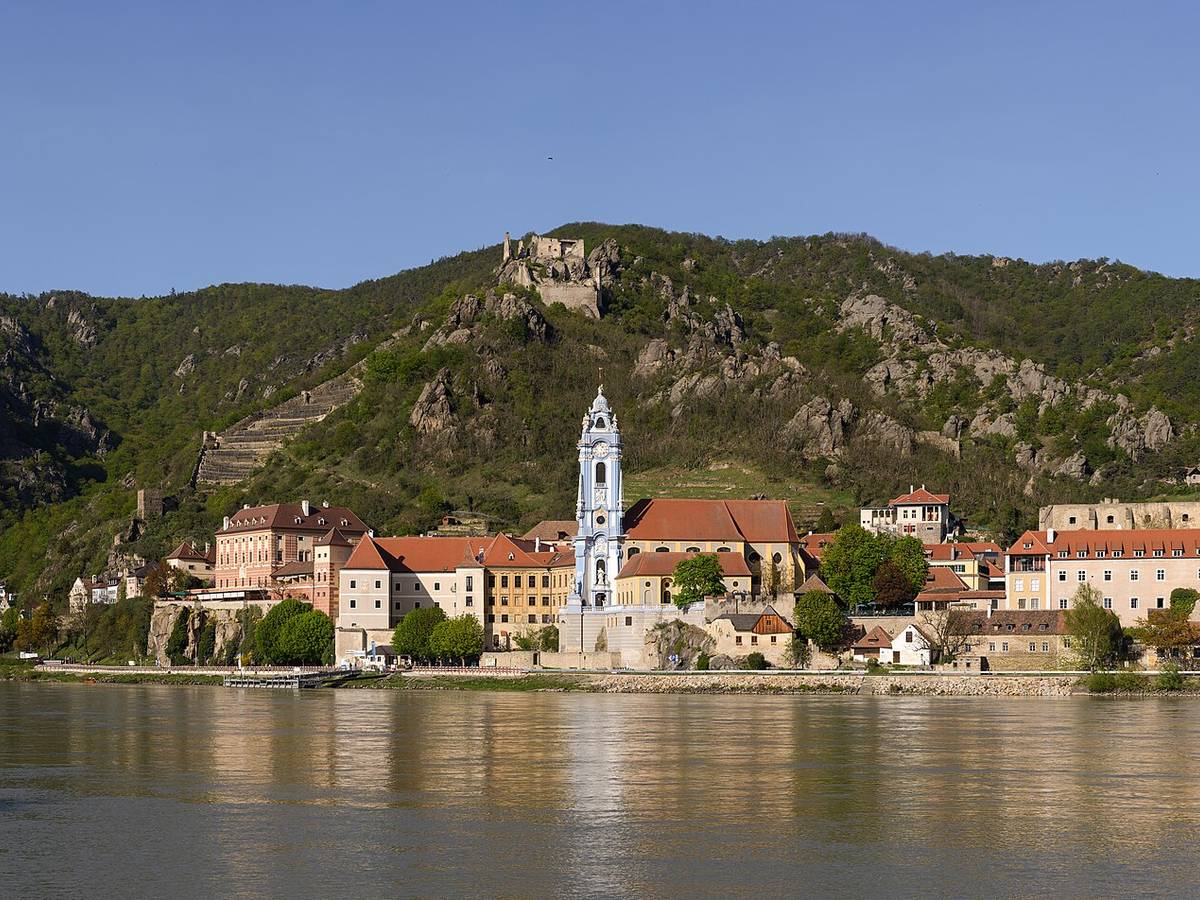
Durnstein is the postcard and it knows it. The blue and white tower of the abbey church stands directly over the quay, and the ruined castle on the crag above is where Leopold V held Richard the Lionheart in 1192 and 1193.
Lower Austria’s tourist board confirms the ruin is free and open all year, and the town puts the climb at about 20 minutes from the center. It is a rocky path, not a promenade, and not one for the shoes you wore to dinner.
The abbey church below is the alternative if the climb is out. Lower Austria gives seasonal hours of 9.00 am to 5.00 pm Monday to Saturday and 10.00 am on Sundays, with last admission at 4.30 pm, and the site is wheelchair accessible.
The problem with Durnstein is arithmetic. It is a village of a few hundred people with three ship berths, and when all three are rafted the main lane becomes a single file line past identical apricot shops.
Which is exactly why some lines now schedule Spitz or Weissenkirchen instead, and if you drew one of those, do not sulk. Both are working wine villages rather than souvenir strips, and both put you on the quay two minutes from the church square.
Rafting, and what it actually costs you
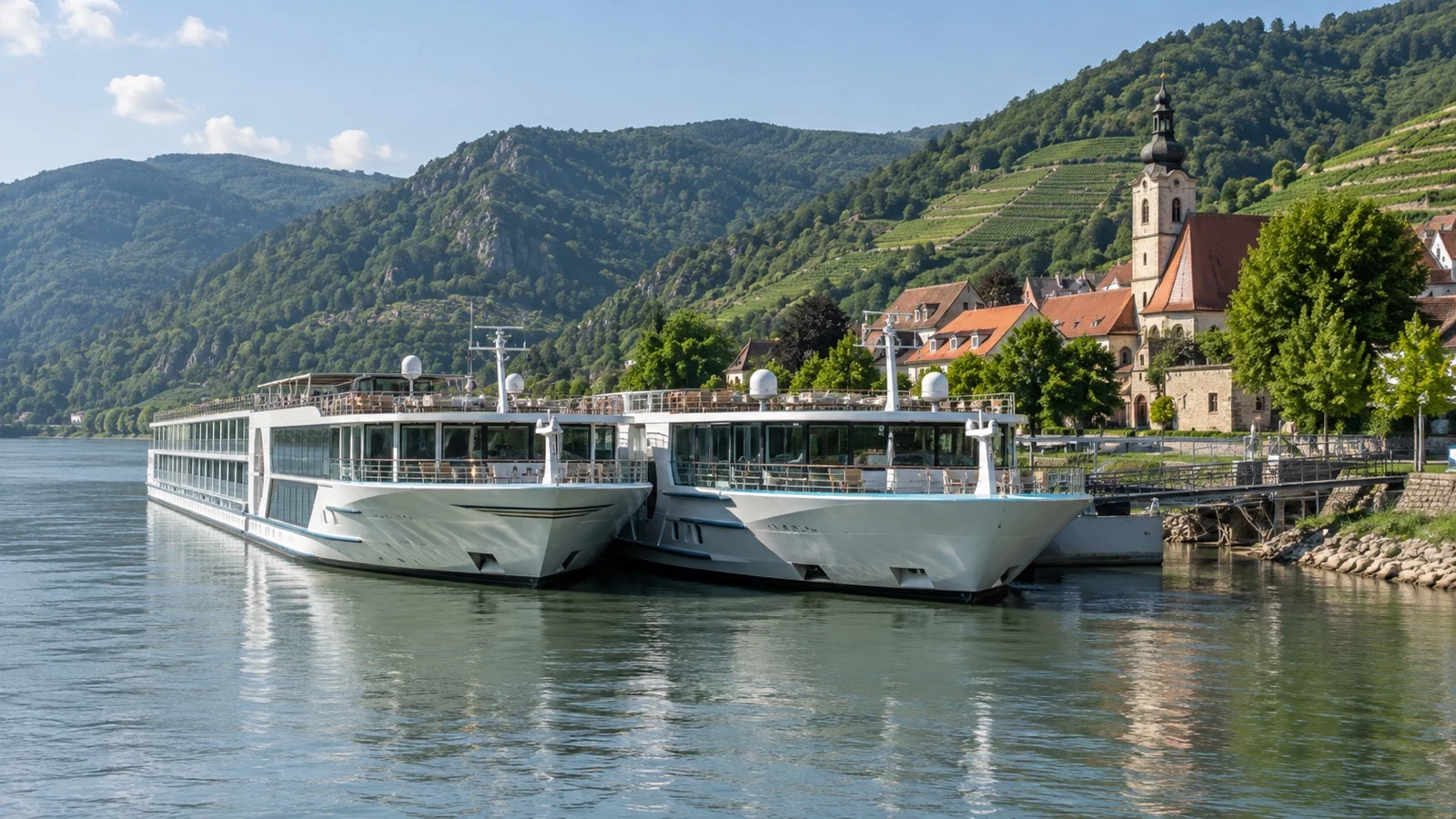
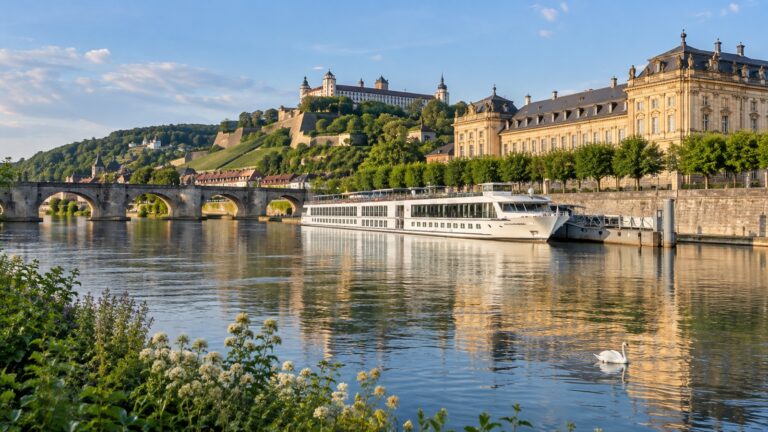
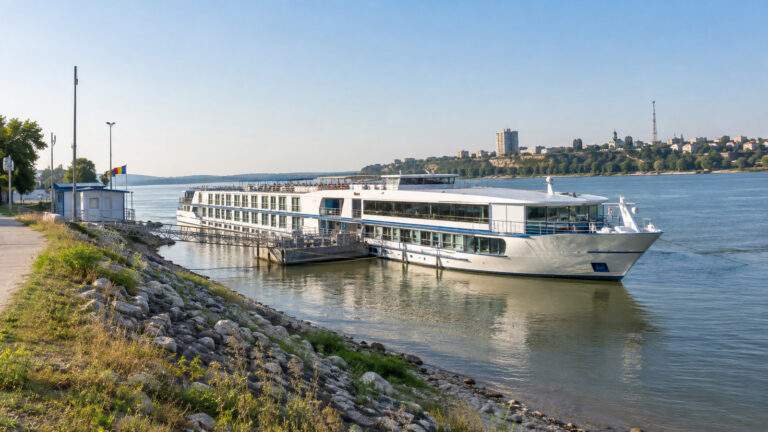
The Wachau is one of the Danube’s most heavily rafted stretches, and the reason is geometry rather than mismanagement. The villages are tiny, the quay walls short, and river ships can run to roughly 443 feet.
Being the outside ship means walking through the reception areas of the ships between you and the shore. Crews expect it and it works fine when the deck levels line up.
When they do not, you go up over an open sun deck and back down, which is a nuisance in rain and a serious obstacle with a stick or a chair. It also means your cabin window faces a stranger’s for the whole call.
Budget ten minutes each way, plus the line when three ships disembark into one gangway at once. The mechanics are explained in the guide to rafting and double docking on river ships.
The scenic stretch is the main event
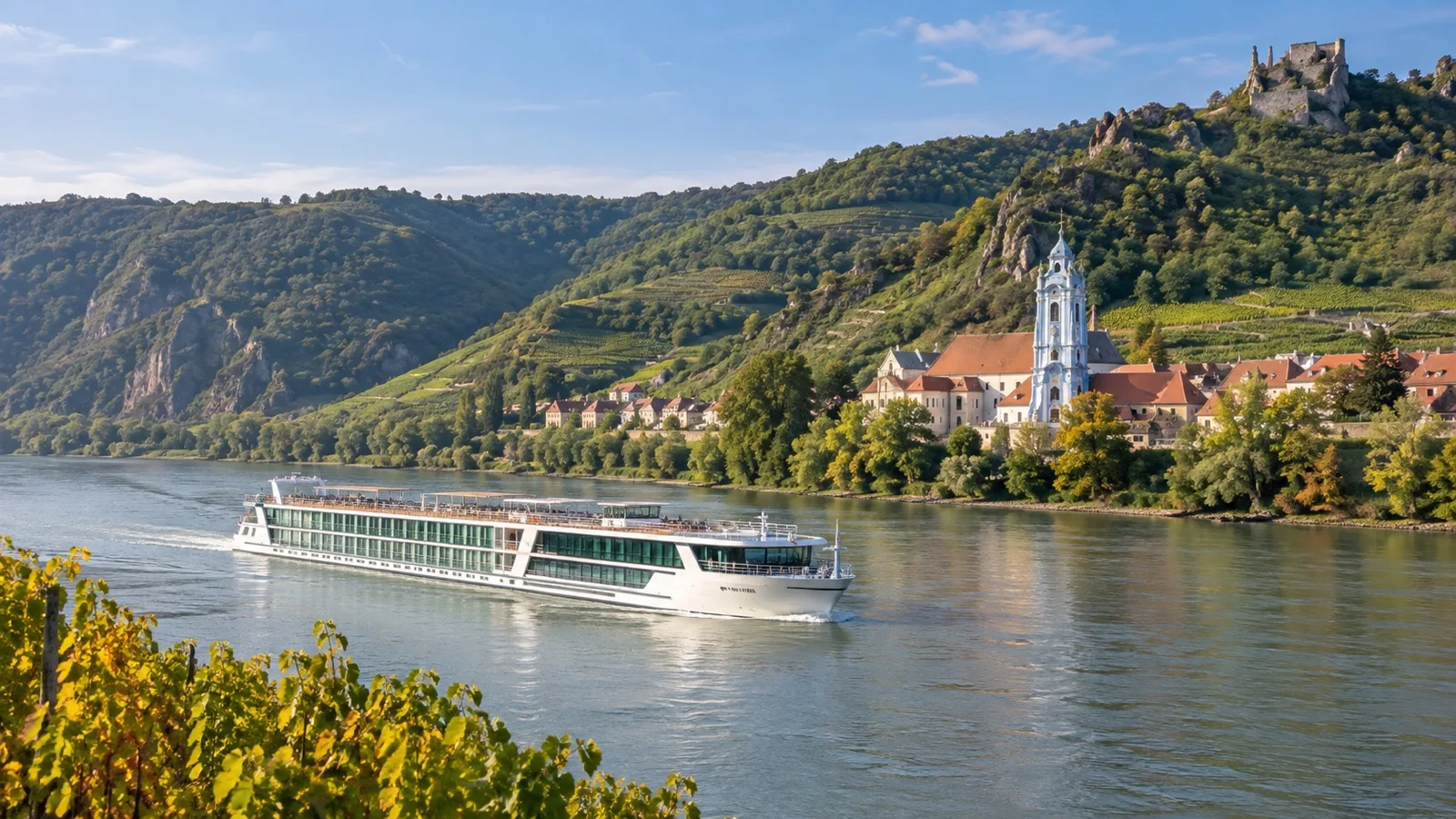
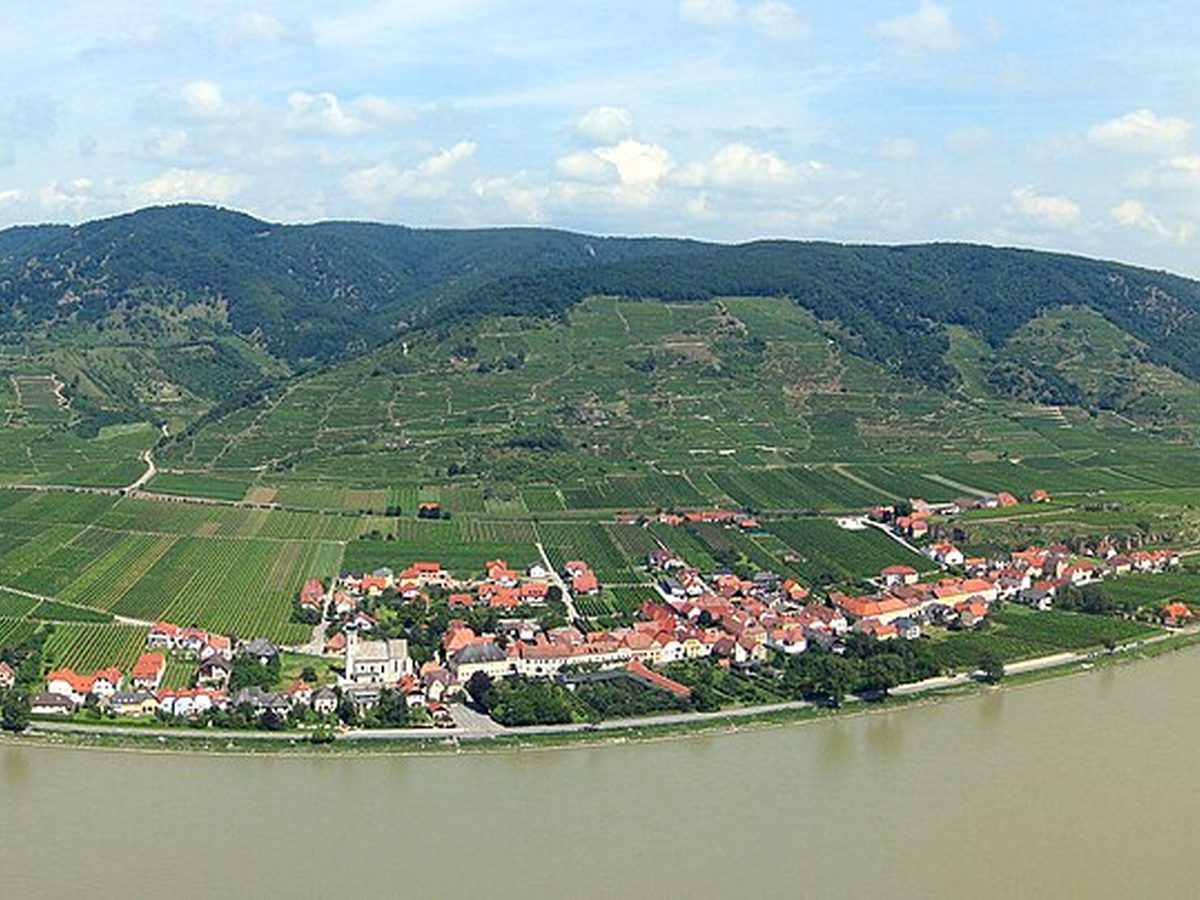
UNESCO inscribed the Wachau Cultural Landscape in 2000, covering roughly 71 square miles of Danube valley between Melk and Krems. The citation is about the terraces and the villages rather than any single monument.
The city of Krems dates the valley at roughly 22 miles from Emmersdorf and Melk in the west to Stein and Krems in the east. At river cruise speed that is two to three hours of continuous scenery.
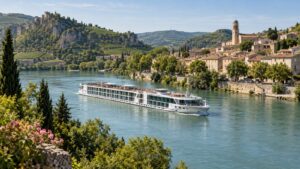
Those hours are the reason to be on this itinerary at all. Terraced vineyards climb the north bank in dry stone steps, apricot orchards fill the flat ground, and a ruin appears every few miles.
The mistake is treating it as background while you have lunch, so find out at the evening briefing when the transit begins and decide which meal you are skipping. Timing shifts with direction and with how the day has run, and a late arrival can push the whole thing into the dark.
Best stops for limited time
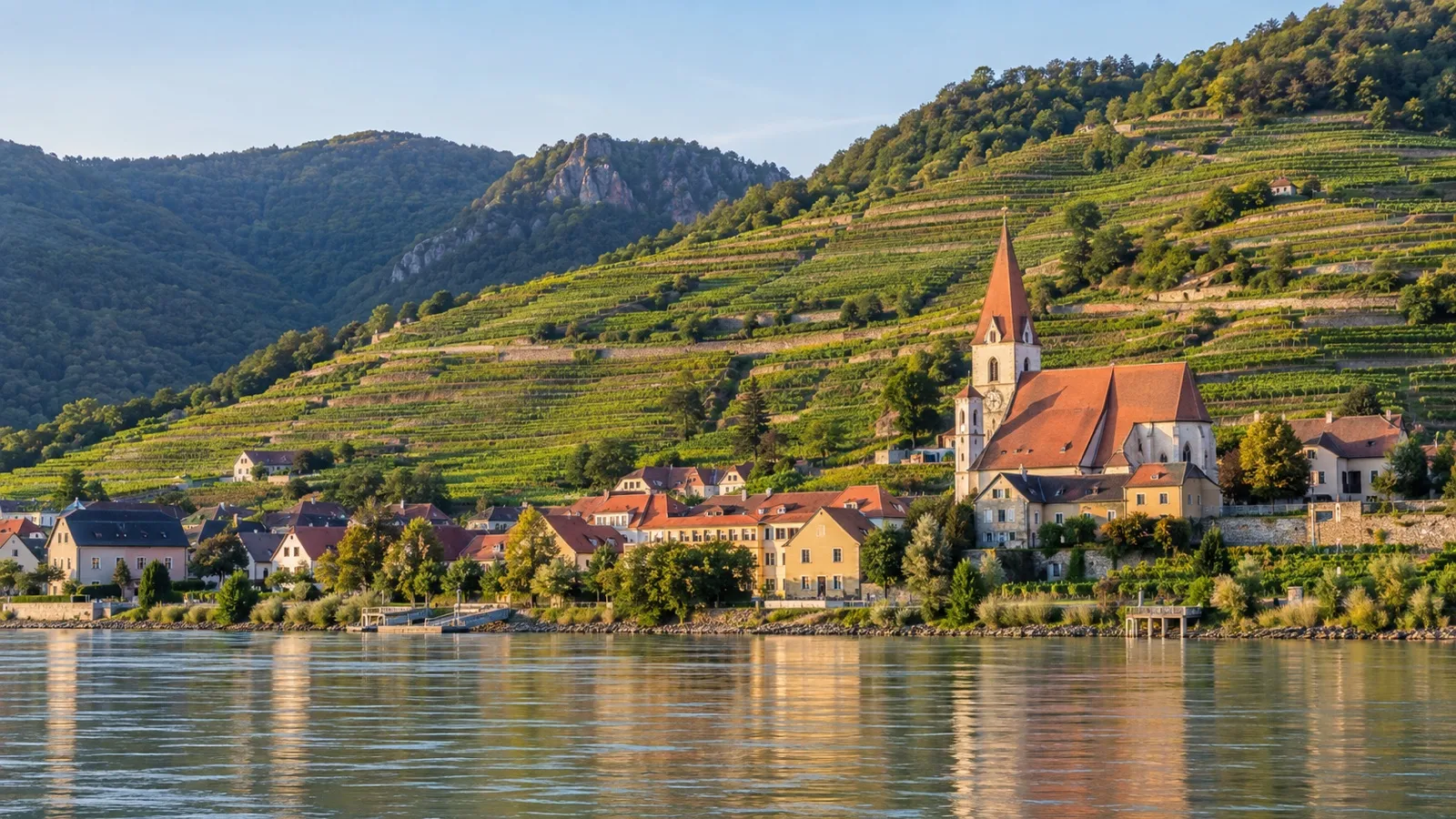
This valley is small enough that the choice is genuinely between six or seven things. Roughly in order of how hard they are to replace.
- Melk Abbey: the Benedictine abbey above the town, with library, church, marble hall and park on one ticket. It suggests at least two and a half hours for the full site, more than most calls allow, so pick two rooms and do them slowly.
- The Durnstein castle ruin: a 20 minute climb from the village to a free, roofless castle with the best view in the valley. The path is uneven and exposed, and worth every step if your knees are willing.
- Durnstein abbey church: the blue tower you photographed from the ship, seen from inside, with a Danube terrace at the back. The exhibition takes about an hour and is wheelchair accessible, which the ruin is not.
- Spitz an der Donau: a wine village with steep vineyards rising out of the back gardens and a quiet main street. This is what Durnstein was before the ships found it.
- A Heuriger: a grower’s own tavern, pouring their own bottles alongside cold food. This is the right way to try Gruner Veltliner and Riesling, rather than in a shop with a cruise line logo in the window.
- Apricots, in every form: jam, schnapps, dumplings, nectar and the fruit itself. The Wachauer Marille holds EU protected designation of origin status, so the label means something.
Fun fact: the Wachau’s growers run a ripeness classification of their own, and Vinea Wachau sets Steinfeder at up to 11.5 percent alcohol, Federspiel at no more than 12.5 percent, and Smaragd at 12.5 percent or above. Smaragd is named after the emerald lizards that sun themselves on the dry stone terrace walls.
How to plan the day
Start with the transit, not the port call. Ask what time the ship enters the valley and what time it leaves, then build the day around those two numbers.
On a Melk morning, take the motorcoach up, go straight to the library and church before group tours stack up, then walk back down through town. The descent is easier than the climb, and the old town is worth the time.
On a Dürnstein afternoon, climb to the ruin first and enjoy wine afterward. Allow roughly twenty minutes up, twenty at the top, and twenty down before setting aside time in town.
If you get Spitz or Weissenkirchen, do almost nothing. Walk the village, sit outside with a glass of Federspiel, and let the Durnstein excursion crowd tell you about the line.
A realistic word on accessibility
The Wachau is beautiful and built on a slope, and those two facts are related. Almost everything worth seeing is uphill from the water.
Melk Abbey describes itself as mostly wheelchair accessible, with the garden pavilion interior and the mineral collection as exceptions, and asks visitors needing assistance to check in at the ticket office in the first courtyard. Getting to the abbey is the harder half, and the step-free route from the pier runs the long way along Wiener Strasse rather than up the stairs.
Durnstein splits neatly. The abbey church is wheelchair accessible at quay level, while the castle ruin is a rough climb that no amount of determination makes safe with limited mobility.
Rafting may be the more important access issue. If a step-free exit matters, say so at booking and again at check-in, and read the guide to wheelchair-friendly cruise ports first.
When to go, and the weather
The Danube season runs from roughly late March to late December, and the valley’s own infrastructure follows it. The Wachaubahn runs weekends and holidays from mid March, and daily only from late April to the start of November.
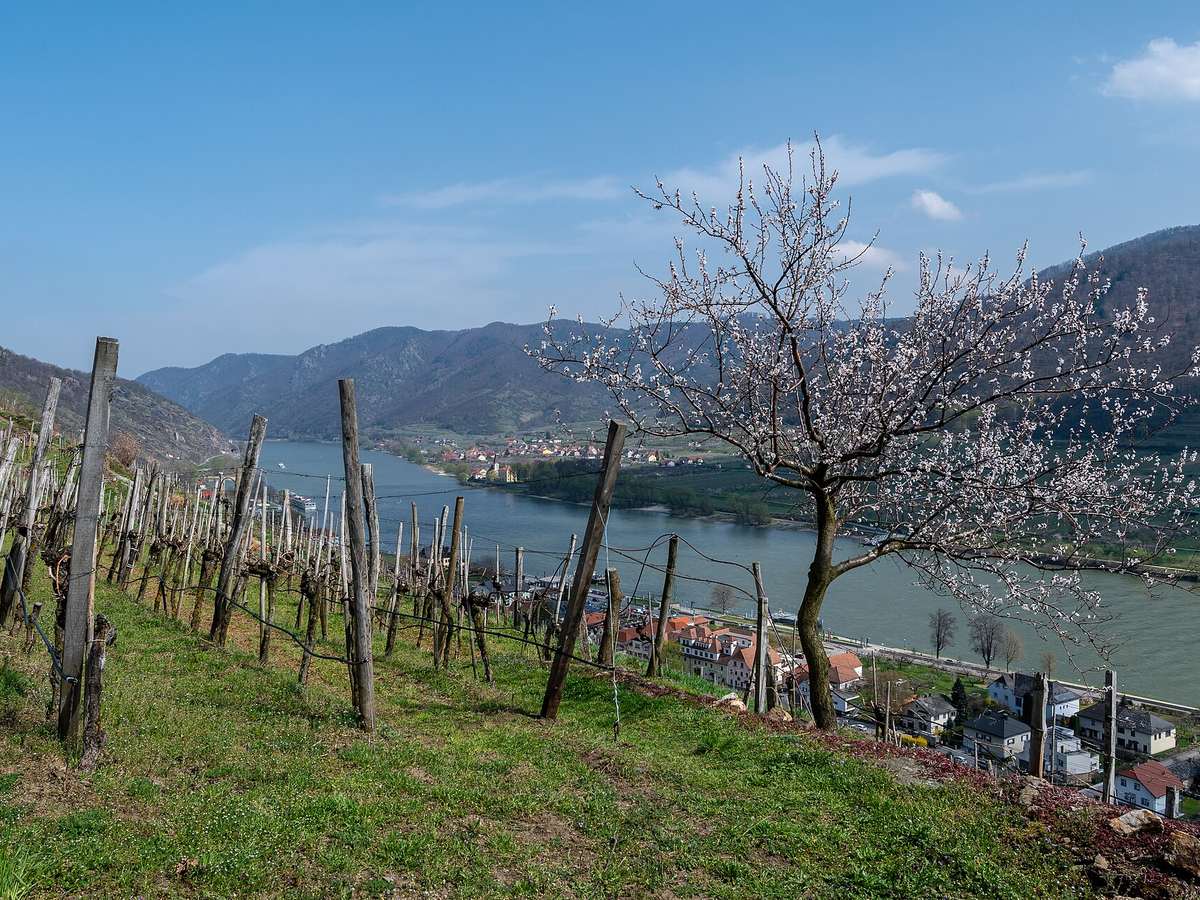
Spring is the apricot blossom, which turns the orchards white for two weeks and is worth arranging a sailing around. Expect daytime highs in the high 50s to low 60s Fahrenheit, and pack for cold mornings on deck.
High summer brings the fruit itself and the crowds, with highs commonly around 79 to 82 Fahrenheit. It is also the riskiest period for low water, which turns a Wachau call into a motorcoach transfer.
September and early October are strong choices, with the harvest underway, warm afternoons, and less crowded decks. Late November and December bring short days, temperatures often in the 30s and low 40s Fahrenheit, and a real chance that the scenic stretch happens after dark.
Practical checks before the Wachau
Confirm Melk, Emmersdorf, Dürnstein, Spitz, or Weißenkirchen rather than planning around the itinerary’s broad Wachau label. Rafting is common, and a different riverbank can turn a walk into a bus transfer, so save the live meeting point before leaving.
Melk Abbey and Dürnstein Abbey have seasonal hours, while the castle ruin above Dürnstein is an exposed, steep trail rather than a casual extension of town. Book timed entry when needed, stay on marked paths, and do not enter closed vineyard terraces or protected private land for a photograph.
Cyclists and independent walkers should turn back with at least 45 minutes before all aboard because ferries, trains, heat, and sudden Danube weather can delay a return. Check Austria’s DoRIS notices and the ship’s daylight transit time, since a mooring change or lock delay can move the scenic stretch into a different part of the day.
Quick answers
Can I walk from the ship to Melk Abbey:
Yes, and the abbey’s own FAQ puts it at about 30 minutes each way. It involves a lifting bridge and either stairs or a longer flat route, so take the motorcoach if one is offered.
Do I need to book Melk Abbey in advance:
If you are on a ship excursion your line handles it. If you are going independently in late fall or winter, note that weekdays are guided tours only at 11.00 am, 1.30 pm and 3.00 pm.
Why is my ship stopping at Spitz instead of Durnstein:
Because Durnstein has three berths and more ships than that on a busy day. Some lines choose Spitz or Weissenkirchen deliberately to dodge the crush, and you are not being shortchanged.
How long is the Wachau scenic stretch:
About 22 miles from Melk and Emmersdorf down to Krems and Stein. That is two to three hours of sailing, depending on direction and flow.
Is the Durnstein castle ruin worth the climb:
Yes, if you can manage 20 minutes on a rough uphill path. It is free, open all year, and the view down the valley is the best you will get without a helicopter.
The last word
Melk is the monument, Dürnstein is the photograph, and Spitz suits a relaxed afternoon. The contrast with the Vienna river cruise berths downstream is useful because Vienna gives you a world capital while the Wachau can place the ship in the middle of a village.
Melk aside, this valley belongs in the roundup of the most walkable cruise ports. For the wider continental picture, start with the European cruise ports overview.
Do one thing before you sail: find out which daylight hours your ship spends between Melk and Krems. Everything here is negotiable except that.
How this guide was researched: Unless a first-hand visit is explicitly identified above, this guide is based on independent research using Melk Abbey, DoRIS waterway information, official Wachau tourism guidance, and the other official sources linked above. Logistics and time-sensitive details were reviewed on September 12, 2026.