Brussels River Cruise Port Guide: Terminal, Grand-Place, and Atomium
Brussels is one of those river cruise calls that makes more sense once you stop expecting the ship beside Grand-Place. The passenger quay is on the canal in the north of the city, so your day begins with a transfer rather than a stroll into the historic center.
That small complication is worth solving. Brussels gives you gilded guildhalls, surreal comic art, serious chocolate, and the unmistakable Atomium in a single port day.
My quick take
I would treat Brussels as a two-part call: first choose the transfer that protects your time, then explore the center on foot. The city is wonderfully walkable after you reach it, but the berth itself is not where you want to spend the day.
For a first visit, Grand-Place and the lanes around it are the priority. Add the Atomium only when your schedule is generous or your ship offers a well-timed transfer, because it sits in a different part of Brussels.
The best version of this day is not a frantic checklist. It is a good look at the square, one or two nearby sights, and enough breathing room for a waffle, beer, or chocolate stop before heading back north.
Brussels quick facts
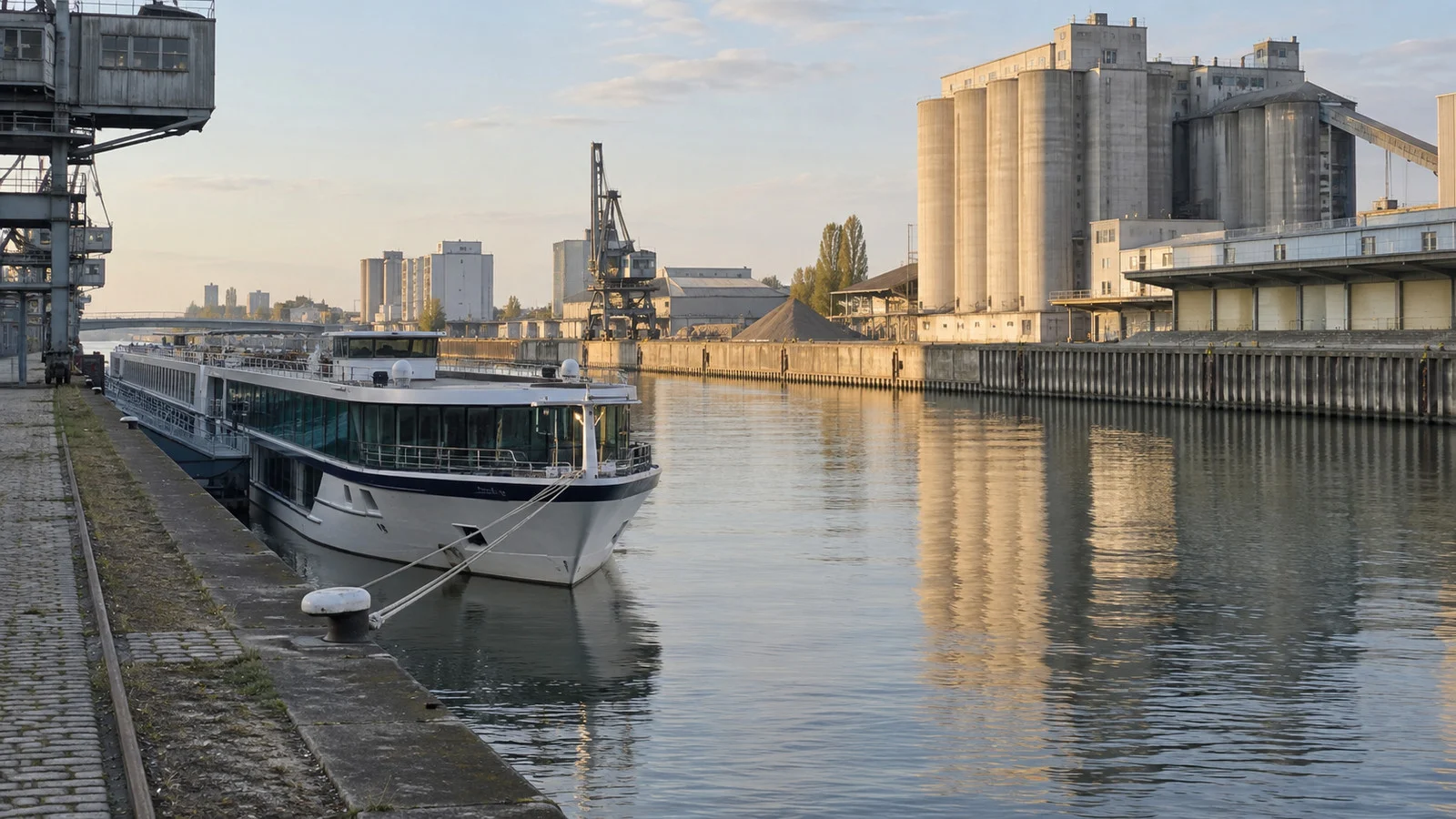
- Docking: River ships use the Brussels Cruise Terminal on the canal in the northern part of the city, not a berth beside Grand-Place.
- Quay: The Port of Brussels lists a 240-meter quay, 12 meters wide, for river vessels carrying up to 200 passengers.
- Best first stop: Grand-Place and the compact historic center deliver the strongest introduction to Brussels.
- Getting around: A ship transfer or taxi is simplest from the berth, while STIB metro, tram, and bus services are useful once you are in the city.
- Payment: Belgium uses the euro, and STIB accepts contactless bank cards, smartphones, and compatible watches on its network.
- Language: French and Dutch are official in the Brussels region, and English is common in visitor-facing businesses.
- Accessibility: Central streets include cobbles and uneven surfaces, while wheelchair access inside the Atomium is limited to the lift-served Panorama.
- Emergency number: Call 112 for urgent police, fire, or medical assistance in Belgium.
Where river ships dock in Brussels
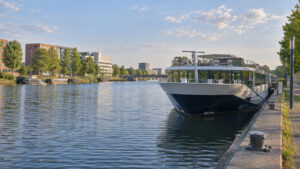
The Port of Brussels identifies the Brussels Cruise Terminal as its passenger terminal for river cruise vessels. Its published specifications describe a 240-meter quay that is 12 meters wide and can receive vessels with up to 200 passengers.
This is a proper alongside berth, so passengers normally walk across a gangway rather than use tenders. The exact gangway position can change with ship placement and operational needs, which is why your cruise line’s daily instructions matter more than a generic map pin.
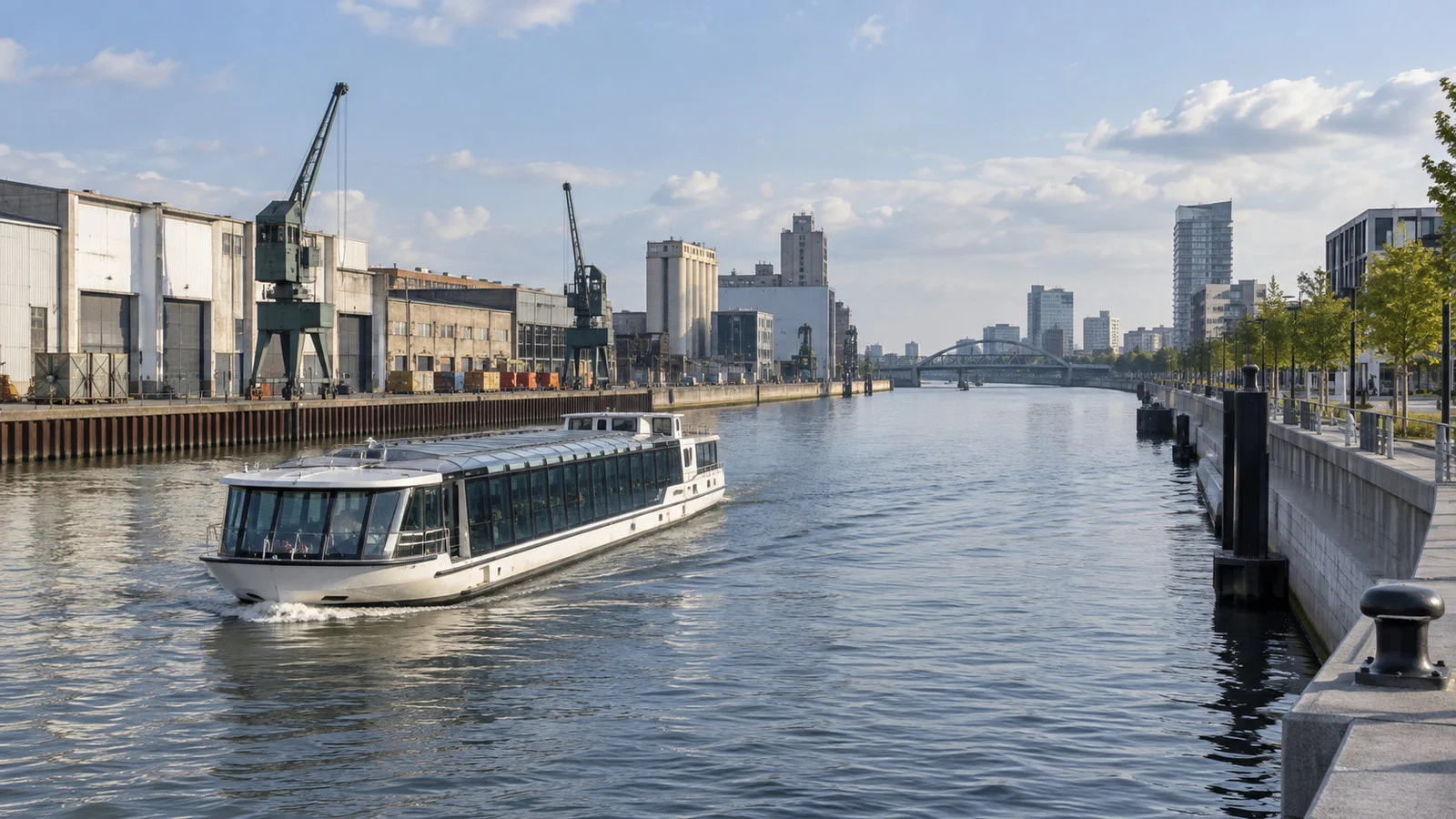
The terminal stands in a working canal environment north of the postcard center. Do not plan on stepping ashore into a district full of cafes, museums, and souvenir shops.
The industrial setting is not a flaw in the itinerary, but it changes the logistics. You need a deliberate ride into the city and a clear return plan before leaving the ship.
Some itineraries describe the location by the broader Neder-Over-Heembeek area or by the terminal name. Confirm the meeting point on your ship because a vessel can adjust its precise berth for traffic, maintenance, or port operations.
Getting from the terminal to central Brussels
A cruise-line coach or shuttle is usually the least complicated option, especially when it is included. Check whether the return works as a continuous shuttle or at fixed times, because that detail determines how independently you can explore.
A taxi can be a smart alternative for two to four people, but ask where taxis will wait for the return. A city-center pickup is easy to arrange, while finding the correct canal-side ship without its berth details is less forgiving.
Public transportation can work, but routes and construction change. Use the official STIB journey planner on the day of your call and enter the terminal or your ship’s confirmed berth rather than relying on an old route number from a blog.
STIB allows contactless payment with a bank card, smartphone, or compatible watch, which is handy for a short visit. Each traveler should validate separately with their own payment method unless using a suitable ticket.
Walking all the way to Grand-Place is not a sensible cruise-day plan. Save your steps for the historic center, where they buy you far more beauty and flexibility.
A realistic plan for Grand-Place
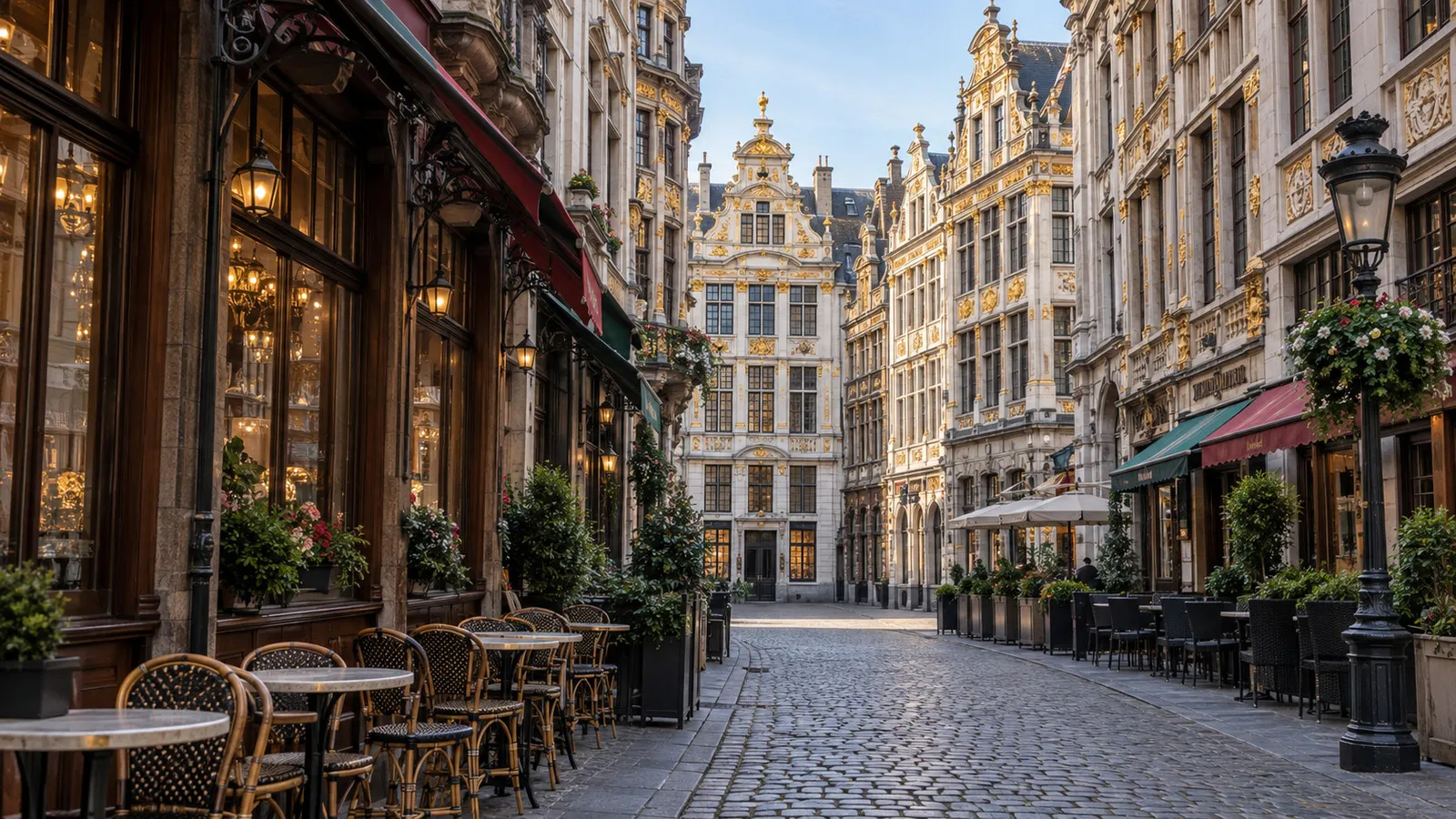
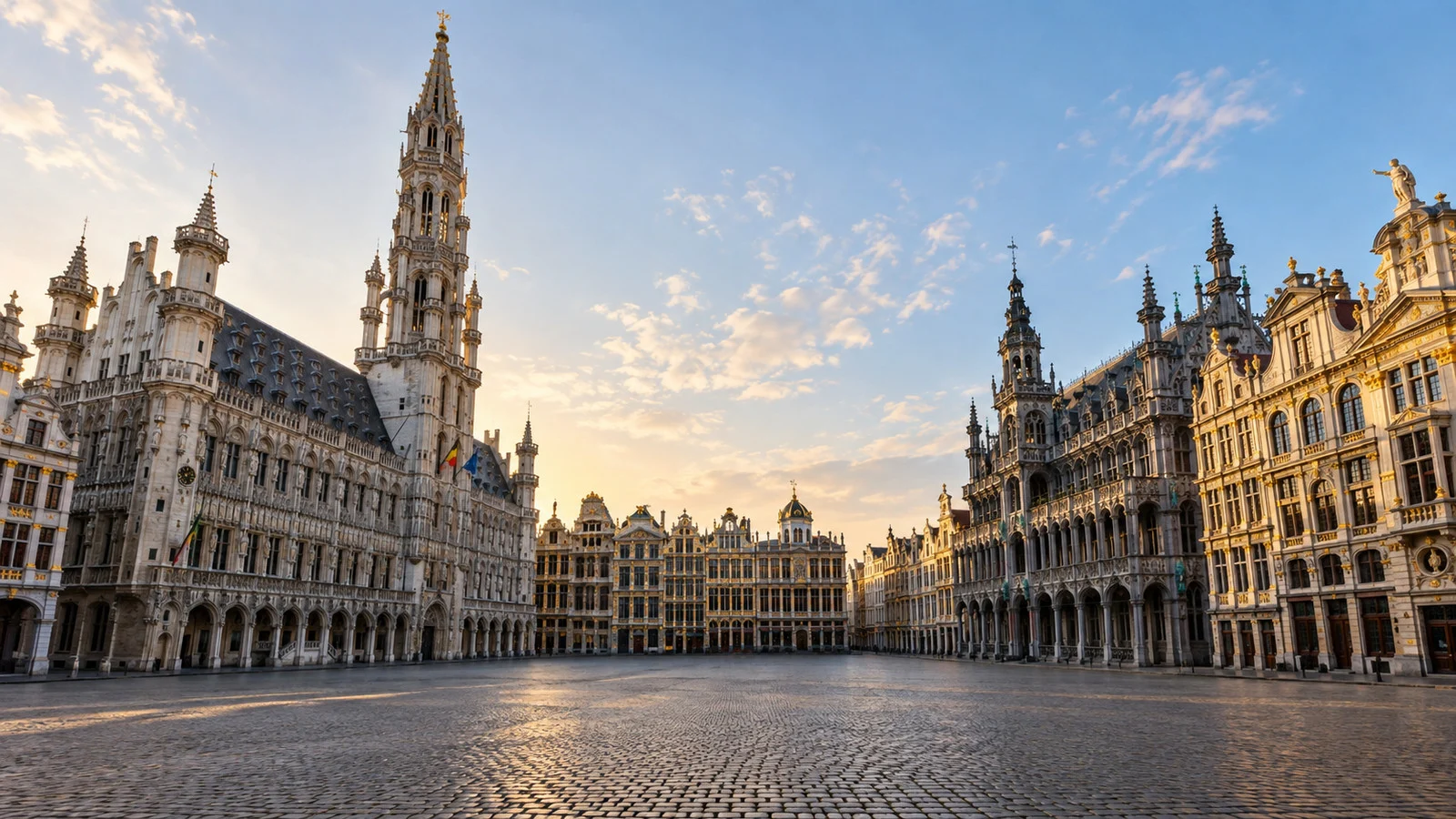
Start at Grand-Place, the ornate square at the heart of the lower town. UNESCO recognizes it for the remarkably coherent blend of civic and guild architecture rebuilt around the surviving Gothic Town Hall.
The square is dramatic at first glance, but give it ten minutes instead of rushing through. Details in the gables, gold ornament, and sculpted facades appear once you stop looking only at the Town Hall spire.
From there, the Galeries Royales Saint-Hubert, Manneken Pis, and the streets around the Bourse are easy additions. The comic-strip murals scattered through central Brussels turn an ordinary walk between sights into a loose treasure hunt.
If you enjoy museums, choose one rather than trying to sample three. The Brussels City Museum on Grand-Place, the Magritte Museum uphill, and the Musical Instruments Museum each pull the day in a different direction.
The lower town is compact, but the route toward the Royal Quarter climbs. Travelers who find slopes tiring can use transit or a taxi between the two areas and keep their energy for the interiors.
Should you add the Atomium?
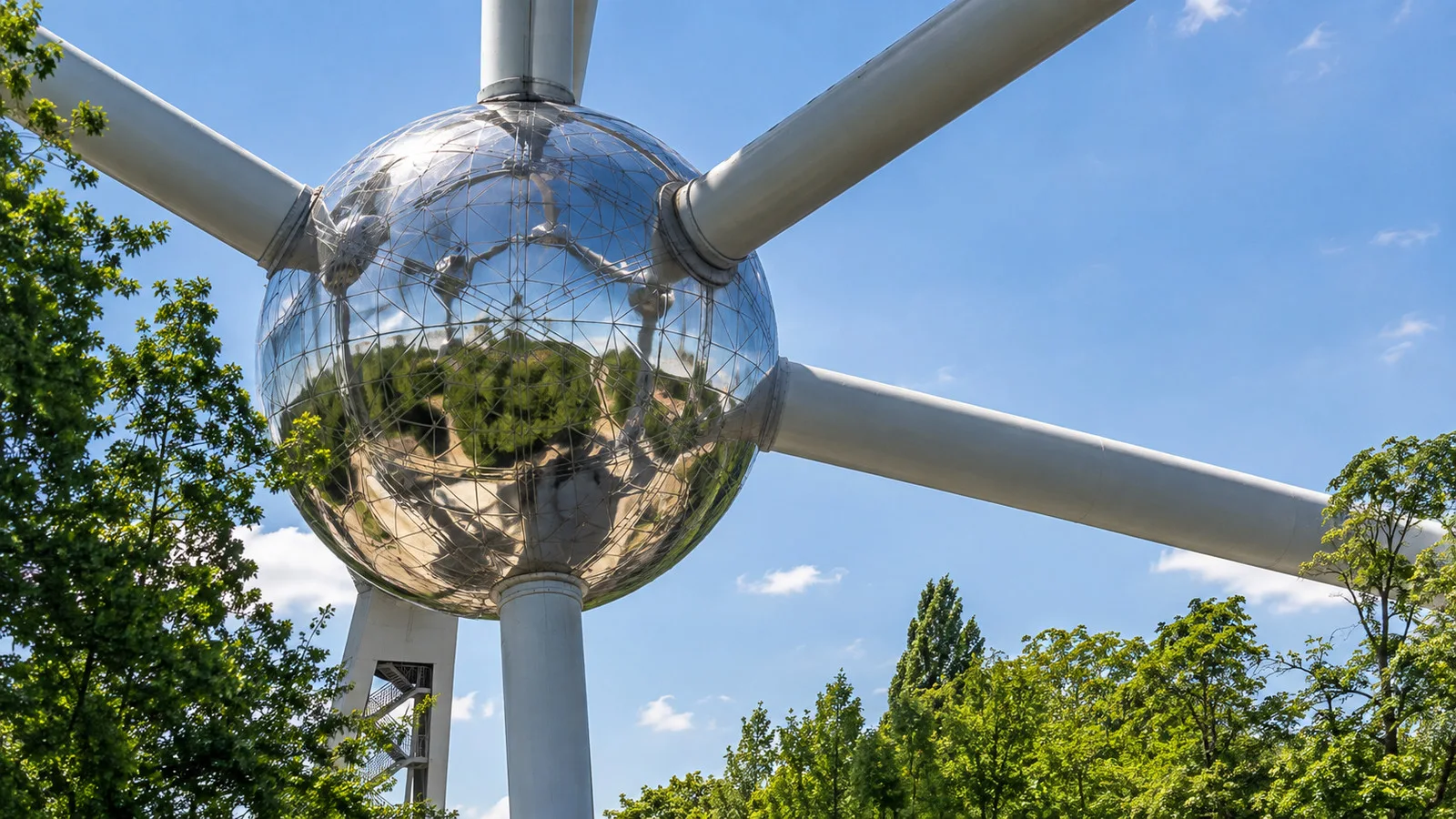
The Atomium is much closer to the northern side of Brussels than Grand-Place, but it is not simply on the same walking route. It works best as a focused visit before or after the center, with transportation planned in advance.
The attraction’s official hours page currently lists daily opening from 10 AM to 6 PM, with last entry at 5:30 PM, though exceptional closures and holiday hours can apply. Online tickets skip the ticket-office line but do not guarantee a shorter entrance queue.
From central Brussels, the Atomium’s official directions use the STIB network and line 6 to Heysel. Its site estimates about 15 minutes on the metro from De Brouckère after the required change at Beekkant, but you still need time for walking, waiting, and the visit itself.
I would add it when the ship stays long enough to give both areas proper attention. On a short call, choosing either the historic center or the Atomium produces a better day than racing through both.
Food, beer, and chocolate without losing the afternoon
Brussels rewards a little appetite, but the most visible storefront is not always the best stop. Walk a block or two away from the square, look for a menu with clear prices, and choose one thing you genuinely want rather than collecting snacks for proof.
A Belgian waffle can mean a light Brussels waffle or a denser Liège-style version with caramelized sugar. Both are valid choices, and neither needs a mountain of toppings to be memorable.
Beer menus can be enormous, so ask for a style rather than a brand if you feel lost. A server can steer you toward a blond ale, lambic, saison, or darker abbey-style beer without turning lunch into homework.
Chocolate is the easiest souvenir to carry back, though warm weather and a heated coach can be rough on delicate pieces. Ask the shop to pack your purchase for travel and keep it out of direct sun.
Allow real time for a seated meal only if your transfer schedule supports it. When the call is tight, a quick counter lunch protects more of your sightseeing time and reduces the chance of a stressful finish.
Ship excursion or independent day?
A ship excursion makes sense when the call is short, the shuttle schedule is restrictive, or you want to combine central Brussels with the Atomium. The transport coordination is the real value here, not just the commentary.
An independent visit works beautifully when your ship provides a flexible transfer into town. Once dropped near the center, you can cover Grand-Place and several nearby sights without needing a guide.
Read the excursion description carefully for words like panoramic, photo stop, and free time. A tour that promises both the Atomium and central Brussels may offer only an exterior look at one of them.
I would not use a Brussels call for a rushed independent trip to Bruges or Antwerp unless the cruise line specifically sells and guarantees that outing. Both destinations add intercity travel to a day that already includes the berth transfer.
If your itinerary also calls at Antwerp or Zeebrugge, save those cities for their own port days. Our Antwerp cruise port guide and Zeebrugge cruise port guide can help you separate the plans.
Accessibility and comfort
Ask the cruise line about the gangway before sailing because slope and width vary with the vessel and water position. Also confirm whether the shuttle has a lift or space for a folded mobility device.
Grand-Place and neighboring streets include cobbles, curb changes, and busy pedestrian areas. A companion, sturdy wheels, and a slower route can make the historic center much more comfortable.
The Atomium’s official accessibility guidance says wheelchair users can reach the Panorama by lift. The exhibition spheres require steep escalators and stairs, including 80 steps up and 167 down in stages, so the full visitor route is not step-free.
Adapted toilets are available behind the Atomium ticket pavilion. Visitors sensitive to dizziness, perception effects, or stroboscopic lighting should also review the attraction’s warnings before booking.
STIB continues to improve accessibility, but do not assume every stop or connection will suit every mobility need. Use the operator’s current accessibility information and allow time for an alternative if a lift is unavailable.
Weather, safety, and practical details
Brussels weather is changeable, and showers are possible in any cruise season. A compact rain layer and shoes that grip wet cobbles are more useful than a heavy umbrella in crowded lanes.
Temperatures can feel cool in the morning even after a pleasant forecast. Wear layers you can carry easily once shops, museums, and transit vehicles warm up.
Central Brussels is busy and generally straightforward for visitors, but pickpocketing is a sensible concern in crowds and on transit. Keep phones and wallets secured, especially around major stations, packed vehicles, and the most photographed corners of the center.
Belgium’s emergency number is 112 for urgent police, fire, or medical help. Save the ship’s contact number and photograph the daily program before leaving, since it should include your berth and all-aboard details.
Cards are widely accepted, and contactless payment reduces the need for cash on a short call. A small amount of euros can still be useful for minor purchases or a shop whose payment system is temporarily down.
Getting back to the ship without drama
Your return target is the ship, not merely the cruise terminal district. Keep the vessel name, berth details, and emergency contact with you because the canal area can look similar from one quay to the next.
If using a fixed shuttle, arrive at its pickup point early enough to find the correct coach. A crowded square, road closure, or unfamiliar exit from a metro station can consume ten minutes surprisingly quickly.
For a taxi, build in a traffic buffer and show the driver the written terminal address or ship information. Do not rely only on saying cruise port, since Brussels has a large working port and several waterside facilities.
Independent travelers should set their personal return deadline earlier than the official all-aboard time. I would rather spend twenty relaxed minutes on the ship than watch the clock from the wrong side of the city.
Quick answers
Do river ships dock beside Grand-Place?
No. The Brussels Cruise Terminal is on the canal in the northern part of the city, so passengers need a transfer to the historic center.
Is Brussels a tender port?
No. River vessels normally berth alongside the passenger quay, though the gangway arrangement depends on the ship and operating conditions.
Can I explore central Brussels independently?
Yes. Once you reach Grand-Place, the lower historic center is compact and well suited to walking, with transit or taxis available for longer moves.
Can I pay for Brussels transit with a bank card?
Yes. STIB advertises contactless validation with a bank card, smartphone, or compatible watch, but each traveler needs an appropriate payment method or ticket.
Is the Atomium wheelchair accessible?
Partly. Its Panorama is accessible by lift, while the other visitor areas use escalators and stairs and are not suitable for wheelchair users.
Can I see Grand-Place and the Atomium in one call?
Often yes, but only with enough port time and a coordinated transportation plan. On a short call, one well-paced area is the better choice.
The last word
Brussels asks for more planning than a river town where the gangway lands beside the old square. Get the transfer right, and the reward is a capital that feels grand, playful, and deliciously unlike the rest of the itinerary.
My ideal first visit keeps Grand-Place at the center and treats everything else as a bonus. Leave the city with enough time to enjoy the ride back instead of turning the last hour into a race.
How this guide was researched: This guide uses current official information from the Port of Brussels, STIB, UNESCO, the Atomium, and Belgian public services. Logistics and time-sensitive details were reviewed in September 2026; always follow your ship’s instructions on the day of arrival and see our Editorial Policy.