Bucharest River Cruise Guide: Giurgiu Transfer and City Plan
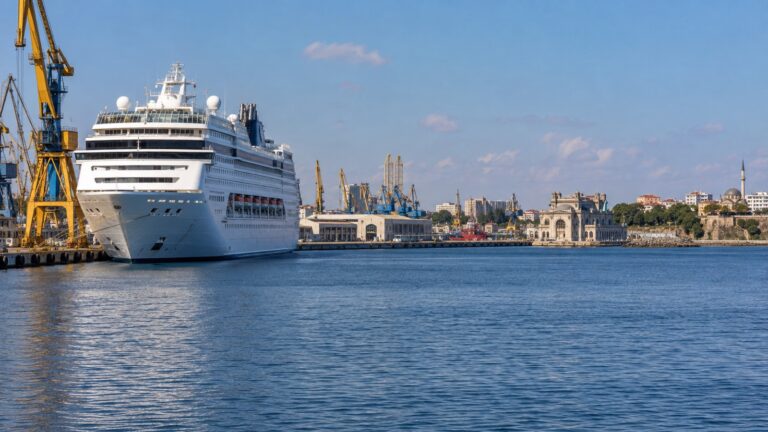
Bucharest appears on Lower Danube itineraries, but river ships do not sail into the Romanian capital. Most cruise passengers reach the city by motorcoach from Giurgiu, a Danube port south of Bucharest.
That transfer is the key to planning the day. Once you understand that this is a city excursion from the ship rather than a walk-off port, Bucharest becomes much easier to enjoy.
My quick take
I like Bucharest most when the schedule leaves room for one major sight and a relaxed look at the center. The city is too big and the Giurgiu transfer too substantial for a heroic checklist.
First-time visitors usually choose the Palace of Parliament, Old Town, or a panoramic tour that samples both from outside. If you have a pre-cruise or post-cruise hotel stay, save the deeper museum visits and long meals for that extra time.
For a same-day port call, the ship’s transportation is genuinely valuable. It removes the hardest part of the day and keeps the return tied to the vessel’s operating schedule.
Quick Facts
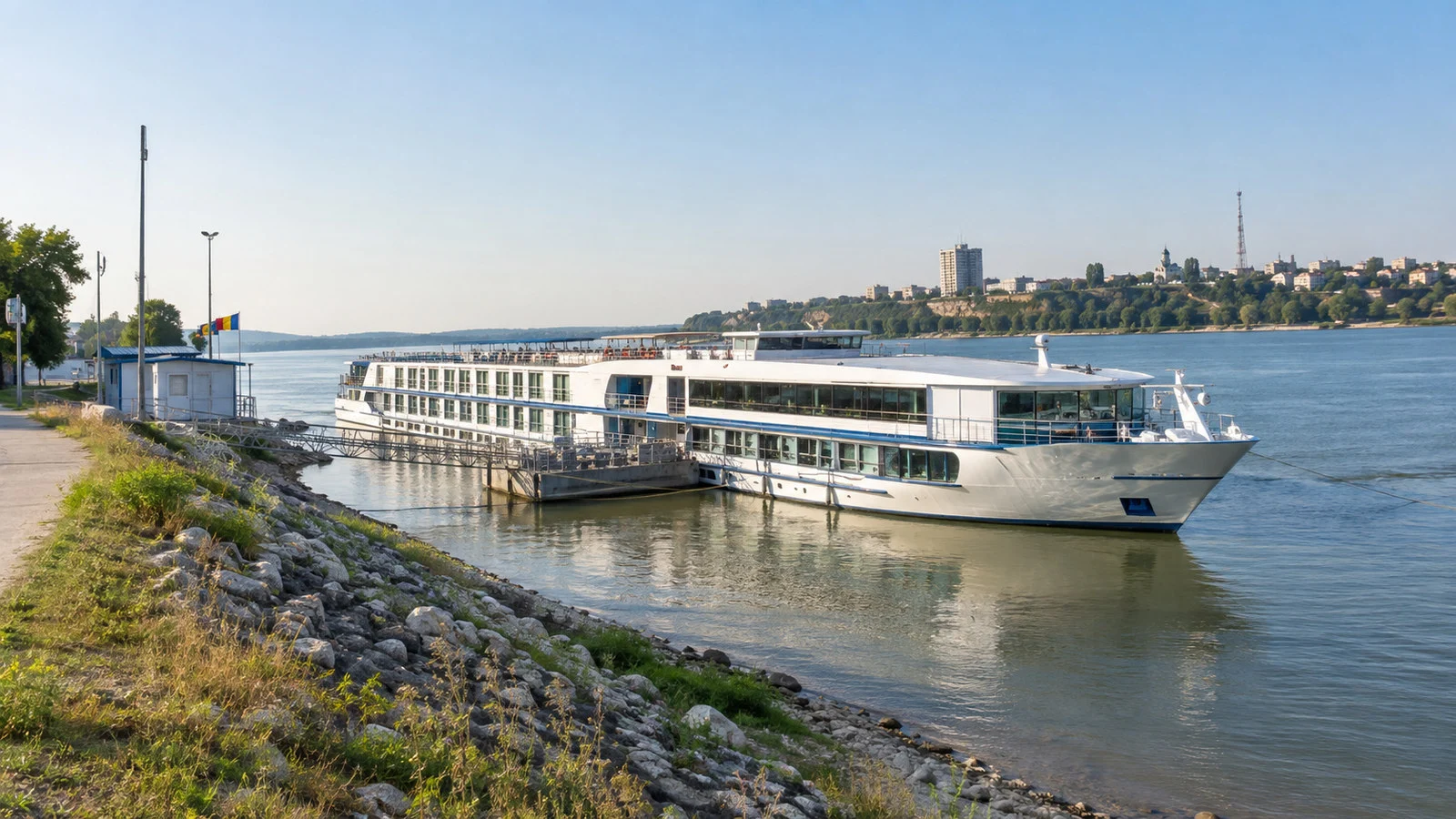
- Actual river port: Most Bucharest cruise calls use Giurgiu on the Danube, not a dock in central Bucharest.
- Transfer: The drive commonly takes about 60 to 90 minutes each way, but traffic, roadwork, berth location, and the cruise line’s route can change it.
- Best first-time choices: Palace of Parliament, Old Town, Revolution Square, the Romanian Athenaeum exterior, or the Village Museum.
- Currency: Romania uses the Romanian leu, abbreviated RON, rather than the euro.
- Cards and cash: Cards are common in Bucharest, though a small amount of lei is useful for minor purchases and payment outages.
- Language: Romanian is the national language, with English widely used in hotels, major attractions, restaurants, and visitor services.
- Time zone: Bucharest uses Eastern European Time and observes seasonal daylight saving time.
- Accessibility: Transfer vehicles, Palace routes, and museum access vary; Old Town has cobbles, curbs, and uneven surfaces.
- Emergency number: Call 112 for urgent police, fire, or medical assistance in Romania.
The real dock is in Giurgiu
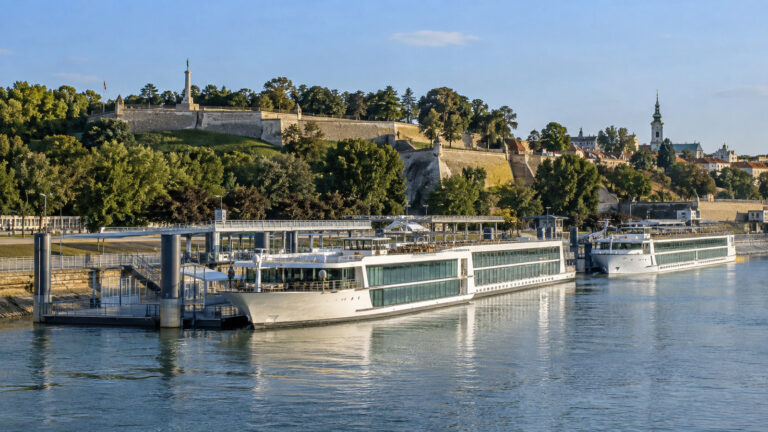
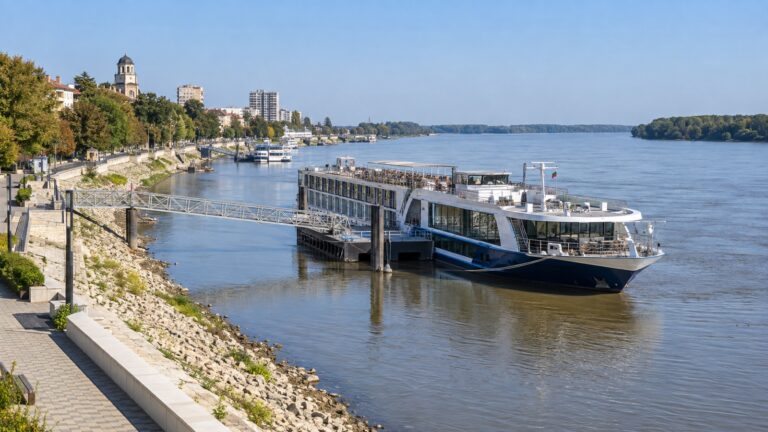
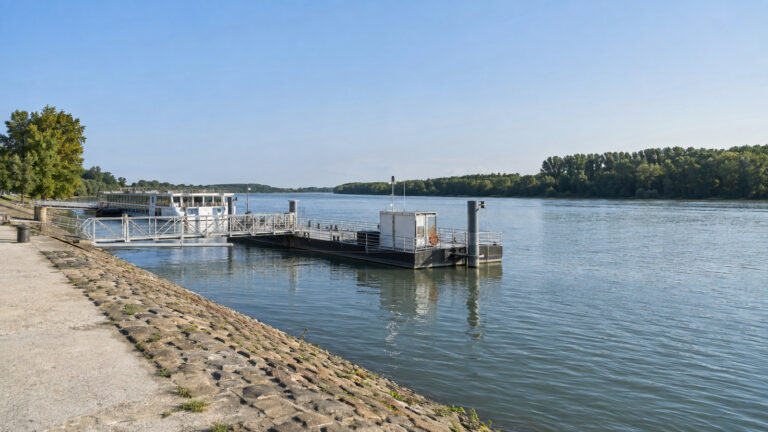
Bucharest sits on the Dâmbovița River, not on the navigable Lower Danube used by river cruise ships. Giurgiu provides the practical river gateway and lies across the Danube from Ruse, Bulgaria.
The exact mooring in Giurgiu can change with traffic, water conditions, and port operations. Follow the ship’s daily instructions rather than assuming a map pin found before the cruise will match the gangway.
Giurgiu is a working river city, not a purpose-built extension of central Bucharest. Facilities at the immediate berth can be limited, and the cruise line usually moves passengers directly between ship and coach.
Our Giurgiu and Oltenița river port guide covers the local port geography in more detail. For the Bucharest day, what matters is the transfer time and the pickup plan.
How long the transfer really takes
Cruise programs often allow roughly 60 to 90 minutes for the drive between Giurgiu and central Bucharest. That is a planning range rather than a promise, because traffic and road conditions can shift during the day.
A ship-operated motorcoach is the simplest option because its departure and return are coordinated with the vessel. Ask whether the city tour begins immediately on arrival or includes a comfort stop that reduces sightseeing time.
A private driver can provide more flexibility, especially for a small group with a specific plan. The driver still needs the correct berth, ship name, return deadline, and enough margin for delays.
Public transportation between Giurgiu and Bucharest is not designed around a cruise call. Combining local transfers, stations, and a fixed all-aboard time creates more risk than most visitors save in money.
Do not count the transfer as dead time if your guide provides useful context. The approach helps explain the contrast between the Danube plain, the capital’s broad boulevards, and the dense central districts.
A realistic Bucharest port-day plan
Begin by deciding whether you want an interior visit or a city overview. Trying to fit a full Palace tour, Old Town, a museum, lunch, and shopping between two long coach rides usually turns a fascinating city into a clock-watching exercise.
A balanced first visit might pair the Palace of Parliament exterior or interior with a short Old Town walk. Another good option is Revolution Square, the Romanian Athenaeum exterior, and a cafe stop before meeting the return coach.
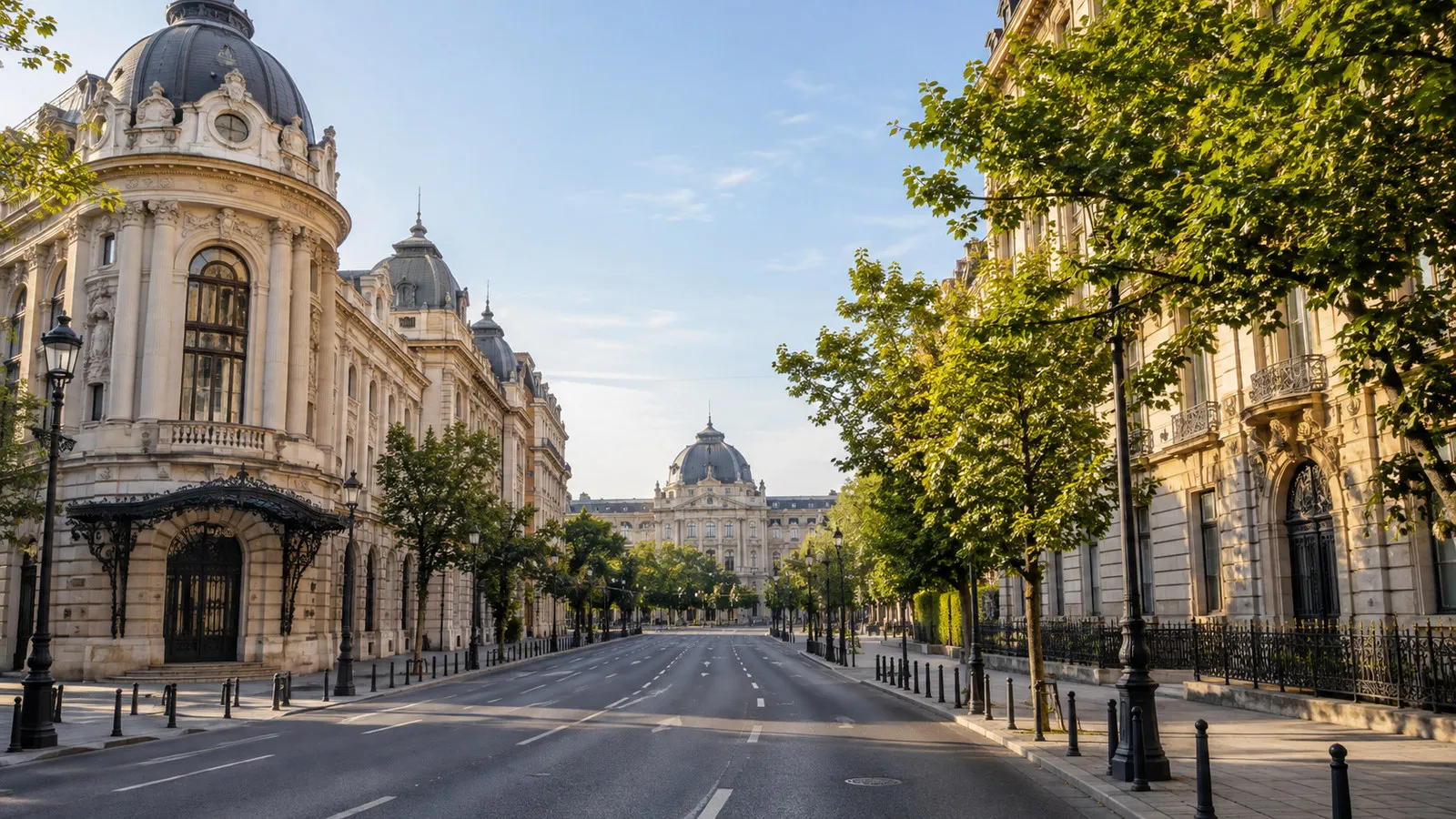
The center mixes Belle Époque buildings, interwar architecture, communist-era interventions, and contemporary restoration. That layered cityscape is the story, not a flaw to hurry past between landmarks.
Keep your meeting point pinned or photographed before wandering. Old Town lanes can feel intuitive until similar facades, cafe terraces, and pedestrian shortcuts make the return route less obvious.
Visiting the Palace of Parliament

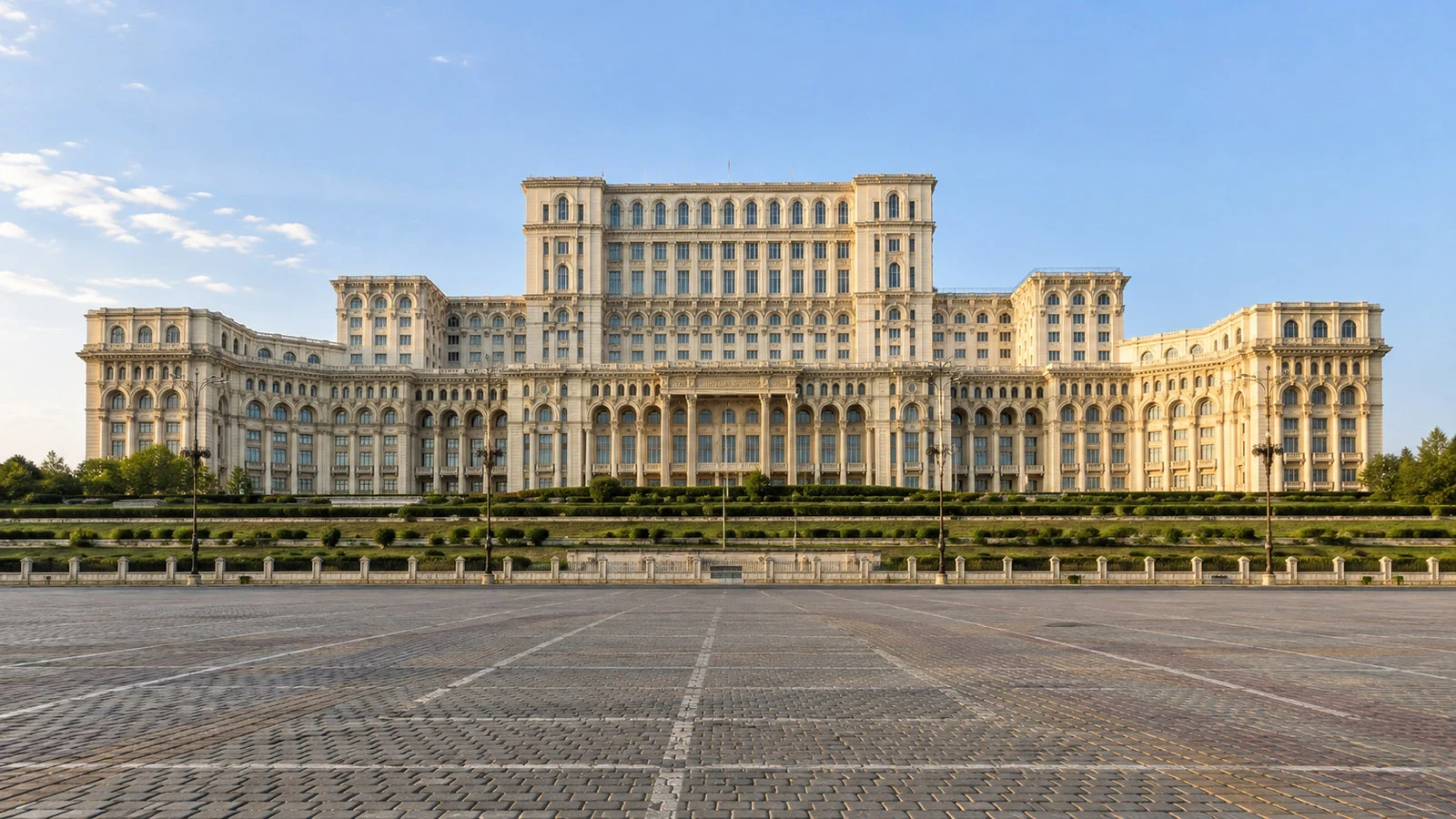
The Palace of Parliament dominates the southern edge of central Bucharest and requires more time than its location on a map suggests. Security, ticket purchase, waiting, and the guided route all sit on top of the transfer from Giurgiu.
The official Palace visitor page currently says the building can be visited daily and that tickets are purchased on site at the Izvor Street entrance. Parliamentary business and special events can affect visitor access, so check the official page close to your call.
Bring the identification required by the current visitor rules and use the exact public entrance named by the Palace. A grand facade does not mean every gate accepts tour visitors.
The Palace is vast, but public tours show only selected rooms and corridors. Choose it because you care about the building’s scale, political history, and controversial construction rather than because a superlative tells you that you must go inside.
If your ship excursion includes the interior, the cruise line handles the timing more safely than an improvised visit. Independent travelers should confirm that the available tour language and start time fit the return drive.
Old Town and the historic center
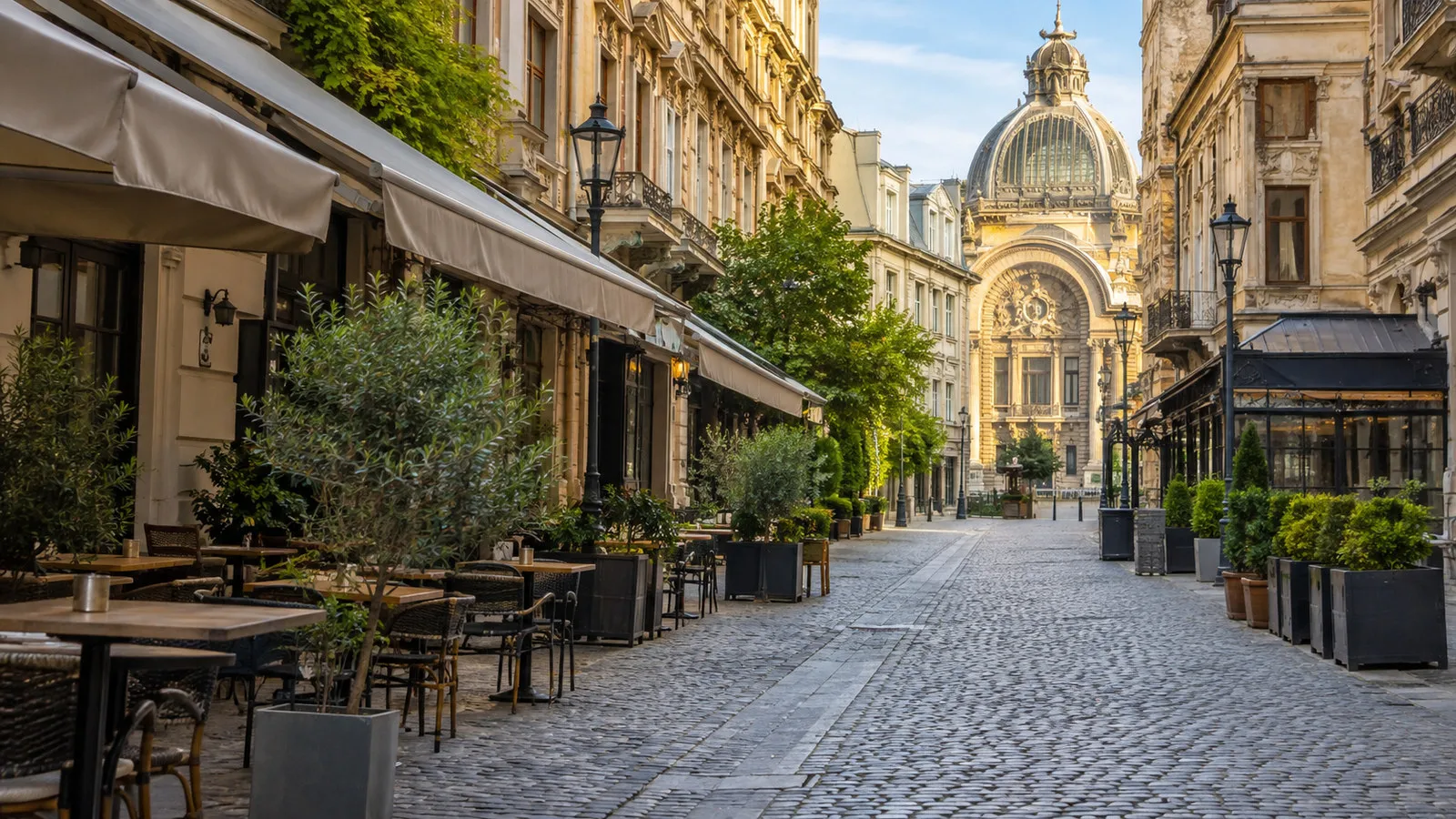
Old Town, often called Lipscani, is the easiest area for independent wandering once your coach reaches central Bucharest. Churches, restored facades, passages, restaurants, and lively terraces sit within a compact street grid.
Stavropoleos Church is a small highlight with a detailed stone facade and peaceful courtyard, though worship and events take priority over sightseeing. Dress and behave respectfully if the church is open.
The area can become crowded, and its pavement ranges from smooth to rough. Wear stable shoes and allow more time if cobbles, curbs, or pedestrian congestion slow you down.
A cafe break here is more pleasant when you step away from the loudest restaurant pitches. Check the menu and service details before sitting, especially if your pickup time is close.
Old Town works best as a flexible hour rather than a tightly timed attraction. You can shorten or extend the walk without losing a prepaid entry if traffic delays your arrival.
Other worthwhile choices
Revolution Square brings Romania’s recent history into focus and pairs naturally with the Romanian Athenaeum exterior. This central area suits travelers who prefer an urban walk to a long indoor tour.
The Dimitrie Gusti National Village Museum displays traditional houses and structures in a green setting beside King Michael I Park. Its spread-out outdoor layout feels completely different from the dense center, though paths and building thresholds require individual accessibility checks.
The National Museum of Art of Romania can fill far more time than a port call allows. Pick a focused collection or temporary exhibition rather than trying to cover the entire museum.
Ceaușescu Mansion offers another angle on the communist period, but it sits away from Old Town and normally requires a scheduled visit. It works better in a private plan or an overnight stay than as a spontaneous addition.
Therme Bucharest and attractions near the airport belong in a longer land stay, not a Giurgiu port excursion. The distances and time commitment do not pair well with a river ship’s same-day departure.
Getting around once you reach Bucharest
Central Bucharest is walkable in sections rather than as one tiny district. Old Town, the Palace, Revolution Square, and northern park areas are close enough on a city map to look simple but far enough apart to consume real time.
The official Metrorex site provides current metro information for travelers. Metro travel can help with longer moves, though a one-day cruise visitor should avoid unnecessary transfers that make the meeting point harder to reach.
Surface transit is extensive but can be affected by traffic and route changes. Use the live journey tools available on the day rather than memorizing a route number from an older article.
Licensed taxis and app-based rides can save time between selected sights. Confirm the destination and payment method before moving, then keep your return meeting point available offline.
The cruise coach may remain the best transportation even after entering the city because it can deliver a panoramic route and a guaranteed pickup. Read the excursion description closely to see how much true walking time it includes.
Ship excursion or independent touring?
I lean toward the ship excursion when Bucharest is a same-day call from Giurgiu. The protected return is more valuable here than in a port where the ship sits ten minutes from the main square.
A private day can be excellent for travelers who want one specific museum, a slower accessible route, or a restaurant reservation. Book a reputable operator that understands river cruise berths and can name a realistic departure time from Bucharest.
Compare tour descriptions for the words interior visit, photo stop, panoramic, and free time. A Palace highlight may mean an exterior view, while an Old Town visit may mean a short guided walk rather than independent exploration.
If the cruise begins or ends in Bucharest, consider adding a hotel night. A land stay turns the city from a rushed excursion into a place where the Palace, museums, parks, and food can each have proper time.
Accessibility and physical demands
Ask the cruise line about the motorcoach before booking because a standard coach may have steep entry steps and no lift. Wheelchair storage does not automatically mean a traveler can board without climbing.
At the Palace, accessible routes and entrance procedures can differ from the standard tour. Contact the official visitor service in advance and tell the cruise line what equipment or assistance you require.
Old Town has cobbles, curb changes, restaurant furniture, and busy pedestrian sections. A smoother parallel street or shorter loop may be more comfortable than following every lane on a group tour.
The Village Museum offers open-air space, but historic houses naturally have steps, narrow thresholds, and uneven approaches. Verify access to the specific areas you hope to see rather than assuming the whole site is step-free.
Heat, long corridors, standing, and limited seating can be as important as stairs. Build in rest stops and choose an itinerary with fewer transitions if stamina is a concern.
Money, language, and practical details
Romania uses the Romanian leu, and the National Bank of Romania publishes the official currency information and exchange rates. Euros may be accepted informally in a few tourist situations, but they are not the everyday local currency.
Cards are common in central Bucharest, especially at established attractions, restaurants, and shops. Keep a modest amount of lei for small purchases, tips, or a terminal that temporarily cannot process your card.
Romanian is the national language, while English is commonly spoken in visitor-facing businesses. A screenshot of the ship name, berth, and pickup point bridges most practical language gaps.
Check prices before accepting a service and use clearly identified transportation. Busy tourist zones reward the same awareness you would use in any European capital.
Weather and safety
Bucharest summers can be hot, sunny, and tiring on exposed boulevards. Spring and fall may be cooler and more comfortable for walking, but a light rain layer remains useful.
Carry water and use shade breaks, especially if your day includes the Palace grounds or a long central walk. Dress respectfully for churches while choosing layers that suit heated or air-conditioned interiors.
The United States travel advisory currently places Romania at Level 1, which means exercise normal precautions. Crowded transit and tourist areas still call for pickpocket precautions, so keep phones, passports, and wallets secured.
Romania’s emergency number is 112 for police, fire, and medical help. Photograph the daily program before leaving the ship so the emergency contact, berth details, and all-aboard time remain available offline.
Returning to Giurgiu on time
Your return deadline should be based on the ship’s time, not the time you hope the drive will take. Bucharest congestion, roadwork, weather, and a slow pickup can all extend the journey.
Ship-organized excursions coordinate the coach with the vessel, but passengers still need to reach the meeting point on schedule. A protected tour does not protect someone who misses the stated departure.
Independent travelers should leave central Bucharest with a generous buffer and keep the driver reachable. Confirm the exact Giurgiu berth before departure rather than trusting a broad cruise port label.
If the ship moves berths while you are away, the cruise line or port agent should provide updated instructions. This is another reason to carry the ship’s contact information and keep your phone charged.
How Bucharest fits the Lower Danube
Bucharest often serves as a gateway or endpoint for Lower Danube itineraries rather than a classic riverside stop. The same journey may include Ruse, the Iron Gates, and other cities covered in our Lower Danube guide.
Giurgiu and Ruse face one another across the river, but a Bucharest excursion heads inland. Do not assume you can casually add both Ruse and Bucharest during one short call unless the itinerary explicitly includes them.
Some operators package Bucharest as a pre-cruise or post-cruise stay with hotel nights and guided touring. That format gives the city far more breathing room than a same-day transfer from the ship.
Quick answers
Do river ships dock in Bucharest?
No. Most Bucharest cruise programs use Giurgiu on the Danube and transfer passengers by road to the capital.
How long is the Giurgiu transfer?
Allow roughly 60 to 90 minutes each way as a practical range. Traffic, roadwork, berth position, and the cruise line’s route can make the drive shorter or longer.
Can I tour Bucharest independently?
Yes, but a prearranged driver is safer than piecing together public transportation from Giurgiu. Protect the return with a generous buffer and the exact berth details.
Can I buy Palace of Parliament tickets online?
The official visitor page currently directs visitors to buy tickets on site. Check it again close to your visit because operating rules can change.
Does Romania use the euro?
No. The national currency is the Romanian leu, abbreviated RON, although cards are widely accepted in central Bucharest.
Is Old Town wheelchair friendly?
Only partly. Cobbles, curbs, thresholds, and crowded pedestrian areas can create barriers, so a shorter planned route is often more comfortable.
Should I add a hotel night?
Yes, if Bucharest is a major reason for choosing the itinerary. An overnight stay gives the Palace, museums, parks, food, and recent history enough time.
The last word
Bucharest is a rewarding Lower Danube gateway, but it is not a walk-off river port. Respect the Giurgiu transfer, choose one or two priorities, and the city feels intriguing instead of rushed.
My favorite plan keeps the transportation simple and the center flexible. Let the ship handle the hardest logistics, then use your city time for the places that genuinely interest you.
How this guide was researched: This guide uses current information from the Romanian Chamber of Deputies, Metrorex, the National Bank of Romania, the United States Department of State, and current river-cruise logistics. Time-sensitive details were reviewed on September 12, 2026; always follow your cruise line’s transfer instructions and see our Editorial Policy.