Lower Danube Cruise Ports: Belgrade, Vidin, Rousse and the Black Sea End
The lower Danube is where Europe’s polished river cruise rhythm begins to loosen. Quays become more industrial, border history moves closer to the surface, shore excursions stretch farther inland, and the river itself takes center stage through the Iron Gates.
This is not the easiest first river cruise, but it can be the most memorable second one. Come for Belgrade, Vidin, Ruse, Vukovar, the gorge, and the feeling that the itinerary is still discovering itself.
My quick take
I would choose the lower Danube after sailing the better known stretch between Passau and Budapest. The upper river teaches you how river cruising works, while the lower river rewards patience with fewer crowds and stranger, deeper stories.
The biggest planning adjustment is road time. A port name may hide a long motorcoach to Bucharest, Veliko Tarnovo, a fortress, or a protected wetland.
The scenic Iron Gates passage is the event I would protect above every optional excursion. Stay on deck, listen for timing announcements, and let lunch wait.
Quick Facts
- Typical route: Budapest to Bucharest, or the reverse, with combinations of Vukovar, Belgrade, Golubac, Donji Milanovac, Vidin, Ruse, Svishtov, and Giurgiu.
- How ships dock: Alongside river quays, sometimes rafted through another vessel, with gangway angles changing as water levels move.
- Most walkable stops: Central Belgrade, Vidin, Ruse, and Vukovar when the ship uses the expected town quay.
- Longest transfer: Bucharest is inland, so the port day normally begins at Giurgiu or Ruse and continues by motorcoach.
- Best scenic day: The Iron Gates gorge between Serbia and Romania.
- Currencies: Euro in Croatia and Bulgaria, Serbian dinar in Serbia, and Romanian leu in Romania.
- Time zones: Croatia and Serbia use Central European time, while Bulgaria and Romania are one hour ahead on Eastern European time.
- Border planning: Croatia, Bulgaria, and Romania are in the Schengen Area, while Serbia is not. Carry the passport named in the booking and follow the cruise line’s border instructions.
- Navigation risk: High or low water, lock traffic, fog, and berth changes can replace a sailing segment with buses or hotels.
- Accessibility: Expect variable gangways, rafting, cobbles, fortress slopes, and motorcoach steps, so ask about each transfer separately.
What cruise lines mean by the lower Danube
The label usually describes the river downstream from Budapest toward Serbia, Bulgaria, Romania, and the Black Sea region. Most itineraries end with a road transfer to Bucharest rather than sailing all the way to the coast.
A common sequence runs through eastern Croatia, Serbia, the Iron Gates, northwestern Bulgaria, and the Bulgaria or Romania border section. Exact calls change with line, season, water level, and the logistics of locks or bridges.
Read the detailed itinerary one day at a time. A headline destination may be where the motorcoach goes, while the ship docks in a smaller town with a completely different walking option.
This matters most for Bucharest and Veliko Tarnovo. Neither sits on the Danube, so both require a substantial road transfer from a river port.
Vukovar: the first hard story
Vukovar often introduces the lower river after Hungary. The town’s Danube quay sits close to the center, making it one of the route’s simpler walk off calls when conditions allow.
The city’s modern history is inseparable from the 1991 siege and destruction. The water tower remains visibly scarred as a memorial, while the rebuilt center shows the long work that followed.
Approach the day with respect rather than seeking dramatic photographs. A local guide can explain memory, loss, rebuilding, and the lives that continued after the images familiar from news archives.
Vukovar also has earlier layers, including baroque architecture and archaeological connections to the Vučedol culture. The Vučedol Culture Museum can make a strong alternative or complement to the war focused tour.
Belgrade: the route’s real city day
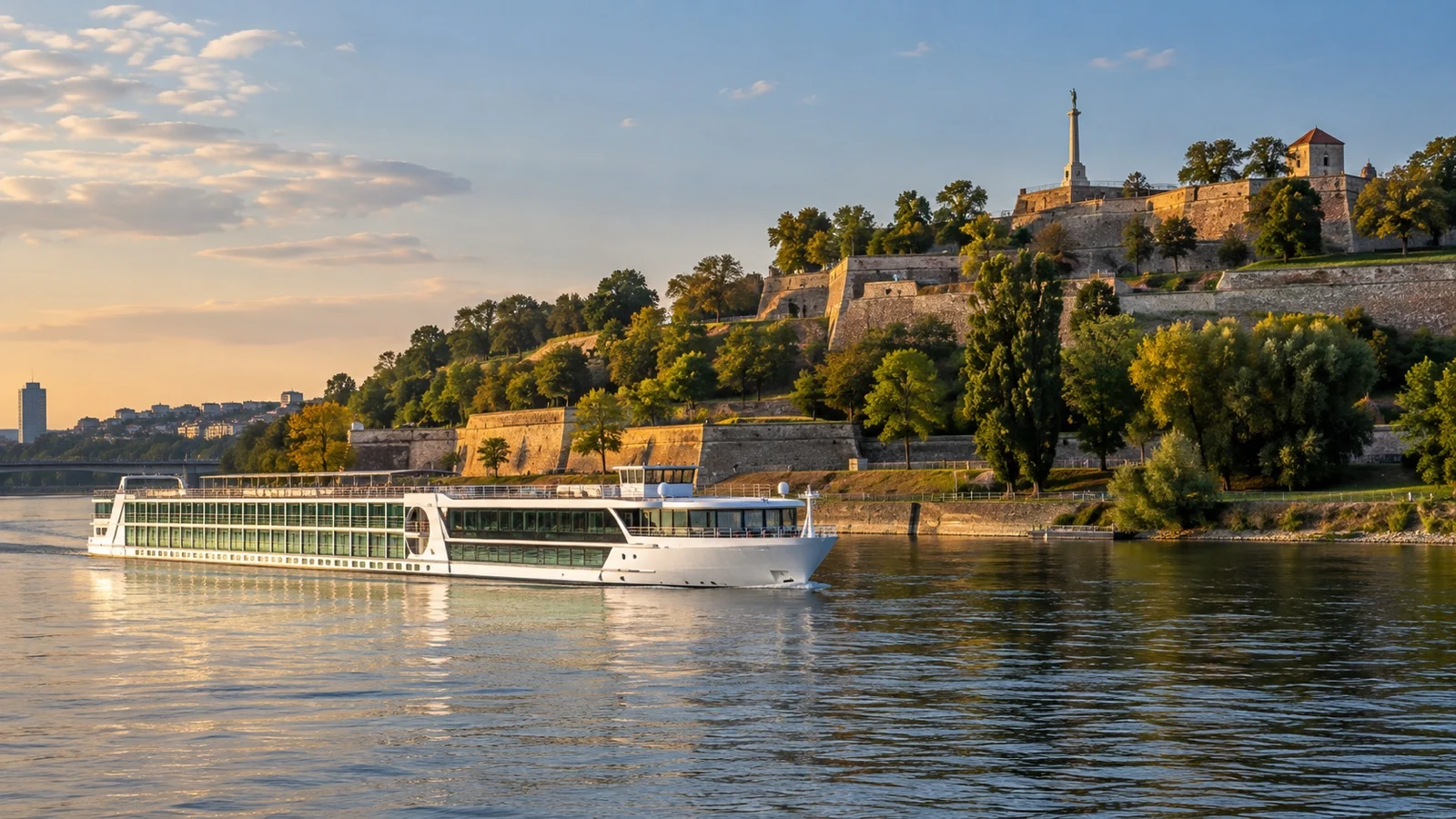
Belgrade is the largest urban stop on most lower Danube cruises and deserves independent time. Ships commonly use riverfront berths near the Sava or Danube, though the exact quay determines how easily you reach the old center.
Kalemegdan Fortress and park rise above the confluence of the Sava and Danube. The grounds are extensive, free to wander in many areas, and filled with gates, walls, viewpoints, monuments, museums, and layers of military history.
The city is energetic, worn at the edges, and more interesting than a windshield tour suggests. Walk from the fortress toward Knez Mihailova, then choose a museum, cafe, or market rather than trying to cross the entire capital.
Traffic can be heavy, so a distant attraction deserves a firm return plan. Central Belgrade is the day I would most readily explore on my own after confirming the berth.
The Iron Gates are the main event
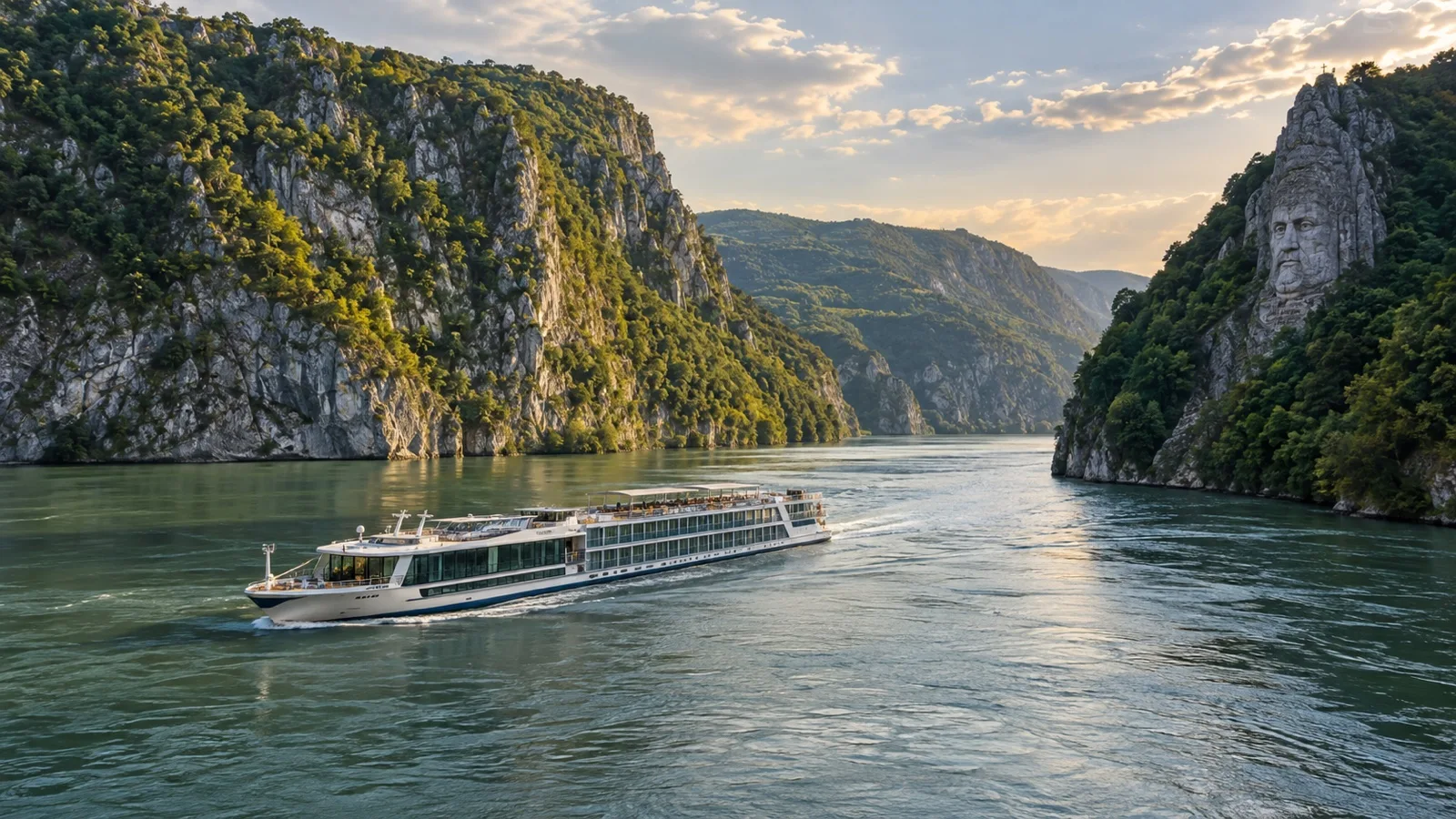
Between Serbia and Romania, the Danube narrows through a series of gorges generally known as the Iron Gates. Forested cliffs, rock faces, archaeological sites, fortresses, dams, and small settlements make this the route’s great scenic sequence.
Serbia’s Djerdap National Park follows about 100 kilometers of the right bank from Golubac Fortress to the area near Karataš. The park describes a narrow protected belt of forested mountains between two and eight kilometers wide.
The river changed dramatically after the hydroelectric system controlled the old rapids and whirlpools. Navigation is safer, yet locks and dam operations can still reshape the daily schedule.
Stay alert for the fortress, narrowing cliffs, carved rock portrait of Decebalus on the Romanian side, monasteries, and changes in the waterway. The most dramatic moments may occur outside the printed lecture time if lock traffic shifts.
Bring a warm layer even in summer because shade, wind, and early departures can make the top deck cool. Binoculars help with details on both banks.
Golubac Fortress
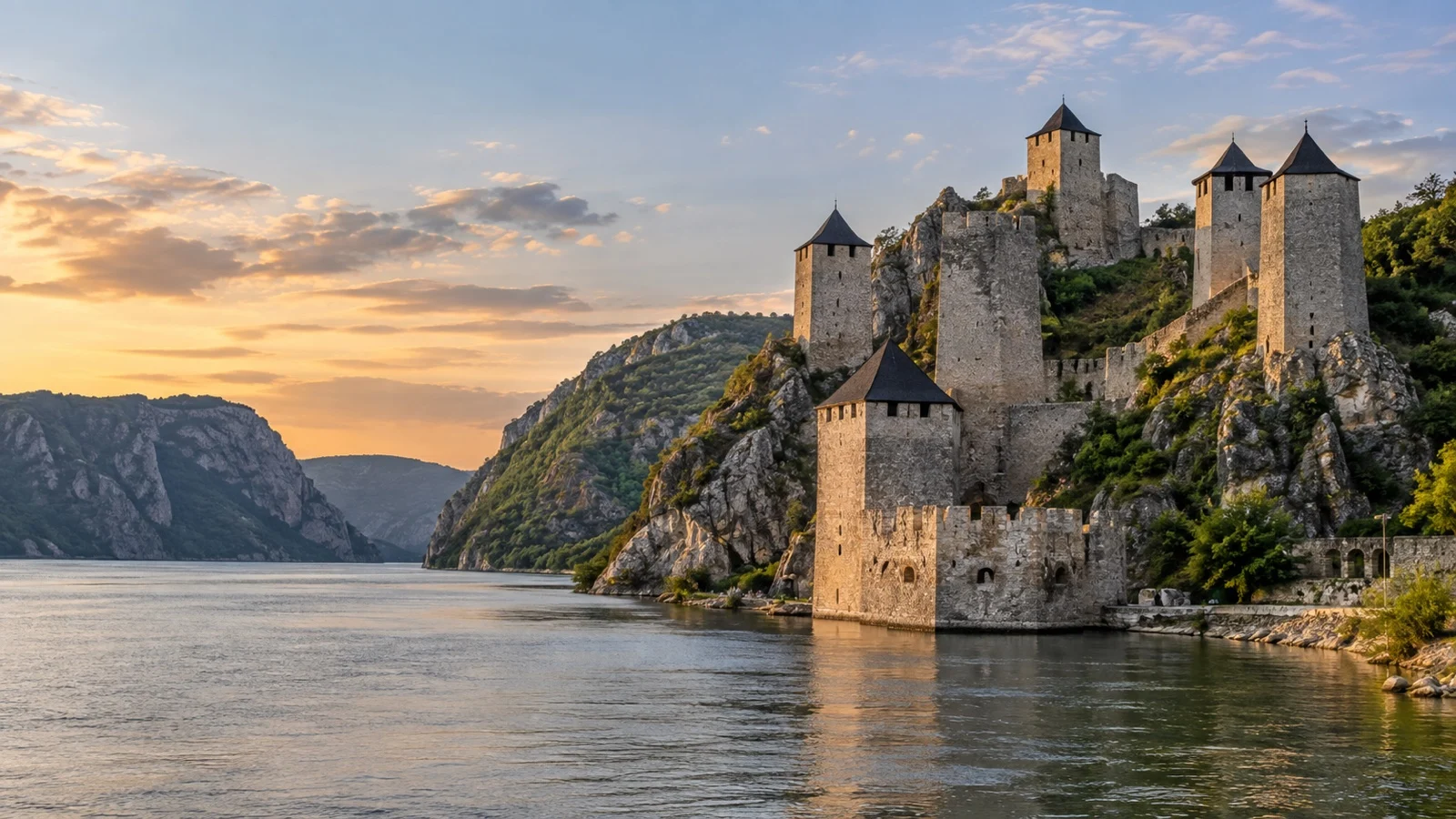
Golubac stands at the upstream entrance to the gorge, its towers pressed between rock and river. Some itineraries visit by bus, some sail past, and others combine the fortress with an embarkation point near the scenic section.
The official Golubac Fortress site divides access into zones with different difficulty and safety rules. The basic green zone covers lower areas, while higher routes can require adulthood, special accompaniment, advance arrangements, and more demanding climbing.
The fortress closes on Monday and uses seasonal hours. Check the live page before assuming every tower is available on an included tour.
Travelers with mobility limits should request the exact zone rather than asking whether the fortress is accessible in general. A lower complex visit and river view can still be satisfying without the exposed upper climbs.
Donji Milanovac and Lepenski Vir
Donji Milanovac is a small Serbian town inside the gorge region and often serves as a quiet landing for archaeological or scenic excursions. It is easy to underestimate because the quay looks modest.
Lepenski Vir preserves evidence of a prehistoric settlement associated with the Danube and its fisheries. A guided visit helps explain why the river’s resources supported communities here long before modern borders.
Confirm whether the excursion returns to the same quay or rejoins the ship farther along. Lower Danube itineraries sometimes use buses to leapfrog a scenic or lock section.
Vidin: the easiest Bulgarian walk
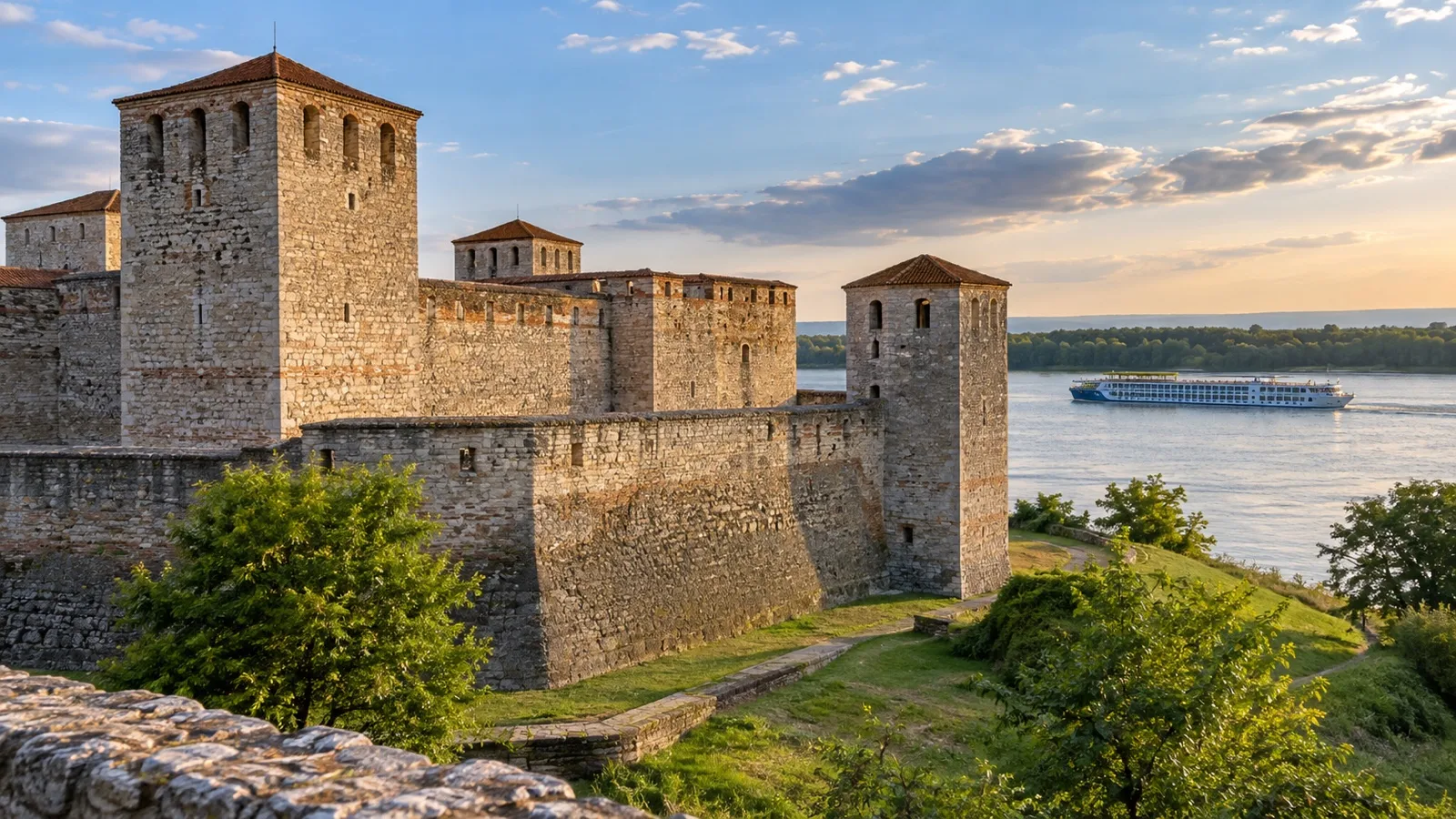
Vidin sits on Bulgaria’s northwest corner and usually provides one of the route’s most straightforward town days. The riverfront promenade and Baba Vida Fortress are close enough for an independent walk when the ship docks centrally.
Baba Vida is the visual anchor, a compact medieval fortress beside the Danube. Its walls, courtyard, towers, and river position explain why this border city mattered.
Surfaces are old and stairs limit access to upper levels. Even without climbing every tower, the exterior and riverside setting are worth the short walk.
Continue along the riverfront toward the center for churches, a mosque, a synagogue restoration, parks, cafes, and the city’s faded architectural mix. Vidin rewards curiosity more than a rigid checklist.
Some lines use Vidin as the starting point for Belogradchik Fortress, farther inland among striking red rock formations. That excursion is scenic but includes road time, slopes, steps, and exposed terrain.
Ruse: architecture or a bus
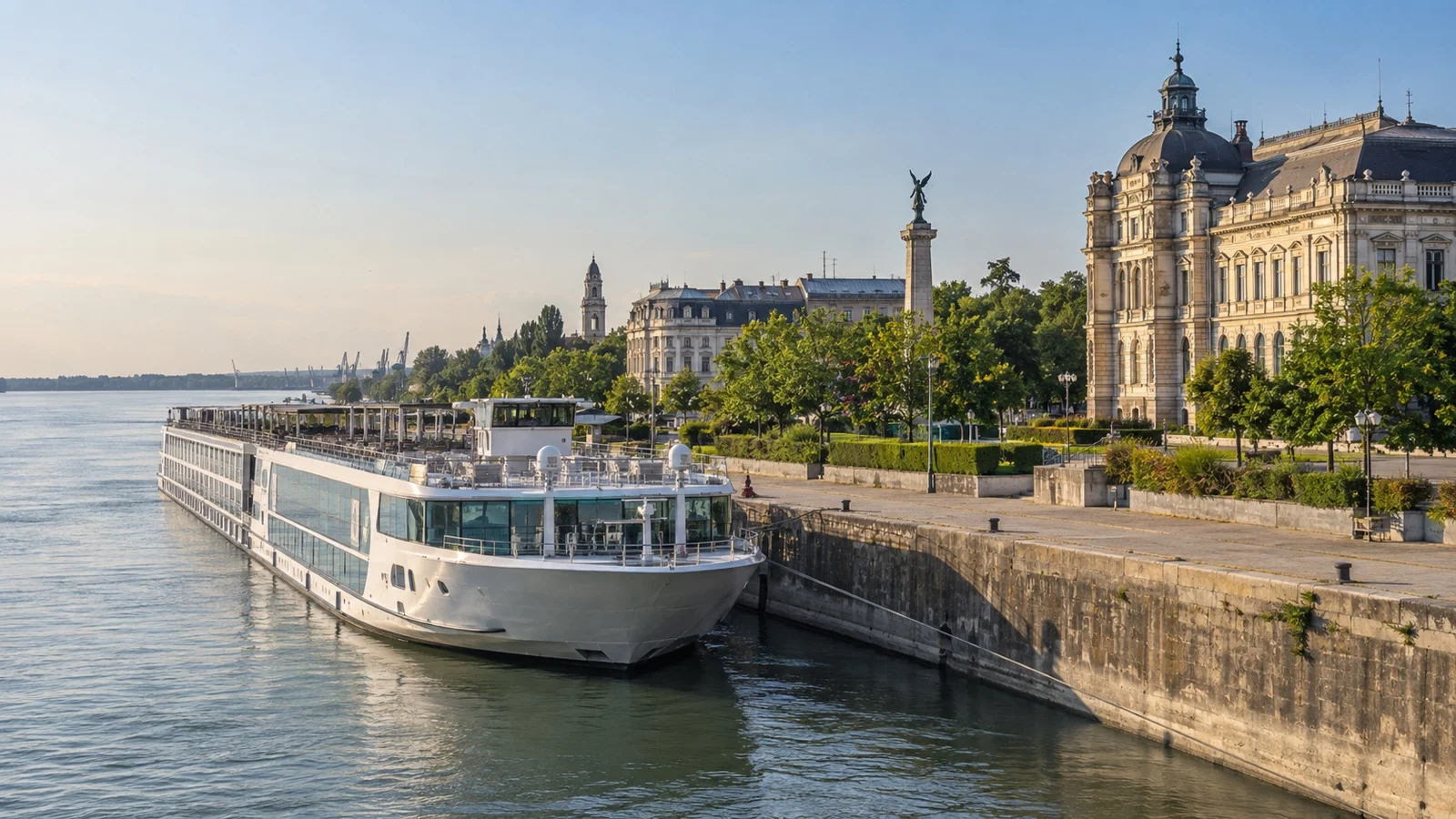
Ruse, often written Rousse on cruise schedules, is one of Bulgaria’s most handsome river cities. The center has broad squares and late nineteenth or early twentieth century facades that feel more Central European than many visitors expect.
If the ship docks near the city, a walking tour can cover the main square, streets, churches, and riverfront without a motorcoach. This is my preferred plan after several long excursion days.
Ruse also serves as a gateway to Veliko Tarnovo, the Rock Hewn Churches of Ivanovo, or even Bucharest. Those options create three very different days, so read the duration before choosing.
Rock Hewn Churches of Ivanovo
The UNESCO listed churches at Ivanovo occupy cliffs in the valley of the Roussenski Lom River. Hermits carved cells and churches here from the twelfth century, and surviving fourteenth century murals reflect the Tarnovo school of painting.
The site is close enough to Ruse to work as a focused half day, but access involves steps and uneven paths. Ask which church is open and how much climbing the tour requires.
Photography and conservation rules deserve careful attention around the frescoes. Small spaces also mean groups may wait before entering.
Veliko Tarnovo
Veliko Tarnovo rises dramatically above the Yantra River around Tsarevets Fortress. It is one of Bulgaria’s most rewarding historic cities and one of the lower Danube’s longer inland drives.
Tsarevets requires a sustained climb over stone surfaces with limited shade. The view and medieval capital story are worth it for active travelers, but the route is not a casual city stroll.
Choose Veliko Tarnovo when it is your one major motorcoach day. If Bucharest matters more, stay in Ruse and save energy for the later transfer.
Bucharest is not a river port
Bucharest sits inland from the Danube, so cruises normally use Giurgiu in Romania or Ruse across the river in Bulgaria as the transport point. The motorcoach journey, traffic, and border procedure determine how much city time remains.
A Ruse departure crosses from Bulgaria into Romania, while Giurgiu begins on the Romanian side. Bulgaria and Romania are both Schengen members, but identity checks or operational delays can still occur and the cruise line controls the group process.
Bucharest itself is too large for a quick highlights loop to feel complete. The Palace of Parliament, old center, boulevards, museums, and Village Museum pull in different directions.
If you take the excursion, decide whether monumental architecture or neighborhood culture matters more. A city tour that tries to include every headline often spends too long in traffic.
Use the ship’s transfer or a reputable private arrangement with a written return. This is not the day to test an improvised cross border taxi plan against sailing time.
Giurgiu, Oltenița, and ship changes
Giurgiu is primarily useful as the closest common river gateway for Bucharest. The quay location, bus staging, and luggage plan matter more than sightseeing when the cruise begins or ends here.
Oltenița may appear on some itineraries as another Romanian transfer point downstream. It can be a practical solution for water levels or routing, but it increases the importance of reading the actual embarkation document.
River lines sometimes move guests by bus, substitute a hotel night, swap ships, or use a different port when water levels disrupt navigation. Keep one full day between final disembarkation and a separately booked long haul flight.
A scheduled berth is never a guarantee. Follow the line’s transfer instructions rather than traveling independently to the city printed most prominently in the brochure.
The Black Sea and Danube Delta end
Most lower Danube cruises stop short of the Black Sea and transfer to Bucharest. Only selected itineraries continue toward Tulcea, the Danube Delta, Constanța, or smaller channels served by excursion boats.
The Danube Delta is a UNESCO World Heritage wetland of channels, reed beds, lakes, forests, dunes, fish, and major bird habitat. It is a protected ecosystem rather than a city attraction.
Tulcea is the practical gateway for many boat excursions, while Sulina lies farther east toward the sea. Vessel size determines which channels and landings an itinerary can use.
Choose an authorized operator and follow wildlife, speed, waste, and landing rules. A smaller boat may provide better bird viewing, but it can also mean exposed seats, spray, narrow steps, and limited restrooms.
Constanța is a Black Sea port with its own history, waterfront, museums, and commercial harbor. A photo of Constanța on an itinerary does not prove the river ship itself will sail there, so read the transport details.
Currencies after Bulgaria’s 2026 change
Croatia and Bulgaria use the euro, with Bulgaria adopting it on January 1, 2026. Older guidebooks that tell visitors to obtain Bulgarian lev are now out of date.
Serbia uses the dinar and Romania uses the leu. Cards work widely in cities, but small cash remains useful at markets, rural stops, toilets, and simple cafes.
Withdraw or exchange modest amounts because dinars and lei may be inconvenient after leaving the country. Spend remaining coins on ordinary purchases rather than accepting a poor last minute exchange.
Always select the local currency when a card terminal offers conversion. Your own bank’s exchange rate is usually clearer than dynamic currency conversion at the point of sale.
Borders and passport reality
Croatia, Bulgaria, and Romania belong to the Schengen Area, while Serbia does not. A lower Danube cruise therefore crosses an external Schengen border even if passengers remain with the ship.
Carry the passport named in your cruise booking and confirm any visa requirements for every nationality and country. The ship may collect passports, process them in groups, or request that passengers present themselves.
Do not assume that no visible roadside booth means no border formalities. River, road, and hotel movements may follow different procedures.
Time zone changes also occur around Serbia, Bulgaria, and Romania. Use the ship’s clock and daily program rather than relying on a phone that may connect to a tower across the river.
Water levels, locks, and itinerary changes
The lower Danube is a managed international waterway, yet extreme high or low water can still disrupt navigation. Draft, bridge clearances, berth depth, and lock queues all influence the response.
A line may adjust sailing time, move passengers by coach, change the quay, shorten an excursion, or transfer between sister ships. Those solutions keep the vacation moving but can create longer road days.
Travel insurance should cover the parts you book independently, not only the cruise fare. Flexible hotels and flights reduce the cost of a late itinerary change.
Ask the cruise line what happened on recent sailings, but understand that last week’s solution may not fit today’s river. Water changes faster than an FAQ page.
How I would choose excursions
Choose one long inland day and let the others remain local. Bucharest and Veliko Tarnovo are both worth seeing, but taking every motorcoach can make the river itself disappear.
In Vukovar, I would take a guided history tour because context matters. In Belgrade, Vidin, and Ruse, I would walk independently after confirming the quay and security route.
At the Iron Gates, I would avoid any optional activity that competes with scenic sailing. At the Delta, I would prioritize the smallest practical wildlife boat whose access and safety arrangements suit me.
Golubac and Ivanovo both require current opening and access checks. A ship excursion handles the timing, while an independent visitor needs reservations and a conservative return.
Accessibility on the lower Danube
This route can be challenging for travelers with limited mobility because no single accessibility answer covers ship, gangway, quay, bus, and fortress. Ask about every link in the chain.
River levels change gangway steepness, and rafting can require walking through another ship with thresholds or stairs. A central berth one day may be replaced by an industrial quay the next.
Motorcoaches often have several high steps and limited mobility device storage. Request the vehicle details in writing, especially for Bucharest and Veliko Tarnovo.
Historic sites add cobbles, broken paving, slopes, towers, and narrow entrances. Golubac’s zone system, Tsarevets hill, Baba Vida stairs, and Ivanovo paths create different limits.
A scenic day aboard can be a strong alternative rather than a lost day. The Iron Gates views come to the ship and may be the itinerary’s most accessible major experience.
Weather and what to pack
The lower Danube has hot continental summers, cold winters, and warm shoulder seasons. July and August can make exposed fortress climbs punishing.
May, June, and September usually provide a better balance of daylight and manageable temperatures, though thunderstorms can arrive quickly. Gorge mornings can feel cool before the sun reaches the river.
Pack breathable clothing, a sun hat, high protection sunscreen, a light waterproof layer, and shoes that grip stone. A small day bag needs room for water and passport documents.
Insect protection matters near wetlands and during Delta excursions. Long sleeves can be more comfortable than repeated repellent in still evening air.
A realistic rhythm for the cruise
Use Vukovar for guided context, Belgrade for an urban walk, and the Iron Gates for a full scenic day. That creates variety before Bulgaria’s fortress and motorcoach choices begin.
Walk Vidin and Ruse when the berth allows, then spend your one long excursion on Bucharest or Veliko Tarnovo. If the itinerary reaches the Delta, leave room for an early small boat outing.
Do not schedule private activities against lock times you found online. The ship’s program will reflect the actual traffic and revised passage window.
Keep a paper or offline copy of each day’s berth, emergency number, currency, and clock time. Four countries can turn one phone screen into an unreliable travel agent.
Common mistakes to avoid
The first mistake is assuming every port name means a city center berth. Read the coach description and map before judging the day.
The second is booking every included motorcoach excursion because it is included. Walkable cities deserve time outside a bus.
The third is sleeping through the Iron Gates passage. Ask for the latest timing and be ready for an early announcement.
The fourth is carrying outdated Bulgarian lev advice into 2026. Bulgaria now uses the euro.
The fifth is treating a fixed itinerary as more powerful than river level or lock traffic. Keep independent bookings flexible and arrival plans generous.
Quick answers
Which ports are on a lower Danube cruise?
Common calls include Vukovar, Belgrade, Golubac or Donji Milanovac, Vidin, Ruse or Svishtov, and Giurgiu, with exact stops varying by line and river conditions.
Does the ship dock in Bucharest?
No, Bucharest is inland, so passengers travel by motorcoach from a Danube port such as Giurgiu or Ruse.
What is the best part of the route?
The Iron Gates scenic passage is the signature experience, with gorges, cliffs, fortresses, dams, and views across Serbia and Romania.
What currency does Bulgaria use?
Bulgaria adopted the euro on January 1, 2026, while Serbia continues to use the dinar and Romania the leu.
Do lower Danube cruises reach the Black Sea?
Some continue toward the Delta or coast, but many finish at a river port and transfer guests to Bucharest by road.
The last word
The lower Danube asks more of a traveler than the river upstream. It trades elegant walk off cities for borders, buses, working quays, fortresses, and one extraordinary gorge.
Accept that rhythm and the itinerary becomes richer. Belgrade feels alive, Vidin and Ruse feel personal, Vukovar feels necessary, and the Iron Gates makes every early morning worthwhile.
Choose your long excursion carefully, protect the scenic day, and leave room for the river to change the schedule. This is not the polished Danube, and that is precisely its appeal.
How this guide was researched: This guide was desk-researched on September 12, 2026 using Djerdap National Park, Golubac Fortress, UNESCO World Heritage Centre, official European currency and border information, national tourism sources, and current river cruise operating guidance. It does not claim a personal sailing, berth inspection, excursion, or river passage.
Confirm the live berth, river level, border process, excursion access, accessibility, and cancellation terms before travel, and see our Editorial Policy.