What Cancels a Cruise Port Call: Wind, Swell, Pilots, Tenders, and Gangways
A port call can disappear on a morning that looks lovely from the balcony. Blue sky is comforting, but it does not tell you whether the approach, pilot transfer, berth, tender platform, moorings, or gangway can be used safely.
My quick take
There is no universal wind speed or wave height that cancels a cruise port. The decision depends on the ship, maneuver, berth or anchorage, wind and wave direction, current, visibility, equipment, and what conditions are expected when the ship must leave.
Use a marine forecast to understand the risk, not to predict the captain’s call from your phone. The useful traveler move is to identify tender calls, book flexible independent plans, and keep a good Plan B onboard.
The quick facts
- No global cutoff exists: Every port, berth, ship, maneuver, and weather direction creates a different operating picture.
- Several people can stop the call: A port authority can restrict or close the port, a pilot can decline an unsafe movement, and the ship’s master can decide not to proceed.
- Pilot transfer matters: A safe approach means little if the pilot cannot board or disembark safely.
- Wave height is not enough: Period, direction, local wind waves, swell, current, and harbor exposure all matter.
- A docked call can still fail: Berthing, mooring loads, surge, and safe gangway access may become the limiting factors.
- Compensation is not automatic: Cruise fare, port charges, excursions, independent bookings, and insurance follow different terms.
What can actually stop a port call
- The port is restricted or closed. Weather, damaged infrastructure, security, or another official restriction can remove access entirely.
- The approach is not safe. Wind, current, visibility, channel depth, traffic, tug availability, or equipment can make the arrival or departure maneuver unacceptable.
- The pilot movement cannot happen. Local pilotage requirements and an unsafe transfer can prevent the ship from entering or leaving.
- The berth cannot be used safely. Crosswind, current, surge, mooring loads, berth exposure, or an unavailable terminal can stop the call.
- Tendering cannot be maintained. Relative motion between the ship, tender, and platform can make passenger transfer unsafe.
- Safe access alongside cannot be maintained. Ship movement, tide, equipment limits, or terminal conditions can force the gangway to close.
- The remaining port day is no longer workable. A long delay can erase the safe or useful time available before the ship must continue its itinerary.
The result may be a late arrival, early departure, changed berth, tender suspension, shortened visit, substitute port, or full cancellation. “Canceled by wind” is often shorthand for a much more specific operational problem.
Who makes the decision
There is no simple three-person sequence that works in every port. Port authorities, coast guards or harbor masters, pilots, terminal operators, tug providers, the cruise line, and the ship’s master may each control a different piece.
A port authority can impose restrictions or close its waters and facilities. A pilot organization can limit or refuse a movement, and the master can decide that proceeding is unsafe even when the port remains technically open.
The International Maritime Organization explains that pilots supply local knowledge and communication with shore and tugs. It also notes that boarding a ship is a familiar pilotage problem, especially in bad weather or with a very large vessel.
A pilot delay can turn into a canceled call without the entire harbor closing. Fog can produce the same frustrating domino effect, which my guide to fog delays in cruise ports explains.
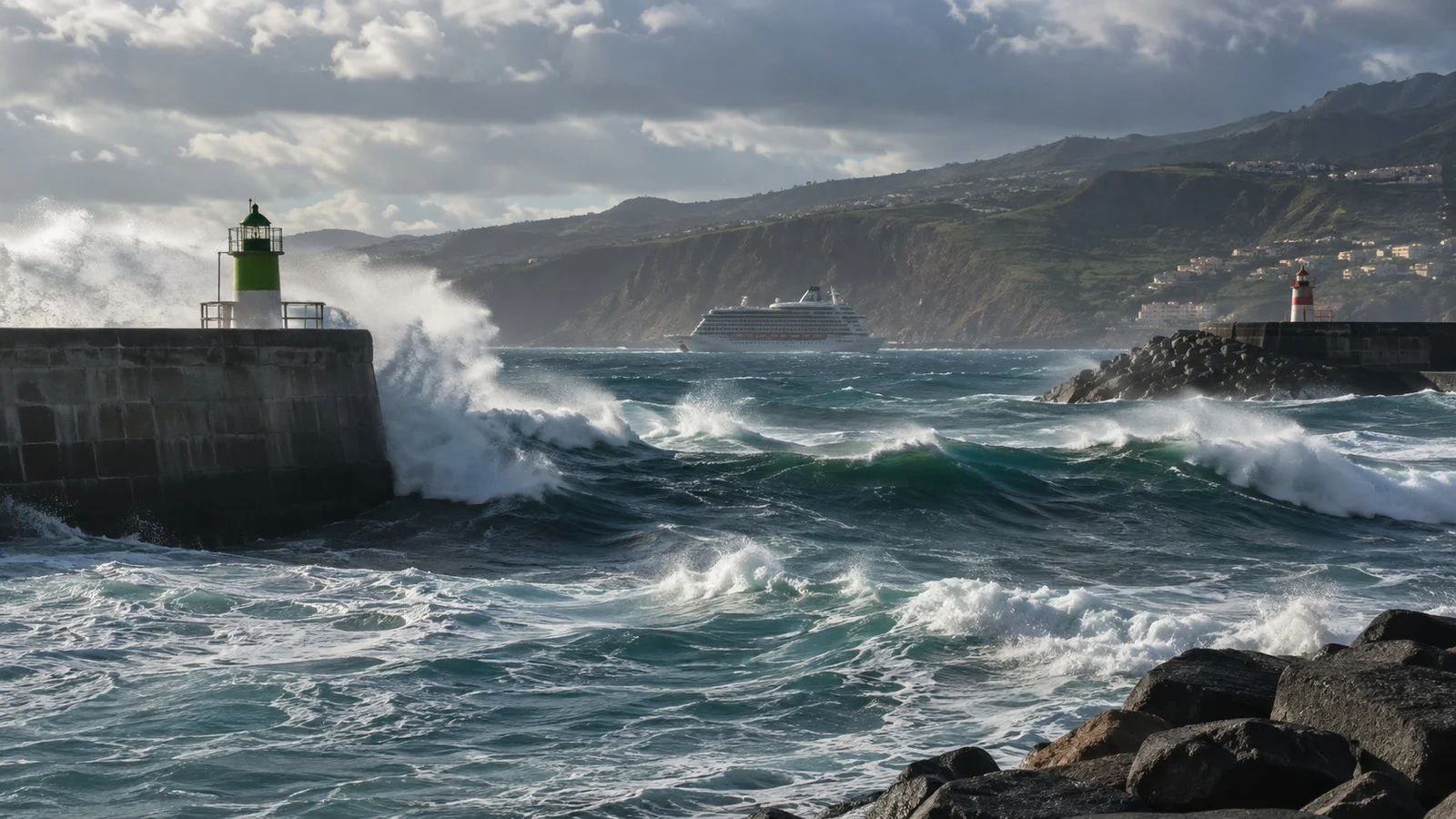
Wind limits are local, and Galveston proves it
Published thresholds do exist, but they are not portable from one berth to another. They may refer to true or apparent wind, sustained wind or gusts, direction, current, vessel size, tug support, or one exact maneuver.
The Galveston-Texas City Pilots’ current guidance says ships entering or leaving Galveston slips require winds of 20 knots or less and a current no greater than 0.5 knot. The same page lists a 25-knot true-wind maximum for mooring and sailing at the Galveston Terminal.
Those numbers describe particular local operations, not a rule for every cruise terminal in Galveston and certainly not the world. The pilots also state that an individual pilot is not obligated to move a vessel when that pilot considers it unsafe.
Wind direction matters because a crosswind can push a high-sided ship sideways during a tight maneuver. The forecast at arrival is only half the problem because the ship must be able to leave safely later.
Wave height, period, and direction belong together
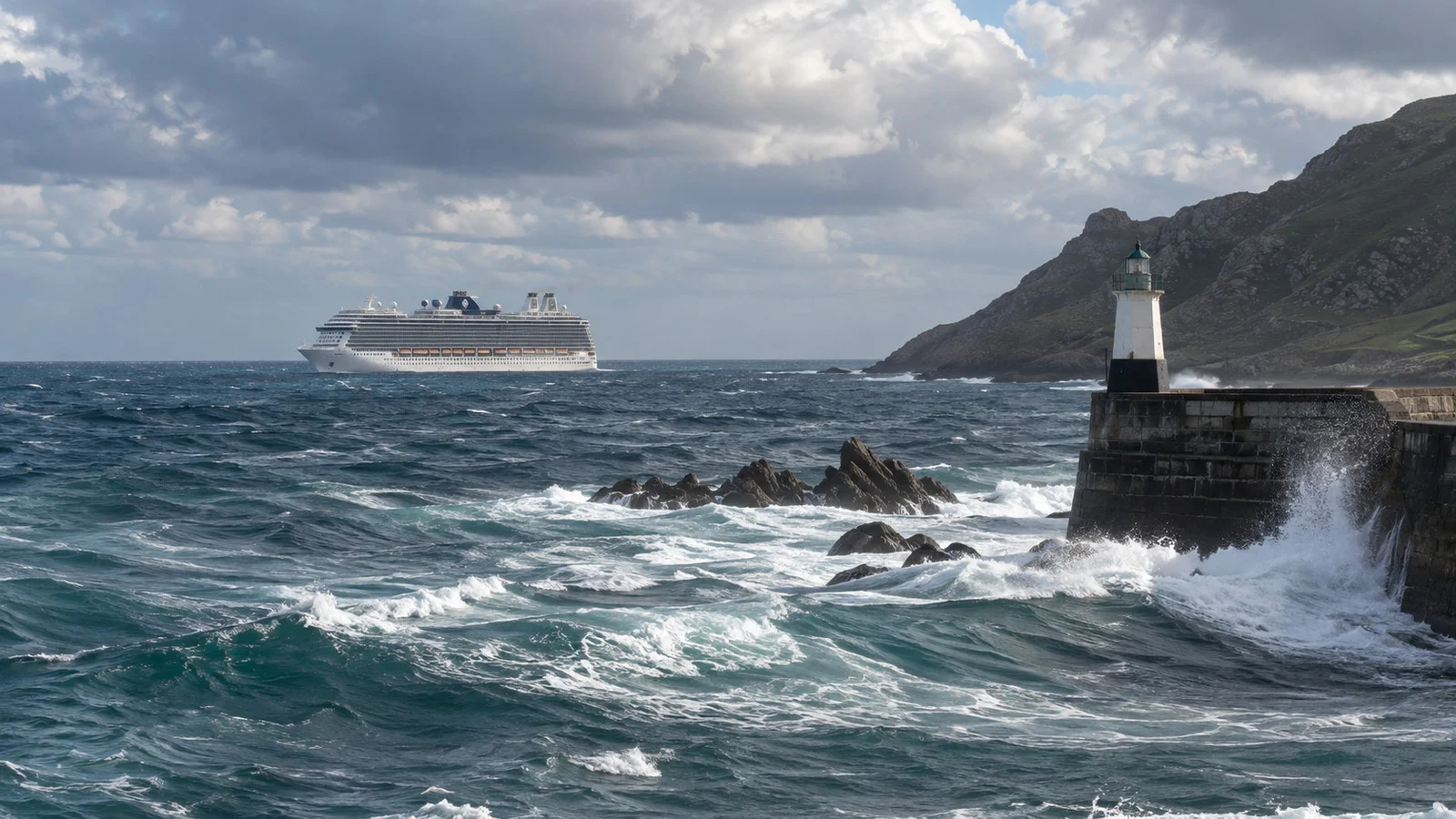
A report of 6-foot seas is incomplete without the period and direction. The same height can describe short local wind waves or longer swell that has traveled away from its generating weather.
NOAA’s marine navigation guidance says wave height, period, and direction are all important to mariners. It defines significant wave height as the average of the highest one-third of waves and notes that steepness uses both significant height and dominant period.
The National Weather Service defines swell as wind-generated waves that have traveled out of their generating area. Swell typically has smoother, more regular crests and a longer period than locally generated wind waves.
Longer period does not automatically mean cancellation, and a tidy-looking sea does not automatically mean safety. The harbor’s shape, water depth, exposure, swell direction, ship motion, and transfer method determine what those numbers mean locally.
Use my guide to reading a marine forecast before a cruise to decode the data. Never turn one buoy observation into a promise that your call will operate.
Pilot transfer can be the hidden gate
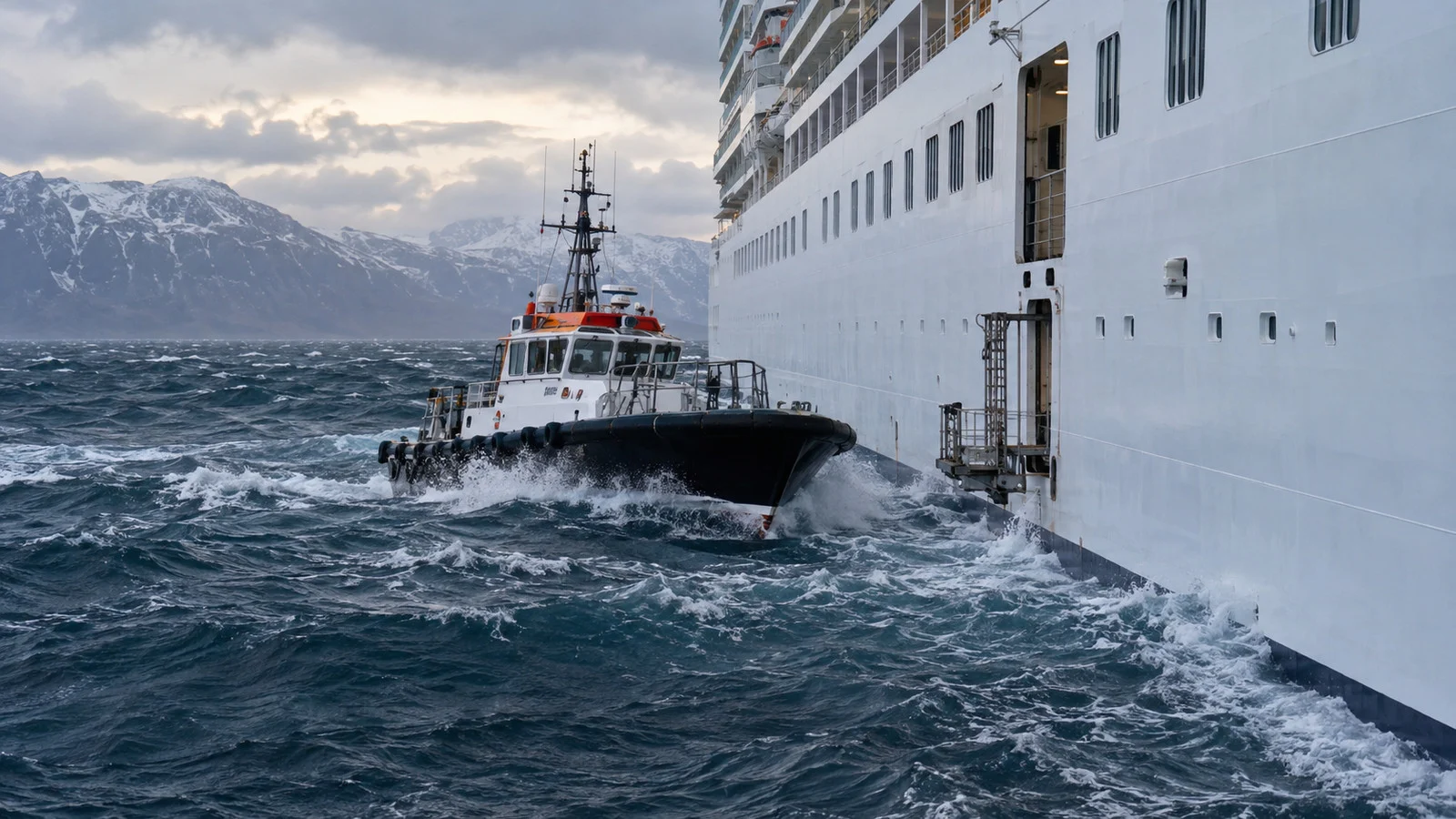
Many ships use a local pilot for the harbor approach, but legal requirements vary by jurisdiction and vessel. The ship may be able to ride comfortably offshore while the small-boat transfer needed to put the pilot aboard is unsafe.
The IMO says pilot-transfer arrangements are governed by SOLAS regulation V/23, with revised requirements expected to enter into force on January 1, 2028. That equipment standard does not create a universal weather limit for the transfer.
A pilot service may pause, resume, or limit movements rather than announce that the whole port is closed. That is one reason the ship may wait offshore while smaller local craft still appear to be moving.
Why tender calls are more sensitive
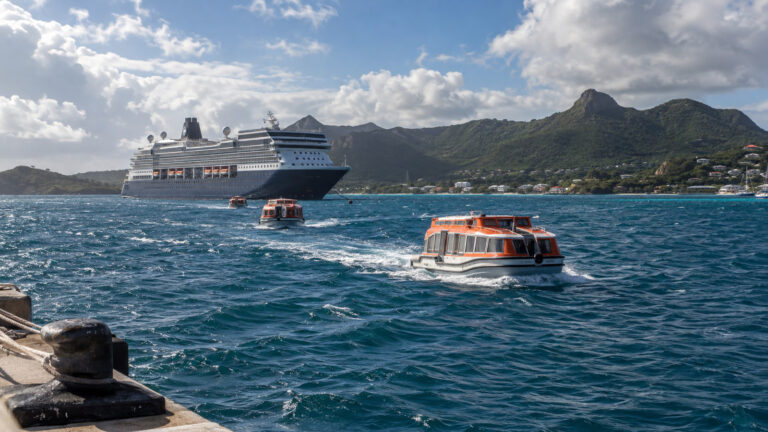
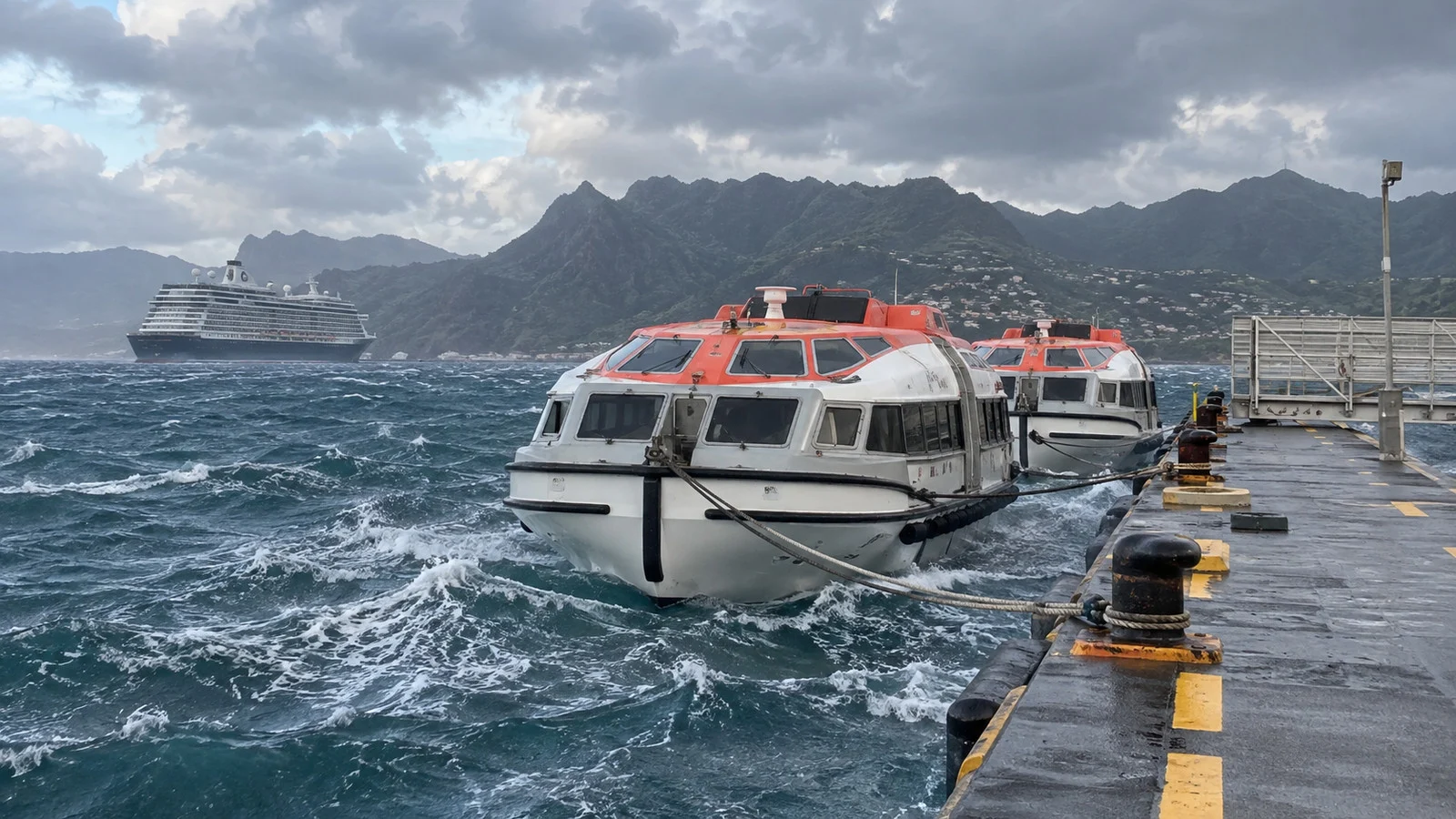
Tendering adds repeated passenger transfers between moving vessels and boarding platforms. Wind, wave direction, swell, current, visibility, landing conditions, and the tender design can all change whether those transfers remain safe.
Cruise lines rarely publish a single tender cutoff because the operating limit is not one reusable number. A sheltered landing and an exposed anchorage can behave very differently under the same regional forecast.
The ship may reposition, delay the first tender, pause service, restrict boarding, or cancel the call. Follow crew instructions and do not pressure staff to make an exception when transfers are limited.
My guide to what a tender port is helps you spot these calls before booking. The companion guide on rough seas and tender operations covers the day-of logistics.
Docked calls still depend on moorings and gangways
Getting alongside is not the end of the safety calculation. Wind, current, and surge can load the mooring arrangement or make the ship move along and away from the quay.
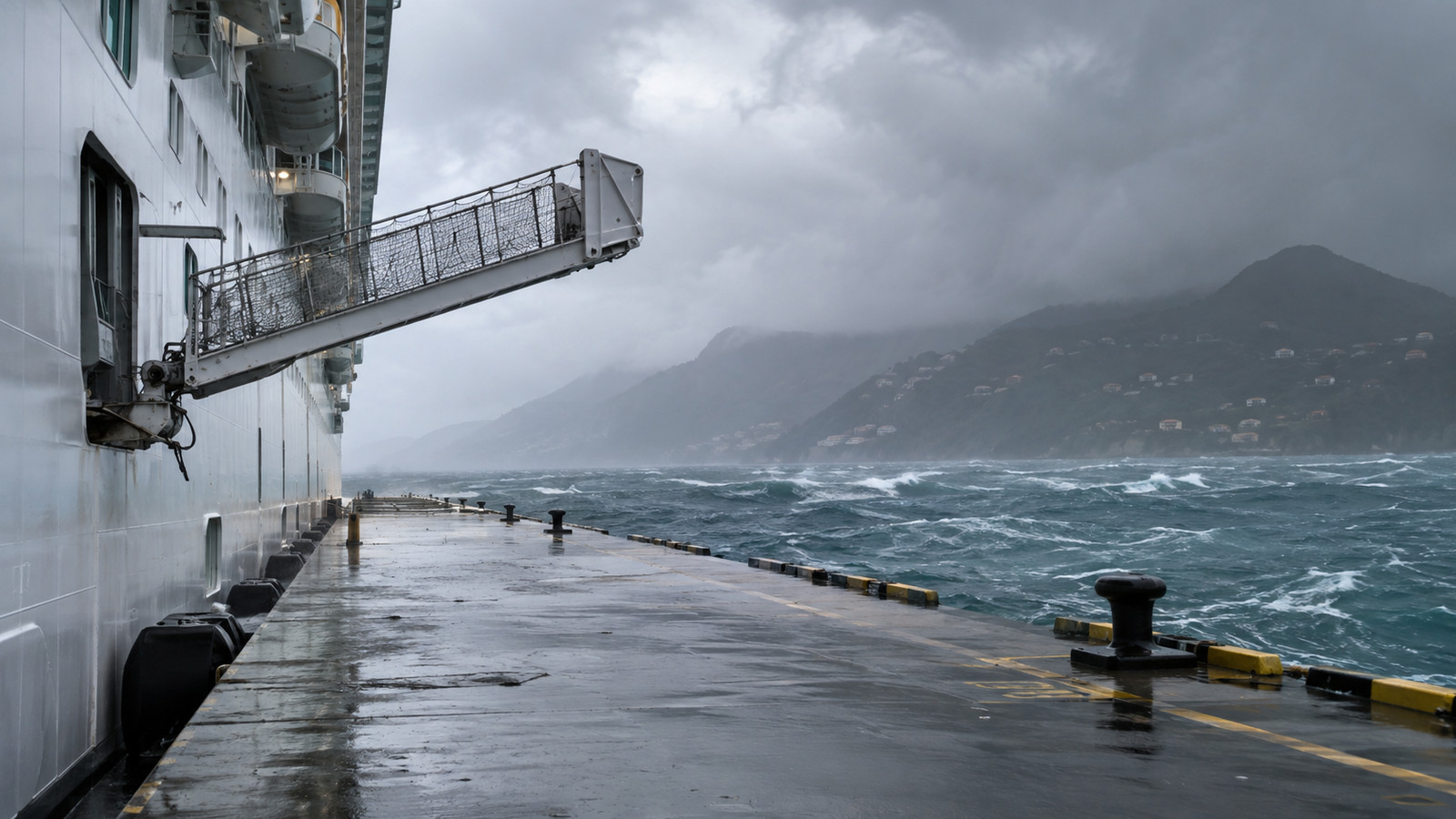
A gangway must stay within its designed operating range and provide safe access for guests and crew. If that cannot be maintained, access may pause even while the ship remains at the berth.
That pause may be brief, or it may help force an early departure or canceled call if conditions are expected to worsen. The terminal setup, tide, vessel movement, and available gangway equipment all matter.
Coast Guard port conditions are not a universal wind switch
In the United States, the local Captain of the Port can set heavy-weather conditions and issue specific restrictions. The timing and requirements are tied to the threat and the particular port, so travelers should read the current local notice rather than memorize one chart.
For example, Sector Honolulu’s published framework uses Whiskey, X-Ray, Yankee, and Zulu as tropical-storm-force winds approach. It says Yankee closes the port to incoming traffic without specific written approval, while Zulu sets the port status to closed and generally stops terminal, facility, and vessel operations.
The same document says conditions may be advanced when a storm speeds up and that specific requirements accompany the condition. This is an operational decision system, not proof that every U.S. port closes at exactly 34 knots.
Clear weather can still produce a cancellation
The weather may be offshore, arriving later, or affecting a different part of the operation than the view from your balcony. A clear sky can coexist with strong wind, distant swell, poor visibility at the harbor entrance, or unsafe conditions expected at departure.
Nonweather causes also exist. Security restrictions, damaged port infrastructure, unavailable tugs or pilots, medical diversions, labor disruption, traffic conflicts, and cascading schedule delays can change a call.
The announcement may simplify all of this to “operational reasons.” That phrasing is frustrating, but it does not mean the decision was casual or based only on the current view.
What to check before sailing
- Dock or tender: Mark every call that requires a tender, water shuttle, or occasional anchorage.
- Port alerts: Follow the official port, harbor authority, coast guard, or maritime safety notice for active restrictions.
- Marine forecast: Read wind, gusts, direction, waves, swell, period, visibility, and timing together.
- Tour terms: Know what happens if the ship misses the port, arrives late, or changes the call.
- Return plan: Leave extra time when tenders, ferries, mountain roads, or limited transport are involved.
- Plan B: Pick an onboard activity you would genuinely enjoy if the day becomes a sea day.
A forecast can show that a call is vulnerable, but it cannot tell you the final outcome. The ship and local authorities have operational information that a public weather app does not.
If seasonal wind or swell matters to your itinerary, compare it with my guide to Caribbean Christmas winds and tender days. Treat seasonal patterns as planning context, never a guarantee for one date.
What to do when the announcement comes
- Read the full notice: The call may be delayed, shortened, moved, or replaced rather than simply canceled.
- Contact independent providers promptly: Use the written cancellation terms and keep screenshots of the ship’s notice.
- Check automatic account changes: Ship excursions, port-related charges, and goodwill credits may be handled differently.
- Read your own contract and insurance: Do not assume another traveler’s outcome applies to your booking.
- Rebuild the day: Reserve any newly offered onboard activities before the rest of the ship has the same idea.
Royal Caribbean’s current FAQ, for example, says weather, strikes, mechanical problems, and other circumstances can lead to a changed or canceled port without prior notice. Other lines and jurisdictions use their own contracts and policies.
Do not promise yourself a fare refund, port-tax credit, excursion refund, or insurance payment until the responsible company confirms it. My guide to what happens financially after a skipped port separates those categories.
Accessibility needs an individual answer
Marginal transfer conditions can affect guests with limited mobility before they affect everyone else. Tender boarding, gangway slope, steps, lifting restrictions, and the ability to transfer safely are ship- and port-specific.
Ask the cruise line’s accessibility team whether the itinerary uses tenders and what mobility equipment can be accommodated. My roundup of wheelchair-friendly cruise ports helps favor direct docks and shorter terminal routes.
Quick answers
Who can cancel a cruise port call?
A port authority or coast guard can close or restrict the port, a pilot organization can stop an unsafe movement, and the ship’s master can decline to proceed. Other operators may control the berth, tugs, terminal, or tender landing.
What wind speed cancels a port?
There is no universal number. Local thresholds depend on the berth, maneuver, vessel, wind direction, current, tug support, and expected departure conditions.
Why can a call be canceled when the sea looks calm?
The limiting condition may be at the harbor entrance, pilot boarding area, berth, tender platform, or later departure window. Swell can also come from weather far beyond the horizon.
Are tender ports always canceled first?
Tender operations add a sensitive passenger-transfer step, but there is no reliable universal ranking. A well-sheltered tender landing may operate while an exposed berth has trouble, or the reverse.
Can a ship cancel after it reaches the harbor?
Yes. Conditions, restrictions, berth availability, pilotage, or the safe departure window can change during the approach or while the ship waits.
Will I receive compensation?
Possibly, but there is no one answer for every line, booking, fee, excursion, or insurance policy. Read the current contract and wait for the cruise line, tour provider, or insurer to confirm the exact treatment.
Final word
A canceled call is rarely about one dramatic number. It is usually the safest outcome after several local limits, forecasts, and transfer problems are considered together.
Identify fragile calls before booking and keep the money side flexible. My guide to ports most likely to be missed adds planning context, while the guide to returning to the ship on time helps when tender service is running but slow.
How this guide was researched: This guide was checked in September 2026 against Galveston-Texas City Pilots navigation guidance, U.S. Coast Guard Sector Honolulu heavy-weather conditions, NOAA marine observations and National Weather Service definitions, International Maritime Organization pilotage guidance, and Royal Caribbean’s itinerary-change FAQ. Conditions and policies change, so use current notices for your ship and port and see our Editorial Policy.
More on this topic: browse every guide on weather, crowds and conditions.