Fog Days on a Cruise: The Delay Nobody Plans For
Fog can turn a nine-hour port call into a short afternoon, delay embarkation, or cancel the one excursion that needs a clear sky. It can also lift on time and change absolutely nothing, which is why flexibility beats trying to predict the captain’s decision from a weather app.
The useful plan is simple: leave room around flights and tours, watch the marine forecast, and keep one weather-proof option for each important port. Fog has enough drama already without a nonrefundable early-morning helicopter ride joining the cast.
My quick take
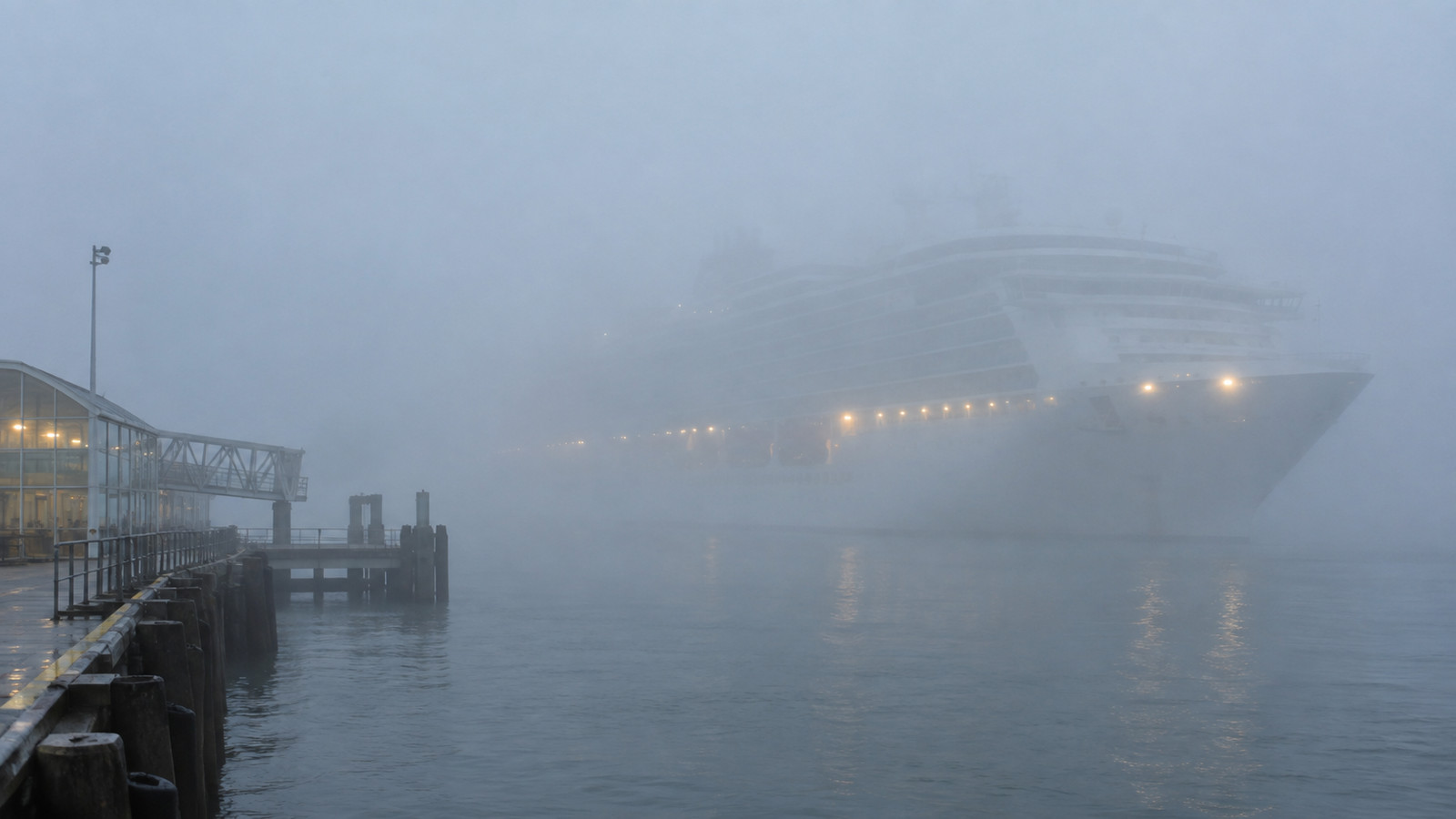
Fog does not produce one standard result. A ship may slow down, wait offshore, delay pilot boarding, enter under local restrictions, change berth, shorten the call, or miss it entirely.
A hold or slow approach is a safety decision, not a sign that the bridge lacks modern equipment. Radar and other navigation tools help, but the official rules still require a speed suited to visibility, traffic, maneuverability, and radar limitations.
Do not schedule a tight independent tour after arrival or a tight flight after disembarkation in a fog-prone season. The exact buffer depends on the port, itinerary, transport, and your tolerance for replacing a ticket.
The quick facts
- Fog does not automatically close a port: The ship, pilot organization, vessel traffic service, Coast Guard, or port authority may impose different precautions under local rules.
- Visibility is the key weather measurement: NOAA’s marine dense fog advisory uses regional or local limits that cannot exceed one nautical mile.
- Radar does not erase the problem: Navigation rules specifically require mariners to consider radar limitations and the possibility that small vessels or floating objects may not be detected soon enough.
- Delay length is unpredictable: Fog may lift quickly, persist, return, or combine with traffic and berth constraints.
- Excursions are separate contracts: Ship-sold and independent tours follow their own cancellation, modification, and refund terms.
- Embarkation can move too: A late inbound ship may delay disembarkation, terminal access, and boarding for the next cruise.
- Your best defense is a buffer: Choose flexible tours, a later flight, and a nearby backup activity.
Why radar does not make fog irrelevant
Radar, electronic charts, automatic identification systems, bridge teams, and pilots give a modern ship excellent information. They do not turn restricted visibility into clear weather or remove every local operating limit.
The United States Coast Guard Navigation Rules require a safe speed and engines ready for immediate maneuver in restricted visibility. The rules also tell radar-equipped vessels to consider interference, equipment limits, traffic, and objects that may not be detected at adequate range.
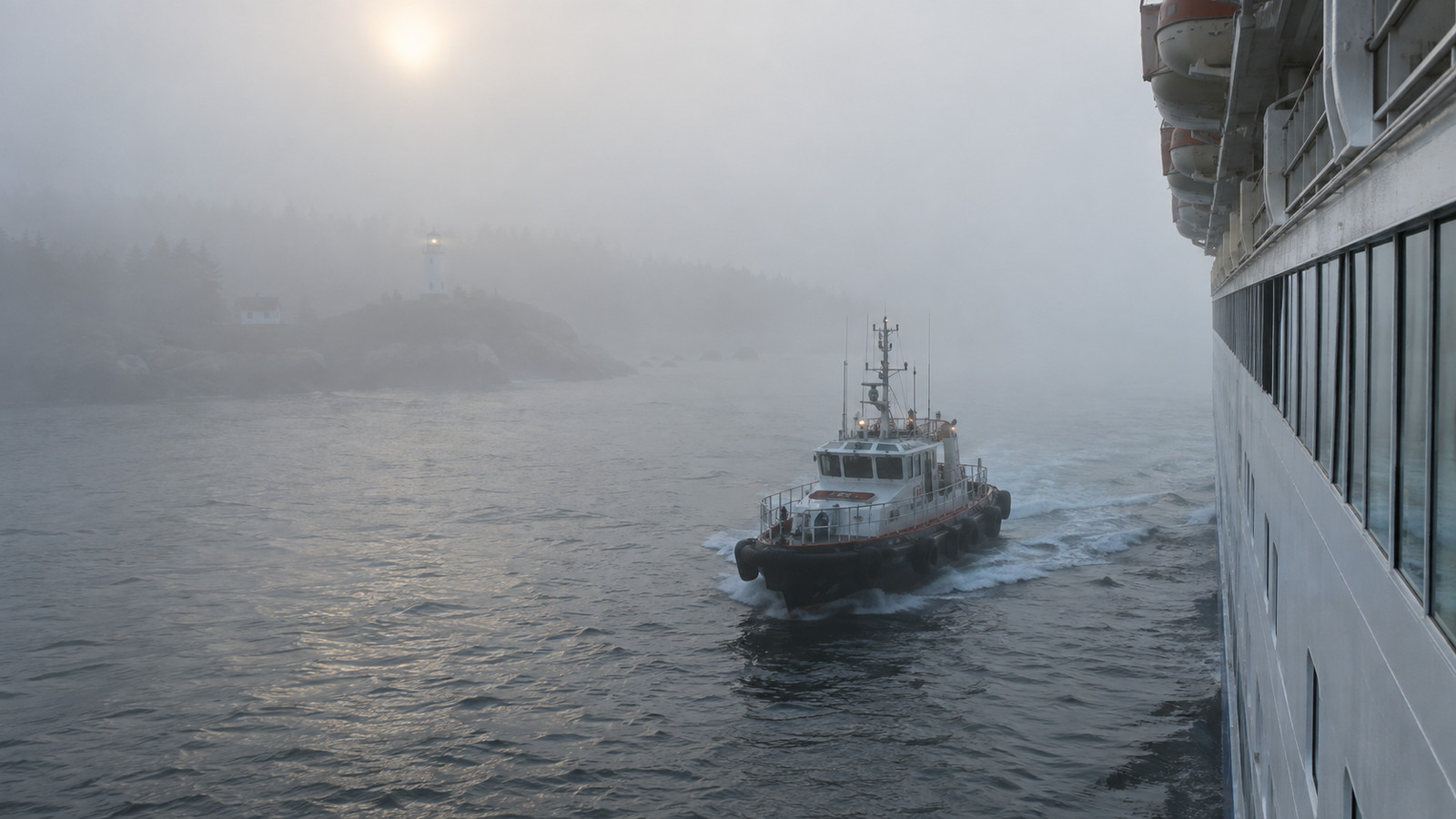
Harbor transit adds narrow channels, crossing traffic, tugs, bridges, berth geometry, and sometimes a pilot transfer at sea. Any one of those can make waiting or slowing the sensible choice.
Who decides whether the ship moves
There is no universal chain in which “the pilot stops first.” The master remains responsible for the ship, while pilot organizations, vessel traffic services, Coast Guards, and port authorities may control or restrict local movements.
The responsible parties use the actual visibility, traffic, ship dimensions, channel, berth, equipment, and local procedures. That is why two vessels can make different moves on the same morning, just as two ships can get different port days.
Passengers will usually hear the operational decision through the captain or cruise director. Treat that announcement as the itinerary update and a weather app as background information.
Gulf Coast cool-season fog
The northern Gulf can develop sea fog when warm, moist air moves across cooler coastal water. The setup is more common in the cool season, but a calendar cannot tell you whether Galveston, New Orleans, or Mobile will have restricted traffic on your morning.
Galveston turnarounds have an extra moving part because ships use a busy approach connected to the Houston-Galveston waterway system. A delay can ripple through inbound docking, luggage, customs and immigration, terminal clearing, supplies, and the next boarding.
Wait for the line’s message before heading to the terminal if your inbound ship is late. Arriving at the original check-in time can simply trade a hotel lobby for a crowded waiting area.
San Francisco has more than one fog pattern
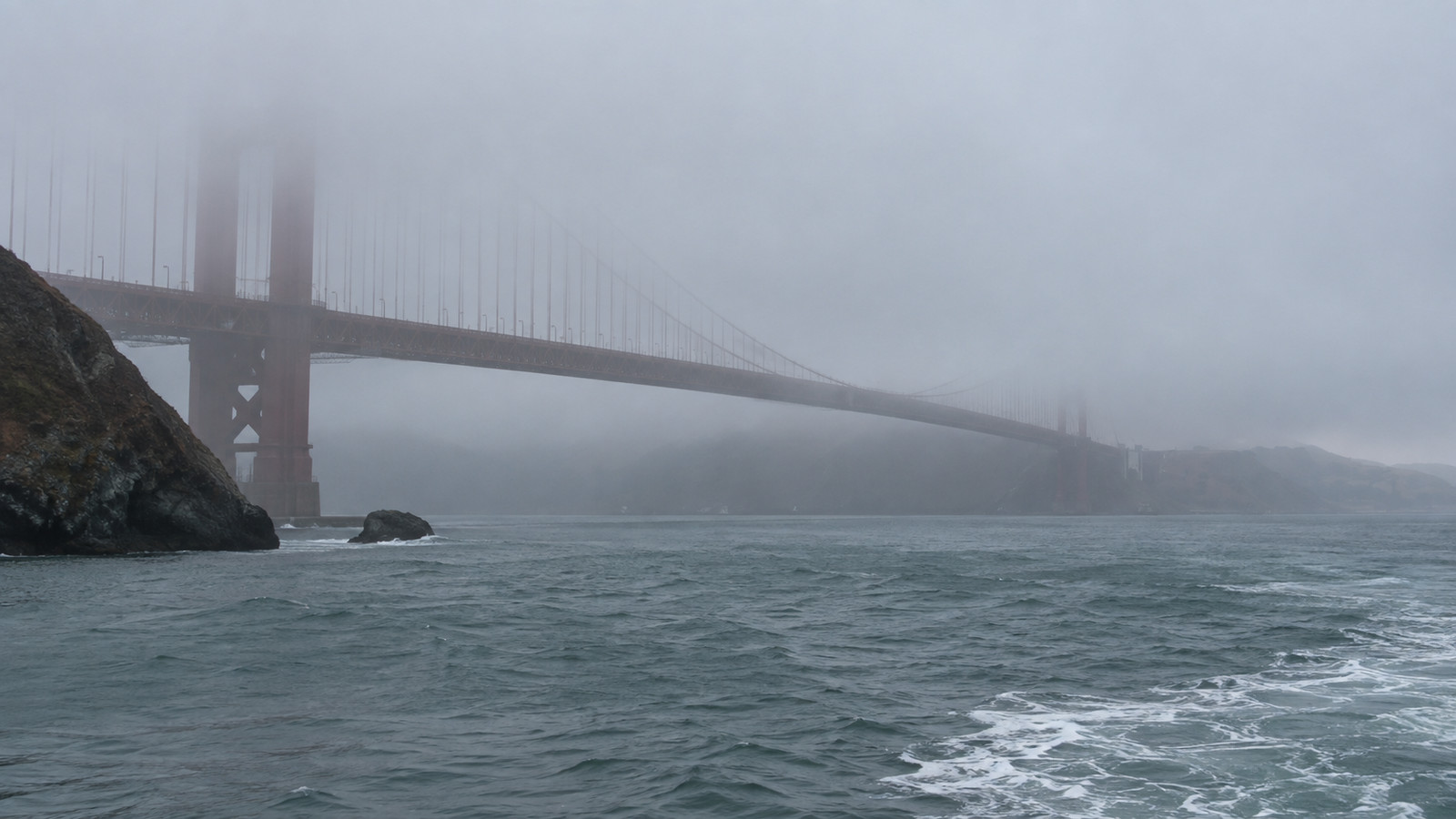
San Francisco’s marine layer is famous in summer, while other restricted-visibility patterns can occur in the cooler months. A scenic Golden Gate arrival may vanish into gray even when port operations continue normally.
Published San Francisco Bar Pilots guidelines warn that severely restricted visibility can bring considerable delays in parts of the bay system. Those guidelines are operational documents, not a passenger forecast or a guarantee that a cruise movement will stop.
Keep a city plan that does not depend on a bay view, then switch when you see the actual conditions. Museums, food neighborhoods, and indoor attractions are sturdier choices than building the whole call around a distant viewpoint.
Alaska fog can hit the excursion first
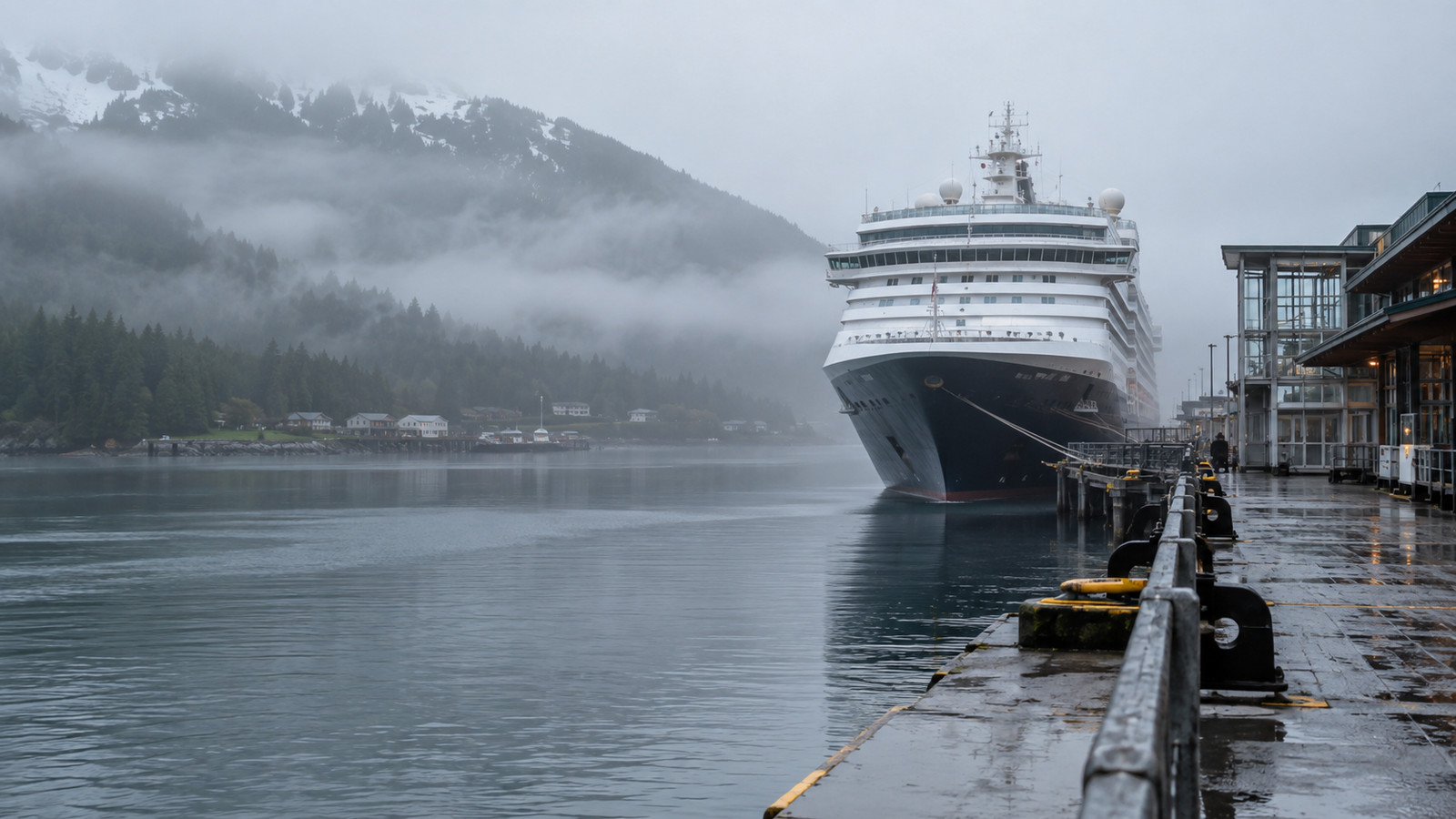
Southeast Alaska can have fog and low cloud during the cruise season, with patterns that vary by channel, harbor, elevation, and time of day. The current NOAA Coast Pilot for Southeast Alaska is a better technical reference than a sweeping claim that one month is always worst.
A ship may berth normally while a flightseeing or helicopter operator cancels because of visibility, cloud ceiling, or conditions at the destination. Boat, rail, hiking, and wildlife tours make their own calls too, so never assume that one mode will run because another does.
Book the experience you want, but understand its weather policy and keep an enjoyable ground-level backup. That is especially useful when a glacier landing, floatplane, or mountaintop view is the expensive centerpiece.
Fog outside the United States
Northern Europe, the Baltic, Atlantic Iberia, river valleys, and fjords can all produce fog or low cloud, but the mechanisms and seasons differ. Use the national weather service and port authority for the destination rather than importing NOAA criteria into another country.
Low cloud can preserve the port call while wiping out the view from a funicular, cable car, mountain road, or scenic flight. A ship arriving does not mean every attraction or excursion can operate.
River fog can also affect scenic cruising and local transport without closing a berth. The guide to Christmas market river cruises covers the broader winter tradeoffs.
What a delay can do to your port day
The line may shorten the call, move all-aboard, rearrange tours, substitute a berth, add a shuttle, or cancel the visit. Do not assume the departure moves by the same amount as the arrival because the ship still has its next port, tides, pilots, and berth schedule to consider.
Wait for a revised all-aboard before leaving the ship and photograph it. Then cut the farthest or least flexible activity instead of trying to squeeze the original day into half the hours.
If the ship must anchor or tender, reduced visibility can also affect tender operations. No berth arrival means passengers are not automatically cleared to go ashore.
Ship excursion or independent tour?
A ship-sold excursion is easier for the line to adjust when the vessel arrives late, but its outcome and refund follow the line’s terms. Do not assume every shortened, modified, or canceled tour produces the same remedy.
Royal Caribbean’s published shore excursion terms, for example, allow cancellation or modification and promise return arrangements when a tour it sold is significantly delayed. Other lines have their own wording, so read the terms attached to your booking.
For an independent tour, get the late-arrival, ship-skip, weather, and no-show policy in writing. Ask whether the operator tracks the ship, waits, shortens the tour, reschedules, refunds, or keeps the payment.
The guide to choosing a ship excursion, local tour, or do-it-yourself day helps price that flexibility. The cruise line premium can buy useful coordination, but it is not a universal delay-insurance policy.
Fun fact: Coast Guard Rule 35 assigns sound patterns in restricted visibility, including one prolonged blast at intervals of no more than two minutes for a power-driven vessel making way. Two prolonged blasts indicate a power-driven vessel underway but stopped and making no way through the water.
Compensation and refunds
There is no universal cruise refund for hours lost to fog. Compensation, taxes and fees, missed-port adjustments, and onboard-credit offers depend on the cruise contract, the line’s policy, applicable law, and what actually changed.
Excursion refunds are a separate issue governed by the seller’s terms and whether the tour was canceled, modified, or partly delivered. Keep notices and receipts if you plan to make a travel-insurance claim.
If the entire call is lost, ask guest services what was adjusted rather than assuming port taxes automatically return in every case. Read the guide to what cancels a cruise port call for the broader contract picture.
The forecast that helps
For United States coastal ports, check the local NOAA or National Weather Service marine forecast and alerts, not only the city forecast. NOAA says a marine dense fog advisory uses a regional or local visibility limit no greater than one nautical mile.
An advisory tells you hazardous reduced visibility exists or is expected, not what the cruise ship or port will decide. Marine zones can also differ from the airport or downtown conditions shown in a phone widget.
Check once the evening before and again in the morning, then follow the line’s alerts. Refreshing every five minutes will not move the fog, though it can certainly ruin breakfast.
Build a fog-proof port plan
- Book flexible first hours: Avoid a nonrefundable independent tour immediately after scheduled arrival.
- Know each cancellation policy: Check late arrival, weather, shortened call, missed port, and no-show language.
- Keep a close backup: Choose one indoor or ground-level activity near the berth, tender dock, or shuttle stop.
- Save the revised clock: Photograph all-aboard and leave a larger return buffer on a compressed day.
- Protect travel home: Book a flight that follows the cruise line’s minimum guidance and leaves additional margin you can afford.
Do not cancel a prized scenic excursion days ahead because fog appears in a long-range forecast. Let the operator make the safety call unless your booking terms allow a no-penalty change that genuinely improves the day.
Embarkation and disembarkation days
A late inbound ship can delay both disembarkation and the next cruise’s boarding. Watch official app, text, or email updates and do not crowd the terminal before the line says it can receive you.
On the way home, a midday flight can become fragile if the ship berths late and customs, luggage, and ground transport stack behind it. Follow the cruise line’s airport guidance, add your own risk buffer, and use changeable airfare when the consequences would be painful.
The Galveston cruise port guide covers the local airport and terminal logistics. Those details matter more than a generic promise that an afternoon flight is always safe.
A realistic word on accessibility
A shortened call can compress disembarkation and excursion departures, but it does not guarantee priority at the gangway. Ask guest services how mobility assistance, tender tickets, accessible shuttles, and revised tour times will work on that day.
Do not accept a shortened accessible tour until the operator confirms the adapted vehicle, lift, guide, restrooms, and return buffer still work. An original accessibility promise can unravel if the new schedule requires a different vehicle or meeting point.
Keep a flat, close-to-port alternative that does not need a timed reservation. The guide to wheelchair-friendly cruise ports helps identify calls that tolerate a shorter day.
Quick answers
Does fog cancel a cruise port call?
It can, but a delay, slow transit, or shortened call is also possible. The outcome depends on actual visibility, local restrictions, traffic, berth or tender operations, and the remaining itinerary.
Do I get compensation for a fog delay?
Not automatically. Check the cruise contract, line policy, applicable law, excursion terms, and any travel-insurance benefit.
Which cruise ports have fog risk?
Fog can affect many coastal, river, and fjord ports, including the northern Gulf, San Francisco Bay, Southeast Alaska, northern Europe, and Atlantic Iberia. The season and operational impact differ by location and year.
Can fog delay embarkation?
Yes, if the arriving ship docks late or terminal operations are pushed back. Wait for the cruise line’s check-in instructions rather than arriving on the original clock.
Should I book an independent tour in a fog-prone port?
Yes, if the operator tracks the ship and gives you acceptable written terms for late arrival, weather cancellation, a shortened call, and a missed port. Otherwise choose a more flexible plan or compare the ship’s excursion.
The last word
Fog is not automatically a ruined port day, and it is not automatically harmless to the schedule. It is a visibility problem that maritime professionals handle with equipment, local knowledge, restrictions, and patience.
Build flexible first hours, a close backup, and a sensible travel-home buffer. Then let the people on the bridge worry about the channel while you decide whether the museum café does a decent pastry.
For a broader Alaska fallback list, start with the guide to Alaska cruise ports. For calls at higher overall risk of being lost, see the ports most likely to be missed or canceled.
How this guide was researched: This guide was checked in September 2026 against NOAA and National Weather Service visibility guidance, the United States Coast Guard Navigation Rules, NOAA Coast Pilot 8, San Francisco Bar Pilots guidance, and Royal Caribbean’s shore-excursion terms. Actual movements, tours, and remedies remain specific to the ship, port, conditions, and contract under our Editorial Policy.
More on this topic: browse every guide on weather, crowds and conditions.