Midnight Sun Port Days: What 24-Hour Daylight Does
A midnight-sun cruise does not give your ship more hours in port, but it makes every scheduled hour feel available. The sky can still look like late afternoon at midnight, which is wonderful for scenery and surprisingly unhelpful for bedtime.
The trick is to match the exact port and date, then check how late the ship actually stays. Twenty-four-hour daylight is predictable astronomy, but a cloud layer can hide the glowing sun and an early all-aboard can keep you from using the bright evening.
The quick take
For a first midnight-sun cruise, look for Tromsø or the North Cape from late May through mid-July. For the longest, most dependable window, Longyearbyen in Svalbard has true midnight sun from April 19 through August 23 according to Visit Svalbard.
Do not pay extra for the words “midnight sun” alone. A late departure, overnight call, open-deck access, and an unobstructed northern horizon matter more than the slogan.
The quick facts
- What it is: the sun remains above the horizon through the full local day, so there is no sunset. Clouds may hide the disk, but they do not create darkness.
- Where it happens: generally north of the Arctic Circle in northern summer. Atmospheric refraction, observer height, terrain, and the circle’s slow movement make the visible boundary less tidy than a line on a map.
- Mainland Norway dates: Visit Norway lists June 12 to July 1 at the Arctic Circle, June 4 to July 8 in Bodø, May 28 to July 14 in Lofoten, May 20 to July 22 in Tromsø, and May 14 to July 29 at the North Cape.
- Longyearbyen dates: Visit Svalbard lists April 19 to August 23. Visit Norway uses the rounded April 20 to August 22 range, so use the local Svalbard dates and allow for horizon and weather conditions at the edges.
- What Alaska cruise ports get: exceptionally long summer days and lingering twilight, not true midnight sun. Travel Alaska says Juneau has more than 18 hours of sunlight at the summer solstice, while true nonstop sun occurs much farther north.
- Best port-day use: save a scenic walk, boat ride, viewpoint, or open-deck session for late evening. Museums and stores may keep normal hours even when the sky does not.
- What to pack: a proper eye mask, clips for curtain gaps, sunglasses, sunscreen, and windproof waterproof layers. Bright does not mean warm.
Why the Arctic Circle is a guide, not a guarantee
The Arctic Circle sits near 66 degrees 34 minutes north and marks the broad threshold for at least one day without sunset. Visit Norway notes that the line moves roughly 46 feet each year as Earth’s axial geometry changes.
The view from a real deck is messier than the geometry. The United States Naval Observatory explains that standard sunrise and sunset calculations assume average atmospheric refraction, a level observer, and an unobstructed horizon, while mountains and unusual air conditions can change what you actually see.
That is why published midnight-sun dates can differ by a day and why a hilltop may keep the sun visible longer than the waterfront. Near the first or last date, treat the advertised window as excellent planning guidance rather than a minute-by-minute promise.
The sun stays low, and that changes the view
At summer solstice, the sun’s approximate height at its lowest point is latitude plus 23.4 degrees minus 90 degrees. That puts it about 3 degrees above a level horizon in Tromsø and about 12 degrees above one in Longyearbyen.
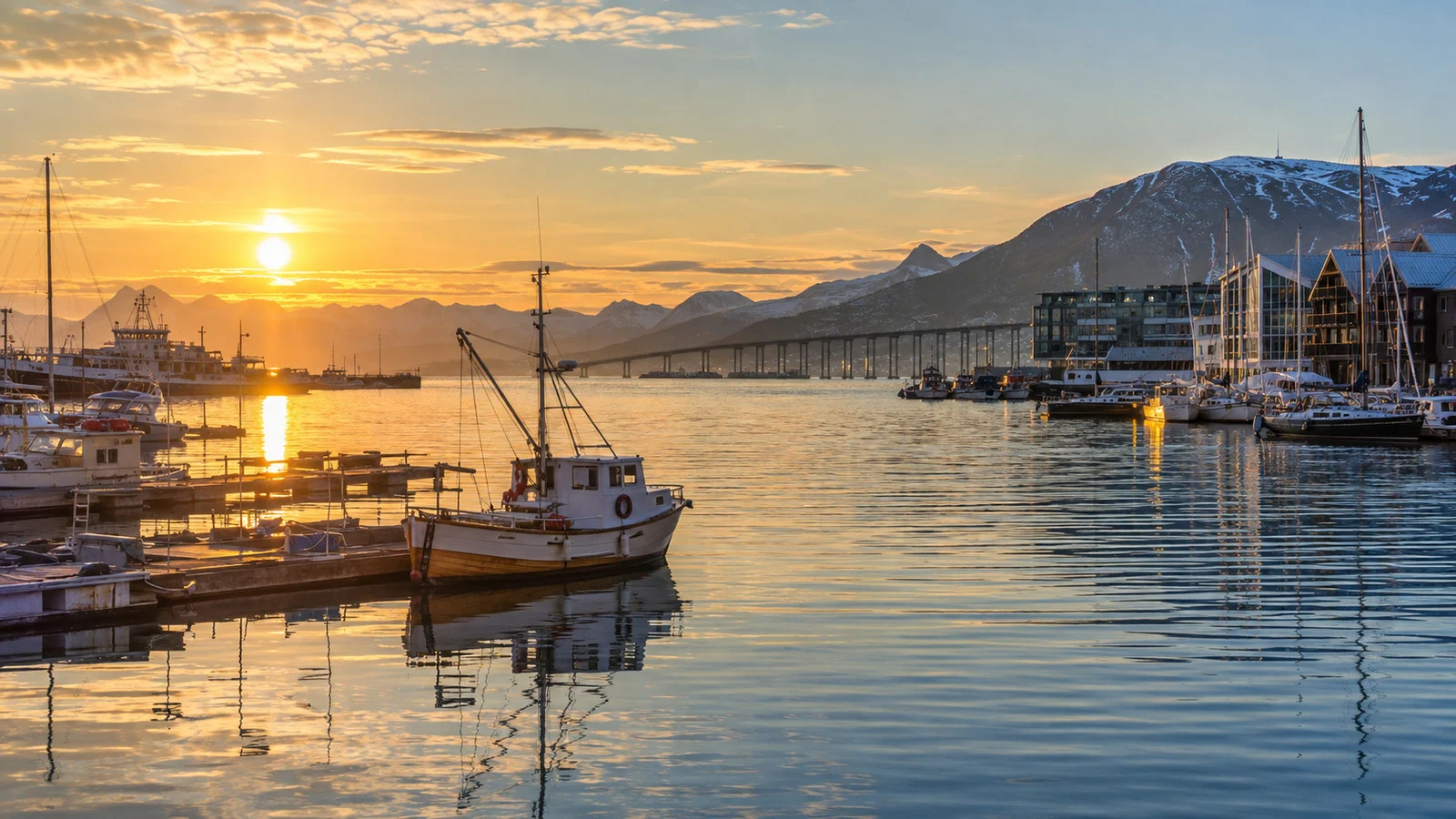
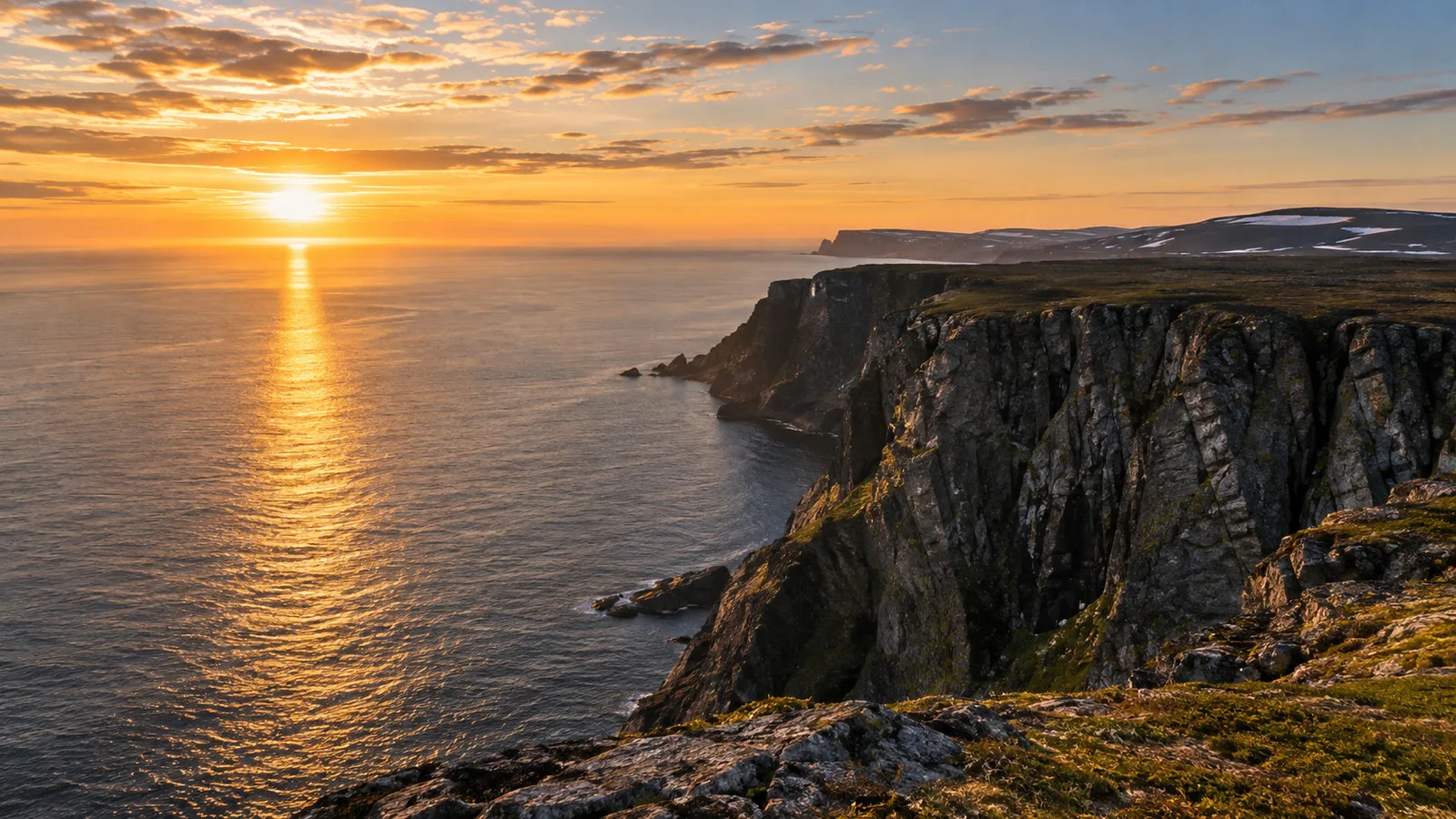
Tromsø can deliver a warm-looking ribbon of light, long shadows, and a sun that skims the horizon. Longyearbyen’s higher midnight sun can feel more like a bright evening, although clouds, mountains, and your direction of view can change the scene completely.
For photos, look for water, a ridgeline, or a headland with a clear northern view. Expose for the sky, keep a person or ship in the frame for scale, and wipe sea spray from the lens before the good light arrives.
Clock midnight is not solar midnight
The sun reaches its lowest point at local solar midnight, which rarely lands at 12:00 on your watch. Longitude, daylight saving time, the date, and the ship’s clock can shift the low point well after midnight.
In Tromsø during summer, the lowest sun is often closer to about 12:45 a.m. local clock time than midnight, with the exact minute changing through the season. Ask whether the daily program uses ship time or shore time, then arrive early and watch the sun’s path instead of chasing one magic minute.
A ship may also change clocks overnight or keep ship time different from local time. Photograph the daily program and all-aboard notice so the bright sky does not trick you into missing the gangway.
Svalbard gives you the longest window
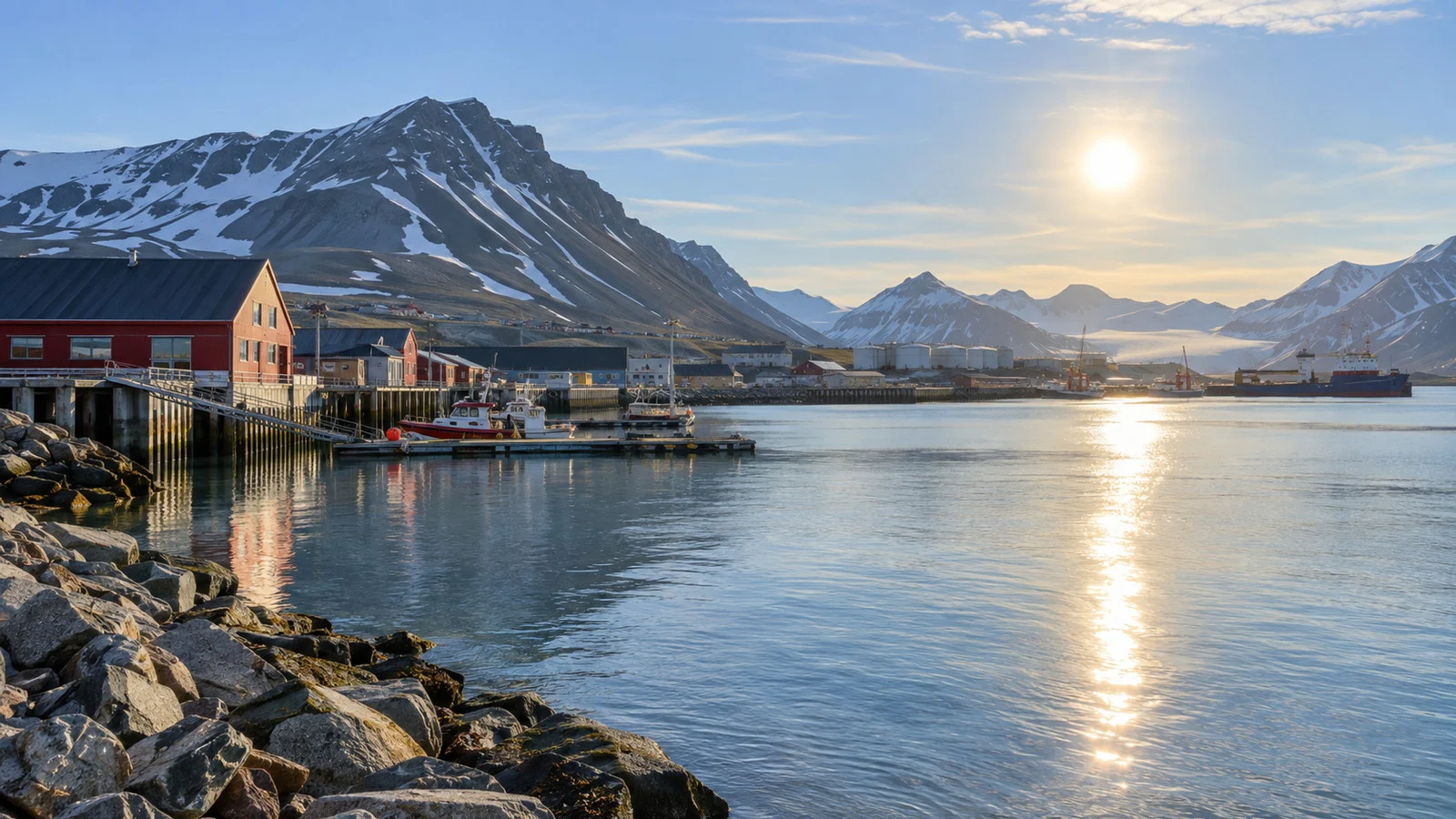
Longyearbyen’s April 19 to August 23 season covers most summer expedition departures, so date selection is forgiving. It is still worth checking the itinerary because an expedition call, landing, or Zodiac cruise depends on conditions and is never guaranteed.
Daylight is not permission to wander into the wilderness. Visit Svalbard advises travelers not to leave Longyearbyen’s settlement area without a professional guide because of polar-bear and other Arctic risks.
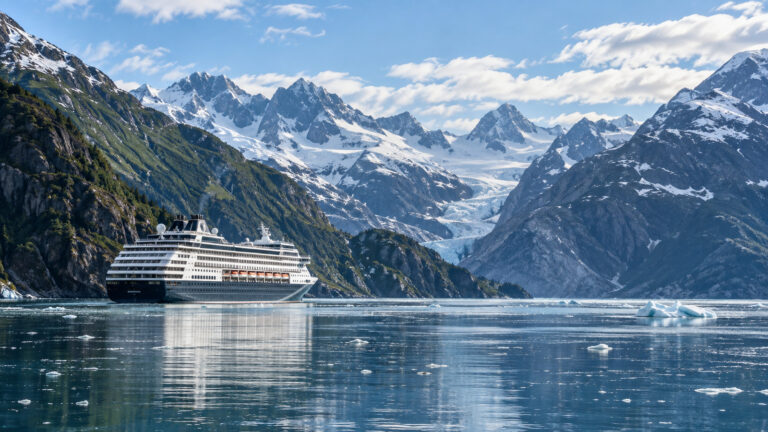
Late guided hikes, kayak trips, and boat outings can be a terrific use of the bright evening when offered by the ship or a qualified local operator. Read the Svalbard cruise rules guide before booking if landings and wildlife viewing are central to the trip.
What is actually open late?
Daylight does not reset shop, museum, transit, or cable-car schedules. Check the official attraction page and the ship’s all-aboard time rather than assuming a bright street is an open street.
North Cape Hall is the useful exception: its current official schedule lists 10 a.m. to 1 a.m. from May 18 through August 17, then 10 a.m. to 11 p.m. through August 31. The adult admission is currently 360 Norwegian kroner, and both hours and price should be rechecked before sailing.
A late Honningsvåg call can therefore support an evening trip to the plateau, but transportation still has to match the ship. The Honningsvåg cruise port guide covers the transfer choices and the weather problem that catches people out.
In Tromsø, the waterfront and central streets are easy choices after normal business hours. Use the Tromsø cruise port guide to check berth location, because a ship at Breivika is not in the same walkable position as one near the center.
Alaska: long light, different promise
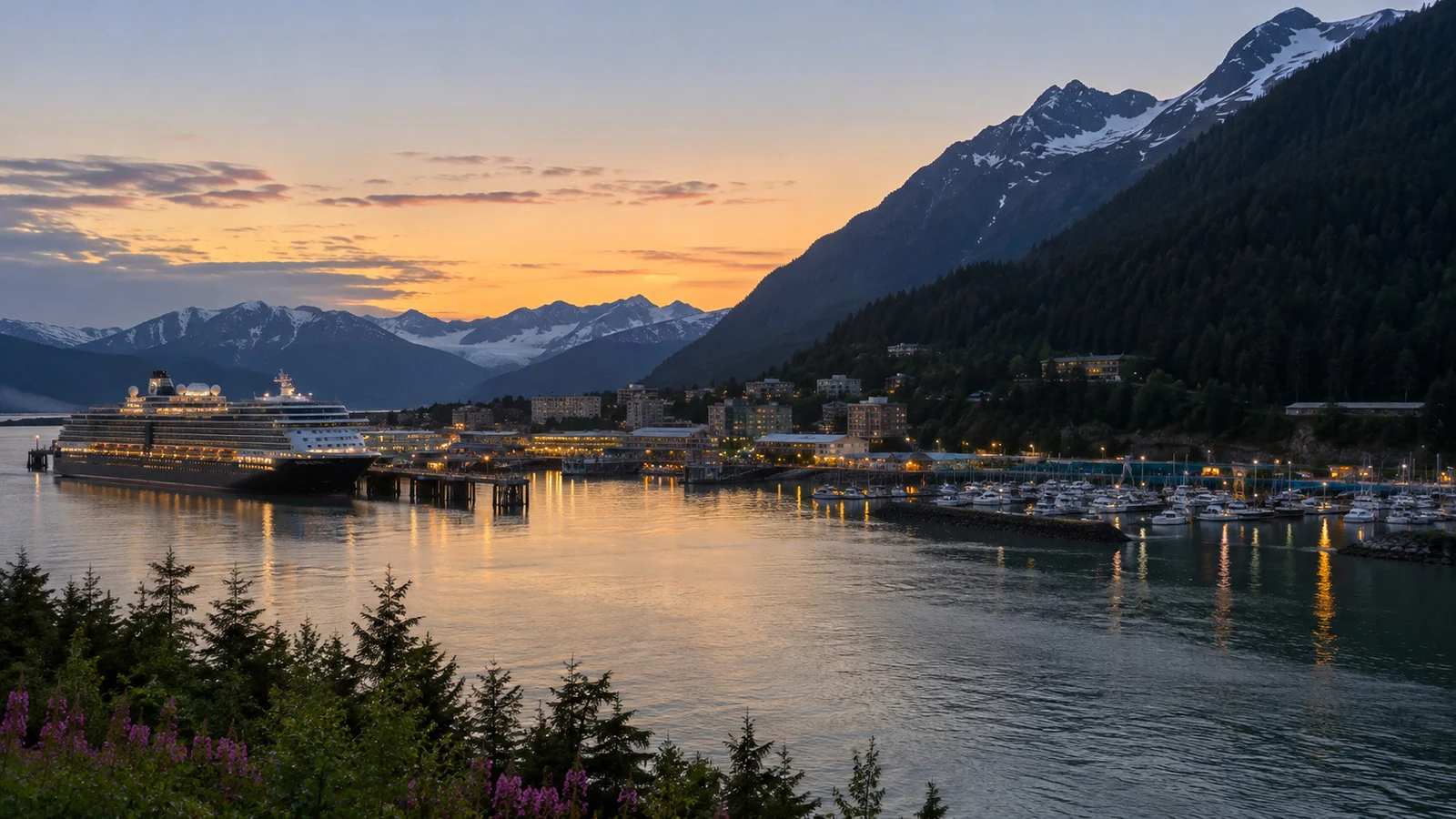
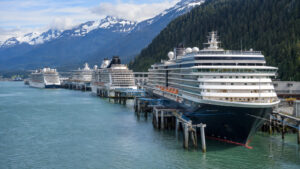
Juneau, Ketchikan, Sitka, Skagway, Seward, and Whittier are south of the Arctic Circle, so their sun sets even near the June solstice. They still have beautifully long evenings, and twilight can make the sky feel usable far beyond the published sunset.
Travel Alaska reports more than 18 hours of solstice sunlight in Juneau and more than 19 hours in Anchorage, with roughly 22 hours of functional daylight in Anchorage. Those are excellent cruise conditions, but they are not the same as seeing the sun above the horizon at midnight.
True midnight sun in Alaska belongs farther north, including Utqiaġvik, where the state tourism office lists nonstop sun from May 10 to August 2. Reaching those places usually requires a separate flight or land itinerary rather than a standard Inside Passage port call.
How to use a bright port day
- Check the date by port: “Northern Norway” is too broad because Trondheim, Bodø, Tromsø, and the North Cape have different daylight.
- Check the evening schedule: a 5 p.m. departure turns midnight sun into scenery from the ship, while a late or overnight call creates time ashore.
- Book the unique timing: when a reputable late boat, hike, or viewpoint tour fits the gangway, favor it over an identical morning departure.
- Protect sleep: use an eye mask, close curtain gaps, set meal and medication alarms, and keep your cabin cool if possible.
- Leave recovery room: a late excursion followed by an early tender call is a rough pairing, so give one of those days a lighter plan.
- Keep ship time visible: bright streets make it easy to forget that buses and gangways still run by the clock.
Families can treat the evening as a bonus rather than a mandatory event. A planned afternoon rest may help, but keeping a child awake for a midnight photo can spoil the next port more thoroughly than one missed sunset.
Sleep, light sensitivity, and accessibility
Constant light can make bedtime feel optional even when your body needs sleep. Bring an eye mask that seals around the nose, use clips on curtain gaps, and silence nonessential notifications before turning in.
If bright light triggers migraines or affects a sleep condition, discuss the trip with your clinician and ask the cruise line what blackout features the cabin actually has. Do not rely on a request for a “shaded side,” because ship direction and berth orientation change.
For mobility planning, separate daylight from access. North Cape can be windy and exposed, some Arctic calls use tenders, and small-boat excursions may require steps or transfers that are not solved by a late sunset.
Ask for the vehicle type, walking surface, maximum step height, restroom availability, and distance from tender to pickup before paying. A cruise line’s accessible-shore-excursion desk is usually the best first stop for ship-operated tours.
Weather and what to wear
Midnight sun is an astronomical condition, not a clear-sky guarantee. Fog or low cloud can hide the disk and erase the warm color while leaving the night bright enough to walk outdoors.
Pack a waterproof shell, a warm midlayer, gloves, and a hat even in midsummer. Coastal wind can make an open deck or the North Cape plateau feel much colder than the sheltered town below.
Check the local forecast just before leaving the ship and carry the layer you think you will not need. The extreme-weather cruise guide has a broader framework for adjusting a port day when conditions change.
How to choose the right itinerary
- List every port with its date, arrival, departure, and tender status.
- Compare each date with the official midnight-sun window for that exact location.
- Favor at least one late departure, overnight, or evening scenic-sailing segment.
- Check which side of the ship faces the best horizon, but plan to use an open deck because the route can turn.
- Read cancellation terms for weather-dependent evening excursions.
- Leave enough sleep before the next early tour or tender ticket.
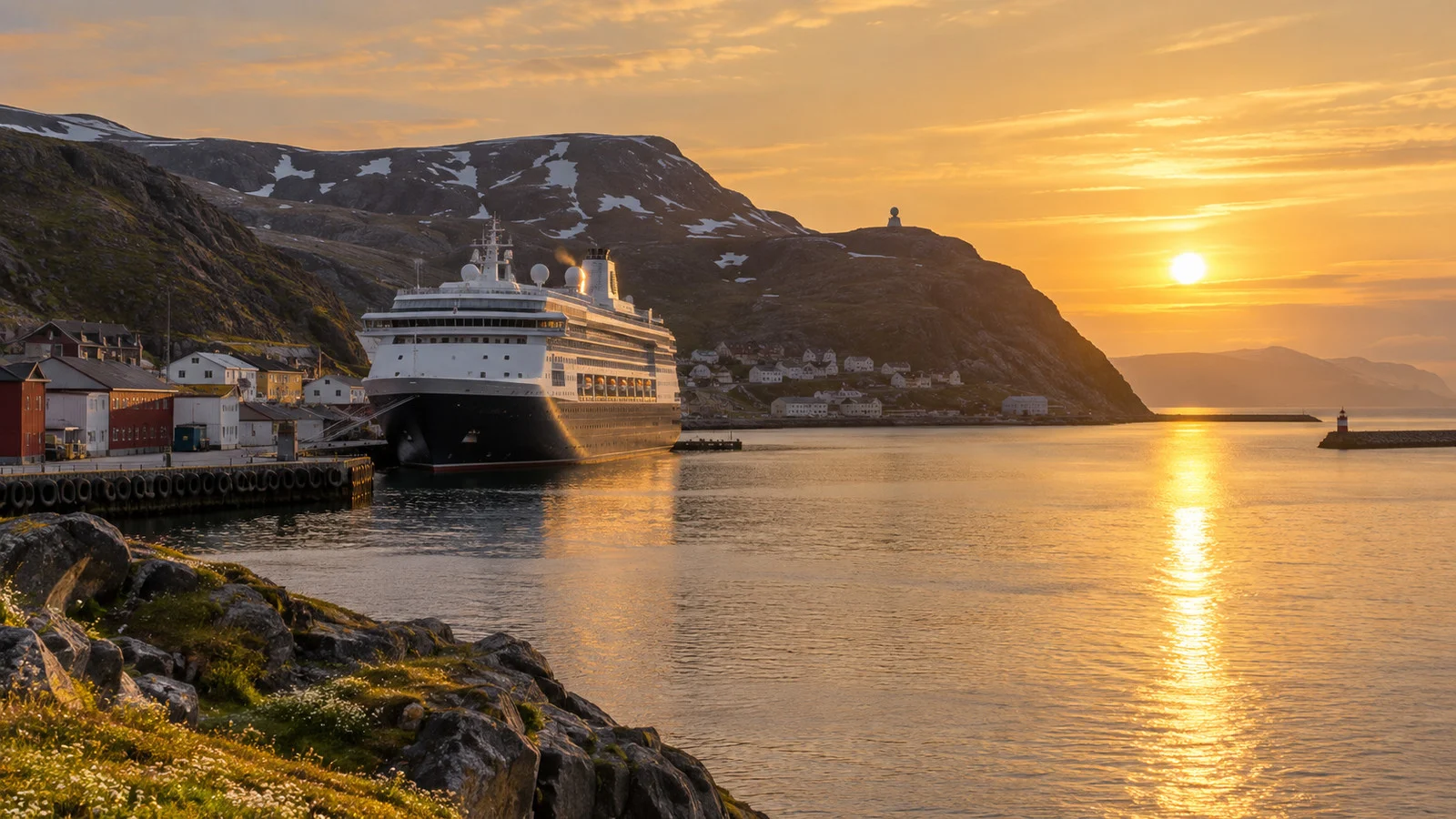
A coastal Norway itinerary that reaches Tromsø or Honningsvåg in June is the simplest mainstream choice. Svalbard gives a longer window and wilder setting, but expedition logistics, access rules, and weather make it a more demanding trip.
The Norway cruise ports overview helps separate fjord routes from Arctic routes. If your real goal is aurora viewing, switch seasons and use the northern lights cruise guide, because midnight sun and dark skies do not overlap.
Quick answers
Do you need to cross the Arctic Circle?
For a practical cruise-planning rule, yes, although refraction, height, terrain, and the slowly moving circle soften the exact visible boundary. Check the published dates for the actual town rather than calculating from latitude alone.
Which cruise port has the longest midnight-sun season?
Longyearbyen has the longest season among the major ports discussed here. Visit Svalbard lists April 19 through August 23.
Can clouds cancel it?
Clouds can hide the sun and the colorful horizon, but they do not change whether the sun astronomically sets. Expect a bright gray sky rather than a guaranteed golden disk.
Will attractions stay open until midnight?
Usually not. North Cape Hall has unusually late seasonal hours, while most businesses and attractions keep posted opening times regardless of daylight.
Is a balcony necessary?
No. An open deck gives you more directions and fewer obstructions, while an inside cabin can make sleeping easier.
Is midnight sun guaranteed?
The nonstop daylight is predictable within the published seasonal window, but seeing the solar disk is not. Cloud, fog, terrain, and restricted deck access can all block the view.
The last word
Treat midnight sun as a different rhythm, not a single photo appointment. Choose the right latitude and dates, protect your sleep, and save enough energy for the soft late light.
The reward is not an extra-long port call. It is the rare feeling that the day never shuts the door.
Current planning sources
- Visit Norway midnight-sun dates and Arctic Circle explanation
- Visit Svalbard midnight-sun dates and Svalbard safety guidance
- United States Naval Observatory rise, set, and twilight definitions
- North Cape Hall opening hours and prices
- Travel Alaska daylight guidance
Checked September 2026. Dates, prices, port calls, operating hours, and excursion conditions can change, so verify them for your sailing.
See the CruisePorts editorial policy.
More on this topic: browse every guide on weather, crowds and conditions.