Wildfire Smoke on a Cruise: AQI, Health, Excursions, and Port Changes
Wildfire smoke can turn a crystal-clear port day into a gray one, cancel a visibility-dependent excursion, or create a real health concern. It does not automatically cancel a cruise, but neither the ship nor the shore day is guaranteed to operate normally.
The smart plan is simple: know which air-quality scale you are reading, check official conditions close to the port call, and keep expensive outdoor plans flexible. This guide covers Alaska, Vancouver, and Europe without pretending anyone can forecast a smoke plume months ahead.
The quick facts
- United States: The EPA Air Quality Index runs from good at 0 to 50 through hazardous at 301 and higher.
- Canada: The Air Quality Health Index uses 1 to 3 for low risk, 4 to 6 moderate, 7 to 10 high, and 10+ very high.
- Do not mix the scales: A Vancouver AQHI of 7 means high health risk, while a U.S. AQI of 7 is in the good range.
- Smoke travels: A port can have unhealthy air even when the fire is hundreds or thousands of miles away.
- Health matters: Heavy smoke can affect anyone, with greater risk for people with heart or lung conditions, older adults, children, and pregnant travelers.
- Refunds are not universal: Cruise-line tours, independent excursions, trip insurance, and missed ports are governed by different contracts and policies.
Read the right air-quality number
For U.S. ports, use the EPA’s Air Quality Index. Values of 101 to 150 are unhealthy for sensitive groups, 151 to 200 are unhealthy, 201 to 300 are very unhealthy, and 301 or higher is hazardous.
The AirNow Fire and Smoke Map adds current monitor and sensor readings to fire and smoke information. Check it the evening before and again on the morning of an Alaska port call because smoke can shift quickly.
For Vancouver and other Canadian ports, use Canada’s Air Quality Health Index and local alerts. Canada publishes observed conditions, health advice, and forecast maximums, but the AQHI is not numerically interchangeable with the US AQI.
For Europe, check the destination country’s civil-protection and air-quality service first. The Copernicus Atmosphere Monitoring Service is useful for the wider smoke picture, while local authorities control evacuations, road closures, and attraction access.
AQI is health guidance, not a tour-cancellation chart
An index tells you about air pollution and health concern. It does not tell a pilot whether visibility meets the operator’s limits, a port whether navigation is safe, or a tour company whether an attraction is accessible.
Flightseeing, helicopter landings, hiking, biking, kayaking, and scenic viewpoints may be more vulnerable because visibility or outdoor exertion is central to the product. Bus, rail, boat, and indoor tours can also change, so never treat one tour type as cancellation-proof.
Alaska: watch the smoke, not only the fire location
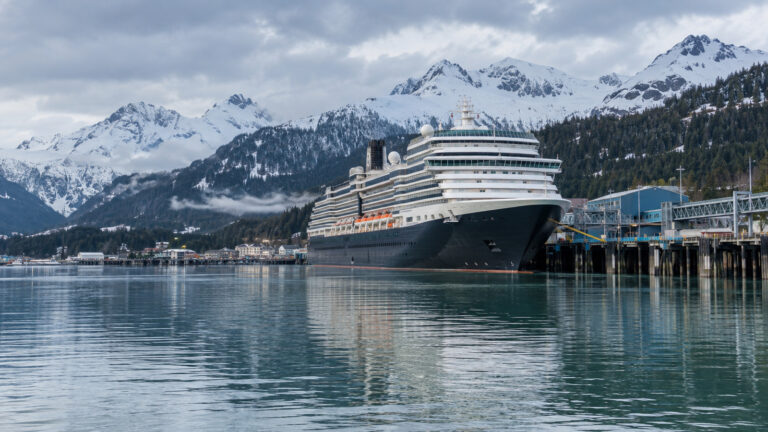
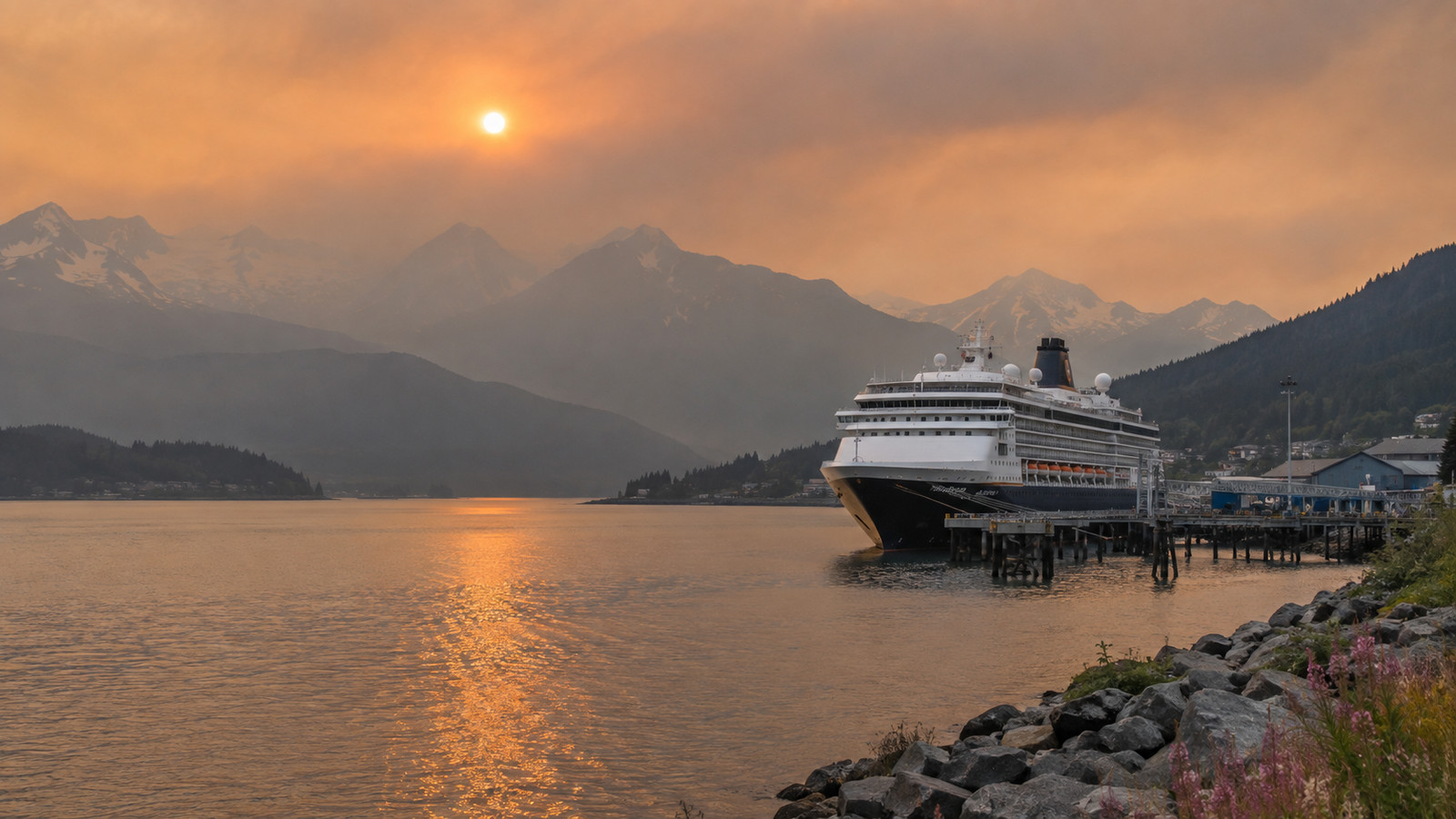
Alaska’s large fires are often far from the Inside Passage, but smoke can travel into Southeast Alaska from the Interior, Canada, or another distant source. A green forest around Juneau or Ketchikan does not prove the air will be clear.
The Alaska Department of Environmental Conservation links air-quality advisories, real-time readings for Juneau and other cities, fire reports, and the UAFSMOKE forecast. Use those official tools instead of assuming a July or August sailing will be smoky or smoke-free.
A land tour through Fairbanks or Denali adds more time near Interior fire country, so build extra flexibility into outdoor activities and road plans. For the coastal half, keep the Juneau port guide handy and choose one indoor backup you would genuinely enjoy.
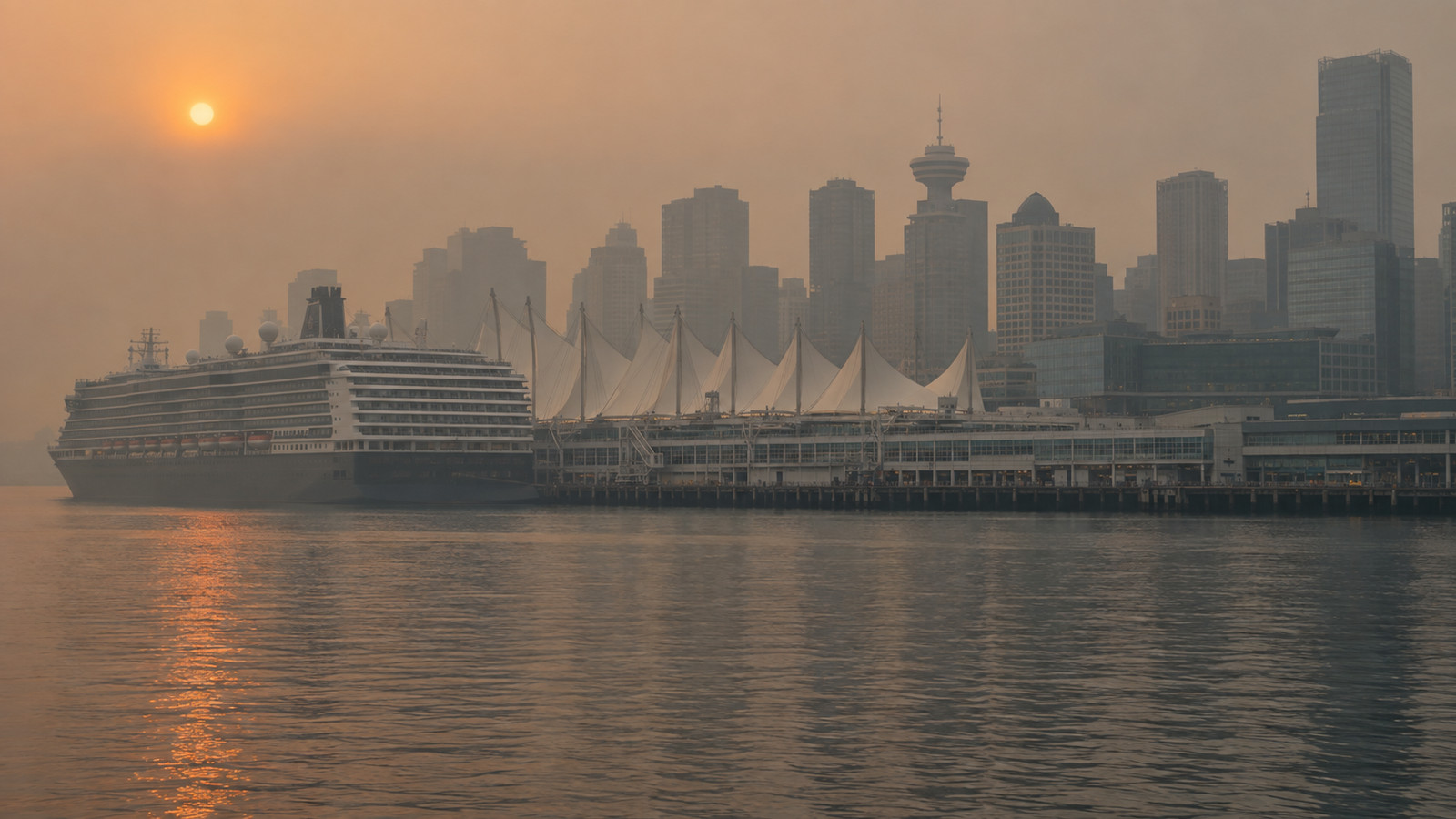
Vancouver: use the Canadian health scale
Smoke from British Columbia or farther away can affect Metro Vancouver, but conditions vary sharply by year and weather pattern. Do not cancel a pre-cruise stay because a distant fire appears in the news.
Check the observed AQHI and its forecast maximums, then follow the matching health advice. At high risk, Canada tells at-risk people to reduce or reschedule strenuous outdoor activity and advises the general population to consider doing so if symptoms appear.
Use the Vancouver cruise port guide to keep an indoor option ready near Canada Place. Museums and galleries can rescue a hazy day, but indoor air is only helpful when the building is managing ventilation and filtration effectively.
Europe and the Mediterranean: smoke may be only one disruption
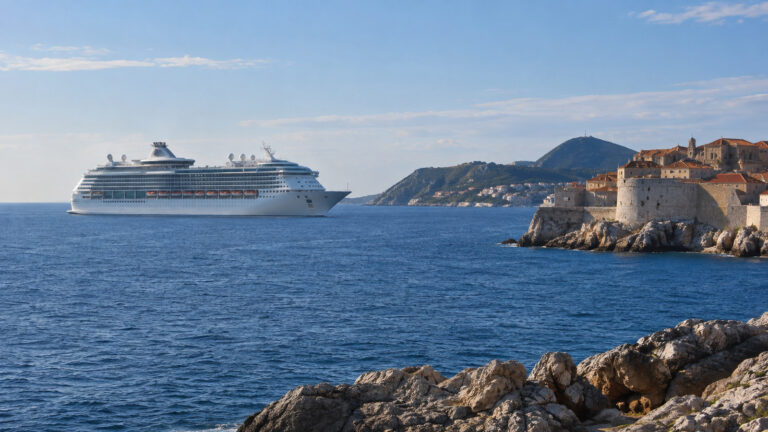
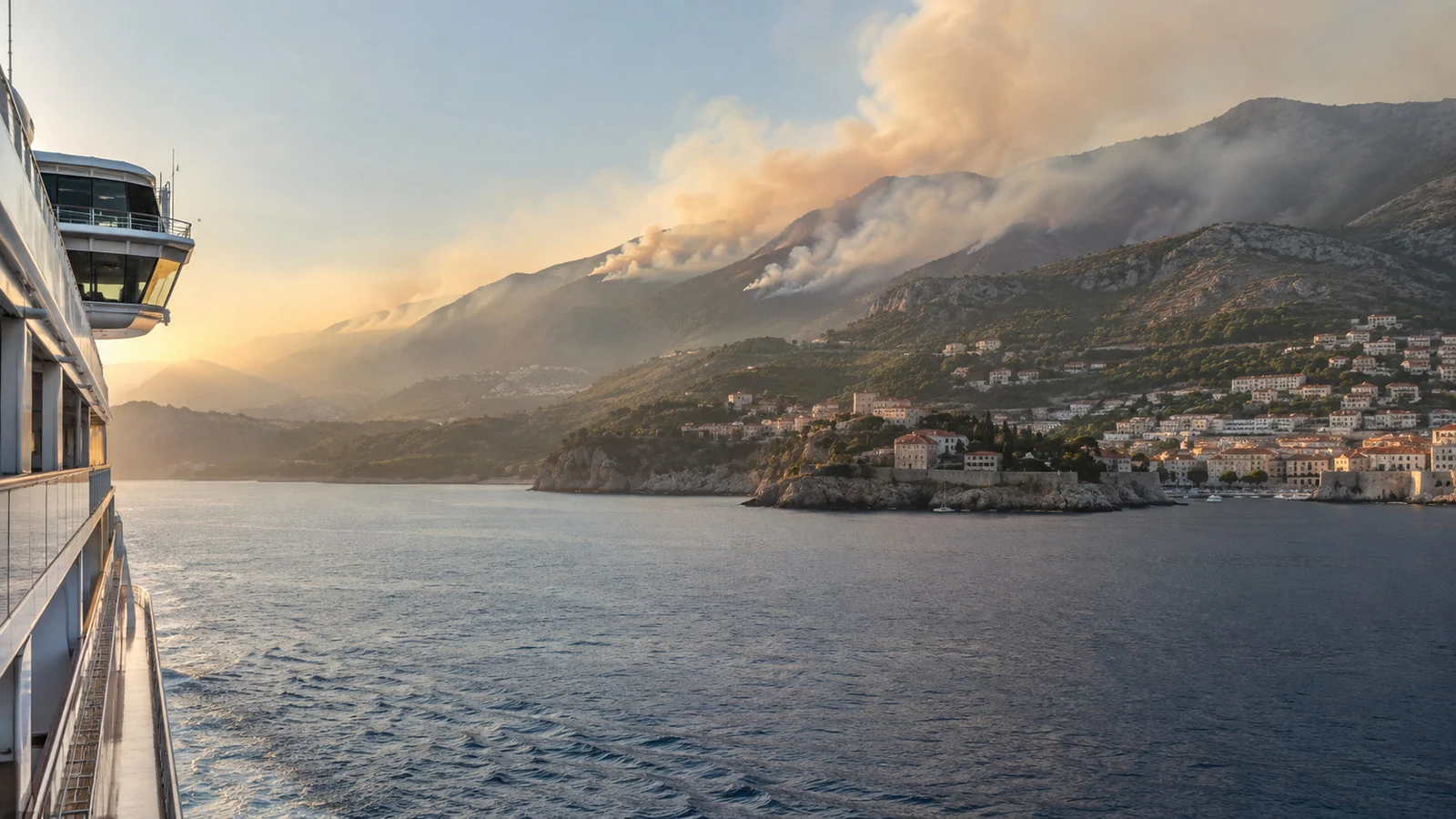
Summer heat, dry conditions, and wind can support dangerous fires around the Mediterranean, but the location and timing vary. A nearby incident may bring smoke, road closures, attraction closures, ferry disruption, or evacuation orders even while the ship itself remains on schedule.
Copernicus reported that Europe recorded its highest annual wildfire emissions in its 2003-to-2025 dataset in 2025, with smoke traveling far beyond the fires. That history shows what is possible, not what will happen on a future sailing.
On a hot, smoky port day, follow local emergency instructions before sightseeing plans and reduce outdoor exertion. Pair this guide with the Mediterranean extreme-heat port plan because heat and smoke can compound the strain.
Protect an expensive excursion
- Read the cancellation terms before paying: Look for the exact rules covering weather, visibility, operator cancellation, port cancellation, and a late ship arrival.
- Compare the real tradeoff: A ship-sponsored tour may offer stronger return-to-ship coordination, while an independent operator may offer a better price or smaller group. Neither label alone proves what a smoke cancellation will refund.
- Ask about rebooking: A later flight or alternate day can be useful on a land tour, but it rarely helps if the ship sails that afternoon.
- Save the policy: Keep the terms and cancellation message in writing for any provider or insurance claim.
Do not assume a missed port, hazy view, or canceled independent tour earns cruise-fare compensation. The cruise contract, excursion terms, local provider agreement, and insurance policy each answer a different question.
What to do if the air turns smoky
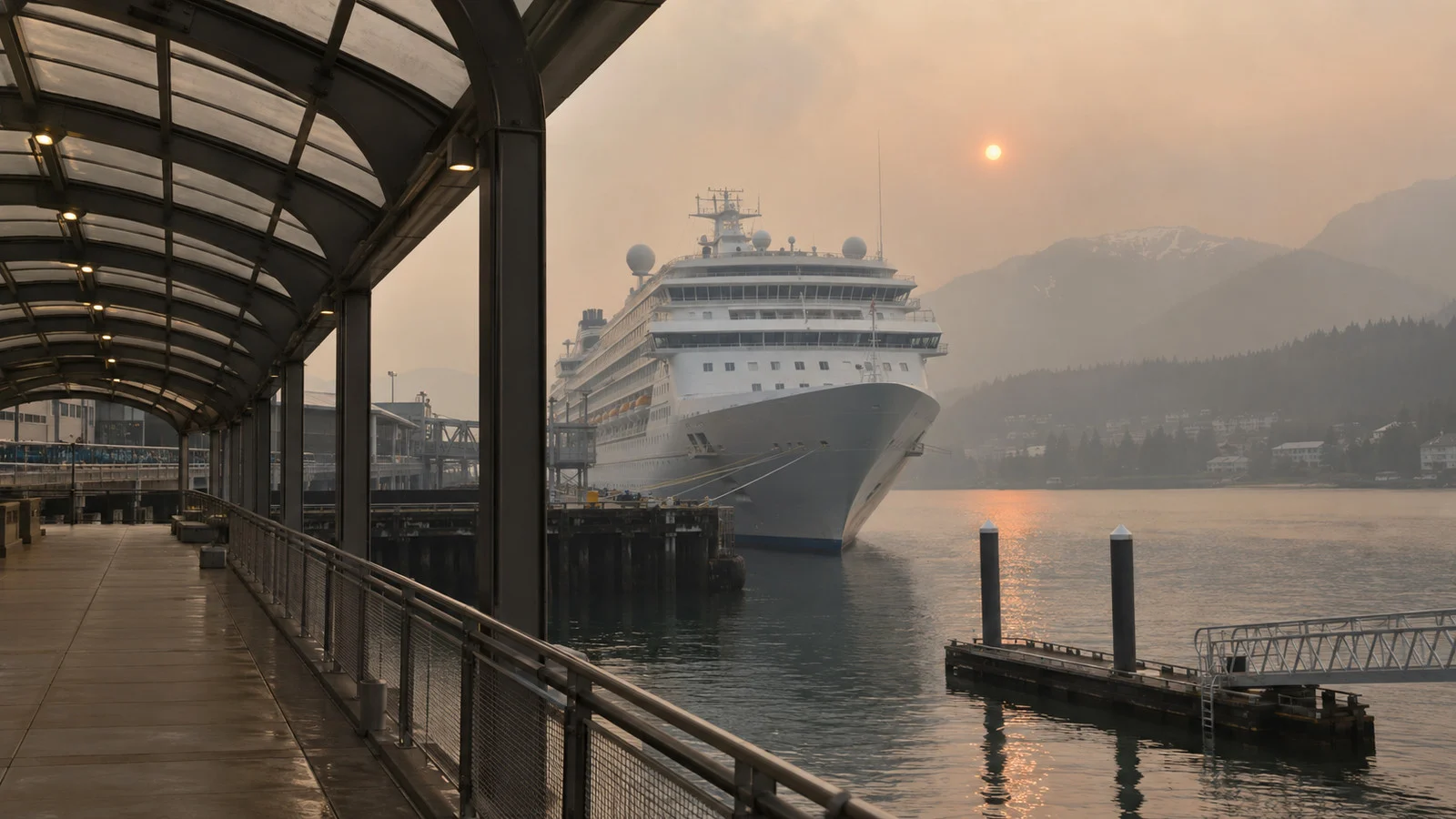
- Check the official index and alert: Use AirNow in the United States, AQHI in Canada, or the national and local authority at a European port.
- Follow the health message for that reading: Cut back or stop strenuous outdoor activity when advised, especially for anyone at higher risk.
- Move to cleaner air: An interior ship space may reduce exposure, but no passenger should assume every cabin or public room has a specific particle level. Keep the balcony door closed and ask the crew where the ship’s cleaner indoor space is.
- Use a proper respirator if advised: A well-fitting particulate respirator is different from a loose cloth face covering. Travelers with medical conditions should discuss smoke planning and respirator use with their clinician before the trip.
- Take symptoms seriously: Stop exertion if smoke causes coughing, wheezing, shortness of breath, chest pain, dizziness, or palpitations, and seek prompt medical help for severe symptoms.
Health Canada says heavy smoke can put everyone at risk and identifies PM2.5 as the main health threat. Its guidance also notes that indoor air can still be elevated, so “inside” and “smoke-free” are not synonyms.
Traveling with asthma, COPD, heart disease, or oxygen
Talk with your clinician before travel about medications, rescue treatment, and when to seek care. Carry essential medication ashore rather than leaving it in the cabin, and bring enough for delays.
Contact the cruise line’s accessibility or special-needs team before sailing if you use oxygen or other respiratory equipment. Requirements vary by line and equipment type, and smoke does not waive those rules.
Children, pregnant travelers, adults 65 and older, and people with chronic conditions may also face higher risk. The correct response comes from the current health advisory and the person’s symptoms, not a generic promise that smoke is merely annoying.
Should smoke change when you cruise?
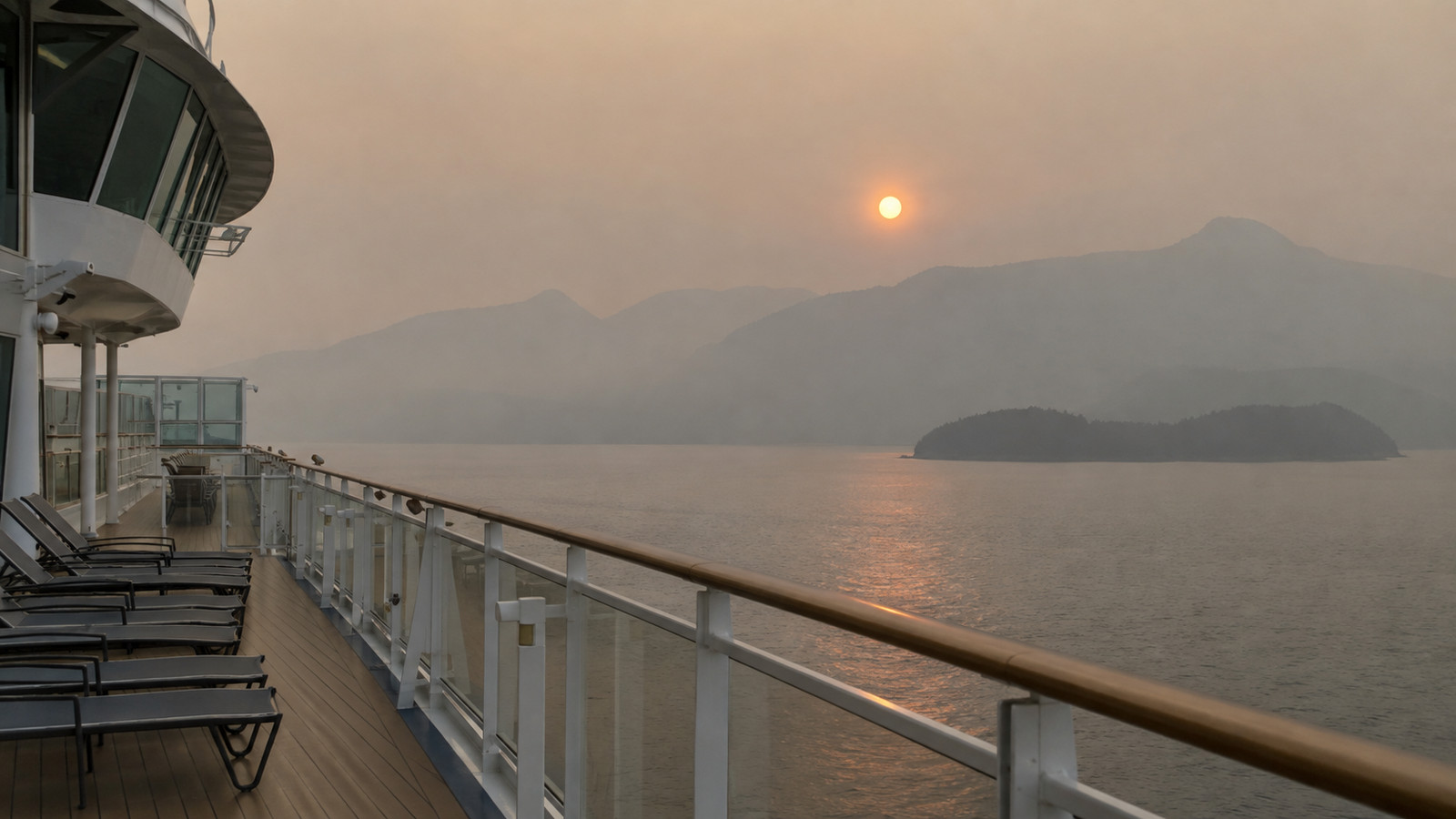
There is no smoke-free booking window for Alaska, Vancouver, or the Mediterranean. Wildfire activity and plume direction vary too much by year and day to support a guaranteed “safe month.”
If clear mountain views or flightseeing is the trip’s main purpose, favor flexible fares and refundable excursions over trying to outguess a season. Shoulder dates may change the odds of heat or fire weather in some places, but they also bring different rain, cold, daylight, and sailing-schedule tradeoffs.
Quick answers
Will wildfire smoke cancel my cruise?
Smoke alone does not automatically cancel a cruise, but a fire, unsafe navigation, port restriction, or wider emergency can alter a call or itinerary. Follow the cruise line and port rather than relying on a general rule.
Will a canceled excursion be refunded?
It depends on who cancels and the terms you accepted. Check the cruise line or independent operator’s written policy instead of assuming smoke triggers a full refund.
Is the air inside the ship safe?
Indoor air may be cleaner than an open deck when doors are closed and filtration is effective, but the actual level depends on the ship and conditions. Ask the crew for current guidance if you are sensitive or symptomatic.
Does travel insurance cover smoke?
Coverage depends on the policy’s named covered reasons and the event that caused the loss. Read the policy or ask the insurer in writing before canceling anything.
The bottom line
Wildfire smoke is unpredictable, but your response does not have to be. Check the correct official scale, protect the expensive bookings, keep one good indoor alternative, and let current health guidance make the call.
For Alaska, pair that plan with the heavy-rain port-day guide and the Alaska cruise ports planner. A flexible day is useful in smoke, rain, low cloud, or the perfectly ordinary plot twist nobody forecast.
How this guide was researched: Air-quality scales and health actions were checked against EPA AirNow, Environment and Climate Change Canada, Health Canada, and Alaska DEC. European smoke context was checked against the Copernicus Atmosphere Monitoring Service, while excursion and insurance outcomes are presented as contract-specific; see our Editorial Policy.
More on this topic: browse every guide on weather, crowds and conditions.