The Best Northern Lights Cruise Ports and When to Sail
Chasing the aurora by ship can be a wonderful winter trip, but season, darkness, clouds, and itinerary hours matter more than a famous port name. This guide compares the best cruise ports and the practical choices that improve your odds without pretending any sailing can guarantee a display.
This guide covers the best cruise ports for northern lights, when to sail, and how I set realistic expectations for the show.
My quick take
If you want the best odds, sail Arctic Norway or Iceland in the dark season, roughly late September through late March. Tromso is my top base, with the Norwegian coast and Iceland close behind.
Summer sailings under the midnight sun are wonderful, but you will not see the aurora then. The sky simply never gets dark enough.
The honest science: when and where the aurora shows up
The aurora appears inside the auroral oval, a ring that sits roughly above the Arctic Circle. Ports well north of that line, like Tromso and North Cape, sit under the oval on active nights.
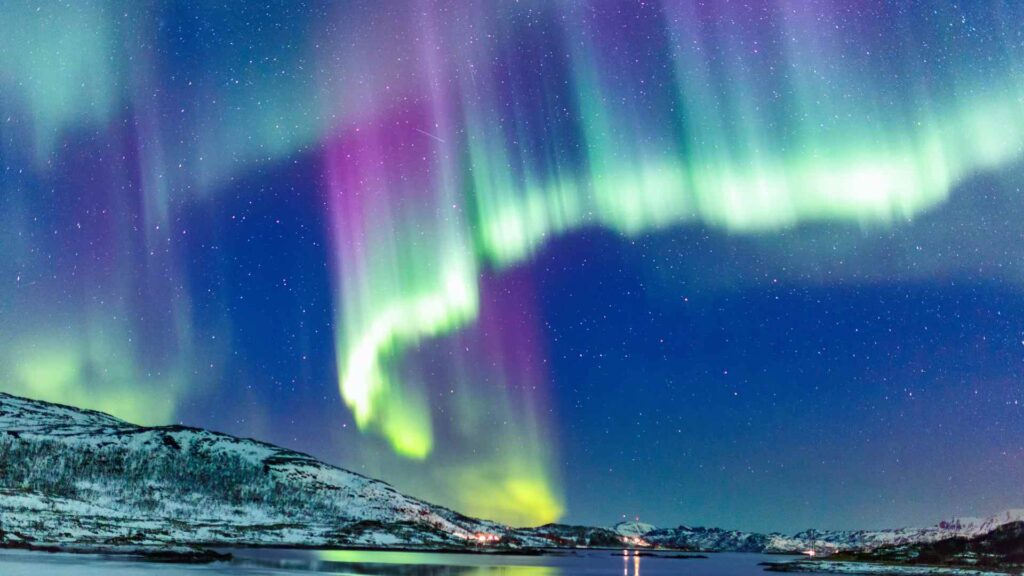
You need three things at once: darkness, clear skies, and solar activity. Visit Norway puts the viewing window between September and April, with the highest statistical activity around the spring and autumn equinoxes.
Aurora activity and cloud cover both matter, and the darkest hours around late evening through early morning are usually the useful viewing window. Check NOAA space-weather guidance plus a local cloud forecast, then be ready to go outside when an alert arrives.
Before heading out, check the NOAA aurora forecast and the planetary Kp index. Kp runs 0 to 9, and a higher number means a brighter, more active display reaching farther south.
NASA and NOAA announced in October 2024 that Solar Cycle 25 had reached its maximum phase. That can support more geomagnetic activity around this part of the cycle, but it cannot make a particular sailing, port, or night reliable.
The Northern Lights are never guaranteed, but itinerary design can improve your odds. Choose long hours of darkness, several nights above or near the Arctic Circle, and late departures or overnights rather than a port name alone.
How to choose the itinerary
For the strongest cruise setup, favor a winter or shoulder-season coastal itinerary with multiple northern nights and at least one late stay in Tromso, Alta, Narvik, Svolvær, or Kirkenes. Akureyri can be a useful Iceland base too, while Reykjavik sits farther south and often needs a dark-sky drive away from city light.
Ordinary summer Norway cruises can visit excellent Arctic ports without meaningful darkness, and many Iceland cruises call only during daylight. Read the hour-by-hour schedule before paying a premium, because a famous aurora port at noon does not match the title intent of this trip.
Tromso, Norway: my top aurora base
Tromso sits well above the Arctic Circle, and it is the port I would pick first. It pairs a real city with easy access to dark, open country, which is exactly the combination you want.
Full details on landing here are in my Tromso cruise port guide. While you wait for dark, a few daytime stops earn their place.
- Fjellheisen cable car: Ride up Mount Storsteinen for a sweeping view over the city and fjords, and a dark vantage if the lights appear.
- Arctic Cathedral (Tromsdalen Church): The white, angular landmark across the bridge is a Tromso icon.
- Polaria: An Arctic experience center and aquarium that explains the region’s environment and wildlife.
- Polar Museum: The story of Norway’s polar expeditions, including Roald Amundsen.
Fun fact: Tromso’s Arctic-Alpine Botanic Garden is the world’s northernmost botanic garden, which tells you plenty about the latitude you are standing at.
Alta, Norway: the City of the Northern Lights
Alta earned its nickname honestly. The world’s first permanent aurora observatory opened on nearby Haldde mountain in 1899, an early home of northern lights science.
Its inland setting can bring clearer, drier skies than the exposed coast on some nights. A few standouts:
- Alta Museum (Rock Art Centre): A UNESCO World Heritage Site with thousands of prehistoric rock carvings.
- Northern Lights Cathedral: A striking spiral of titanium clad in the town center, opened in 2013.
- Sorrisniva Igloo Hotel: A seasonal hotel rebuilt from snow and ice each winter just outside town.
Sami culture runs deep in this part of Finnmark, and husky or reindeer experiences are common winter add-ons here.
Reykjavik, Iceland: aurora plus fire and ice
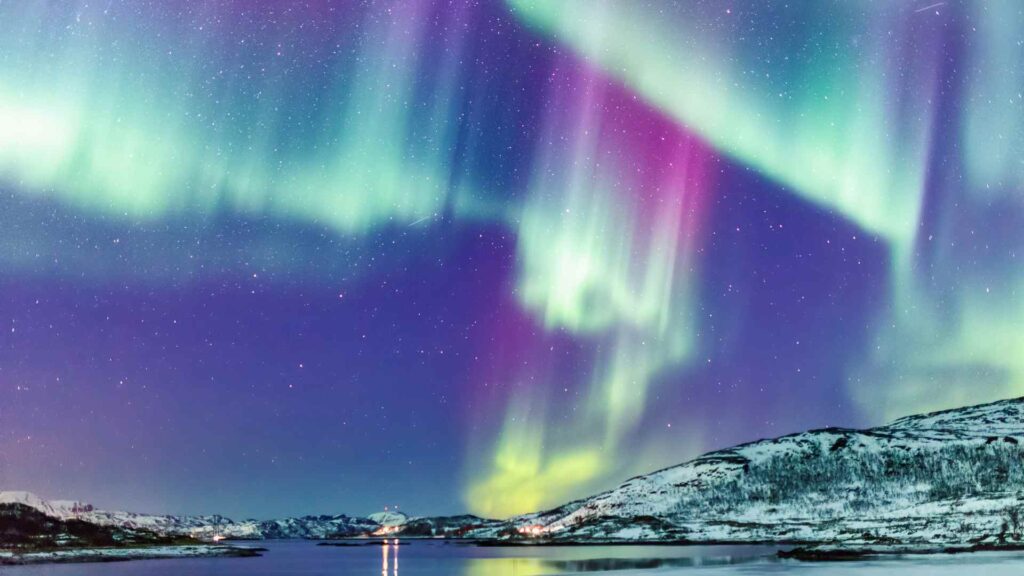
Iceland sits just below the Arctic Circle, and winter calls at Reykjavik can deliver the lights on clear nights. The draw here is pairing aurora hunting with geysers, waterfalls, and volcanic country.
My full Iceland cruise ports guide covers the practical side. Visit Iceland stresses the same essentials: darkness, clear skies, and getting away from city glow.
- Grotta lighthouse: A dark spot on the edge of the city, popular for aurora watching when skies cooperate.
- Thingvellir National Park: A UNESCO site in the Golden Circle with wide, dark horizons.
- Hallgrimskirkja: Ride the tower lift for a daytime panorama over the colorful rooftops.
- Perlan: Interactive exhibits on Iceland’s nature, including a planetarium show about the aurora.
If your call is a long or overnight one, a Golden Circle or Blue Lagoon outing fills the daylight hours nicely before the sky darkens.
The Norwegian coastal route: aurora from the deck
Some of the most reliable aurora sailings are the coastal voyages that run north past the Arctic Circle. Because they cruise dark waters far from city light, the show can appear straight off the deck.
These itineraries string together the ports below, so you get several dark nights at different latitudes rather than one roll of the dice.
North Cape (Honningsvag): the edge of Europe
Honningsvag is the gateway to North Cape, one of the northernmost points reachable by road in Europe. It sits firmly under the auroral oval.
See my Honningsvag cruise port guide for landing details. The North Cape plateau and its visitor hall are the headline stop, weather permitting.
Lofoten Islands: peaks, sea, and sky
The Lofoten Islands give the aurora a dramatic frame of sharp peaks and fishing villages. It is one of the most photogenic places to catch the lights.
My Lofoten cruise port guide has the details. Henningsvaer’s harbor and the Lofotr Viking Museum are worthwhile daytime stops before dark.
Kirkenes and Bodo: two more northern calls
Kirkenes, near the Russian border in far northeastern Norway, is known for winter king crab safaris and a snowhotel. Bodo, just north of the Arctic Circle, adds the powerful Saltstraumen tidal current nearby.
Both sit at latitudes where the aurora is a genuine possibility on clear, active nights.
A word on Alaska and Scotland
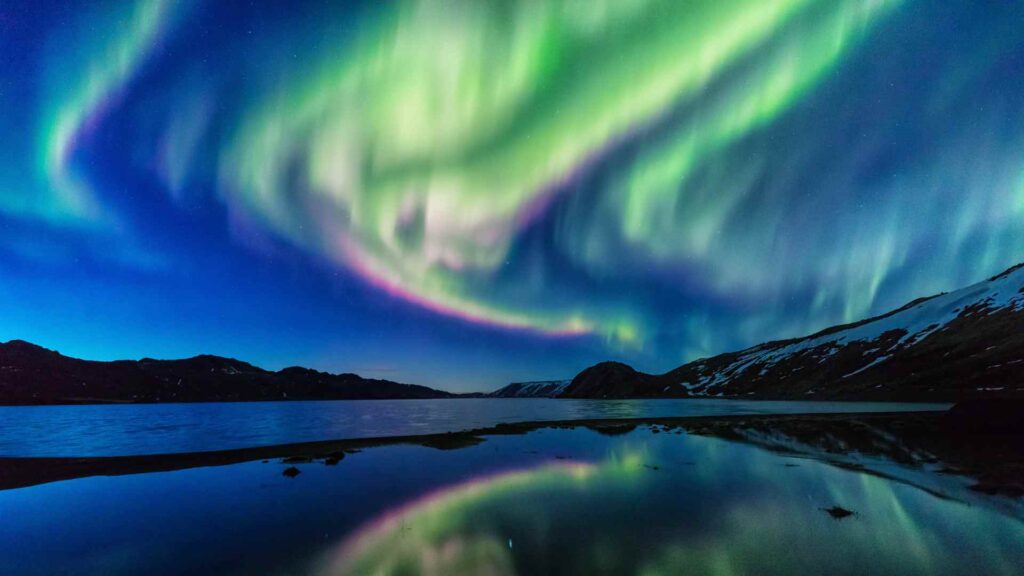
People often ask about aurora on an Alaska cruise. The catch is timing: mainstream Alaska cruise season runs May to September, when the far north stays too bright for the lights.
Fairbanks is a superb aurora destination, but it is an inland, winter, land-tour experience rather than a cruise port. For live odds there, the University of Alaska Fairbanks Geophysical Institute aurora forecast is the go-to source.
Northern Scotland and Shetland can catch the aurora during strong storms, but they sit south of the oval, so the odds are lower than in Arctic Norway. If you are combining regions, my Europe cruise ports hub helps map an itinerary.
Tours, weather, and realistic expectations
A guided chase can move around cloud and light pollution, but road weather may restrict routes and nobody can guarantee a sighting. Check whether a tour runs in poor weather, what cancellation or rebooking policy applies, how long you may stand outside, and whether toilets or a warm vehicle are available.
Honningsvåg is a gateway to North Cape, but the plateau road can close or run in convoy during winter conditions and the cape itself is not required for aurora. If mobility or cold tolerance is limited, a ship’s dark open deck or a shorter accessible tour may be the more comfortable choice.
How I would plan a northern lights cruise
- Sail the dark season: Aim for late September to late March. Avoid summer midnight-sun sailings if aurora is the goal.
- Give yourself several nights: Clouds and quiet Suns happen. More dark evenings north of the Arctic Circle means better cumulative odds.
- Get away from ship lights: On deck, move to a dark corner and look north. In port, a short chase tour to open country helps.
- Check the forecast nightly: Watch the Kp index and cloud cover, and be ready to step outside near midnight.
- Dress for real cold: Thermal base layers, an insulated jacket, hat, gloves, and waterproof boots. Standing still in Arctic air gets cold fast.
- Bring a proper camera: A camera with manual settings and a tripod captures the aurora far better than a quick phone snap, though newer phone night modes help.
For inspiration on the wider Norwegian coast, my guides to Bergen, Alesund, Geiranger, and Flam round out a fjords-and-aurora trip.
Quick answers
When is the best time to see the northern lights on a cruise?
The dark season, roughly late September to late March. Visit Norway cites the highest statistical activity around the spring and autumn equinoxes.
Can I see the aurora from the ship itself?
Yes, especially on coastal sailings far from city lights. Move to a dark part of the deck, look north, and let your eyes adjust.
Are the northern lights guaranteed?
No. You need darkness, clear skies, and solar activity together, so book several dark nights and treat any display as a bonus, not a certainty.
The bottom line
For the best shot at the aurora, sail Arctic Norway or Iceland in winter and give yourself several dark nights. Tromso, North Cape, Lofoten, and Reykjavik lead my list.
Set expectations honestly, pack for the cold, and let the Arctic sky do the rest.
How this guide was researched: Unless a first-hand visit is explicitly identified above, this guide uses official port, tourism, transit, government, and attraction sources where available. Logistics and time-sensitive details were reviewed on September 10, 2026; see our Editorial Policy.
More on this topic: browse every guide on weather, crowds and conditions.