Senegal and The Gambia Cruise Ports: Dakar and Banjul
Most ships that call at Dakar and Banjul are not really going to West Africa. They are crossing the Atlantic, and these two stops are what happens between the Canaries and the Caribbean.
My quick take
These are two of the more rewarding port days on any repositioning itinerary, and two of the more demanding ones. Both give you real history rather than a shopping street, and both ask more of you than a Caribbean call does.
I would book a guide or a driver in both, and I would do it before I sailed rather than at the gate. That is not because either place is dangerous, it is because a stranger who knows the city buys you a calmer, faster and much more interesting day.
The quick facts
- Both dock: Dakar and Banjul are alongside berths in working commercial ports, so no tender and no weather lottery.
- Season: Calls cluster in the cooler, drier stretch from roughly November through April.
- Language: French in Senegal and English in The Gambia, which changes the difficulty of your day more than you expect.
- Money: West African CFA franc in Senegal, dalasi in The Gambia, and cash in small notes in both.
- The headline sights: Goree Island off Dakar and Kunta Kinteh Island up the Gambia River, both World Heritage listed.
Why these two ports keep appearing together
The West African bulge sits directly on the seasonal migration between Europe and the Caribbean. Ships heading west in the fall and east in the spring pass close enough that a call costs them almost no extra sea time, which is the entire reason these ports exist on cruise schedules at all.
Dakar is the busier of the two by a wide margin, and Banjul turns up less often and on smaller or more adventurous ships. Both are usually paired with the Canary Islands and Cape Verde on the same voyage.
If you are trying to work out what kind of sailing you have actually booked, my piece on how a crossing differs from a repositioning cruise sorts out the vocabulary. The Cape Verde ports almost always sit on the same itinerary.
Dakar is a real capital and it feels like one
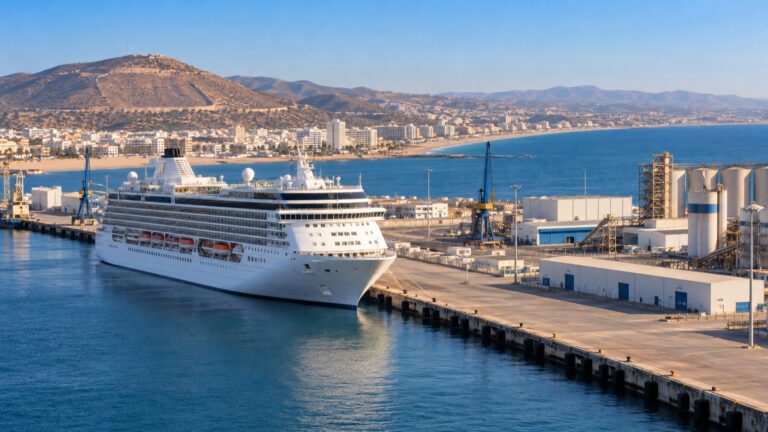
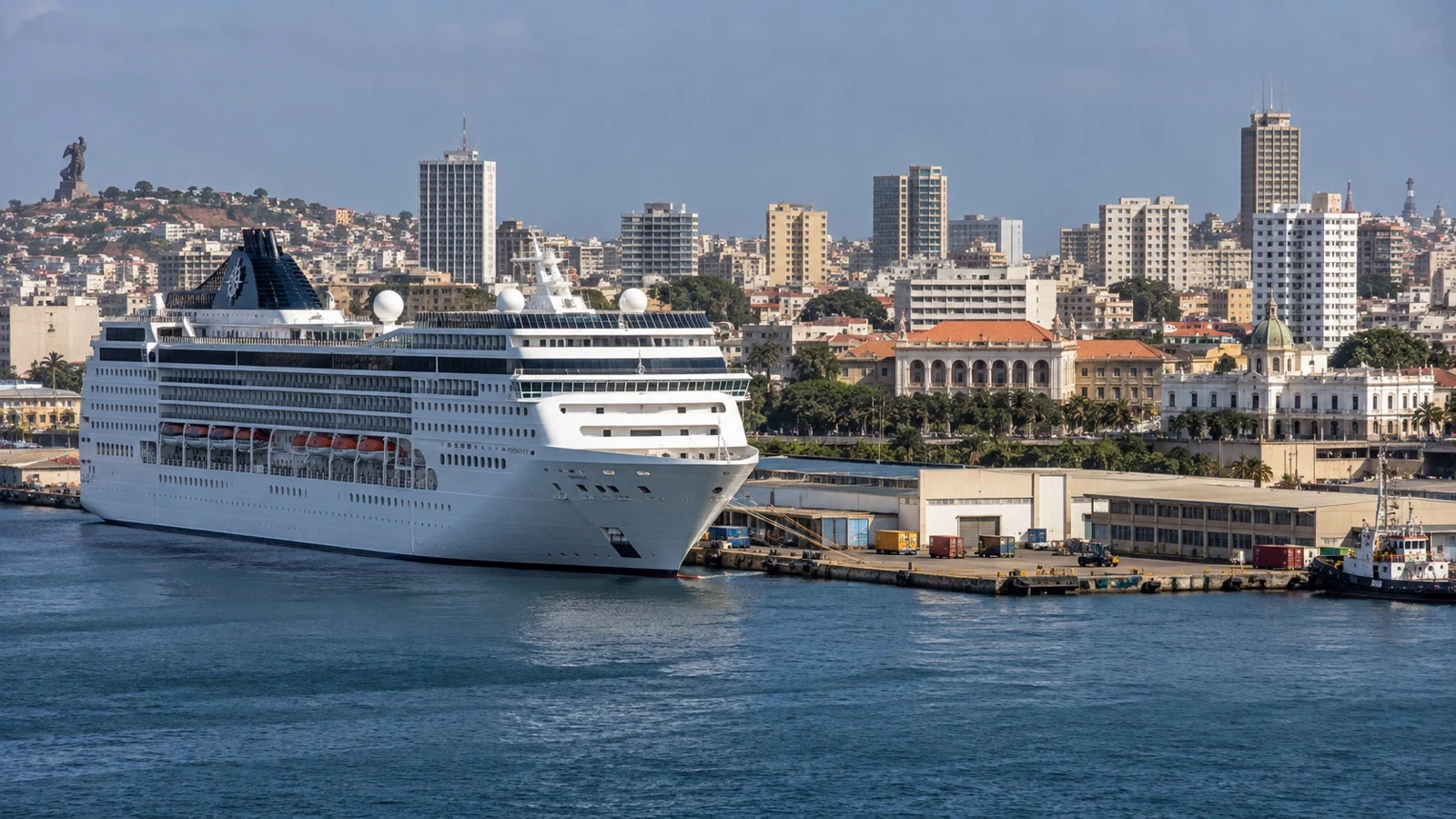
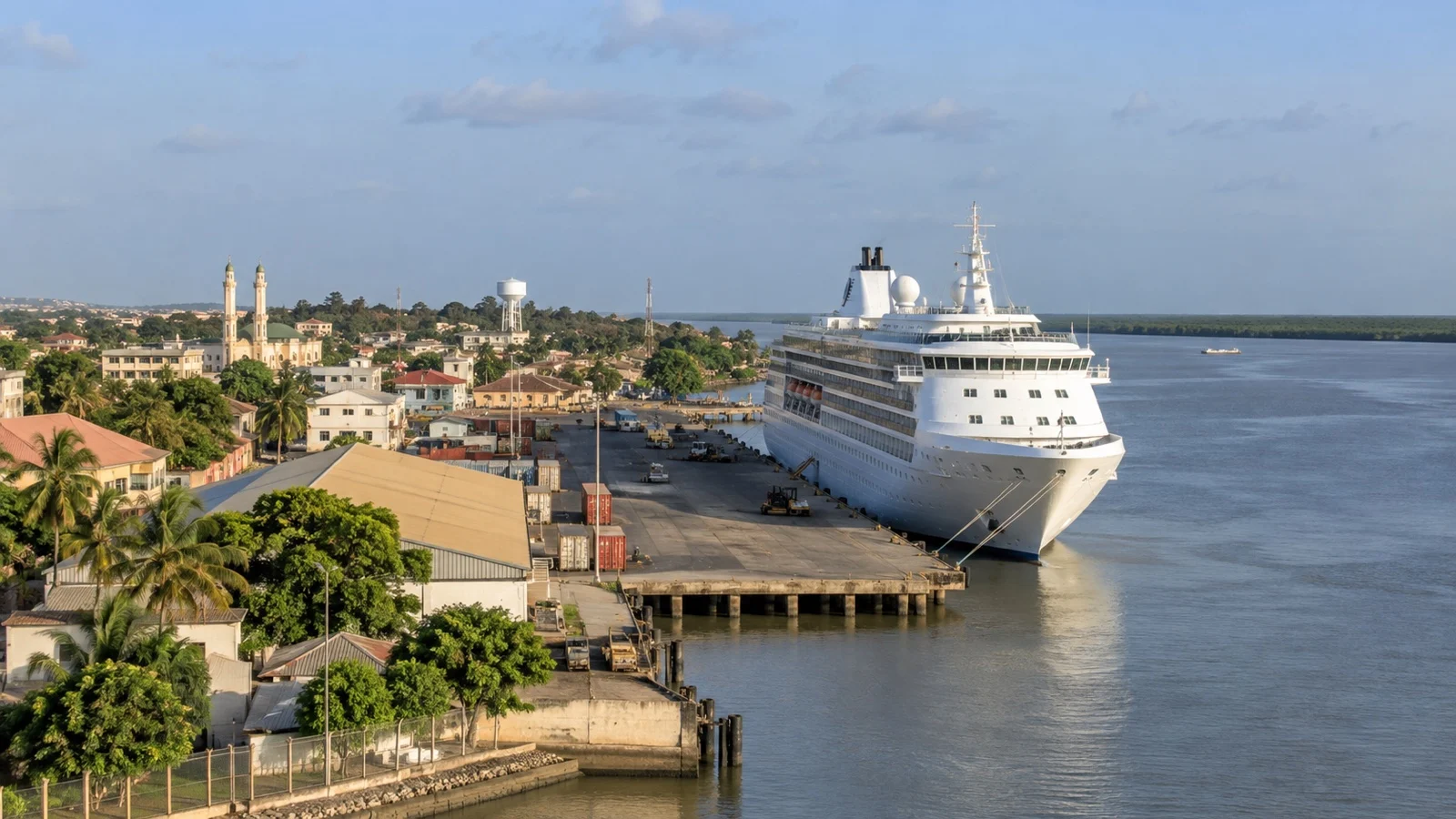
Ships berth alongside inside the Port of Dakar, a deepwater commercial harbor with something like six miles (10 km) of quays, on the eastern edge of the city. You walk off directly, and then you are in a container port rather than a promenade.
Downtown and Place de l’Independance are roughly a 10 to 15 minute taxi ride from the berth. That is short in distance and unpredictable in time, because Dakar traffic does what it wants.
The city rewards a half day if you give it one. The restored colonial market hall at Marche Kermel, the much louder Marche Sandaga, the Museum of Black Civilizations, the Grand Mosque and the painted fishing pirogues at the Soumbedioune fish market are all realistic, and the African Renaissance Monument out at Ouakam stands roughly 160 feet (50 m) tall with an elevator to a viewpoint inside.
Lac Rose, the salt lake northeast of town, is the excursion I would think hardest about. The pink color varies with the season and the conditions, and it is a long drive to be disappointed, so our Dakar port guide is right to tell you to manage expectations.
Goree Island is why most people come
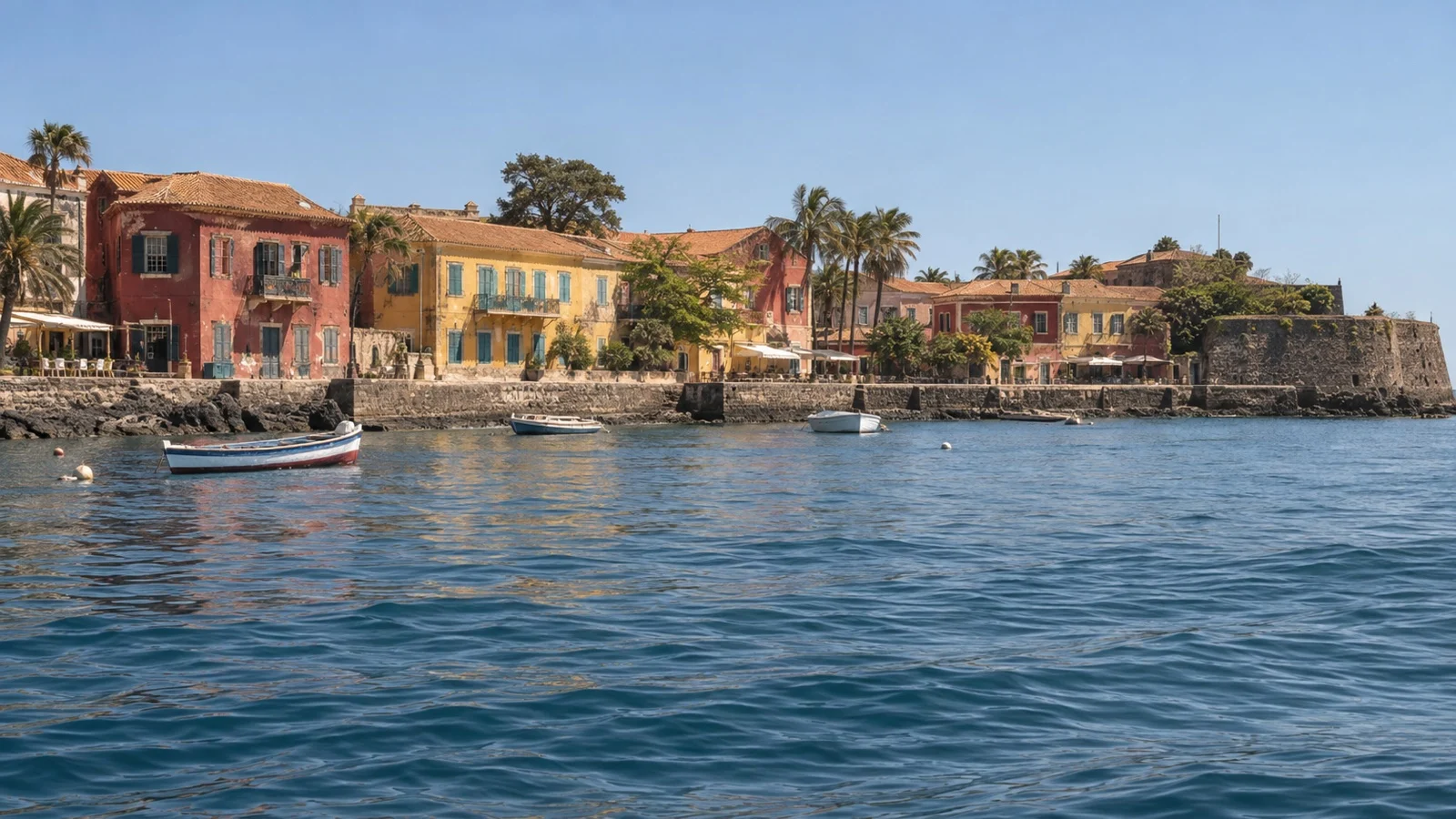
The island sits about 2 miles (3.5 km) off Dakar and is reached by a short passenger ferry from the city, not from the cruise berth. It was inscribed as a World Heritage site in 1978 as the largest slave trading center on the African coast, held in turn by the Portuguese, Dutch, English and French.
What you find is a small, car free island of pastel houses, a fort on a rocky plateau, and the Maison des Esclaves. The contrast between the merchants’ houses and the quarters below them is the whole point, and it lands hard.
This is a self contained morning and I would treat it that way. Getting to the ferry, crossing, walking the island properly and crossing back is most of a port day, and trying to bolt Lac Rose onto it is how people end up rushing the one thing they came for.
Banjul is small, close and slower than it looks
Ships generally berth alongside at the Port of Banjul, on the northern edge of the city center. Albert Market is roughly half a mile from the gate, which makes this one of the few West African calls where walking out is genuinely an option.
Albert Market is a dense warren of fabric, produce and craft stalls, and it is the most vivid thing within walking distance. Go early, carry small dalasi notes, and expect to bargain rather than to be quoted a price.
Everything else is spread out. Arch 22 on the edge of town gives you the panorama, the Kachikally crocodile pool at Bakau is the oddly memorable one, and the Makasutu forest reserve is the half day in the mangroves, but all three need a vehicle.
Distances here are short on a map and slow in practice. Our Banjul port guide makes the same point, and I would build a bigger buffer before all aboard than the drive time suggests.
Kunta Kinteh Island and the river
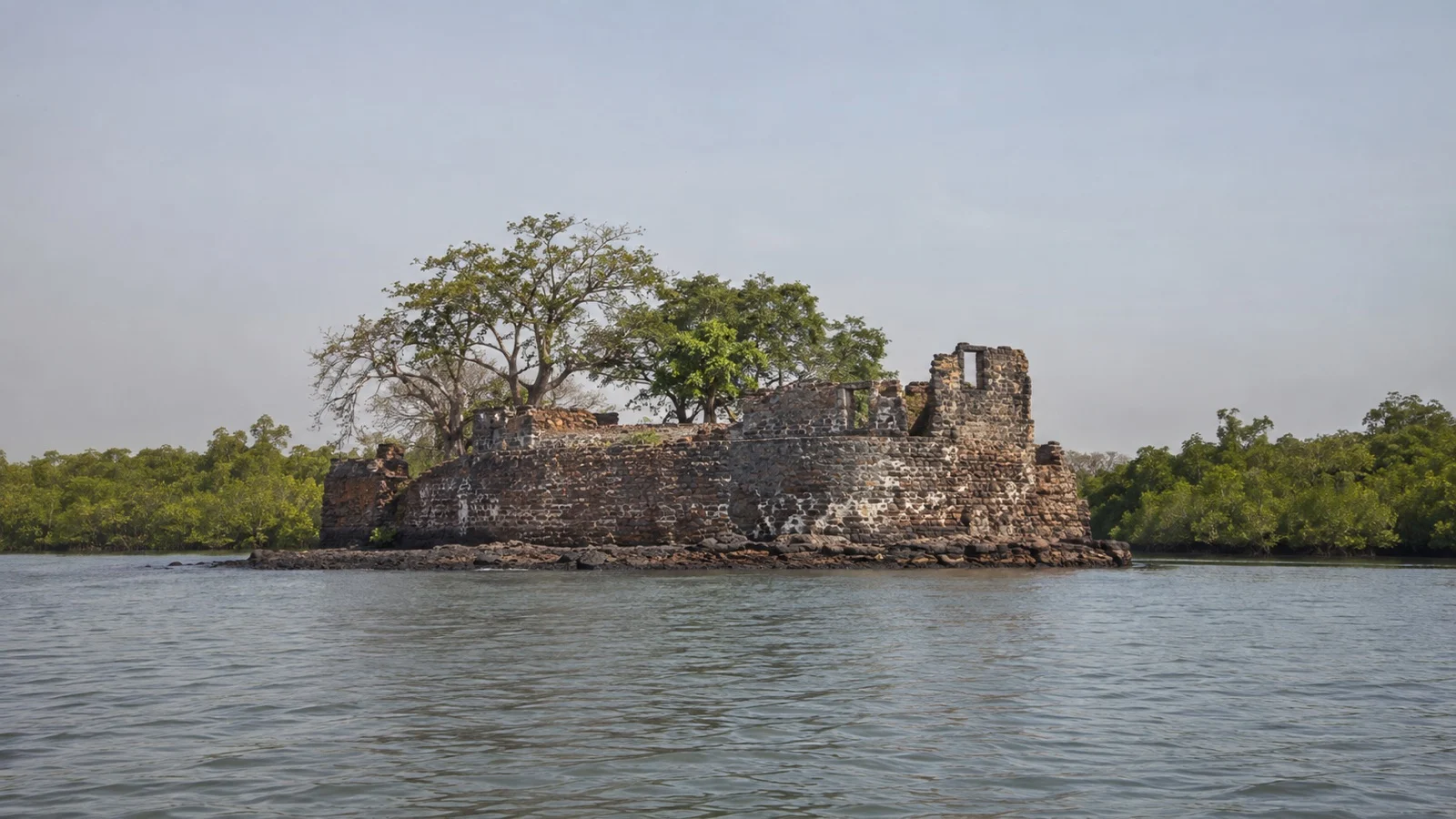
The most meaningful thing you can do in The Gambia is get on the river. Kunta Kinteh Island sits about 19 miles (30 km) upstream from the mouth and is part of a World Heritage listing of seven separate sites along the Gambia River, inscribed in 2003 for what they document about the African and European encounter and the slave trade.
It is a boat trip, and boat trips eat port days. If your call is short, this is the excursion I would book through the ship rather than assemble myself, purely for the guaranteed return.
If you just want sand and a quiet lunch
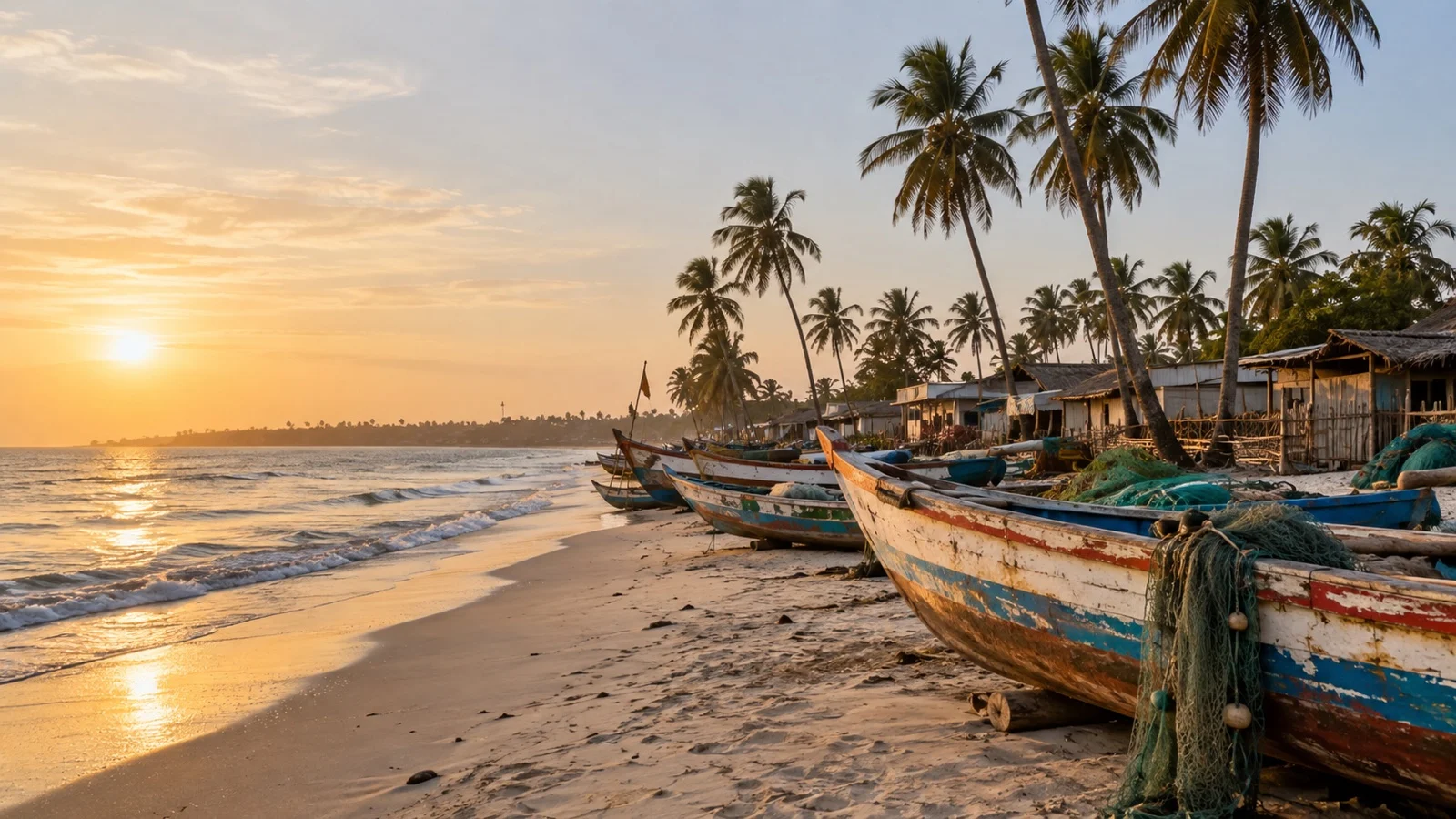
The Gambian coast west of Banjul is a proper resort strip, and it is the easy version of this port day. A driver, a hotel beach, a grilled fish lunch and back aboard is a completely defensible way to spend the call.
I would not pretend it is the reason to be in West Africa. It is, though, the right answer if you have a long crossing behind you and no appetite for a schedule.
Which of the two I would pick
Dakar, and it is not close. It is a bigger, more layered city, the sightseeing is better, and Goree is one of the genuinely important places you can reach on a cruise day.
Banjul wins on exactly one thing, which is language. Doing business in English rather than French removes a whole layer of friction from negotiating a taxi, agreeing a price, or asking where the restrooms are.
The hassle question, answered straight
Yes, you will be approached. Around the port gates, the markets and the ferry landing there are people selling crafts, offering to guide you, offering to be your friend for the day, and some of them will be persistent well past the point that feels comfortable to an American visitor.
This is normal and it is almost never a safety issue. Petty street crime is the actual risk in both countries, and it is the ordinary kind: bags, phones, visible cash.
What works is being warm and completely clear. A friendly greeting, a firm no thank you, and continuing to walk ends most of it, while an apologetic maybe later keeps you in the conversation for another ten minutes.
The people who have the worst time are the ones who engage half way. If you are the sort of traveler who finds this genuinely draining, that is a reason to book a guide, and it is the same calculation I describe in my notes on ports where I take extra care.
Guides and drivers, and what a fair arrangement looks like
A private driver or a licensed guide for the day is the single best purchase in either port. It converts a day of negotiating into a day of looking at things, and in Dakar it also solves the French problem.
Agree the whole thing in advance and in writing where you can. The price, the currency, the exact stops, the waiting time, the return to the ship and whether entry fees are included, all settled before you leave the pier.
- Fix the price first: Taxis are unmetered, so the number is whatever you agreed before the door closed.
- Name the stops: A vague day trip becomes a tour of your driver’s cousin’s craft shop.
- Confirm the return: Getting back to the gate by a stated time is the part of the deal that actually matters.
- Carry the fare in small notes: Nobody at the end of a long day has change for your biggest bill.
- Tip separately: Keep it apart from the agreed fare so the fare stays the fare.
Ride hailing is not the safety net here that it is in Europe. Assume you are arranging transport the old fashioned way and you will not be caught out.
Money, language and the small stuff
Senegal uses the West African CFA franc and only a few places take cards, with ATMs available in Dakar but not reliably. The Gambia uses the dalasi, cards work at major hotels and a handful of restaurants when the internet is cooperating, and dollars and euros are widely accepted.
Change money at a bank or a proper bureau rather than with whoever offers on the street. My guide to carrying cash and cards in port covers why small bills matter more than the total you bring.
On language, French runs Senegal and English runs The Gambia, with Wolof widely spoken in both. A dozen words of French and a translation app will carry you a long way in Dakar, and neither is necessary in Banjul.
Entry rules, and the one that surprises people
Senegal is the easy one. US passport holders need no visa for stays of 90 days or less, with six months of passport validity beyond arrival and one blank page for the stamp.
The Gambia is the one that catches people out, because it does require a visa for US citizens, obtainable in advance or on arrival, paid in cash, with a separate security fee on top. Cruise passengers on a day call are normally cleared as a group by the ship and go ashore on a pass, so the practical answer usually differs from the paperwork answer.
Do not guess at which version applies to you. Ask your line directly, and ask early enough that a surprise is fixable, which is the general point of my roundup of ports where your passport alone is not enough.
The health box to tick before you sail
Yellow fever vaccination is not required for either country if you are arriving directly from the United States. It becomes required if you arrive from or transit a country with yellow fever transmission risk, which a West African itinerary can easily create.
That is the check I would do the moment I book, not the week before. A certificate takes time to arrange and the rule is about your route, not your nationality.
Malaria is present in both countries. A daytime port call is a much smaller exposure than a stay ashore, but repellent is sensible and anything more than that is a conversation with a travel clinic.
What a good day actually looks like
In Dakar, a good day is Goree in the morning and one city thing in the afternoon. You come back tired, quieter than you left, and glad you did not try to fit in a lake.
In Banjul, a good day is either the river or the market plus a beach lunch, and not both halves of the country. The trap is a four stop itinerary across roads that do not move at four stop speeds.
Quick answers
Is Dakar safe for cruise passengers?
Senegal sits at the lowest advisory tier, and the realistic risk is street crime rather than anything dramatic. Keep valuables out of sight, use a licensed taxi or a booked guide, and steer clear of any demonstration.
Can you visit Goree Island on your own from a cruise ship?
Yes, by taxi to the ferry landing and then the passenger ferry across. Give it the whole morning and watch the return crossing times against your all aboard.
Do I need a visa for a Banjul cruise stop?
The Gambia requires a visa for US citizens in the general case, though day callers are usually cleared as a group by the ship. Confirm with your cruise line rather than assuming either way.
Is Banjul walkable from the ship?
Albert Market is about half a mile from the port gate, so the center is genuinely walkable. Everything beyond the market needs a vehicle.
When do cruise ships call at Dakar and Banjul?
Mostly between November and April, when the weather is cooler and drier and the repositioning ships are passing. Outside that window calls are rare.
Final word
Dakar and Banjul are not easy port days and they are not supposed to be. They are the stops where a repositioning cruise stops being a series of sea days and turns into actual travel.
Book the guide, carry small notes, start early and be straightforwardly polite with everyone who approaches you. If you want to see how these two fit alongside the rest of the continent, our region by region guide to Africa’s cruise ports is the place to go next.
How this guide was researched: Berth arrangements, walking distances, visa and vaccination rules, currency notes and current travel advice for Dakar and Banjul were checked against official government and heritage listings in November 2026. Visa fees, advisory levels and ferry and tour schedules change often, so confirm the details that apply to your own sailing before you book. See our Editorial Policy.