Agadir Cruise Port: Beach, Kasbah & Souk in Morocco
Agadir is easy to underestimate on a Morocco itinerary. It is a calmer, more modern stop than the country’s famous medina cities, with a long beach and a hilltop ruin whose history gives the port much more depth than the resort skyline suggests.
My quick take
Agadir doesn’t look like the Morocco of postcards, and there’s a reason for that. A 1960 earthquake leveled the old city, and everything you see today was rebuilt from scratch a mile or so south of the original site.
So instead of a tangled medina like Tangier, or the grand colonial-era landmarks of Casablanca, Agadir gives you wide boulevards, a long beach, and a slower pace. If your itinerary stacks Agadir after a couple of more intense port days, that can be a welcome reset.
It does mean the real highlights, the Kasbah ruins and the mountains, take a bit of effort to reach. Go in knowing that, and the day rewards you.
Agadir Cruise Port Quick Facts
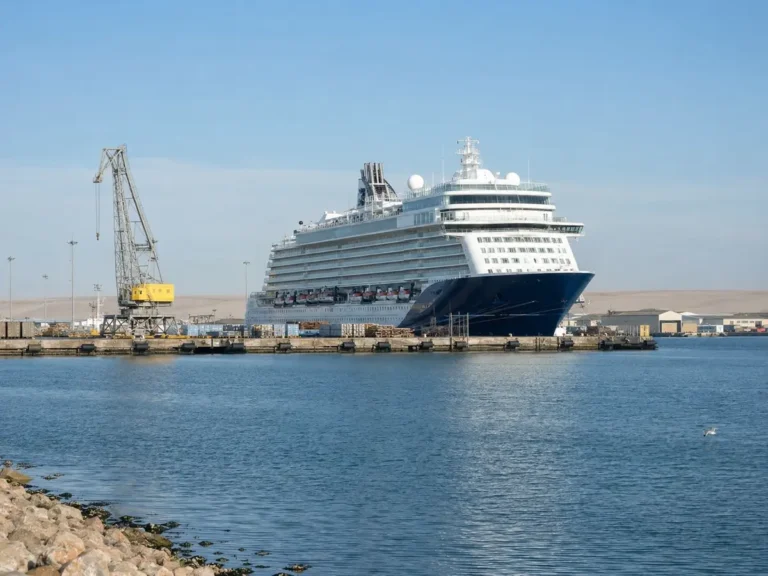
- Where you land: Agadir’s commercial port, a working harbor of fishing boats and cargo cranes a few miles north of downtown, not a purpose-built cruise terminal. There is no souvenir strip waiting outside the gate, just the taxi line.
- Dock or tender: It is a deep-water commercial port behind a breakwater, so there is no tendering involved.
- Into town: Taxi, cruise-line shuttle, or a booked tour.
- Currency and language: The Moroccan dirham (MAD); Arabic and Tashelhit are what you will hear locally; French is widely spoken, and English is common in tourist areas.
- Time zone: Morocco generally uses UTC+1, but the government can change clocks for Ramadan or other policy decisions. Keep the ship on the clock announced onboard.
- Operational watch: The breakwater shelters the working harbor, but the captain and port make the final decision when Atlantic weather affects the call.
Getting off the ship: port logistics
Once you’re through the terminal, you’re standing in an active commercial port, not a tourist welcome zone. There’s no strip of souvenir stalls waiting for you, just cargo operations, fishing boats, and a taxi line.
The first decision is shuttle, authorized taxi, or a booked tour from the controlled port area. Confirm whether the taxi is metered or fixed-price, agree on the total before leaving, and photograph the pickup point for the return.
I’d budget the first 20 to 30 minutes of any port day just for this transition. The port sits a genuine few miles from anything worth seeing.
Getting around
Agadir itself is spread out and modern, which changes how you get around compared with a compact old-town port. Taxis are cheap by Western standards and the easiest way to cover ground, so just settle the fare before you go.
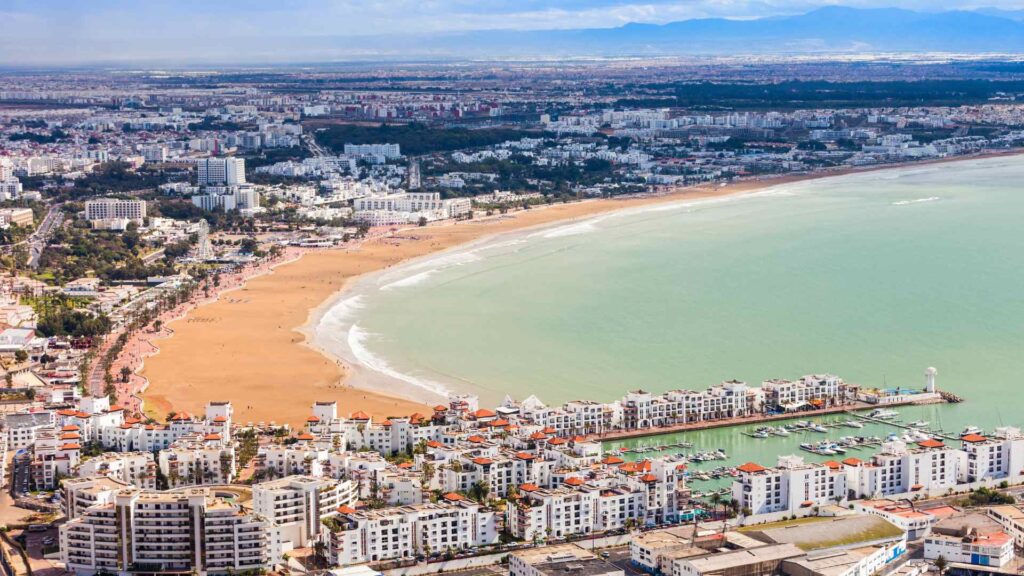
Once you’re in the city center or along the seafront, walking is genuinely pleasant. The promenade runs the length of the roughly 6-mile beach, flat and shaded in places, so it is easy to put taxis aside for a couple of hours and explore on foot.
For anywhere outside the city, whether that’s Paradise Valley, the Atlas foothills, or a Berber village, you’ll want a taxi arranged for the return trip or a guided tour. Public buses aren’t set up for visitors on a ship’s clock.
Agadir Oufella is reached by road, licensed taxi, tour, or the current cable-car operation rather than a casual climb from the marina. Check the official site for access and ticket information on your date.
Build the route before bargaining
A city loop can combine Agadir Oufella, the promenade, and Souk El Had with two or three pre-agreed taxi legs. Check the souk’s current closing day and Ramadan hours, because a market listed as open online may not match your call date.
Paradise Valley is a separate out-of-town excursion with mountain-road time, seasonal water levels, and limited return options. Choose a ship tour or a driver who waits, and target the ship 90 minutes before all aboard.
First visit: Oufella early, promenade lunch, then the souk if it is open.
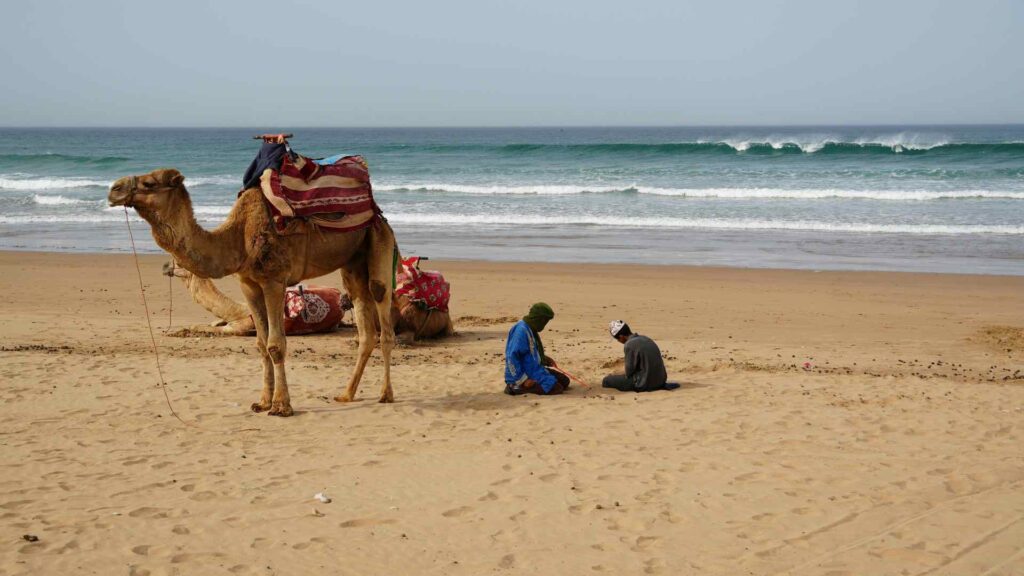
Beach day: use a beach club or patrolled area and follow surf flags; the Atlantic can be rough even when the sand is busy.
Mountain day: book the full transport and accept that Paradise Valley replaces most city sightseeing.
The stops I would actually spend time on
Kasbah of Agadir Oufella. This hilltop fortress overlooking the port is the one place in Agadir that still carries the pre-1960 city’s history; Most of what you see are restored ramparts rather than a full structure, which is the point, because it doubles as a memorial to the earthquake that leveled the old town.
The view over the marina, the beach, and the Atlantic is worth the trip on its own. The Kasbah was originally built in 1572 under Sultan Abdallah al-Ghalib, and after sitting in ruins for over sixty years, its restored walls only reopened to visitors in February 2024.
The Agadir beach promenade. This is a roughly 6-mile stretch of sand backed by a wide, walkable corniche lined with cafes; It’s where I’d send anyone who just wants a slow, low-effort port day, so grab a coffee, watch the surfers, and let the afternoon go by.
The seafront’s mild, wind-softened climate is a big part of why Agadir markets itself as a year-round beach destination rather than a strictly summer one.
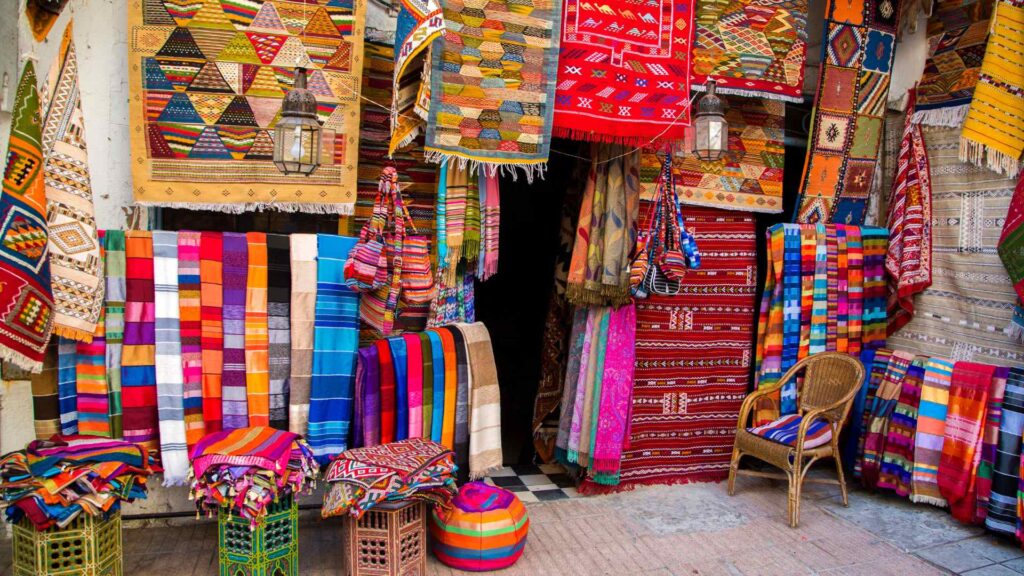
Souk El Had. This is one of Morocco’s largest markets, with thousands of small stalls organized loosely by trade: spices, leather, ceramics, textiles, produce; It’s louder and more maze-like than the beach promenade, and bargaining here is expected, not optional.
The souk is laid out with roughly 6,000 individual stalls. That’s part of why it’s easy to lose an hour in there without meaning to.
Paradise Valley or a Berber village day trip. If you have a full day and want to see beyond the city, the drive toward the Atlas Mountains foothills gets you to Paradise Valley’s rock pools, or to a Berber village for mint tea and a very different pace of life than the coast; this is the excursion I’d book ahead rather than wing, purely because of the drive time.
The countryside around here is argan country, and the Berber know-how behind argan oil is recognized as UNESCO intangible cultural heritage, so a village stop often comes with a demonstration. Paradise Valley itself sits roughly 37 miles northeast of Agadir, right where the coastal plain starts climbing into the Atlas range.
How I would plan the day
With a full day in port, I’d take a taxi straight to the Kasbah first thing, while it’s cooler and before the light gets harsh for photos. The climb and the views are worth doing early.
From there, head down to the marina and walk the promenade toward the city center, stopping for lunch somewhere with an ocean view. Save the afternoon for Souk El Had if bargaining and browsing sound fun, or just stay on the beach if it doesn’t.
If your ship is only in for a half-day, skip the souk and pick one: the Kasbah for the story and the view, or the beach for the reset. Trying to also fit in Paradise Valley on a short call is where people run out of time, since that one really needs the better part of a day by itself.
Money, dress, and entry details
Use Moroccan dirhams for small purchases and take cash from a bank ATM rather than depending on euros. Dress comfortably but modestly away from the beach, ask before photographing people, and expect altered business hours during Ramadan.
Visa and passport rules depend on nationality and itinerary, so check Morocco’s official consular guidance and the cruise line before sailing. Declare restricted items as instructed and do not assume a ship card replaces the documents named onboard.
A realistic word on accessibility
I want to be straightforward about this one. The port itself is a working industrial area with uneven surfaces and no dedicated pedestrian infrastructure, so anyone with mobility limitations will need door-to-door taxi or shuttle transport rather than attempting to walk any part of it.
The Kasbah involves a genuine climb of steps and slope, and it isn’t realistic for wheelchairs or those with limited stamina. Souk El Had has narrow, crowded, sometimes uneven walkways that make navigation slow.
The one bright spot is the beach promenade itself. It’s flat, paved, and wide, which makes it the most accessible stretch of the whole port day by a wide margin.
When to go, and the weather
Agadir’s whole tourism pitch rests on its climate, and it mostly delivers. The city claims around 340 sunny days a year, and Atlantic trade winds keep it from getting as brutal as Morocco’s interior.
Winters are mild, with January averages around 69°F, which is a big reason cruise itineraries and package tourists alike treat it as a year-round stop. Summer is warmer, generally around 80°F, though it can spike well beyond that during heat events.
If your call falls in winter, it’s genuinely one of the more comfortable ports on a Morocco itinerary. In peak summer, plan on the beach and shaded promenade over the exposed Kasbah climb in the middle of the day.
Our piece on Morocco Cruise Ports is the fuller version of this point.
Quick answers
How far is the port from downtown Agadir?
A few miles, close enough for a short taxi ride but far enough that walking isn’t practical.
Do I need dirhams, or will euros work?
Bring or exchange dirhams if you can, because euros are sometimes accepted in touristy spots but cost you on the exchange rate compared with local currency or a card.
Is Agadir worth it if I’ve already done Casablanca or Tangier?
Yes, but for a different reason: it’s less about landmarks and more about pace, so go in expecting a beach-and-mountains day rather than a medina day.
Can I just walk to the beach from the port?
No, you’ll need a taxi or shuttle to get from the port into town first, but once you’re there the beach promenade is easy walking.
Is one day enough in Agadir?
For the Kasbah, the promenade, and the souk it is plenty, but add a long excursion or a second day if Paradise Valley is a priority.
Are cruise-line excursions worth it here?
For far-flung trips like Paradise Valley or a Berber village they save you the hassle of arranging return transport, while the Kasbah and beach are easy enough to do on your own by taxi.
Stacked up against the rest of Morocco’s cruise coast, Agadir is the low-key stop. Tangier gives you medina energy and Cap Spartel day trips, and Casablanca gives you the Hassan II Mosque and big-city landmarks.
Agadir gives you a beach reset with a genuinely moving hilltop ruin if you’re willing to go find it. Set against the wider sweep of Africa’s cruise ports, that contrast is exactly why I’d keep it on the list.
How this guide was researched: Unless a first-hand visit is explicitly identified above, this guide is based on independent research using official port, tourism, transit, government, and attraction sources where available. Logistics and time-sensitive details were reviewed on September 11, 2026; see our Editorial Policy.