The Best Months to Cruise Australia and New Zealand
Christmas in Sydney is a beach day. If you book an Australia and New Zealand cruise on northern hemisphere instincts you will pick the wrong month, pack the wrong bag, and pay peak fare for the privilege.
My quick take
February is the month I would book if the trip is mainly about New Zealand and the southern Australian cities. The weather has settled into its best stretch, the domestic school crowds have gone home, and the fares have come off their December ceiling.
If the trip is about the tropical north instead, that answer inverts completely and you want the middle of the year. This is the part travelers get wrong most often, because Australia does not have one cruise season, it has two that run at opposite ends of the calendar.
The quick facts
- Seasons are reversed: December through February is summer down here, and June through August is winter.
- Main season: The big Australia and New Zealand cruise season runs roughly October to April, peaking December to February.
- Cyclone season: The official Australian tropical cyclone season runs November 1 to April 30.
- Stinger season: Marine stingers make tropical beaches a suit and enclosure situation from late spring into early fall.
- The north runs backward: Cairns, Darwin and the Kimberley are at their best from about April to October, the dry season.
Everything is flipped, and it changes more than the temperature
The seasons run opposite to the northern hemisphere here, so the warm months are December, January and February and the cold ones are June, July and August. That much most people know before they book.
What catches them out is everything that hangs off it. School vacations, public holidays, hotel rates, whale seasons and the storm calendar all sit on the southern pattern, so a January sailing here is the equivalent of a July sailing in the Mediterranean in every way that costs you money.
Latitude also does more work than in most regions. The gap between the tropical north and the far south of New Zealand is enormous, and our guides to Australia’s cruise ports and New Zealand’s main stops lay out how differently those two ends behave.
October and November open the southern season
Ships reposition into the region in spring, so October and November are when Sydney, Melbourne and Auckland start filling up with cruise traffic again. Days are getting long, the water is still cool, and the fares have not reached their peak.
The tradeoff is variability. Spring here is genuinely changeable, especially across the south of New Zealand and Tasmania, and a November scenic cruising day can be gray in a way that January usually is not.
Best for: value hunters who want the full itinerary at a shoulder price and will take their chances on the weather.
December and January are peak everything
The long summer school vacation runs from about mid December to the end of January in Australia, and the whole country goes on vacation at once. Fares climb, popular tours sell out, and coastal towns that felt sleepy in October are suddenly full.
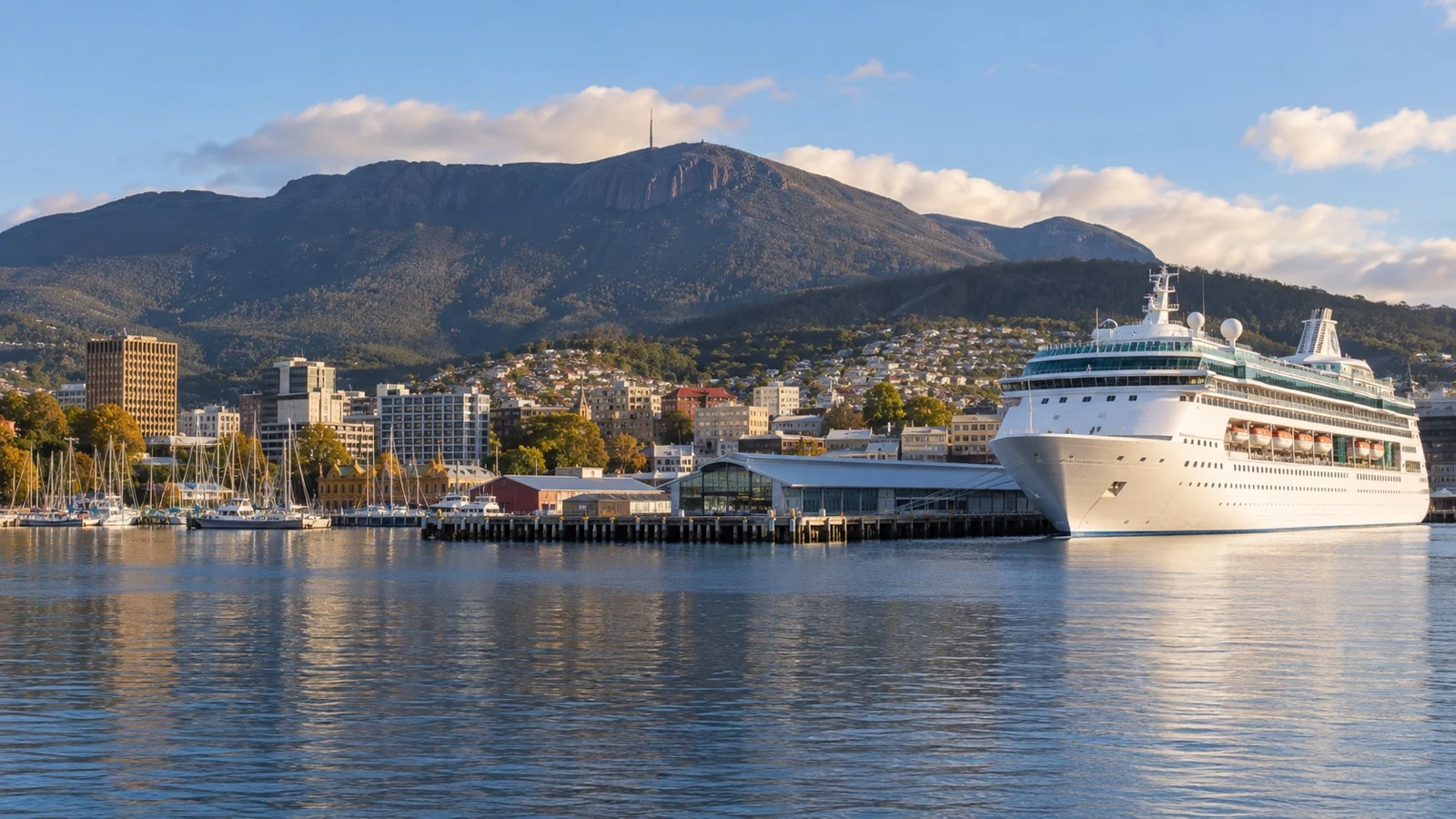
You do get the payoff. Sydney summer days usually sit around 80 degrees (26 C), Hobart runs in the low 70s (around 22 C), and daylight stretches late enough that a port day feels twice as long as it does at home in winter.
Best for: families tied to holiday dates and anyone who wants the harbor city version of Australia at full volume, with the fare to match.
February and March are the quiet sweet spot
Once the schools go back at the start of February, the region exhales. The weather is still summer, the sea has warmed up over the whole season, and the crowds at the famous spots thin out noticeably.
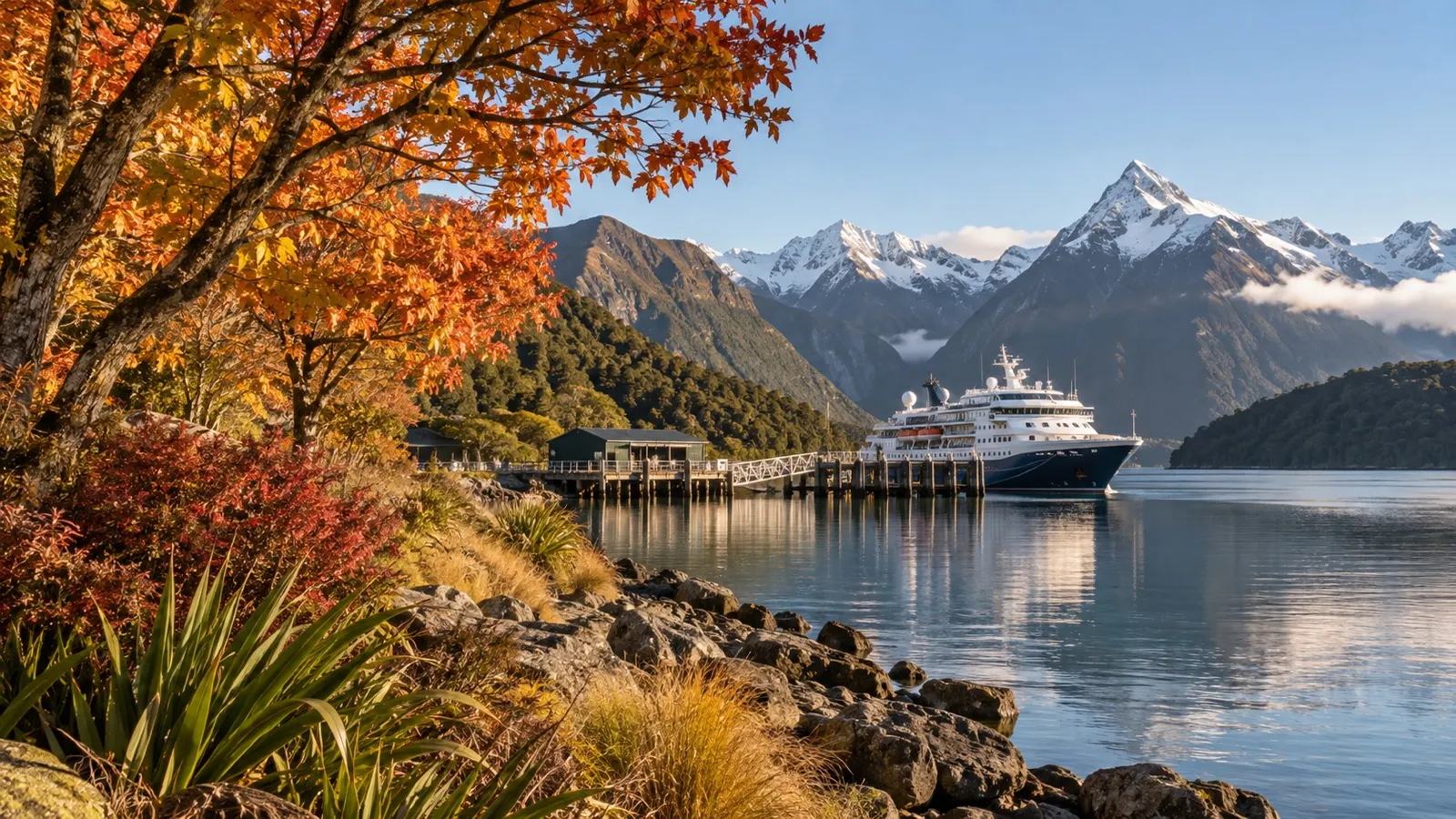
New Zealand in particular is at its best here. February is usually one of its warmest months, and the settled spells that make Fiordland and the Marlborough Sounds look like the brochure are more common now than in November.
Best for: couples, repeat cruisers, photographers, and anyone whose priority is the scenery rather than the school calendar.
April closes one season and opens the other
April is the handoff. The southern season winds down as ships reposition away, while the tropical north is drying out and starting its own season in the same weeks.
It is also the last comfortable month for Tasmania and the South Island before the cold arrives. Expect cool mornings, shorter days and a real coat requirement in the far south.
Best for: travelers who want fall color in Tasmania and the Central Otago hills, and who do not mind that some itineraries have already stopped running.
May to September belongs to the tropical north
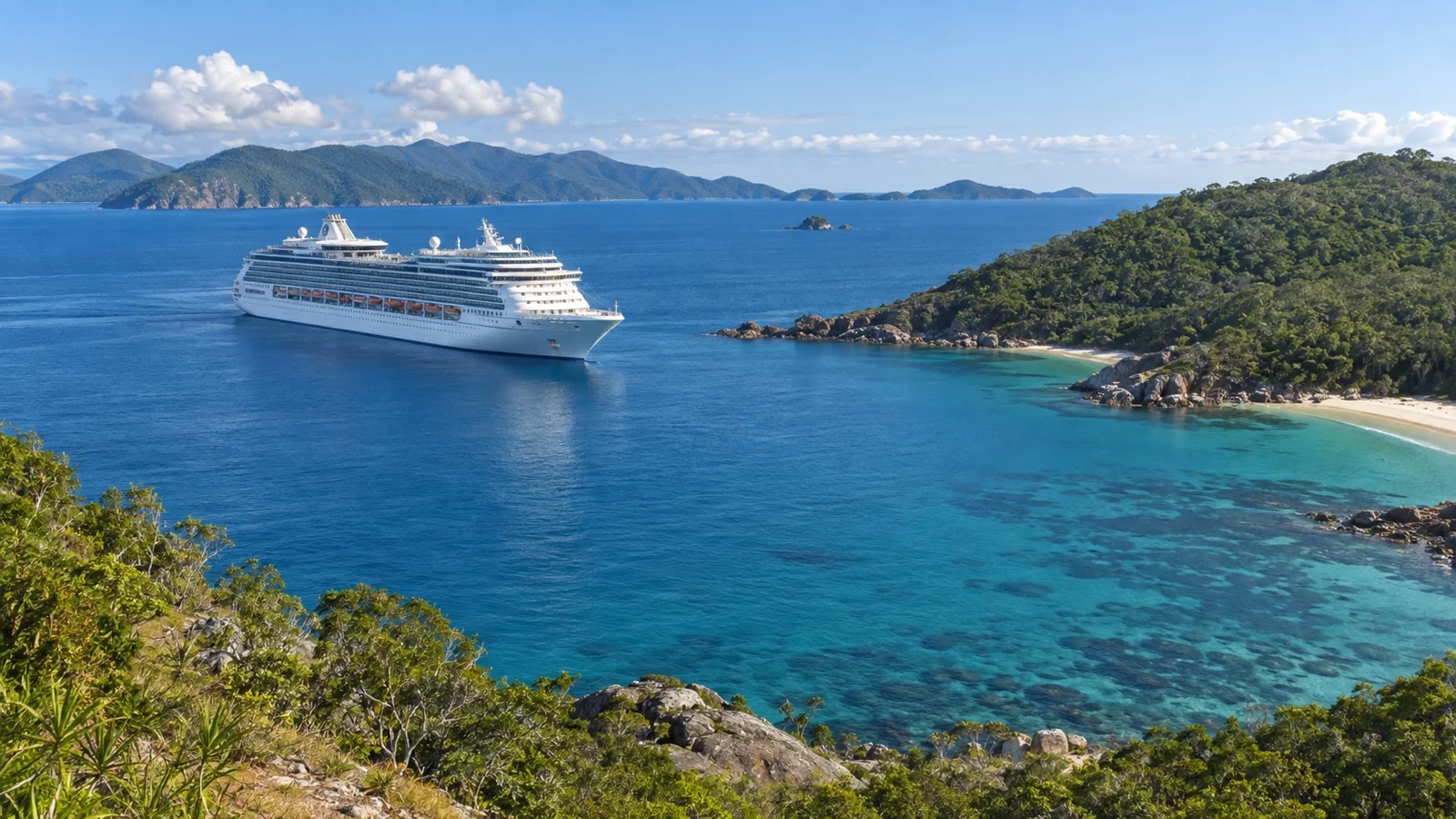
While the south is cold, the top of Australia is in its dry season and this is when it makes sense. Humidity drops, the rain stops, the seas calm down for reef trips, and the roads and rivers that were closed in the wet reopen.
This is the window for Cairns and the reef, and the only realistic one for the far northwest, where the expedition sailings described in our Kimberley cruise ports guide run through the middle of the year rather than the summer.
Best for: reef and rainforest travelers, expedition cruisers, and anyone who wants northern Australia without the sweat and the storms.
Cyclone season is a November to April problem
The official cyclone season in the Australian region runs from November 1 to April 30, with an average of about ten tropical cyclones a season and three or four of them crossing the coast. The first coastal crossing in an average season does not happen until late December.
That matters mostly if your itinerary goes north of Brisbane in summer. A cyclone off the Queensland coast in January rarely cancels a cruise, but it does swap a reef day for a sea day and it can close a tender port on swell alone.
Sydney to New Zealand itineraries sit well south of most of this, which is one more reason the summer sailings here lean toward the southern half of the map.
Stinger season changes what a beach day even means
In the tropical north, roughly north of Bundaberg on the east coast and Geraldton on the west, the warm months bring marine stingers into the shallows. The guidance is consistent and worth taking seriously, because it is a genuine medical risk rather than a nuisance.
The season runs from late spring into early fall, so in practice that is roughly November through May, and it varies with the location and the weather. What it means on a port day is netted swimming enclosures, stinger suits on reef trips, and lifeguard signage you actually read.
It is not a reason to skip the north in summer, but it is a reason to check what your beach day actually looks like first, which our Cairns port guide covers in more detail.
New Zealand’s shoulder months are the underrated buy
New Zealand’s cruise season is short and concentrated, roughly October to April, and the middle of it is expensive. The two ends are where the value sits.
Late October and early November give you long days, low crowds and green everything, at the cost of unsettled weather. March and early April give you warm sea temperatures, stable air and thin crowds, and this is the shoulder I would pick of the two.
Pack for the west anyway. Prevailing westerly winds dump their rain on the western side of the mountains, so the wettest and driest parts of the country sit only about 60 miles (100 km) apart, and your itinerary may well touch both.
The Tasman crossing is the part nobody plans for
Most Australia and New Zealand itineraries include a Tasman Sea crossing, which is two to three days of open ocean covering well over 1,000 miles (1,600 km) with nothing to hide behind. It sits in the westerly wind belt, and it is not a Caribbean sea day.
The crossing is generally kinder in the middle of summer and rougher at the shoulders, which is a real argument for January and February over late October if you are motion sensitive. Direction matters too, since a westbound leg into the prevailing wind can feel different from the eastbound run.
I would not pick a cabin at the far ends of the ship on this route, and I would have the motion sickness plan sorted before embarkation rather than at 2am in the Tasman.
Fiordland does not have a dry month
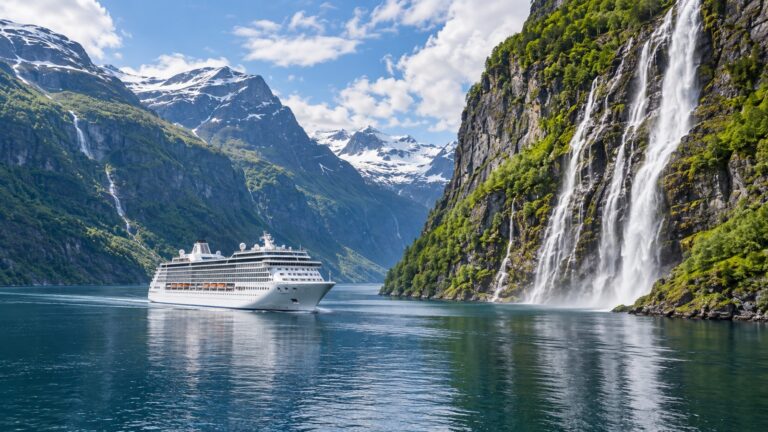
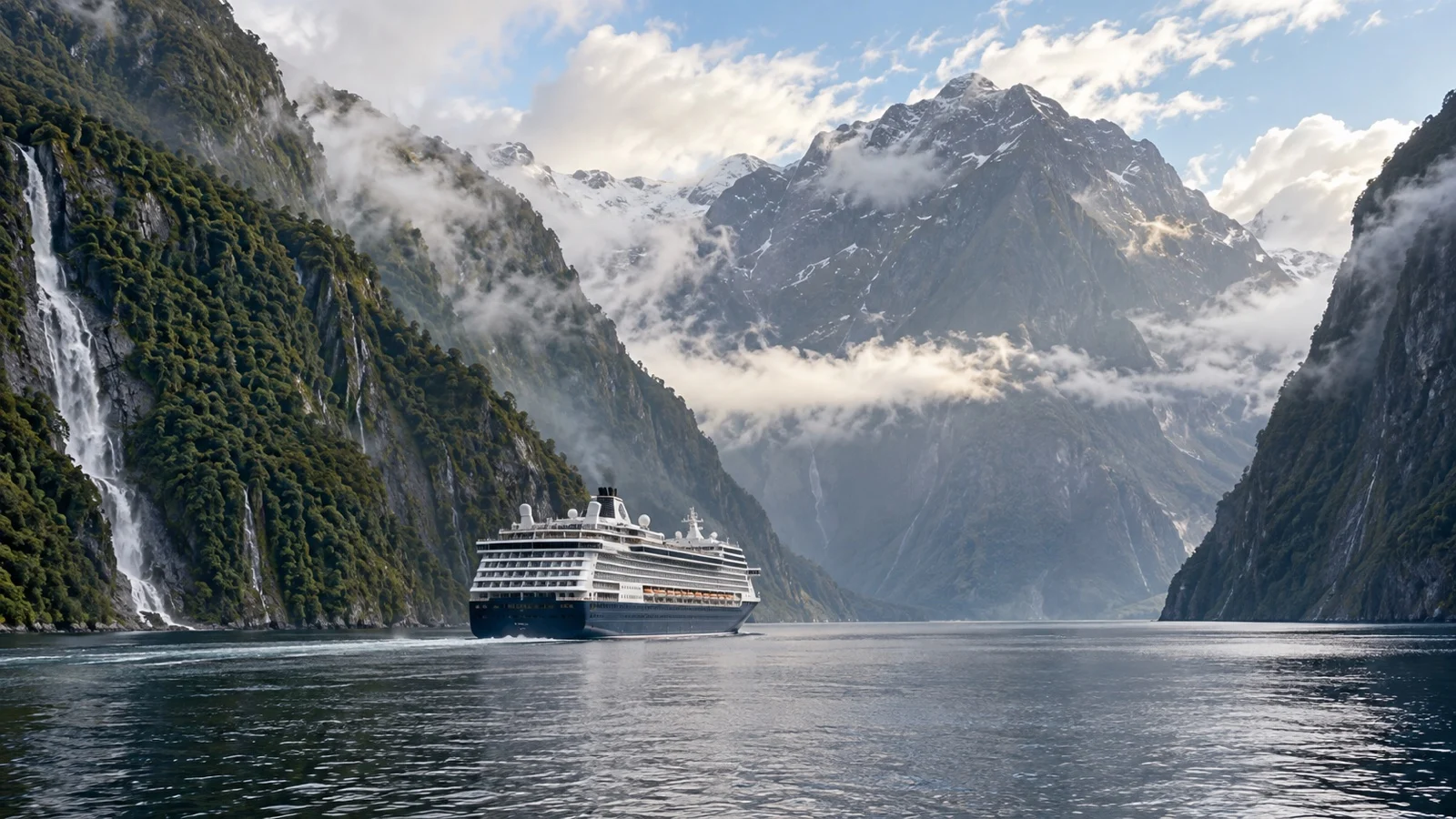
People book a summer sailing specifically to see Milford Sound in sunshine, and that is a coin flip in any month. This is one of the wettest places in the country, and rain is the normal state rather than the exception.
The upside is that rain is what turns the cliffs into waterfalls, so the wet version is arguably the better one. What you actually want is decent visibility, and conditions in the park are noted as challenging from May to October, which is outside the cruise season anyway.
Our notes on scenic cruising in Fiordland go further on what the day actually involves, including how early it starts.
Public holidays that will surprise you
Australia Day falls on January 26 and Waitangi Day on February 6, and both land inside the busiest part of the cruise season. Sydney Harbour in particular is a different place on those days, in the good way and the crowded way at once.
Anzac Day on April 25 is more solemn and more disruptive. Services run in the morning, plenty of businesses stay closed, and a port day built around shopping or a museum can quietly fall apart.
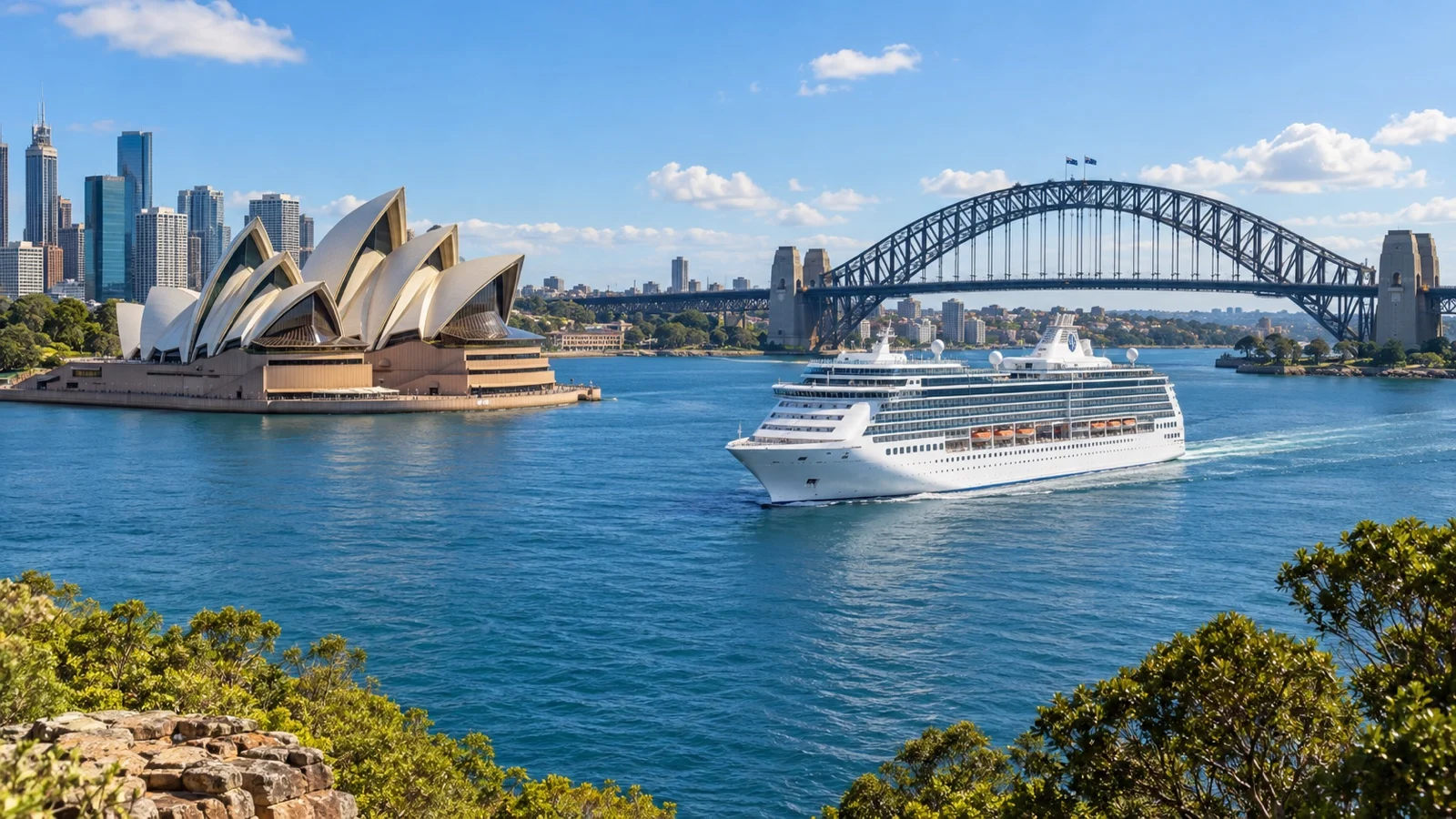
None of these are reasons to change your booking. They are reasons to check the date before you plan the day, the same way our guide to Sydney’s two cruise terminals is worth reading before you assume where you are docking.
Tasmania and the deep south run on their own clock
Hobart and the southern New Zealand ports are cooler than the numbers suggest, because the wind off the Southern Ocean has nothing between it and Antarctica. Summer highs in the low 70s (around 22 C) can still feel raw on a windy wharf.
These ports are also the ones most exposed to a canceled call. If your trip hinges on one southern stop, pick the middle of summer and accept that the shoulder months carry more risk.
Pack layers regardless of the month, and treat a waterproof shell as required equipment rather than a maybe, as our Hobart port guide makes clear.
What I would book, by traveler
There is no single best month across a region this large, and anyone who hands you one without asking where you want to go has not thought about it. Here is how I would split it.
- New Zealand scenery: February, or early March if you want the same weather with fewer people.
- First time, southern cities: Late February through March, warm and past the school peak.
- Great Barrier Reef: June through September, dry, calm and outside stinger season.
- Kimberley expedition: The middle of the year, since that is the only time it runs.
- Lowest fares: Late October and early November, with weather risk priced in.
If you can only do this once and you want both countries, I would take February. You are paying less than December, you are past the worst of the crowds, and you have the best odds on the Tasman and in Fiordland.
Quick answers
What is the best month to cruise Australia and New Zealand?
February for the southern cities and New Zealand, because it combines summer weather with post school crowds. For the Great Barrier Reef and the tropical north, it is the middle of the year instead.
When is cyclone season in Australia?
The official season runs November 1 to April 30, with about ten tropical cyclones in an average season and three or four crossing the coast. It mainly affects the tropical north, not Sydney or New Zealand.
When is stinger season in Queensland?
Roughly late spring into early fall, which in practice means about November through May in tropical waters north of Bundaberg. Swim in netted enclosures, wear a stinger suit on reef trips, and follow the beach signage.
Is the Tasman Sea crossing rough?
It can be, because it is two to three days of open water in the westerly wind belt with no shelter. Midsummer crossings are usually the calmest, and the shoulder months are the ones to be careful with.
Can you cruise New Zealand in winter?
Very little runs between May and September, since the season is built around the southern summer. If you see a winter sailing it is usually a repositioning leg with a thin port list.
Final word
Pick the half of the map first. The southern cities and New Zealand belong to the southern summer, and the tropical north belongs to the middle of the year, and no month serves both well.
Once you have done that, the month almost picks itself. Get it backward and you end up in Cairns in the wet with a stinger suit, or in Fiordland in a month when the ships are not even sailing.
How this guide was researched: Official cyclone season dates and averages, marine stinger guidance, New Zealand climate patterns and national park conditions were checked in November 2026 against government meteorological, health and parks sources. Season lengths, deployment months and fares shift from year to year, so confirm the dates and the port list for your own sailing before you book. See our Editorial Policy.
More on this topic: browse every guide on weather, crowds and conditions.