The Best Months to Cruise the Mediterranean
The Mediterranean never really closes, so the question is not whether you can go but what you are signing up for. A July port day in Naples and a February one in Barcelona are different vacations wearing the same brochure.
My quick take
May and late September are the two months I would book without thinking twice. You get warm days, water you can still swim in on the September side, and archaeological sites you can walk across at noon without planning your route around shade.
July and August are not ruined, and plenty of people have a wonderful time in them. They just require a different kind of port day, and I would rather move my dates than rebuild every excursion around a heat plan.
The quick facts
- Season: The main season runs roughly April through October, and a reduced winter season runs all the way through.
- Hottest: July and August, with coastal average highs near 90 degrees (31 C) and inland sites hotter still.
- Driest: Midsummer, when some Mediterranean ports go weeks with almost no measurable rain.
- Wettest: Fall, with October the wettest month of the year on the Spanish coast.
- Winter: Nothing closes region wide, but most of the fleet leaves and the itineraries shrink to the western half.
The season has three shapes, not two
There is a full season from roughly May through early October when every port, every island and every itinerary is running. There is a shoulder in April and late October when the east and the Adriatic thin out first, and there is a winter when the western half keeps going and the rest largely stops.
Our cruise season calendar by region is the fast version of when each region opens and closes. This post is the slow version for the Mediterranean, month by month, with the tradeoffs written down instead of implied.
What actually moves from month to month
Five things change across the year, and they do not move together. That is why the calendar has two sweet spots instead of one obvious peak.
- Heat: Climbs steeply from June, peaks in late July and August, and drops off through October.
- Rain: Almost absent in midsummer, heaviest in fall, steady and modest in winter.
- Sea temperature: Lags the air by about two months, so September water beats June water.
- Crowds: Track the European school break, which means late July and August above everything else.
- Fares: Highest in summer, lowest in winter, with real value hiding in April and late October.
The lag on sea temperature is the one people get wrong most often. June looks like beach weather on paper and the water has not caught up yet.
January and February: the empty version
Winter in the western Mediterranean is milder than most Americans expect. Average highs in Barcelona sit around the mid 50s (14 C) in January and February, and Palma runs a few degrees warmer than that.
Mild is not warm, though, and it rains. Both months average more rain than July does, and a gray 55 degree (13 C) day of walking is a different proposition than the postcard.
Daylight is the bigger constraint. Athens gets about nine and a half hours between sunrise and sunset around the winter solstice, and a ship in port from 8am to 5pm gives you a short usable day.
What you get in return is a European city with no line at anything. If your itinerary is Barcelona, Marseille, Valencia and the Canary Islands, and the point is cities rather than beaches, winter is genuinely good value.
March and April: the season restarts, unevenly
Ships come back to the Mediterranean in force during April, and the eastern itineraries reappear before the Adriatic does. March is still a western Mediterranean month for most of the fleet.
April weather is pleasant and honestly variable. Coastal average highs run in the mid to high 60s (18 to 20 C), which is perfect for walking Rome or Athens and slightly disappointing if you packed for a beach.
The catch is that small operations on the islands and in smaller ports may not be fully open yet. Our guide to how seasonal closures affect shoulder season port days covers the pattern, which is that the big sites stay open and the small things around them do not.
April also catches Easter, which moves every year and reshapes crowds and closures wherever it lands. I check the Easter dates against my sailing before I book anything in spring.
May: the month I would book first
May is when the region becomes fully itself without becoming unbearable. Average highs around the Balearics reach the mid 70s (24 C), rainfall is already dropping toward the summer minimum, and the light is long enough for a late afternoon in town.
Everything is open by May. The islands are running, the tender operations are staffed, the small museums have their summer hours, and you are ahead of the European school break.
The one honest weakness is the water. The sea in May is still cool in most of the region, so a beach day is a nice idea rather than a good one.
If you are choosing a first Mediterranean cruise and you are not tied to a school calendar, this is my answer. It is the month that asks the least of you.
June: still good, already crowded
June is May with the volume turned up. Temperatures around the Balearics climb into the low 80s (28 C), the days are at their longest, and the rain has mostly stopped.
Crowds build through the month rather than arriving all at once. Early June still feels like shoulder season in most ports, and the last week of June does not.
If your dates are flexible by only a week or two, moving from late June to early June is one of the highest value changes you can make. Same weather, noticeably fewer people, usually a lower fare.
July and August: the heat problem nobody puts in the brochure
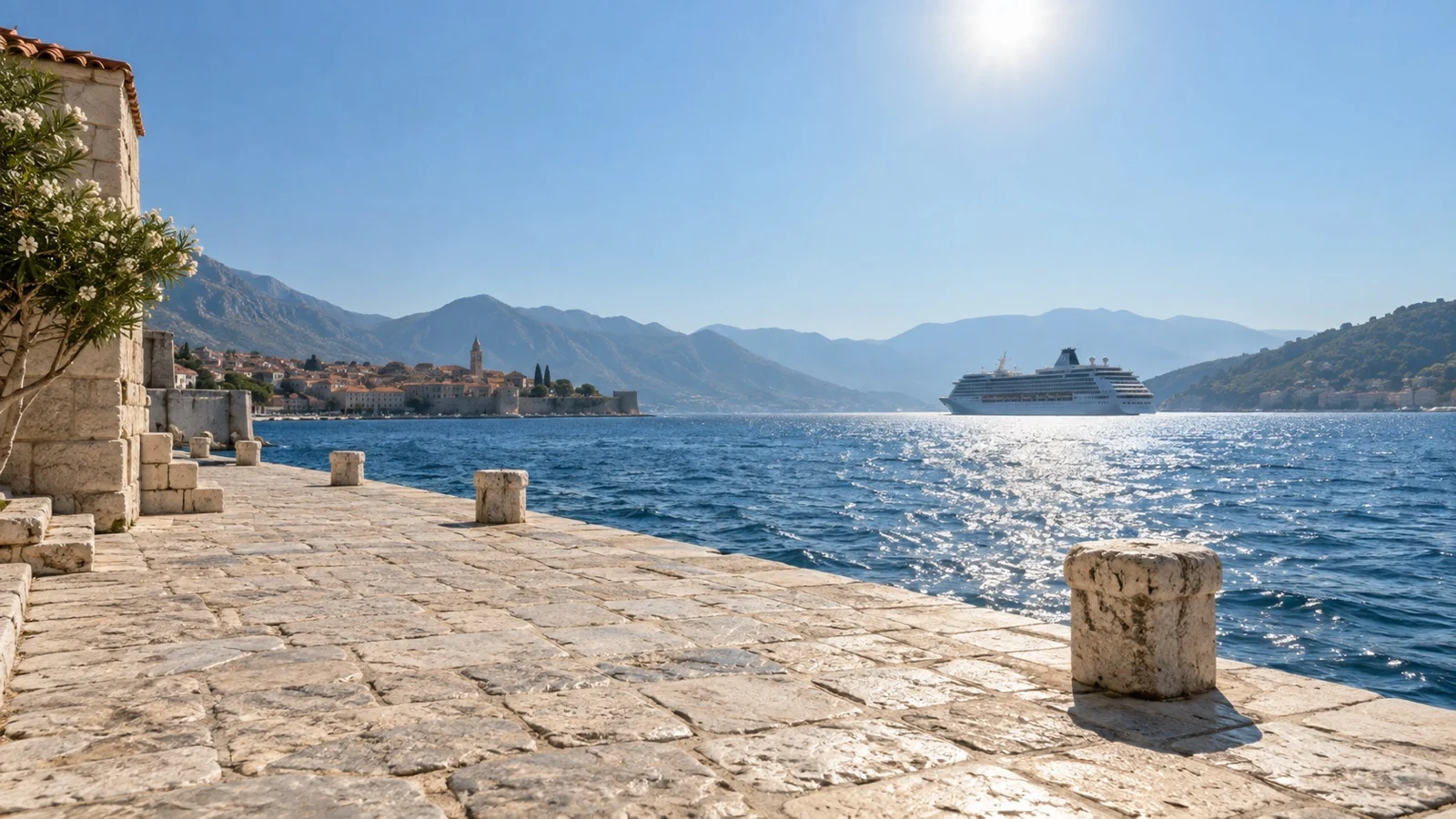
These are the two months where the Mediterranean stops being a walking destination in the middle of the day. The long run averages for the Balearics put July and August highs near 90 degrees (31 C), and that is an average, so plenty of days run well above it.
Coastal numbers also understate what you actually feel. Pompeii, the Acropolis and the Roman Forum are inland, unshaded and reflective, and they run hotter than any airport reading suggests.
Heat is a genuine health issue rather than a comfort complaint, and it hits older travelers and anyone with a heart or lung condition hardest. The public health guidance on hot weather is blunt about limiting outdoor activity in peak hours and getting into air conditioning during the worst of the afternoon.
If you are sailing in high summer anyway, build the day around it rather than against it. Our guide to how extreme heat should change your Mediterranean port plans is the version I would follow, which puts one outdoor priority first thing and a real indoor block in the middle.
Wind, tenders and the part of summer nobody warns you about
The Aegean has a summer wind pattern that peaks in July and August, and it is strong enough to matter operationally. A windy morning in a tender port is how a call gets shortened or canceled.
This is the reason a high summer sailing built around tender ports carries more schedule risk than the weather forecast implies. Sun and 30 knots of wind are the same day.
I check which of my ports are tender calls before I sail and decide in advance which excursions I would give up. Our Santorini cruise port guide gets into how that plays out in the port where it bites hardest.
September: warm water, softer light, fewer school groups
September is the month that fixes most of what is wrong with August. European schools go back, the crowds thin from the first week onward, and the temperature steps down into something you can walk in.
The sea is at its warmest now, because water lags air by a couple of months. This is the best swimming of the year in most of the region, which is not what the calendar looks like it should say.
Rain starts returning in September, mostly as short heavy bursts rather than all day gray. Barcelona averages more rain in September than in any summer month, and more again in October.
Late September is my other unhesitating recommendation. If May is the best walking month, late September is the best all around one.
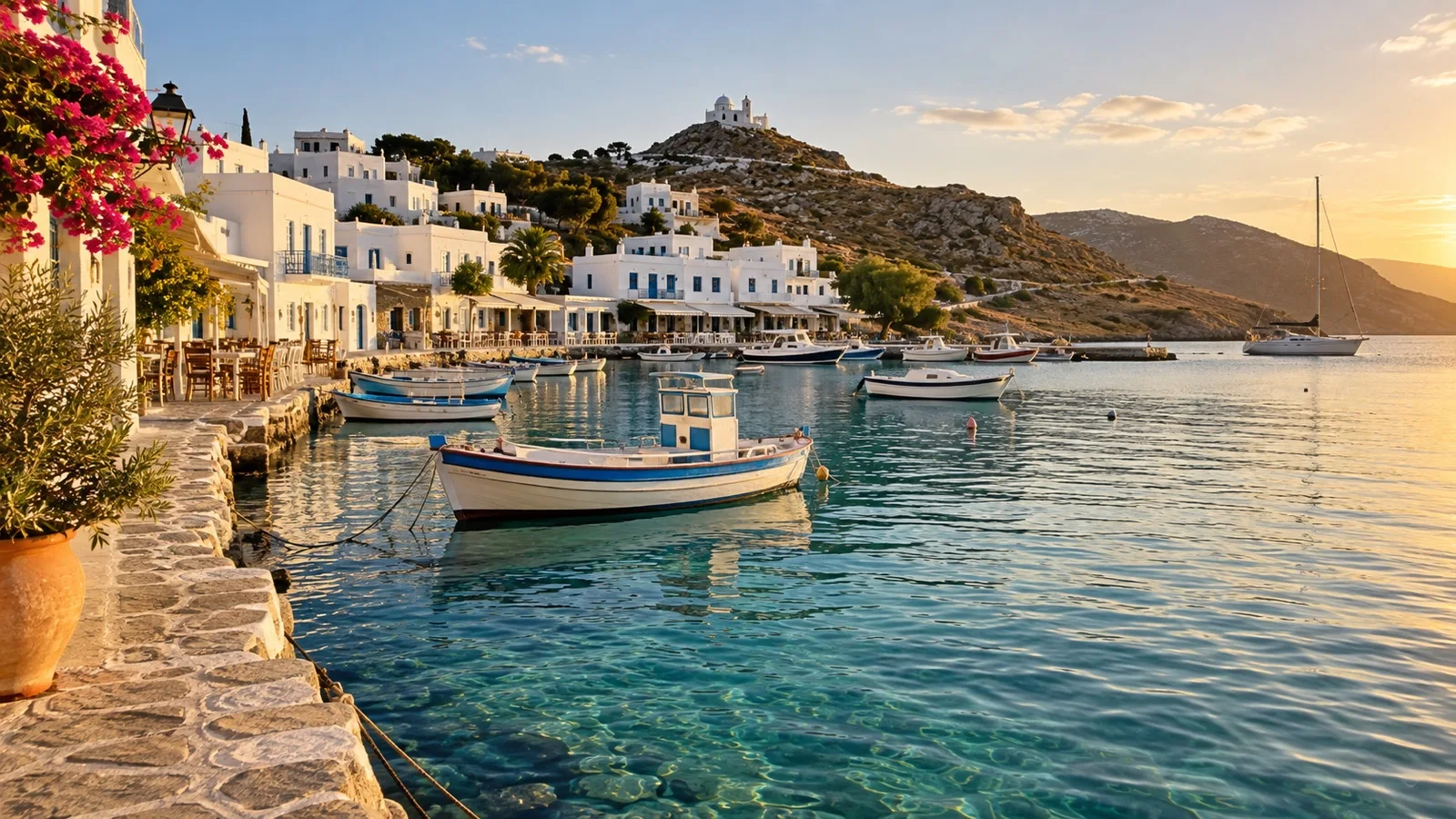
October: the other sweet spot, with a rain caveat
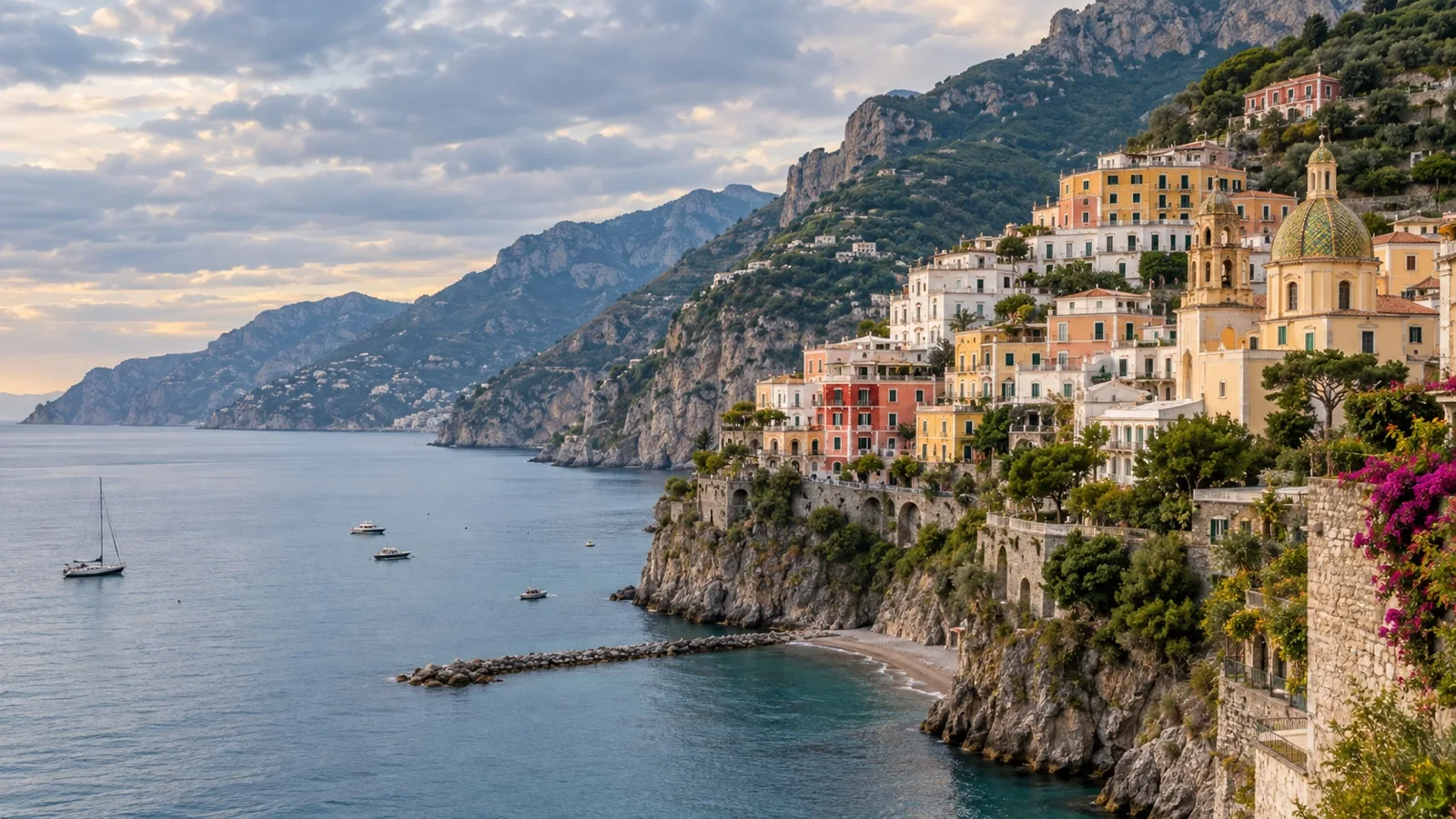
October keeps most of September’s advantages and adds a real chance of weather. Average highs around the Balearics are still in the mid 70s (24 C), which is close to what May gives you.
The difference is rainfall. In the long run averages for Barcelona, October is the wettest month of the year at about three and a half inches (90 mm), against under an inch (21 mm) in July.
Fares fall through October as the season winds down, and the last sailings before the fleet repositions are among the cheapest of the year. That is a genuinely good deal if you can absorb a wet day.
November and December: the fleet leaves and the map shrinks
November is the handover month. Most of the big ships cross to the Caribbean and South America, and the Mediterranean itineraries that remain concentrate on the western half.
What survives the winter is usually a Spain, France, Italy and Canary Islands pattern, sometimes stretched to Morocco or Madeira. The Greek islands, the Adriatic and most of the eastern Mediterranean effectively stand down until spring.
December brings the Christmas market sailings, which are a specific kind of trip rather than a discounted summer one. Short days and a real chance of rain are part of the deal.
What closes, what shortens and what gets strange off season
Very little closes outright. The big archaeological sites and major museums stay open all year, and many of them run shorter winter hours that are published in advance.
The things that go are the small and seasonal ones. Island ferry frequencies drop, beach clubs shut, some hilltop restaurants close for months, and a small town that runs on cruise traffic can look genuinely deserted in January.
- Stays open: Major sites and museums, city transit, most restaurants in large cities.
- Runs shorter: Site opening hours, daylight, tour departures, tender operations.
- Goes away: Island ferries at summer frequency, beach concessions, many small island businesses.
- Changes without warning: Local visitor rules and fees, which are worth re-checking every year.
That last one is not theoretical. The day visitor access charge trialed in Venice applied only on selected peak days and is no longer in effect, which is exactly the kind of seasonal rule that changes between the day you book and the day you sail.
Where the money actually sits
April, late October and the winter months are where the value is, in that order. The Mediterranean cruise ports that appear on those cheaper sailings are usually the western ones, so check the itinerary before you assume the deal covers the ports you wanted.
Transatlantic repositioning cruises in April and November are the outlier value play. They are cheap because they are mostly sea days, which some people love and others should absolutely avoid.
So who is each month actually best for
Find your version of this trip and book that month.
- January to March: Best for city focused travelers on a budget who do not need beaches, islands or long days.
- April: Best for value hunters and for anyone whose priority is Rome, Athens and other sites you want to walk in comfort.
- May and early June: Best for first timers and for the best overall balance of weather, crowds and open operations.
- July and August: Best for families locked to school calendars and for anyone who really wants beach and swim days, provided you plan around the heat.
- September and October: Best for couples, warm water, softer crowds and the strongest value inside the main season.
Quick answers
What is the best month for a Mediterranean cruise?
May is best for walking, sightseeing and a first trip, and late September is best if you want warm water with smaller crowds. Neither is best for a family tied to a summer school break.
Is July too hot for a Mediterranean cruise?
Not automatically, but it changes how you use a port day, and midday sightseeing at exposed sites becomes a real health consideration. If you have a choice of dates, take almost any other month.
Can you cruise the Mediterranean in winter?
Yes, and it is cheap, mild and uncrowded in the western Mediterranean. The Greek islands and the Adriatic largely drop off the map until spring, so expect a Spain, France and Italy itinerary.
What is the cheapest time to cruise the Mediterranean?
January and February, followed by the last sailings in late October and early November. April and November repositioning crossings are the other bargain if you like sea days.
Is October a good month for a Mediterranean cruise?
It is one of the best months for temperature, crowds and price, and the worst for rain. Pack a proper jacket and treat one wet port day as part of the bargain.
Final word
The Mediterranean rewards people who pick the month to match the trip they want, not the trip the photos suggest. Sightseeing, swimming and bargain hunting each have their own season here, and they are not the same one.
If you can go whenever you like, book May or late September and stop reading. If summer is your only option, go anyway, book the earliest entry times you can get and plan an honest indoor block into the middle of every port day.
How this guide was researched: Published climate normals for western Mediterranean coastal stations, sunrise and sunset times for Athens, heat health guidance and the current status of local visitor rules were checked in October 2026. Deployments, itineraries, opening hours, local fees and fares all change from year to year, so confirm the details for your own sailing before you book. See our Editorial Policy.
More on this topic: browse every guide on weather, crowds and conditions.