Fiordland National Park Cruising: Milford, Doubtful & Dusky
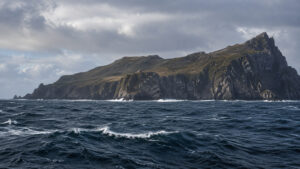
Fiordland is the rare cruise stop where the best plan is to stay on the ship and pay attention. Your reward is a moving wall of rainforest, waterfalls, dark water, and glacier-cut mountains across Milford, Doubtful, and sometimes Dusky Sound.
My quick take
Fiordland scenic cruising is not filler between ports. It is one of the strongest reasons to choose a New Zealand sailing in the first place, and I would protect these hours on my schedule like an actual shore excursion.
For most mainstream ships, there is no transportation puzzle, tour ticket, or meeting point to worry about. Check the daily program, dress for wet wind, and get outside before everyone else realizes breakfast can wait.
If your itinerary lists several Fiordland sounds, do not assume one good look at Milford means you have seen the rest. Milford is the dramatic postcard, Doubtful feels broader and quieter, and Dusky has a wilder, island-dotted feel.
I would read this alongside my New Zealand cruise ports guide, then use my Milford Sound and Doubtful Sound guides when you want the more detailed landmark-by-landmark version.
The quick facts
- Where you land: Nowhere on a typical mainstream call. Fiordland is scenic cruising, so passengers usually remain aboard.
- Dock or tender: Neither. The ship stays underway and enters the fiord itself.
- Into town: Not applicable. This is not a conventional port day.
- Currency and language: New Zealand dollar, English, and te reo Māori. You normally will not make purchases ashore during the transit.
- Time zone: New Zealand Daylight Time during most of cruise season, with New Zealand Standard Time outside daylight saving.
- How often the call is missed: Medium (5–10%): wind, swell, visibility, and navigation conditions can force a shortened or skipped fiord entry.
What Fiordland scenic cruising actually is
Fiordland National Park protects a huge, roadless stretch of New Zealand’s southwest coast, where glaciers carved deep valleys that later flooded with seawater. The New Zealand Department of Conservation explains how repeated glaciation created the steep-sided landscape you see from the ship.
The names can be confusing because Milford Sound, Doubtful Sound, and Dusky Sound are all technically fiords. “Sound” stayed in the English place names, while Fiordland became the wonderfully literal name for the region.
Most big-ship itineraries treat Fiordland as scenic cruising rather than a port call. You stay aboard while the bridge team takes the ship into one or more fiords, slows through the most dramatic sections, then continues along the coast.
That distinction matters when you read the itinerary. A six-hour Fiordland listing does not mean six hours ashore, it means the scenery itself is the destination.
Fiordland also sits within the Te Wāhipounamu World Heritage Area, which UNESCO recognizes for exceptional glacial landforms, intact ecosystems, and dramatic mountains-to-sea scenery. This is one of those places where the protected status makes immediate sense from the deck.
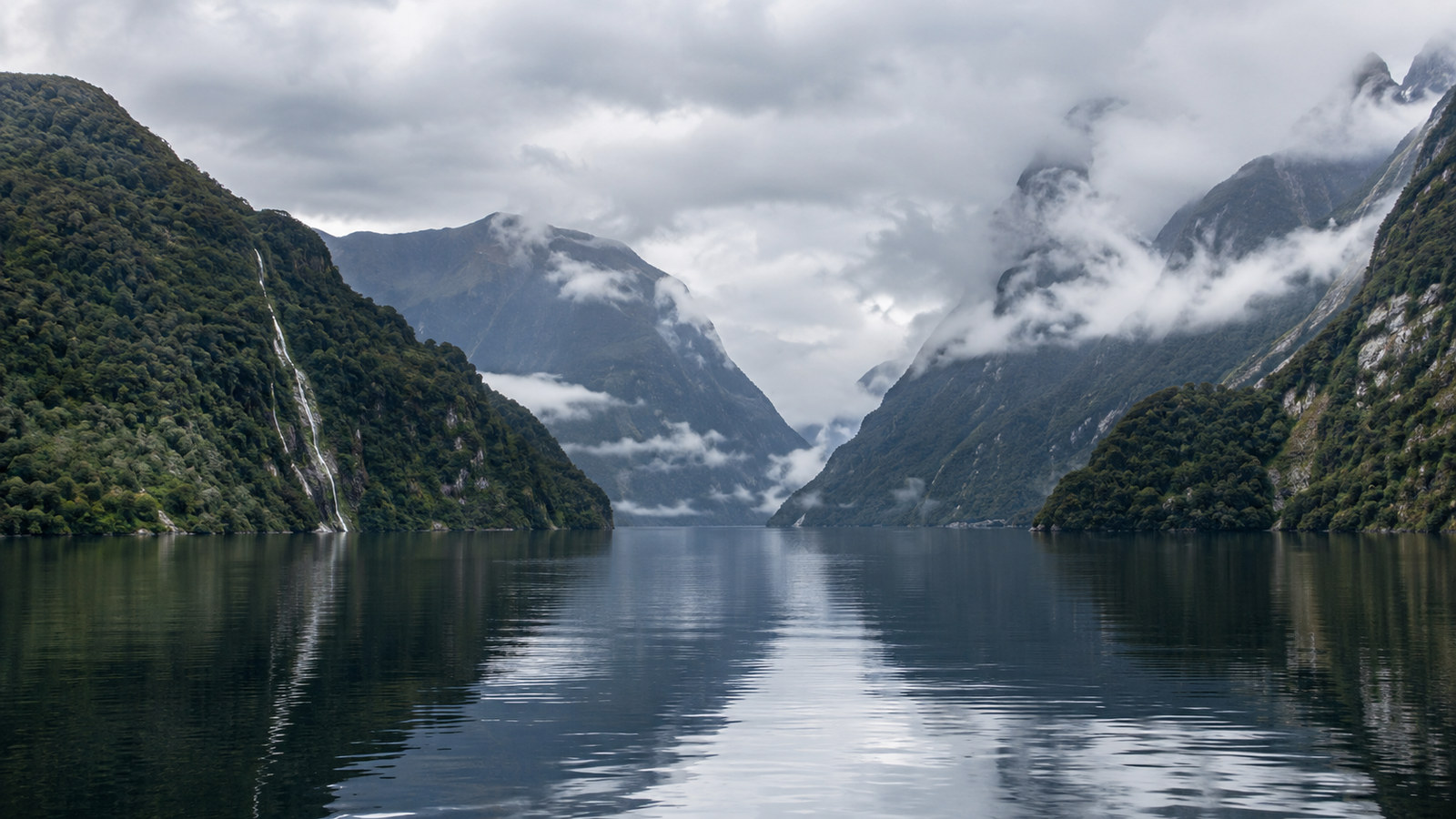
Milford, Doubtful, and Dusky are not interchangeable
Milford Sound/Piopiotahi
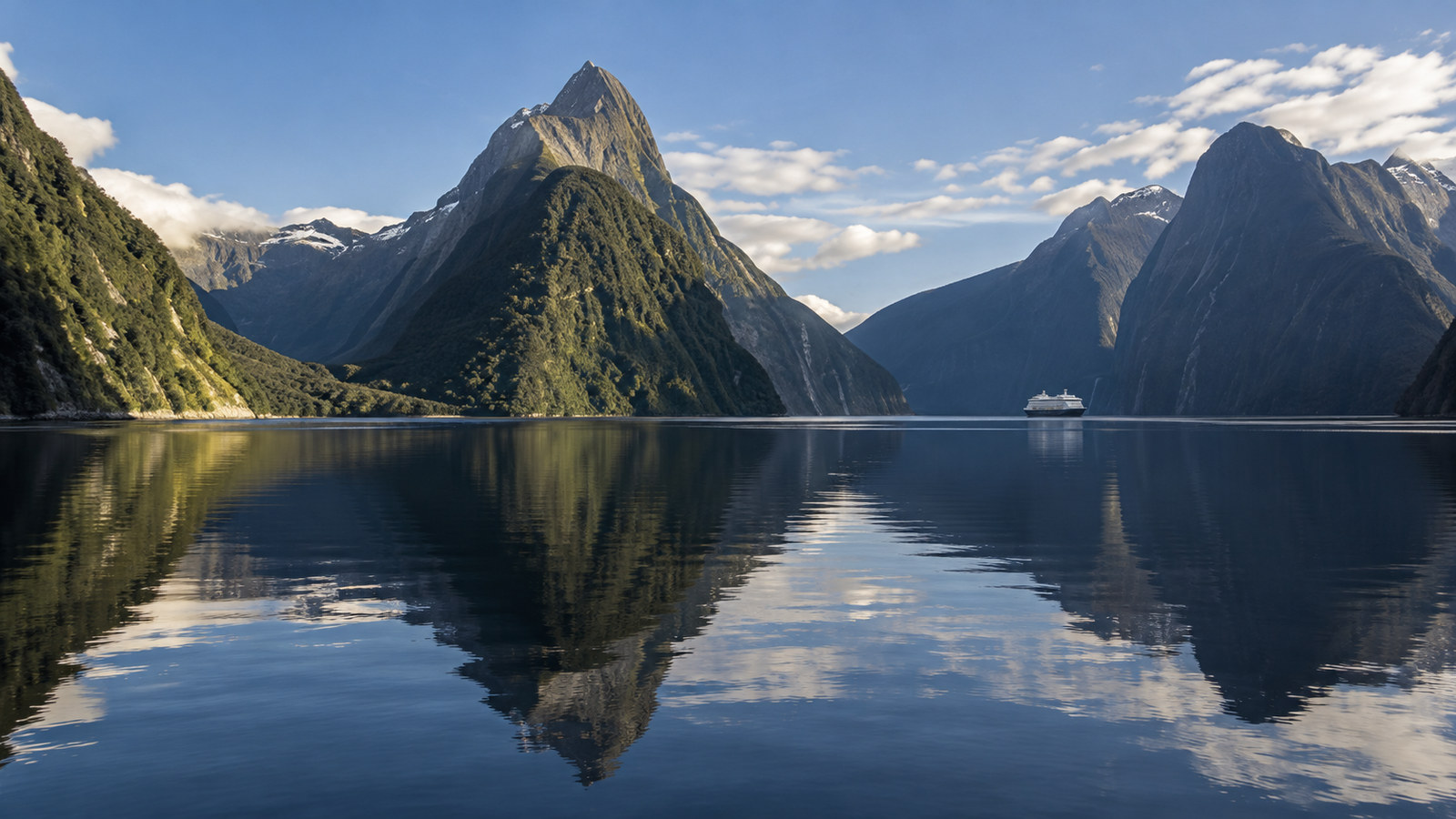
Milford is the famous one, and it absolutely earns the attention. The fiord runs about 10 miles inland, with sheer cliffs, rainforest, waterfalls, and Mitre Peak rising more than 5,500 feet almost directly from the water.
The Department of Conservation’s Milford Sound guide describes Milford as one of Fiordland’s wettest areas. That sounds like terrible vacation weather until you see what rain does here.
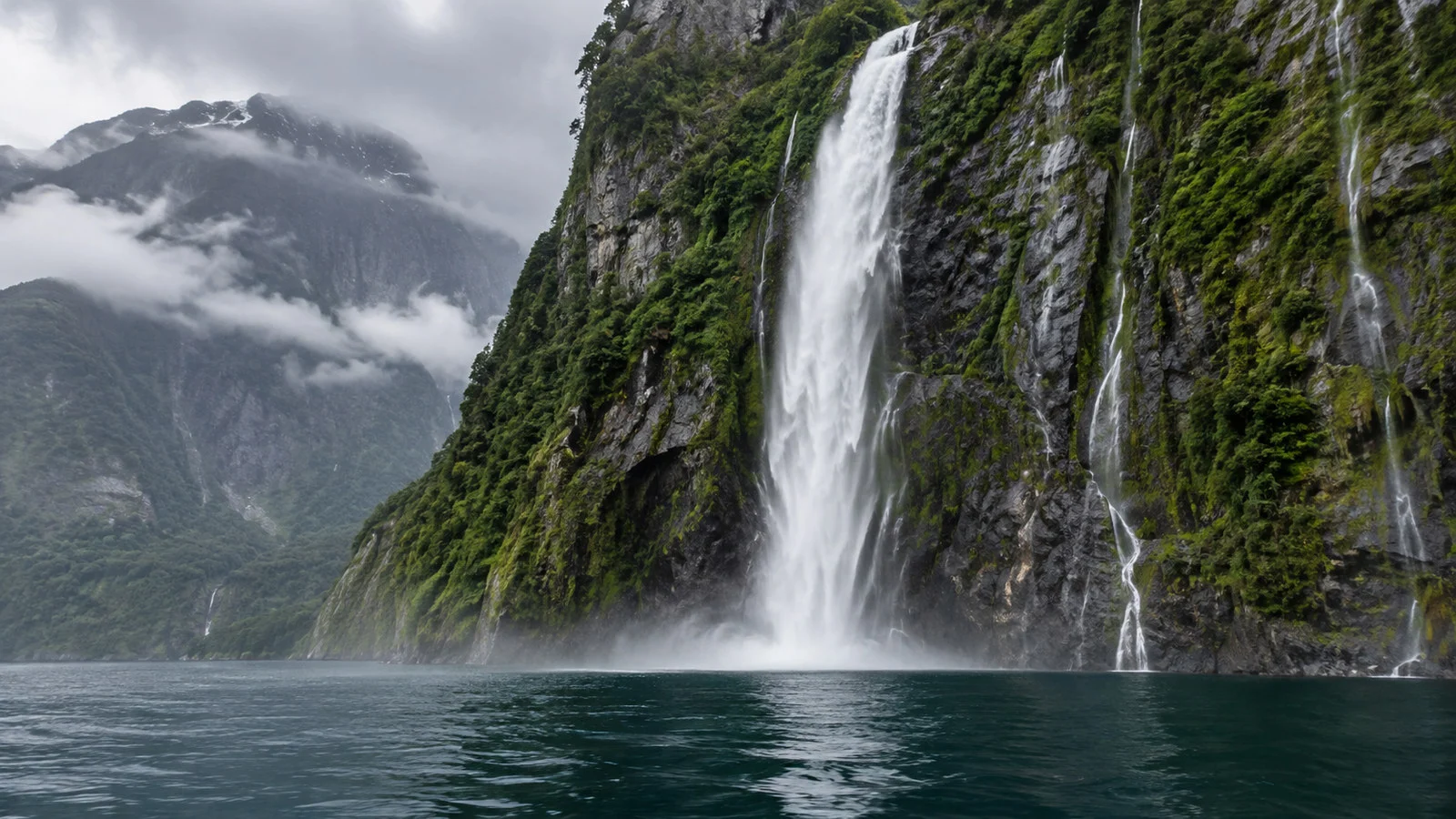
Bowen Falls and Stirling Falls are permanent, but after a downpour the cliff walls switch on with temporary waterfalls. A gray morning can produce more visual drama than the blue-sky version you thought you wanted.
Milford also feels relatively narrow from a large cruise ship, which is part of the magic. When the walls close in around you, the ship suddenly looks much smaller than it did at the pier yesterday.
Doubtful Sound/Patea
Doubtful is broader, quieter, and more remote. The Department of Conservation calls it the “Sound of Silence” and notes that it has three main arms plus one of the southernmost bottlenose dolphin populations in the world.
The cruise-ship experience is less about one famous peak and more about being surrounded by layers of forested ridges. It feels enormous, especially when low clouds erase the top half of the mountains.
I would bring binoculars here even if wildlife is not your main priority. Dolphins, seals, and birds are easier to appreciate when you can scan the coves and rocky edges instead of relying on whatever happens to pass close to the ship.
If Milford is the theatrical reveal, Doubtful is the slow exhale. I would not rank one above the other because they are doing different things.
Tamatea/Dusky Sound
Dusky is the one many travelers know least about before the cruise, which makes it a fun surprise. It sits among Fiordland’s southern fiords, where the coastline opens into a maze of forested islands, channels, and steep mountains.
The Department of Conservation describes the southern fiords as remote, wild country with very limited access. From a cruise ship, that isolation is the point rather than an inconvenience.
Dusky usually feels more sprawling than Milford. Instead of one narrow corridor and a handful of famous landmarks, you get a longer sequence of islands, coves, forest, and big open-water views.
If your itinerary includes all three, stay curious through the last one. The geography repeats a theme, but the shape, light, weather, and sense of scale change enough that each transit feels like another chapter.
Where I would stand on the ship
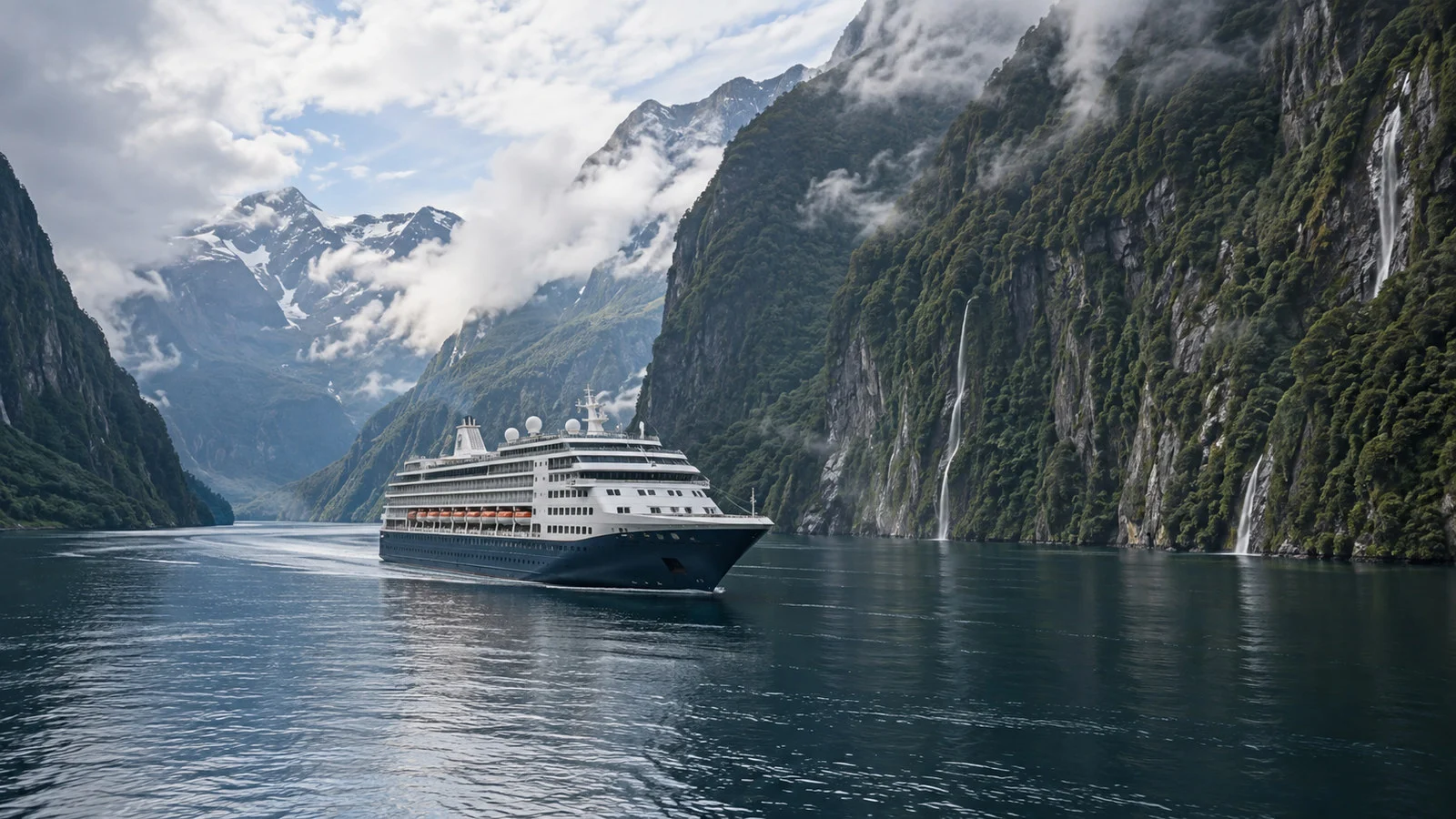
I would start outside and as far forward as public access allows. Seeing the fiord open directly ahead of the bow gives you the best sense of scale, and even a great balcony cannot quite reproduce that first approach.
Then I would move around. A side promenade, aft deck, observation lounge, and upper deck all show different angles, and I would rather walk the ship than defend one railing for three hours.
Do not stress about choosing port or starboard for Fiordland. Ships enter, turn, and change heading, so no single side owns the entire experience.
A balcony is still fantastic when the rain gets aggressive. I would use the public deck for the entrance, then retreat to the balcony for a warmer, private reset without completely losing the view.
If the ship has a forward observation lounge, locate it before scenic cruising begins. It becomes the best backup when wind, rain, mobility, or crowds make the open decks less appealing.
What I would actually watch for
The landscape is the headline, but Fiordland gets better when you know what is passing the rail. I would keep a short mental list rather than trying to identify every unnamed ridge.
Mitre Peak is Milford’s classic silhouette. The mountain rises more than 5,500 feet above the fiord and looks especially dramatic when the lower slopes disappear into mist.
Waterfalls are the other obvious target. Permanent falls are impressive on their own, but temporary cascades after rain can turn an entire cliff face into dozens of white ribbons.
New Zealand fur seals use rocky haul-outs around the fiords, and bottlenose dolphins live in both Milford and Doubtful waters. Tawaki, or Fiordland crested penguins, also occur in the wider region, though a cruise-ship sighting is lucky rather than likely.
Look down as well as up when the water is calm. Reflections can make the surface look almost black, especially in sheltered reaches where the mountains block the ocean swell.
The forest deserves attention too. UNESCO describes Te Wāhipounamu as an unusually intact natural landscape, and the dense temperate rainforest clinging to near-vertical rock is part of what makes Fiordland feel so different from a normal coastal sail-by.
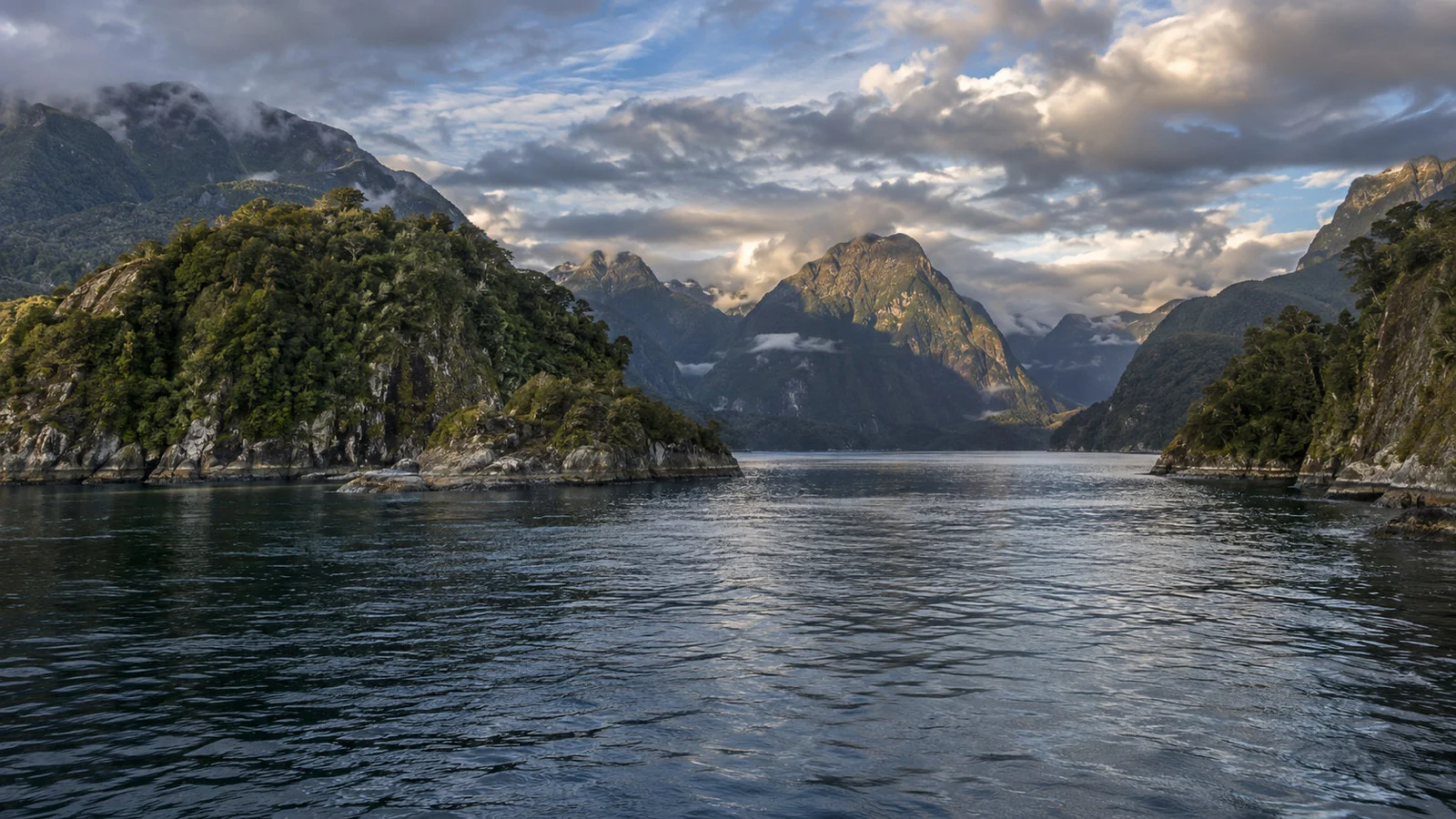
Rain, mist, and why bad weather can be good here
Fiordland is one of the few cruise destinations where I would never apologize for a rainy forecast. Blue sky gives you sharper mountain detail, but rain gives you waterfalls that simply do not exist on a dry day.
Mist can hide the tops of peaks and still make the lower cliffs look enormous. I would rather have a wet Fiordland transit than a dry day spent indoors because I assumed the weather had ruined it.
The practical issue is wind, not just rain. A waterproof shell with a hood is much more useful than an umbrella, which quickly becomes awkward on an exposed cruise deck.
Keep a dry lens cloth in one pocket and a backup somewhere genuinely dry. Phone cameras handle mist surprisingly well, but one drop of water in the wrong place can blur every waterfall.
Weather can also change what the captain can safely enter or how long the ship can remain in a fiord. Treat the published route as the plan, not a guarantee, and listen for bridge announcements on the day.
A realistic word on accessibility
Fiordland scenic cruising is one of the easiest destination experiences for travelers who cannot manage tenders, uneven sidewalks, long walks, or tour buses. On a mainstream cruise, the scenery comes to you.
The limitation is that the most dramatic viewing areas may be outdoors, windy, wet, or crowded. Door thresholds, slick decks, and people clustering at railings can matter more than distance.
I would identify two viewing spots before the transit begins: one sheltered indoor location with large windows and one outdoor deck that is easy to reach. That way a weather change does not become a last-minute scramble.
If you use a wheelchair or scooter, ask crew which open deck has the easiest automatic-door access and least slope. The answer varies by ship, and that one question can improve the entire morning.
What to pack for Fiordland scenic cruising
You do not need expedition gear, but you do need layers. I would wear a light base layer, something warm over it, and a waterproof shell that actually blocks wind.
A secure hat can be useful, and light gloves feel surprisingly good during an early-morning rail session. Holding a cold phone or binoculars for an hour is less charming than it sounds.
Bring binoculars if wildlife matters to you. The ship may be hundreds of feet from a seal haul-out or dolphin group, and binoculars turn “something moving over there” into an actual sighting.
I would also carry a microfiber cloth for the camera, plus water and a hot drink. There is no reason to go back inside just because your lens got wet or your hands got cold.
Skip the umbrella. A hood is safer, easier, and far less annoying to the person standing behind you.
How I would spend the day
The night before, I would check the daily program and write down the first scenic-cruising time. I would not trust myself to remember it after a late dinner and a time-zone change.
About 30 minutes before the first fiord, I would grab coffee and go outside. Early matters because the best public rails fill quickly once the cliffs start looking interesting.
For Milford, I would stay out for the entire inbound section and at least the first part of the turn back toward the sea. If Doubtful or Dusky comes later, I would change decks so the experience feels fresh.
I would eat around the scenery, not the other way around. A late breakfast, quick buffet plate, or room-service snack is a better trade than missing the narrowest section because the dining room had a table at exactly the wrong time.
Between fiords, take the chance to warm up and charge your phone. You do not need to stand outside for every minute of coastline to get the full experience.
After the final fiord, I would finally settle in and sort photos. If Dunedin is next, my Dunedin cruise port guide is the natural next planning step because that day flips completely back to transportation, shore time, and choices.
Quick answers
Do you get off the ship in Fiordland National Park?
Usually not on mainstream cruises. Fiordland is normally scenic cruising, while expedition ships may have different permitted operations.
Which Fiordland sound is best?
Milford is the most dramatic and recognizable, but Doubtful feels quieter and Dusky feels wilder. I would choose an itinerary that includes more than one.
Is Fiordland worth seeing in the rain?
Absolutely. Rain creates temporary waterfalls, deepens the greens, and adds mist, so wet weather can make the scenery more dramatic.
What side of the ship is best?
Neither side wins for the whole transit. I would start forward, then move around the ship as the route changes.
Can Fiordland scenic cruising be canceled?
Yes. Wind, swell, visibility, or other navigation conditions can change the route, timing, or whether the captain enters a particular fiord.
Is a balcony worth it for Fiordland?
Yes, especially in rain, but I would still spend the main entrance on a forward or open public deck for the widest view.
The last word
Fiordland is a useful reminder that not every great cruise day needs a gangway. Sometimes the ship itself is the excursion, and the best thing you can do is stop planning long enough to watch the landscape move around you.
If I were comparing New Zealand itineraries, multiple Fiordland entries would be a genuine selling point. Milford gets the photographs, but the combination of Milford, Doubtful, and Dusky is what turns a pretty sail-by into one of the most memorable days of the trip.
How this guide was researched: Unless a first-hand visit is explicitly identified above, this guide is based on independent research using official tourism, conservation, government, and cruise-planning sources where available. Logistics and time-sensitive details were reviewed in August 2026. See our Editorial Policy.