Doubtful Sound (Patea) Cruise: Scenic Cruising Guide
Doubtful Sound, or Patea, is one of the wildest scenic-cruising days a New Zealand itinerary can hand you. Your ship sails deep into a remote fiord past waterfalls and dolphins, then turns back out to sea, so here is how I would make the most of it.
How the ship route can change
A large ship enters from the Tasman Sea, but it may not explore every arm or reach the same turning point as a small local vessel. The bridge chooses the route around draft, traffic, wind, visibility, and the timing of any Milford or Dusky Sound entries on the same day.
Be outside before the published entrance time and listen for narration changes. If the route is shortened, the open coast and fiord mouth can still provide strong scenery and wildlife viewing, but no named waterfall or dolphin encounter is guaranteed.
Best broad view: a high forward or aft deck, then change sides after the ship turns.
Best bad-weather fallback: a lounge with clean panoramic windows and easy elevator access.
Best wildlife habit: scan the waterline and rocky points with binoculars instead of waiting for an announcement.
My quick take
This is a stand-on-deck day, not a port call. There is no tender, no terminal, and no town, so the fiord itself is the whole experience.
If you have sailed Milford Sound and loved it, Doubtful is the bigger, quieter, more remote sibling. It pairs naturally with the rest of a New Zealand cruise.
Quick Facts
- Where you land: Nowhere. This is a scenic cruising day, you stay aboard throughout. Big ships enter from the Tasman Sea in the southwest corner of the South Island, sail up the fiord and its arms inside Fiordland National Park, then turn back out.
- Dock or tender: There is no berth, no tender, and no terminal, so there are no excursion tickets or customs lines to worry about.
- Into town: Not applicable.
- Currency and language: The New Zealand dollar (NZD), with English and te reo Māori spoken.
- Time zone: New Zealand Daylight Time (NZDT, UTC+13) through the October to April cruise season, falling back to New Zealand Standard Time (NZST, UTC+12) in winter.
- Route reliability: Weather dependent, because wind, swell, visibility, and marine traffic can alter or cancel the entry.
Why Doubtful Sound is different from Milford
Doubtful Sound is much larger and more branched than Milford, with three main arms and three of Fiordland’s marine reserves. Exact dimensions vary by source, so the useful cruise-day difference is its scale and remoteness rather than a ranking.
It is also far less visited than Milford, partly because there is no road to it. That remoteness is the point: the Department of Conservation calls it the “Sound of Silence”.
Patea is commonly interpreted as a place of silence, which suits the fiord’s ‘Sound of Silence’ nickname. Treat the name with respect and use the bilingual Doubtful Sound/Patea where practical.
Another fun fact: Captain Cook spotted the entrance in 1770 but did not sail in, naming it “Doubtful Harbour” because he doubted he could sail back out against the wind. Later sealers and whalers renamed it Doubtful Sound.
There is more on this in Fiordland National Park Cruising.
Reading the landscape from the ship
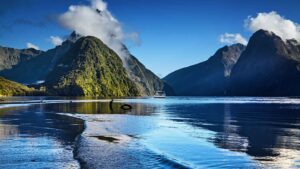
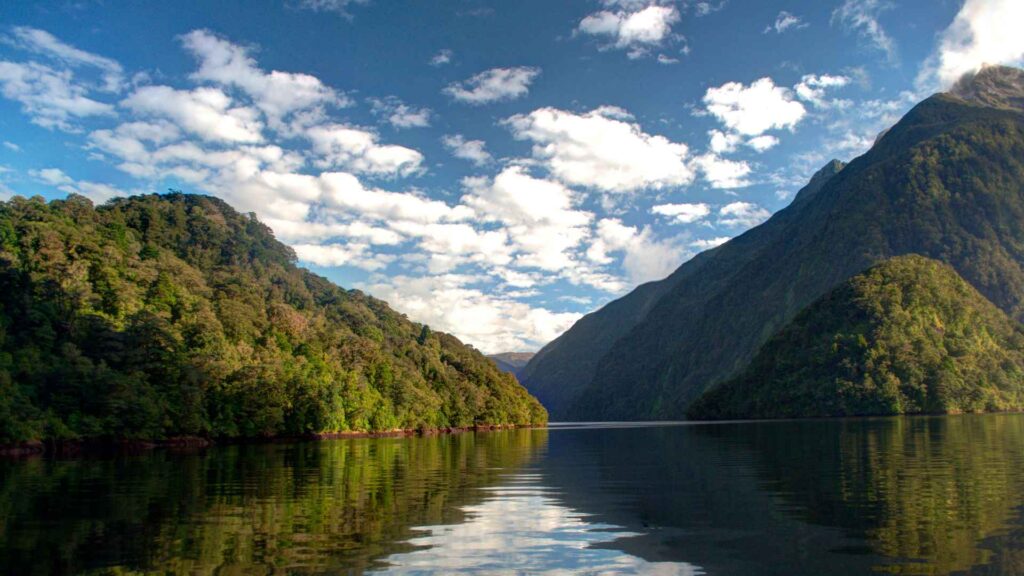
The walls around you are the result of repeated glaciation, not a river valley flooded in recent history. Ice cut the deep U-shaped troughs, hanging valleys, and abrupt cliffs that UNESCO highlights across Te Wahipounamu, then the sea filled the lower ground when the glaciers retreated.
That history is easiest to read where waterfalls spill from valleys high above the waterline. Look beyond the largest cascade and you will start noticing dozens of thin temporary falls after rain, plus pale rock scars where landslides have briefly opened the forest.
Southern beech and podocarp forest cling to slopes that appear almost vertical from the ship. The green is not decorative landscaping, and even a small-looking clearing may be a natural slip rather than a road or settlement.
Doubtful Sound has three main arms and three of Fiordland’s marine reserves, according to the Department of Conservation. A large cruise ship may enter only part of this branching system, so compare the live narration with the map instead of expecting the route used by small local day boats.
Wildlife viewing without overpromising
The resident bottlenose dolphins are nationally vulnerable and live at the southern edge of the species’ range. The Department of Conservation also identifies vessel activity and strike risk as threats, which is why a responsible bridge may slow, change course, or keep extra distance instead of delivering the closest possible photo.
Scan ahead of the bow for dorsal fins, then watch the wake only after the animals have passed. If an announcement sends everyone to one rail, staying on the opposite side can be smarter because the ship may turn and wildlife rarely follows a script.
For seals and tawaki, concentrate on rocky edges near the mouth and use binoculars before reaching for a long camera lens. A dark shape can be kelp or wet rock, so let the naturalists confirm a sighting and enjoy the landscape even when wildlife remains distant.
Comfort, photography, and timing
Rain on the outer deck can bead across a phone lens in seconds, while wind makes umbrellas useless and potentially unsafe. Pack a microfiber cloth, use a hood instead of an umbrella, and keep electronics inside a dry pouch that opens quickly.
A wide lens captures the scale of the walls, but binoculars often add more than a large camera because wildlife can remain far from the ship. Take a few frames, then put the screen down long enough to hear waterfalls and feel how the fiord changes as the vessel turns.
The official shore route into Patea is completely different from a cruise ship’s ocean entry. Land travelers cross Lake Manapouri by boat and Wilmot Pass by coach, but scenic-cruise passengers remain aboard and should not expect that overland program unless it is separately sold before or after the voyage.
The things I would actually watch for
You are not ticking off attractions on foot here, so the “sights” are the living fiord itself. These are the ones worth staying on deck for.
Bottlenose dolphins: Doubtful Sound is home to one of the world’s southernmost populations of bottlenose dolphins, and they sometimes ride the bow wave.
New Zealand fur seals (kekeno): watch the rocky outcrops near the fiord’s mouth, where they haul out to rest.
Fiordland crested penguins (tawaki): one of the world’s rarest penguins nests along these shores, mostly in spring and early summer.
Waterfalls after rain: Fiordland receives extraordinary rainfall, so the cliffs stream with temporary falls when the weather turns.
The three arms: the branching fiord opens up new walls and horizons as you go, best seen from the highest open deck.
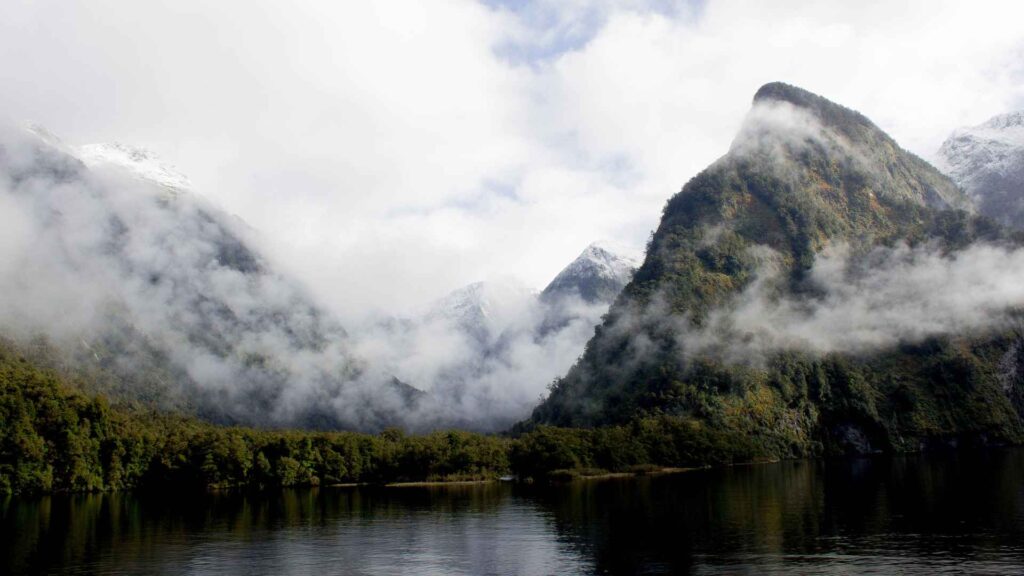
Sheer forested walls: rainforest clings to near-vertical rock, often wrapped in low mist that makes the whole scene feel prehistoric.
The quiet: when the engines ease, the stillness that gives the fiord its name is genuinely striking.
How I would plan the day on board
Because you never leave the ship, the plan is about positioning, not logistics. Treat the fiord like a slow, unfolding show.
Before the entrance: dress in warm, waterproof layers and stake out a spot on an open deck rather than behind glass. Announcements usually flag when the fiord comes into view.
Sailing in: keep your camera out and your eyes on the waterline for dolphins and seals near the mouth.
Deep in the arms: this is the quietest, most dramatic stretch, so give yourself time outside even if it is drizzling.
Warm-up breaks: duck inside to a panoramic lounge between highlights, then head back out. The weather changes fast.
Many Fiordland scenic-cruising days combine Doubtful Sound with Dusky Sound and Milford Sound, so check your itinerary for the exact order and timing.
A realistic word on weather and access
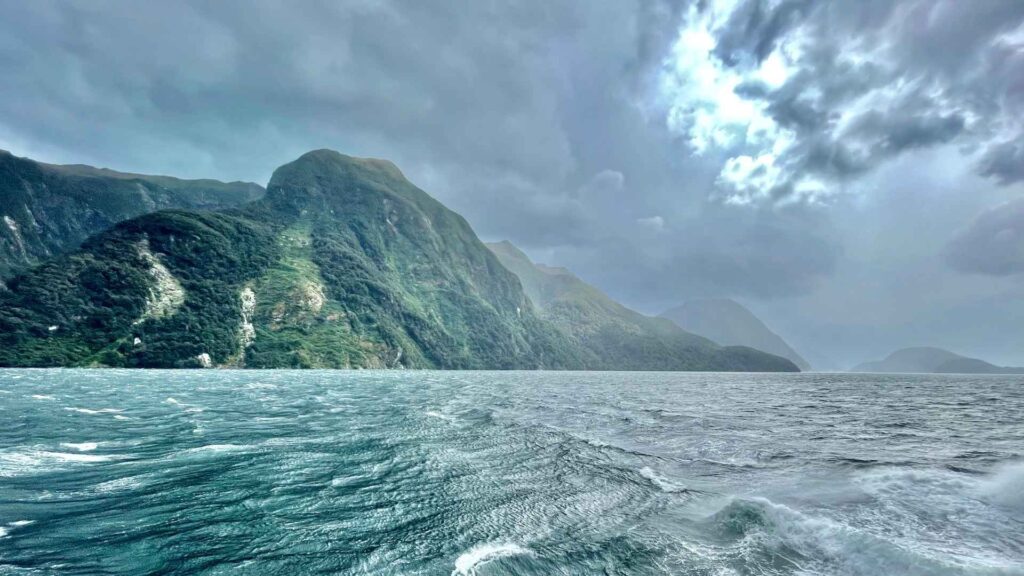
Fiordland is one of the wettest places in the country, and that is exactly what feeds the waterfalls. A gray, misty day here is atmospheric, not a disappointment.
Scenic cruising also depends on conditions. Swell and wind at the exposed Tasman Sea entrance can shorten or alter a fiord sailing, so treat the day as weather-dependent and confirm plans with your cruise line.
Fun fact: Fiordland National Park is part of Te Wahipounamu, a UNESCO World Heritage Area recognized for its outstanding natural value. You are cruising through a globally protected wilderness.
Quick answers
Do we get off the ship at Doubtful Sound?
No, this is a scenic-cruising day with no tender, dock, or town, and your ship sails into the fiord and back out to sea.
Where is the best place to see it?
An open, high deck beats an indoor window. Bundle up and stay outside for the dolphins, waterfalls, and the quiet of the arms.
How is it different from Milford Sound?
Doubtful is much larger, deeper, and more remote, and it sees far fewer visitors. Milford is more compact and dramatic in a single sweep, while Doubtful feels vast and silent.
How this guide was researched: Unless a first-hand visit is explicitly identified above, this guide is based on independent research using official port, tourism, transit, government, and attraction sources where available. Logistics and time-sensitive details were reviewed on September 11, 2026; see our Editorial Policy.