Milford Sound Cruise Port: A Scenic-Cruising Guide
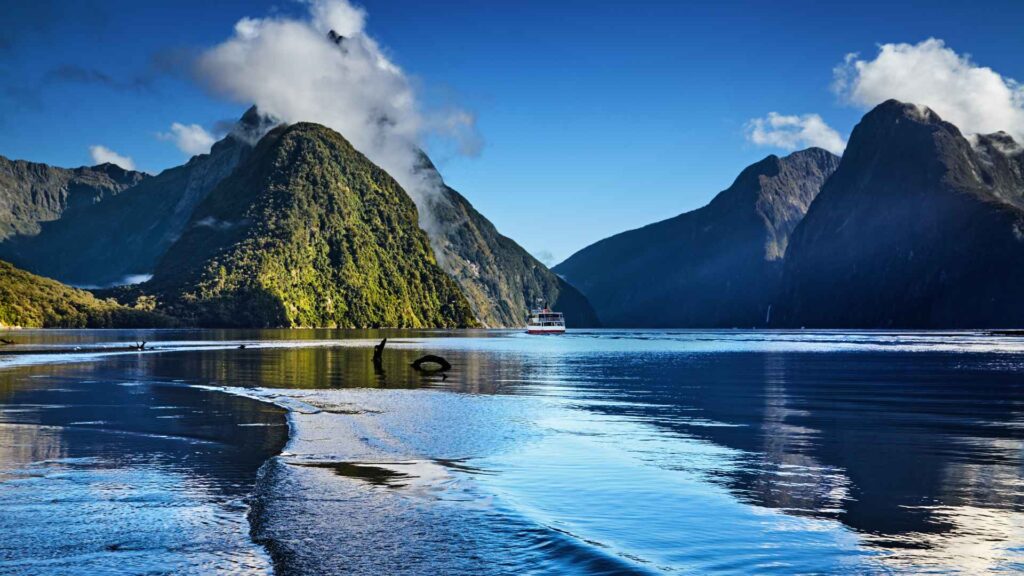
Here is the thing about Milford Sound, or Piopiotahi: you do not go ashore. Your ship enters from the Tasman Sea, cruises toward the head of this sheer-walled fiord in Fiordland National Park, turns, and sails back out.
Choose the right viewing plan
Check the daily program for the predicted entrance time, then be outside 20 to 30 minutes early because the ship can adjust its sequence. A high forward or aft deck gives the broadest view, while a covered promenade or panoramic lounge is the better fallback in hard rain or strong wind.
Photographers: protect the lens from spray, use a hood rather than changing lenses outside, and remember the turn usually gives both sides a view.
Families: alternate short deck sessions with a warm indoor window, since rail height, wind, and wet flooring can tire children quickly.
Limited mobility: identify the closest elevator and a seated indoor viewpoint before entry, because outside decks may be slick or temporarily closed.
Wildlife is a bonus, not a promise, so build the day around waterfalls, cliffs, and changing light. Follow crew barriers and never lean equipment beyond the rail when the ship is maneuvering.
My quick take
This is one of the most jaw-dropping few hours you can have at sea, and it needs almost no planning. Just warm layers, a waterproof rain jacket, and a spot on deck.
If Milford is on your itinerary, it is likely part of a wider South Island run. I would read it alongside my New Zealand cruise ports guide and its sister fiord, Doubtful Sound.
Milford Sound Cruise Port Quick Facts
Milford Sound sits on the remote southwest coast of the South Island, inside Fiordland National Park. It is one of the deepest, most dramatic fiords in the country.
- Where you land: Nowhere. This is a scenic cruising day, you stay aboard throughout. Your ship enters from the Tasman Sea, sails the length of the fiord inside Fiordland National Park, and turns back out. The fiord was carved by glacial ice and runs to depths of about 870 feet (265 m), per the Department of Conservation.
- Dock or tender: There is no cruise berth and no tender operation here, so nobody goes ashore.
- Into town: Not applicable.
- Currency and language: The New Zealand dollar (NZD), with English and te reo Māori spoken.
- Time zone: New Zealand Daylight Time (NZDT, UTC+13) through the December to February peak of the season, falling back to New Zealand Standard Time (NZST, UTC+12).
- Weather watch: The exposed Tasman Sea approach, wind, swell, and visibility can shorten or cancel scenic entry, with the captain’s decision final.
Language note: The Māori name Piopiotahi refers to the piopio, a native thrush now thought to be extinct. The familiar ‘eighth wonder’ line is often repeated, but its attribution to Rudyard Kipling is not securely documented.
Piopiotahi is more than a viewing corridor. The Department of Conservation records early Māori travel through this region for fishing, hunting, and collecting pounamu, with both coastal and inland routes connecting Fiordland to the wider South Island.
Using the name Piopiotahi alongside Milford Sound is a small way to recognize that older relationship with the landscape. It also helps explain why this protected place deserves the same attention as any port city, even though nobody steps ashore.
How the scenic-cruising day actually works
Your ship enters from the Tasman Sea and cruises as far into the fiord as the captain considers safe, then turns back out. Timing and route vary by vessel, traffic, visibility, wind, and the wider Fiordland schedule.
The captain and expedition team usually narrate as you go, pointing out peaks, falls, and wildlife. That commentary is your best guide, so keep the ship’s channel or announcements handy.
Do not assume one side of the ship gets the entire show. The turn often changes the angles, but wind, traffic, and navigational needs decide the exact route, so I move between an open rail and a sheltered window instead of guarding one spot.
Low cloud can hide the tops of peaks while making the lower cliffs and waterfalls more dramatic. I keep a wide view for scale, then use binoculars for seals and birds near the shoreline rather than expecting the ship to approach wildlife closely.
One honest caveat: sailings here are weather and swell dependent. The entrance from the open sea can be rough, and the captain may adjust or, rarely, skip the fiord for safety.
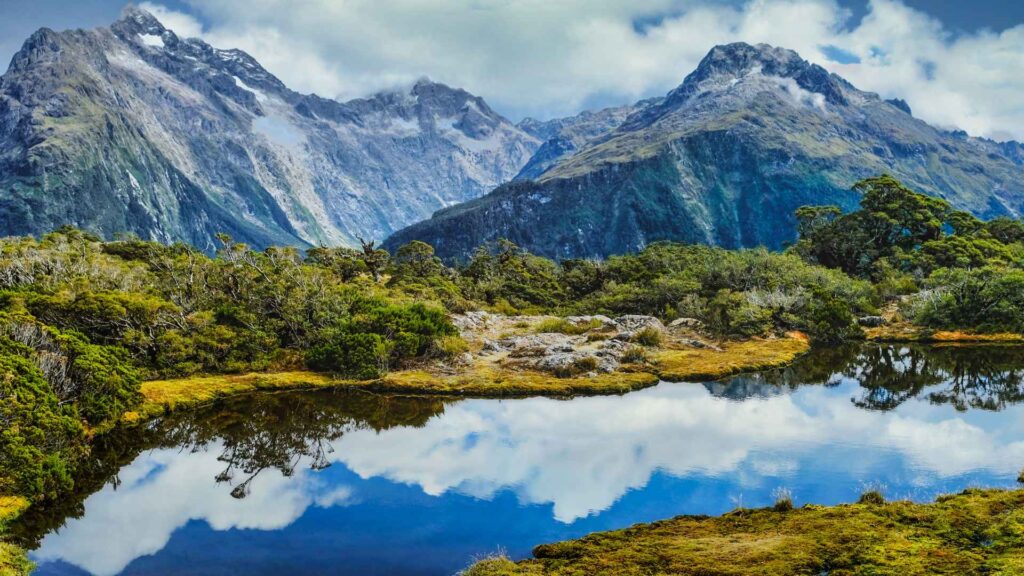
What to look for from the deck
These are the things I would not want to miss as the fiord unfolds. Every one is verifiable, and most get called out over the ship’s commentary.
Mitre Peak: the icon. Fun fact: its sheer rock walls rise 5,551 feet (1,692 m) almost directly from the water, making it one of the most photographed peaks in the world (Department of Conservation).
Bowen Falls: one of only two permanent falls in the fiord, dropping around 525 feet (160 m) near the fiord’s head.
Stirling Falls: the other year-round waterfall, tumbling straight into the fiord. Many boats nose right up to it, so watch for spray on deck.
The temporary waterfalls: after rain, hundreds of ribbon falls appear down the cliffs. Fun fact: a wet day is arguably the better day here.
Fur seals: New Zealand fur seals haul out and sunbathe on the rocks near the fiord mouth. Binoculars help.
Dolphins and penguins: bottlenose dolphins sometimes ride the bow wave, and the rare Fiordland crested penguin turns up, mostly in the breeding season.
The rainforest walls: temperate rainforest clings to near-vertical cliffs, fed by all that rain, with mist often draping the treetops.
Fun fact for the water below you: Milford is a marine reserve where a dark freshwater layer sits over the sea, letting deep-water black coral grow at unusually shallow depths, per the Department of Conservation marine reserve page.
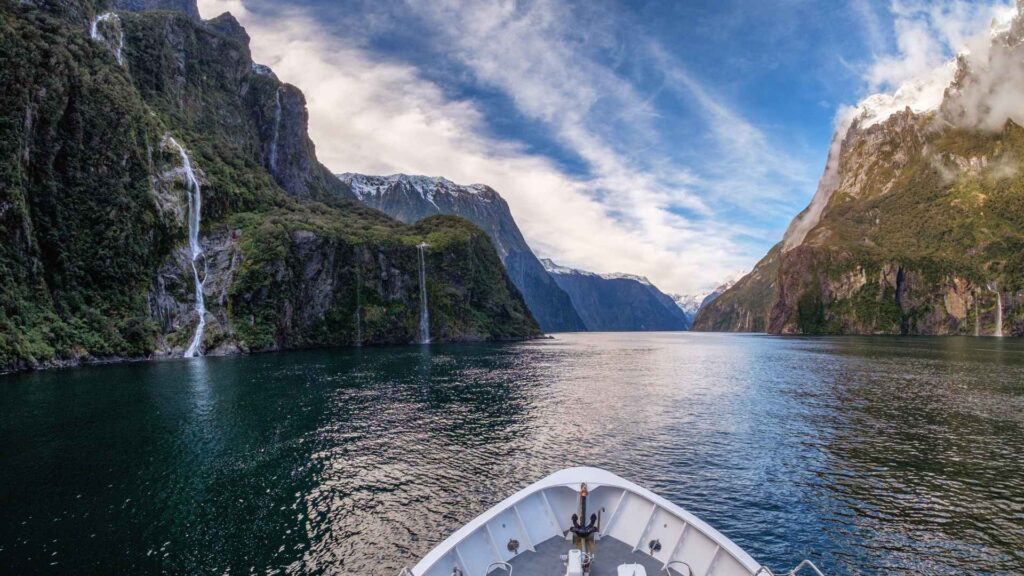
How I would plan my few hours
Because there is no shore excursion in the usual sense, this is about being ready when the moment comes. Here is my simple rhythm.
Before the entrance: dress in warm layers with a waterproof shell, grab a hot drink, and get outside early to claim a rail spot.
Sailing in: stay on deck for the full transit. The scale only reveals itself as the walls close in around you.
Near the head: this is peak waterfall and Mitre Peak territory, so keep your camera protected from spray and ready.
Sailing back out: the light changes and the seals near the mouth come into view, so do not head inside too early.
Some itineraries pair Milford with Doubtful and Dusky Sounds on the same voyage. If yours does, treat each as its own scenic day rather than expecting a landing.
A realistic word on accessibility
The good news: since it is all viewed from the ship, there is no gangway, tender, or uneven dock to negotiate. That makes Milford one of the easier “ports” for guests with limited mobility.
The catch is exposure. The best views are from open, weather-exposed decks, which can be cold, wet, and windy, so plan for warmth and a sheltered fallback with big windows.
Ask guest services which lounge has the cleanest forward or aft sight line and whether exterior doors may close in strong wind. A seat near an elevator can preserve the experience for someone who cannot stand at a rail for the full transit.
When to go, and the weather
Most cruise sailings run over the New Zealand summer, roughly December to February, when days are longest. Rain is possible in any season here.
Do not be disappointed by gray skies. Rain feeds those hundreds of temporary waterfalls, and a moody, misty fiord is arguably Milford at its most spectacular.
New Zealand is generally a very safe, low-risk destination for travelers. As always, follow your ship’s guidance on deck safety in wind and swell.
Quick answers
Do we get off the ship at Milford Sound? No, this is a scenic-cruising day, so your ship sails into the fiord and back out while you enjoy it entirely from the deck.
Is it worth going on deck if it is raining? Absolutely, because rain triggers hundreds of temporary waterfalls, so a wet day here is often the most memorable one.
Can the ship skip it? Rarely, but the open-sea entrance is weather and swell dependent, so the captain will always put safety first.
Milford is part of the Te Wahipounamu UNESCO World Heritage Area, protected since 1990. It is one of four national parks in that vast southwest wilderness.
For more South Island planning, see my guides to Dunedin and Akaroa, and the official Milford Sound tourism guide for background before you sail.
How this guide was researched: Unless a first-hand visit is explicitly identified above, this guide is based on independent research using official port, tourism, transit, government, and attraction sources where available. Logistics and time-sensitive details were reviewed on September 11, 2026; see our Editorial Policy.