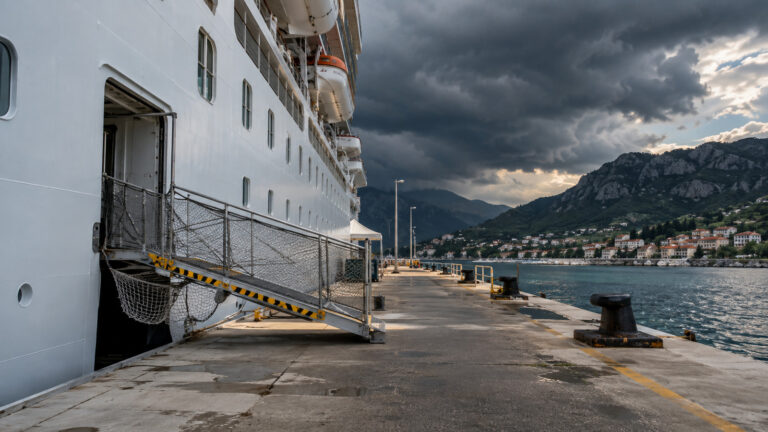
How Many Ships Share Your Port Day? How to Read the Schedule
A cruise schedule can tell you much more than how many ships share your date. Read the ship names, passenger capacity, arrival and departure windows, berth or anchorage, and whether the call is a turnaround or a day visit.
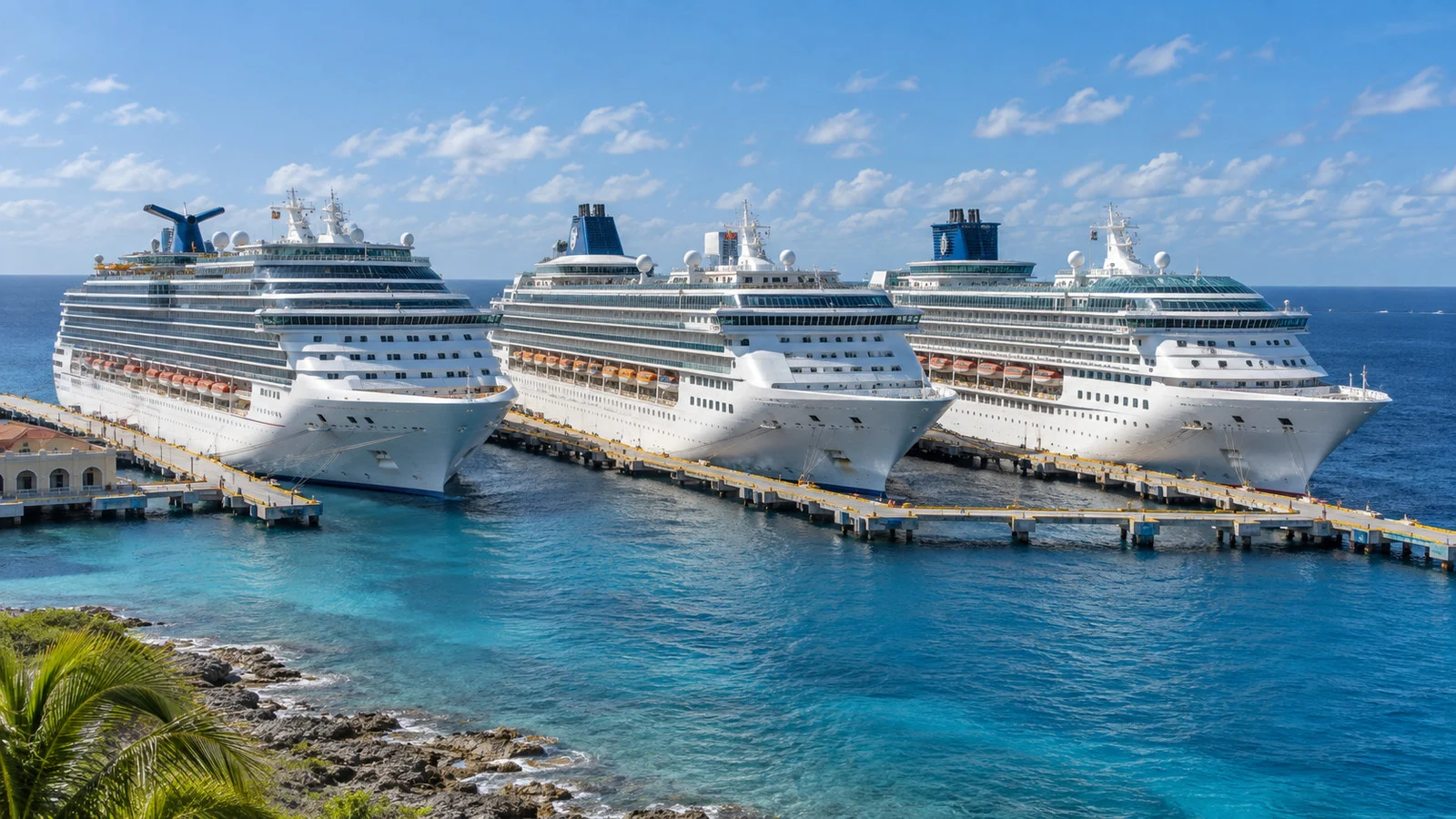
The raw ship count is only a first clue. Two large ships arriving together can create more pressure than four small ships spread across the day, while a remote berth or tender landing can concentrate people in one transport bottleneck.
Quick Facts
- Best source: Start with the port authority, harbor, terminal, or official cruise schedule.
- Count people, not just ships: Use ship capacity as context, not a prediction of actual guests ashore.
- Check timing: Simultaneous arrivals and departures matter more than a full-day total.
- Check location: Berths, terminals, tender landings, and shuttle points can create separate crowd patterns.
- Recheck: Schedules and berth assignments can change through the season.
Where official cruise schedules live
Search the port’s official website for “cruise schedule,” “ship arrivals,” “vessel calls,” or “berth plan.” A tourism calendar can be helpful, but a port or harbor source is usually closer to the operational schedule.
The Port of Seattle publishes a seasonal cruise schedule and warns that it remains subject to change. Its separate ship-and-terminal tool is also useful because the terminal affects transportation planning.
Cruise Line Agencies of Alaska publishes dated schedules for individual Alaska ports along with an all-ports file and code guides. Check the update date so you know how fresh the file is.
Santorini’s municipal port site publishes monthly arrivals and departures and explains its berth-allocation process. That is more useful than a generic crowd calendar because it comes from the body managing the calls.
Some official calendars are PDFs, spreadsheets, or interactive tools rather than ordinary webpages. Download the latest version and confirm that the date, year, and time zone match your sailing.
How to read one entry
Ship name and cruise line
Match the ship name exactly because one brand may operate several vessels on the same route. If the schedule uses codes, open its abbreviation guide rather than guessing.
Arrival and departure
Look for operational arrival and departure times, then compare them with your itinerary. A schedule may show ship movement times rather than the moment passengers can go ashore.
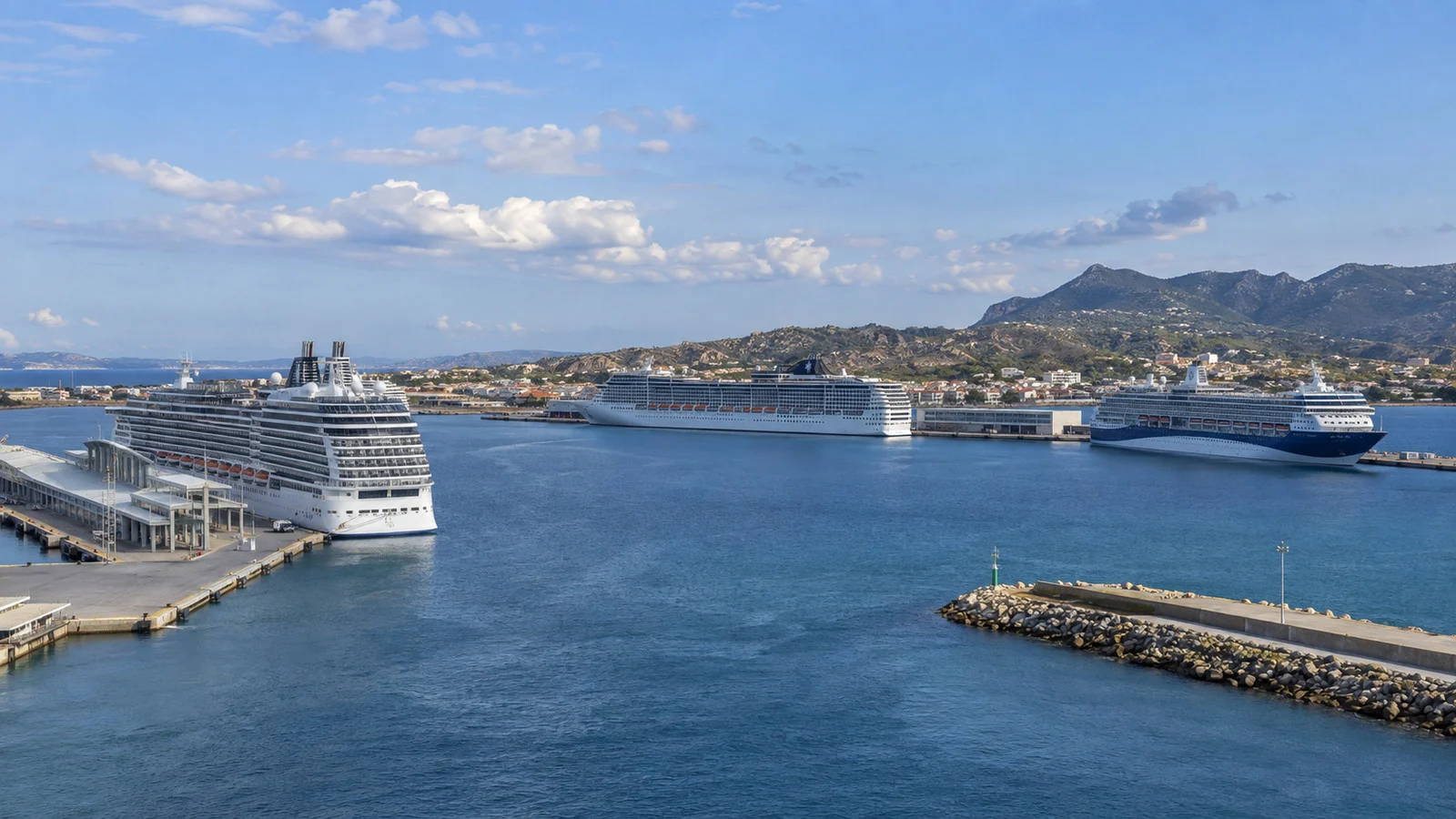
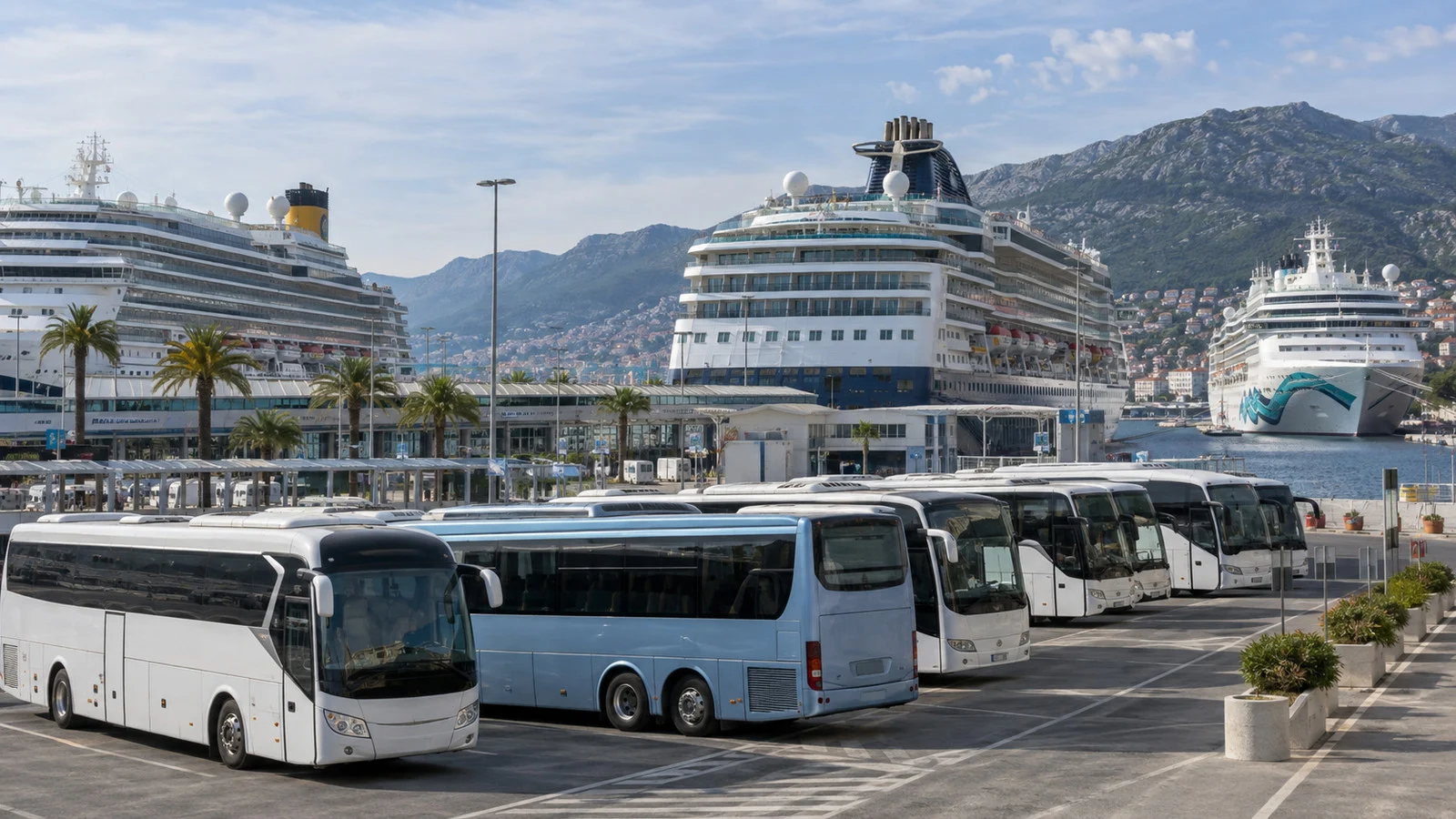
Several ships arriving within a short window can load terminals, roads, tender landings, cable cars, ferries, and popular tour departures at once. Ships with staggered calls may spread that demand.
Berth, pier, terminal, or anchorage
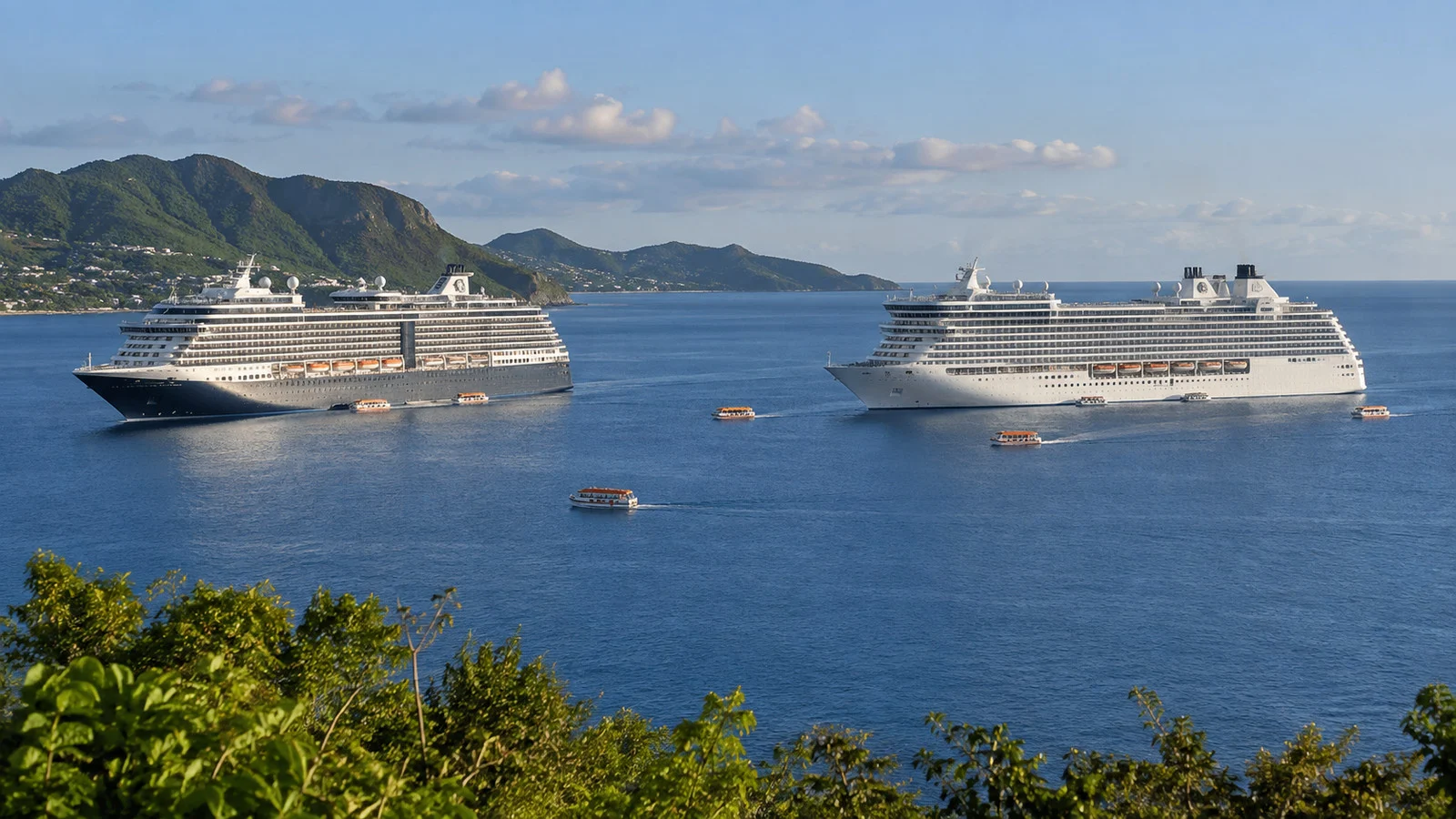
A berth can determine whether passengers walk into town, take a required shuttle, or begin far from the main sights. “Anchorage” or similar wording usually signals a tender operation, but confirm the line’s current plan.
Two ships in different terminals may barely interact at the gate, then meet at the same landmark later. Conversely, one large ship at a constrained tender landing can create a sharp local queue.
Passenger capacity
Use the ship’s published guest capacity as a rough scale, not an exact attendance count. Occupancy, crew, guests staying aboard, tour choices, and overnight passengers all affect the number actually entering town.
Be consistent when comparing ships because published capacities may use double occupancy or a higher maximum. You need an order-of-magnitude estimate, not fake precision.
Call type
A turnaround call brings embarking and disembarking guests, luggage, taxis, coaches, supplies, and private vehicles. A transit call mainly sends current passengers ashore and back.
An overnight ship may already have guests in town before a new arrival reaches the port. A short call can also compress excursion departures and returns into a narrow period.
Turn the schedule into a useful crowd estimate
Start by listing every ship whose call overlaps your time ashore. Add a rough passenger-capacity figure for each, then mark arrival time, departure time, berth, and call type.
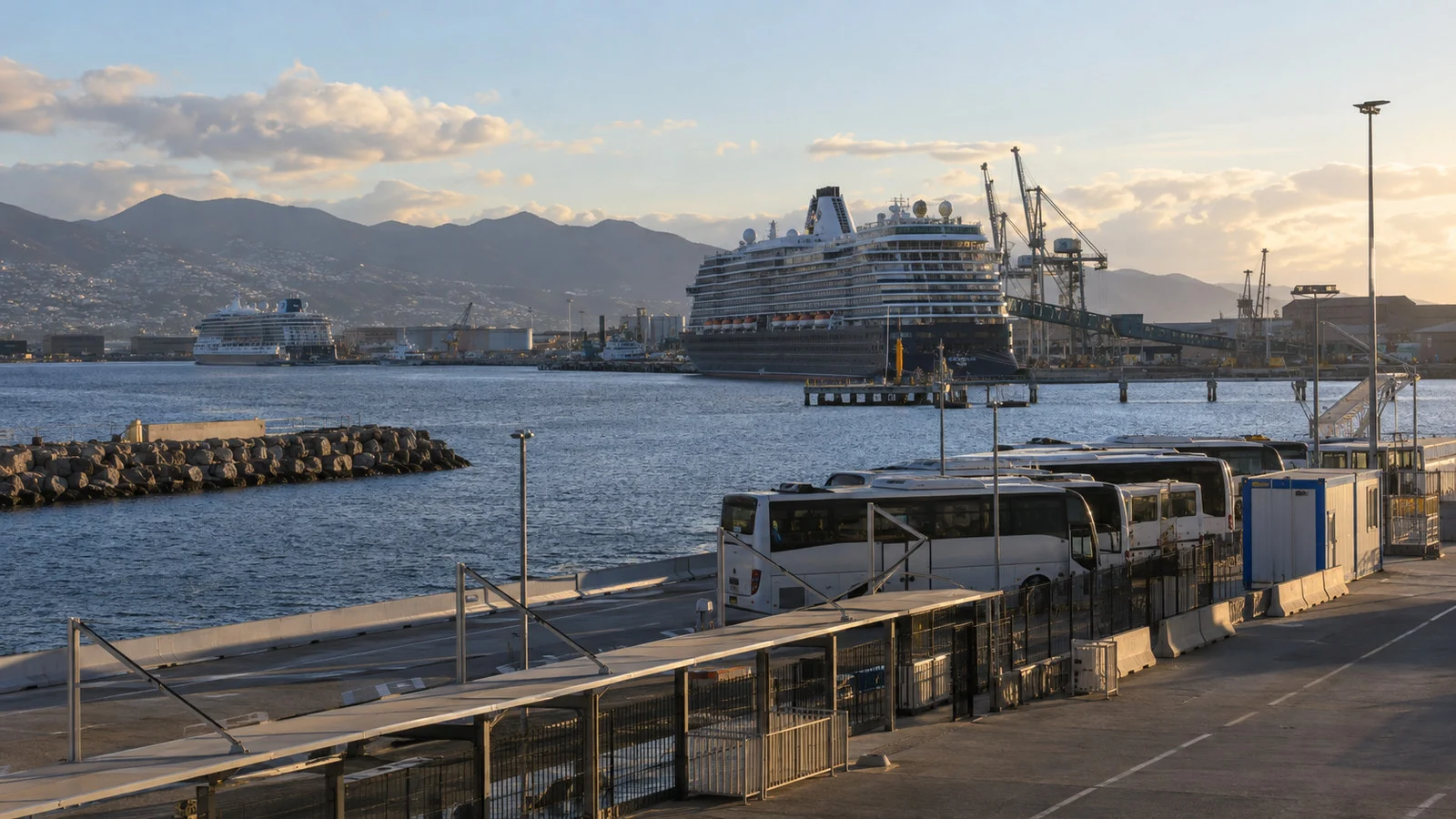
Next, identify shared bottlenecks: the only tender pier, a required shuttle, one cable car, a narrow old town, a single road, or the same morning attraction. These places feel busy even when the wider destination does not.
Finally, look at non-cruise demand. Weekends, holidays, festivals, school breaks, weather, and local visitors can matter as much as the ships.
The result is a planning signal, not a forecast. Use it to choose timing and reservations, not to declare that an entire port day will be ruined.
What the ship count can and cannot tell you
A busy schedule can justify earlier reservations, a timed-entry ticket, a different route, or a backup plan. It cannot tell you exactly how long a taxi, tender, security, or attraction line will be.
One large vessel does not distribute guests evenly. Ship excursions may leave quickly by coach, independent travelers may cluster near the terminal, and repeat visitors may head in many directions.
Weather can reverse the pattern. A sunny day may send more people outdoors, while rough water may slow or cancel tender operations and change the call altogether.
If the port publishes no useful calendar
Check the cruise line’s itinerary for your own ship, then look for an official vessel-arrivals page, harbor notice, port-call list, or terminal calendar. A local tourism office may also link to the port’s source.
Third-party aggregators can help discover ship names, but treat them as leads rather than final confirmation. They may combine planned calls from several feeds, retain canceled visits, or omit berth changes.
Search the exact date and port name, then verify the result against an official source as close to sailing as possible. If the answer affects an expensive booking, contact the port, terminal, tourism office, or operator.
How the result should change your plan
- Reserve capacity-limited attractions when the cancellation terms are reasonable.
- Visit the most constrained sight before the main excursion wave or later in the call.
- Allow more time for tenders, shuttles, taxis, and the return to the ship.
- Confirm the meeting point with independent guides if several terminals or tender landings are used.
- Choose a less concentrated neighborhood, beach, trail, or museum when the headline attraction is overloaded.
- Keep a weather-safe and low-logistics backup.
- Recheck the ship’s announced all-aboard time instead of copying a public schedule.
The guides to busy attraction days, planning around crowds, and several ships in one port add practical ways to adjust the day.
Independent tours and reservations
Send the operator your ship name, date, berth or tender landing, and current arrival and all-aboard times. Ask whether the meeting point changes when several ships are present.
A crowded day makes flexible cancellation and a ship-delay clause more valuable. It does not make an independent tour automatically unsafe or a ship excursion automatically faster.
If transportation is limited, ask how the operator protects the return and what happens if the ship changes berth or skips the port. Compare those answers with the tradeoffs in ship excursion, local tour, or independent day.
Accessibility and family planning
Crowd estimates matter most at narrow gangways, tender piers, shuttle queues, cable cars, and small elevators. Ask the cruise line or operator about step-free routes, accessible vehicles, mobility-device rules, and likely waiting conditions.
Families may need extra time for strollers, car seats, bathrooms, and keeping a group together. A less famous stop with easier access can produce a better day than racing toward the same bottleneck as everyone else.
Do not assume the first or last hour is automatically quiet. Tender priorities, excursion departures, commuter traffic, and early attraction closing can change the pattern.
When to check
Check once before booking nonrefundable plans, again near final payment, and again shortly before sailing. Onboard, use the cruise line’s current notices for the berth, clearance, and all-aboard time.
If the schedule’s last update is old, lower your confidence in it. A timestamp is part of the evidence, not decoration.
Quick answers
How do I find how many ships share my port day?
Open the official port, harbor, terminal, or cruise schedule and search your date. Count overlapping calls, then check ship size, timing, location, and call type.
Does more ships always mean worse crowds?
No. Passenger scale, arrival waves, transport capacity, local events, tendering, and how visitors disperse can matter more than the vessel count.
Can I trust a third-party cruise calendar?
Use it as a discovery tool, then verify with the port and cruise line. Planned calls, cancellations, and berth assignments can change.
What if my itinerary and the port schedule disagree?
Recheck the year, time zone, ship name, and update date, then ask the cruise line or port. Use the ship’s current onboard instructions for the actual port day.
Should I avoid a port with several ships?
Usually not. Adjust the timing, reserve the true bottlenecks, and choose a backup route instead of abandoning the destination based on one number.
Final word
A cruise schedule is most useful when you read it as a movement plan, not a scoreboard. Ship size, timing, berth, tendering, and local capacity turn a simple count into a practical port-day decision.
Schedules change, so verify the latest official information before committing money or time. See the Editorial Policy for how CruisePorts.co researches and updates guidance.
More on this topic: browse every guide on weather, crowds and conditions.