Cruise Ports With a Scenic Train Ride From the Pier
Most famous scenic trains sit hours inland from any pier. A few start close enough that you can ride one and still make all aboard, and that short list is the one worth planning a port day around.
My quick take
I like a train excursion more than almost any other kind, and it is not close. You sit down, you face a window, and somebody else handles the road.
But I only get excited when the train starts near the ship. The moment a scenic railway needs a ninety minute bus ride in front of it, I stop calling it a train day and start calling it a bus day with a train in the middle.
The quick facts
- Closest to the ship: Flam, where the railway station and the quay are the same short stretch of waterfront.
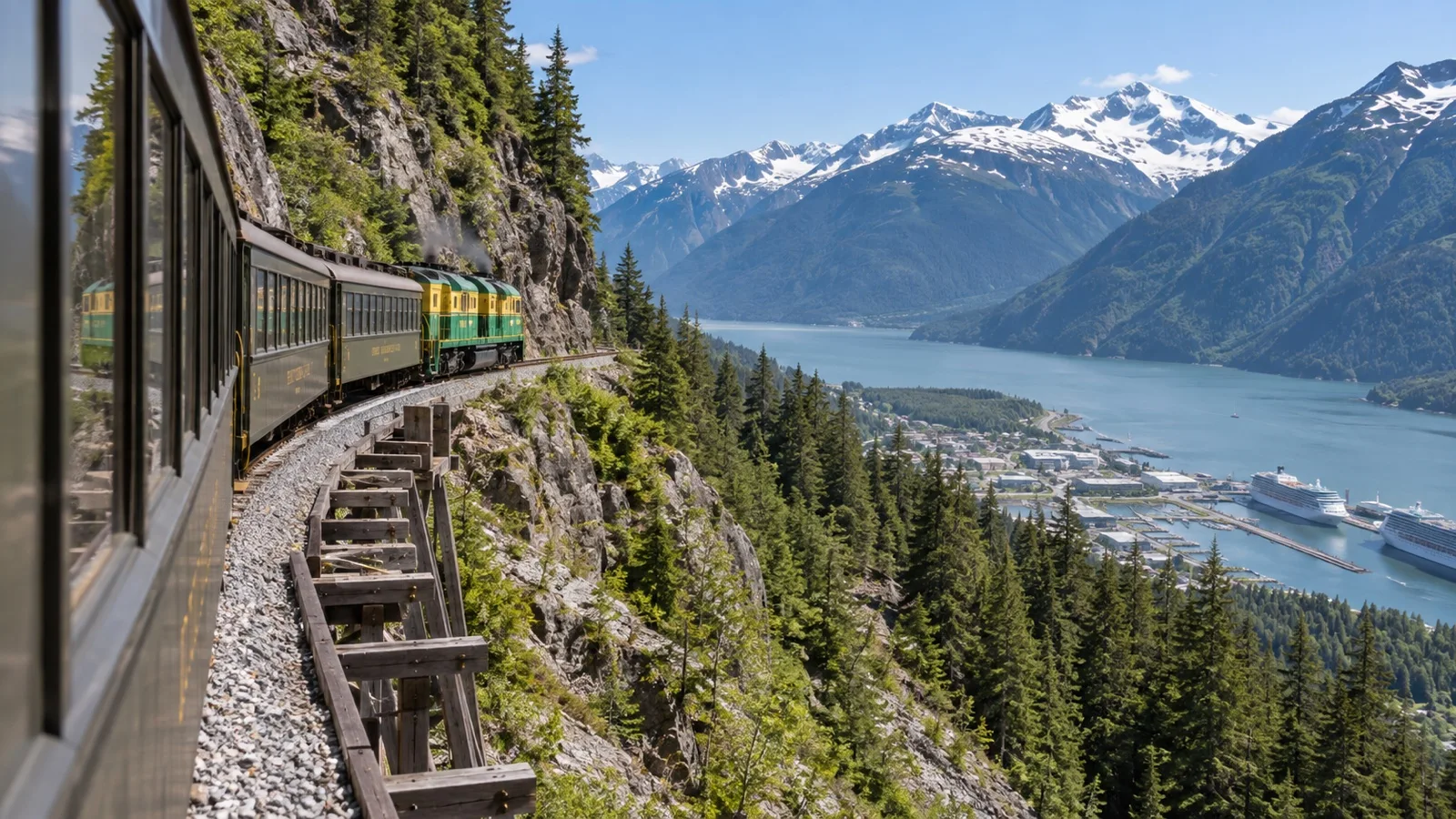
- Best all around: Skagway, where the summit run is a short level walk from the docks and takes under three hours.
- Biggest day: Cairns to Kuranda, which wants roughly six hours from the terminal and back.
- Where it goes wrong: Public timetables with one usable return, especially in remote ports.
- Cheapest version: A funicular, which is a train in every way except length.
What actually counts as a train from the pier
My bar is simple. The train has to start within a walk, a shuttle, or a transfer short enough that the ride itself is the biggest block of the day.
That rules out most of the world’s famous railways, and it should. A four hour drive each way to a two hour train is a bad trade on a port day, no matter how good the photos look.
The second thing I look at is the return. A scenic railway is usually an out and back, and the return leg is what decides whether you make the ship.
That is the same logic behind reaching a real city by train from the pier. If there is exactly one train back and it runs late, you have no plan B.
Skagway and the White Pass, the cleanest yes on this list
Ships tie up alongside at the Railroad, Broadway, or Ore Dock, and the historic district is about three quarters of a mile (1.2 km) away on flat ground. The narrow gauge railway boards downtown near Broadway, so getting to the train is a walk rather than a logistics exercise.
Which of the three docks you get changes that walk a little, and the Skagway cruise port guide has the layout. It does not change the plan.
The standard summit excursion runs about 2.5 to 2.75 hours over a 40 mile (64 km) round trip. It climbs from tidewater toward the pass, past Bridal Veil Falls and Inspiration Point, and you are back in town with the afternoon still ahead of you.
The town itself is a preserved gold rush district under federal protection, which is why the storefronts look the way they do. The longer runs that push toward the Yukon are a different animal, and those are the ones that go long.
If you are choosing where to spend excursion money across a whole Alaska week, our comparison of Juneau, Skagway and Ketchikan is worth reading first.
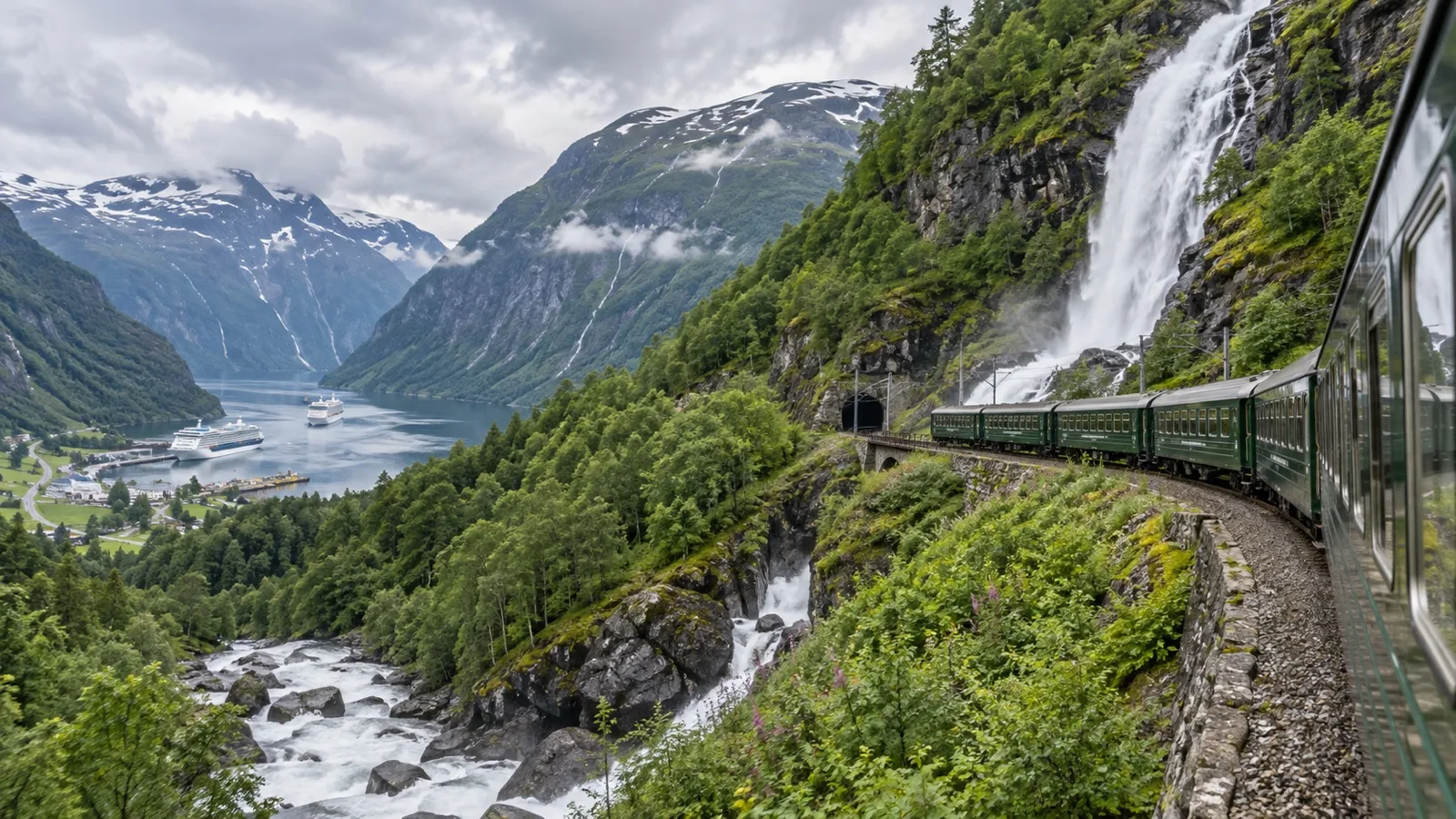
Flam, where the railway is the reason the ship stopped
Flam is an alongside berth, not a tender stop, and the walk from the quay to the railway station is roughly two minutes. The tourist information point, the cafes and the platform all sit on the same stretch of waterfront.
The Flam cruise port guide covers the layout in detail. There is no shuttle to figure out and nothing to negotiate.
The round trip to Myrdal and back is roughly two hours including the turnaround. The line climbs about 2,830 feet (863 m) in around 12 miles (20 km) at a grade of 1 in 18, which makes it one of the steepest standard gauge railways anywhere.
There is a photo stop at Kjosfossen where everyone piles out into the spray. The one real hazard here is sellouts on busy port days, so reserve ahead or take the ship version rather than turning up hopeful.
Gudvangen gets you the same train with a bus in front of it
Gudvangen sits at the end of a spectacular arm of the fjord, and small expedition ships dock at the village quay. Larger vessels anchor off and tender to the same small dock, which is worth knowing before you plan anything ambitious.
Road transfers to Flam run about 45 minutes, and there is no taxi rank sitting at the quay waiting for you. That is the whole problem in one sentence, and the Gudvangen cruise port guide is blunt about how thin the transport options are.
So the railway is technically reachable from Gudvangen, but only if somebody has arranged the road leg in advance. I would book it through the ship here and not think twice about the markup.
Bergen gives you a mainline you only have time to sample
Bergen is the western end of Norway’s great mountain railway, and the temptation is obvious. Ships use Skolten, Bontelabo or Jekteviken, and from the first two it is about a ten minute walk to Bryggen and the Fish Market, with the main station a little further on.
The Bergen cruise port guide covers which berth puts you where. From Jekteviken you want the shuttle or a taxi rather than your feet.
Here is the honest part. The full run across the mountains is a most of a day proposition, and a port call does not give you that.
What you can do is ride a section inland and turn around, which gives you real scenery without gambling the ship. Check the timetable for your specific date before you commit, because the useful return is the one that matters and it is not always the obvious one.
Seward and Whittier, where the pier is basically the platform
These two are turnaround ports rather than day calls for most people, which changes the question. You are not squeezing a train into a port day, you are choosing how to get to or from Anchorage.
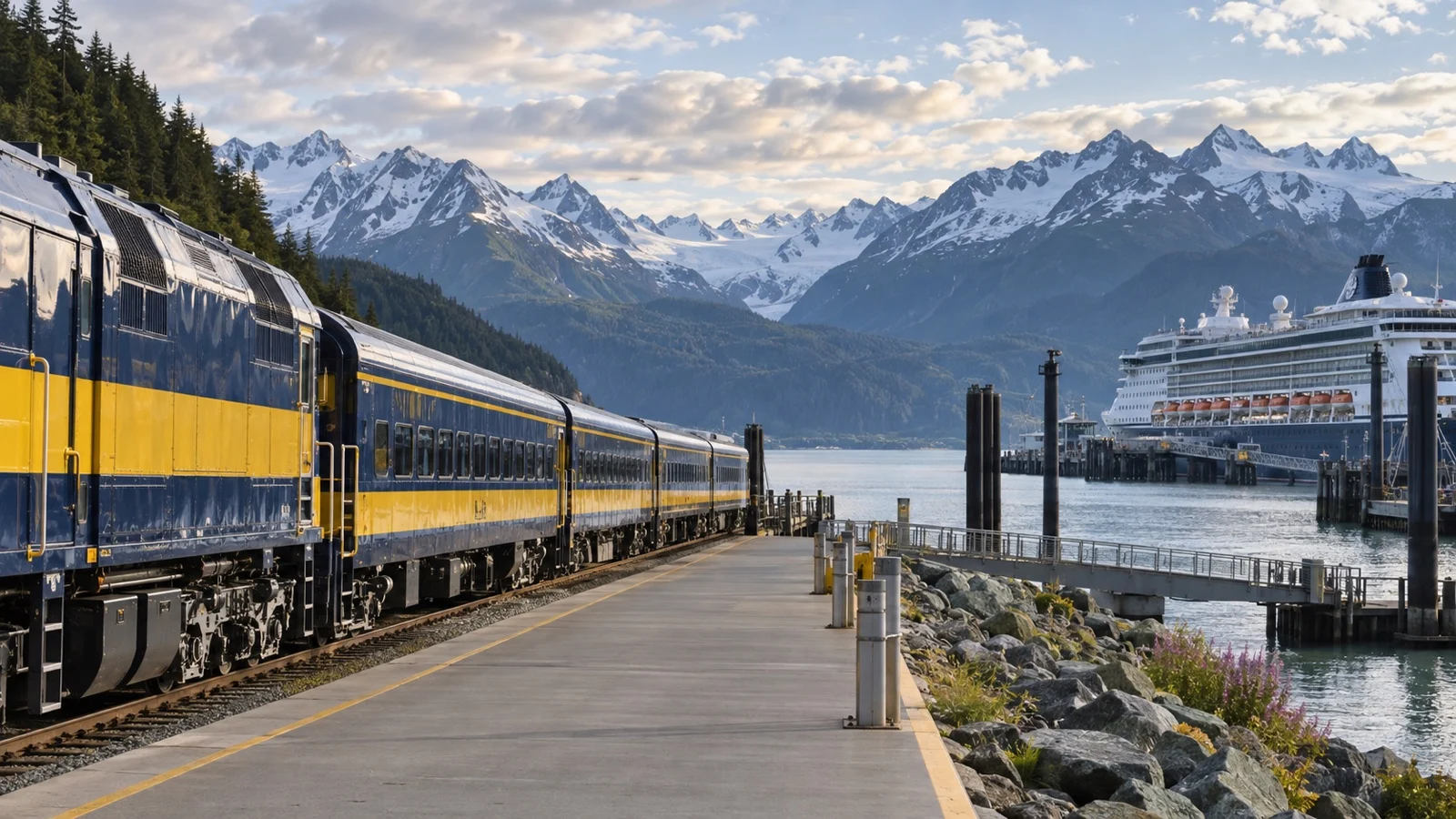
In Seward, ships berth at the railroad’s own passenger dock at the head of Resurrection Bay, beside the tracks and near the Small Boat Harbor. Anchorage is about 130 road miles (209 km) away, and the state’s passenger rail service runs the corridor seasonally from roughly mid May to mid September.
The Seward cruise port guide has the current terminal details. The scenic run is a destination in its own right, not just a transfer you tolerate.
Whittier is stranger and I mean that as a compliment. The terminal sits at the head of Passage Canal with the rail siding right alongside, and everything and everyone reaches town through a shared road and rail tunnel more than two miles (3 km) long.
Road traffic runs on published alternating windows, which is exactly the kind of detail the Whittier cruise port guide spells out.
Whittier is one of the few ports on this list I have actually stood in, and the tunnel is the thing I would plan around. Never build an arrival that depends on catching the last possible opening.
Cairns and the climb to Kuranda
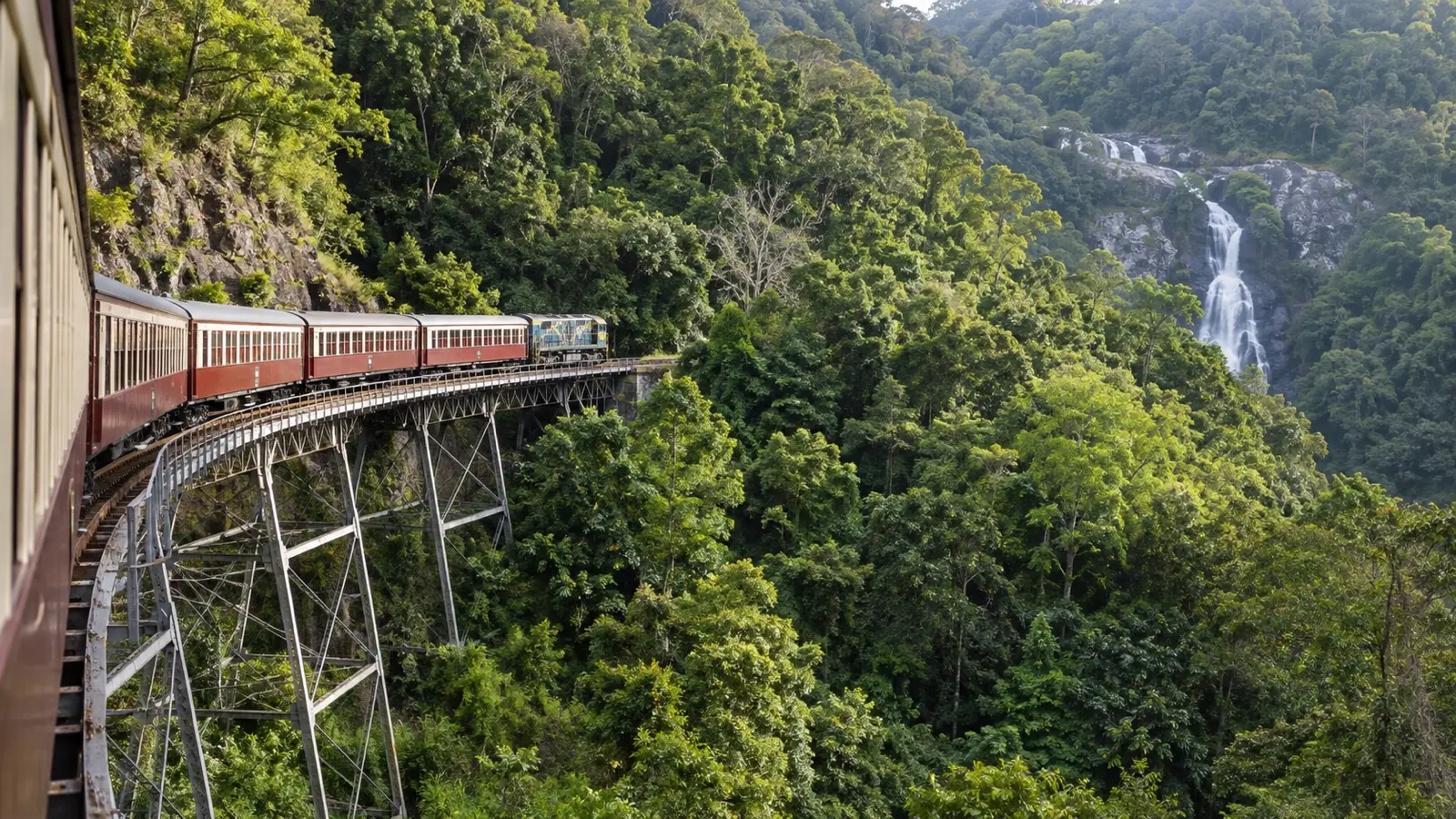
Ships use the Cairns Cruise Liner Terminal on Wharves 1 to 3, in a heritage wharf shed right on the city waterfront, and downtown is a flat five minute walk. The largest ships anchor in Trinity Bay and tender instead.
See the Cairns cruise port guide for which applies to your ship. A tender day eats an hour you were counting on.
The heritage railway that climbs out of Cairns covers about 23 miles (37 km) and gains around 1,070 feet (327 m), crossing 55 bridges and threading 15 tunnels on the way up through the gorge. It is genuinely one of the great short rail journeys and the engineering is half the appeal.
The version I would do is the cableway up and the train down, with time in the village between. Budget about six hours for that loop, which means it only works on a long call.
Holyhead is the long way around to the Snowdon railway
This is the one people most want to work, and it is the one I would think hardest about. Ships either dock at the deep water berth or anchor and tender, and the berth sits inside an active secure port with no pleasant walking route out, so you are on a port shuttle either way.
The Holyhead cruise port guide lays out both arrangements. Photograph your shuttle stop before you walk away from it.
The rack railway up the highest mountain in Wales departs from Llanberis, which is inland past Caernarfon. Caernarfon alone is 40 to 55 minutes by road from the port, so Llanberis is a solid chunk more, and mountain routes want a two hour buffer before all aboard.
Add a weather dependent summit service and a couple of hours on the mountain on top of all that driving, and the math gets tight fast. If you want this one, buy it from the ship and let them own the delay.
Narvik and the Ofoten line toward the Swedish border
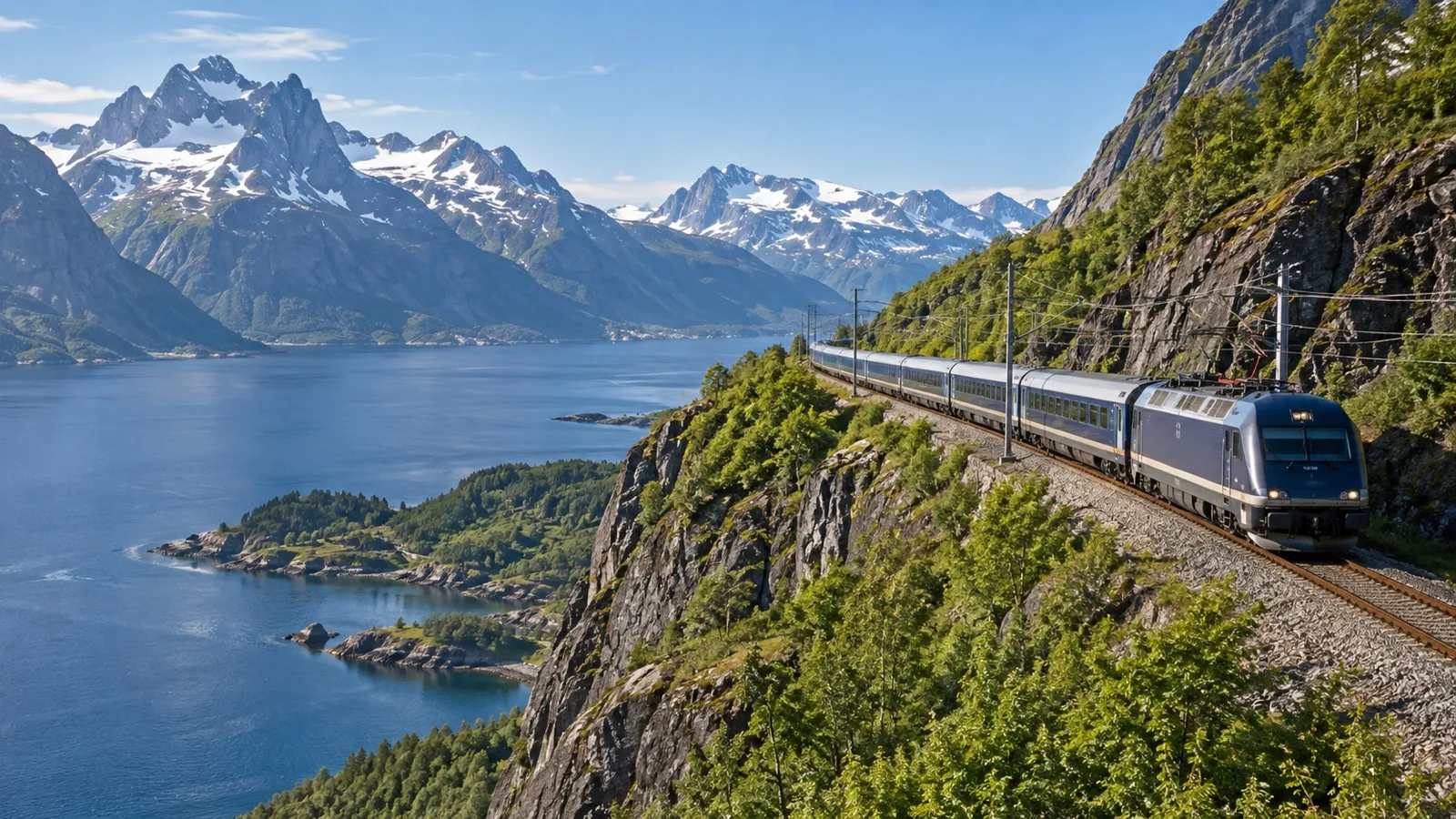
Narvik works as a rail port on paper. Pier 3 is the established cruise berth, roughly 1,640 feet (500 m) from the town center, a ten to fifteen minute uphill walk.
The Narvik cruise port guide notes that some ships get assigned elsewhere in the deep water area instead. In winter that walk feels considerably longer than the distance suggests.
The line climbs through genuinely severe mountain country toward Sweden, and it is the reason the town exists. The catch is that public passenger trains do not necessarily line up with a cruise call or give you a forgiving turnaround.
There is also a border in the middle of it, and Norway and Sweden are two jurisdictions, so bring your passport if you are crossing. I would take the organized version here or skip the train and ride the gondola above town instead.
Douglas kept every old train it ever had
Most big ships anchor in Douglas Bay and tender to the Sea Terminal area between Victoria Pier and Edward Pier, so you land in the middle of town. That is unusually good for a tender port, and it puts several vintage lines within reach on foot.
The Douglas cruise port guide maps out how they connect. Smaller ships sometimes berth alongside when the conditions allow it.
The horse tram runs the promenade and is the easiest vintage ride to fit around a short call. The electric railway starts at Derby Castle and heads north, and the steam railway leaves from Douglas station inland of the terminal.
- Shortest option: The horse tram along the promenade, which you can walk to from the landing.
- Best combination: The electric railway north toward Laxey and the Great Laxey Wheel.
- The stretch too far: Adding the mountain railway at Laxey, which stacks another wait and another weather sensitive connection onto your return.
Tender ports also mean an earlier final boat deadline than the posted all aboard. Work backward from the last tender, not from the sailing time.
Funiculars, cog railways and the petit train question
A funicular is a train. It has rails, a schedule and a driver, and on a short call it delivers a view for a fraction of the money and none of the risk.
Bergen’s funicular has been running since 1918 and lifts you about 1,050 feet (320 m) above the city in roughly six minutes. In Capri the funicular runs from Marina Grande up to the Piazzetta in about four minutes for a couple of euros, and the Capri cruise port guide warns that the line for it is the real cost.
Quebec City has a one minute ride between Lower and Upper Town that saves you the Breakneck Steps, and the Quebec City cruise port guide notes it takes cash or tap only.
The rubber tired petit train you see rolling along a seafront is not a train, it is a bus in a costume. I still ride them, usually in heat, usually when the alternative is a long uphill walk, and I have never once regretted the eight dollars.
Three famous trains that are not cruise trains
People ask about these three constantly, so here is the plain answer on each. None of them are reachable on a port day, and pretending otherwise is how a vacation goes sideways.
The Durango and Silverton runs in the mountains of southwestern Colorado, several states and a full day of driving from any ocean terminal. Treat it as a land trip, not a shore excursion.
Copper Canyon is the same story in a different country. The line climbs inland from the Pacific coast of Sinaloa toward Chihuahua, and no scheduled Mexican Riviera call puts you within striking distance of a same day round trip.
If you dock in Puerto Vallarta and someone offers you Copper Canyon, that is not a real product.
Cass is the one I wish worked, because it is a steam operation in an old lumber town preserved as a state park in the West Virginia mountains. It is hours of driving from the nearest cruise terminal, which makes it a wonderful road trip and a terrible port day.
When the ship excursion is worth the markup
I am not a reflexive ship excursion buyer. But trains are the category where I hand over the money most willingly, because the failure mode is so specific.
A train that runs late does not care about your sailing time, and you cannot flag down a different one. If the ship sold you the seat, the ship waits or gets you to the next port, and that guarantee is the actual product you are buying.
- Book independently: Skagway and Flam, where the station is a walk and the round trip is short.
- Book through the ship: Gudvangen, Holyhead and Narvik, where a road leg or a sparse timetable sits between you and the train.
- Either works: Cairns, as long as you have a long call and you buy the combination ticket in advance.
- Never needs an excursion: Any funicular, anywhere.
Quick answers
Which cruise port has the best scenic train?
Skagway, for the combination of scenery, a short walk to the platform and a round trip under three hours. Flam is a close second and is even easier to reach from the ship.
Can I book the White Pass railway myself instead of through the cruise line?
Yes, tickets are sold directly by the railway as well as through cruise lines. Just leave a real cushion if you pick one of the longer runs toward the Yukon.
Is the Flam Railway worth it on a short port call?
Yes, because the round trip is only about two hours and the station is a couple of minutes from the quay. Reserve ahead, since it sells out when several ships are in.
Can you visit Copper Canyon from a cruise ship?
Not on a normal Mexican Riviera itinerary. The railway climbs far inland from the coast, so it belongs to a separate land trip rather than a port day.
What happens if my train is late and the ship leaves?
If you booked independently, getting to the next port is on you and it is expensive. If the ship sold you the excursion, that problem becomes theirs.
Final word
The short list is short for a reason. Skagway, Flam, Cairns and the Alaska corridor are the ports where a railway is genuinely the best use of your hours ashore, and everything else on this page is a judgment call about how much bus you will tolerate.
Decide your return leg before you buy anything. I pick the train that gets me back with a comfortable margin, then I find the one after it and treat that as my backup, and if there is no train after it I buy the ship’s version instead.
How this guide was researched: Berth locations, walking distances, railway routes and journey times for every port listed here were checked in October 2026 against official operator and park information. Schedules, seasons, prices and berth assignments change often, so confirm the timetable and the return departure for your own sailing date before you book. See our Editorial Policy.
More on this topic: browse every guide on shore excursions and DIY port days.