US River Cruises vs Europe: Why the Mississippi Feels So Different
A Mississippi cruise and a Rhine cruise share the words “river cruise,” then part company quickly. American itineraries usually put more emphasis on the river landscape, regional history, small towns, and coach-supported touring, while many European routes string together compact historic centers.
Neither style wins automatically. The right choice depends on whether you want the river itself to lead the trip or want a new city waiting beyond the gangway most mornings.
The quick take
Choose a United States river cruise when domestic travel is easier, spacious modern riverboats appeal, and the Mississippi, Columbia, Snake, Ohio, Tennessee, or Cumberland story is the point. Choose Europe when walkable cities, castles, cathedrals, and short distances between countries matter more.
Do not compare fares until you have matched the inclusions. One line may include gratuities, drinks, selected excursions, transfers, or a pre-cruise hotel that another leaves outside the headline price.
The quick facts
- Main American choices: American Cruise Lines offers river routes across several domestic waterways, while Viking Mississippi sails the Mississippi. American currently says its ships carry 90 to 180 guests; Viking lists 386 guests in 193 outside staterooms.
- Ship shape: Viking Mississippi is 450 feet long and 75 feet wide, much broader than a typical European longship. Lock dimensions, bridge clearance, draft, and the route’s turning spaces shape every vessel.
- Included hotel: American Cruise Lines says new bookings made on or after August 7, 2025 include one pre-cruise hotel night, luggage service, and transportation from that hotel to the ship. Airport-to-hotel transportation is not included under the same published policy.
- Included spending: American currently includes onboard gratuities, alcoholic and nonalcoholic drinks, port charges, and at least one featured excursion in each port on its Mississippi and Columbia and Snake cruises. Other lines and European fares use different packages, so compare your exact sailing.
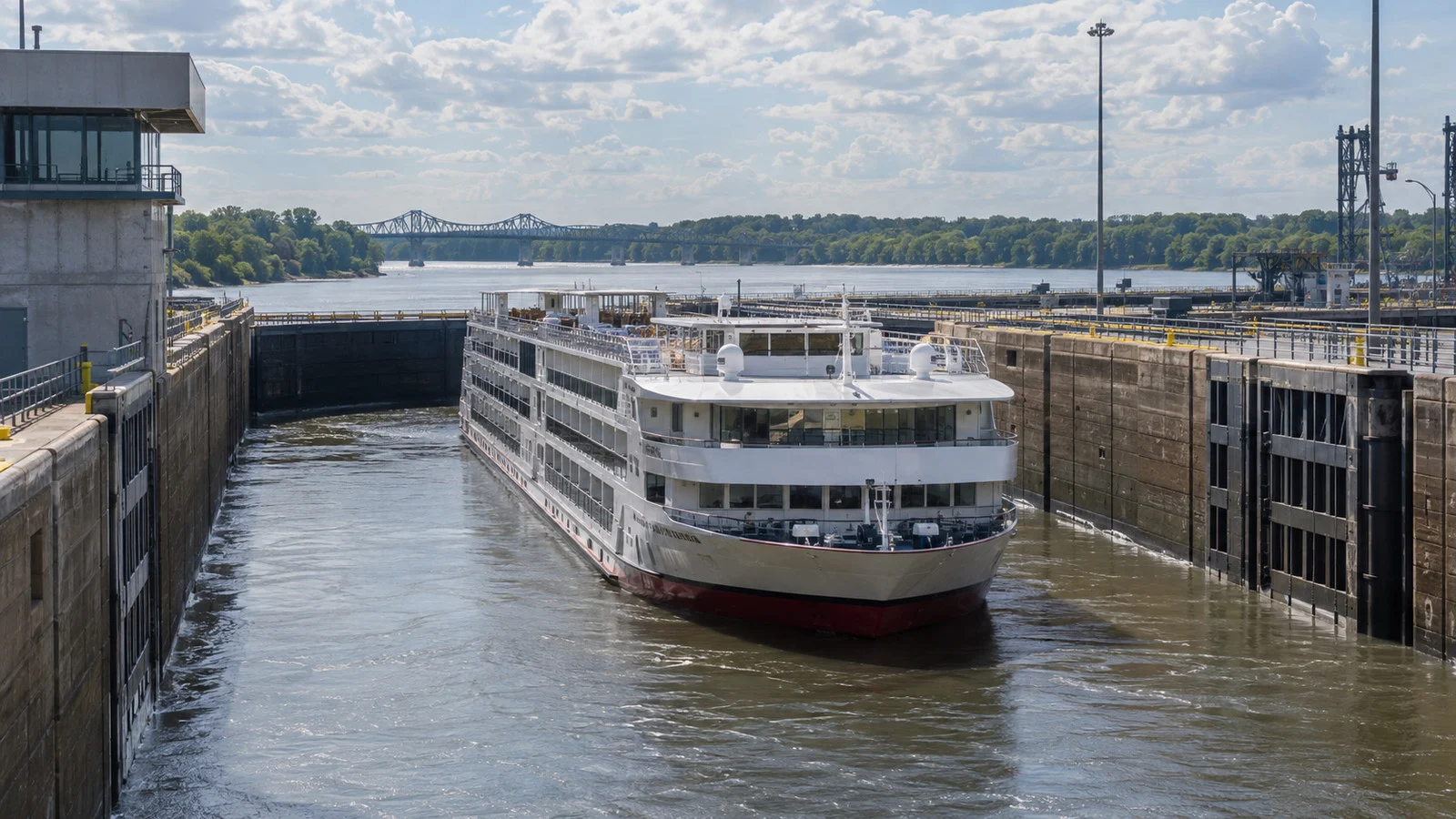
- Locks: Upper Mississippi routes pass a long chain of locks and dams, while Lower Mississippi itineraries between Memphis and New Orleans are lock-free. Columbia and Snake itineraries can make the navigation system a daytime attraction.
- Going ashore: some berths are downtown and some require a shuttle, coach, steep levee, or temporary landing. That variation exists on both continents, so read the port notes rather than trusting a map pin.
- Price: American river cruises are not automatically the budget alternative to Europe. Compare the cruise checkout total, airfare, hotel nights, gratuities, drinks, excursions, and transfers for the same month and cabin standard.
Why the ships feel so different
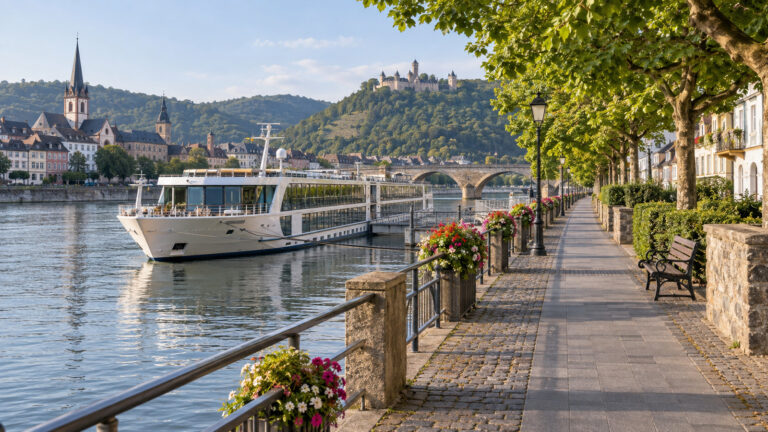
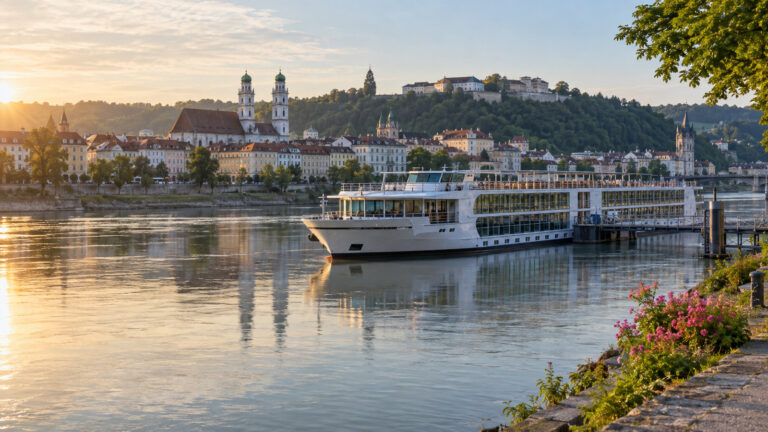
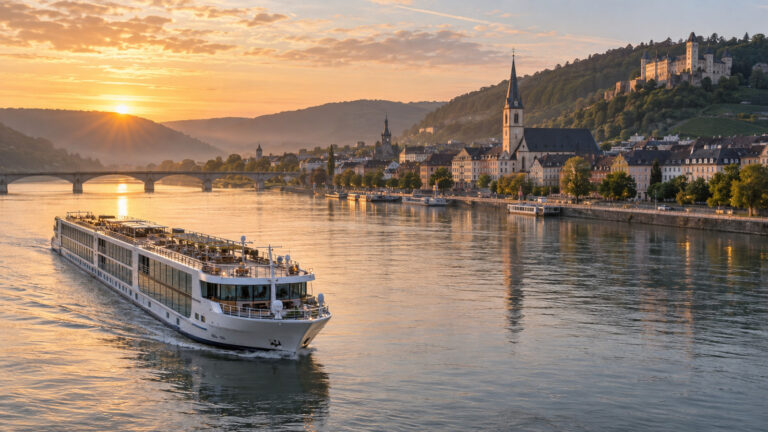
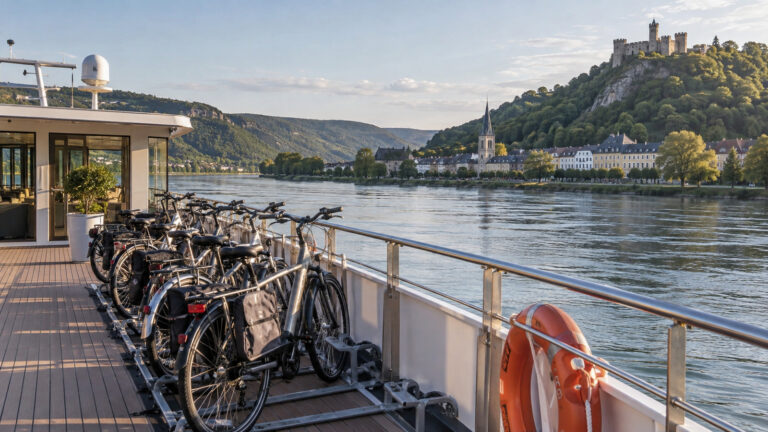
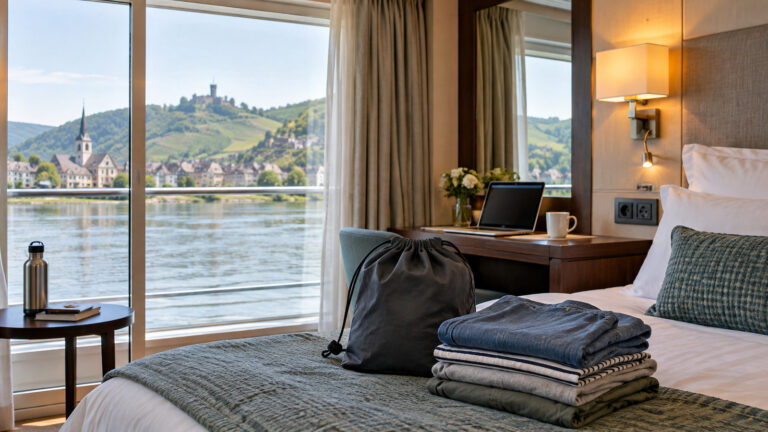
European river ships are commonly long, narrow, and low because they must clear old bridges and fit constrained locks. Those limits explain the familiar longship silhouette and why lower-deck cabins may use fixed windows near the waterline.
Major American commercial waterways were engineered around freight traffic, and some locks are considerably wider. The United States Army Corps of Engineers says its Saint Paul District section of the Upper Mississippi includes 13 locks and dams, with ten 600-foot chambers and three 400-foot chambers.
That does not mean every American riverboat is huge. American Cruise Lines publishes a range of 90 to 180 guests, while the wider Viking Mississippi carries 386 and has a full promenade deck, broad public rooms, and elevators throughout the ship.
Use the river ship size and lock guide to understand the engineering, then study the deck plan for the ship you will actually sail. A brand name does not guarantee the same cabin layout, elevator reach, or outside space across its fleet.
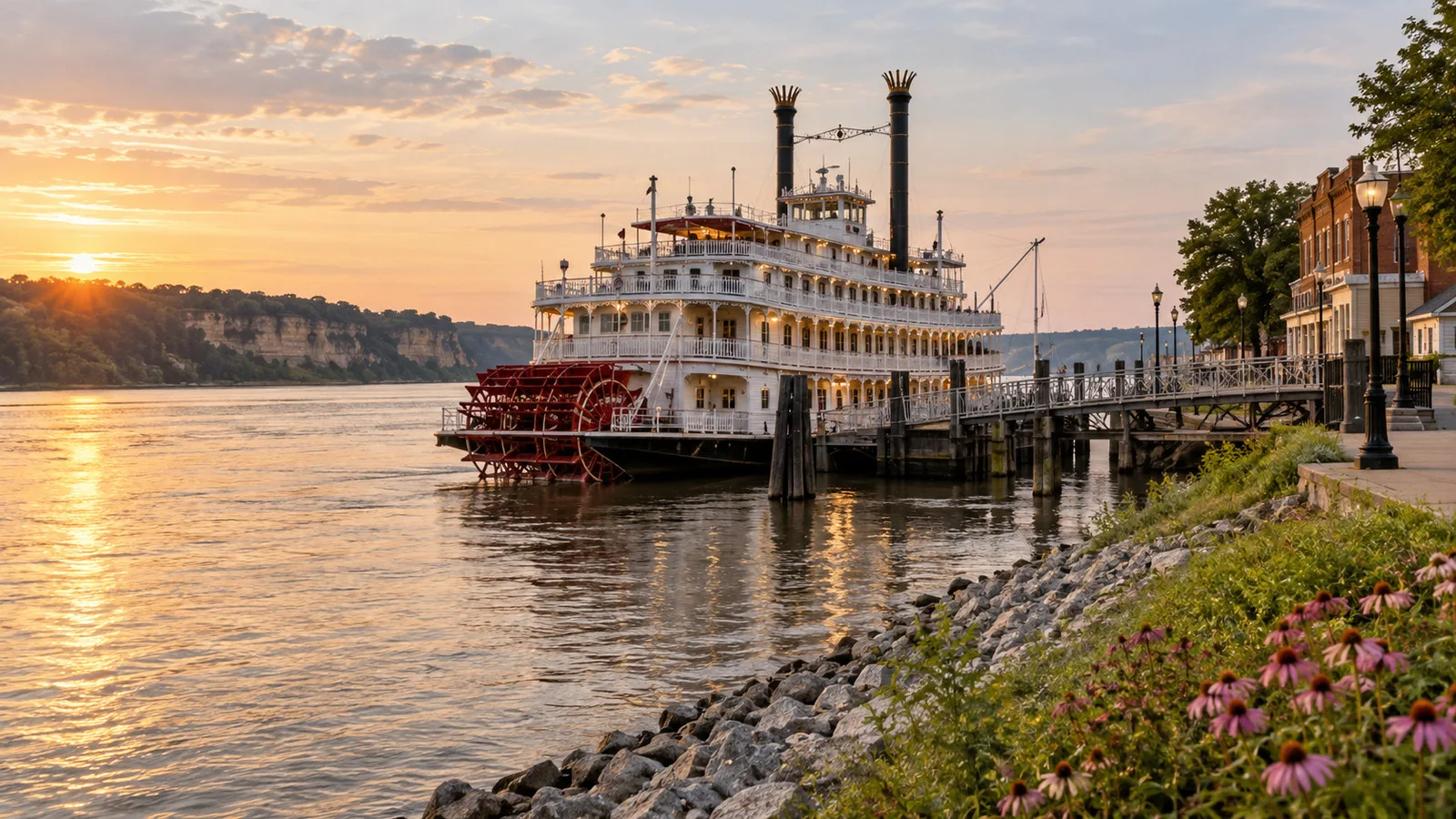
Paddlewheel charm is ship-specific
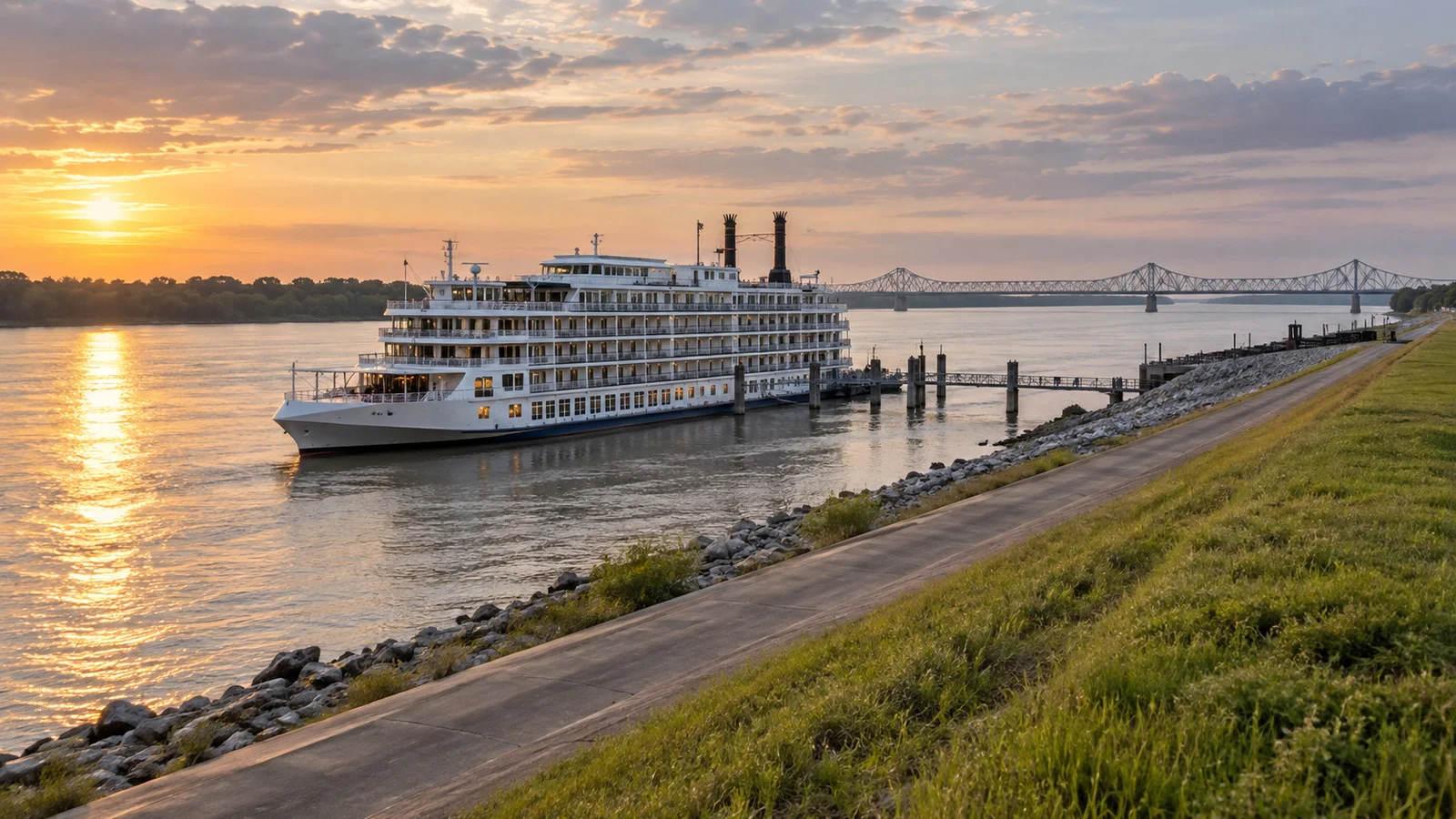
American Cruise Lines currently markets both classic paddlewheelers and modern riverboats. Its official ship pages identify American Heritage and American Splendor on the Mississippi and American Pride on the Columbia and Snake as paddlewheelers, while many ships on the same rivers have no wheel.
If the stern-wheel look is part of the dream, book by ship name rather than route alone. Also remember that a modern paddlewheeler has contemporary propulsion, navigation, hotel systems, and safety equipment even when the silhouette nods to the nineteenth century.
Embarkation can include a hotel, but read the boundary
American Cruise Lines’ current policy gives qualifying new bookings a hotel night before embarkation, luggage service, and a hotel-to-ship transfer. It does not include your airport-to-hotel ride, and optional upgraded pre-cruise packages cost extra.
Viking Mississippi lists noon embarkation and 4 p.m. stateroom access on its ship page. European river lines and packages vary widely, so never assume that a hotel or transfer is included because another company bundles one.
A pre-cruise hotel is valuable even when it is not bundled. It protects the sailing from a flight delay, gives checked luggage time to catch up, and makes a changeable berth location much less stressful.
If Europe is your choice, the river cruise land-extension guide helps separate a useful arrival buffer from a pricey package you could arrange independently.
Dining and evenings vary more than the stereotype
American Cruise Lines says its dining room accommodates all guests at one open seating and serves complimentary beer and wine with lunch and dinner, plus a cocktail hour before dinner. Exact dining times appear in the daily program and can vary by ship and itinerary.
Many European river ships also use one dinner sitting, but alternative venues and flexible options differ by line and vessel. Avoid choosing a continent based on one company’s dinner clock.
The more reliable contrast is what happens around dinner. American itineraries may feature regional lectures, local music, or scenic river time, while a European ship may remain in town for an evening walk or sail toward the next city.
Neither schedule is universal, and ports can swap berths or hours. Read two or three sample daily programs from your exact line if late dining, nightlife, or independent evenings matter.
Locks shape the day differently
European itineraries often transit locks while guests sleep because the ship is covering ground between closely spaced port days. Plenty of locks also happen in daylight, and an itinerary can change that timing because of traffic, water levels, or operational needs.
The Upper Mississippi has an extensive lock-and-dam system, and freight traffic can affect passage times. The Corps’ Saint Paul District alone manages 13 locks between Minneapolis and Guttenberg, Iowa, before the river continues through other districts.
Lower Mississippi cruises between Memphis and New Orleans do not pass navigation locks. The river is still highly managed with levees, revetments, dredging, and control structures, so “no locks” does not mean an untouched channel or an unchangeable schedule.
Columbia and Snake sailings use a series of large navigation locks, and cruise lines often treat the transit as part of the show. Stand on deck if the timing allows, but do not build a day around a promised hour because commercial navigation takes priority.
For the European side, the European river cruise locks guide explains why the Rhine, Main, Danube, Rhône, and Douro feel so different from one another.
Ports: small-town landings versus city quays
The Danube can link major cities such as Vienna, Bratislava, and Budapest, while the Lower Mississippi may pair New Orleans and Memphis with Natchez, Vicksburg, and smaller river communities. That creates a different rhythm, but it does not make every European berth walkable or every American stop coach-only.
On American rivers, a ship may use a downtown landing, levee, park, or purpose-built dock. Some excursions begin steps from the gangway, while others travel by motorcoach to a museum, historic site, scenic viewpoint, winery, or natural area.
Europe has its own remote berths, rafted ships, industrial quays, and last-minute dock changes. The practical question on either continent is the walking distance and transfer plan for your date, not the city name in the brochure.
For a stop-by-stop reality check, use the Mississippi river cruise ports guide. It flags the calls where independent exploring is easy and the ones where an included shuttle or excursion matters.
What each American river does best
Lower Mississippi
Choose the Lower Mississippi for music, foodways, architecture, Civil War and civil-rights history, and the scale of a working river. Look closely at how any plantation visit interprets slavery and whose stories the excursion centers.
Expect broad water, long levees, industrial traffic, and stretches where the landscape is subtle rather than postcard-pretty. New Orleans and Memphis make strong bookends, but the smaller calls give the route its texture.
Upper Mississippi
Choose the Upper Mississippi for bluffs, locks, river towns, and a greener landscape. Seasonal operation, changing river conditions, and longer transfers at some endpoints deserve extra attention.
This is the American route for travelers who want to watch navigation as much as visit museums. Give yourself deck time instead of filling every hour with a coach tour.
Columbia and Snake
Choose the Columbia and Snake for the gorge, dry eastern landscapes, large locks, regional history, and outdoor scenery. Some attractions sit well away from the river, so coach time is part of the bargain.
Read the Columbia and Snake port guide before picking a direction. Airport, hotel, and transfer logistics in Portland and Clarkston can matter as much as the cabin.
How the European experience differs
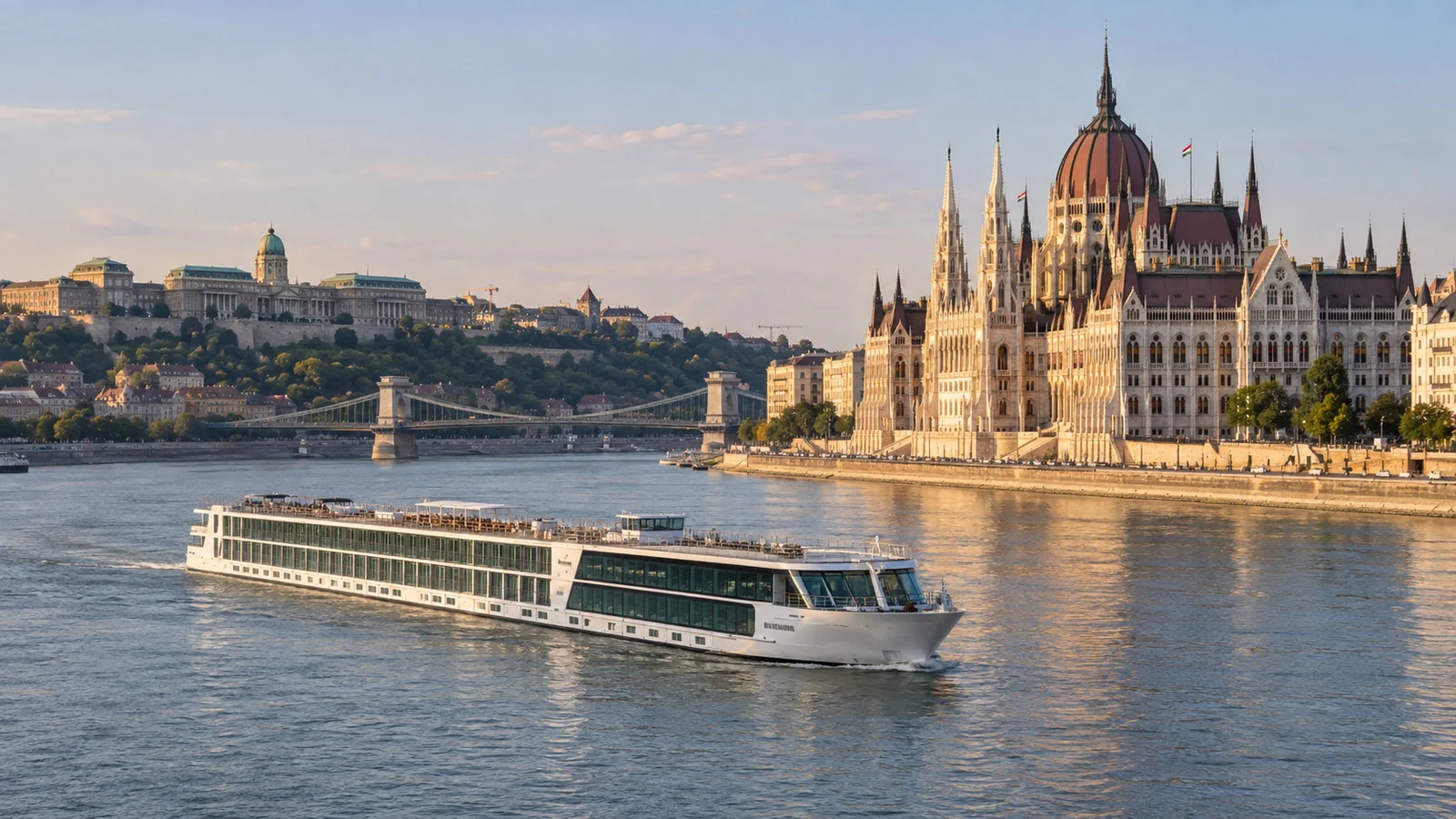
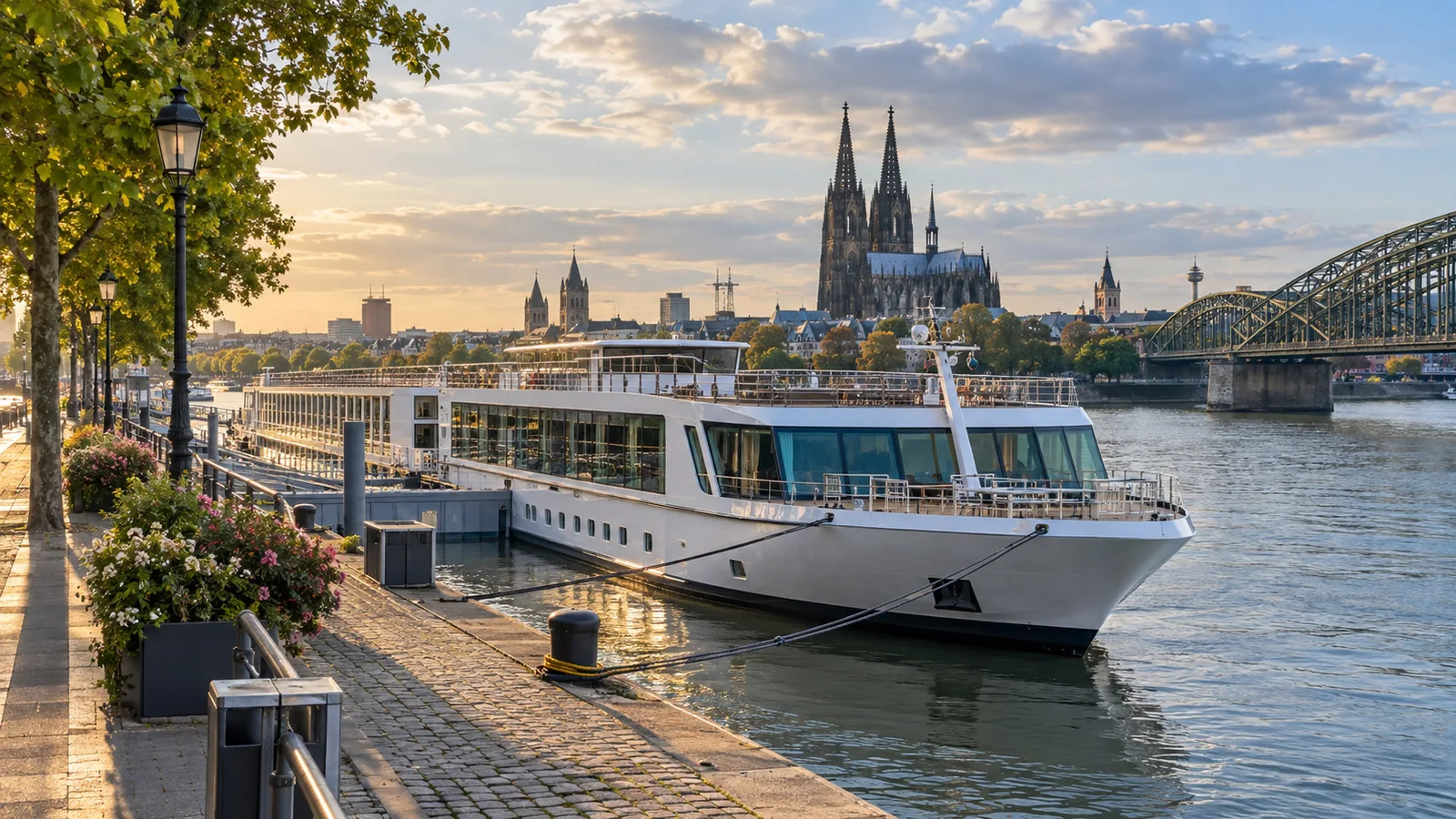
Europe offers more international variety within a single week and a stronger chance of stepping into a historic center. It can also bring bus rides, suburban berths, rafted docking, low bridges, high or low water, and walking tours over cobblestones.
The Rhine is a friendly first choice for castles and big-name cities, while the Danube layers capitals with smaller towns. The Rhône leans into food and Provence, the Douro into scenery and coach touring, and the Main-Danube Canal into locks and long sailing stretches.
If you are new to the format, the river cruise versus ocean cruise guide explains the more important first decision. A quiet ship, fixed meal windows, and destination-heavy days matter more than which continent appears on the map.
Compare the true price
American river fares can look high beside promotional European prices, but the comparison is incomplete until every required and likely cost is added. Use the checkout price for the same cabin standard and travel month rather than a “from” fare.
- Transportation: domestic or international airfare, bags, seats, airport transfers, and any one-way flight premium.
- Arrival buffer: hotel, meals, and ground transportation before embarkation.
- Onboard: gratuities, drinks, Wi-Fi, laundry, and any package you would genuinely buy.
- Ashore: included tours, paid upgrades, independent tickets, shuttles, and tips.
- Documentation: passports, visas or entry authorizations, insurance, and foreign transaction costs where relevant.
- Time: total vacation days, overnight flights, and the recovery day you may need after returning home.
American Cruise Lines currently includes gratuities, drinks, port charges, and selected excursions, while its qualifying new bookings include a hotel night. Viking and European operators publish their own inclusions and promotions, so recheck the exact fare rather than carrying one company’s rules across the market.
Book early only when the cabin or date is genuinely scarce, and read the deposit and repricing rules first. The river cruise booking-timeline guide helps balance choice against flexibility.
Accessibility is about the exact ship and landing
A wider American ship may offer roomy corridors, elevators, and accessible cabins, but that does not make every sailing easy. American Cruise Lines says most ships have elevators while naming several with limited elevator access, and Viking Mississippi identifies specific wheelchair-accessible cabin inventory.
The weak link can be the gangway, levee slope, tender, coach, or historic building ashore. Ask the line in writing whether your cabin, every passenger deck, embarkation hotel, transfer vehicle, and priority excursions work with your mobility device.
European ships face additional complications from rafted berths, narrow gangways, stairs, and cobblestones, but newer vessels vary. Never accept “accessible” as a complete answer without measurements and a route-specific explanation.
Season and river conditions
The Lower Mississippi has a long operating season, but heat, humidity, storms, fog, and high water can affect comfort or calls. The Upper Mississippi has a shorter warm-season calendar, while Columbia and Snake weather changes sharply between the wet western gorge and the drier interior.
European rivers face their own low-water, high-water, lock, and bridge-clearance disruptions. On either continent, a cruise contract usually allows itinerary changes, so buy the overall region rather than treating one small port as guaranteed.
Spring and fall can bring cooler deck weather and attractive scenery, while midsummer may be hotter and busier. Check climate normals and recent river advisories for the exact route instead of relying on one season rule for an entire continent.
Who should choose which?
A United States river cruise fits best if:
- You want domestic flights and no transatlantic travel.
- The river’s landscape, engineering, and regional history are central attractions.
- Small-town calls and coach-supported touring sound appealing.
- A spacious cabin or classic paddlewheel aesthetic matters more than nightlife.
A European river cruise fits best if:
- You want several countries or major historic cities in one trip.
- Independent walks from the ship are a high priority.
- Castles, cathedrals, wine regions, and old-town architecture lead your wish list.
- You are comfortable arranging international flights, documents, and a pre-cruise buffer.
There are exceptions in every direction, so compare two actual itineraries before deciding. The brochure category is less useful than the ship, berth list, hours in port, and included excursions.
Quick answers
Are American river cruises cheaper than European cruises?
Not reliably. Domestic airfare may save money for an American traveler, but cruise fares and inclusions vary enough that an all-in quote is the only fair answer.
Do American river ships still have paddlewheels?
Some do, and many do not. Check the exact ship page because paddlewheelers and modern riverboats can share the same route.
Is a pre-cruise hotel included?
American Cruise Lines currently includes one on qualifying new bookings under its published policy. Do not assume the same for Viking Mississippi or any European line without checking the fare details.
Are there locks on the Lower Mississippi?
Not on the common Memphis-to-New Orleans route. Upper Mississippi and Columbia and Snake itineraries use extensive lock systems.
Can you explore independently?
Yes at many stops, but the ease varies by berth. Check walking distance, shuttle frequency, all-aboard time, and whether the attraction you want lies outside town.
The last word
American river cruising is not a cheaper copy of Europe. It is a different vacation built around wider waterways, working-river landscapes, regional stories, and a mix of compact towns and coached excursions.
Choose the Mississippi or Columbia because that river fascinates you, not because you expect Vienna with a paddlewheel. Choose Europe because its ports excite you, not because every gangway will land in the center of town.
Current planning sources
- American Cruise Lines official FAQ for fleet size, inclusions, hotel policy, embarkation, dining, excursions, and elevator notes
- American Splendor, American Heritage, and American Pride official ship pages
- Viking Mississippi official ship page
- United States Army Corps of Engineers Upper Mississippi navigation project
- United States Army Corps of Engineers Columbia navigation-lock overview
Checked September 2026. Ships, routes, fares, inclusions, berths, and river conditions can change, so verify them for your sailing.
See the CruisePorts editorial policy.
More on this topic: browse every guide on river cruise planning.