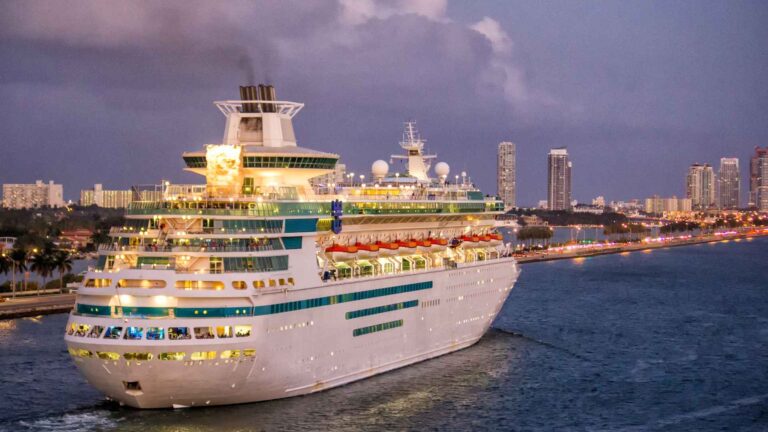
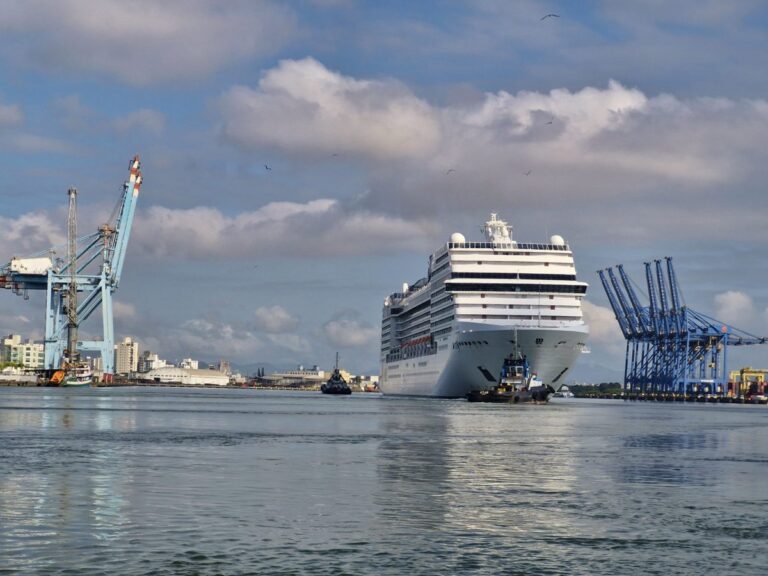
Castro, Chiloé Island Cruise Port Guide
Castro, on Chile’s Chiloé Island, is one of my favorite southern-Chile calls: colorful stilt houses over the water, UNESCO-listed wooden churches, and a mythology all its own. Here is exactly how I would plan a short day ashore.
My quick take on Castro, Chiloé
If you want one thing, make it the palafitos and the yellow-and-purple Church of San Francisco, both walkable in central Castro.
Chiloé sits between Puerto Montt and the fjords, so many ships pair it with Puerto Chacabuco or Punta Arenas on a Chile itinerary.
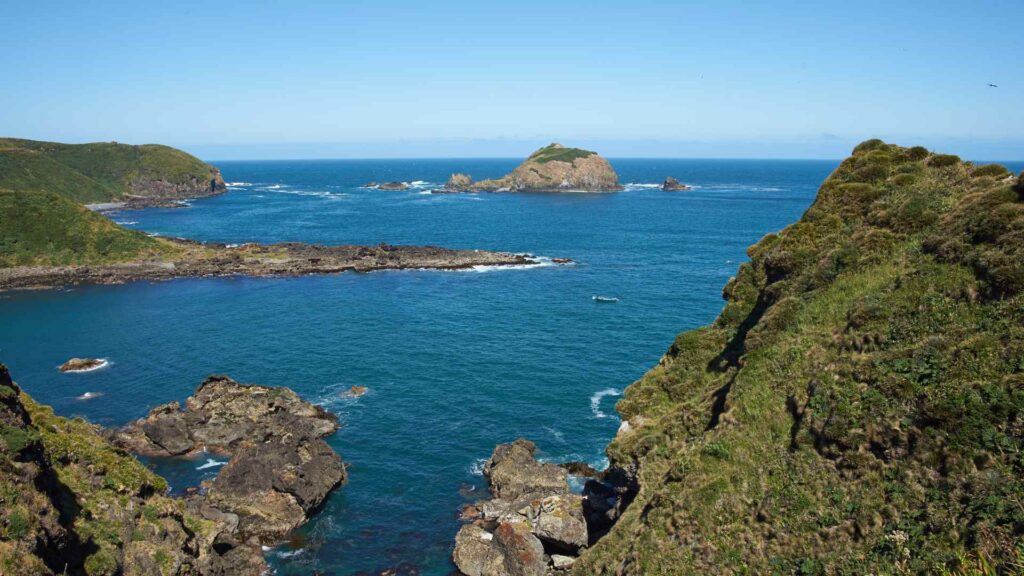
The quick facts
- Where you land: a call-specific tender landing in Castro’s port area, the capital of Chiloé. Ships anchor out in the bay, and the palafito stilt houses and the main square are both within an easy walk of where the tenders come in.
- Dock or tender: Castro is a tender port , so ships anchor and shuttle you ashore by lifeboat.
- Into town: Allow roughly 10 to 20 minutes for the church, market, or a palafito viewpoint, depending on the landing and route.
- Currency and language: The Chilean peso (CLP), and Spanish, with little English spoken.
- Time zone: Chile Summer Time (UTC−3) during the November to March cruise season, standard time (UTC−4) from April to early September.
- How often the call is missed: Medium (roughly 3 to 7%): wind or swell can halt tender operations.
How I’d confirm a tender day
Because Castro is a tender port, going ashore depends on weather and sea state, and tender lines can be slow at peak times.
Confirm the first and last tender times with your cruise line, and build a generous buffer for your return.
Getting around Chiloé from Castro
Central Castro is compact and walkable, which is why I would spend the first couple of hours on foot.
- On foot: the main square, the church, markets, and the Gamboa and Pedro Montt palafitos are all close to the tender landing.
- Taxis and colectivos: shared taxis run fixed routes for a set fare and are handy for short hops.
- Ship excursions or private tours: the easiest way to reach Dalcahue, Chiloé National Park, or the Puñihuil penguins, which are well outside town.
The stops I’d actually spend time on
Chiloé rewards a focused plan more than a long checklist. These are the places I would prioritize on a port day.
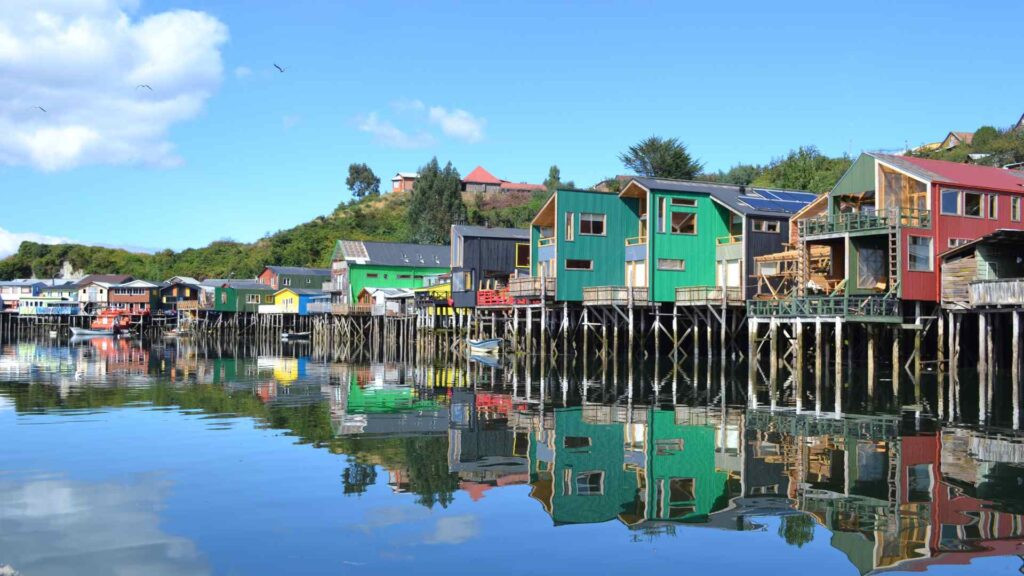
1. The palafitos of Castro
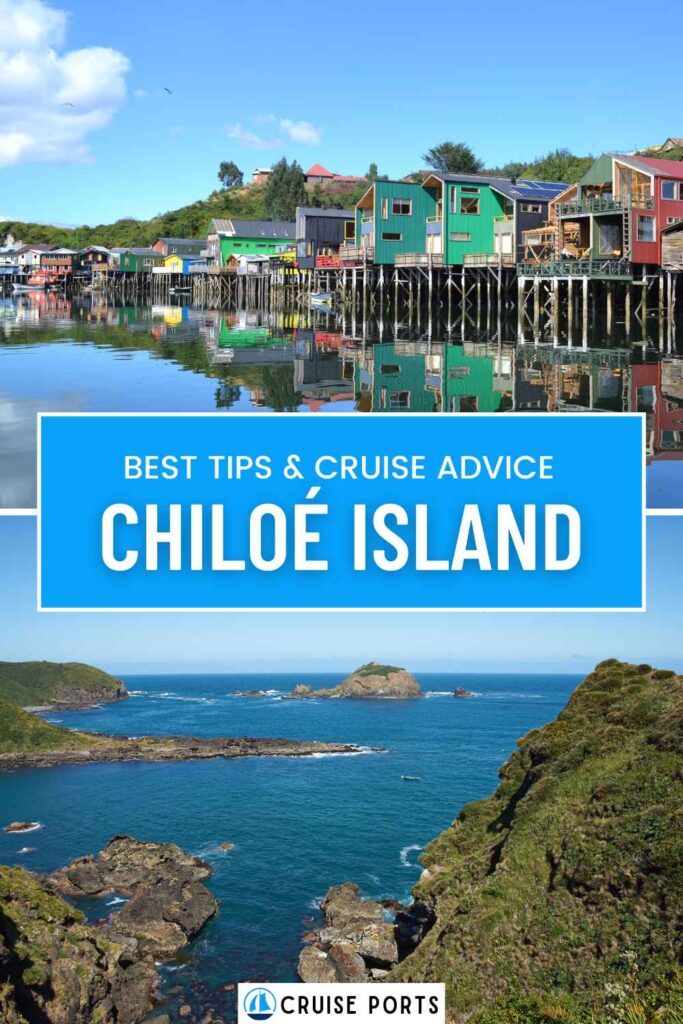
These colorful houses on stilts stand over the water at Gamboa and Pedro Montt, and they are Castro’s signature image.
Fun fact: the stilts let the houses ride Chiloé’s big tidal range, sitting over water at high tide and mudflats at low tide.
2. Church of San Francisco de Castro
The town’s headline church is one of the Churches of Chiloé, a group of sixteen wooden churches inscribed as a UNESCO World Heritage Site.
Fun fact: its bold yellow-and-purple exterior hides an all-wood interior built with techniques closer to boat-building than masonry.
3. Feria and Museo de Arte Moderno
Castro’s waterfront craft market is the place for Chilote wool, wood carving, and a bowl of seafood soup.
The Museo de Arte Moderno de Chiloé occupies a site in Castro’s municipal park outside the central waterfront, so check opening hours and take a taxi.
4. Dalcahue and its church
A short drive north, Dalcahue pairs a lively artisan market with its own UNESCO-listed wooden church on the main square.
It is also the ferry gateway to Isla Quinchao and the historic church at Achao.
5. Curaco de Vélez
Across the water on Isla Quinchao, this quiet village is known for its wood-shingled houses and calm waterfront.
It is a gentle stop if you want the countryside feel without a long drive.
6. Chiloé National Park, Cucao
On the west coast near Cucao, Chiloé National Park protects Valdivian rainforest, dunes, and wild Pacific beaches.
Allow roughly 75 to 90 minutes each way from Castro to the Cucao sector, then add park entry and walking time. It suits a long, prearranged tour rather than a quick dash.
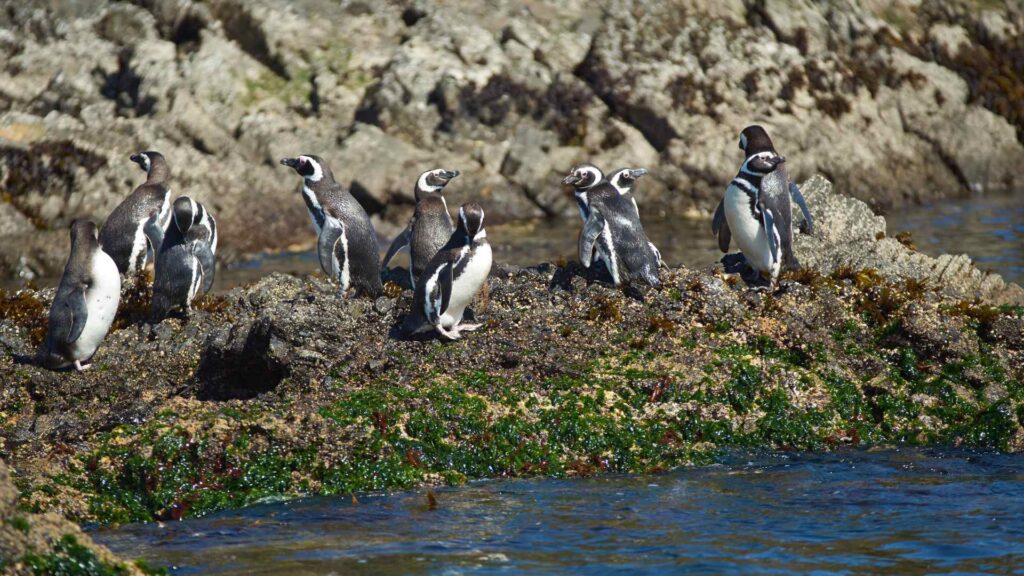
7. Penguins at Puñihuil
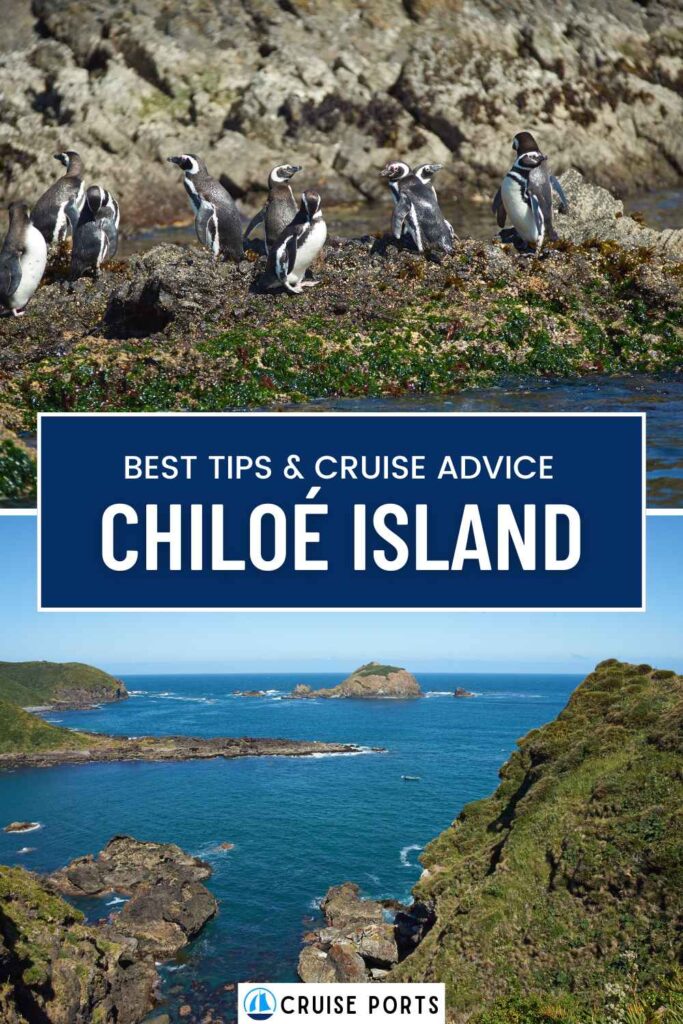
The Puñihuil islets, near Ancud, are protected as a natural monument and reached by small boat.
Fun fact: this is one of the very few places on earth where Humboldt and Magellanic penguins nest side by side, roughly September to March.
8. Ancud and Fuerte San Antonio
At the island’s north end, Ancud has a regional museum and the ruins of Fuerte San Antonio, a Spanish coastal fort.
It works well combined with the Puñihuil penguin colony nearby.
9. Try curanto
Curanto is Chiloé’s signature feast of shellfish, meat, and potato breads, traditionally cooked in a pit over hot stones.
Fun fact: many restaurants now cook the same dish in a pot, called curanto en olla or pulmay, so you can taste it any day.
How I’d plan the day
Tender timing shapes everything here, so I would match the plan to how long you actually have ashore.
- Short (about 3 hours): stay in Castro for the palafitos, the Church of San Francisco, and the waterfront market.
- Half day (about 5 hours): add Dalcahue and its church, or a quick hop toward Curaco de Vélez.
- Full day (about 8 hours): commit to one big outing, either the Puñihuil penguins near Ancud or Chiloé National Park at Cucao.
For long drives, a tender port leaves little room for error, so give yourself a solid cushion to get back to the pier.
A realistic word on accessibility
Castro is a tender port, and boarding a small tender in a swell can be difficult for anyone with limited mobility.
Central Castro also has slopes and some uneven surfaces near the palafitos, so ask your cruise line about tender access on your sailing.
When to go, and the weather
Cruise calls cluster in the austral summer, roughly November to March, which is also the drier, milder window.
Chiloé is famously rainy year-round, so pack a waterproof layer whatever the forecast says.
Keep the island distances realistic
Start with the Church of San Francisco and a palafito viewpoint, then choose only one place outside Castro. Dalcahue is roughly 30 minutes away, while the Cucao entrance to Chiloé National Park is a much longer drive that requires current admission and conditions from CONAF and Pases Parques.
Puñihuil sits near Ancud at the far north of the island, typically more than two hours each way from Castro before the small-boat trip. Consider it only on an unusually long call with a ship excursion or firm tender protection, and remember that penguin sightings and boat landings are never guaranteed.
The modern-art museum is outside the central waterfront in Castro’s municipal park, so it needs a taxi and an opening-hours check. It is not housed in converted palafitos, and it should be a rainy-day alternative rather than part of the standard walking loop.
Tender boarding is the main accessibility barrier, while Castro adds hills, uneven sidewalks, and viewpoints that may include stairs. Ask about mobility-device limits and join the return line at least 75 minutes before all aboard, or earlier in wind and swell.
Quick answers
Do ships dock or tender at Castro?
Castro is a tender port. Ships anchor in the bay and run tenders to a landing near the town center.
What is the one thing to see?
The palafitos and the UNESCO-listed Church of San Francisco, both a short walk from the tender landing.
Can I see the penguins on a port day?
Only on an unusually long call with a protected tour, since Puñihuil is generally more than two hours each way from Castro before the boat trip.
Planning more of the coast? See my guides to South America cruise ports and Valparaíso.
How this guide was researched: Unless a first-hand visit is explicitly identified above, this guide is based on independent research using official port, tourism, transit, government, and attraction sources where available. Logistics and time-sensitive details were reviewed on September 10, 2026; see our Editorial Policy.