Baltic Overnight Ferries: The Stockholm Helsinki Overnight Ferry Is the Cheapest Cruise in Europe
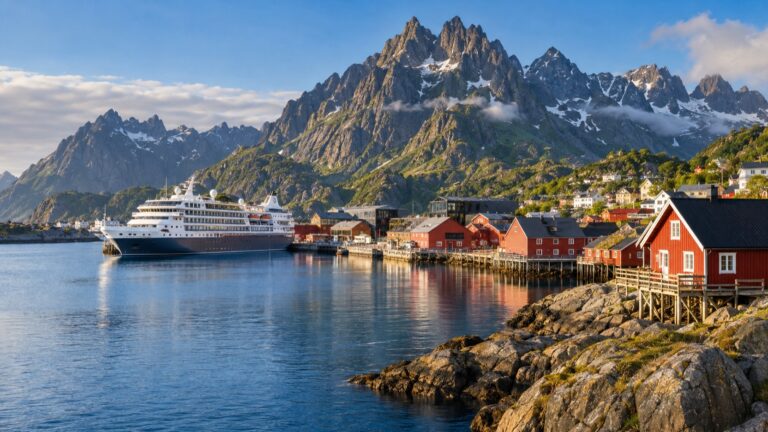
A Stockholm Helsinki overnight ferry is, by any honest measure, a cruise ship. It has a cabin, a buffet, a spa, a tax-free shop, a nightclub and a theater, and it costs a fraction of what a cruise line would charge you for the same night at sea.
The Baltic ferry operators do not market these as cruises to the English-speaking world, which is why almost nobody outside Scandinavia books them. That is the gap, and it is a large one.
My quick take
If you want to know what a cruise feels like before committing two weeks and several thousand dollars to one, this is the cheapest test available in Europe. One night, one cabin, one buffet, and you will know.
My default is the Stockholm to Helsinki run in either direction, because the ships are the biggest and the scenery at both ends is the best. Tallink lists the round trip as a 40 hour product on Silja Serenade or Silja Symphony, with two nights on board and a day ashore in the middle.
Book a window cabin, eat the buffet once rather than twice, and go to bed before the karaoke peaks. Do that and you have had a very good night at sea for the price of a mediocre hotel room.
The quick facts
- The main routes: Tallink Silja Line runs Helsinki to Stockholm, Turku to Stockholm, Tallinn to Stockholm and Helsinki to Tallinn. Viking Line runs Helsinki to Stockholm and Turku to Stockholm on its own schedule.
- The terminals: Tallink uses Vartahamnen in Stockholm and Viking Line uses Stadsgarden, which matters because they are on opposite sides of the city. Ports of Stockholm lists both, along with Birka Gotland’s scheduled cruises from Stadsgarden.
- The Helsinki end: the Port of Helsinki puts Tallink Silja at the Olympia Terminal in the South Harbour and West Terminal 2, and Viking Line at Katajanokka. It handled 9.6 million passengers in 2025.
- How you board: normally a linkspan or air bridge in a working ferry terminal rather than a tender. You walk on and off with your own bag.
- The Aland stop: ships on the Sweden to Finland runs call at Mariehamn or Langnas in Aland, which is a tax rule dressed up as a port call. Tallink lists terminal addresses at Hamngatan 24 in Mariehamn and Langnasvagen 656 in Lumparland.
- Cabin grades: from windowless inside berths on the lowest passenger decks up to suites with balconies, plus lounge classes and family cabins. Prices swing enormously by day of week and season, so quoting one is useless.
- Time zone: Sweden is on Central European Time and Finland and Estonia are one hour ahead on Eastern European Time.
The Stockholm Helsinki overnight ferry, and why it detours to Aland
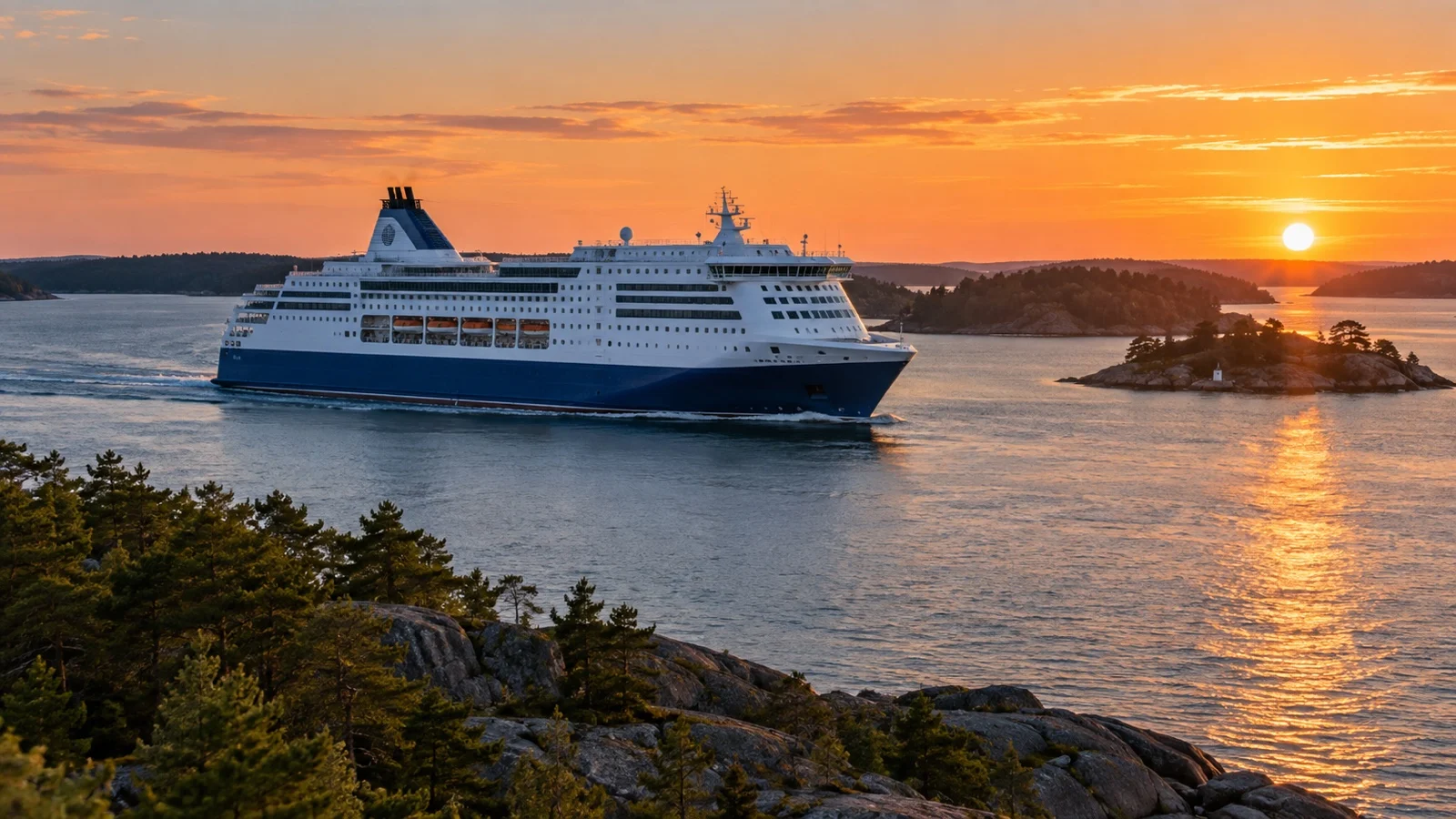
Look at a chart and the Aland call makes no navigational sense. The ships are already going that way, but stopping at a small island terminal in the middle of the night costs time and fuel.
The reason is tax. Aland is an autonomous, demilitarized, Swedish-speaking region of Finland, and when Finland joined the EU in 1995 Aland entered under a special protocol that made it, in the words of the Government of Aland, a third territory with respect to indirect taxation.
That puts Aland outside the EU VAT and excise area while the rest of Finland sits inside it. A ship that calls there is running an international voyage for tax purposes, which is what keeps the tax-free shop open.
The practical effect on you is close to zero. The call is short, usually in the small hours, and unless you have booked a cabin above the car deck ramp you will sleep through it.
Åland’s official statistics agency counted 30,836 residents on December 31, 2025, while the Government of Åland says 20 ferries a day serve the islands in winter, close to double that in summer. A population that size does not need that many ships; the tax border does.
The scenic argument, which is better than people expect
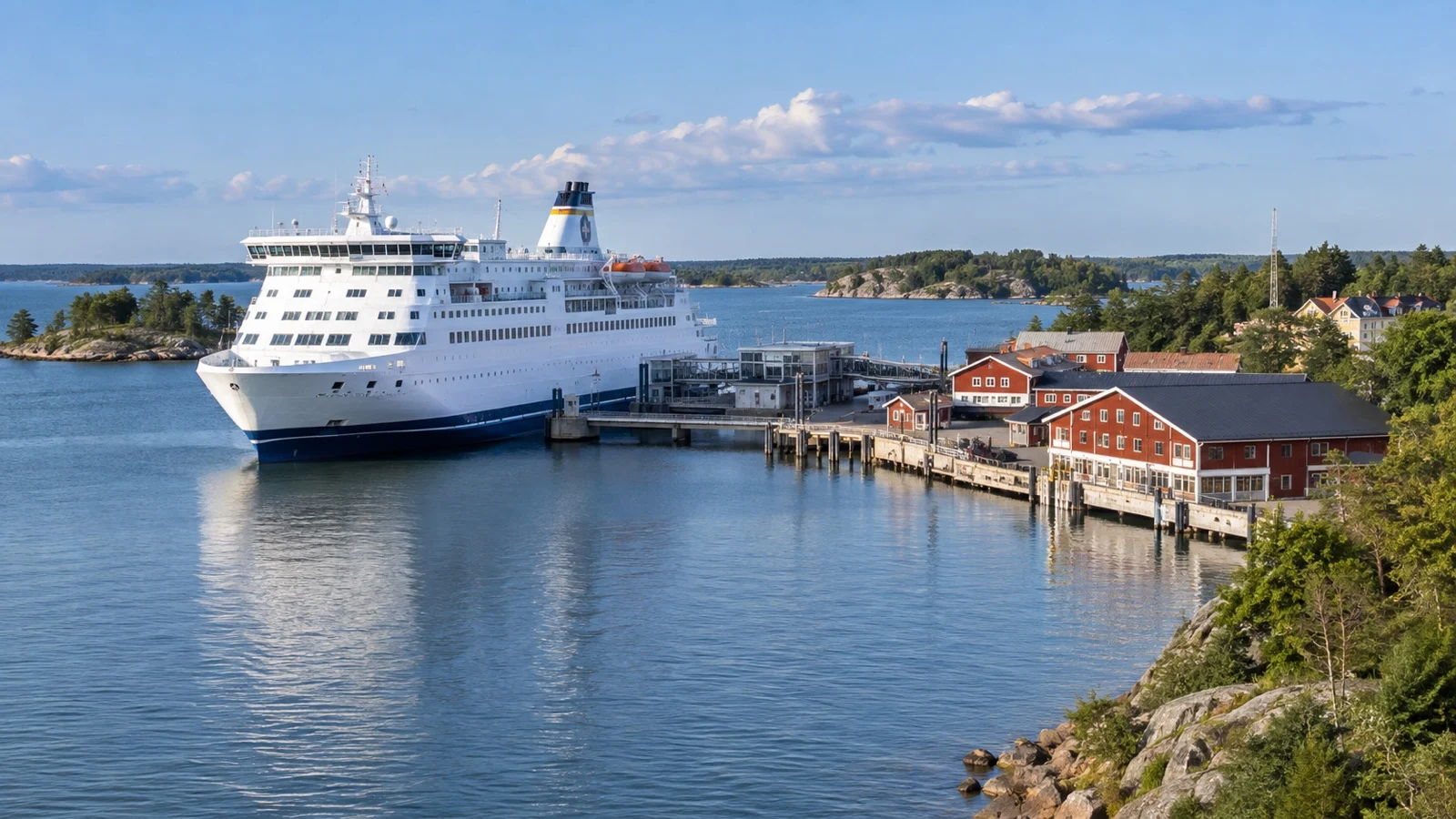
The pitch I would make to a skeptical cruiser is not the buffet. It is that both ends of these routes are transited in daylight through two of the densest island groups in the world.
Leaving Stockholm, the ship spends hours threading the Stockholm archipelago. Visit Stockholm counts over 30,000 islands spread across more than 650 square miles, running from the Fjaderholmarna a few minutes from the city out to Svenska Hogarna in the east.
At the Finnish end the Turku route is the better of the two for this. Ships weave through the Archipelago Sea, part of what Visit Finland describes as more than 50,000 islands along the Finnish coast, and the channels are narrow enough that you can read the numbers on channel markers from the rail.
The Helsinki approach is more open water, though the run past Suomenlinna into the South Harbour is a good arrival by any standard. Turku is the scenic winner and Helsinki is the better city, which is the whole trade-off.
Summer sailings get the best of it because the light lasts until nearly midnight in June. In November you will do most of both archipelagos in the dark, and the trip becomes purely about the ship.
Cabins, buffets, and the round trip with no shore time
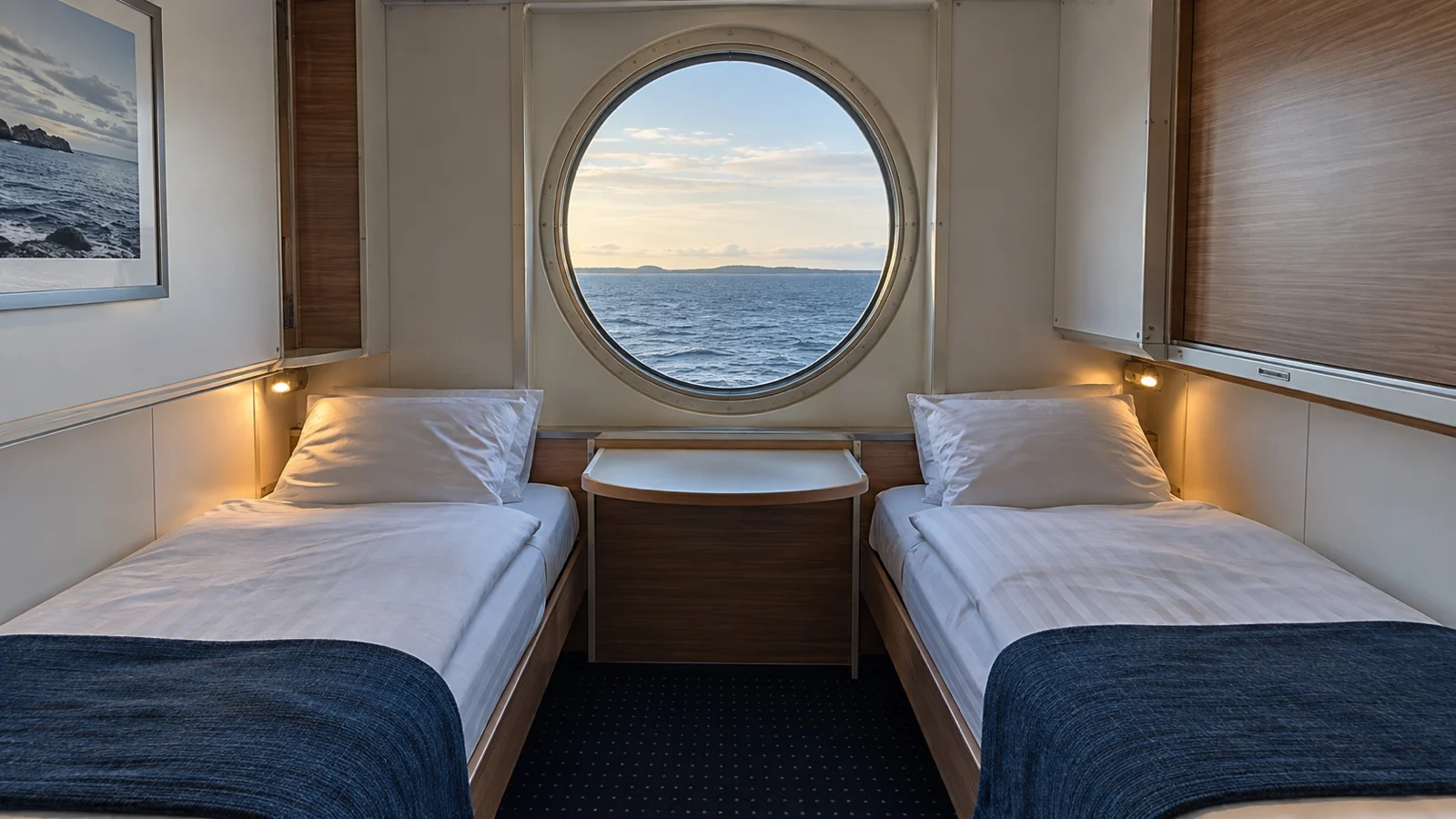
The cabin grades work broadly like a cruise ship, with one important difference at the bottom end. The cheapest inside cabins are genuinely small, often four berths in bunk format, and they are sold as a unit rather than per person.
Above that sit outside cabins with windows, then the promenade cabins on Silja Serenade and Silja Symphony, whose windows look inward onto a roughly 466-foot indoor promenade rather than out to sea. Tallink also sells lounge classes and family cabins, and the top suites come with a balcony and a sauna.
The buffet is the other headline. It is a huge Nordic spread with drinks included in most versions, and booking it in advance is meaningfully cheaper than paying at the door.
Now the part that confuses foreigners most. A large share of passengers on these ships never get off at the far end, because Tallink sells the round trip as its own product with the return sailing the same night.
Tallink lists the Turku to Stockholm round trip at 23 hours and the Helsinki to Tallinn cruise on Victoria I at 22 hours, both of which are effectively out and back with a short break. The Stockholm to Helsinki and Tallinn to Stockholm round trips run 40 hours with two nights on board and a full day ashore in the middle.
The routes I would actually book
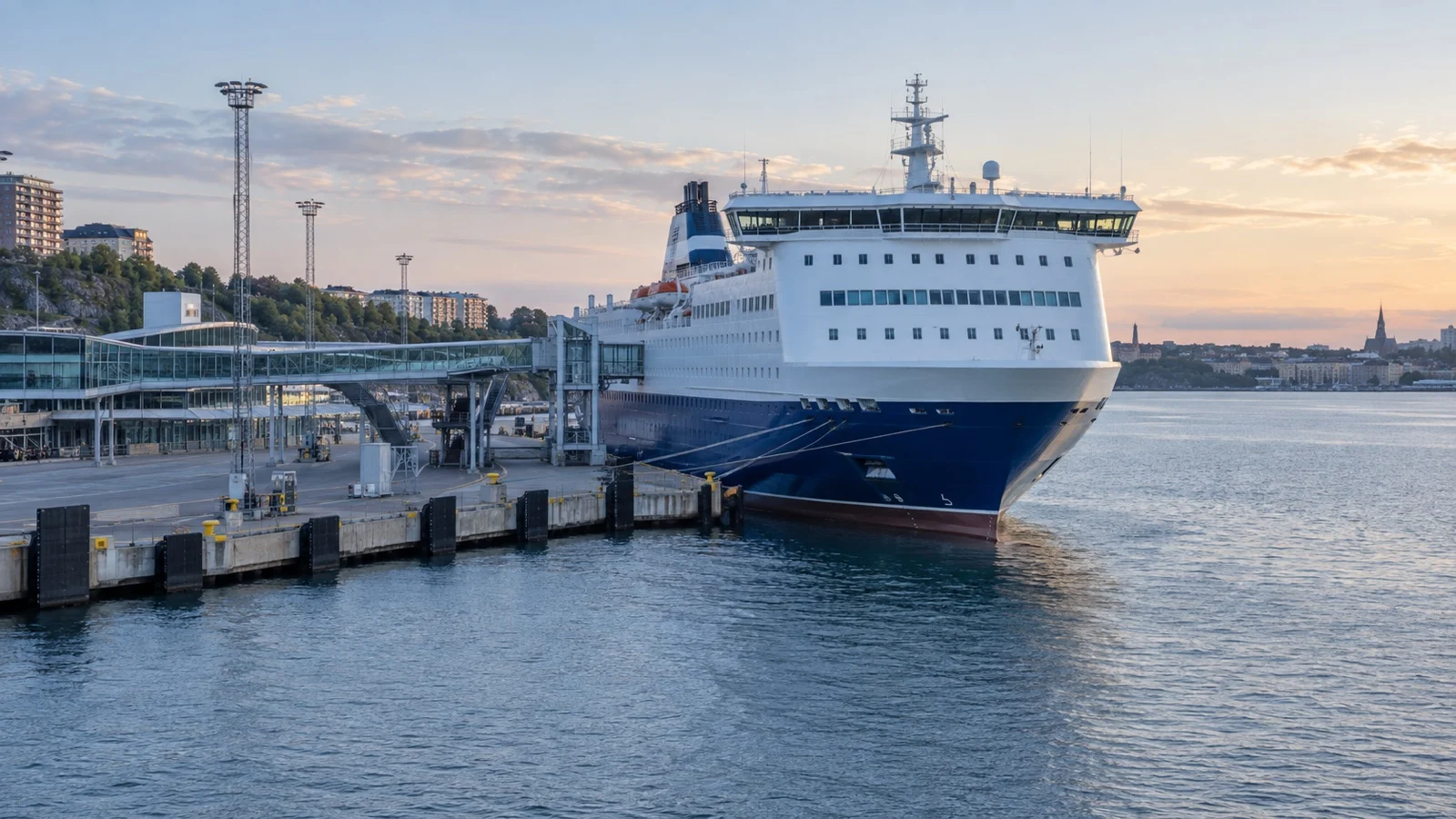
Ranked by what you get rather than by what is cheapest. All of these sit on the operators’ own current published network, which is more than can be said for some routes people still recommend.
- Stockholm to Helsinki: the flagship run, on Silja Serenade or Silja Symphony via Aland, overnight in each direction. The biggest ships, the best facilities, and two capital cities as bookends.
- Stockholm to Turku: Tallink runs Baltic Princess on this one via Mariehamn, and Viking Line runs its own service from Stadsgarden. Shorter, cheaper, and the better archipelago scenery of the two Finnish routes.
- Stockholm to Tallinn: Baltic Queen, overnight, and a 40 hour round trip if you want the day in the old town. Less famous than the Helsinki run and usually less crowded.
- Helsinki to Tallinn: not overnight at all, and better for it. Tallink puts the cities about 54 miles apart, with up to six daily departures on MyStar, Megastar and Victoria I taking about two hours.
- Stockholm to Riga: this one needs a warning. Tallink’s current published network is the four routes above, and Romantika, the ship most associated with the Riga run, was announced in July 2026 as going on charter to Italy.
- The archipelago-only cruise: Birka Gotland runs scheduled cruises out of Stadsgarden, which is the purest version of the no-shore-time idea. Check the current program directly, because these operate seasonally.
Fun fact: Aland’s tax status exists because the islands negotiated their own terms inside Finland’s 1995 EU accession, and the Government of Aland notes the demilitarization guarantees date back to international agreements of 1856. A shipping industry worth hundreds of millions rests on a treaty older than the Suez Canal.
How I would actually decide
If you want the ship, book the 40 hour Stockholm to Helsinki round trip and treat the day ashore as a bonus. You get two nights, the full run of the facilities, and you sleep in the same cabin both nights.
If you are testing whether cruising suits you at all, do Turku to Stockholm. It is the shortest overnight, the archipelago is the best, and if you hate it you have lost one night rather than two weeks.
Book the buffet when you book the cabin, and take the later sitting so you watch the archipelago instead of eating through it. Then check which Stockholm terminal you leave from, because Vartahamnen and Stadsgarden are not walkable from each other.
A realistic word on accessibility
The newer ships are good and the terminals are excellent, which is what you would expect in this part of Europe. Accessible cabins exist across the fleet and elevators serve all passenger decks.
The honest weakness is that these are car ferries first. Boarding can involve long ramps, and at peak times you are moving with a crowd that includes motorcoach groups and people carrying a great deal of duty free.
Accessible cabins are limited in number and go early, particularly in summer, so book them as far ahead as you can rather than hoping at check-in. Say what you need at booking and confirm it again a week out.
Ashore, both cities are strong on step-free transport, though Tallinn’s old town is cobbled and steep in places. My guide to the Tallinn cruise port covers which of those streets to avoid.
When to go, and the weather
These routes run year round, which is unusual and useful. Ice-class ships and icebreaker support keep the routes practical in winter, though severe ice, weather, or operational problems can still disrupt a sailing.
Summer is the obvious choice for the scenery. Visit Finland puts southern Finnish summer temperatures around 57 to 68 Fahrenheit, with light in Helsinki lasting until midnight and beyond around midsummer.
Winter is the opposite proposition and cheaper for it. Expect roughly 18 to 27 Fahrenheit in Helsinki between December and February, with very short days and a real chance of sailing through pack ice.
Spring and fall sit in between at roughly 32 to 59 Fahrenheit. May and early June are my pick, with long light, low fares and the archipelago at its best.
The terminals, documents, and check-in buffer
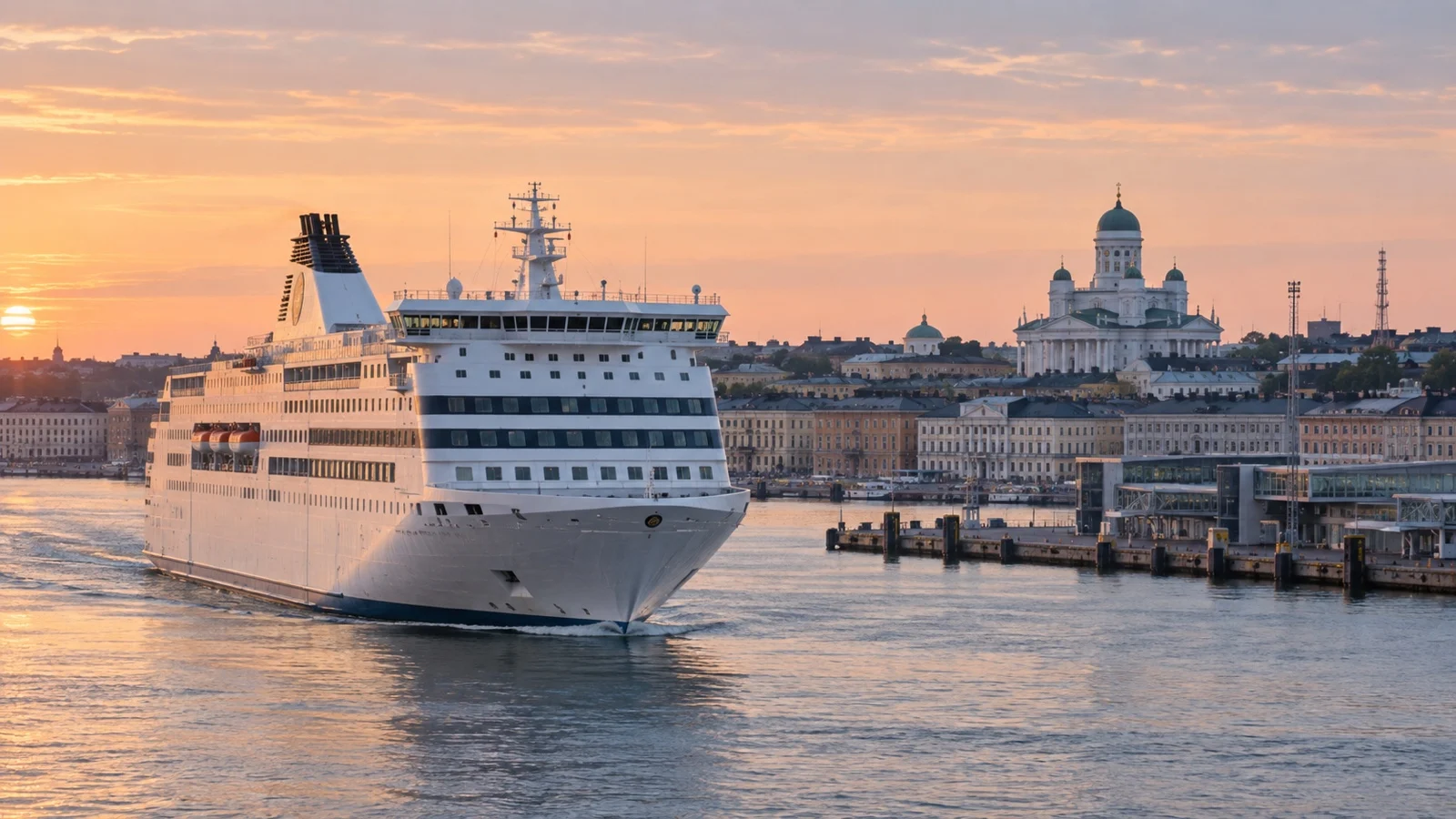
In Stockholm, Tallink uses Värtahamnen while Viking Line uses Stadsgården; in Helsinki, Tallink’s Stockholm service uses Olympia Terminal and Viking uses Katajanokka. Save the terminal named on the ticket because these are different parts of each city and ships can rotate.
Sweden and Finland are in the Schengen Area, but the ferry company still requires the travel documents stated for the route and can check identity at boarding. The Åland stop supports duty-free sales; it does not waive passport, visa, or carrier-document rules.
Use the operator’s current check-in cutoff, arrive earlier than that cutoff, and allow city-transit slack with bags. I would keep at least 45 minutes beyond the normal terminal journey and more in winter, during events, or when an elevator is essential.
Ice-class ships and icebreaker support make year-round service practical, but severe weather, ice, or operations can still delay or cancel a sailing. Prebook an accessible cabin and assistance, then confirm the step-free route at both terminals rather than assuming every gangway setup is identical.
Quick answers
How long is the Stockholm to Helsinki ferry?
It is an overnight crossing, and Tallink sells the full round trip as a 40 hour product with two nights on board.
Check the exact sailing times for your date, because they vary by ship and season.
Do I have to get off in Helsinki?
No, and plenty of passengers do not.
The round trip is a legitimate product in its own right, and staying aboard is normal rather than eccentric.
Why does the ferry stop in Aland in the middle of the night?
Because Aland sits outside the EU VAT and excise area, so calling there keeps the tax-free shop legal.
It is a tax stop, not a tourist one.
Is the Helsinki to Tallinn ferry worth doing as a day trip?
Yes, and it is the best value day out in the region.
Tallink lists the cities about 54 miles apart, with up to six departures a day and a crossing of about two hours.
Are there equivalents outside the Baltic?
Yes.
DFDS sells a Newcastle to Amsterdam mini cruise on King Seaways and Princess Seaways with two nights at sea and around five hours ashore, and Jadrolinija runs Split to Ancona, Zadar to Ancona, Split to Bari and Dubrovnik to Bari across the Adriatic.
The last word
The Baltic overnight ferry is the closest thing European travel has to a free sample. You get the cabin, the sea, the buffet and the shop, and you pay ferry money for all of it.
If you are pairing one of these with a proper cruise, the two ends of the route are ports you will meet again. My guides to the Stockholm cruise port and the Helsinki cruise port cover the berths the big ships use, which are not the ferry terminals.
The wider point is that scheduled ferries are a real alternative to cruising in several parts of the world, and the Baltic is simply where they do it best. The same argument applies on the Alaska Inside Passage ferry, at a rather higher price per hour of scenery.
Book the cabin with a window if you can afford it and the buffet in advance if you cannot. Either way, set an alarm, because the hour you lose sailing east is not negotiable.
How this guide was researched: Unless a first-hand visit is explicitly identified above, this guide is based on independent research using official port, tourism, transit, government, and attraction sources where available. Routes, fleet and terminal details were checked against Tallink Silja Line’s own fleet, cruise and terminal pages, the Port of Helsinki and Ports of Stockholm passenger traffic pages, the Government of Aland’s facts pages, and the published route pages of DFDS and Jadrolinija.
Logistics and time-sensitive details were reviewed September 12, 2026. See our Editorial Policy.
More on this topic: browse every guide on expedition and alternative cruises.