Inside Passage Ferry: Port Hardy to Prince Rupert on BC Ferries
The Inside Passage ferry travels between Port Hardy and Prince Rupert through British Columbia’s protected coastal channels. It is scheduled transportation rather than a cruise, so compare the current fare and onboard options with the experience you want.
This is a working transport link between northern Vancouver Island and British Columbia’s North Coast. The scenery is part of the route, but there are no cruise-style port excursions or programmed narration.
My quick take
This sailing suits travelers who are comfortable with a long ferry journey and simple onboard service. Wildlife may appear, but sightings are never guaranteed and the ship does not operate as a guided wildlife tour.
BC Ferries markets the peak-season trip as the Inside Passage Summer Day Cruise. Off-season sailings can follow a different pattern, so check the schedule for your date before booking hotels or connections.
A cabin or reserved seat can make the long trip more comfortable, but availability and pricing are date-specific. Compare those options in the live booking flow rather than relying on an old fixed price.
The quick facts
- Where you board: Bear Cove, the BC Ferries terminal outside Port Hardy at the north end of Vancouver Island, and the Prince Rupert terminal at the other end. Neither is in the middle of its town, so foot passengers need a taxi or other ride.
- The vessel: BC Ferries lists the Northern Expedition on the Port Hardy to Prince Rupert route. Its official fleet page gives an overall length of about 498 feet, capacity for 638 passengers and crew, and space for 115 cars, but vessel assignments can change.
- How long it takes: a full day or an overnight trip, depending on the seasonal schedule and stopping pattern. Check the published sailing for your date before booking a hotel or onward connection at either end.
- What it costs: the fare guide effective June 16, 2026 lists a one-way adult fare of 208.90 Canadian dollars regular or 122.60 off peak, and a standard vehicle up to 20 feet at 478.70 regular or 268.90 off peak. BC Ferries also notes a 5 percent fuel surcharge at payment, so confirm the live total before buying.
- Cabins and seats: BC Ferries offers cabin and amenity options on North Coast sailings. Prices and availability are shown for the specific sailing, so select them during booking if they matter to your trip.
- Getting to the terminal: Bear Cove is outside Port Hardy, and reaching northern Vancouver Island is a substantial drive from Victoria or Nanaimo. Confirm current road conditions, flight schedules, and ground transportation, then leave a generous buffer before check-in.
- How often it is disrupted: BC Ferries does not publish a dependable route-specific cancellation percentage. Weather, mechanical issues, and operational changes can disrupt a sailing, so protect important connections with flexible time.
What the Inside Passage ferry actually is
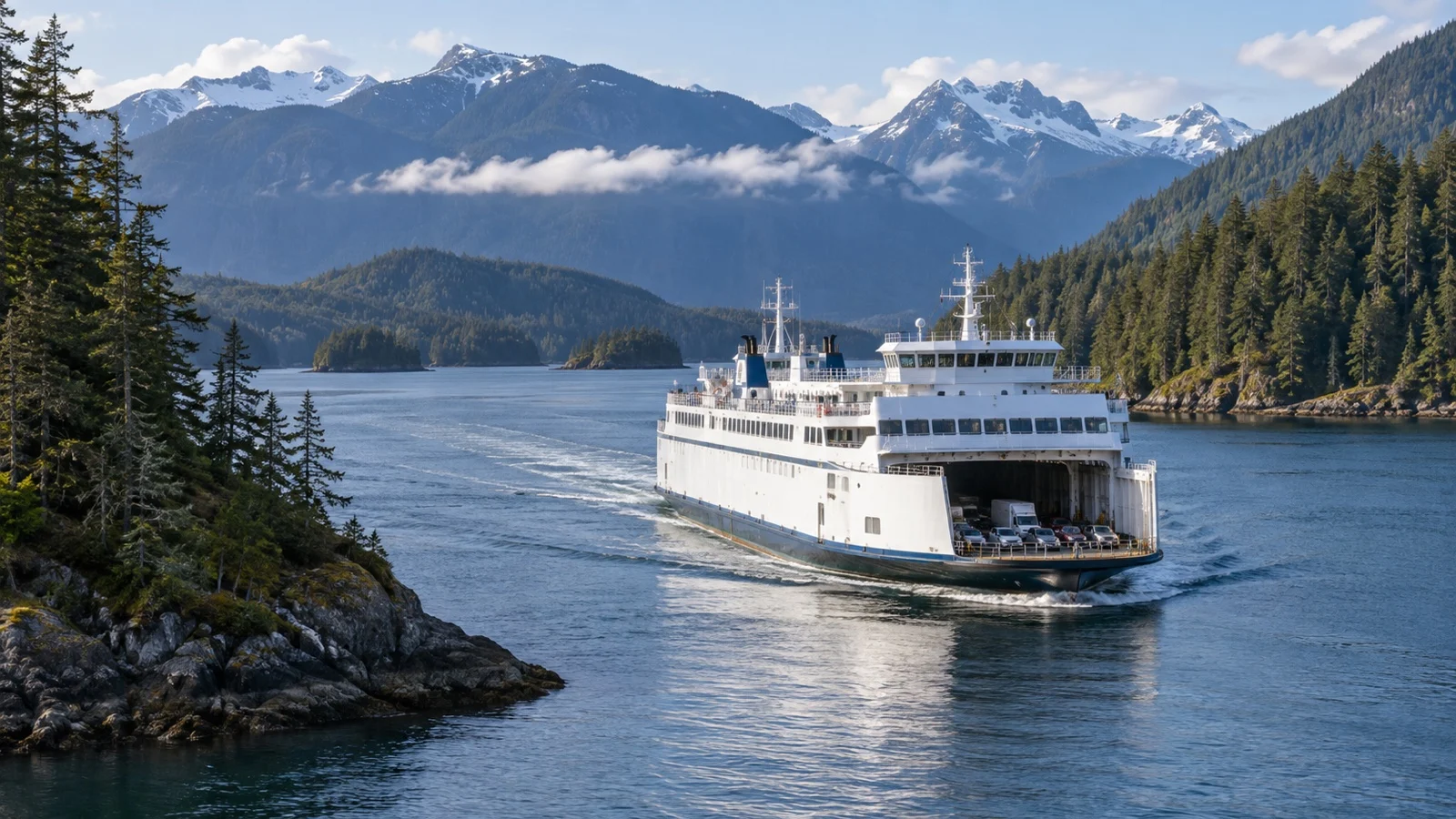
This is a scheduled passenger and vehicle service connecting coastal communities. Expect a practical ferry experience rather than the staffing, entertainment, and shore program of a cruise ship.
The route threads the protected channels between the mainland and the outer islands, which is exactly what the phrase Inside Passage means. Cruise ships heading for Alaska use large parts of the same corridor.
BC Ferries lists both peak-season trips with occasional scheduled stops and off-season service through Central Coast communities. The stopping pattern changes duration and arrival time, so read the individual schedule carefully.
The ship, the lounges and the cabins
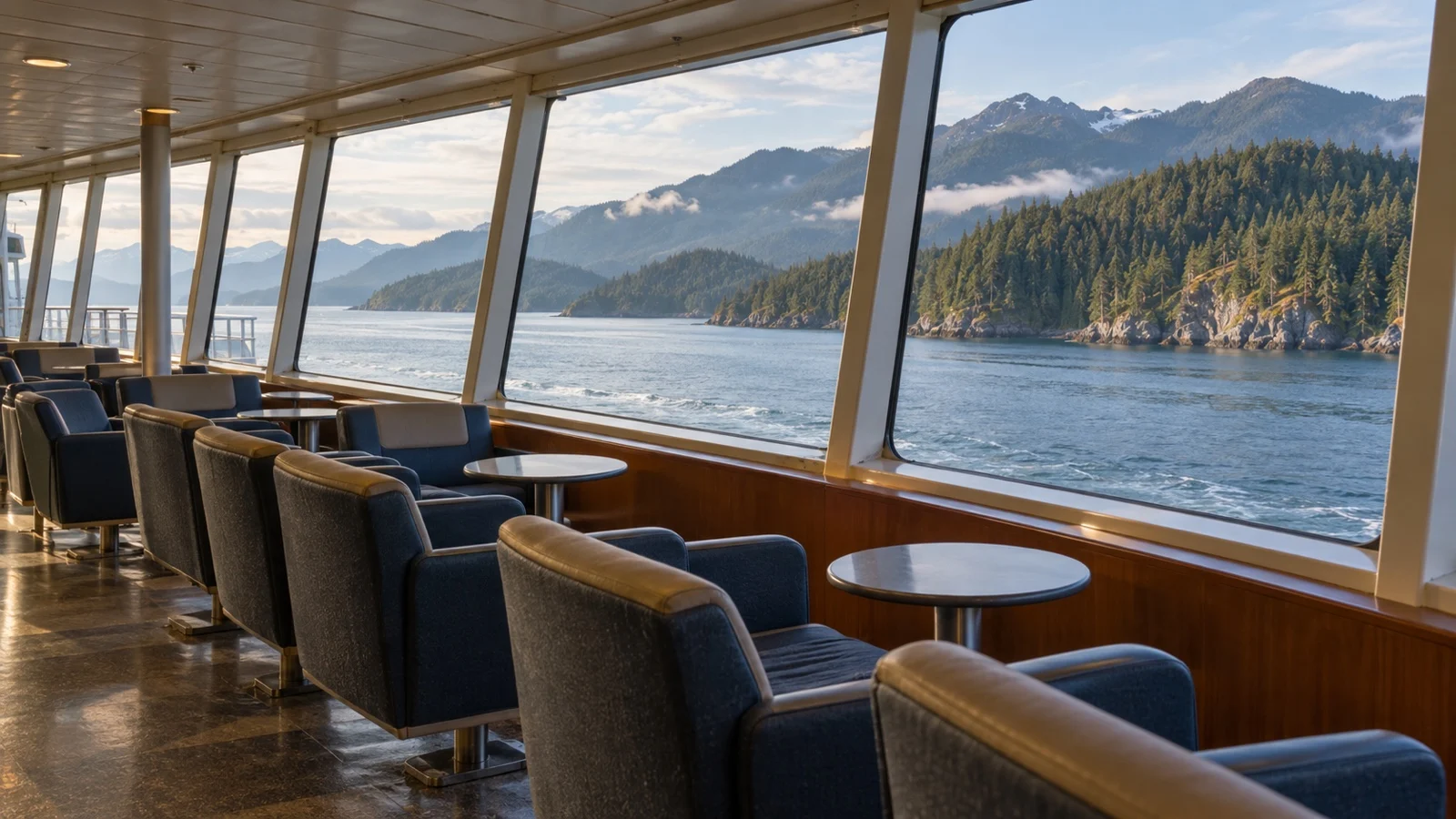
The Northern Expedition’s official fleet page lists a maximum speed of 20.5 knots and active fin stabilizers. It is designed for northern service, but conditions can still affect comfort and operations.
Public space is organized around named lounges. BC Ferries lists the Aurora Lounge for premium seating, the Raven Lounge for movies and the Canoe Cafe for coffee, plus the Passages shop.
Vehicle deck access is generally closed during northern sailings under Transport Canada safety rules. Bring medicine, warm layers, chargers, and other essentials upstairs, while pet owners follow any announced access times.
The BC Ferries pet policy lists indoor kennels on Deck 2 of the Northern Expedition and limited access to a Deck 5 outdoor pet area from June to September. Pets are not permitted in passenger cabins on northern vessels, and access can change with weather or operations.
Getting to Port Hardy is the hard part
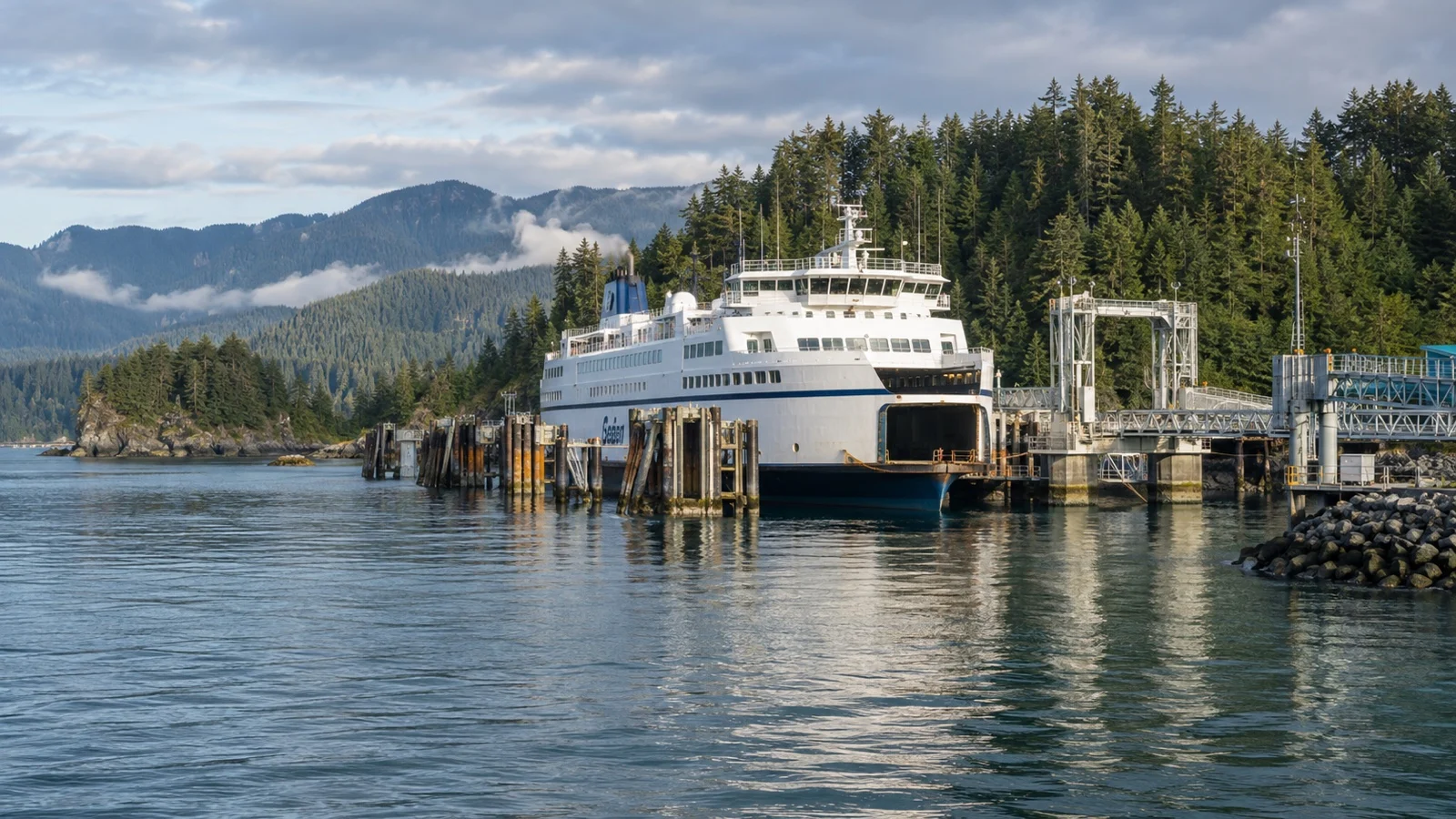
Port Hardy sits near the north end of Vancouver Island, and reaching it takes real planning. Bear Cove terminal is outside the town center.
The drive from Victoria follows Highway 19 for roughly 310 miles. Allow more than the map estimate for breaks, road conditions, construction, and the ferry’s required check-in time.
A night in Port Hardy before departure creates useful protection against a missed check-in. If you travel the same day, build a substantial buffer and confirm transportation to Bear Cove.
Foot passengers should follow the check-in instructions attached to the northern-route booking and allow time for the ticket agent. These sailings are bookable, so reserving ahead is sensible when your dates are fixed.
The Bella Coola and Haida Gwaii connections
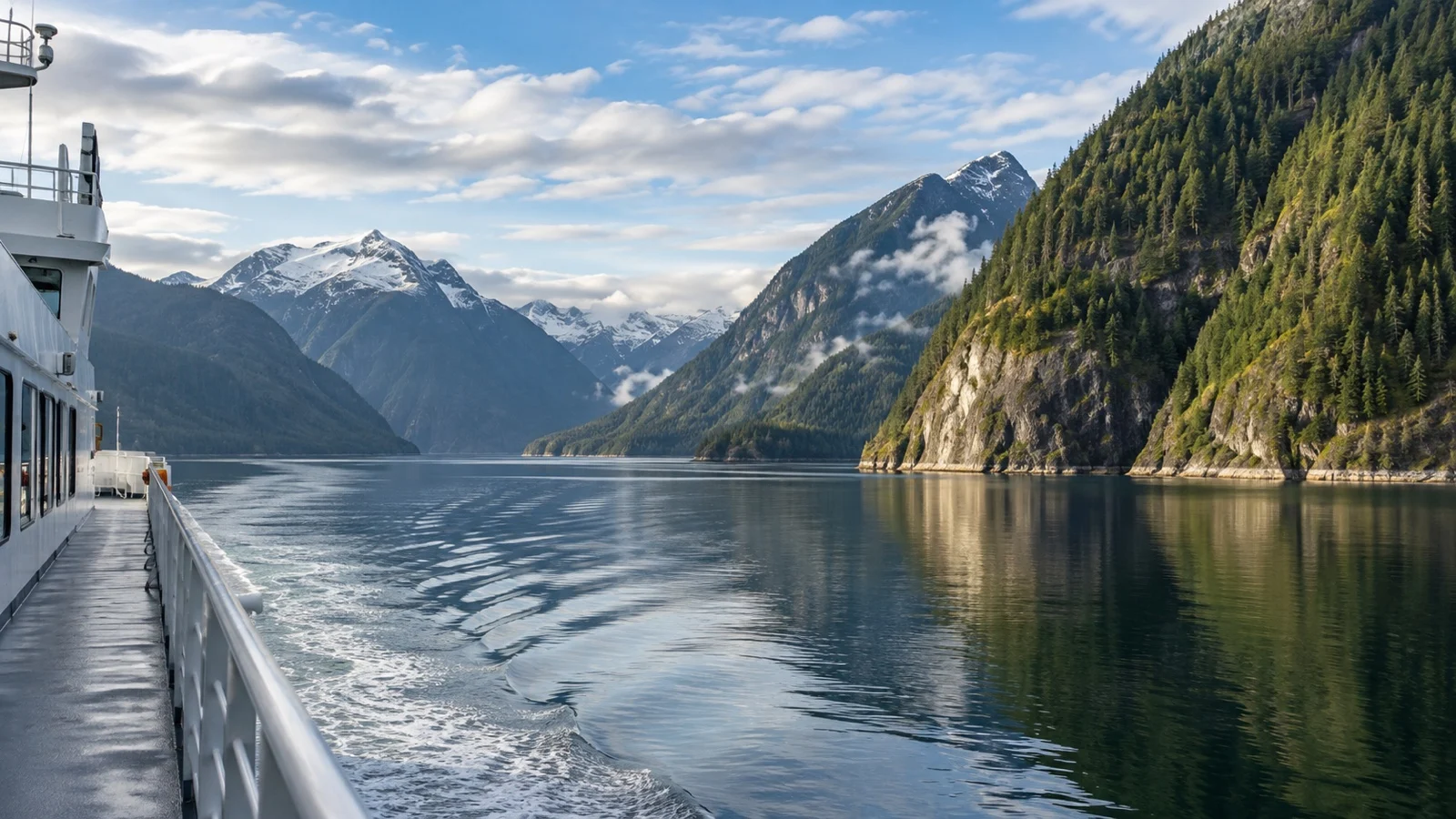
Other North Coast routes connect the region with Bella Coola and Haida Gwaii. Neither should be treated as a casual same-day add-on.
The Discovery Coast run goes from Port Hardy to Bella Coola on the Northern Sea Wolf, a much smaller vessel built in 2000 carrying 150 passengers and 35 cars. It calls at Bella Bella, Shearwater and Ocean Falls, which are communities most visitors never see.
The Haida Gwaii crossing runs between Prince Rupert and Skidegate on Graham Island. Check its separate schedule and current fare, then leave recovery time between sailings.
If Gwaii Haanas is your target, plan properly rather than turning up. Parks Canada requires independent visitors to complete an orientation session before entering, and the protected area itself can only be reached by sea or by air.
What you actually get for the fare
The onboard options are practical rather than cruise-style. Confirm what is available on your assigned vessel and sailing.
- A reserved seat: assigned seating may be offered on the day sailing. Check the live booking page for availability and price.
- An inside cabin: a private place to rest without a window. It can be useful on a long day or overnight sailing.
- An outside cabin: a private cabin with a window. Decide whether the view is worth the date-specific price difference.
- Outside deck space: useful for wide views and fresh air. Dress for wind and rain even when the forecast looks mild.
- Wildlife, unguided: whales, eagles, and sea lions may be seen, but sightings are not guaranteed or narrated. Bring binoculars and give wildlife space.
- No vehicle deck access: not a perk, but the fact that shapes your packing. One bag upstairs with everything you need for the full sailing.
Fun fact: the Prince Rupert Port Authority highlights the harbor’s deep, naturally sheltered water as a major advantage. Port specifications vary by berth, so use the authority’s current terminal information for exact depths.
How to decide
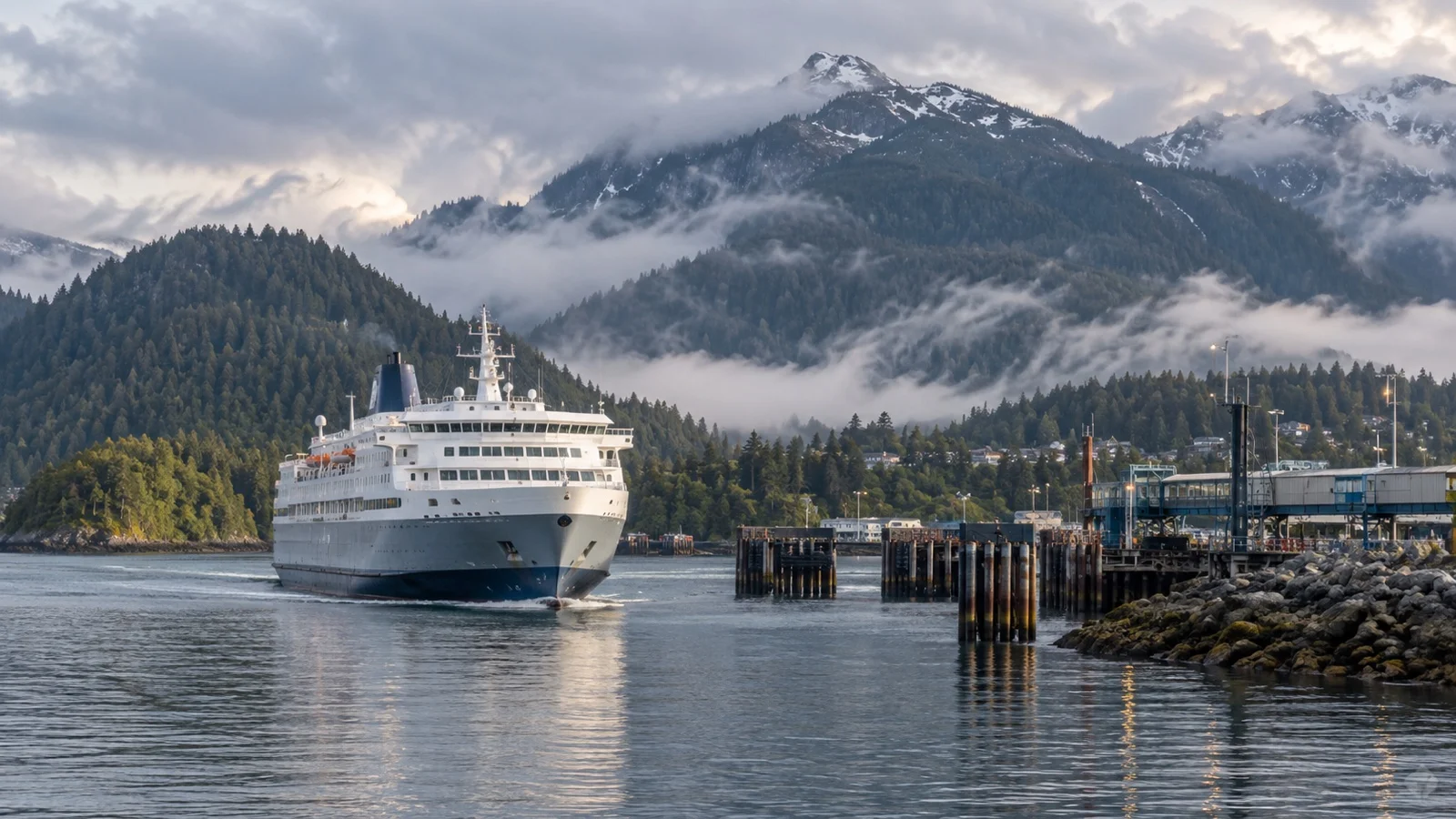
Ask yourself one question first. Do you want the coast, or do you want a vacation that includes the coast?
Choose the ferry when the coastal journey and transportation link are the priority. Choose a cruise when you want a cabin-based vacation with organized port calls, dining, and onboard programming.
A one-way ferry trip can fit into a broader British Columbia itinerary. Plan the return route, rental-car rules, and onward transportation before committing.
If you are weighing this against an Alaska sailing, the comparison of the Alaska ferry versus a cruise ship covers the American side of the border. The routes and operators differ, so use each company’s current rules.
A realistic word on accessibility
The Northern Expedition has three fully accessible cabins on Deck 5, accessible washrooms on Decks 4 and 5, and elevators. BC Ferries warns that elevators may be unavailable during extreme weather.
If another vessel is assigned, check its fleet page for cabin, washroom, and elevator details. Do not assume that accessibility features are identical across northern vessels.
The BC Ferries accessibility page asks customers using northern terminals to call at least 48 hours ahead for assistance. Parking near the vehicle-deck elevator is limited, so repeat the request at check-in.
Ground transportation at both ends needs advance planning, especially when accessible service is required. Confirm a suitable ride and bring everything needed during the sailing out of the vehicle.
When to go, and the weather
Peak-season day sailings give you the most daylight for coastal views. Check the exact schedule because departure times and stopping patterns vary.
Prince Rupert stays cool in summer compared with much of southern Canada. Pack a warm layer for the outer deck and check Environment Canada’s local forecast before sailing.
Rain, low cloud, and wind are normal possibilities on this coast. Pack a proper waterproof layer and protect cameras, medications, and electronics.
Off-season service can be less frequent and may run overnight. The lower off-peak fare comes with less daylight, so choose it for transportation rather than guaranteed scenery.
The booking details that protect the whole trip
The northern route uses Bear Cove outside Port Hardy and BC Ferries’ terminal outside central Prince Rupert, so foot passengers need a confirmed ride at both ends. Stay in Port Hardy the night before, use the check-in time printed for your passenger or vehicle booking, and do not rely on a same-day flight or six-hour island drive.
Check the exact sailing pattern because some trips run direct while others serve Central Coast communities, changing both duration and arrival time. Fares, refund terms, vessels, pet spaces, and onboard access can also change, so the current reservation conditions outrank an old fixed figure.
A mechanical or weather disruption can break every later reservation in a chain. Leave recovery time before a Haida Gwaii connection or expensive flight, then monitor BC Ferries service notices before travel.
For northern terminals, request accessibility assistance at least 48 hours ahead and repeat the request at check-in, especially if you need parking near an elevator. Gwaii Haanas is not a casual ferry add-on: independent visitors need Parks Canada reservations and orientation, and the protected area is reached separately by sea or air.
Quick answers
Is the Inside Passage ferry the same as an Alaska cruise?
No.
It covers many protected channels in British Columbia and may include scheduled Central Coast stops. It is transportation rather than a cruise vacation with shore excursions.
Do I need a cabin on a day sailing?
No, but a cabin or reserved seat can make a long sailing more comfortable.
Check the live booking page for current options, prices, and availability.
Can I take my car?
Yes, and the fare depends on vehicle length, season, and current surcharges.
Vehicle deck access is restricted during the sailing, so bring everything you need upstairs first.
How far ahead should I book?
As early as you can for summer, because both vehicle and foot passenger space on the northern routes is fully reservable and cabins are finite.
Read the current cancellation terms before paying, because fees and refund deadlines can change by fare and route.
Can I connect to Haida Gwaii or Bella Coola?
Yes, but each uses a separate route and schedule.
Leave recovery time between sailings because weather, mechanical issues, or operational changes can affect the connection.
The last word
The Inside Passage ferry can be a memorable coastal journey when expectations match the service. It is a long transportation day with practical onboard facilities, not a cruise vacation.
If you are building a wider trip around it, the overview of Canada’s cruise ports puts the North Coast in context with larger-ship calls. Prince Rupert serves both ferry passengers and cruise visitors.
Travelers using the ferry around a larger sailing often connect through Vancouver, and the guide to the Vancouver cruise port covers the city’s transfer logistics. The Alaska cruise ports guide covers the conventional cruise route north.
Bring binoculars, a waterproof layer, medications, and chargers in the bag you carry upstairs. Keep important onward bookings flexible and check service notices before leaving for the terminal.
How this guide was researched: Fares and vessel details were checked against BC Ferries’ fare guide effective June 16, 2026 and its current fleet, pet, accessibility, and booking pages. Parks Canada, the Prince Rupert Port Authority, Environment Canada, and official regional information were used for destination and weather context.
Logistics and time-sensitive details were reviewed September 12, 2026. See our Editorial Policy.
More on this topic: browse every guide on expedition and alternative cruises.