Le Pecq River Cruise Port Guide: Saint-Germain-en-Laye and Paris
Le Pecq is a practical Seine berth west of central Paris, not a grand arrival beneath the Eiffel Tower. Its real reward sits above the river in Saint-Germain-en-Laye, where a royal château, archaeology museum, terrace, and lively center make an excellent port day.
You can also continue into Paris by rail once you reach the station beside the château. That option only works when the ship’s schedule, current RER service, and your return margin all line up.
My quick take on Le Pecq
I would treat Saint-Germain-en-Laye as the destination and Le Pecq as the landing. The quay is useful, while the hilltop château and terrace are what make the call memorable.
First-time Paris visitors may be tempted to race straight into the center. Unless the call is long, the more satisfying choice is often to stay local and enjoy a royal town without turning the day into a transit calculation.
Le Pecq quick facts
- Location: A Seine-side suburb west of central Paris
- Arrival: River ships normally berth alongside, but the assigned quay can change
- Best local destination: Saint-Germain-en-Laye above the river
- Main sights: Château, National Archaeology Museum, national domain, and terrace
- Main physical challenge: A noticeable uphill route from the Le Pecq waterfront
- Paris connection: RER A from Saint-Germain-en-Laye, not from the cruise gangway
- Currency: Euro
- Return rule: Check live transit and protect the ship’s all-aboard time
Where river cruise ships berth in Le Pecq
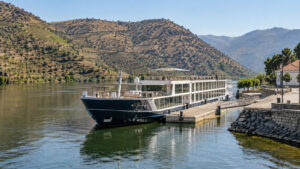
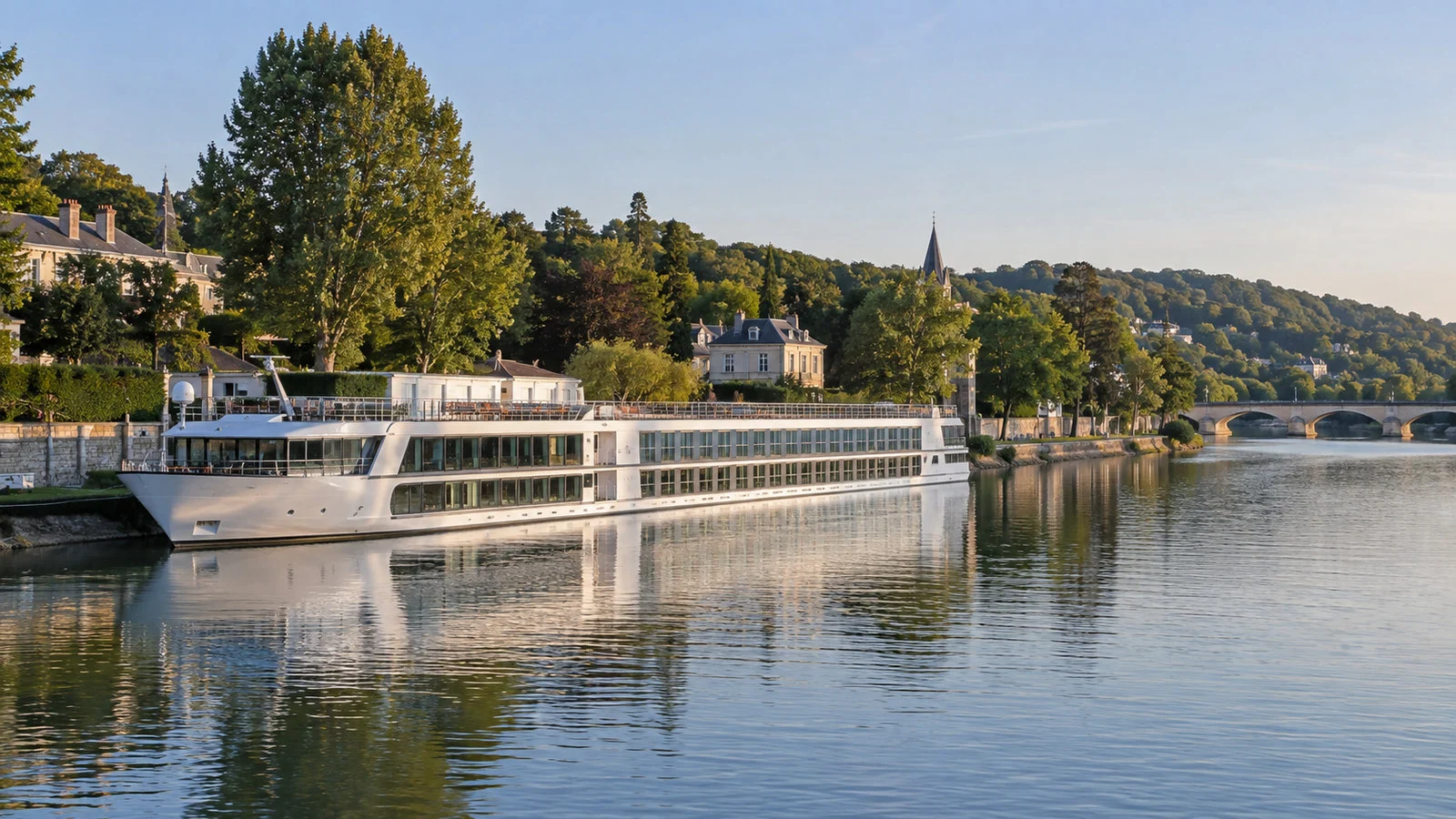
Le Pecq is used as a Paris-area river mooring, but the daily location can shift with vessel operations and Seine conditions. Use the berth name, address, and return instructions in the ship’s current program.
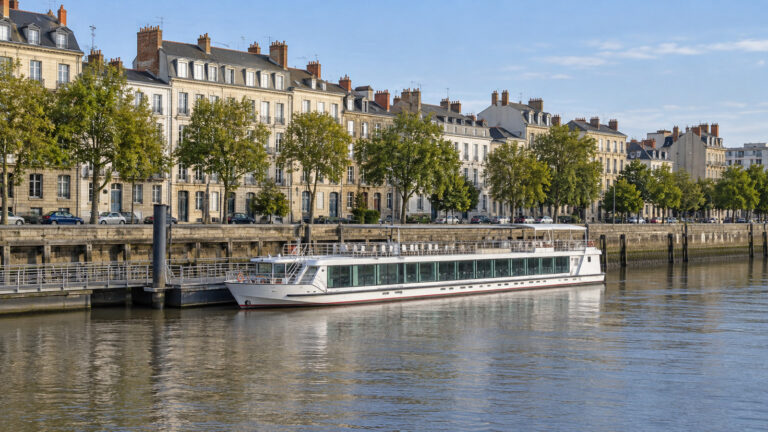
Expect an ordinary suburban riverbank rather than a staffed cruise terminal. Shops, major sights, and the RER station are not waiting directly at the gangway.
Photograph the vessel and quay from the land side before leaving. Save the ship’s local contact, and ask whether it will remain at the same berth all day.
Getting up to Saint-Germain-en-Laye

Saint-Germain-en-Laye sits on a plateau above the Seine, so the route from the waterfront involves a real climb. Fit walkers can make it on foot, while many visitors will prefer a local bus, taxi, or ship transfer.
Do not judge the route by distance alone. Grade, weather, traffic crossings, and the final approach can matter more than the number of kilometers.
There is no RER platform beside the ship. Saint-Germain-en-Laye station is next to the château, while Le Vésinet-Le Pecq is a different station across the river.
Check the RATP journey planner for the exact bus or rail option on your date. Construction, service changes, and branch destinations can all affect a plan that looked simple when booked.
What to do in Saint-Germain-en-Laye
The château precinct offers the highest-value sightseeing with the least backtracking. You can combine the museum, outdoor domain, terrace, and a meal without needing central Paris.
Château and National Archaeology Museum
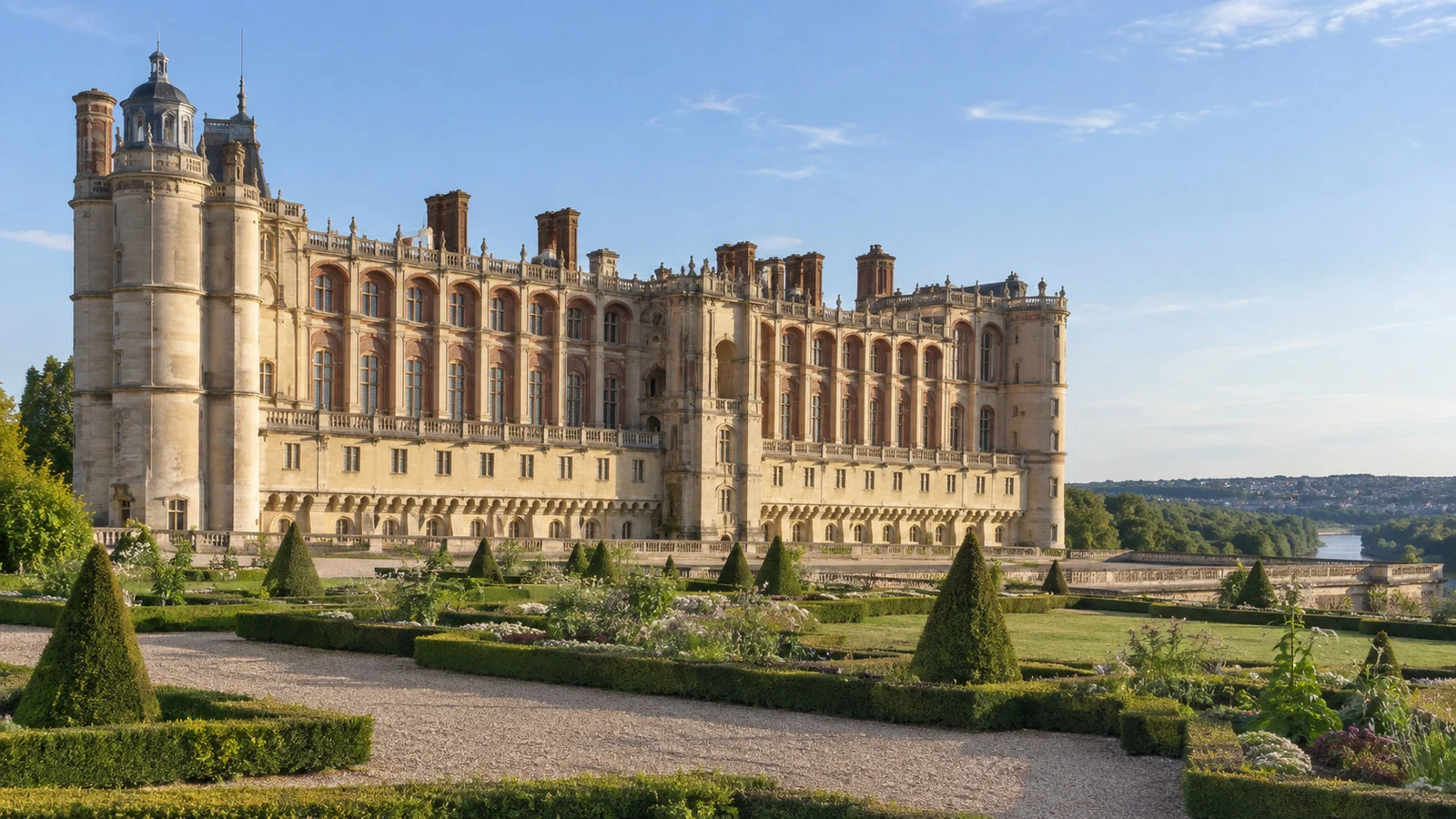
The Château de Saint-Germain-en-Laye houses France’s National Archaeology Museum. The royal residence is also known as the birthplace of Louis XIV.
The official practical information currently lists museum hours from 10 AM to 5 PM, with Tuesday closure and additional annual holiday closures. Individual admission is currently €6, and independent visitors can normally enter without an advance reservation.
Major renovations currently limit the collections available inside. The museum says the open route runs from the Neolithic through Gaul, while several other sections remain closed.
Check the room-status notice shortly before your cruise. A traveler coming for one specific archaeological period may otherwise find that the desired gallery is not accessible.
National domain and terrace
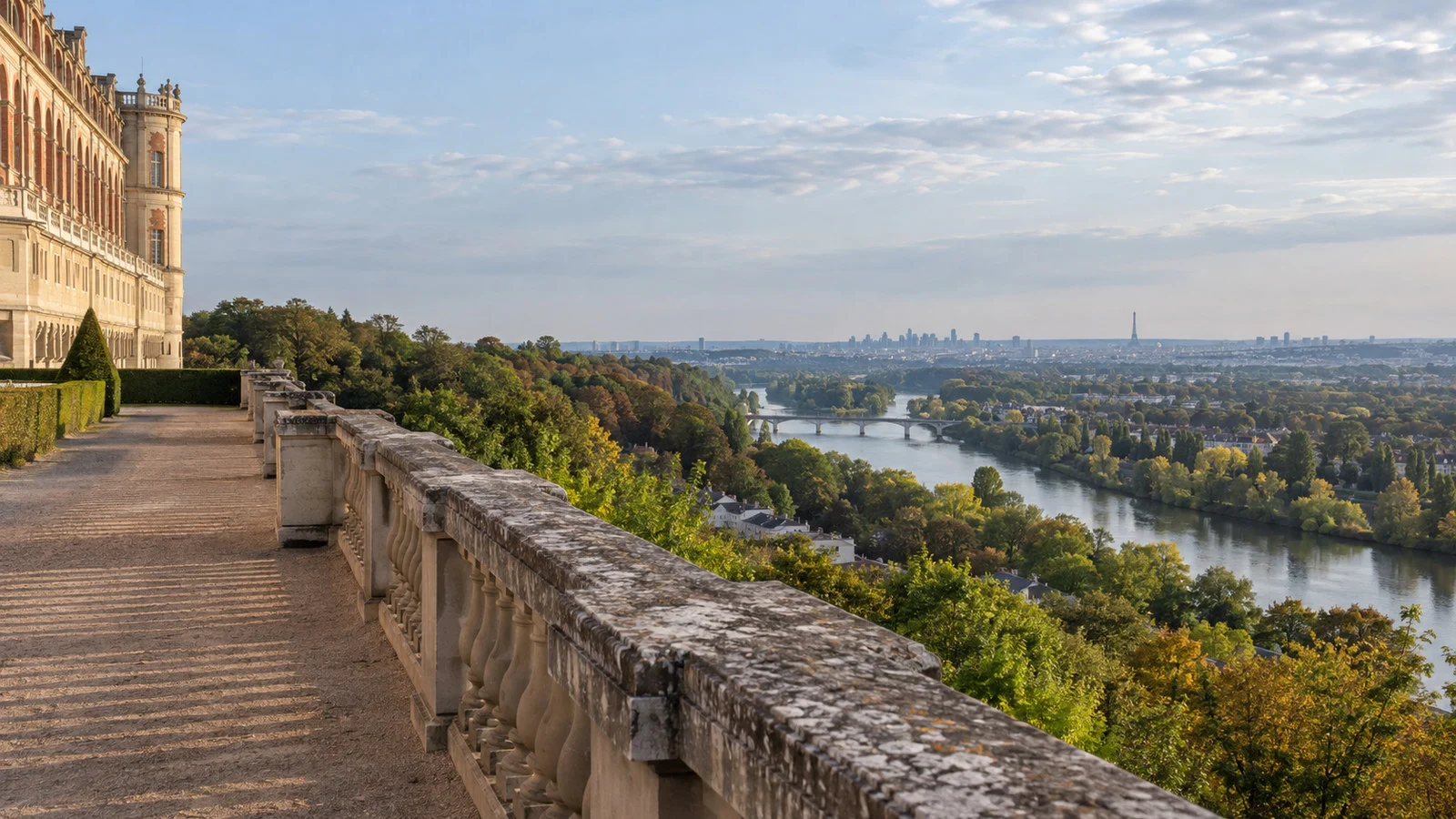
The outdoor domain is free to enter and follows its own seasonal hours. It is the easiest choice when the museum is closed, your time is short, or you prefer views to galleries.
The long terrace overlooks the Seine valley toward the Paris skyline. Walk only as far as the schedule and your energy allow, because the return to the ship still includes the descent to Le Pecq.
The English Garden is currently closed until further notice because heat-weakened trees require safety work. Other access can change for weather or maintenance, so follow current signs and barriers.
Town center and lunch
Saint-Germain-en-Laye has enough cafés, shops, and streets to turn the château visit into a relaxed half day. Eating here is simpler than adding central Paris solely for lunch.
If one restaurant matters, check its service hours and reserve when possible. French lunch schedules do not always match a ship’s short call.
Can you visit central Paris from Le Pecq?
Yes, but first you must reach Saint-Germain-en-Laye station from the river. RER A then connects the western suburbs with major central stations.
Use RATP’s live planner for the exact route, platform, disruptions, and accessible options. Make sure the return train is on the correct western branch because RER A divides outside central Paris.
Paris becomes a realistic independent plan only when the call is long and your turnaround time is conservative. One delayed connection should not put the ship at risk.
If Paris is the sole priority, compare the ship’s organized transfer with the independent rail plan. A cruise excursion may sacrifice flexibility but remove several moving parts.
Ship excursion or explore independently?
Saint-Germain-en-Laye is well suited to independent exploration once transportation up the hill is clear. The museum, terrace, and town center sit close together.
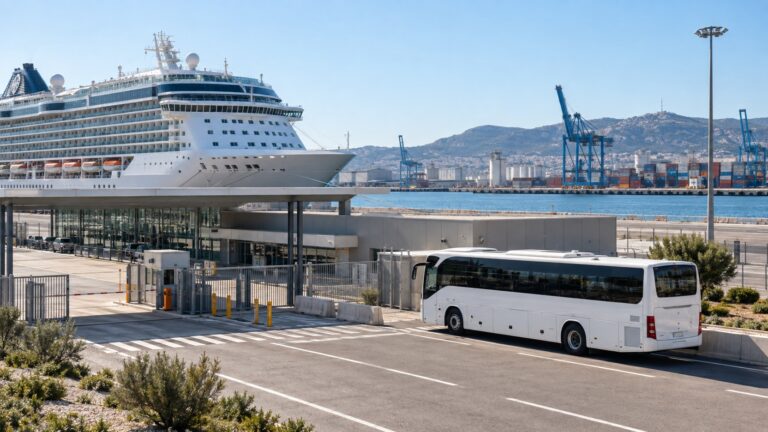
A ship excursion is useful when you want historical commentary, a guaranteed coach, or a structured Paris visit. Read the walking description carefully because a bus transfer does not necessarily eliminate stairs or slopes.
My preference for a first Le Pecq call is independent time in Saint-Germain-en-Laye. I would choose the organized option when central Paris is nonnegotiable or mobility requires a confirmed vehicle.
Accessibility
The hill between the Le Pecq waterfront and Saint-Germain-en-Laye is the main outdoor barrier. Ask the cruise line about gangway angle, quay surface, distance to transportation, and whether an accessible coach is available.
The museum states that temporary exhibition rooms and permanent galleries are wheelchair accessible with assistance by ramp and elevator, except Salle Piette. Wheelchairs and cane seats can be requested at reception.
That museum access does not make the full ship-to-château route step-free. Confirm vehicle boarding, the drop-off point, curb transitions, and the path through the domain.
RATP’s planner includes an option for accessible itineraries, but station equipment can be affected by maintenance. Check the exact journey shortly before departure.
Weather and river conditions
Rain makes the hill and historic surfaces more tiring, while summer heat can turn the climb into the hardest part of the day. Wear shoes with dependable grip and carry a light waterproof layer.
High water on the Seine can change schedules, berths, or entire itineraries. There is no trustworthy fixed cancellation percentage for Le Pecq, so treat the cruise line’s operational update as the only useful answer.
Heat or storm alerts can also change access within the château domain. Check the museum’s practical page for current weather notices before walking up.
Timing your return
The all-aboard time controls every decision. Work backward through the final train or bus, the descent to the river, traffic, and gangway boarding.
If you stay in Saint-Germain-en-Laye, the route is easier to simplify when time tightens. If you go into Paris, set a firm turnaround time before leaving Le Pecq.
Do not depend on the final theoretical train that reaches the quay just in time. Allow room for a wrong branch, crowded platform, service interruption, or delayed taxi.
Safety and practical details
Use ordinary urban awareness around stations and in crowded transit. Keep phones and wallets secure, validate the correct ticket or payment method, and watch for service announcements.
France’s general emergency number is 112. Save the ship’s contact separately because the cruise line needs to know immediately if a transportation or medical issue could delay your return.
The museum currently prohibits suitcases, cabin-size luggage, and large bags, so leave bulky items aboard. The euro is the local currency, and cards are widely useful for most visitor expenses.
How Le Pecq fits a Seine cruise
Le Pecq often acts as a Paris-area endpoint or overnight berth on a longer Seine itinerary. Its suburban setting is very different from a central Paris mooring.
Farther downstream, Vernon opens the route toward Giverny, Les Andelys offers a dramatic castle landscape, and Rouen provides a larger historic city. Le Pecq’s strength is the royal town immediately above it.
Compare the actual berth with our Paris river cruise port guide before making plans. Seine ships can use several Paris-area locations, and the name printed on an itinerary does not always describe the gangway.
Common Le Pecq planning mistakes
The first mistake is assuming the ship docks in central Paris. Le Pecq lies west of the city and requires ground transportation or a climb before the RER.
The second is confusing Saint-Germain-en-Laye station with Le Vésinet-Le Pecq station. They are different stops on the western RER network.
The third is planning the museum without checking the current gallery closures. Renovation means the available collections are more limited than the museum’s full scope suggests.
The final mistake is treating central Paris as an automatic add-on. It is a separate transit plan that needs a firm turnaround and a generous return margin.
Final take
Le Pecq makes sense when you stop asking the quay to be Paris and look uphill instead. Saint-Germain-en-Laye offers royal history, archaeology, views, and lunch in one compact destination.
Go into central Paris only when the live rail plan and ship schedule leave breathing room. Otherwise, the château and terrace are not a compromise but the best version of this call.
How this guide was researched: Unless a first-hand visit is explicitly identified above, this guide is based on independent research using official museum, national-domain, transit, government, tourism, and cruise sources where available. Logistics and time-sensitive details were reviewed in September 2026; see the Editorial Policy.