Barca d’Alva River Cruise Port: Quay, Castelo Rodrigo, and Côa Valley
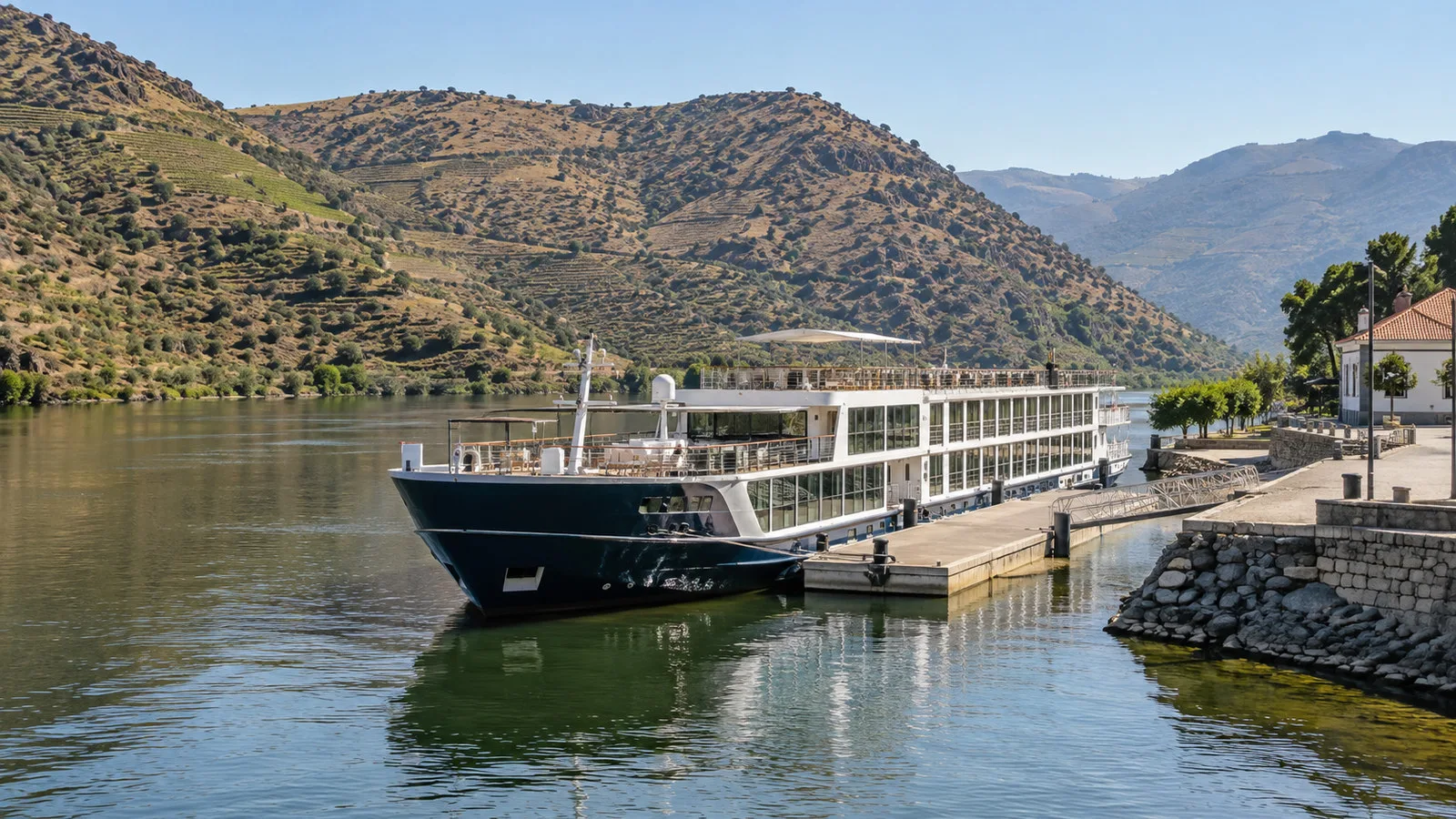
Barca d’Alva feels like the edge of the map in the best possible way. Your ship reaches a quiet bend of the Douro where steep hills, vineyards, railway history, and the Spanish border create a wonderfully remote sense of place.
The catch is that the headline sights are not clustered beside the gangway. A satisfying day here depends less on wandering and more on choosing the right transfer, understanding the terrain, and protecting your return time.
My quick take
Treat Barca d’Alva as a scenic gateway rather than a destination packed with attractions. If this is your first visit, I would prioritize Castelo Rodrigo for atmosphere and manageable sightseeing, or the Côa Valley if prehistoric art is the reason you chose the itinerary.
A ship excursion is usually the simplest answer because local transport is limited and road timings can vary. Independent travelers can still have a rewarding day, but a vehicle and driver should be arranged before arrival rather than improvised on the quay.
Quick Facts
- Port setting: Barca d’Alva is a very small riverside settlement near Portugal’s border with Spain, not a conventional town-center cruise port.
- Best-known excursion: Castelo Rodrigo offers walls, old lanes, a medieval cistern, a church, a pillory, and the ruins of the Cristóvão de Moura Palace.
- Other major option: The Côa Valley pairs an excellent museum with guided visits to open-air rock-art sites.
- Getting around: Organized excursions or prearranged private transport are the practical choices for sights beyond the quay.
- Walking conditions: Expect uneven surfaces, slopes, steps, and limited shade at many historic and archaeological stops.
- What to carry: Bring water, sun protection, supportive shoes, and a light layer for changing river weather.
- Timing rule: Build your day around the ship’s stated all-aboard time because sailing and lock schedules can change.
Where river ships dock
River vessels use the quay at Barca d’Alva, but the exact berth and gangway position can vary with operations, river conditions, and the day’s traffic. Follow the cruise director’s instructions instead of assuming that a map pin marks your final exit point.
The immediate riverside area is compact and quiet. You may have pleasant views and a short stroll near the water, but you should not expect the dense services, taxi ranks, or long list of walkable landmarks found at a larger port.
Ask the crew whether the gangway is level, sloped, stepped, or assisted on your call. Water level and berth setup can change the angle, so a report from a previous sailing may not describe today’s access.
What Barca d’Alva is really like
This is a small border settlement with a strong sense of landscape and history. The old railway infrastructure hints at the route that once connected the Douro corridor with Spain, while the surrounding hills explain why the river journey itself is such a large part of the experience.
A short independent walk works best for travelers who want fresh air, photographs, and time to absorb the valley. It is not a substitute for Castelo Rodrigo or the Côa Valley, and it is wise to turn back before the heat or distance becomes uncomfortable.
Services can be sparse and opening patterns may not match your ship’s timetable. Carry what you need from the vessel, including water, medication, sun protection, and a charged phone.
Choosing the right excursion
The two strongest cultural choices serve different interests. Castelo Rodrigo is about a compact historic village and broad views, while the Côa Valley is about archaeology, interpretation, and carefully managed access to a vast rock-art landscape.
Do not try to combine ambitious versions of both unless your cruise line has built the itinerary and transport around it. The roads, visit procedures, walking surfaces, and ship schedule leave little room for casual improvisation.
Choose Castelo Rodrigo if you want
Choose the village for stone lanes, layers of religious and political history, and a visit that can be adjusted more easily to the group’s walking pace. It also suits travelers who prefer a visually rich outing without committing to a specialized archaeological field visit.
Choose the Côa Valley if you want
Choose the valley for one of Europe’s most important open-air rock-art landscapes and a deeper look at human creativity across an immense span of time. Decide whether your plan means the museum, a guided site visit, or both, because those are not interchangeable experiences.
Castelo Rodrigo: the classic day out
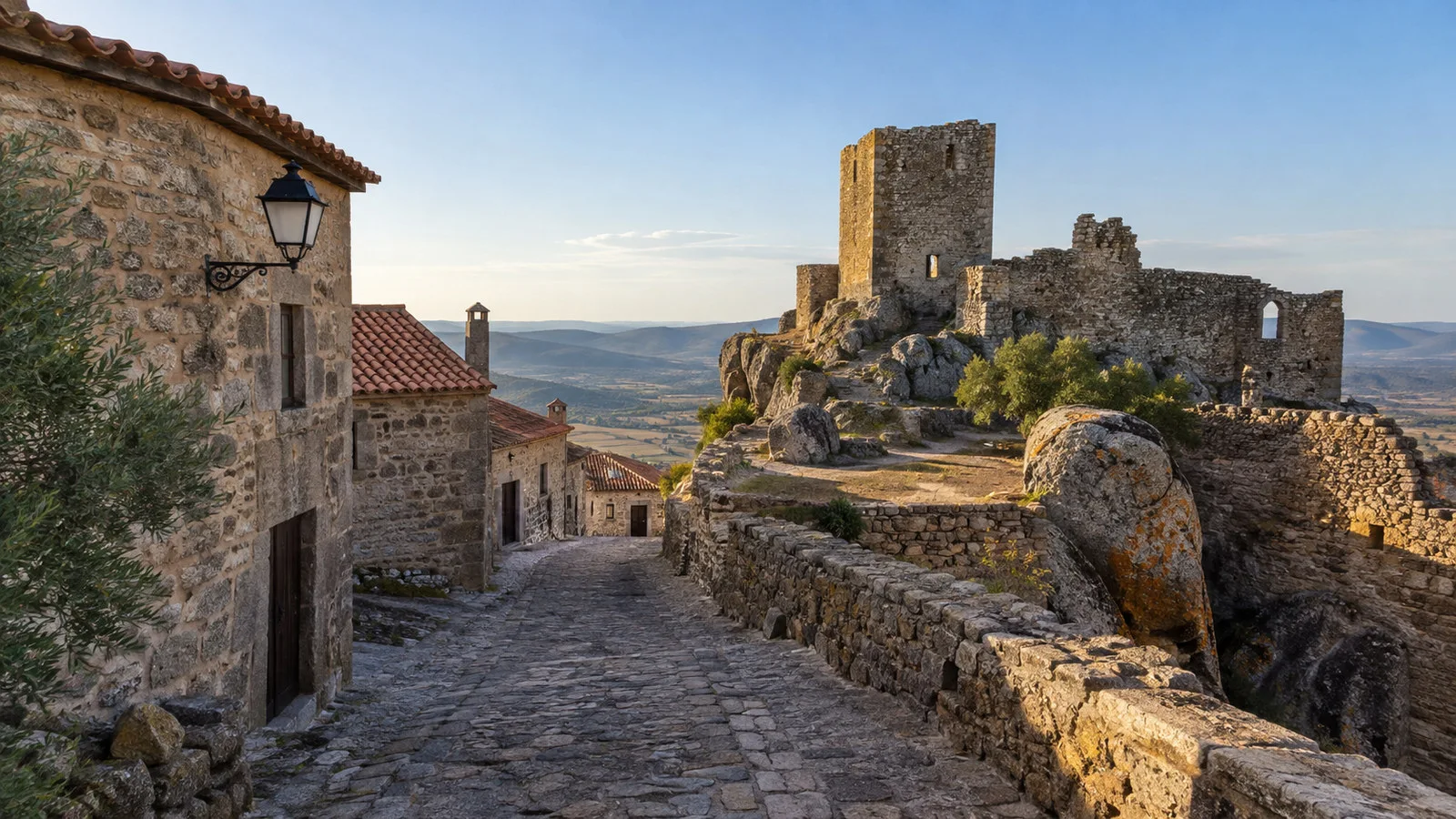
Castelo Rodrigo sits within old walls above the surrounding countryside, and the approach immediately gives the visit a sense of occasion. Inside, the lanes connect the ruins of the Cristóvão de Moura Palace, a sixteenth-century pillory, the parish church, and a medieval cistern.
The official Historical Villages of Portugal page also highlights evidence of a New Christian community. That context adds depth to what might otherwise look like a simple collection of photogenic stone buildings.
Allow time to pause rather than racing from marker to marker. The pleasure comes from the relationship between the architecture, the hilltop position, and the wide landscape, not from checking off a long museum list.
The village’s cobbles, gradients, and steps deserve serious attention. Travelers who use a cane, walker, wheelchair, or mobility scooter should ask the excursion desk about the vehicle drop-off point, the steepest section, restroom access, and whether a shorter route is possible.
For current destination information, consult the official Castelo Rodrigo page from the Historical Villages of Portugal. Opening access can vary, so treat any interior visit as a bonus unless it is specifically included in your tour.
Côa Valley rock art: museum or field visit
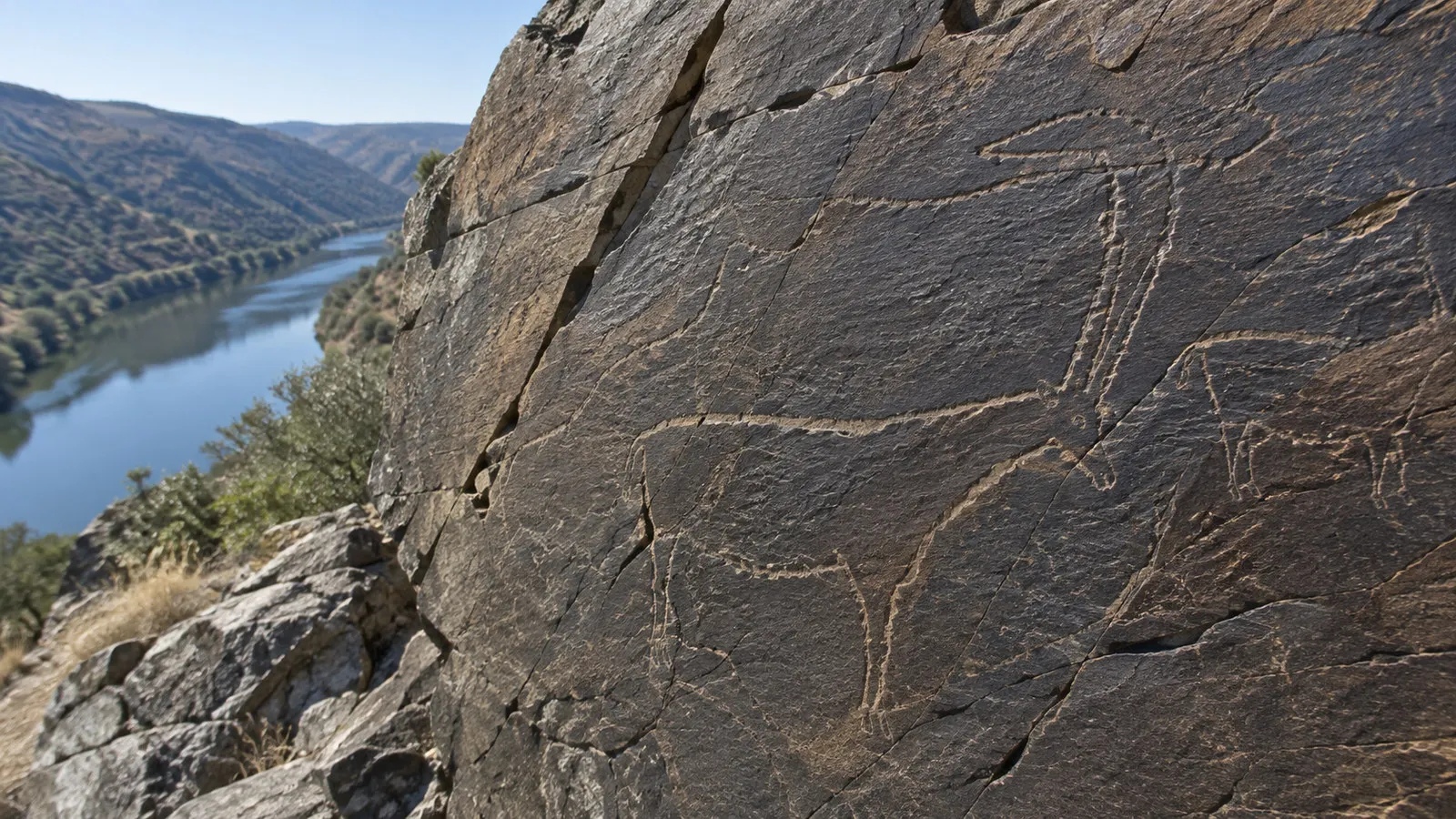
The Côa Valley’s engraved rock surfaces are spread through the valleys of the Côa and Douro rather than gathered in a single walk-in attraction. Côa Parque currently reports more than 1,200 engraved outcrops across about 80 sites, with most dating to Paleolithic times.
The Côa Museum gives you the clearest overview through exhibits, interpretation, and a dramatic setting above the river landscape. The UNESCO World Heritage listing explains why this open-air art matters, while the museum is the better fit if you want context with fewer outdoor challenges.
A field visit is more demanding and more controlled. Sites such as Penascosa, Canada do Inferno, and Ribeira de Piscos are visited through authorized guided arrangements, with the exact format, transport, schedule, and walking requirements set by Côa Parque.
Do not assume that museum admission automatically includes a rock-art site or that you can arrive independently at an engraving location. Check the official Côa Parque visit information for current tours, prices, rules, and reservations before committing.
The engravings can be subtle, and changing light affects how easily they are read. A knowledgeable guide is not just a transport solution but an essential part of understanding the figures, techniques, and archaeological setting.
The river journey is part of the port day
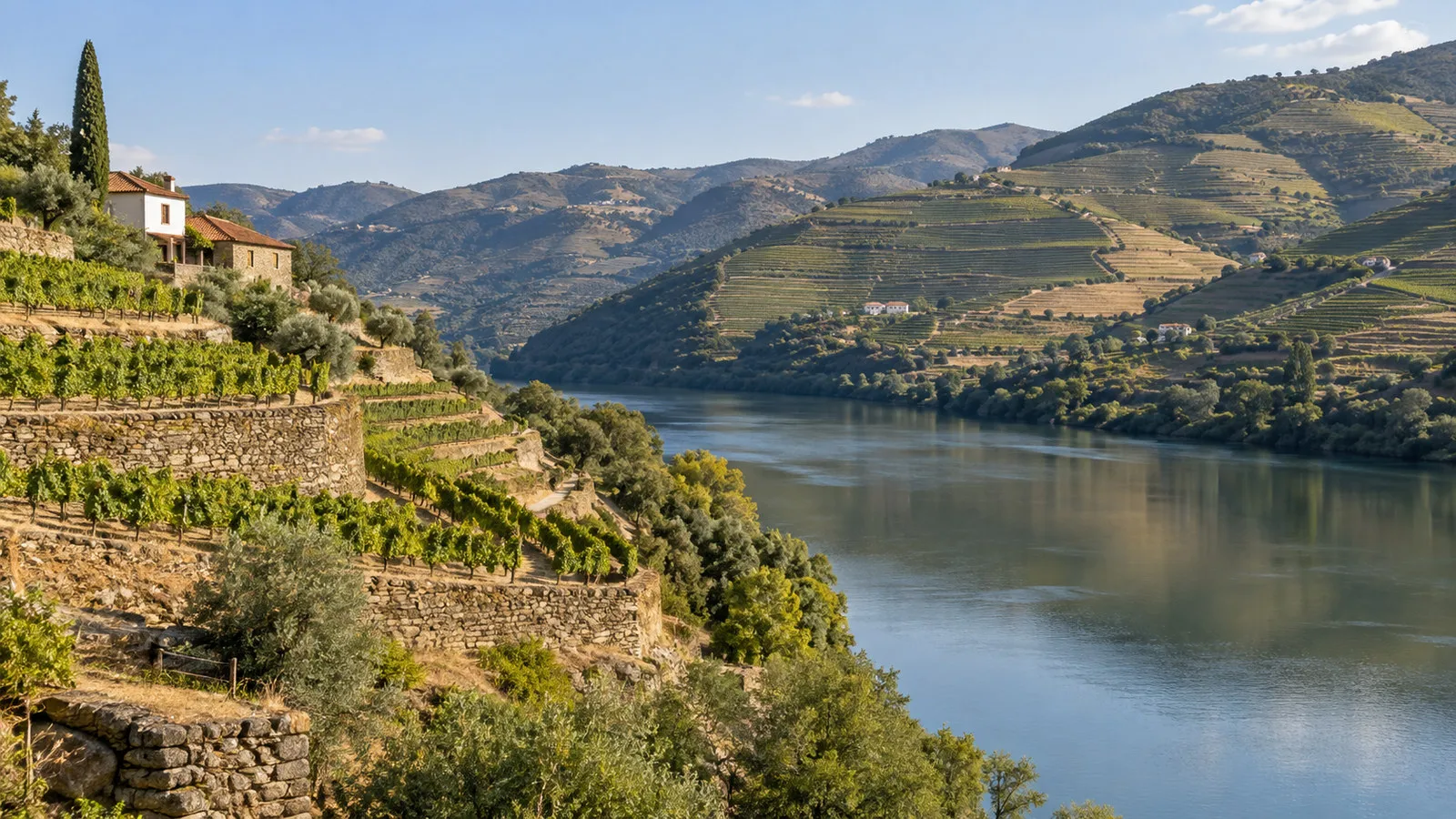
Barca d’Alva is reached through one of the Douro’s most dramatic stretches, so keep some energy for the hours aboard. Terraces, rocky slopes, dams, and locks create a slow-moving panorama that changes as the vessel travels east.
Cruise directors often announce major navigation moments, but schedules can shift. If there is a lock or scenic reach you especially want to see, ask when it is expected and be prepared for an early start or a change in timing.
A lock transit can be as memorable as an excursion because it reveals the engineering that makes modern navigation possible on this steep river. Watch from an open deck when permitted, respect crew barriers, and keep loose belongings secure in wind.
Nature, viewpoints, and the border landscape
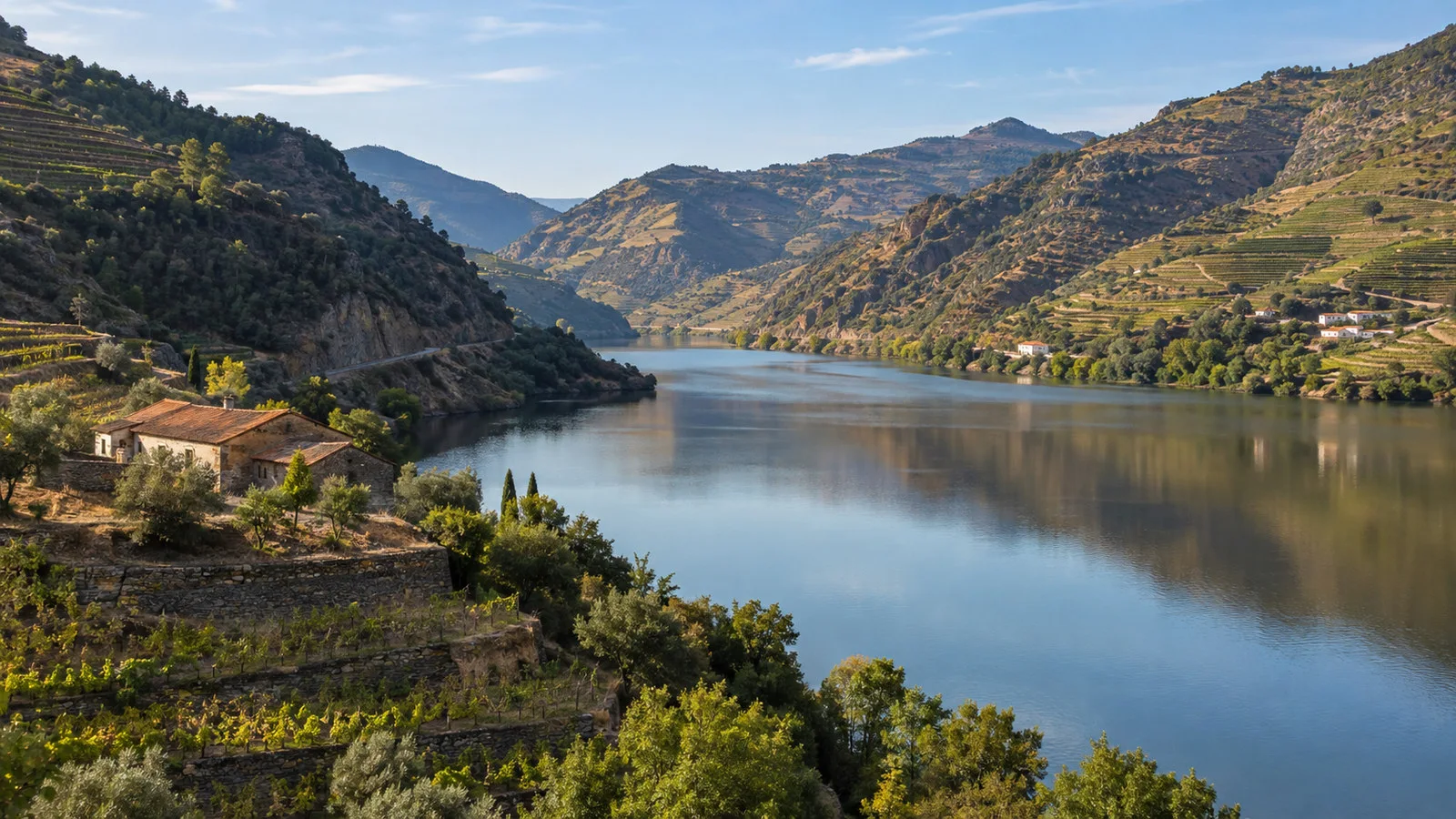
The surrounding region connects the Douro International landscape with the Côa Valley, Serra da Marofa, and protected areas such as Faia Brava. The scale is striking, and even a roadside viewpoint can be rewarding when visibility is clear.
Wildlife sightings are never guaranteed, though the cliffs and open country make this an appealing region for patient birdwatchers. Bring compact binoculars if nature matters to you and keep expectations realistic during a short port call.
Stay on authorized paths and follow guide instructions in archaeological and protected areas. The ground can be loose, shade may be limited, and leaving the route can harm fragile features that are easy to miss.
Can you visit Spain from Barca d’Alva?
The Spanish border is close, and some Douro itineraries use nearby Vega de Terrón for their border call. However, Barca d’Alva and Vega de Terrón are distinct operational points, so never assume that advice for one berth applies to the other.
A cross-border outing only makes sense when your cruise program or a prebooked driver confirms the pickup location, route, documents, and return plan. Proximity on a map does not make it a sensible walk from the gangway.
Transport and independent planning
There is no dependable turn-up-and-go taxi strategy for a small call like this. If you want to travel independently, arrange a licensed driver in advance and send the company your ship name, arrival date, berth information if known, and required return time.
Ask for a written itinerary that states whether waiting time, parking, admission, and guide services are included. Also confirm the vehicle type and luggage space if anyone travels with a folding wheelchair or mobility device.
Offline maps are useful because mobile coverage may vary along remote roads. Save the ship’s contact details, the local agent information if provided, and your driver’s number before leaving the vessel.
Never let an independent schedule use every available minute. Road delays, slow group movement, weather, and last-minute ship changes can erase a narrow margin very quickly.
Accessibility and mobility
Barca d’Alva’s quiet quay may look easy, but accessibility depends on the gangway and the specific excursion. Historic villages and open-air archaeological sites add cobbles, slopes, rough ground, vehicle steps, and limited places to sit.
Ask focused questions instead of relying on the word accessible. Useful details include maximum walking distance, longest uninterrupted walk, number of steps, surface type, restroom layout, shade, seating, and whether you can remain with the vehicle during difficult sections.
Castelo Rodrigo may work with a shortened route if the operator can use a favorable drop-off point. A Côa Museum visit may be more practical than a field site for travelers who need smooth surfaces, climate control, and predictable facilities.
Wheelchair users should also confirm whether the excursion vehicle has a lift or only underfloor storage. Crew assistance policies vary, and companions may be expected to manage transfers that the driver cannot provide.
Weather and what to wear
The upper Douro can feel intensely hot and exposed in summer, while mornings, evenings, and shoulder-season calls may be cool or breezy. Check the forecast for the inland destination you will actually visit rather than relying only on conditions at the quay.
Wear supportive shoes with good grip for stone and uneven paths. A brimmed hat, sunscreen, water, and a light layer will cover most conditions, while a compact rain shell is useful when showers are possible.
Heat changes what is realistic. Slow your pace, use shade when you find it, and tell a guide early if you need a rest rather than waiting until the group is far from the vehicle.
Food and small purchases
Castelo Rodrigo and the wider region offer chances to sample local products, but a short cruise visit is not the moment to depend on a leisurely meal. If your excursion includes a tasting, enjoy it as part of the experience and keep a simple backup snack with you.
Olive oil, almonds, preserves, and regional wines are common themes in this part of Portugal. Check customs rules for your final destination before buying food, and pack glass bottles carefully for the rest of the trip.
Small businesses may not keep the same hours every day. Carry a payment card plus a modest amount of euros, and do not count on every vendor accepting a particular method.
A practical half-day plan
For a first visit, leave the ship on an organized transfer to Castelo Rodrigo, take the gentler available route through the village, and allow unhurried time at a viewpoint. Return with the group, then use any remaining time for a short riverside stroll close to the quay.
For an archaeology-focused day, choose a confirmed Côa Museum or Côa Parque program and read the mobility notes before booking. Keep the rest of the schedule deliberately light because guided start times and road transfers will control the day.
If you prefer to stay local, enjoy the riverfront, photograph the landscape, and return aboard early for a good deck position. A modest plan is not a wasted port call here because the remoteness and river setting are the main attraction.
Common planning mistakes
The biggest mistake is assuming that Barca d’Alva works like a walkable city port. Another is booking a distant activity without a confirmed driver and a return buffer.
Travelers also confuse the Côa Museum with an actual rock-art site visit, underestimate the terrain in Castelo Rodrigo, or rely on a forecast for Porto instead of the hotter inland valley. Each error is easy to avoid with one precise question before departure.
Finally, do not copy timings from a different itinerary. River levels, locks, ship operations, and the direction of travel can all change the time available on shore.
Quick answers
Is Barca d’Alva worth leaving the ship for?
Yes, especially for Castelo Rodrigo or the Côa Valley. If neither fits your interests or mobility, the scenic sailing and a quiet local walk can still make the call worthwhile.
Can I walk to Castelo Rodrigo?
No practical cruise-day plan should treat it as a walk from the quay. Use the ship’s excursion or prearranged road transport.
Can I see Côa rock art without a guide?
The protected field sites use managed guided access, so reserve through the official system or choose an excursion that includes it. The museum is a separate experience and has its own admission arrangements.
Which is better for limited mobility?
The Côa Museum may be the more predictable option, while Castelo Rodrigo may be possible on an adapted shorter route. Confirm the exact vehicle, surfaces, distances, and restrooms with the operator because no single answer fits every call.
How early should I return?
Follow the ship’s stated all-aboard time and use a generous buffer if traveling independently. The vessel may need to meet a lock slot or sailing plan, so late returns create real operational problems.
Final word
Barca d’Alva rewards travelers who plan for its remoteness instead of fighting it. Choose one meaningful outing, respect the terrain and timing, and leave space to enjoy the Douro from the deck.
Castelo Rodrigo offers the easiest blend of history, views, and atmosphere, while the Côa Valley delivers a deeper archaeological experience for travelers prepared to reserve and walk. Whichever you choose, the quiet border landscape will likely be the image that stays with you.
Research note
Destination details were checked against the official Historical Villages of Portugal page, Côa Parque visitor resources, and UNESCO’s World Heritage listing. Berths, opening hours, tour formats, accessibility, road conditions, and ship schedules can change, so reconfirm them for your sailing.