Kaohsiung Cruise Port: Two Terminals, LRT and Harbor Days
Kaohsiung is a rare big-city cruise call that can feel delightfully simple. First identify which of its two cruise terminals your ship uses, then let the light rail do the heavy lifting while you save your energy for harbor art, temples, seafood, and shaved ice.
The two-terminal question comes first
Port schedules may assign a ship to the Kaohsiung Port Cruise Terminal at Wharf 20 or the Penglai International Cruise Terminal at Pier 9. They sit on the same waterfront, but they have different nearest light-rail stops and walking routes.
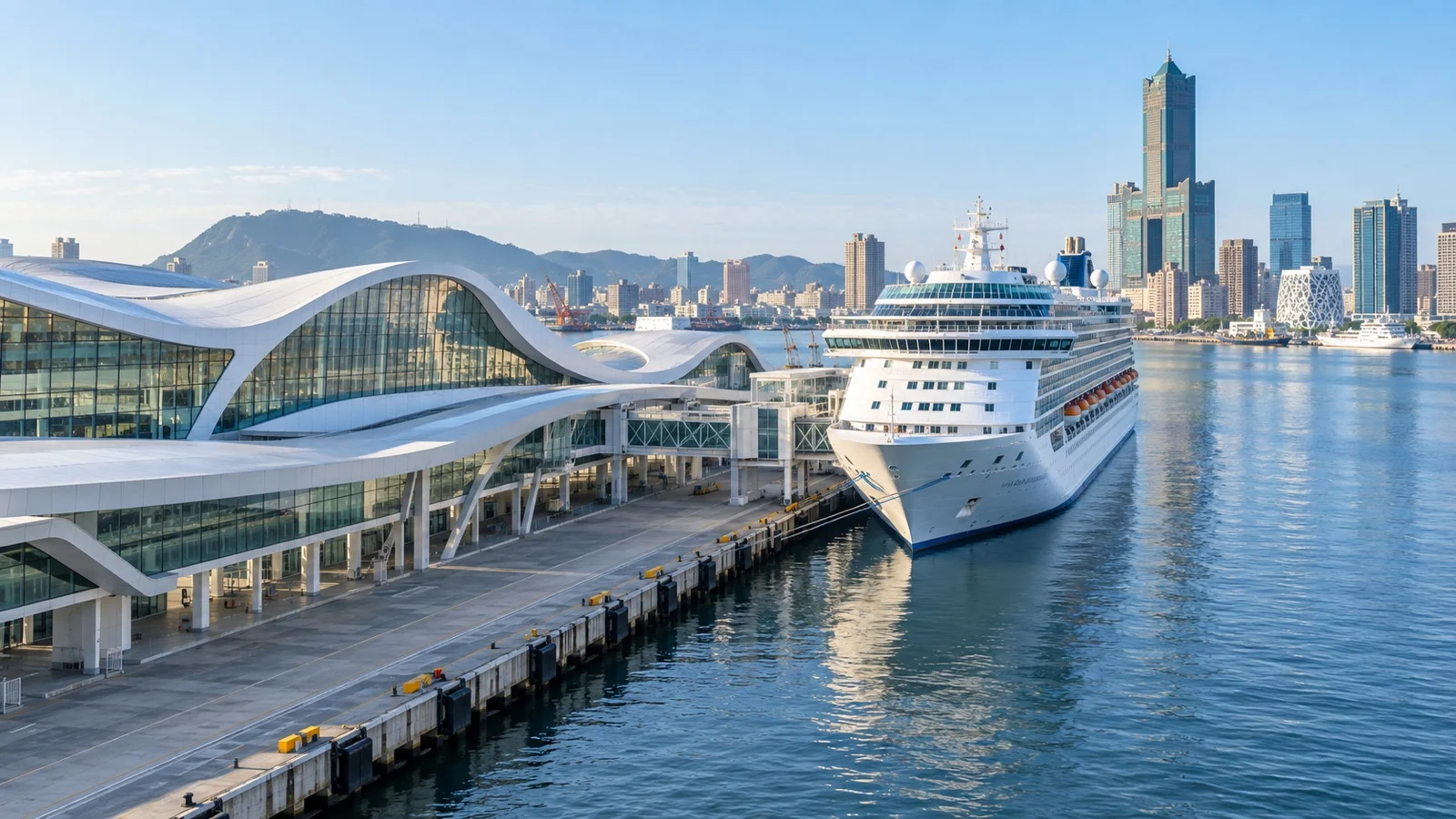
The sculptural Kaohsiung Port Cruise Terminal stands behind Wharves 19 and 20, beside Cruise Terminal station C9. Taiwan International Ports Corporation says the C9 stop is about a one-minute walk, while Sanduo Shopping District MRT station is roughly an 18-minute walk.
Penglai International Cruise Terminal occupies the port’s historic warehouse district at Pier 9. The port’s official terminal and transportation page places Dayi Pier-2 light-rail station C12 about a ten-minute walk away, and Sizihwan MRT station about twenty minutes away.
Penglai is not an obsolete footnote. TIPC reopened the expanded terminal in March 2026 after integrating Warehouses 9-2 and 8-2, adding passenger-processing and baggage space beside Pier-2 and KW2.
Check your cruise line’s day notice and the official Kaohsiung sailing list for the assigned wharf. A map pin simply labeled “Kaohsiung cruise terminal” can send you to the wrong glass building, which is an impressively modern way to start a very old-fashioned panic.
Our piece on Taiwan Cruise Ports is the fuller version of this point.
Kaohsiung cruise port quick facts
- Where you land: one of two terminals. The Kaohsiung Port Cruise Terminal stands behind Wharves 19 and 20, about a one-minute walk from light rail station C9, while the Penglai International Cruise Terminal occupies the historic warehouse district at Pier 9. Confirm which one your ship uses.
- Dock or tender: Ships berth alongside at both terminals, though the assigned wharf varies by call.
- Into town: From Wharf 20, walk a minute to C9 and take the light rail along the waterfront to Pier-2, Love Pier, and Hamasen.
- Currency and language: The New Taiwan dollar (TWD) and Mandarin Chinese, with Taiwanese Hokkien widely spoken and English signage on the transit system.
- Time zone: National Standard Time (UTC+8).
- How often the call is missed: Low (roughly 1 to 2%): tropical storms can make the approach unsafe.
Leaving the terminal without making it a project
From Wharf 20, follow signed public routes to C9 rather than wandering through operational port land. The light rail runs along the waterfront past Glory Pier, Love Pier, Pier-2, Penglai, and Hamasen, so many of the city’s easiest cruise-day stops sit on one line.
From Pier 9, walking directly to KW2 and Pier-2 may be quicker than boarding transit. C12 Dayi Pier-2 and C13 Penglai Pier-2 are useful once you want to continue toward Love River, Hamasen, or a connection elsewhere.
The official light-rail guide is worth saving offline before arrival. Buy or tap the accepted fare media shown at the station, validate as directed, and avoid assuming that a cruise shuttle will run unless your ship confirms one.
Taxis are useful for Lotus Pond, Fo Guang Shan, or travelers who need door-to-door transport. Carry the terminal name, wharf number, and address in Chinese, because “the cruise terminal” is no longer specific enough in Kaohsiung.
A waterfront day that practically plans itself
Begin at Pier-2 Art Center, where converted warehouses, public sculptures, shops, and open harbor views reward aimless wandering. Exhibitions and individual venues keep their own hours, but the outdoor district still works when you arrive early.
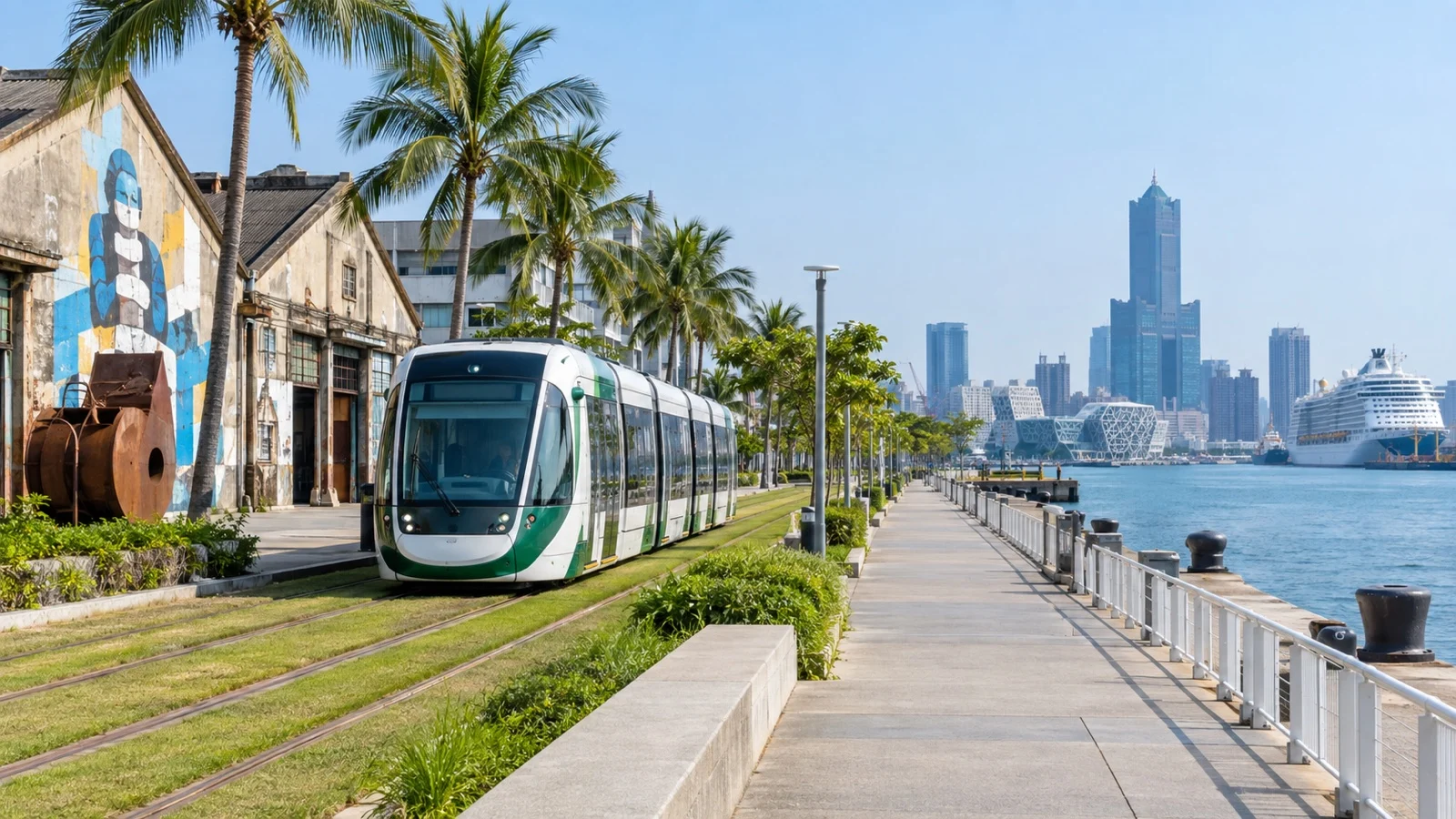
Walk the Great Harbor Bridge when it is open, then continue to KW2 for snacks, shade, and a front-row look at the working harbor. The bridge has scheduled rotation periods, so check local notices instead of building a minute-perfect plan around one crossing.
Ride the light rail toward Love Pier and Glory Pier, or continue west to Hamasen for old port streets and the ferry connection. This flexible route is especially useful on shorter calls because every extra stop is optional rather than a hostage situation for your schedule.
If you enjoyed how our Keelung cruise port guide separates the berth from the broader Taipei gateway, apply the same discipline here. Kaohsiung is its own excellent destination, not a southern launchpad for racing toward Taipei.
Cijin: a tiny ferry ride with a real clock attached
From Hamasen, walk to Gushan Ferry Pier and cross to Cijin for the old street, Tianhou Temple, seafood stalls, beach, and coastal views. Kaohsiung’s tourism office lists the Gushan to Cijin crossing at about five minutes, although boarding lines add time.
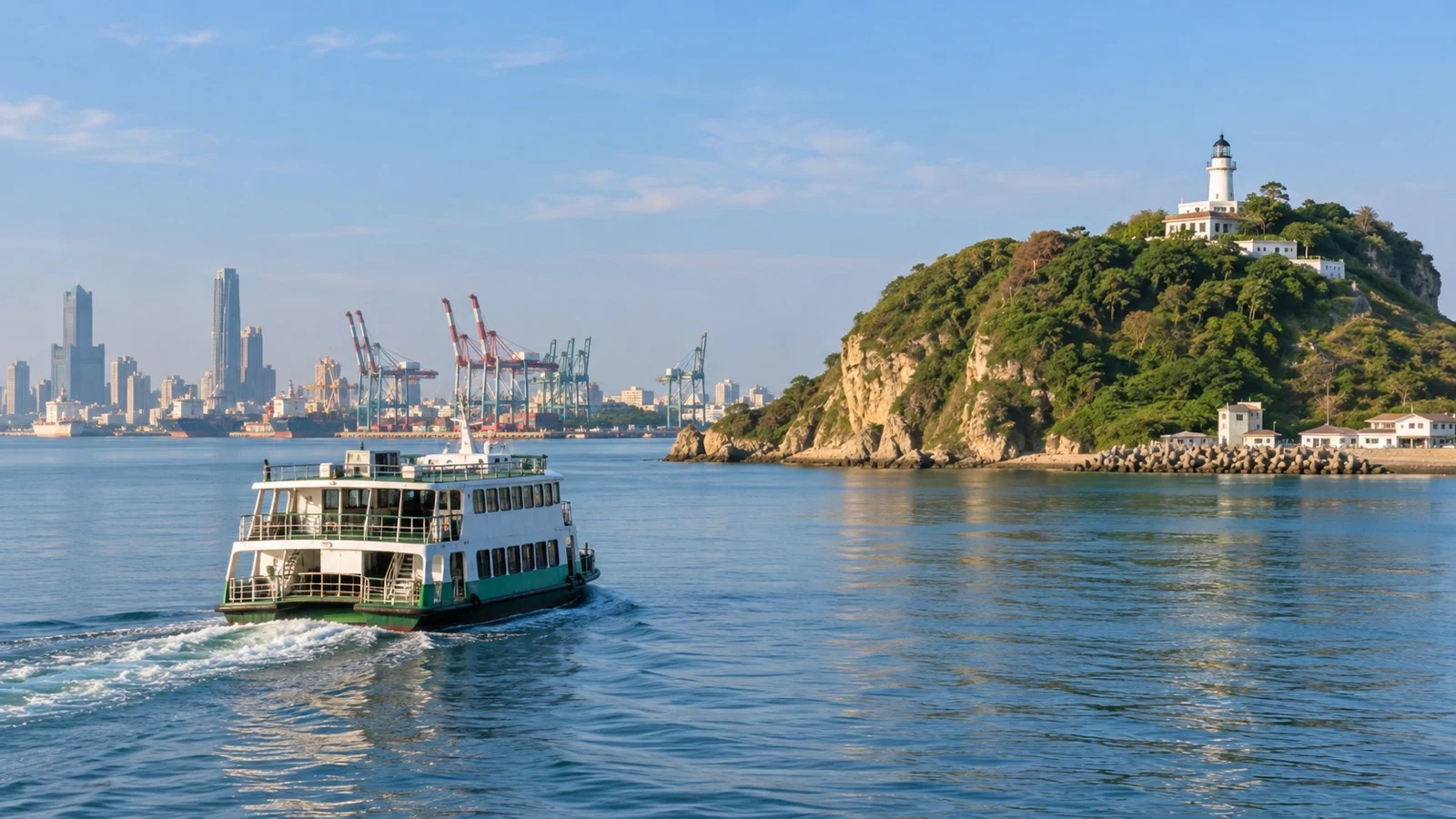
Cijin works best as a focused half-day rather than one ingredient in a frantic city sampler. Weekend crowds, bicycle traffic, heat, and ferry lines can turn a cute five-minute crossing into a much longer return sequence.
Start back at least 90 minutes before all aboard, earlier during peak periods or severe weather. That buffer covers the ferry line, the light-rail ride, the final station walk, and port security without requiring Olympic-level speed in tropical humidity.
Temples, lotus ponds, and one bigger choice
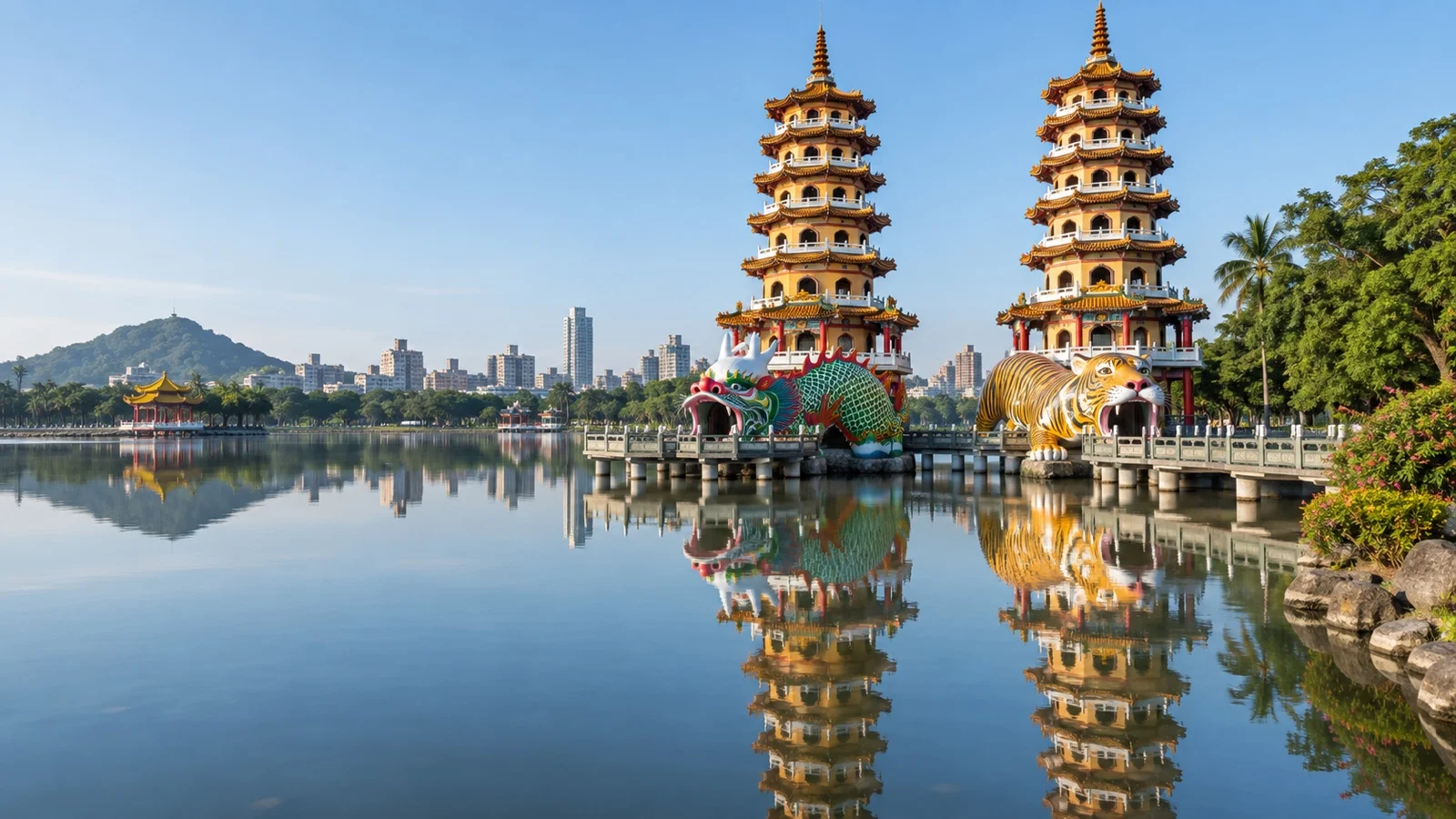
Lotus Pond’s temples and pavilions make a colorful inland alternative, but restoration status and access can change. Use MRT plus a local connection or a taxi, then verify which structures are open before committing your whole day.
Fo Guang Shan Buddha Museum is farther from the harbor and deserves a dedicated excursion or prearranged vehicle. Treat it as your main event, not a casual add-on after Pier-2, Cijin, and lunch.
Our guide to choosing one major attraction or several smaller stops is particularly relevant here. A port day becomes much more enjoyable once you stop trying to collect Kaohsiung like achievement badges.
Eating well without losing the afternoon
Kaohsiung rewards casual grazing with seafood, dumplings, beef noodles, milkfish dishes, papaya milk, and mountains of shaved ice. Choose a busy, clean stall or restaurant near your route, and point to a menu photo if language temporarily leaves the chat.
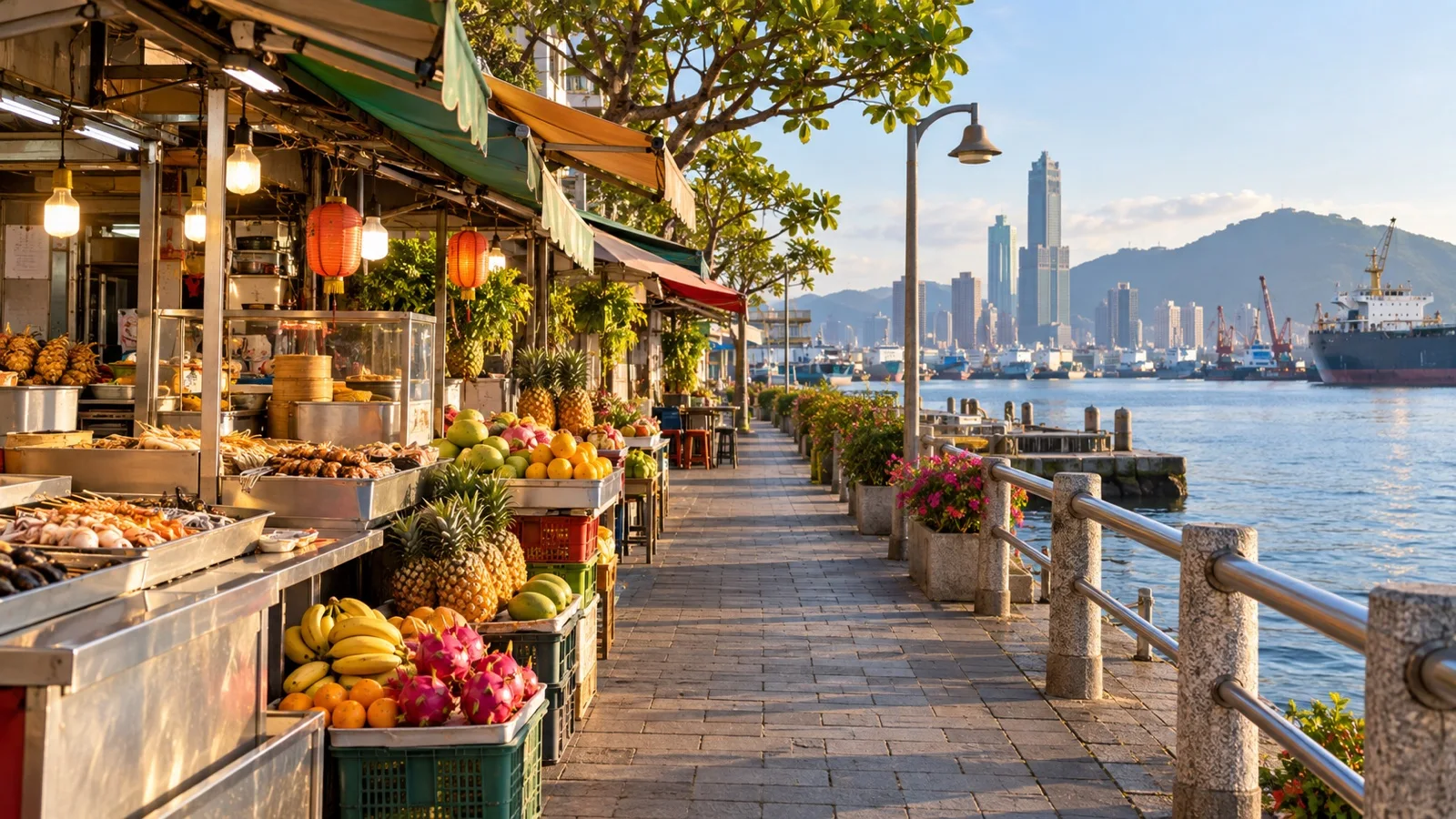
Night markets are famous, but many stalls wake up after a daytime cruise ship has sailed. For lunch, Pier-2, Yancheng, Hamasen, Cijin Old Street, and central shopping areas offer more realistic choices.
Carry some TWD for small purchases even if larger businesses accept cards or mobile payments. Do not make your return dependent on finding an ATM, deciphering a payment app, or negotiating one final heroic bowl of noodles.
Heat, rain, and the very useful shade strategy
Kaohsiung is often warm, humid, and bright, with heavier rain and typhoon risk in the warmer months. Check the day’s official forecast and port notices because high wind or severe weather can alter ship operations, ferries, and outdoor attractions.
Bring water, sun protection, a light rain layer, and shoes that tolerate wet paving. Alternate outdoor stretches with air-conditioned stops rather than saving every indoor break until someone becomes a steamed dumpling.
Accessibility and limited-mobility planning
The modern terminals and low-floor light rail make Kaohsiung one of the more manageable Asian harbor cities, but the ship’s gangway angle still changes with tide and berth conditions. Ask the cruise line about gangway help and mobility-device handling before the sailing.
Elevators, ramps, and step-free routes may require a longer path than the obvious stairs. Pier-2 has broad outdoor spaces, yet heat, rail crossings, uneven edges, and gaps between shaded areas can make distance feel greater than it looks.
Ferry boarding conditions to Cijin can vary with the vessel, crowd, and water level, so confirm assistance before joining a line. Our guide to port activities for limited mobility can help you build a cooler, shorter waterfront circuit.
Three sensible shapes for the day
Short call: Explore Pier-2, KW2, and the Great Harbor Bridge, then return by the same waterfront corridor. This keeps navigation easy and leaves room for a proper lunch.
Standard call: Combine Pier-2 with Hamasen and Cijin, or ride east toward Love Pier and a central food stop. Pick one branch, because doing both makes ferry and transit delays compound.
Long call: Make Lotus Pond or Fo Guang Shan the major destination, then add one harbor stop if time remains. Prearranged transport and a conservative turnaround matter more than squeezing in a bonus temple.
Safety and getting back to the correct ship
Kaohsiung is generally straightforward for independent visitors, but use normal city precautions with valuables and traffic. Scooters, bicycles, light-rail tracks, and hot sidewalk deserve more attention than dramatic crime scenarios.
Save the terminal name and wharf number on your phone, plus a screenshot in case data service disappears. Follow our return-to-ship timing guide, then add extra margin for Cijin, weather, or an unfamiliar transfer.
Check arrival paperwork and the last light-rail leg
Taiwan’s visa-exempt entry, visa, and online arrival-card rules depend on nationality and current National Immigration Agency policy. Complete only the process the official service and cruise line require, then keep the specified passport or landing document available for port clearance.
At Wharf 20, C9 is the direct light-rail starting point, while Penglai may make walking to Pier-2 faster than riding one stop. Check Kaohsiung Metro for the current fare, service notice, elevator route, and last useful return rather than treating the circular line as an always-identical shuttle.
Cijin is the better half-day branch when the ferry is operating normally, while Fo Guang Shan should own a long day with arranged transport. Keeping those choices separate prevents ferry queues, road time, and the final terminal walk from stacking into one fragile return.
Kaohsiung cruise port FAQs
Can I walk from the cruise terminal?
Yes, but the useful walking route depends on your berth. Penglai is close to Pier-2 and KW2, while the Wharf 20 terminal is beside C9 and better connected by light rail for most sightseeing.
Does every ship use the new Kaohsiung Port Cruise Terminal?
No. Kaohsiung has active facilities at Wharf 20 and Pier 9, so check the TIPC sailing assignment and your ship’s instructions for your date.
Is Cijin realistic during a port call?
Usually yes when weather and ferry operations are normal. Keep it to a focused visit and start back early enough to absorb ferry lines and the terminal transfer.
Should I visit Taipei from Kaohsiung?
No, not on a normal daytime call. Keelung is the appropriate cruise gateway for Taipei, while Kaohsiung offers more than enough locally.
Do I need a shore excursion?
Not for a waterfront day using the light rail. A guided or private option becomes more useful for Fo Guang Shan, complex mobility needs, or anyone who prefers not to navigate the two-terminal system independently.
This guide follows the Cruise Ports Editorial Policy, with official port and transit sources prioritized and call-specific details clearly marked for verification.
How this guide was researched: Terminal, tender, transit, entry, attraction, booking, safety, and accessibility details were checked against current official sources on September 10, 2026, including Taiwan International Ports Corporation, Taiwan’s National Immigration Agency, Kaohsiung Metro, and Kaohsiung tourism. Sailing assignments, border requirements, schedules, access, and operating conditions can change, so confirm the ship-specific details before travel; see our Editorial Policy.