Portsmouth, UK Cruise Port Guide for 2026
Portsmouth is the rare British cruise call where the terminal, royal naval history, modern waterfront, and city center all belong to the same island-sized patch of geography. The catch is that several nearby names sound almost helpful enough to send you elsewhere.
Portsmouth cruise port quick facts
- Where you land: Portsmouth International Port, George Byng Way, Portsmouth PO2 8SP, which takes ships up to about 985 feet. Check the official cruise schedule for whether your visit is a call or a turnaround. The Historic Dockyard and Gunwharf Quays are roughly 2 miles south.
- Dock or tender: Ships berth alongside inside Portsmouth Harbour and this is not a tender port, although the exact berth is assigned operationally.
- Into town: Portsmouth and Southsea station is about a 20 minute walk on the port’s marked pedestrian route, or roughly 5 minutes by taxi.
- Currency and language: Pounds sterling (GBP) and English.
- Time zone: British Summer Time (BST, UTC+1) during the cruise season, GMT (UTC+0) in winter.
- How often the call is missed: Low (under 1%): the sheltered berth is rarely limited by local weather.
Check the official 2026 cruise schedule for whether your visit is marked “Call” or “Turnaround.” That single word changes the useful advice more than any generic list of attractions.
Four names not to muddle
Portsmouth International Port is the working ferry and cruise terminal on George Byng Way. This is where your UK cruise ship arrives or departs, and the postal code PO2 8SP is the safest navigation detail.
Portsmouth Harbour is a rail station beside the Historic Dockyard and Gunwharf Quays, not the cruise terminal. It can be useful during a sightseeing day, but it is the wrong drop-off for check-in luggage.
Southampton is a separate major cruise port about 22 miles away, with its own terminals and rail station. Our Southampton cruise port guide covers that entirely different embarkation.
Portsmouth, Virginia is across the Atlantic in the United States. If your directions mention Norfolk, Virginia, or dollars, the map has developed an adventurous personality and should be corrected.
For a pre-cruise night, see our guide to hotels near Portsmouth, UK Cruise Port Guide for 2026 cruise port.
Where ships berth and what the terminal is like
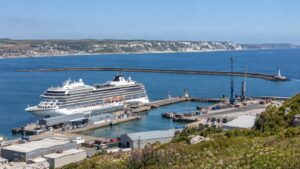
Cruise vessels berth alongside within Portsmouth International Port and passengers pass through its dedicated terminal complex. The port does not publish a dependable numbered berth for every call, so do not invent one from a photo, tracking app, or old forum post.
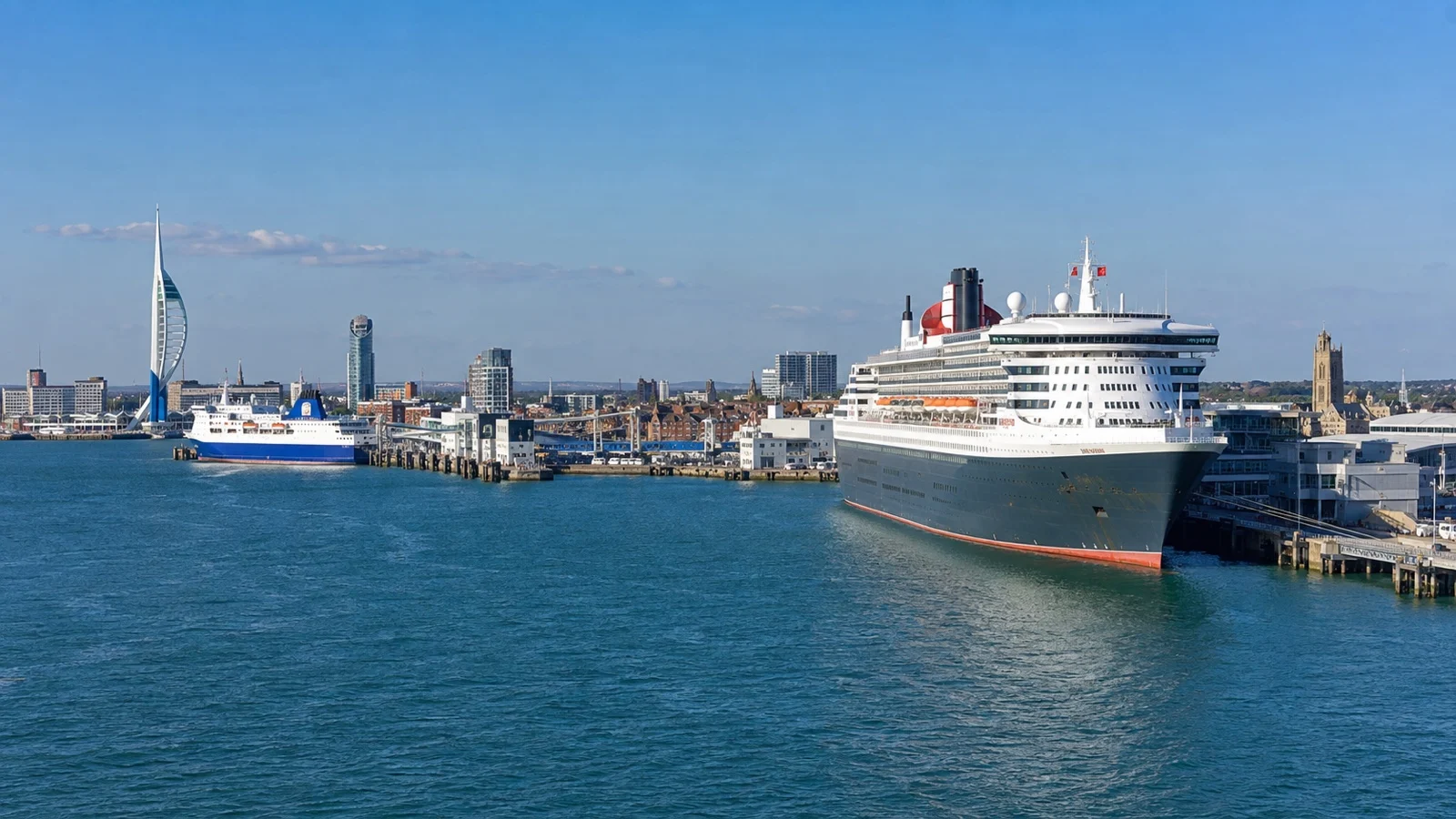
A major berth extension and new sustainable passenger-terminal extension allow the port to handle ships up to about 985 feet long. Portsmouth focuses on small and mid-sized boutique, luxury, and expedition cruising rather than trying to impersonate nearby Southampton.
The modern terminal has seating, restrooms, food and drink options, free Wi-Fi, parking, taxi access, and passenger assistance. Current details sit on the official terminal facilities page, which is more useful than relying on a review from before the extension opened.
Is yours a port call or a turnaround?
Transit call
A schedule entry marked “Call” means Portsmouth is a day stop and your luggage normally stays aboard. Your planning problem is getting from the port to the sights and back before all-aboard.
Turnaround
A “Turnaround” means passengers embark, disembark, or both, so check-in windows, parking, baggage, and onward rail connections matter. Porters take checked embarkation luggage through security, while arriving luggage is organized in the baggage hall for collection.
Do not plan a museum visit between train arrival and check-in unless your cruise line explicitly allows early baggage drop. Keep medications, documents, valuables, and anything needed that day in hand luggage.
Getting between the port and Portsmouth
Taxi
A taxi rank is outside the main terminal and is the cleanest option for the Historic Dockyard, Gunwharf Quays, or a rail station. Traffic around the M275 and city-center approaches can thicken, so allow more time late in the day.
Walking
The port confirms safe pedestrian routes from the south, north, and east, with Portsmouth & Southsea station about a 20-minute walk away. Use the official route rather than following a road shoulder or a map shortcut through controlled port land.
Bus
First Bus and Stagecoach serve stops near the port, and routes change by day and season. Use the port’s official transport page as the starting point, then check the operator’s live planner.
Rail
For terminal journeys, the port recommends Portsmouth & Southsea, which has taxis outside. Portsmouth Harbour station is better positioned for Gunwharf Quays and the Historic Dockyard once you are already sightseeing.
Direct trains connect Portsmouth with London, Brighton, Gatwick, Southampton, and other cities, but engineering work can transform a simple line into a small rail-based novel. Check National Rail close to travel.
The naval-history cluster
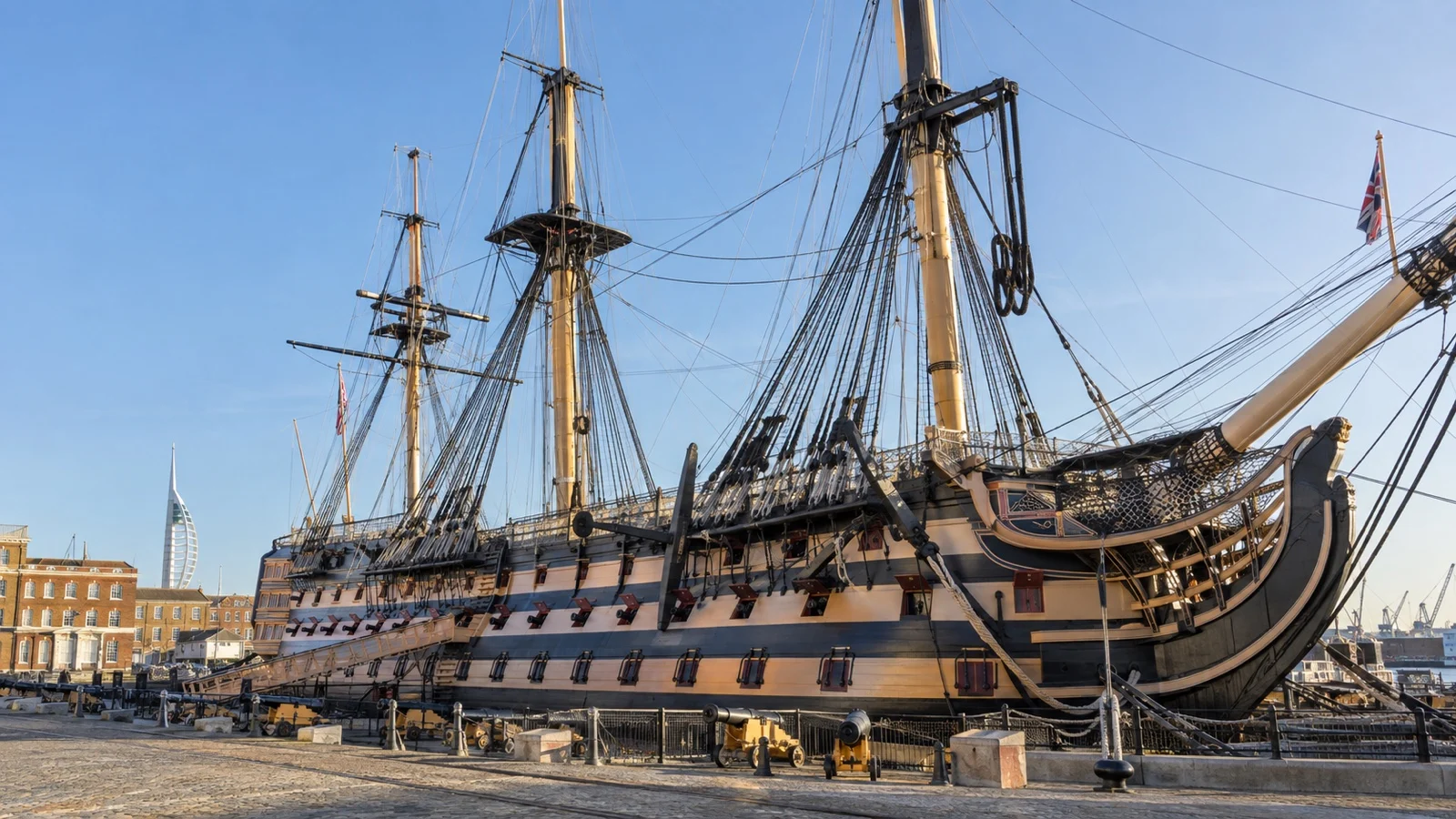
Portsmouth Historic Dockyard is the strongest first-time destination and can fill an entire call. Its attractions include HMS Victory, the Mary Rose Museum, HMS Warrior, the National Museum of the Royal Navy, and harbor experiences, with availability varying by ticket and date.
Check the official Historic Dockyard site for opening times, restoration closures, timed entry, and which attractions your ticket includes. One major ship plus the Mary Rose is a satisfying day, while attempting everything may produce more marching than maritime insight.
HMS Victory
Nelson’s flagship is a working conservation project as well as a historic ship, so visible scaffolding or altered routes can be part of the visit. Decks involve low clearances, narrow spaces, and steep access, making the museum’s detailed accessibility notes essential.
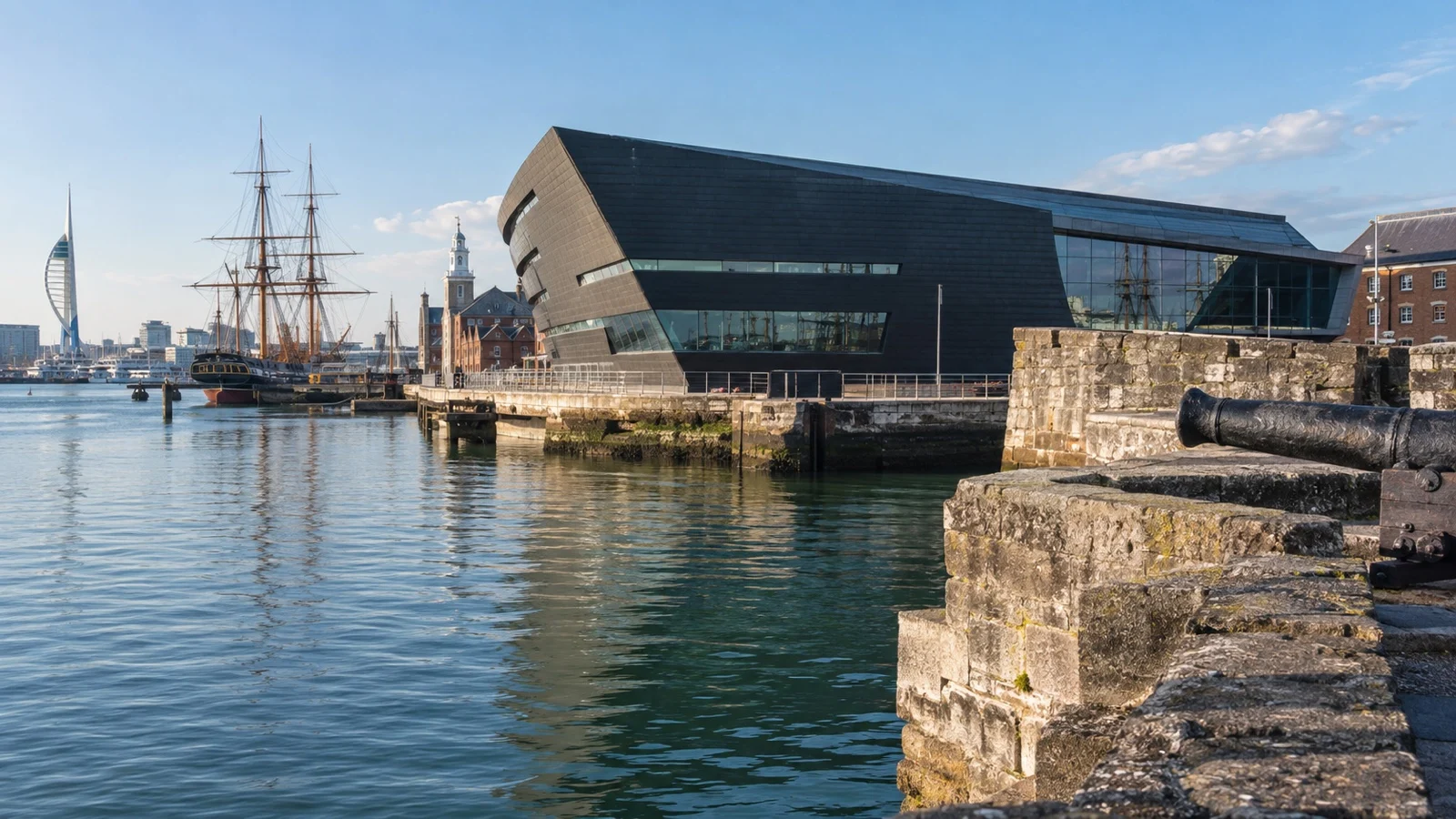
Mary Rose Museum
The purpose-built museum displays Henry VIII’s warship and thousands of Tudor objects recovered with it. It is the best all-weather, broadly accessible anchor for visitors who want deep history without climbing through a preserved vessel.
Gunwharf Quays and the Spinnaker Tower
Gunwharf Quays combines outlet shopping, restaurants, harbor views, and the 558-foot (170 m) Spinnaker Tower beside Portsmouth Harbour station. It is close to the Historic Dockyard entrance, so the two areas pair naturally without another cross-city transfer.
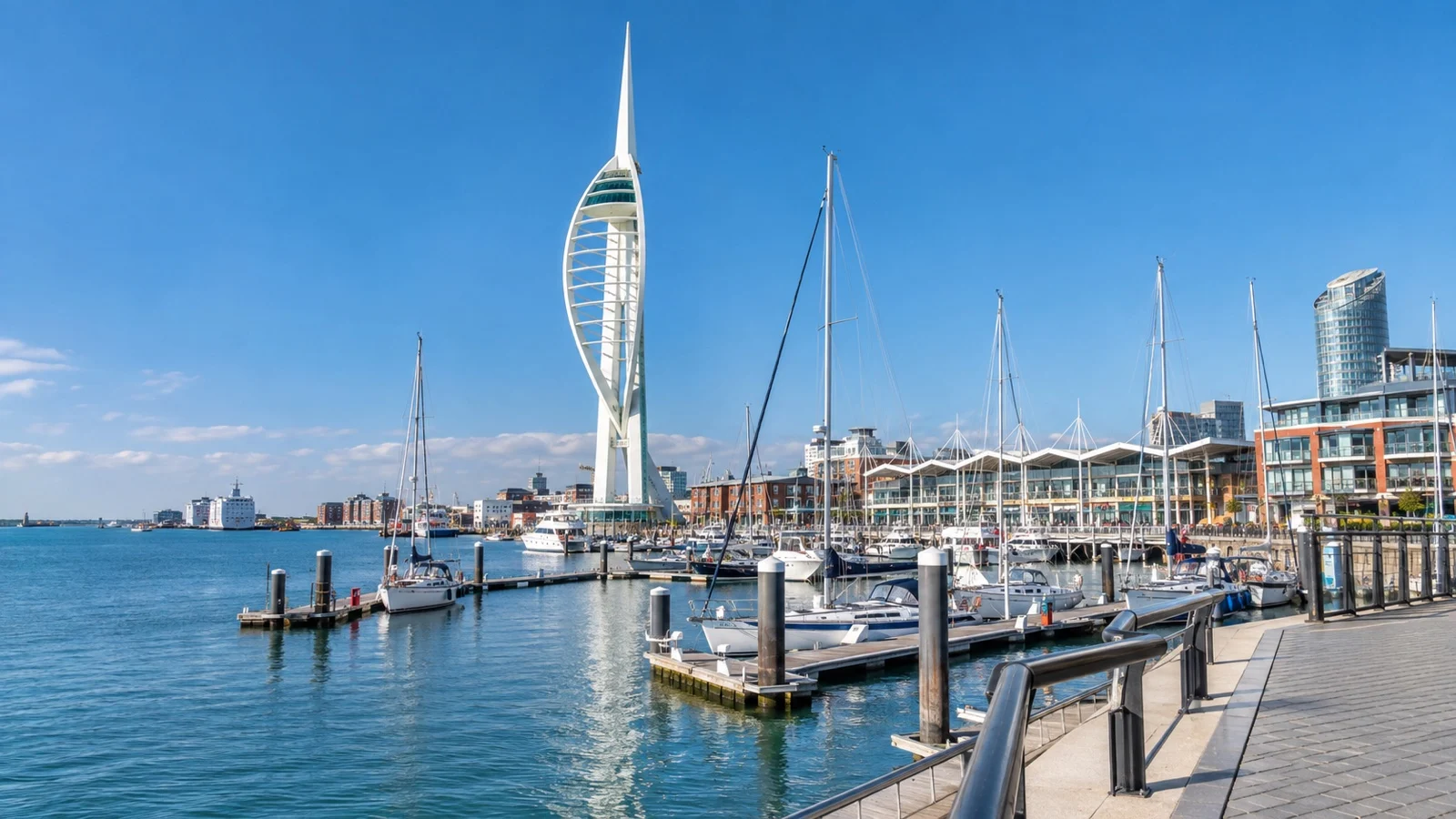
The tower’s viewing decks deliver Solent, harbor, city, and Isle of Wight panoramas when visibility cooperates. Review timed admission and access on the official Spinnaker Tower site, especially during high winds or private events.
Gunwharf is useful as a flexible final stop because eating and shopping can shrink to match the clock. Do not confuse that flexibility with permission to stay until the ship’s departure siren becomes your personal soundtrack.
Southsea deserves its own mood
Southsea offers a long seafront, gardens, cafés, Southsea Castle, and the D-Day Story. It feels more spacious and local than the concentrated attractions around Portsmouth Harbour.
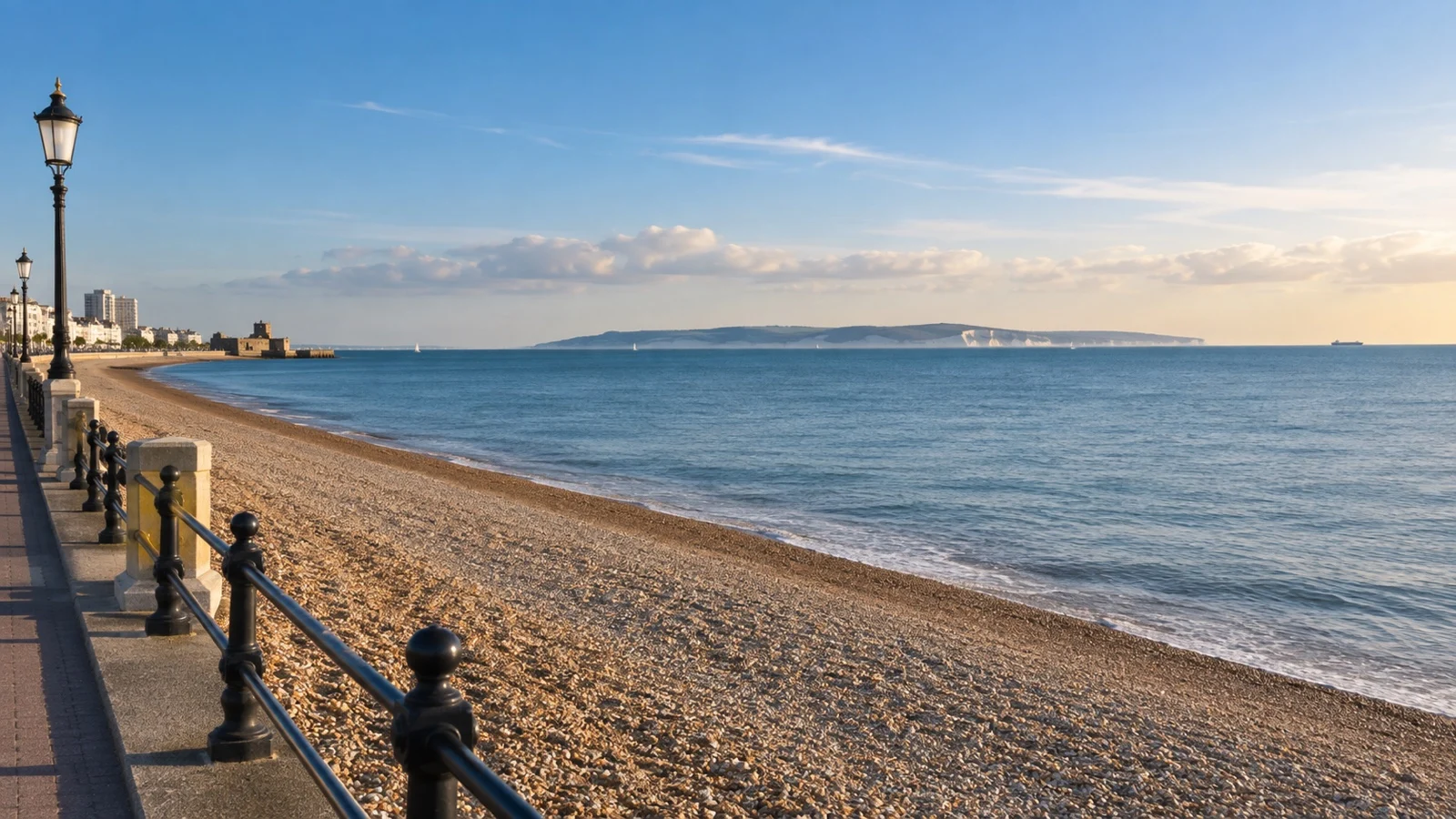
The D-Day Story uses objects, personal accounts, and the Overlord Embroidery to explain the Normandy campaign. It is a meaningful indoor visit and sits near Southsea Castle, but transport back to the cruise terminal needs to be included.
Should you go to London?
Portsmouth promotes London as roughly 60 miles away, and direct trains make a day trip technically possible. A typical journey to London Waterloo is around 90 minutes to two hours each way before terminal transfers, delays, and city travel.
For a short or medium transit call, London is usually a poor independent bargain because four hours can disappear into movement. A ship excursion is safer on a long call, while Portsmouth itself offers enough maritime history for several days.
If London is non-negotiable, choose one compact area, monitor live rail status, and board a return train with at least one backup behind it. Returning to Portsmouth & Southsea station is not the finish line because the ship is still five minutes by taxi or 20 minutes on foot away.
Choose by clock, not by ambition
Four to five hours ashore
Take a taxi to the Historic Dockyard, visit the Mary Rose or one historic ship, then walk through Gunwharf Quays. Taxi back from the terminal side of Gunwharf with a generous buffer.
Six to eight hours ashore
Give the Historic Dockyard most of the day, pause for lunch, then ride the Spinnaker Tower if weather and time permit. This plan is dense with substance and light on transport roulette.
A softer waterfront day
Start at Southsea’s D-Day Story and seafront, then finish at Gunwharf for food and harbor views. Use taxis between zones if walking distance or weather would eat the visit.
Turnaround traveler with extra time
Stay overnight and visit the dockyard before or after cruise day, leaving check-in day deliberately simple. Portsmouth rewards an extra night much more than it rewards sightseeing with suitcases.
Accessibility and assisted travel
The passenger terminal is modern, but ship-to-quay access still depends on the vessel, gangway, and tide. Request cruise assistance before sailing and state whether you use a manual chair, powered chair, scooter, or transfer aid.
The port’s assisted-travel service and taxi area can help with terminal movement, yet onward attractions have separate policies. The Mary Rose Museum and Spinnaker Tower offer modern accessible environments, while historic ships contain tight passages and stairs that cannot all be adapted.
If walking from Portsmouth & Southsea, use the port’s safe route and allow more than the published 20 minutes for rest stops or luggage. A taxi is usually the saner choice on embarkation day, particularly when a suitcase has developed the steering instincts of a shopping cart.
Weather, safety, and harbor common sense
Portsmouth has a mild maritime climate, with wind and showers possible in any season. Bring a waterproof layer and shoes that can manage ship decks, old stone, and long museum floors.
The tourist zones are busy and generally straightforward, but use normal city precautions around stations, shopping areas, and crowds. Stay on public routes and never follow a shortcut into naval or commercial port land.
Harbor traffic is active, sea walls can be slippery, and the tide moves quickly through the entrance. Respect barriers and keep children close near unfenced water.
Your return-to-ship buffer
From the Historic Dockyard or Gunwharf, leave at least 60 minutes before all-aboard and add more during events, rush hour, or bad weather. From Southsea, allow 75 minutes because the road route is longer and traffic more variable.
From London, aim to reach Portsmouth with at least 90 minutes before all-aboard, not merely catch a train scheduled to do so. A canceled service, platform change, or taxi line should be inconvenient rather than voyage-ending.
Finish the turnaround checklist before sightseeing
Embarkation passengers should use the cruise line’s check-in window, the port’s booked parking instructions, and the current baggage cutoff as three separate deadlines. Portsmouth & Southsea station is useful for the terminal, while Portsmouth Harbour is the sightseeing station by Gunwharf and the Historic Dockyard.
International visitors should check the official UK visa or Electronic Travel Authorisation requirement for their nationality and route before sailing. A cruise booking is not immigration permission, and a transit call does not make the document question disappear.
On a port call, the Historic Dockyard is the strongest single anchor because it avoids a second regional transfer and still needs several hours. London is best left to an overnight stay or a ship-managed long-call excursion because rail disruption can remove the backup journey very quickly.
Portsmouth cruise port FAQs
Is Portsmouth cruise port the same as Southampton?
No. Portsmouth International Port is at George Byng Way, PO2 8SP, while Southampton has separate cruise terminals about 22 miles away.
Which rail station should I use for the cruise terminal?
The port recommends Portsmouth & Southsea, about five minutes by taxi or 20 minutes on foot. Portsmouth Harbour station is beside the Historic Dockyard and Gunwharf, not the cruise terminal.
Do cruise ships tender in Portsmouth?
Normal cruise operations berth alongside at Portsmouth International Port. The exact operational berth can vary, so use the port and ship instructions rather than a fixed berth number.
Can I walk to the Historic Dockyard?
It is possible for strong walkers, but it is farther than the walk to Portsmouth & Southsea station and consumes sightseeing time. A taxi or checked local bus is more practical for most port calls.
What does “turnaround” mean on the schedule?
It means the ship is embarking or disembarking passengers rather than only visiting for the day. Plan around check-in, baggage, parking, and onward travel instead of treating it as a normal shore excursion.
For comparisons, see our Dover cruise port guide, Tilbury cruise port guide, and complete UK cruise ports overview. Our evidence, update, and correction standards are published in the Cruise Ports Editorial Policy.
How this guide was researched: Terminal, tender, transit, entry, attraction, booking, safety, and accessibility details were checked against current official sources on September 10, 2026, including Portsmouth International Port, the UK government, National Rail, Portsmouth Historic Dockyard, and Visit Portsmouth. Sailing assignments, border requirements, schedules, access, and operating conditions can change, so confirm the ship-specific details before travel; see our Editorial Policy.