Alofi Cruise Port: Niue’s Remote Sea Caves & Tenders
Niue is a genuinely remote tender call where limestone caves, clear water, and a tiny capital reward careful planning. The exposed landing, tides, limited transport, and local driving permit matter more here than a long attraction list.
My quick take
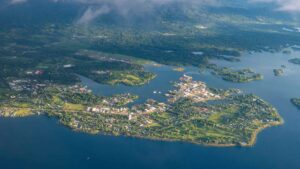
Alofi is Niue’s tiny capital and its only real town, and “tiny” undersells it. Think a scattering of buildings along the coast road rather than anything resembling a downtown.
Compared to somewhere like Avarua, which already feels wonderfully small next to a typical Caribbean port, Niue is a different category of remote entirely: no dock, no breakwater, and a genuine chance of being skipped if the ocean isn’t cooperating.
I’d treat a Niue call as a bonus day rather than a sure thing, and keep the must-see list short. The caves, the water clarity, and Alofi itself are enough to make it worthwhile even on a shortened stop.
Quick Facts
- Where you land: Alofi Wharf, on Niue’s west coast, the island’s only port facility and a short step from the capital, which is home to most of the roughly 1,700 people on the island.
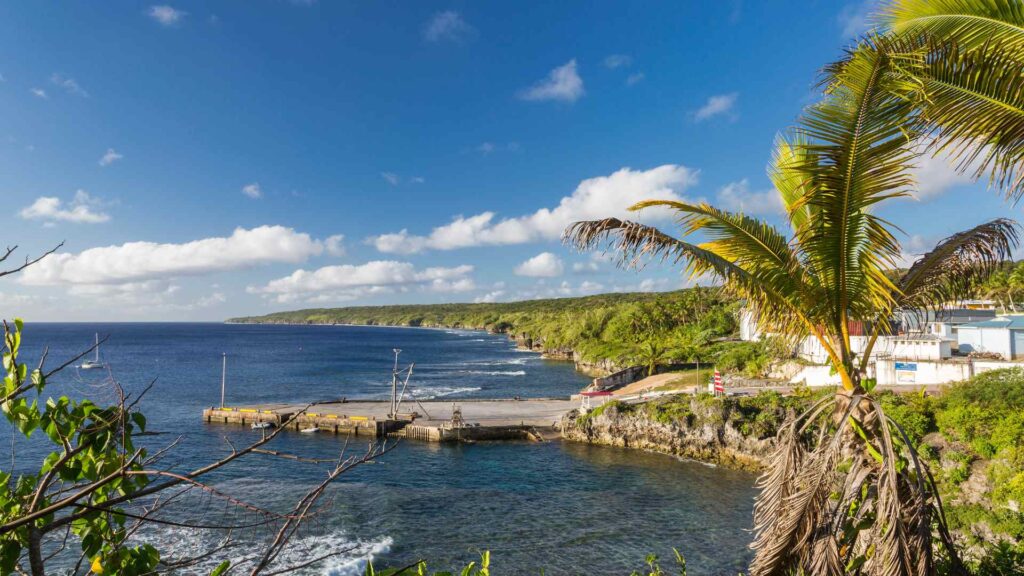
- Dock or tender: Ships anchor in open water off Alofi and tender ashore. The ship and port team set the exact crane-assisted landing procedure for the conditions that day.
- Into town: A few minutes on foot.
- Currency and language: The New Zealand dollar (NZD); Niuean and English are both spoken, and English is used everywhere you will deal with visitors.
- Time zone: Niue Time (UTC−11).
- Operational caution: Swell, wind, tropical weather, tender safety, and the ship’s operating plan can change or cancel a call.
Getting ashore: the tender call that isn’t guaranteed
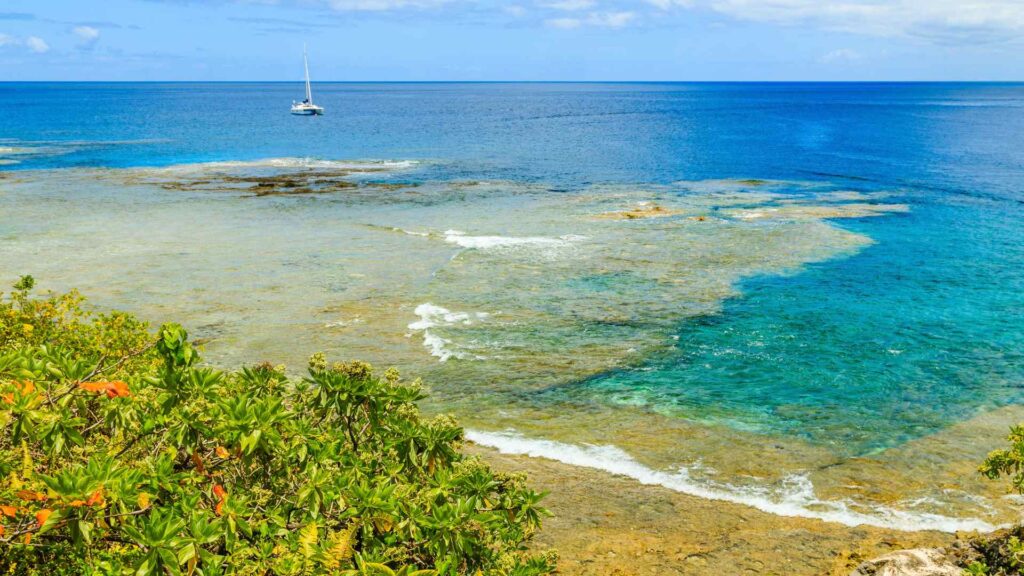
Alofi Bay has no sheltered cruise harbor, so ships anchor offshore and use tenders at Alofi Wharf. The exact small-boat and crane-assisted landing procedure is set by the ship and port team for the conditions that day.
Here’s the honest part: even a moderate swell can make that operation unsafe to run. Niue is one of the Pacific ports most likely to be dropped from an itinerary on short notice, sometimes with the call made only that morning.
I’d go in treating any Niue stop as speculative until the tenders are actually running, and I’d have a backup plan in mind for a sea day instead.
If you want a sense of how this compares, I keep a running rundown of the world’s trickiest and easiest tender ports, and Niue sits firmly at the demanding end. A calm-weather landing here is smooth enough, but the margin between running and canceled is thinner than almost anywhere else.
Getting around
Niue has no public transport, so once you’re off the wharf you’re relying on wheels, feet, or a pre-booked tour. A single road, about 40 miles, circles the island and is mostly sealed, with narrow side roads and no traffic lights anywhere on Niue.
A rental car is practical only if it is reserved before arrival. Niue Tourism says visitors need a local driver license from Police, with a current home license and fee, so confirm office hours and whether the rental company can complete the process on a cruise call.
Driving is on the left, same as New Zealand. Taxis exist but are few and not metered, so it’s worth arranging one in advance through your accommodation if you’re not renting.
Alofi’s own core is compact enough to walk easily, but anywhere beyond it really does call for a vehicle. Given Niue’s limited medical facilities, New Zealand’s official travel advice for Niue is worth a quick read before you go, particularly the note on travel insurance that covers medical evacuation.
Build the day around tides and transport
Confirm the first and last tender, landing procedure, rental pickup, fuel terms, and local-license process before committing to an island loop. No public transit means a missed rental or tour can reduce the day to Alofi on foot.
A practical full-call route pairs Matapa Chasm or Talava Arches with one tide-dependent pool, then Alofi on the return. Togo Chasm is a longer, rougher walk and belongs on a full, on-time call with dry conditions and sturdy shoes.
Best for swimmers: choose one pool after checking tide, surge, and local advice; limestone entries are sharp and rarely lifeguarded.
Best for photographers: take the arches or coastal viewpoints, accepting that access tracks are uneven and slippery after rain.
Best low-effort plan: stay near Alofi, arrange a short vehicle loop, and carry water, cash, and offline directions.
The stops I would actually spend time on
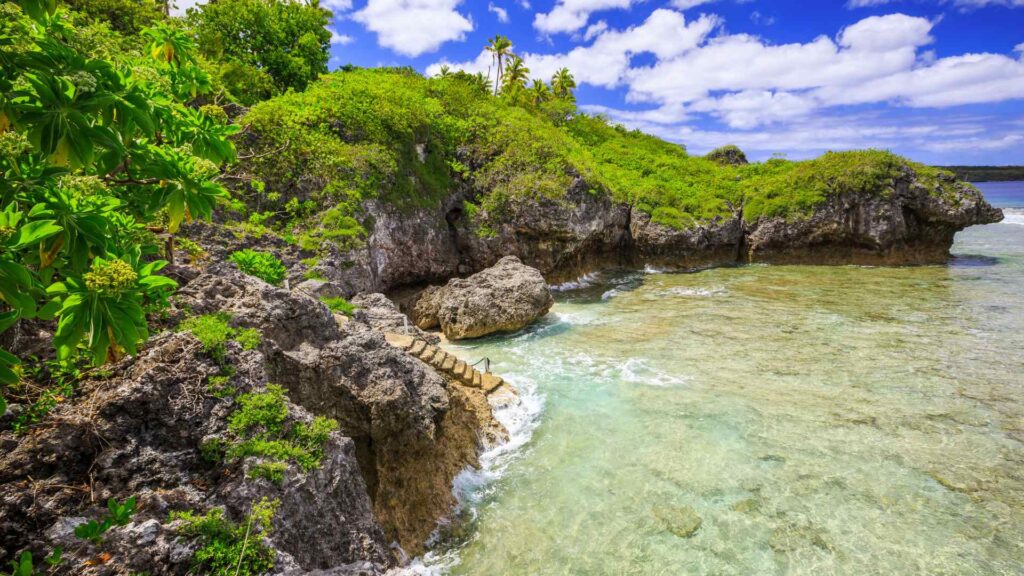
Talava Arches is a dramatic set of sea arches and rock formations, reached by a walk through caves and coastal forest that branches off the Matapa Chasm track. Long before it was a hiking destination, this stretch of coast served a very practical purpose for Niueans.
Fun fact: according to Niue’s tourism board, the site was traditionally used as a lookout point to watch for approaching canoes and foreign vessels.
Avaiki Cave carries real weight, because local tradition holds that this is where Niue’s first canoe landed, making it one of the island’s most historically significant sites rather than just a pretty swimming hole. There’s a turquoise pool inside the main cave and a second swimming cave a short walk north, best visited around low tide.
Fun fact: Niue’s tourism board lists Avaiki as both the island’s founding landing site and one of its best spots to watch the sunset.
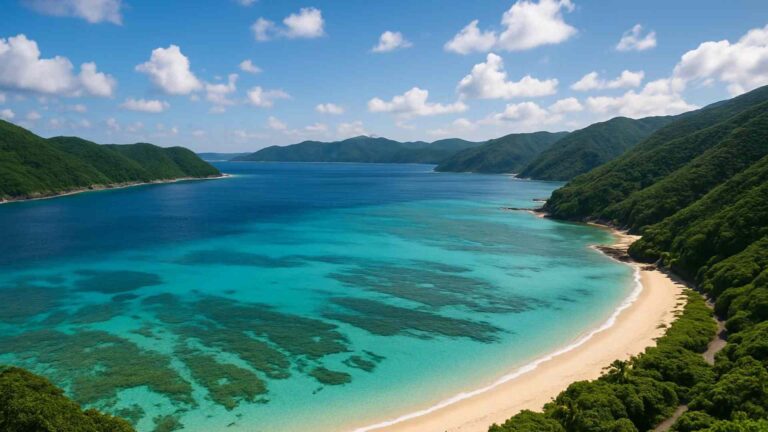
The snorkeling is Niue’s signature draw, and for good reason: the island has no rivers, so there’s no silt or freshwater runoff clouding the ocean. Visibility is consistently among the best in the world, which is why divers travel a long way specifically for it.
You don’t need a boat or a tank to appreciate it, either, because wading in from one of the coastal pools on a calm day makes the difference obvious immediately.
Matapa Chasm was once the bathing place of Niuean royalty, a sheltered cleft of deep, cool water framed by high rock walls. It sits at the end of a short forest track and stays calm even when the open coast is churning, which makes it one of the more reliable swims on a swelly day.
The Limu Pools are a cluster of clear, interconnected rock pools on the northwest coast, shallow and sheltered enough to be a favorite with families and first-time snorkelers. Little fish drift through the mix of fresh and salt water, and on a calm day the visibility is almost comically good.
Togo Chasm is the island’s most cinematic walk, crossing a jagged field of raised coral pinnacles before a wooden ladder drops you into a hidden sandy oasis ringed by palms. It’s a longer, more demanding hike than the others, so I’d only aim for it with a full, on-time port day and decent shoes.
Katuali sea snakes are venomous sea kraits that may be seen in Niue’s clear coastal water. Do not touch, corner, or follow one for a photo; give it room to leave.
I’d still give any sea snake plenty of space and let it move on its own terms rather than angling for a closer look.
Alofi town is the capital in name only, a low and unhurried strip of government buildings, a market, a few cafes, and the wharf, all within a short walk of each other. It’s less a sightseeing stop than a place to feel how small and self-contained this whole country really is.
Connectivity note: Niue was an early national wireless-internet pioneer, but that history is not a promise of free or reliable visitor Wi-Fi today. Download maps and confirmations before sailing.
How I would plan the day
I’d build the day around whichever natural site a tour operator or a rental car can realistically reach and return from in the time available, since a Niue call can already run short if tendering starts late.
Mornings suit the chasms and arches best, before the heat builds and while the light is good for photos, and midday is a solid window for a swim at one of the calmer pools. I’d save the walk through Alofi town for whenever there’s a gap, since it doesn’t take long and doesn’t need to be scheduled precisely.
Whatever the plan, build in a real buffer before the last tender. With an open-water landing like this one, the crew would rather load an early boat than a late one if conditions start to shift.
A realistic word on accessibility
Alofi is a difficult call for many travelers with limited mobility because tender transfer depends on the ship, mobility device, and sea conditions. Ask the accessibility desk before sailing whether the device can be carried and whether the landing requires steps or a moving transfer.
Beyond the wharf, Alofi’s core streets are flat and walkable, but almost every natural attraction, whether the chasms, the arches, or the caves, involves uneven coral limestone, ladders, ropes, or narrow rock stairways, with essentially no accessible alternate route.
New Zealand’s own travel guidance flags Niue’s limited medical facilities and recommends insurance covering medical evacuation, which says a lot about the general level of infrastructure to expect. If mobility is a significant concern, staying around Alofi town itself, rather than attempting the chasms or caves, is the realistic plan.
When to go, and the weather
Niue sits within the cyclone belt, so the dry season from roughly May to October is both the more comfortable time to visit and the safer window for cruise calls, with steadier trade winds and a lower chance of the swell that cancels tenders. November through April is Niue’s wetter, cyclone-risk season, when heavier rain and storm activity make itinerary changes more likely.
July through October also overlaps with whale season, when humpbacks pass close enough to the island to be visible from shore, a genuine bonus if your call lines up with it.
Whatever the month, this is a stop where I’d check the ship’s daily program the morning of and keep expectations flexible rather than fixed.
Quick answers
Do cruise ships dock in Niue, or is it a tender port?
Cruise ships anchor offshore and use Alofi Wharf for the tender landing; the wharf serves small craft, not an alongside cruise ship.
How often do tender calls to Niue get canceled?
Often enough that it’s worth expecting; because Alofi Bay has no shelter from swell, cruise lines sometimes cancel or skip the call on short notice when conditions aren’t safe for tendering, making it one of the more genuinely weather-dependent stops in the Pacific.
What currency does Niue use?
The New Zealand dollar (NZD); card acceptance is limited outside a few larger businesses, so it’s worth carrying cash.
Do I need a car to see Niue’s best sites?
Mostly, yes; alofi town is walkable, but the chasms, arches, and caves are spread around the island’s single ring road, so a rental car (with the required local driving permit) or a pre-booked tour is the practical way to reach them on a short call.
Do I need a passport or visa for Niue?
Requirements depend on nationality, and a cruise call does not erase them; Niue Tourism lists visa-waiver nationalities, passport validity, permits on arrival, and declaration rules, so check your passport and follow the ship’s document instructions.
Which other South Pacific ports pair well with Niue?
Niue often shares an itinerary with the Cook Islands, so it’s worth reading up on Avarua on Rarotonga and the lagoon-fringed Aitutaki as well; both are also tender calls, which makes a mixed Cook Islands and Niue voyage a real exercise in flexible expectations.
If Niue leaves you wanting more of the wider region, most itineraries that call here also connect through New Zealand’s cruise ports, a useful contrast given that Niue runs on New Zealand’s currency and political ties but has none of the polish or infrastructure of an Auckland or Wellington call. That gap is really the whole appeal, because Niue is what a South Pacific stop looks like before it’s been built up for cruise traffic, swell permitting.
How this guide was researched: Unless a first-hand visit is explicitly identified above, this guide is based on independent research using official port, tourism, transit, government, and attraction sources where available. Logistics and time-sensitive details were reviewed in September 2026; see our Editorial Policy.