Cochin Cruise Port: Kochi Terminals, Fort Kochi and Backwaters
Cochin and Kochi are two names for the same Indian port city, and a cruise day here can move from a modern terminal to centuries-old waterfront neighborhoods in less than an hour. The challenge is not finding something interesting, but choosing between Fort Kochi, Mattancherry, and Kerala’s backwaters without losing control of the return.
Cochin Port operates two dedicated cruise terminals on Willingdon Island, and your exact berth shapes the first and last part of the day. Confirm Sagarika or Samudrika on the ship’s daily program before matching any map, driver, or Water Metro plan to your call.
Cochin cruise port quick facts
- City names: Cochin and Kochi refer to the same destination
- Cruise terminals: Sagarika at Ernakulam Wharf and Samudrika at BTP
- Port area: Willingdon Island
- Top heritage areas: Fort Kochi and Mattancherry
- Top scenery excursion: Kerala backwaters
- Useful transit: Kochi Water Metro, with route and terminal checks required
- Planning priority: Choose one main anchor and protect time for traffic and port security
My quick take
For a first call, I would choose Fort Kochi and Mattancherry as one connected heritage day. Pick the backwaters instead if scenery matters more than architecture and you are comfortable spending more of the call in a vehicle.
I would not try to combine a long backwater cruise, every Fort Kochi landmark, Mattancherry Palace, shopping, and an evening performance. Kochi rewards slow looking, and traffic punishes an overfilled plan.
Cochin or Kochi?
Kochi is the city’s official modern name, while Cochin remains widely used by the port, cruise lines, hotels, and travel websites. You may see “Cochin” on the itinerary and “Kochi” on local transit signs without having changed destinations.
The metropolitan area spreads across islands, peninsulas, and mainland neighborhoods linked by roads and ferries. That geography explains why a short distance on a map can involve a bridge, boat, traffic bottleneck, or secure-port transfer.
The two cruise terminals, clearly explained
The Cochin Port Authority identifies two dedicated international passenger facilities. Sagarika serves Ernakulam Wharf, while Samudrika is at BTP on Willingdon Island.
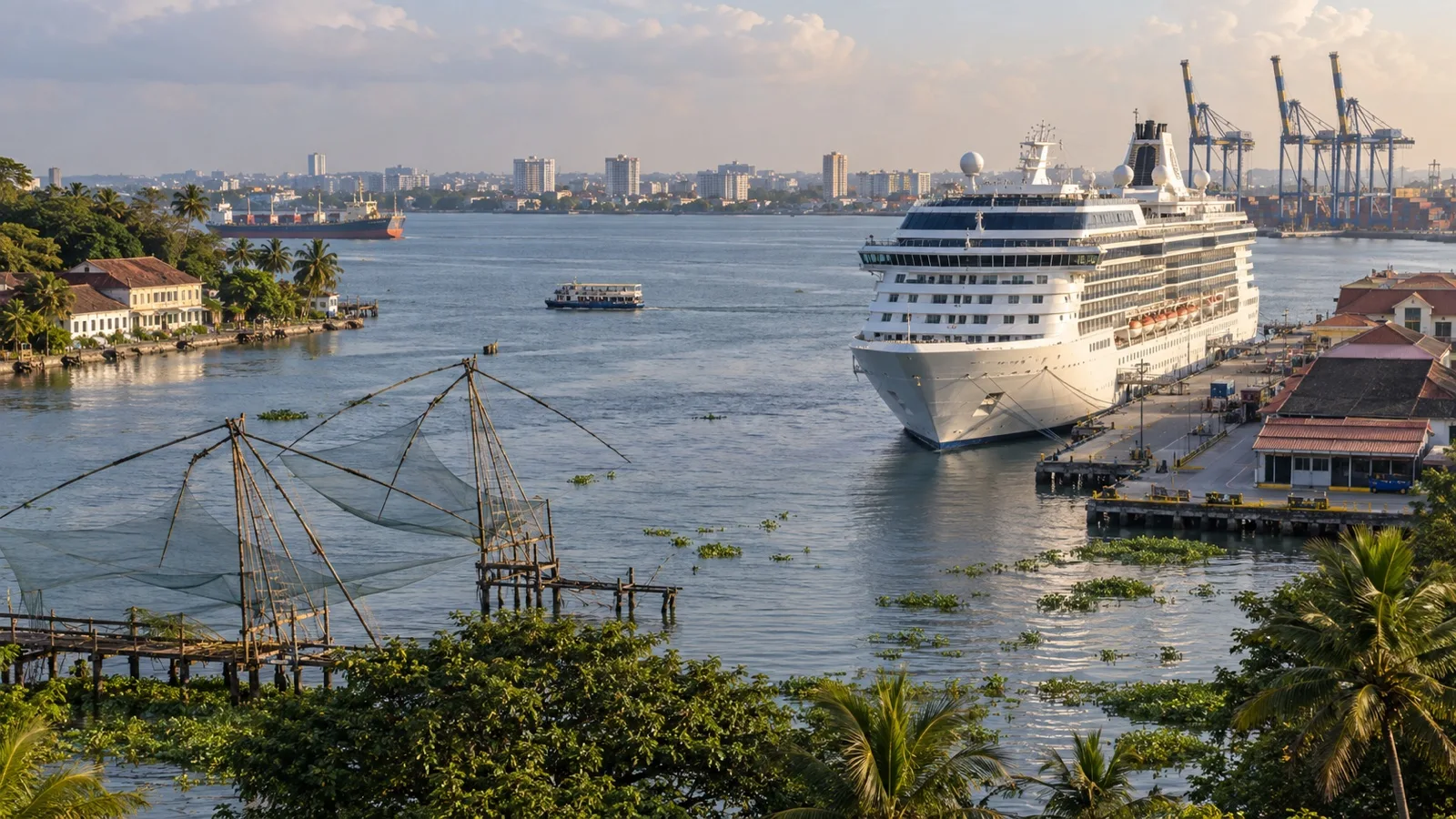
Both terminals bring immigration, customs, and passenger processing under one roof, according to the port authority. That does not make the two locations interchangeable for a driver pickup or independent return.
Use the terminal name printed in the daily program and photograph the meeting-point sign before leaving. If a driver knows only “Cochin cruise terminal,” send the exact terminal and a pin supplied by the ship or port agent.
The authority’s current international forecast lists calls through the 2026 to 2027 financial year, including ships scheduled in late 2026 and early 2027. Treat that official forecast as preliminary and still verify the exact date with your cruise line.
What happens between gangway and city
Cochin is an alongside port for the calls handled at its cruise berths, so passengers normally walk down a gangway rather than take a tender. Immigration, customs, security, vehicle staging, and the distance across the port estate still consume time.
Do not assume you can stroll from the gangway to Fort Kochi. The port is on Willingdon Island, and most visitors need a cruise-line transfer, taxi, auto-rickshaw, tour vehicle, or a carefully planned link to public water transport.
Vehicle access and pickup zones can change with the berth. Ask where independent taxis meet, whether a shuttle is running, and how long the terminal reentry process usually takes on that call.
The Water Metro is useful, with one caveat
Kochi Water Metro is a public urban ferry network, not a dedicated cruise transfer. Its official terminal list includes Willingdon Island, Fort Kochi, and Mattancherry, which makes it attractive for travelers who enjoy local transit.
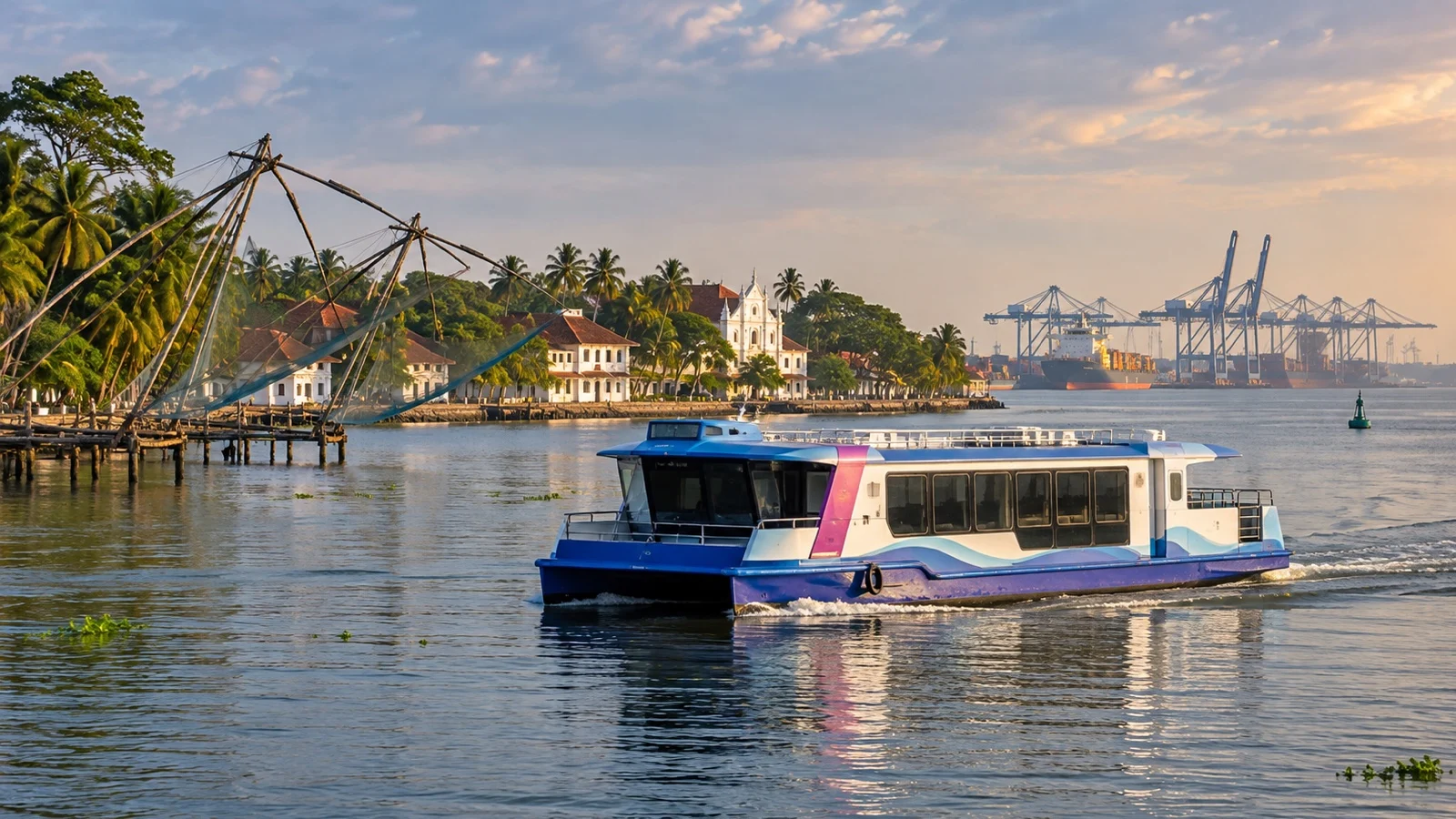
The caveat is the first-mile connection from your cruise terminal to the correct Water Metro terminal. Port roads, secure gates, heat, luggage rules, and schedule gaps can turn an elegant map route into a poor time-saving plan.
Check the live Kochi Water Metro schedule on the morning of the call and ask local port staff how to reach the departure point. Keep enough cashless or ticketing flexibility for the system in use that day.
Use public water transport for experience as well as movement, not because it appears guaranteed to beat traffic. A canceled or missed boat can cost more time than a prearranged vehicle.
Build your day around one anchor
Kochi offers three natural anchors for a port day: Fort Kochi, Mattancherry, or a backwater excursion. Fort Kochi and Mattancherry combine well, while the backwaters deserve most of the schedule rather than being squeezed between city stops.
If your call is around six hours, choose heritage or backwaters, not both. Our guide to planning a six-hour port call explains how one headline experience and one flexible extra protects the day.
Fort Kochi on foot
Kerala Tourism describes Fort Kochi as a coastal neighborhood shaped by Portuguese, Dutch, and British influences. Its low-rise streets, churches, heritage buildings, cafes, art spaces, and waterfront make it the easiest area to explore independently once you arrive.
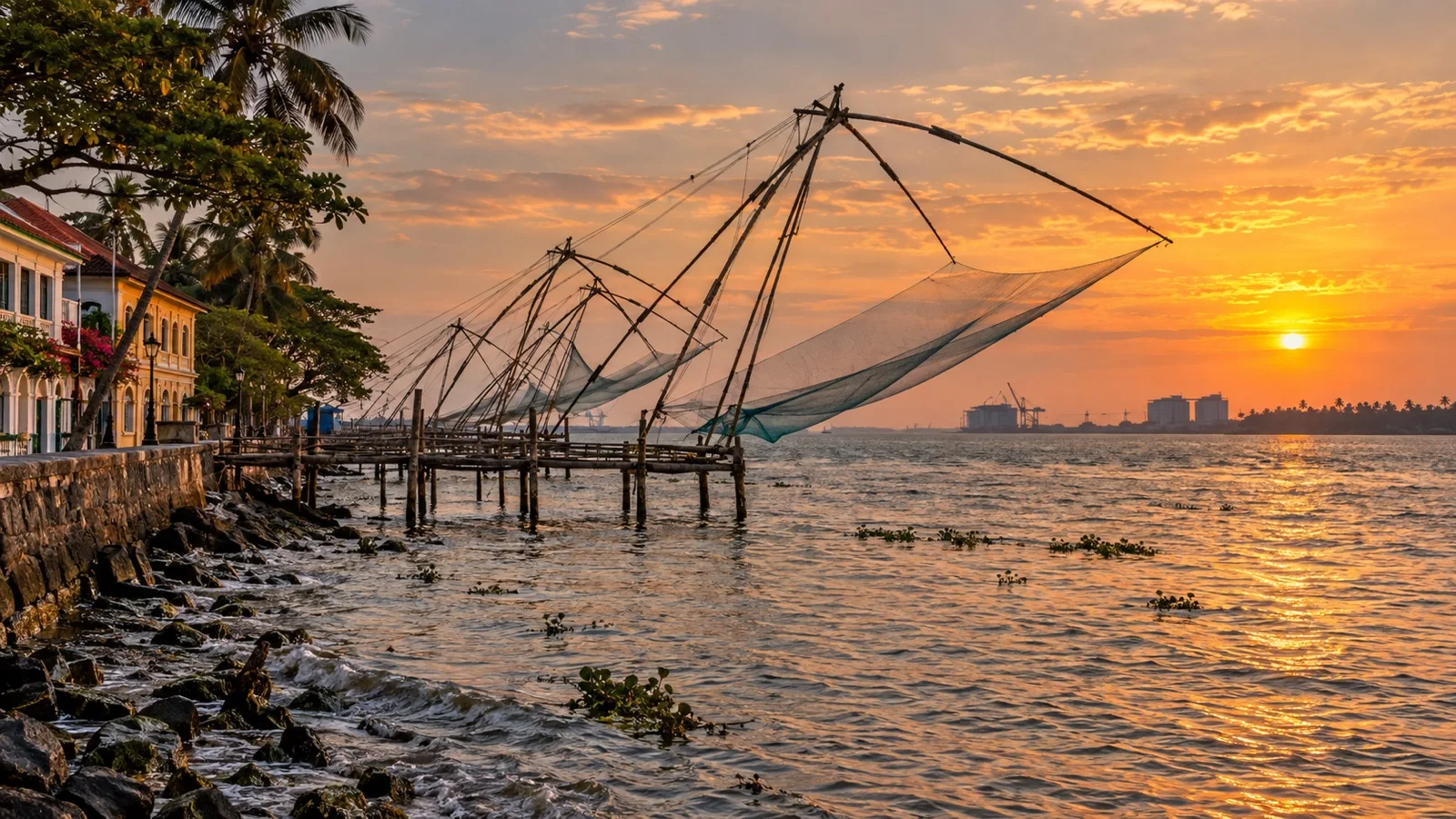
Begin near the Chinese fishing nets if conditions and local activity allow a clear view. These shore-operated structures are working symbols of the waterfront, so keep out of working space and ask before photographing individuals closely.
St Francis Church adds layers of European and local history, while Santa Cruz Basilica offers a different architectural experience. Check worship schedules, dress modestly, and step aside during services rather than treating an active church as a museum.
The pleasure of Fort Kochi is in the connections between major sights. Leave room for shaded streets, old facades, spice aromas, small galleries, and a meal instead of racing between pins.
Mattancherry and centuries of trade
Mattancherry sits beside Fort Kochi but has its own density of palace history, religious heritage, wholesale trade, spice commerce, and neighborhood life. A short auto-rickshaw or planned walk can connect the two, depending on heat and traffic.
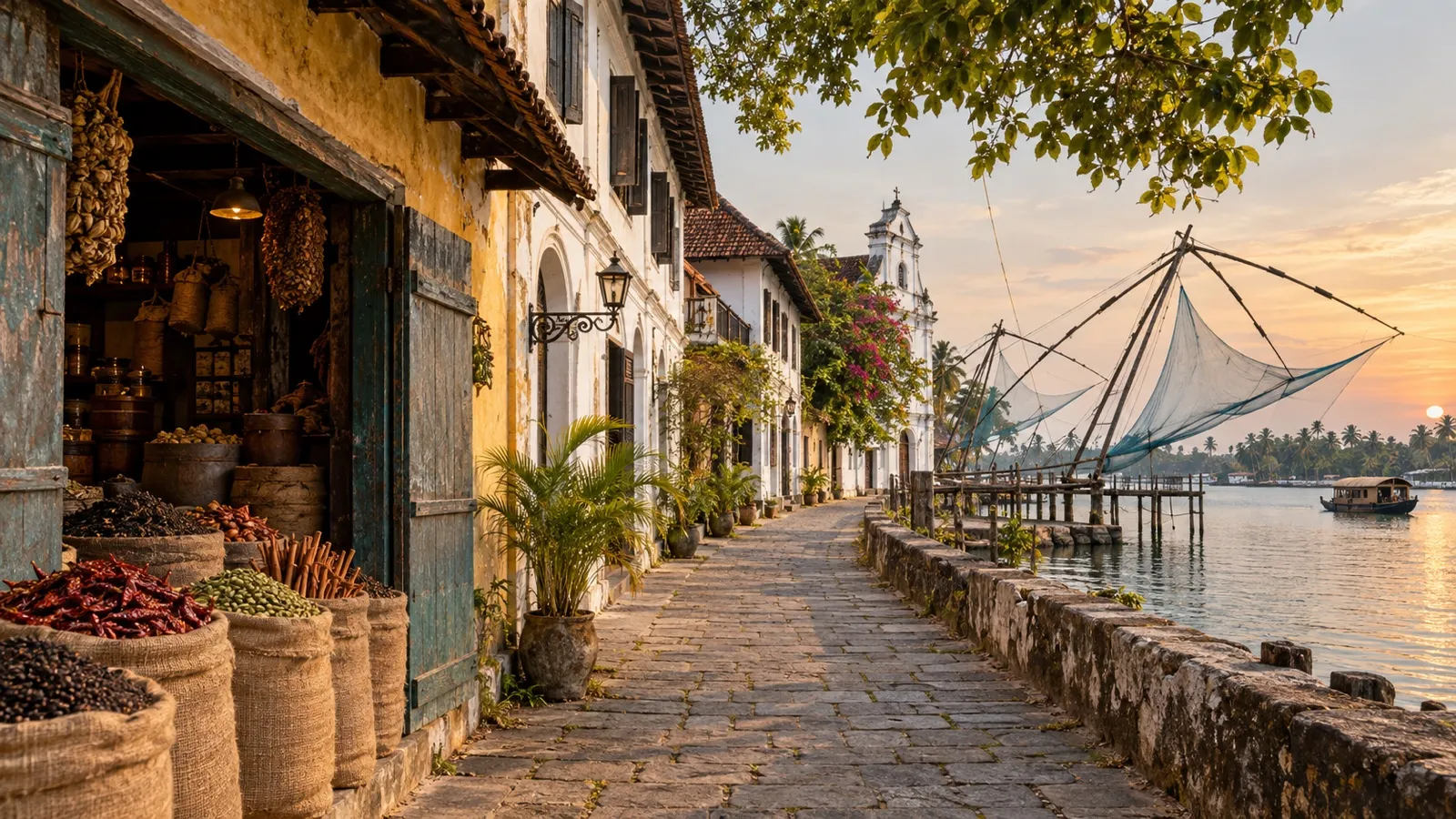
Mattancherry Palace, often called the Dutch Palace, was built by the Portuguese and later renovated by the Dutch. Kerala Tourism highlights its traditional architecture, royal artifacts, and Ramayana murals, and currently lists Friday as the weekly closing day.
Verify the current Mattancherry Palace hours before departure because holidays and conservation work can change access. The palace rewards an unhurried visit, particularly if you care about mural painting and the history of Kochi’s rulers.
Nearby Jew Town and the Paradesi Synagogue add another chapter to Kochi’s multicultural story. Respect security checks, dress expectations, prayer schedules, and any photography restrictions posted at the entrance.
A backwater excursion
Kerala’s backwaters offer palms, canals, villages, farms, and slow-moving boat traffic beyond the urban harbor. Cruise excursions may use different embarkation points and styles of vessel, so “backwaters” is not one standardized trip.
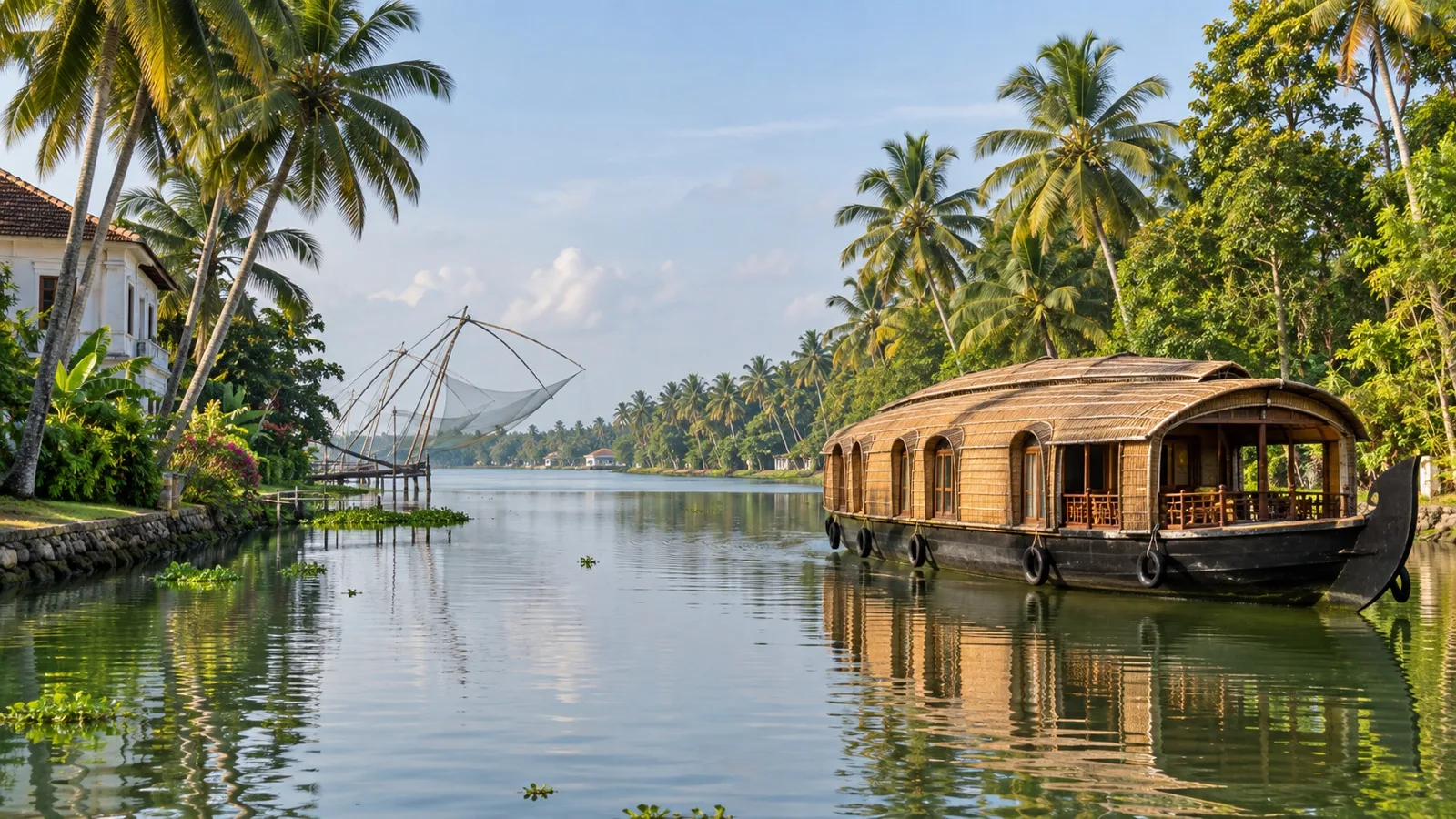
Ask where the boat boards, how long the road transfer takes, whether the cruise portion is on a large houseboat or smaller craft, and what happens if traffic delays the return. A shorter canal experience close to Kochi can be wiser than a famous but distant route during a limited call.
This is the day I am most likely to book through the ship or a highly experienced local operator. The value lies in coordinated transport and return timing, not just the boat ride.
If scenery is your priority, give the backwaters the center of the schedule and treat any Fort Kochi stop as a bonus. Trying to force a full heritage loop around it creates a day spent watching traffic.
Three realistic port-day plans
The first-timer’s heritage loop
Take a confirmed transfer to Mattancherry early, visit the palace and nearby heritage area, then continue to Fort Kochi. Finish with the waterfront and return by prearranged taxi or a verified Water Metro connection.
The slower sensory day
Stay in Fort Kochi for churches, art, architecture, a relaxed Kerala meal, and waterfront time. This plan minimizes vehicle uncertainty and gives you the easiest ability to shorten the day.
The scenery-first day
Prebook a backwater trip with transport tied to your ship’s schedule. Add one brief city stop only if the operator can preserve a strong terminal return buffer.
How early should you turn back?
Kochi traffic can change quickly around bridges, junctions, construction, and port approaches. For an independent trip outside Fort Kochi or Mattancherry, I would aim to reach Willingdon Island at least 90 minutes before all aboard.
Add more time for a distant backwater embarkation point or a Water Metro connection that requires another transfer. The ship’s published deadline always overrides a general planning margin.
Photograph the terminal name and gate instructions before leaving, then send them to your driver. Our guide to how early to return to a cruise ship provides a fuller way to build the clock backward.
India visa and immigration basics
India’s entry rules depend on nationality, passport, visa type, and itinerary. Cruise passengers should use the official Indian eVisa portal and instructions from their cruise line rather than a commercial visa website.
An eVisa approval, where available, is not simply a payment receipt. Check that your document is granted, valid for the intended arrival, linked to the correct passport, and accepted at the sea port used by your itinerary.
Carry printed and digital copies of required documents, and allow time for the terminal process. A previous Indian port call does not guarantee that every later clearance step will be skipped.
Accessibility and sensory considerations
An alongside terminal avoids tender transfers, but gangway slope can vary with tide and berth. Ask the cruise line about step-free transport from the terminal, wheelchair space in vehicles, and the exact meeting point for accessible tours.
Fort Kochi and Mattancherry include broken pavement, curbs, traffic, heat, crowds, and historic buildings without modern access. A car or auto-rickshaw can reduce distance but may still require a high step or transfer.
For a lower-strain day, choose an air-conditioned vehicle, a short waterfront stop, one accessible attraction confirmed in advance, and a generous rest break. Our guide to cruise port activities for limited mobility can help shape the questions.
Weather and what to wear
Kochi is tropical, with heat and humidity that can feel intense even during a short walk. Monsoon rain and sudden showers may affect streets, boat schedules, and transfer time.
Wear breathable clothing, modest coverage for religious sites, and closed shoes with grip. Carry water, sunscreen, insect repellent, and a compact rain layer rather than a large umbrella that becomes awkward in crowds.
Protect your phone and documents from downpours, especially if you plan to use ferries. Keep an indoor attraction or covered meal stop ready when weather interrupts a walking route.
Food, money, and sensible safety
Kochi is a wonderful place to try Kerala flavors, seafood, vegetarian dishes, appam, and local spices. Choose a busy, reputable restaurant, ask about dietary needs clearly, and drink sealed or reliably filtered water.
Carry some Indian rupees for small purchases, ferry tickets, or vendors that do not accept your card. Use a legitimate ATM or exchange source and avoid displaying a large amount of cash.
Agree on taxi or auto-rickshaw terms before departing and confirm whether the quote is per person, per vehicle, or per hour. Keep valuables secure in traffic and crowded heritage streets, and use the official emergency contacts supplied by the ship if a problem develops.
Frequently asked questions
Are Cochin and Kochi different ports?
No, both names refer to the same city and port. Kochi is the official city name, while Cochin remains common in cruise and port usage.
Where do cruise ships dock?
Cochin Port identifies Sagarika at Ernakulam Wharf and Samudrika at BTP as its two dedicated cruise terminals. Confirm your exact terminal because pickup and return directions differ.
Can I walk from the terminal to Fort Kochi?
It is not a practical casual walk from the secure port estate. Use an approved taxi, auto-rickshaw, shuttle, tour, or verified connection to the Water Metro.
Is the Water Metro direct to Fort Kochi?
The network includes Willingdon Island and Fort Kochi terminals, but the useful route depends on the live schedule and your first-mile connection from the cruise terminal. Check both parts before leaving the ship.
Can I see Fort Kochi and the backwaters?
A long call and well-coordinated excursion may allow a brief combination, but most travelers should choose one as the main experience. Traffic and port processing make an ambitious independent plan risky.
The bottom line
Remember the port in three parts: verify Sagarika or Samudrika, choose heritage or backwaters, and protect the Willingdon Island return. That simple structure leaves enough room to enjoy Kochi instead of spending the day calculating what you have missed.
We verify port, transit, and destination details through official sources under our editorial policy. Your cruise line, Cochin Port Authority, and same-day immigration instructions remain the final authorities for your call.