Malé Maldives Cruise Port: Tender, City and Resort Days
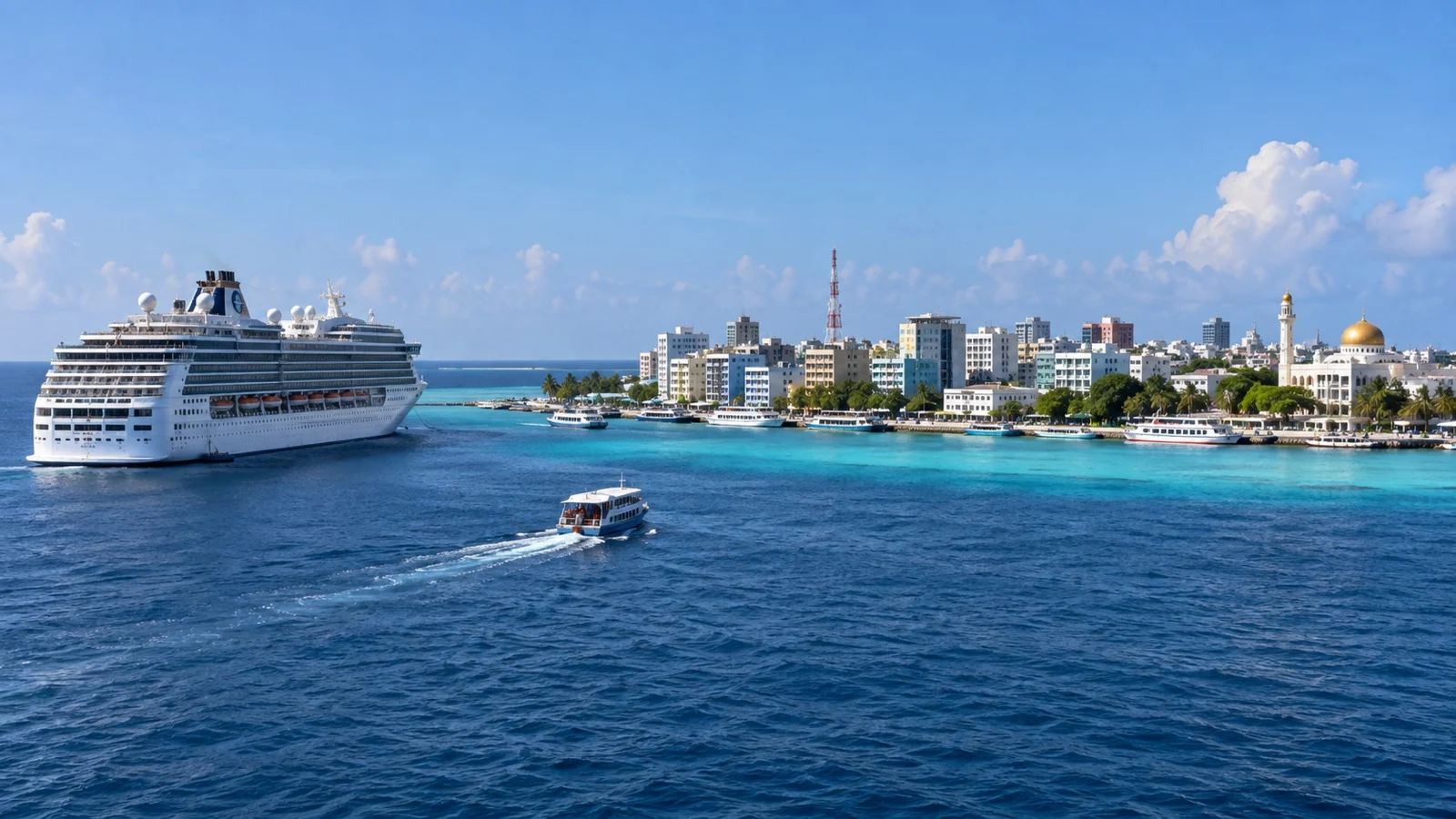
Malé is the Maldives without the resort filter: dense, energetic, deeply local, and ringed by water busy with ferries, fishing craft, speedboats, and tenders. A good cruise day starts by confirming which island and jetty your ship is actually using.
I would then choose either a capital day or one properly contracted marine escape. Trying to combine city, resort, reef, and several boat connections is how a beautiful lagoon becomes a very expensive stopwatch.
Quick Facts
- Arrival: Large ocean ships generally anchor in the Malé area and transfer passengers by tender or local boat.
- Landing: The assigned island and jetty can vary, so use the ship’s daily notice rather than a generic port pin.
- Main city: Malé island is compact, busy, and suitable for a focused guided walk after a confirmed central landing.
- Resort day: Book a named property, confirmed day access, and round-trip boat transportation in advance.
- Currency: Maldivian rufiyaa, with cards and US dollars common in many visitor-facing businesses.
- Language: Dhivehi is national, while English is widely used in tourism.
- Time: Maldives Time, UTC plus 5.
- Main risk: Every extra local boat creates another weather, timing, and boarding dependency before the ship tender.
Large ships anchor, but the landing is call-specific
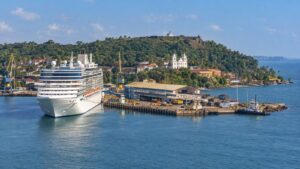
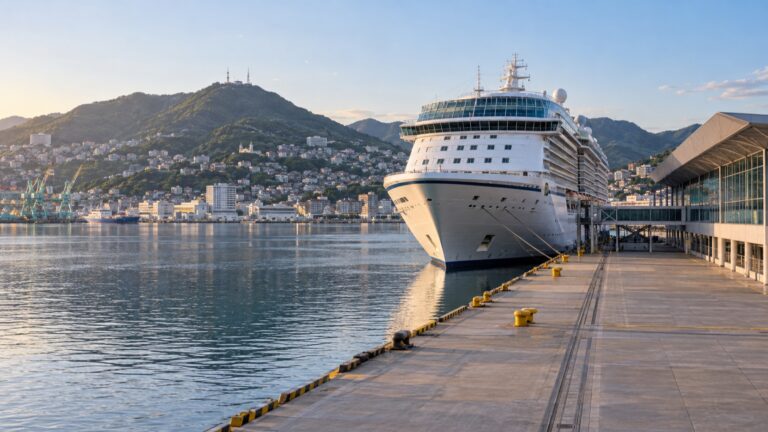
Malé Commercial Harbour is the country’s principal cargo gateway on the northwestern side of Malé island. That working port does not function as a universal berth for large cruise ships, which generally remain at anchor and move guests ashore by smaller craft.
The Maldives Ports Limited page provides the official commercial-harbor context, but it does not tell an individual passenger where the day’s tender will land. Your vessel can assign a central Malé waterfront point, a Hulhumalé arrangement, or another operational jetty.
Write down the island name, jetty name, first tender procedure, final tender time, and emergency contact before leaving the cabin. In a capital built across separate islands, saying “meet me at the port” is not a transportation plan.
A published itinerary proves that the line intends to call, not that wind, swell, clearance, and local operations will permit the same landing every time. Keep independently booked activities refundable and stay ready for the captain to alter the operation.
Tender time belongs inside the day
The scheduled arrival is not your step-ashore time. Clearance, boat preparation, sea conditions, ticket groups, and safe loading all reduce the usable hours on land.
Ask whether a ship excursion includes tender priority and where the group meets aboard. Independent guests should collect the correct ticket and avoid promising a local operator an unrealistically early departure.
The return is another marine transfer with its own queue, loading, and weather exposure. Plan to reach the official landing for an earlier boat than the final one rather than treating the cutoff as a target.
Malé and Hulhumalé create different itineraries
A landing on Malé island places you inside the dense capital, where markets, parks, mosques, and government landmarks can fit a short route. A Hulhumalé landing begins on a more spacious planned island linked by road toward the airport and Malé.
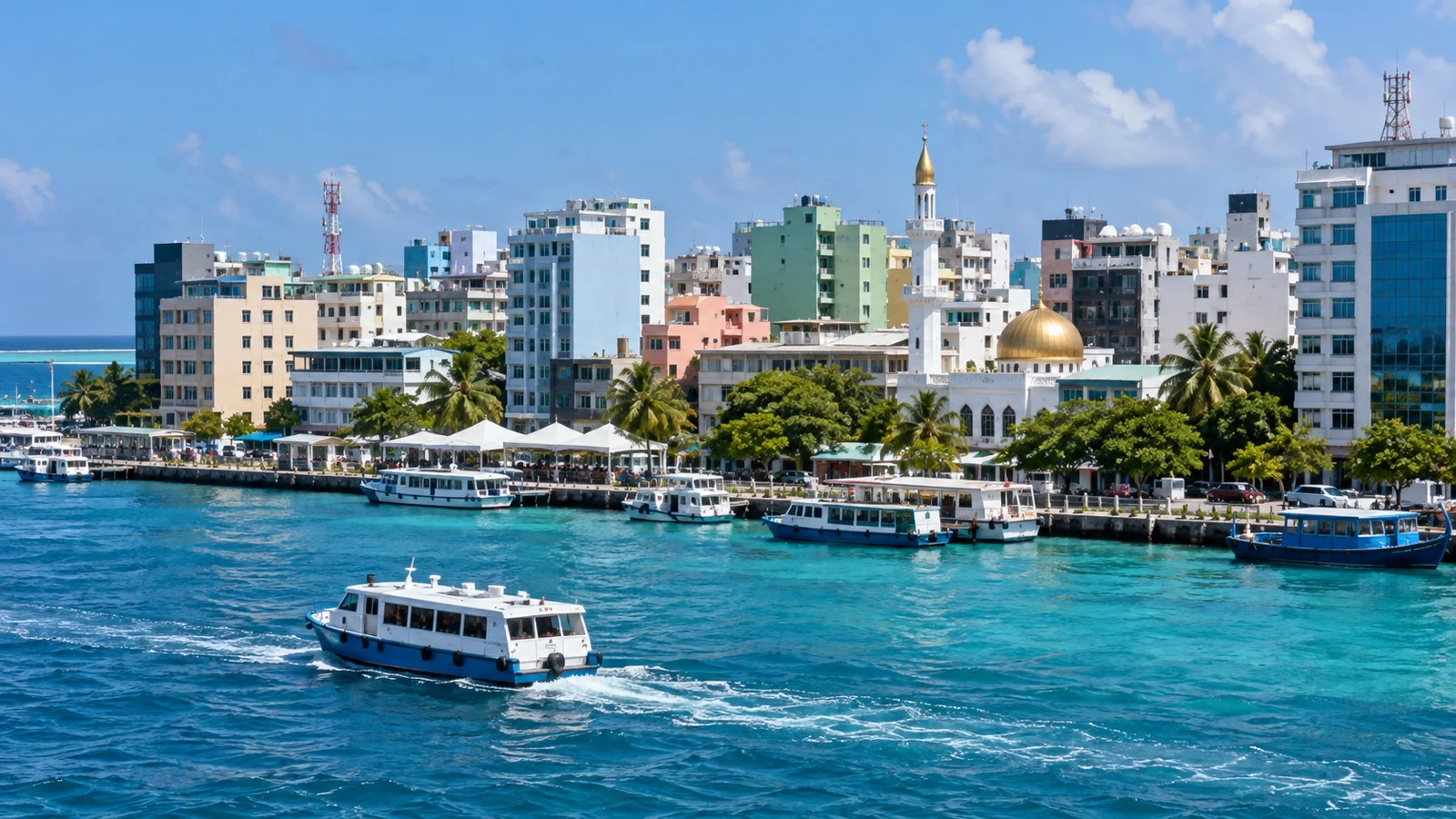
Official Visit Maldives guidance describes Malé as compact and rich in cultural sights, while Hulhumalé has wider roads, parks, cafés, shops, and beaches. It also confirms the road link among Hulhumalé, the airport island, and the capital.
Do not hire a guide until both of you identify the same island and waterfront. Exchange a map pin, jetty name, live phone number, vehicle details when relevant, and the return meeting point.
A capital walk shows the country behind the resorts
Malé is intensely urban, with narrow streets, scooters, crowded crossings, and very little resemblance to an overwater-villa advertisement. That contrast is exactly why the city is worth seeing.
Republic Square and the Islamic Centre provide an easy orientation near the north shore, while Sultan Park gives the center a welcome patch of green. Government buildings and the waterfront reveal how a small island nation organizes daily life in a remarkably compressed space.
Keep the route focused because heat and congestion make even short distances feel slower. A local guide adds more value through context and navigation than through collecting every landmark on a list.
Mosques require permission and timing
The Islamic Centre’s large golden dome is a familiar city landmark, while Hukuru Miskiy is historically important for its coral-stone construction and decoration. Visitor access depends on prayer times, dress, current rules, and permission.
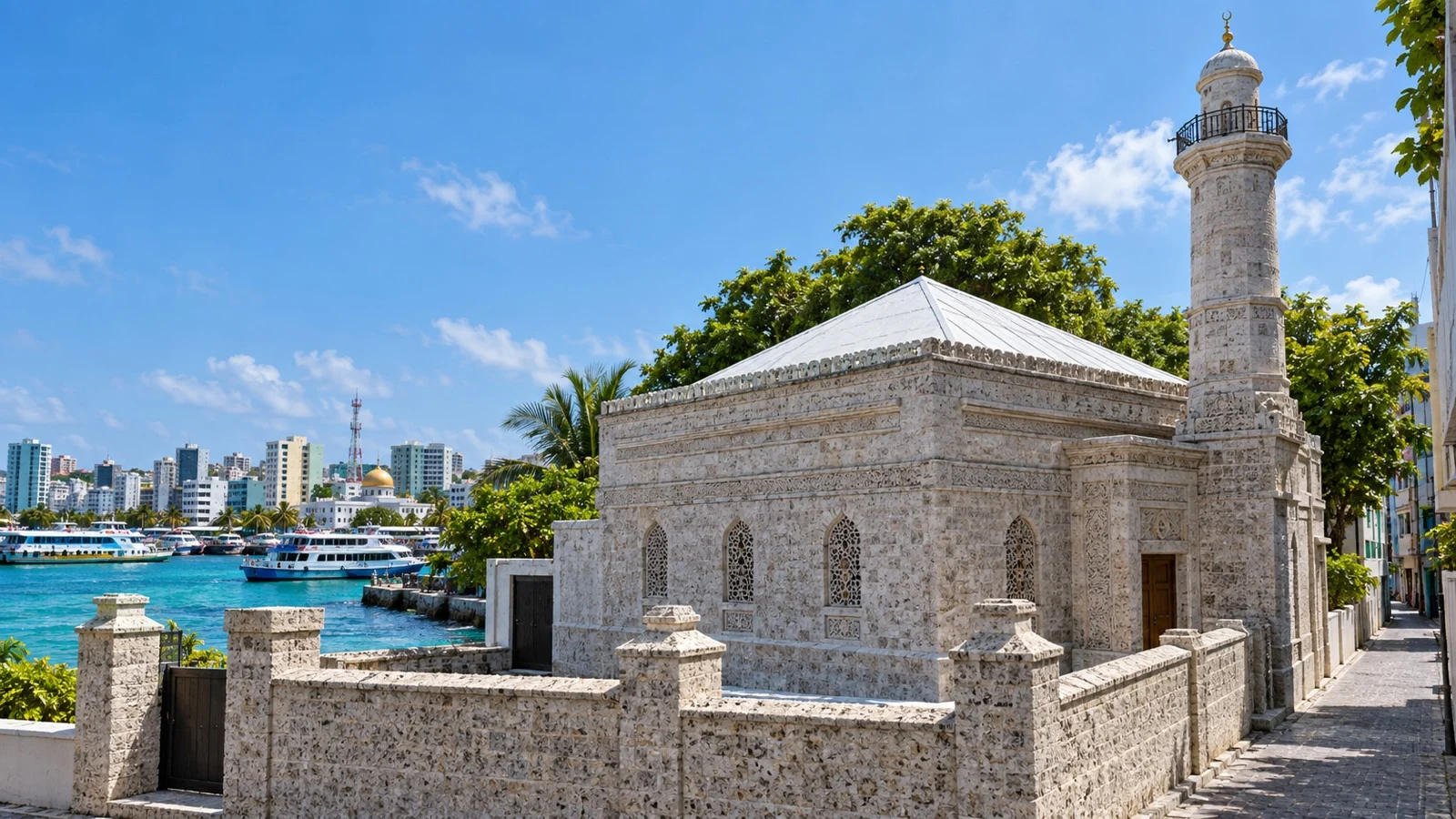
Cover shoulders and knees, remove shoes when instructed, keep voices low, and avoid arriving during prayer unless a guide has confirmed access. An exterior explanation is better than pressing for entry at an inappropriate moment.
The cemetery and surrounding religious spaces deserve the same quiet respect. These are active sacred places rather than decorative stops installed for cruise photography.
Markets work best with a little context
The produce and fish market area explains how food moves through a country with limited land and many inhabited islands. Expect a working environment with wet surfaces, active handling, strong smells, and transactions that take priority over visitors.
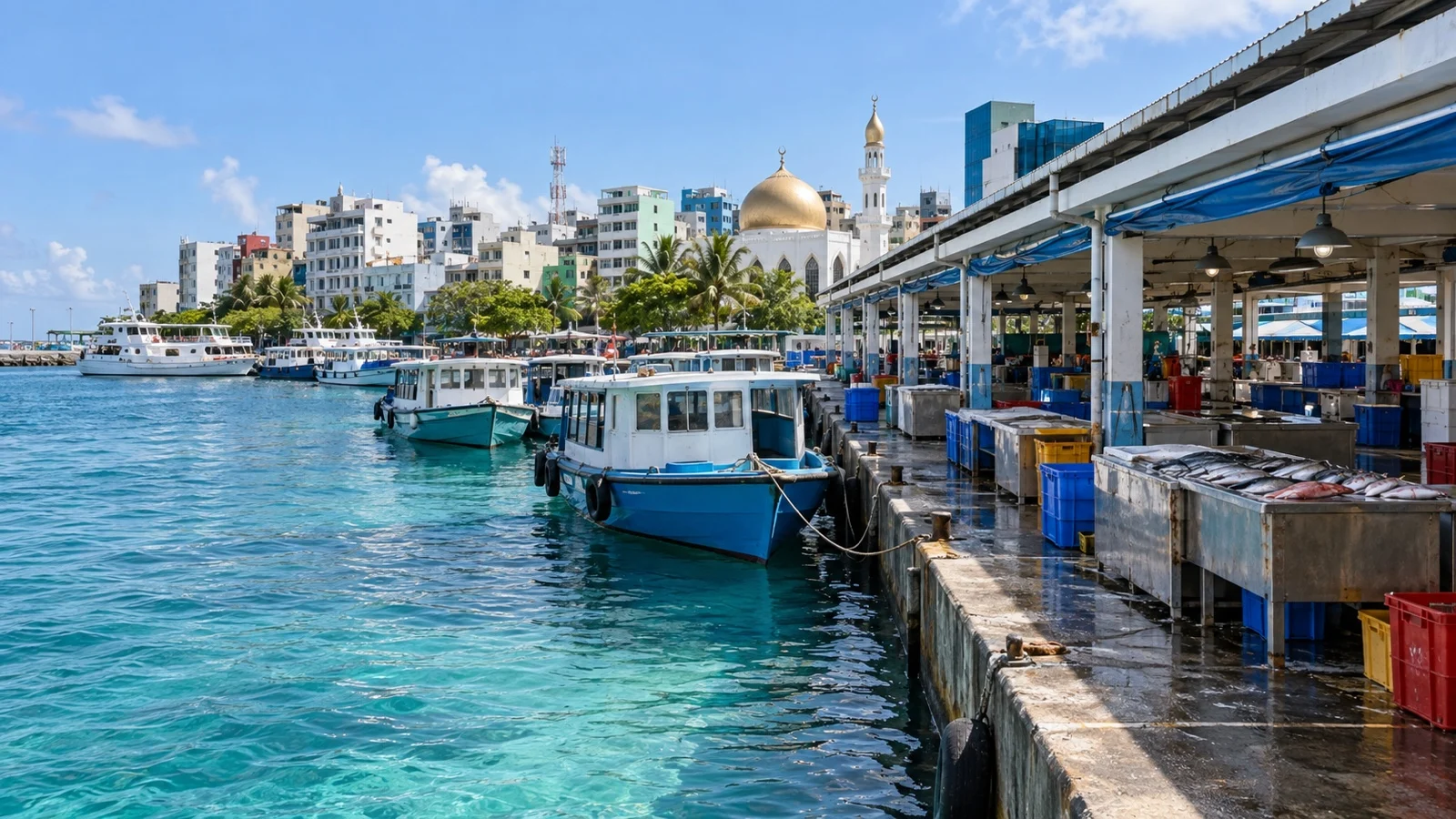
Wear closed shoes, stay out of work areas, and ask before photographing a vendor or fisher. A guide can explain tuna, coconuts, dried products, and supply chains without turning the market into a staged performance.
Souvenir shops mix locally associated crafts with imported goods, so ask where an item was made. Do not buy coral, shells, turtle products, or other wildlife material that may be protected or restricted.
A resort day starts with written permission
A resort pass can deliver the beach, pool, and lagoon experience many passengers picture when they hear Maldives. It only works when a named property confirms day access and coordinates transportation from a jetty compatible with the cruise landing.
Never arrive at a public dock expecting an island resort to accept unannounced visitors. Ask who operates the boat, where it departs, how guests identify it, and what happens if the ship tender begins late.
The written confirmation should list meals, drinks, towels, snorkeling gear, changing facilities, room use if any, taxes, service charges, and cancellation terms. Avoid fragile package prices in the planning stage because inclusions and charges change more quickly than the lagoon view.
Choose a return boat that reaches the ship’s landing point with a generous buffer before the last tender. A resort transfer is not under the captain’s control unless it is sold and managed by the cruise line.
Local islands and resort islands follow different customs
Malé, Hulhumalé, and other inhabited islands reflect Maldivian public law and social norms. Resort islands operate licensed visitor facilities, including alcohol service where permitted, but that does not make the same rules apply in the capital.
The official tourism page states that alcohol cannot be purchased or brought into the capital or residential islands and recommends modest clothing. It also advises modest swimwear at residential beaches unless a specifically designated tourist beach allows otherwise.
Do not carry alcohol ashore from the ship, and keep shoulders and knees covered in Malé. Public affection should remain discreet, while Friday and Ramadan can alter operating hours and the rhythm of the day.
A reef or sandbank trip is another transport contract
Reefs, sandbanks, turtles, rays, and clear water make a boat excursion irresistible on the right day. Use the cruise line or a reputable licensed operator who records the ship deadline, supplies life jackets, and explains the live sea conditions.
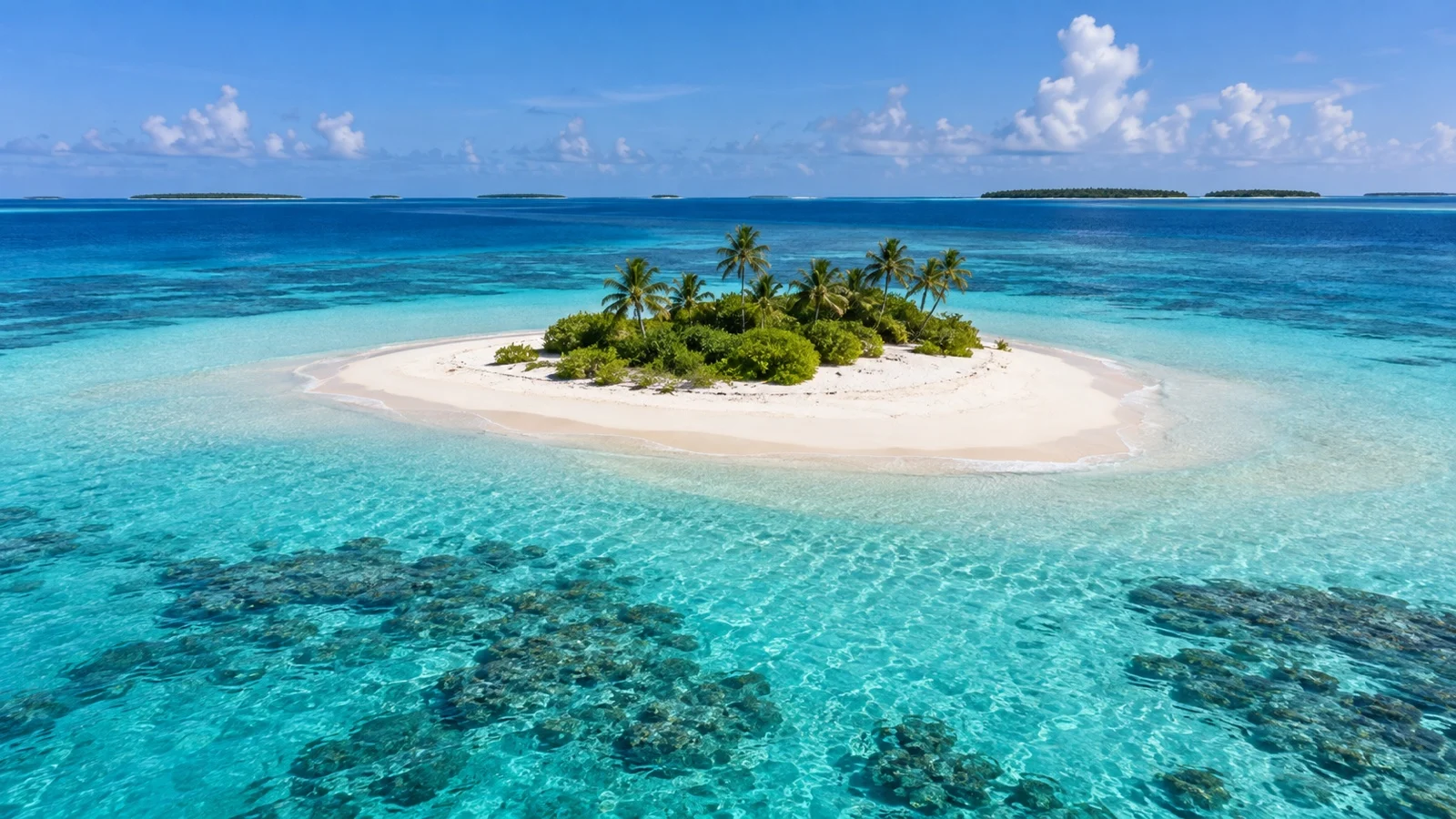
Ask whether the vessel is a speedboat or dhoni, how passengers board, where shade is available, and whether there is a marine toilet. Travelers with limited mobility should request exact step and ladder information rather than accepting the word accessible.
Never stand on coral, touch marine life, feed fish, or chase turtles and rays. Stay with the guide, secure loose items, take every piece of waste back, and leave wildlife enough distance to choose its own direction.
A weather cancellation should trigger a city or Hulhumalé fallback rather than a search for a less cautious boat. Operators who ignore unsafe conditions are not providing better value; they are transferring risk to you.
Public ferries are useful but not cruise insurance
Scheduled ferries connect parts of the capital area and nearby islands, but routes, terminals, crowding, Friday service, and weather all affect reliability. A timetable found before the voyage must be reconfirmed on the day.
The departure pier may not sit beside the cruise tender, and the return service may use a different queue or ticket process. Choose a ferry plan only when another viable return remains after the one you intend to take.
Taxis can help within Malé or between connected islands, though congestion means a short distance is not always a quick ride. Give the driver the exact jetty name and map pin instead of asking for the cruise port.
Current immigration guidance needs attention
The official Maldives Immigration portal currently labels the Traveller Declaration mandatory within 96 hours of arrival or departure. Cruise handling can be sailing-specific, so follow both the official portal and the written instructions from your cruise line.
Do not rely on an old claim that the declaration applies only to air passengers, and do not submit duplicate forms simply because a travel forum says so. If the line handles group clearance, keep its confirmation with your travel documents.
Passport validity, entry permission, onward travel, and other requirements depend on nationality and itinerary. Verify them before sailing and carry only the original identification required for the shore call, with copies stored securely elsewhere.
Accessibility begins before the first boat
Tender boarding can require steps, balance, and movement across a changing gap between vessels. The captain or crew may restrict wheelchair, scooter, or passenger transfers when equipment, staffing, or sea conditions make the process unsafe.
Ask whether you must walk independently, whether a mobility device can remain occupied, and how it is lifted or stored. An approval for the ship tender does not automatically cover a resort speedboat or snorkeling vessel.
Landing jetties may involve ramps, steps, and uneven transitions, while Malé sidewalks can be narrow or obstructed. A shorter guided route with a prearranged vehicle may work better than an ambitious independent circuit.
A resort day adds at least one more marine transfer and unknown surfaces at the destination. Receive written answers about boat boarding, beach access, restrooms, shade, and assistance before paying.
Heat, rain, and sea conditions
Malé is hot, humid, and exposed to strong equatorial sun throughout the year. Carry water, a hat, sun protection, and lightweight modest clothing, then build shaded or indoor pauses into the route.
Rain can arrive hard and fast, but wind and swell matter more to tender safety than the rainfall total. The city may remain open while the captain delays or stops the boat operation.
Keep medication and electronics protected from spray and sudden downpours. A waterproof pouch is more useful than discovering that your phone’s map has developed its own private ocean.
Use the Maldives Meteorological Service and ship announcements for current conditions. A broad seasonal label cannot replace the marine decision made for the anchorage that morning.
Money, language, and phone planning
The Maldivian rufiyaa is the local currency, while many tourism businesses accept cards or US dollars. Carry small spending money and confirm the payment method with an independent operator before departure.
Dhivehi is the national language, and English is widely used in visitor services. Save the operator, ship agent, and emergency contacts offline because a working phone signal is not guaranteed on every boat route.
Avoid using a short call to hunt for a better exchange rate or unfamiliar ATM. The most valuable number on the day is the final tender time, and it does not improve through negotiation.
Return math has an extra layer
A city day needs one transfer back to the ship, while a resort or reef day may require a local boat, a walk or taxi, and then the cruise tender. Every link needs a separate margin.
Tell the resort or marine operator the ship’s cutoff in writing, then set a personal deadline earlier than the final tender. Reach the correct jetty with enough time to survive a queue, identification check, or changed boarding position.
Verify that the afternoon return uses the same landing point announced in the morning. Malé has many working piers, and a generic waterfront description can leave you close enough to see the ship but not close enough to board it.
Three realistic Malé plans
The compact capital day
Take a guided walk through the central sights, market area, a park, and an appropriate mosque exterior, then stop for lunch. This is the most flexible plan after a delayed tender and the best way to understand daily Maldivian life.
The confirmed resort day
Book one named resort with day access and round-trip transport from the correct cruise landing. Choose an early return boat and confirm every inclusion, charge, rule, and cancellation term.
The licensed marine day
Select one reputable reef or sandbank trip with life jackets, shade, clear boarding requirements, and a conservative cruise return. Keep a city fallback ready if wind or swell cancels the local boat.
Frequently asked questions
Do cruise ships dock in Malé?
Large ocean ships generally anchor and transfer guests by tender or local boat. The approved landing island and jetty can vary by call.
Can I explore the capital on foot?
Yes after a confirmed Malé island landing, though heat, traffic, narrow sidewalks, and cultural access rules favor a focused route. A guide adds useful context and protects time.
Can I visit a resort without a reservation?
No. Arrange a named day pass and round-trip boat transportation before arrival, then verify that the pickup matches your cruise landing.
Can I use public ferries?
Possibly, but only after confirming the current pier, schedule, Friday pattern, weather, and a backup return. Public service does not wait for a cruise passenger.
What should I wear in Malé?
Choose lightweight modest clothing that covers shoulders and knees, particularly near religious sites. Resort and designated tourist-beach rules can differ, so follow the property or local guidance.
My final advice
Malé gives you a choice between understanding the country and escaping briefly into its famous lagoon landscape. Both can be excellent, but each needs the correct landing point and an honest boat schedule.
I would choose one story, protect the return, and let the rest remain an invitation. The Maldives is more memorable when the last tender is comfortably ahead rather than rapidly shrinking behind you.
How this guide was researched: This guide was independently checked on September 11, 2026, against Maldives Ports Limited, Maldives Immigration, Visit Maldives, current government guidance, and cruise operating information.
Reconfirm the anchorage, landing island and jetty, tender sequence, immigration instructions, operator license, resort permission, cultural rules, weather, accessibility, and final return time before sailing because live conditions can change.