How to Plan Cruise Port Days for Someone Who Cannot Walk Far
A comfortable cruise port day for someone who cannot walk far begins at the cabin door, not at the first attraction. I count the ship corridor, elevator wait, gangway, pier, terminal, vehicle transfer, restroom route, and return before deciding what the day can hold.
The best plan usually has one seated anchor experience, transportation that gets as close as local rules allow, and a backup near the ship. Fewer stops are often better because repeated standing, loading, and short walks can be more tiring than one clearly described distance.
Quick Facts
- First planning number: Comfortable continuous walking distance, not a vague easy or moderate label.
- Best day shape: One seated main experience, one planned rest, and one close backup.
- Best transportation: A vehicle confirmed for the traveler’s transfer ability and mobility device.
- Hidden distance: Cabin, elevators, gangway, pier, terminal, security, pickup area, attraction entrance, and restrooms.
- Tender warning: Water shuttles can require steps, moving transfers, lifting limits, and captain approval.
- Essential equipment details: Device length, width, height, weight, folding method, and whether the user must remain seated.
- Best question for a tour operator: Describe every walking and standing segment in feet or meters.
- Return rule: Finish while the traveler still has energy for the pier and gangway.
Define cannot walk far in useful numbers
The phrase limited walking means different things to different people. One traveler may manage 500 feet with a seat halfway, while another can cover that distance only with a rollator or wheelchair.
Measure a comfortable continuous distance on an ordinary day, then note the total distance possible across several hours. Also record maximum standing time, steps, curbs, slopes, uneven ground, and whether heat or pain changes the limit.
Be specific about transfers. Can the traveler step into a sedan, climb several motorcoach steps, use a van lift, fold a walker, or move from a scooter into a vehicle seat?
Plan for the typical day, not the rare excellent one. A port call is a poor place to test endurance because the traveler still has to return through the terminal and ship after sightseeing.
If walking tolerance changes unpredictably or a health condition makes exertion risky, discuss the itinerary with the traveler’s clinician. This guide helps with logistics, but it cannot decide what is medically safe for an individual.
Trace the route from cabin to vehicle
Start with the ship itself. The cabin may be several decks and a long corridor from the gangway, and elevator demand can be heavy when thousands of guests go ashore together.
Ask the cruise line how embarkation and port-day assistance work, when it must be requested, and where it ends. Wheelchair help to the gangway does not automatically include the pier, terminal, tour vehicle, or attraction.
The Princess accessibility guide notes that shore accessibility varies and that gangways, tenders, local facilities, and vehicle availability can limit going ashore. Your own cruise line’s current policy controls, so request sailing-specific confirmation in writing.
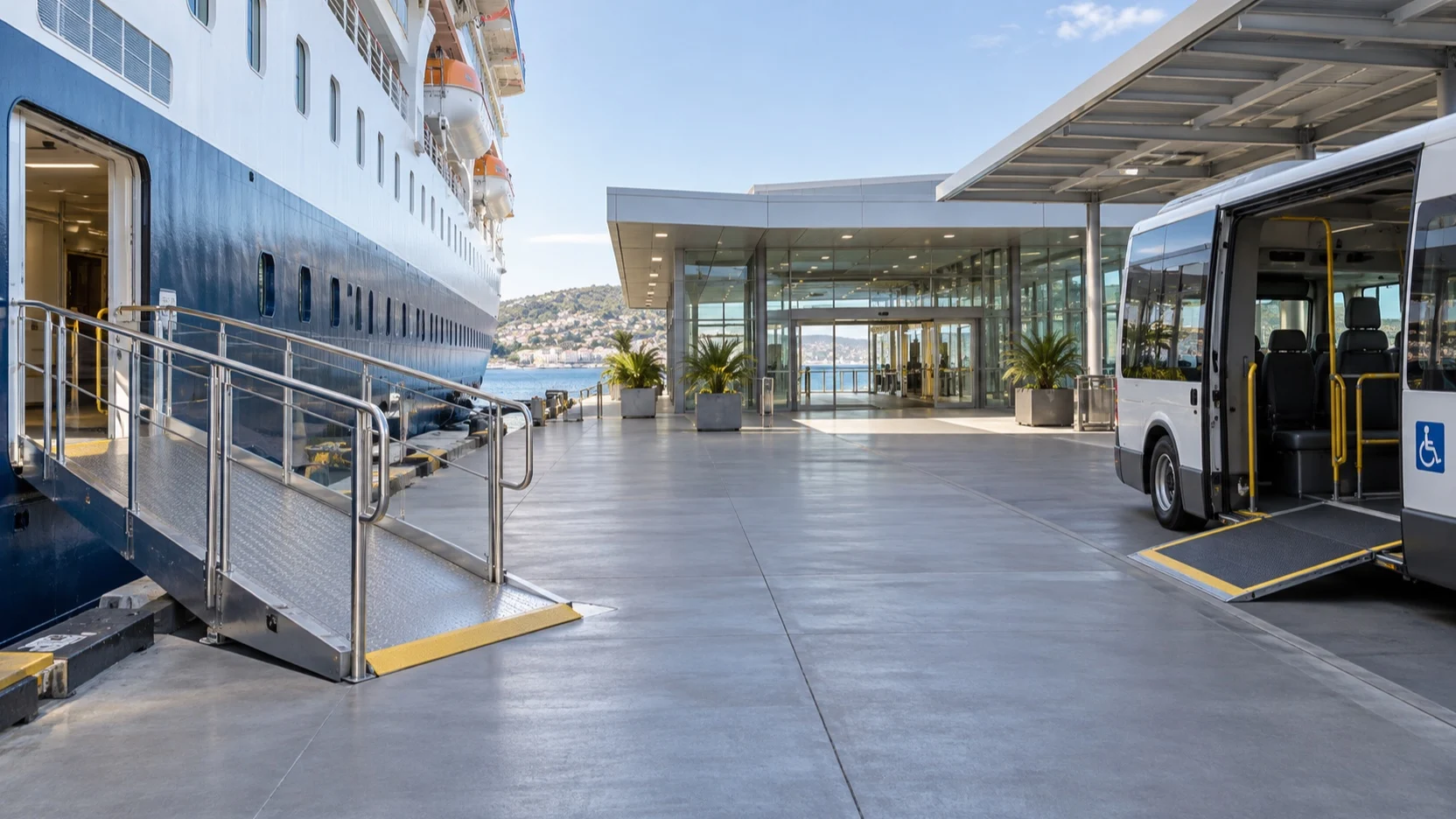
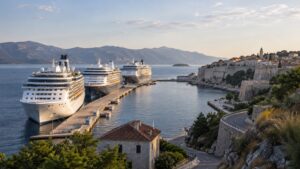
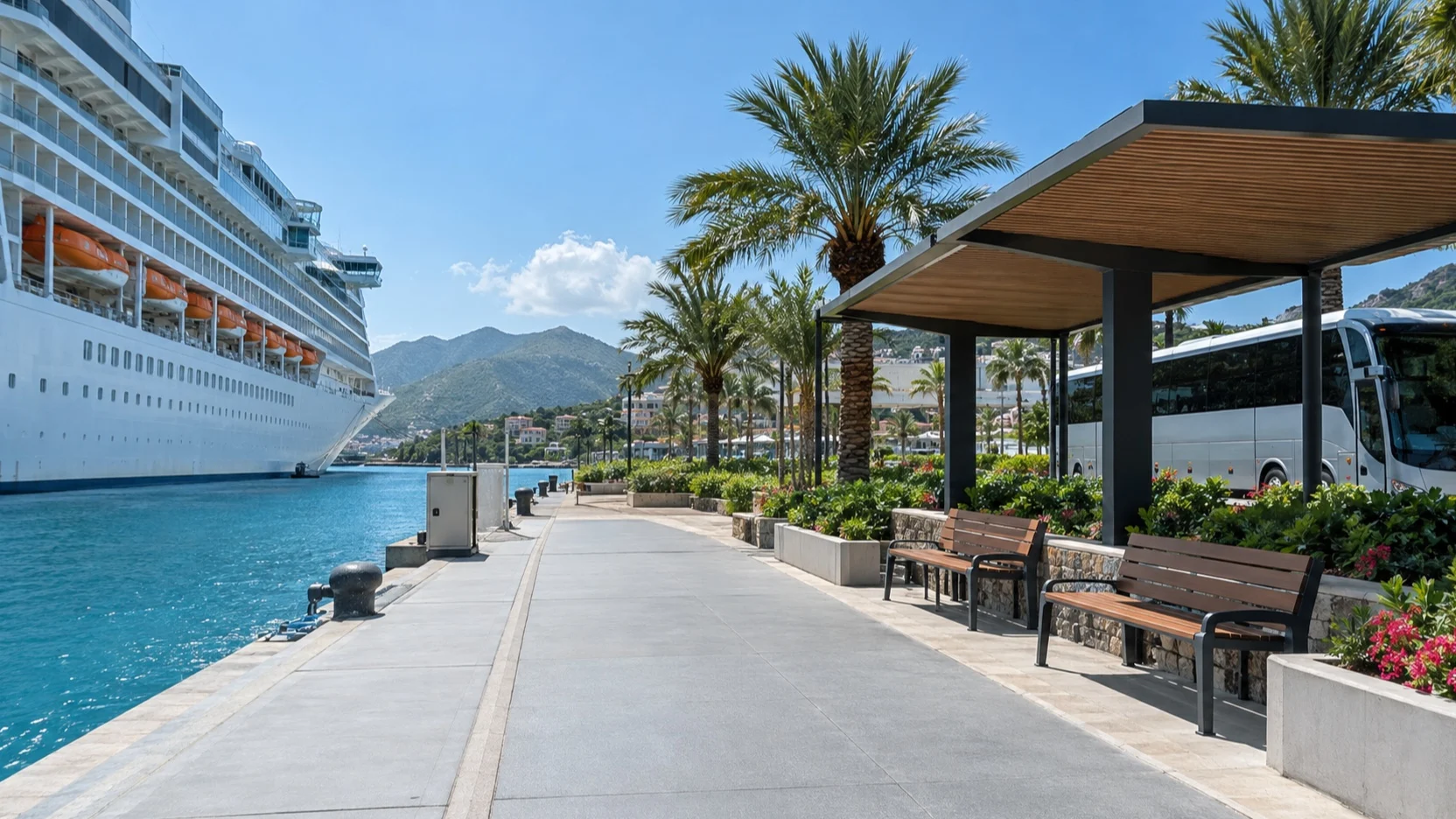
Long industrial piers can use most of a traveler’s comfortable distance before the tour begins. Ask whether a shuttle operates, whether it accepts the device, where it drops passengers, and whether a companion may ride with the traveler.
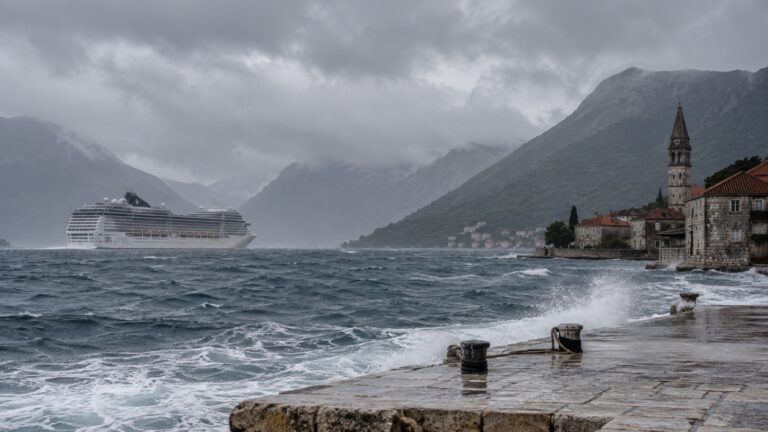
Weather and tide can steepen a gangway even at a normally accessible dock. Treat the crew’s day-of safety decision as final and keep an enjoyable onboard alternative in mind.
Choose the vehicle around the traveler
An accessible label is only the beginning. The important question is whether this exact traveler, device, and companion can board this exact vehicle at this exact port.
Private car
A private sedan can work for someone who walks short distances and transfers comfortably into a low seat. It may fail for a traveler who needs to remain in a wheelchair or cannot lower into the vehicle.
Ask how close the driver can stop to each entrance and whether waiting is permitted. Historic centers may restrict vehicles, leaving a walk that the phrase door to door quietly hides.
Accessible van
A ramp or lift vehicle may be the best solution for a full-time wheelchair or scooter user. Confirm door height, lift capacity, interior securement, combined user-and-device weight, and whether the traveler stays seated during transit.
Send the device’s length, width, height, weight, battery type, and folding method before booking. A provider cannot responsibly confirm fit from a description such as standard scooter.
Accessible vans can be scarce, especially in smaller ports, so reserve early and reconfirm close to sailing. Get the cancellation policy for a missed port or a ship that docks somewhere unexpected.
Standard motorcoach
A motorcoach may store a collapsible device underneath but still require several steep steps into the cabin. The traveler must also manage repeated boarding if the itinerary has many short stops.
Ask whether front seats can be reserved and whether the vehicle has a restroom that is actually usable for the traveler. A restroom onboard is not necessarily accessible, and it may remain locked on short segments.
Cruise-line accessible excursion
Accessible excursions can combine a suitable vehicle, a slower pace, step-free routing, shorter walking, and planned restroom access. Celebrity’s current accessible excursion guidance also says that guides are not permitted to push wheelchairs, so a user may need to self-propel or travel with a companion who can assist.
Do not assume every sailing offers the program or that every accessible space remains available. Book early, provide complete device information, and keep the written confirmation.
Choose one seated anchor experience
The easiest day has a main experience that is enjoyable while seated. Scenic drives, harbor cruises, panoramic trains, wildlife viewing, accessible museums, food tastings, and performances often work better than attraction-hopping.
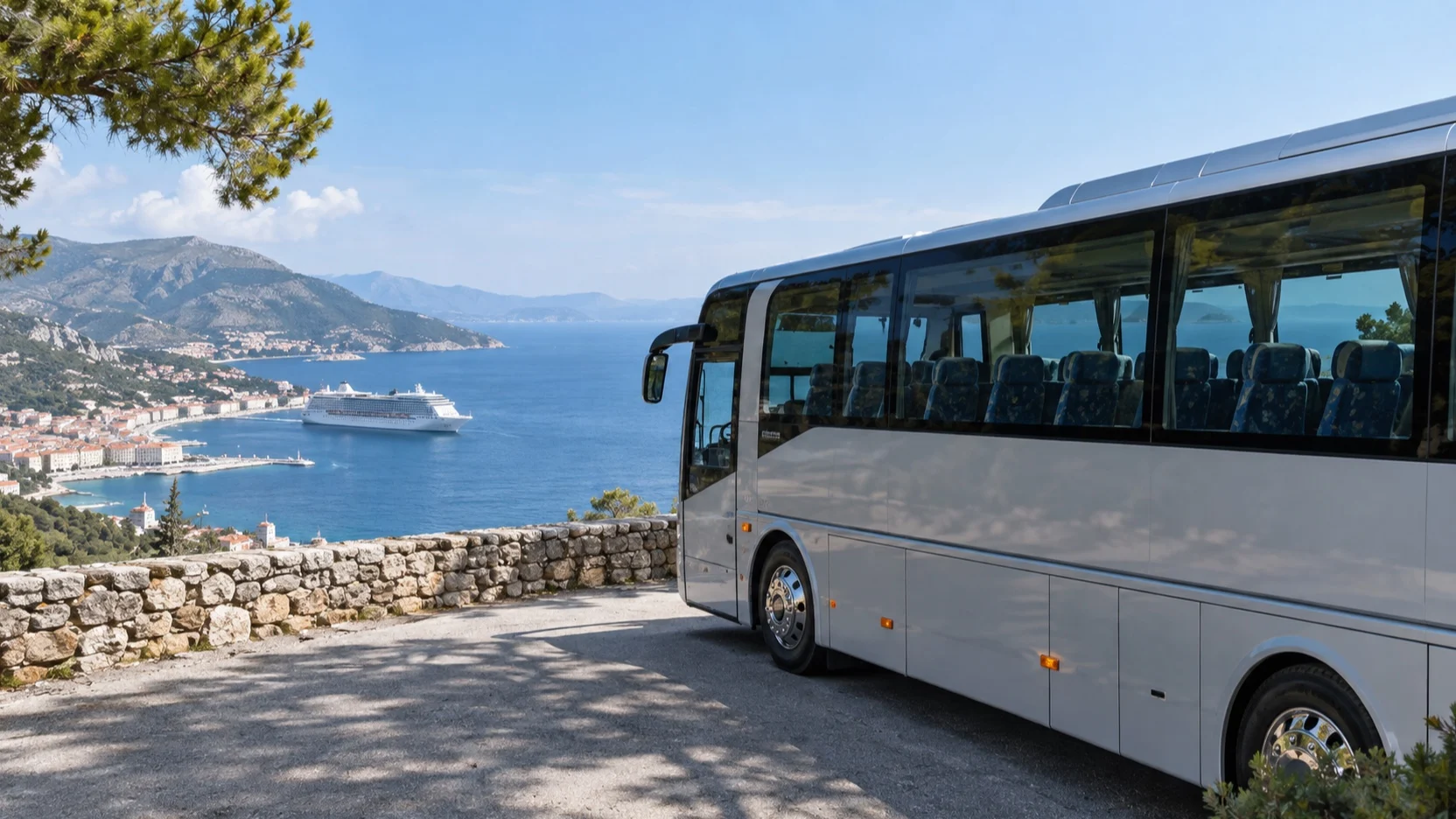
A scenic drive should include real viewing time, not only hours inside a vehicle. Ask which stops can be enjoyed from the seat, which require exiting, and whether the driver can skip a lookout without disrupting the group.
A museum can be excellent when the entrance is close, elevators work, seating is available, and an accessible restroom is inside. Confirm those details directly because historic buildings may have partial access rather than a fully step-free route.
A harbor cruise can reduce walking but adds gangways, dock movement, thresholds, and restroom questions. Request boarding photos or measurements when the traveler cannot manage steps or must remain in a mobility device.
Audit every small walking segment
Tour descriptions often count attraction walking but omit everything around it. A short walk from the bus may be followed by a security line, courtyard, elevator queue, gallery route, gift shop, and distant restroom.
Ask the operator to describe each segment in feet or meters and estimate standing time. Request the longest continuous stretch as well as the total across the day.
Also ask whether the vehicle remains nearby or leaves after drop-off. A traveler who needs to stop early requires a clear route back, not a bus parked somewhere unknown until the scheduled departure.
Lines can be more difficult than slow walking because there may be nowhere to sit. Timed admission, priority access, or a folding seat can help only when current rules permit them.
Verify surfaces, slopes, and seating
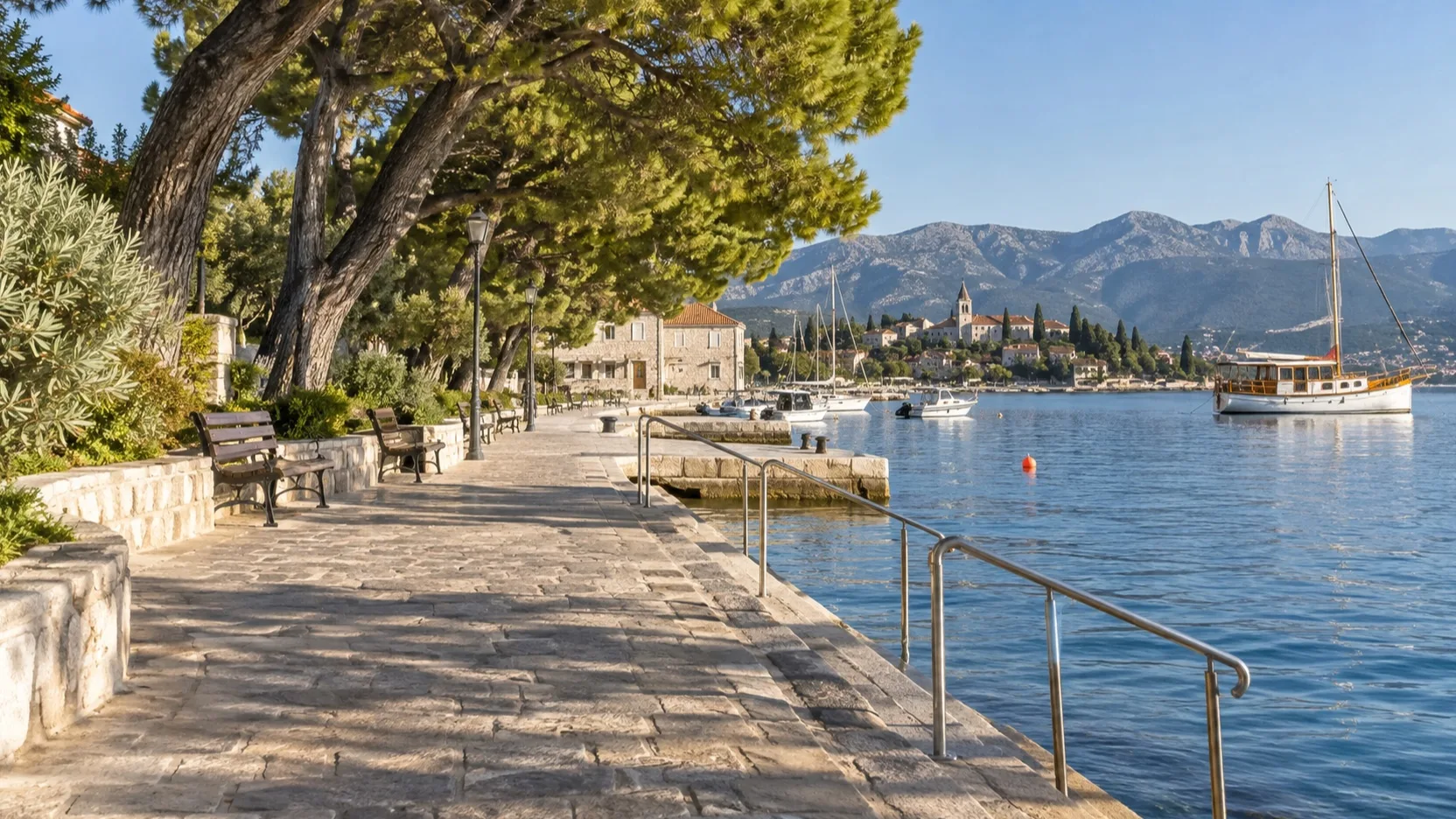
Aerial photos flatten hills and hide cobbles. Bilbao, Lisbon, Old San Juan, Dubrovnik, and many beautiful port cities can look compact while asking a great deal from knees, lungs, or a wheelchair companion.
Ask whether the route uses smooth pavement, gravel, cobbles, grass, sand, stairs, or ramps. A ramp can still be too steep, and an elevator can be too small for a large scooter.
Seating needs its own verification. A low wall, bar stool, folding chair, and bench without arms do not offer the same support, so explain what the traveler can safely use.
Accessible restrooms may be farther from the main route or available only to customers. Identify at least one dependable option and consider timing, door width, grab bars, transfer space, and companion access.
Treat tenders and water shuttles separately
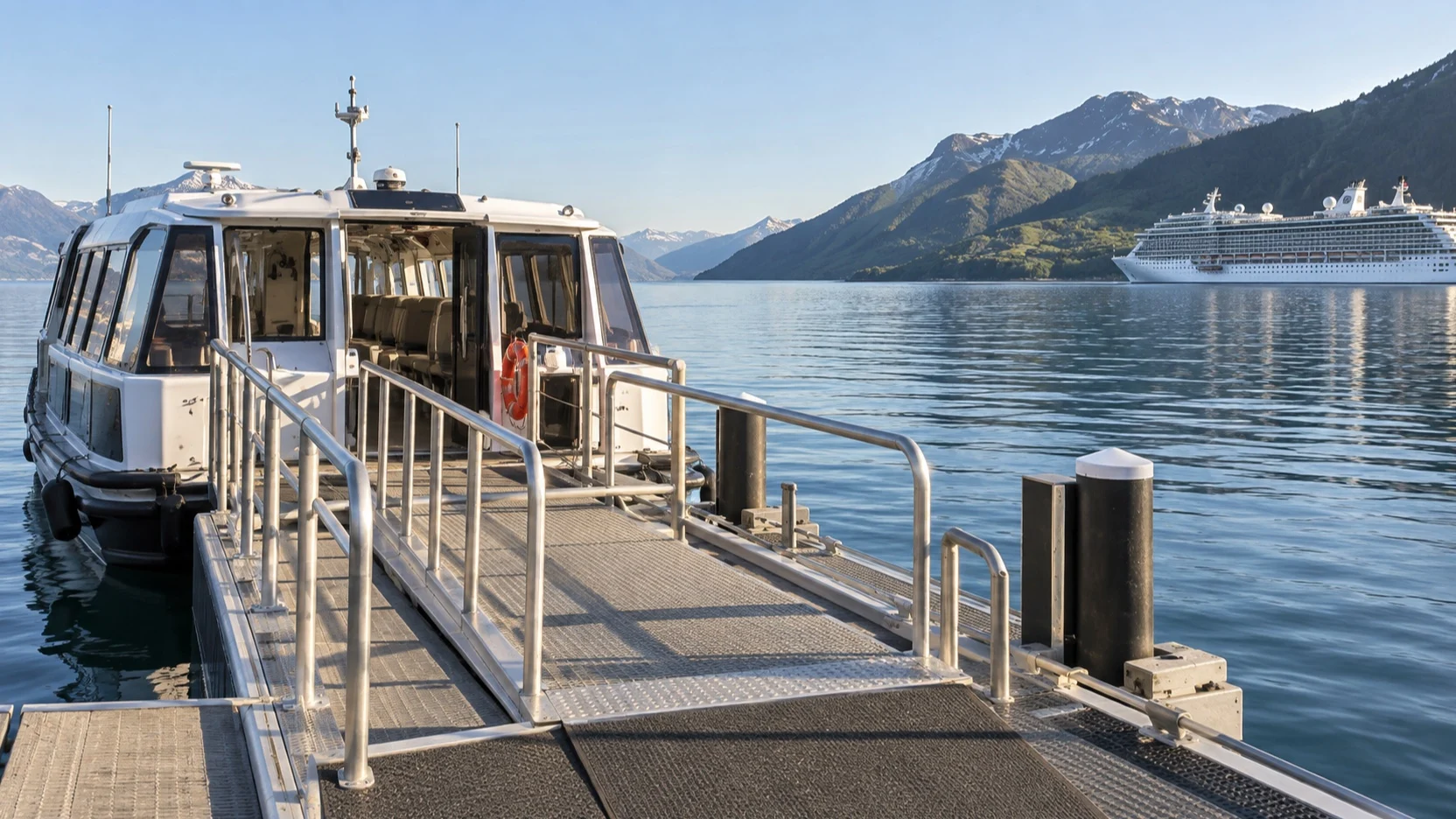
A tender port can change the entire plan because boarding involves a moving ship, a smaller boat, and conditions that vary by sea and weather. Even if the traveler reaches the ship’s tender platform, the crew may decide that transfer is unsafe.
Cruise-line policies can include lifting limits and restrictions on transferring mobility devices. Princess currently states that staff do not physically lift more than 50 pounds and that water-shuttle transfers may be unavailable when more lifting is required.
Your cruise line, ship, captain, and port conditions determine what applies on the day. Ask whether the device can board, whether it is safe from spray, how many steps are involved, and what assistance crew may provide.
Remember the shore landing too. A traveler might board the tender at the ship but face steps, a narrow ramp, or no accessible transport after arrival.
Plan rest before it becomes urgent
Do not wait for pain or fatigue to decide when to sit. Put a real seated break into the schedule before the traveler reaches the usual limit.
A useful rest has shade or climate control, supportive seating, water, and a restroom nearby. Standing in a busy café queue is not a rest, even if lunch appears on the itinerary.
Keep food plans simple and verify reservations or opening hours. A long search for the perfect restaurant can create more walking than the attraction you carefully chose.
Carry medication in its original packaging as appropriate, hydration, sun protection, and any small aid the traveler uses. Do not place essential medication in a bag that may be separated during a tour.
Build an early-return option
A low-walking day needs a way to end early without drama. Private transportation is easiest, but a group excursion can work if you know whether the traveler may leave and how a separate return would be arranged.
Keep the port name, terminal, ship, port-agent number, driver contact, and local emergency number offline. Carry a backup payment method and do not assume an accessible taxi can be summoned instantly in every destination.
Return while the traveler still has enough capacity for security, the pier, gangway, elevators, and cabin corridor. Arriving at the port gate exhausted is not the same as completing the day comfortably.
Keep a close-to-ship backup
Weather, tide, fatigue, vehicle problems, or a late arrival may defeat the main plan. Prepare a port-area café, accessible terminal space, short shuttle ride, or relaxed ship day that still feels intentional.
A backup is especially important at tender ports and destinations with scarce accessible vehicles. It removes pressure to accept a transfer that looks unsafe simply because money has already been spent.
Four low-walking day shapes
The scenic plan
Arrange a private car or accessible van for one scenic route with two optional viewpoints. Choose at least one stop that can be enjoyed from the vehicle and one accessible restroom break.
The culture plan
Select one accessible museum, church, performance, or heritage site with timed entry and seating. Add a nearby meal only if the route, entrance, restroom, and vehicle pickup are confirmed.
The wildlife plan
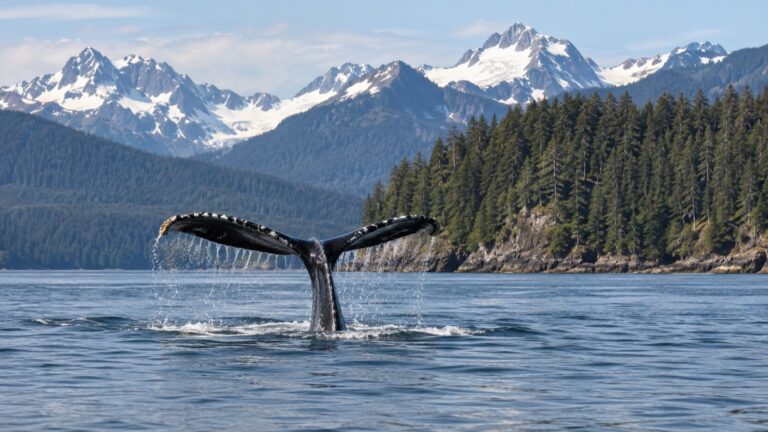
Choose a viewing boat, accessible hide, aquarium, or drive where the traveler can remain seated for most of the experience. Confirm boarding and restroom details rather than assuming nature tours are automatically low walking.
The port-area plan
Use ship assistance to the terminal, enjoy one nearby accessible venue, and return for lunch or a rest. This can be the best choice after several busy ports, and it does not need to feel like a failed day.
Questions to send before booking
Tell the operator the traveler’s comfortable distance, standing limit, step ability, transfer ability, and device details. Ask for the longest continuous walk, total distance, surfaces, slopes, stairs, vehicle steps, seating, and restroom access.
Ask exactly where pickup occurs relative to the gangway and whether port transportation is required. Confirm how close the vehicle may stop at each attraction and whether it remains available if the traveler must leave early.
Request the guide’s assistance limits, because pushing, lifting, and personal-care help may be prohibited. State whether a companion can provide assistance and whether that person also needs a seat in the accessible vehicle.
Get the missed-port, weather, equipment-failure, and cancellation terms in writing. Reconfirm the vehicle and device information shortly before travel without waiting until you are standing on the pier.
Common planning mistakes
The first mistake is trusting an easy activity symbol without reading the route. Ratings describe a broad audience and may not capture this traveler’s actual distance, balance, pain, or transfer needs.
The second is counting only attraction walking. The cabin, ship, pier, terminal, parking area, lines, restrooms, and return can require more effort than the advertised visit.
The third is adding stops because they look close on a map. Every stop introduces unloading, standing, surfaces, steps, restroom decisions, and another chance for the vehicle to park far away.
The fourth is assuming a companion or guide will push a wheelchair all day. Confirm assistance rules and be realistic about hills, heat, battery range, and the companion’s own strength.
The fifth is waiting until embarkation to request accessible shore arrangements. Vehicles and spaces are limited in many ports, and advance notice gives the cruise line or local provider a chance to match equipment properly.
My final recommendation
Design the day around the person rather than the attraction list. One seated experience with verified transport, a planned rest, and an easy exit will usually produce a better memory than six supposedly short stops.
Make every vague word measurable before paying. Easy, nearby, a few steps, and minimal walking should become actual distances, surfaces, vehicle details, restroom facts, and assistance limits.
Most importantly, stop before the traveler reaches the edge of their ability. The day still includes the port, gangway, ship corridors, and the next morning’s plans after the sightseeing ends.
How this guide was researched
This guide was checked in September 2026 against current accessibility guidance from Princess Cruises and Celebrity Cruises. Policies, tenders, gangways, port facilities, vehicles, lifting rules, and tour availability vary by ship and sailing, so confirm every arrangement directly and read our Editorial Policy for sourcing and corrections.
More on this topic: browse every guide on accessible and family cruise planning.