Aqaba Cruise Port: Petra, the Red Sea & Jordan Guide
Aqaba is Jordan’s only coastal city, but most cruise passengers see it first as the road to Petra or Wadi Rum. That choice shapes the entire day because Petra is a long inland commitment, while the desert and Red Sea can fit more comfortably into a shorter call.
I like Aqaba because the port forces an honest decision. Pick one big experience, give the driving and security checks proper room, and the day feels extraordinary instead of frantic.
My quick take
Petra is the bucket list choice and deserves a full port day. Wadi Rum brings huge scenery with less road time, while a coast day trades monument chasing for coral, warm water, and an easy lunch.
The city itself is low rise and relaxed compared with the grander Gulf ports. You are not coming for a skyline, and that is exactly why the Red Sea waterfront feels refreshing.
I would never try to combine Petra, Wadi Rum, and snorkeling in one call. A tour brochure may make the distances look tidy, but road conditions, site walking, port clearance, and the ship’s final gate all eat into the usable hours.
Ships approaching Aqaba often include a Suez Canal transit elsewhere in the itinerary. We cover what a Suez Canal cruise transit is actually like in a separate guide.
The Quick Facts
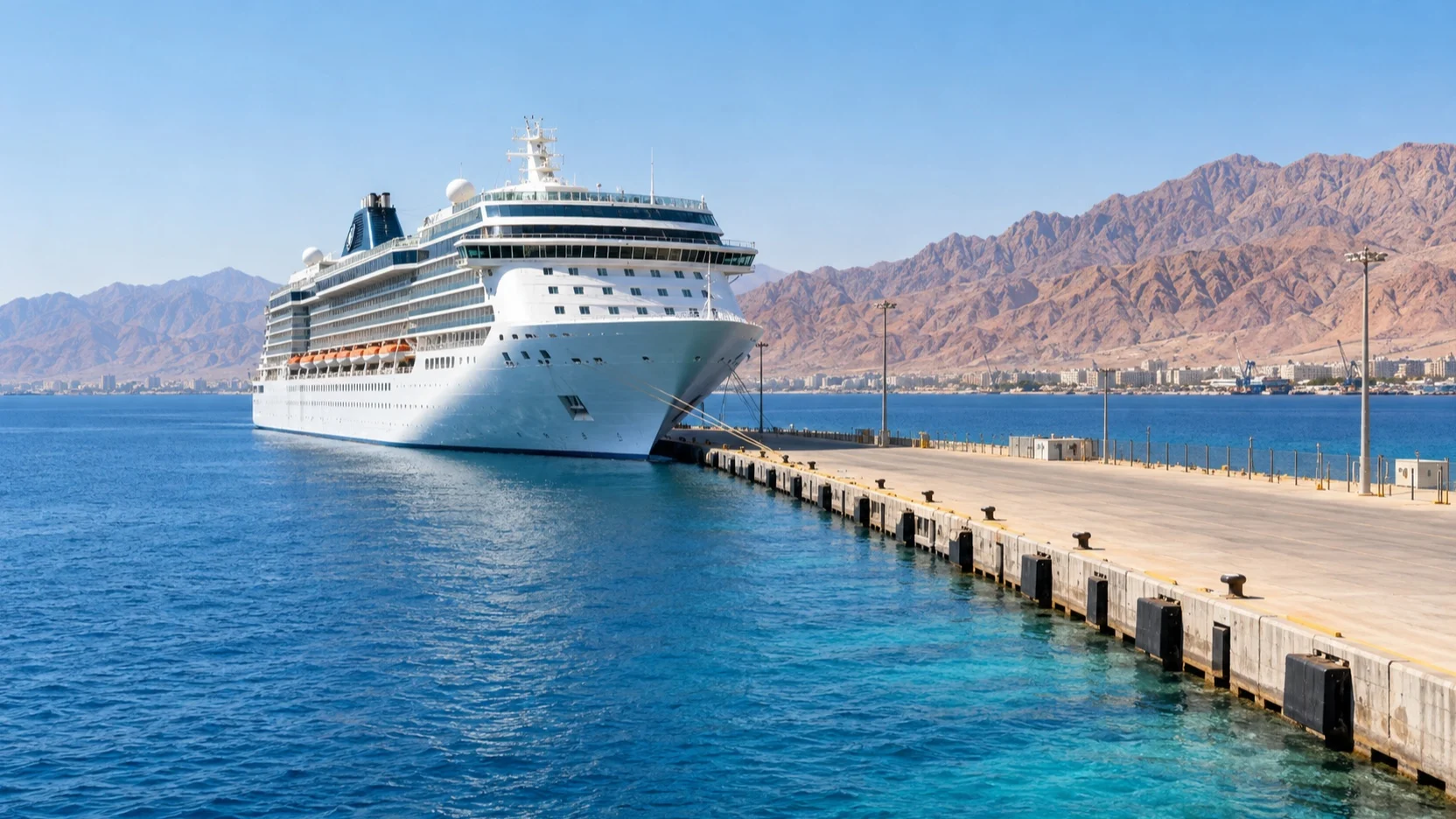
- Arrival: Cruise ships normally berth alongside in the secure port area, although the line confirms the exact passenger route for every call.
- Town transfer: Use the ship shuttle, an authorized taxi, or your excursion vehicle because the industrial port is not a casual pedestrian route.
- Petra timing: Allow roughly two hours by road each way before adding admission, walking, meals, and a substantial ship return margin.
- Wadi Rum timing: The protected desert is closer than Petra, but the final route and jeep arrangements belong in the written booking.
- Money: The Jordanian dinar is the local currency, and cards are common at larger venues while cash remains useful for small purchases and tips.
- Time: Jordan uses UTC+3 throughout the year, but always follow ship time for the all aboard deadline.
- Entry: Visa and passport rules depend on nationality and itinerary, so use Jordan’s official immigration guidance and the cruise line’s clearance instructions.
- Best plan: Choose Petra, Wadi Rum, or the Red Sea as the anchor and add only something genuinely close to the return route.
The berth and port logistics
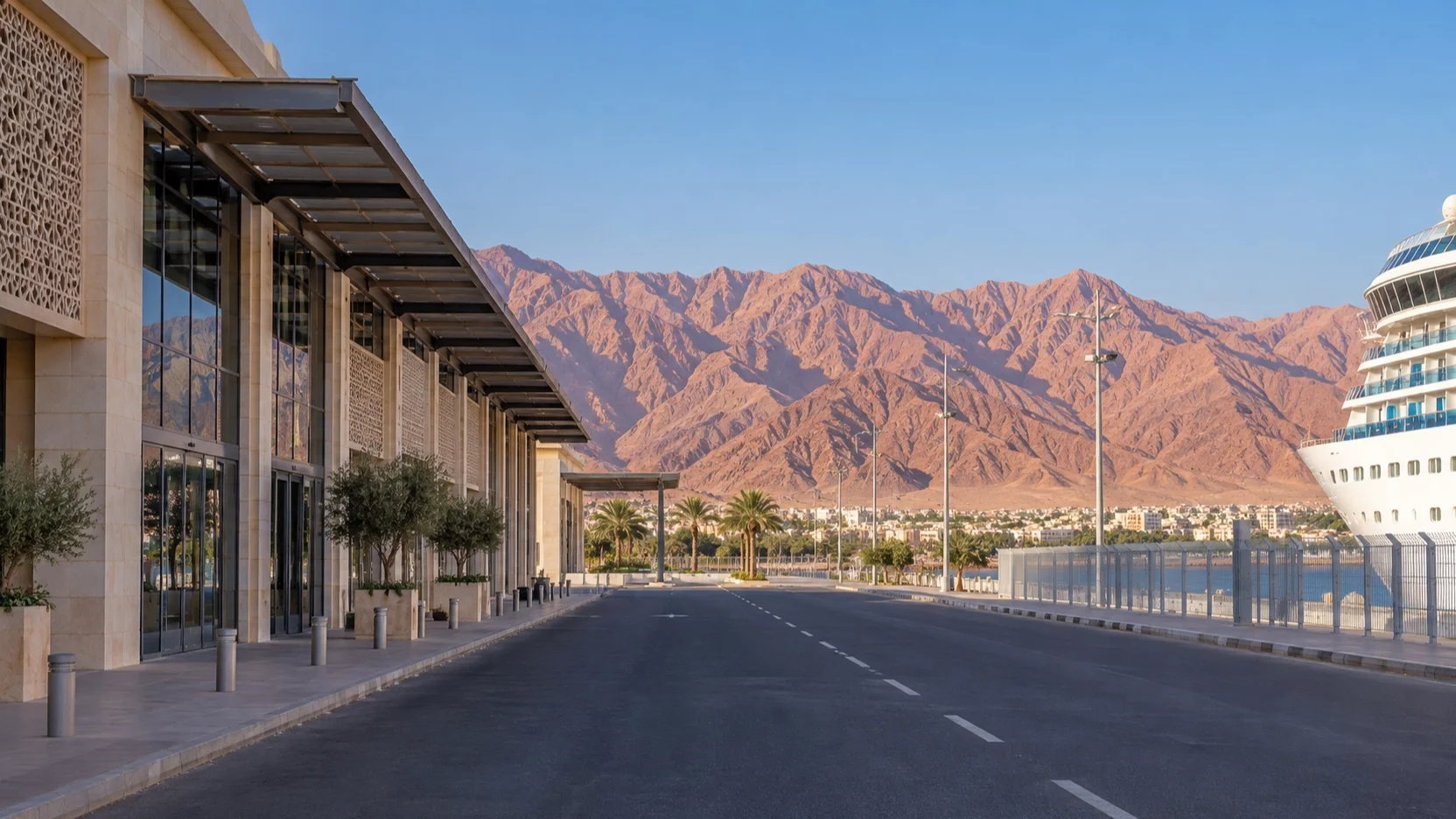
Aqaba’s cruise facilities sit within an active, controlled port rather than on an open downtown promenade. Ships generally berth alongside, so a normal call does not require tender boats, but passengers still follow designated walking and vehicle routes.
The cruise line is the authority for your assigned berth, shuttle, authorized pickup point, and final gate time. I save that information offline because a generic map pin cannot tell you which gate is open for a particular ship.
Terminal services can vary with the call. I do not assume there will be a convenient ATM, shop, or walk-up taxi after security, so I carry a little local currency and have the driver’s meeting instructions in writing.
If a tour says “port pickup,” I ask whether that means the ship side, terminal exit, or an external gate. That single detail can prevent a miserable search in the heat.
Returning early matters because the vehicle drop is not always the end of the journey. Port screening and the route from the gate to the gangway can use time you thought was spare.
Getting around without losing the day
Distance is the central planning problem in Aqaba. Petra is commonly around two hours away in ordinary road conditions, while Wadi Rum is often closer to an hour, but neither estimate includes every pickup, checkpoint, comfort stop, or delay.
For Petra or Wadi Rum, I use a licensed operator with a named contact, written meeting point, clear admission inclusions, and a specific ship return plan. A cruise line excursion usually costs more, but it offers the cleanest chain of responsibility if clearance or road timing changes.
An independent booking can work on a generous call when the operator regularly handles cruise passengers. I still ask who monitors the ship, what happens after a late docking, and how much margin is planned before all aboard.
Downtown Aqaba is compact enough for walking once a shuttle or taxi has delivered you there. Taxis are useful for the waterfront and beach areas, though I agree on the destination and fare method before setting off.
I do not rent a car for a one day visit unless I already understand local driving and port procedures. Navigation is only part of the job, and a missed turn or roadside delay can erase the savings quickly.
From Petra, I want a very generous cushion before ship time. From Wadi Rum, I still protect substantial margin because desert transfers, jeep handoffs, and port security are separate moving pieces.

The experiences worth building around
Petra
Petra earns its reputation before you even reach the Treasury. The walk through the Siq narrows the world to sandstone walls, then the famous carved facade appears in a reveal that photographs never quite explain.
UNESCO describes Petra as a Nabataean caravan city where ancient Eastern traditions meet Hellenistic architecture. Its channels, tunnels, dams, cisterns, and reservoirs also show how sophisticated water management supported life in an arid landscape.
A cruise visit shows only a fraction of this enormous site. The main trail continues well beyond the Treasury, while the Monastery requires far more walking and climbing than many shore schedules can accommodate comfortably.
I decide my turnaround point before entering. The return through the Siq, the walk to the visitor center, the parking transfer, and the road back to Aqaba all count against the clock.
Wadi Rum
Wadi Rum is my choice when I want desert drama without spending most of the call on the Petra road. Sandstone massifs rise from broad valleys, and a well-run four wheel drive outing creates a cinematic day with time to stop and look.
The Wadi Rum Protected Area is recognized by UNESCO for both natural and cultural values. Rock art, inscriptions, and archaeological remains record a very long human relationship with this landscape.
A desert excursion still needs practical questions. I ask about the vehicle type, seat access, shade, restroom stops, water, and exactly where the highway vehicle meets the desert driver.
Soft sand and high steps can be difficult for travelers with limited mobility. A private vehicle may offer more control, but only the operator can confirm which stops are physically workable.
Red Sea snorkeling and diving
A coastal day is not the consolation prize. The Gulf of Aqaba is known for clear water, coral, and dive sites south of the city, and it gives you far more control over the pace than a four hour round trip by road.
I choose an established operator and ask where the boat departs, whether transport from the cruise terminal is included, and what equipment is provided. Certified divers should confirm the shop’s credential requirements, while snorkelers should ask about flotation and water entry.
Marine conditions can change even when the sky looks perfect from the ship. I leave the reef timetable to the operator, avoid touching or standing on coral, and keep the return plan independent of the final boat of the day.
Aqaba town and waterfront
A town day works beautifully when the call is short or you need a gentler pace. The waterfront, local restaurants, souks, and the area around Aqaba Fort can fill several unhurried hours without pretending to compete with Petra.
Aqaba Fort and the Great Arab Revolt Plaza sit near each other, which makes them easy to pair. Opening access can change, so I treat the exterior and surrounding waterfront as the dependable plan and any interior visit as a bonus.
South Beach is the practical direction for many reef activities, but it is not simply the next block beyond downtown. Confirm transportation both ways and do not rely on finding an immediate taxi at an isolated pickup point.
How I would plan three different port days
The Petra day
I book one purpose-built excursion, leave the ship as soon as instructed, and accept that Aqaba itself will be a brief view through the window. At Petra, I prioritize the Siq, Treasury, and a sensible section of the main trail rather than turning the visit into an endurance contest.
Lunch, shopping, and optional transport inside the site can consume more time than expected. I keep the guide informed about my walking pace and never separate from the group without a confirmed meeting place.
The Wadi Rum day
I pair a focused desert tour with a late lunch or short waterfront stop only when one operator controls the transport back to the port. This gives the day variety without creating a risky chain of unrelated bookings.
Aqaba’s light can be harsh by midday, while the desert cools quickly outside summer. I bring sun protection, water, and a layer rather than dressing only for the temperature beside the ship.
The Red Sea day
I choose one reef outing, verify the boat ladder and equipment, and keep dry clothes ready for the port return. A relaxed meal afterward is easier to protect than another fixed attraction.
If weather cancels the water activity, downtown Aqaba becomes the fallback. That is why I prefer a refundable operator and a simple second plan over two prepaid activities stacked tightly together.
Accessibility and physical demands
Petra is demanding even for strong walkers. The route includes packed earth, uneven stone, sand, heat, slopes, and a long return, while reaching the Monastery adds a major stair climb.
The official Visit Petra site publishes current trails, fees, hours, and visitor guidance. Ask the authority or your operator about available electric vehicle services because routes, capacity, and eligibility can change.
Animal rides should never be assumed to be included, comfortable, accessible, or appropriate for an individual traveler. I make accessibility decisions from current site information and the traveler’s actual transfer ability.
Wadi Rum presents different barriers, including soft sand, uneven ground, and tall vehicle steps. The Red Sea adds boat motion, ladders, wet surfaces, and limited assistance away from the dock.
For a lower effort day, an accessible vehicle tour of Aqaba with selected waterfront stops may be the best fit. Get step heights, walking distances, restroom access, and vehicle storage for mobility equipment confirmed in writing.
Weather and what to pack
Aqaba has a hot desert climate, and summer heat can make inland sightseeing punishing. Petra sits higher and can feel distinctly cooler, especially in winter mornings and evenings.
Spring and fall often provide kinder walking weather, but sun exposure remains serious in every season. Shade can be scarce at archaeological and desert stops, so a hat, sunscreen, water, and sturdy shoes are core equipment.
I add a light layer for an air-conditioned coach and for cooler high ground around Petra. A scarf is useful for sun, dust, and respectful coverage without taking much bag space.
For the Red Sea, I pack reef-safe sun protection, secure sandals, and a dry pouch for the phone. The operator should supply safety equipment, but I verify that before leaving the ship.
Entry, safety, and money
Jordanian entry rules vary by nationality, passport, and itinerary. The Jordanian Ministry of Interior and the cruise line are the right sources for visa handling, same-day shore clearance, and any current passport requirements.
The latest United States State Department advisory was raised to Level 3, Reconsider Travel, on August 29, 2026 because of terrorism and armed conflict risks. It identifies some areas at Level 4 and says the regional security environment can change quickly, so I would read the full Jordan travel advisory rather than rely on a summary.
Travelers of other nationalities should use their own government’s advice as well. Cruise calls can be altered for operational or security reasons even when attractions are open and daily life in Aqaba looks normal.
Petra admission varies by visitor category and length of stay. The Jordan Pass is designed for broader trips, so a cruise passenger should compare it carefully with a tour that already includes the correct same-day ticket.
I carry some Jordanian dinars for small purchases and tips, plus a card for larger merchants. Currency exchange and ATM availability should be handled before a tightly timed excursion rather than left to chance inside the port.
Jordan is socially conservative, so breathable clothing with reasonable coverage is both respectful and practical. At religious or community sites, follow the guide’s local instructions rather than treating beachwear as all-day clothing.
Quick answers
Can I see Petra during one cruise call?
Yes, on a sufficiently long call with reliable transport, and thousands of passengers do it. The cost is roughly four hours of road time plus a physically demanding visit, so Petra should be the day’s single priority.
Is Wadi Rum a better option for a shorter call?
Usually, because it is closer to Aqaba and can be shaped around a focused desert drive. The call still needs enough time for highway travel, the vehicle handoff, the desert experience, and port screening.
Can I walk from the ship into town?
Do not plan on it. The berth is in a controlled working port, so use the shuttle, authorized taxi, or excursion transport specified for your sailing.
Do I need local cash?
A small amount is useful for tips, taxis, and minor purchases, while larger attractions and businesses often accept cards. I would not delay a departure while hunting for an ATM.
What happens if regional conditions change?
The cruise line may adjust the call, excursion operation, or clearance at short notice. Monitor official government advice and ship messages, and choose bookings with clear cancellation terms.
How Aqaba compares with nearby cruise gateways
Aqaba feels more grounded and rugged than Dubai or Abu Dhabi. Those ports make the city the attraction, while Aqaba asks you to decide between a world-famous archaeological site, a protected desert, and the sea.
It resembles Ashdod in one important way: the marquee experience lies well beyond the dock. The difference is that Aqaba also offers a genuinely satisfying local coast day when you do not want the long transfer.
Before sailing, I check the Jordan Tourism Board, the official Petra visitor site, my government’s travel advice, and the cruise line’s final excursion details. That combination gives a clearer picture than any static list of prices or promises.
The Bottom Line
Aqaba is a decision port, and the best day begins by choosing one anchor. Commit to Petra for the wonder, Wadi Rum for the desert, or the Red Sea for an easier pace, then protect the ship return as carefully as the experience itself.
Current entry and security guidance deserves serious attention, but good preparation keeps the logistics understandable. With the right goal and enough margin, Aqaba can be one of the most memorable calls on a Middle East itinerary.


How this guide was researched: This guide uses current Aqaba port, Jordan Tourism Board, Petra authority, UNESCO, immigration, and government travel advisory sources. Port access, road timing, entry, safety, and attraction details were reviewed on September 11, 2026; see our Editorial Policy.