Mozambique Cruise Ports: Maputo, Nacala and Pemba
Mozambique has roughly 1,500 miles (2,400 km) of Indian Ocean coastline and only a thin trickle of cruise calls to show for it. Nearly all of them are Maputo, and most of the rest are beach days off a sandbar.
My quick take
Mozambique is not a cruise country in the way South Africa or Namibia is. It is one real city call, two beach stops that belong to one cruise line, and a couple of northern ports that show up on paper far more often than they show up on an actual itinerary.
I would sail here for Maputo and treat everything else as a bonus. If your itinerary lists Nacala or Pemba, I would read the fine print twice and keep my expectations loose.
The quick facts
- Main port: Maputo, a working cargo port right against the downtown grid, with ships alongside rather than tendering.
- Beach stops: Portuguese Island and Pomene, both tender-only and both operated as beach days by a single line.
- Rare calls: Nacala and Pemba in the north, where cruise traffic is occasional at best and security shapes the schedule.
- Money and language: Mozambican metical and Portuguese, with cards working only at bigger hotels, restaurants and shops.
- Season: The cooler, drier months from about May through September are the comfortable ones for walking.
Who actually sails to Mozambique
Three kinds of ship turn up here. The biggest share is the southern Africa season based out of Durban, which runs short sailings up the coast and uses Mozambique for beach days and the occasional Maputo call.
The second is the long-haul crowd. World cruise segments and Indian Ocean repositioning runs sometimes drop into Maputo between South Africa and the ports further north, and small expedition ships occasionally poke at the northern coast.
The season follows the southern hemisphere calendar. Ships cluster in the drier, cooler stretch from roughly May through September for city calls, while the beach stops run through the warmer months because the water stays swimmable year round.
My region by region look at cruising in Africa puts this coast in context against the busier East African ports.
Maputo is the only proper city call
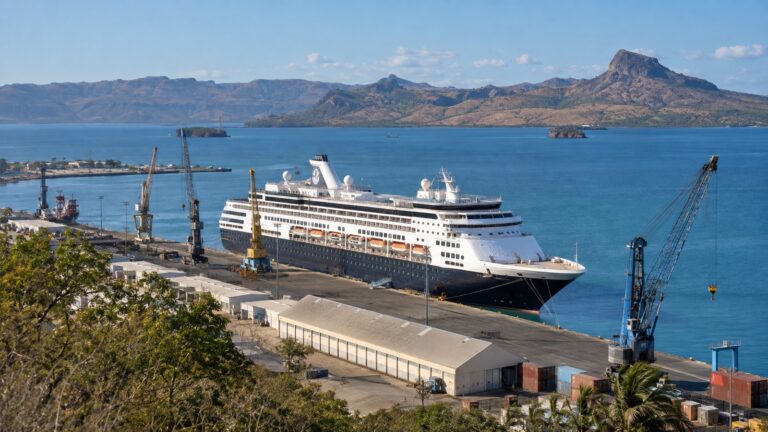
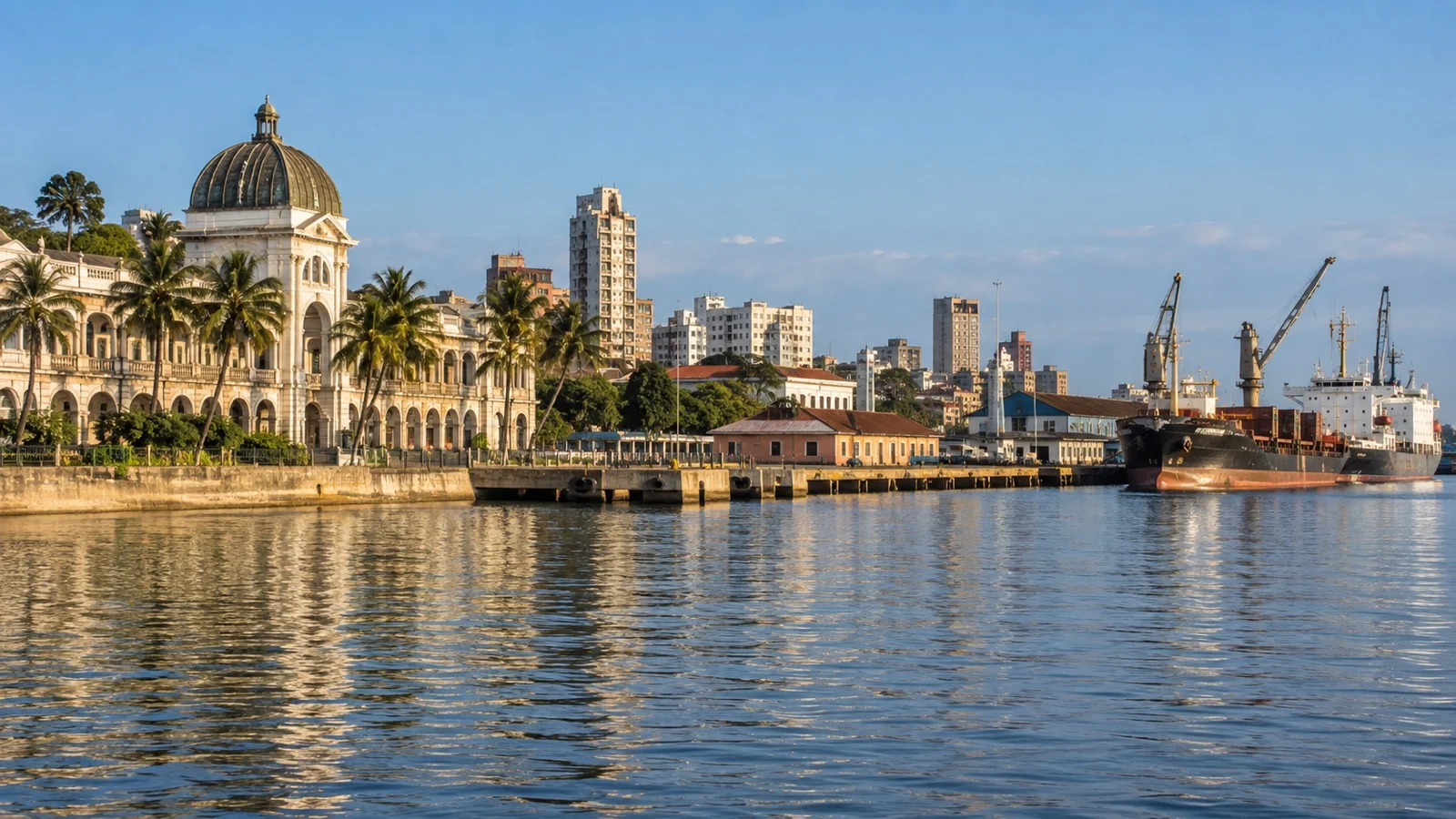
Ships tie up alongside inside a busy commercial port on the north shore of Maputo Bay, with the downtown Baixa district sitting more or less on top of the port gate. There is no tender, which already makes this the easiest port day in the country.
From the gate, the ornate 1916 railway station and the central market are around a 15 to 20 minute walk. That walk is flat and the grid is easy to read, which is unusual for an African cargo port and worth taking advantage of.
The short list I would actually do on foot is the railway station, the Iron House, the restored fortress and the Tunduru Botanical Gardens, with the FEIMA craft market if you want to shop. The bigger draws, meaning Inhaca Island and Maputo National Park, are full day commitments that need an organized tour booked in advance.
Taxis exist and are unmetered, so agree on a price before you get in. Our full Maputo port guide goes deeper on the walking route and the day trip options.
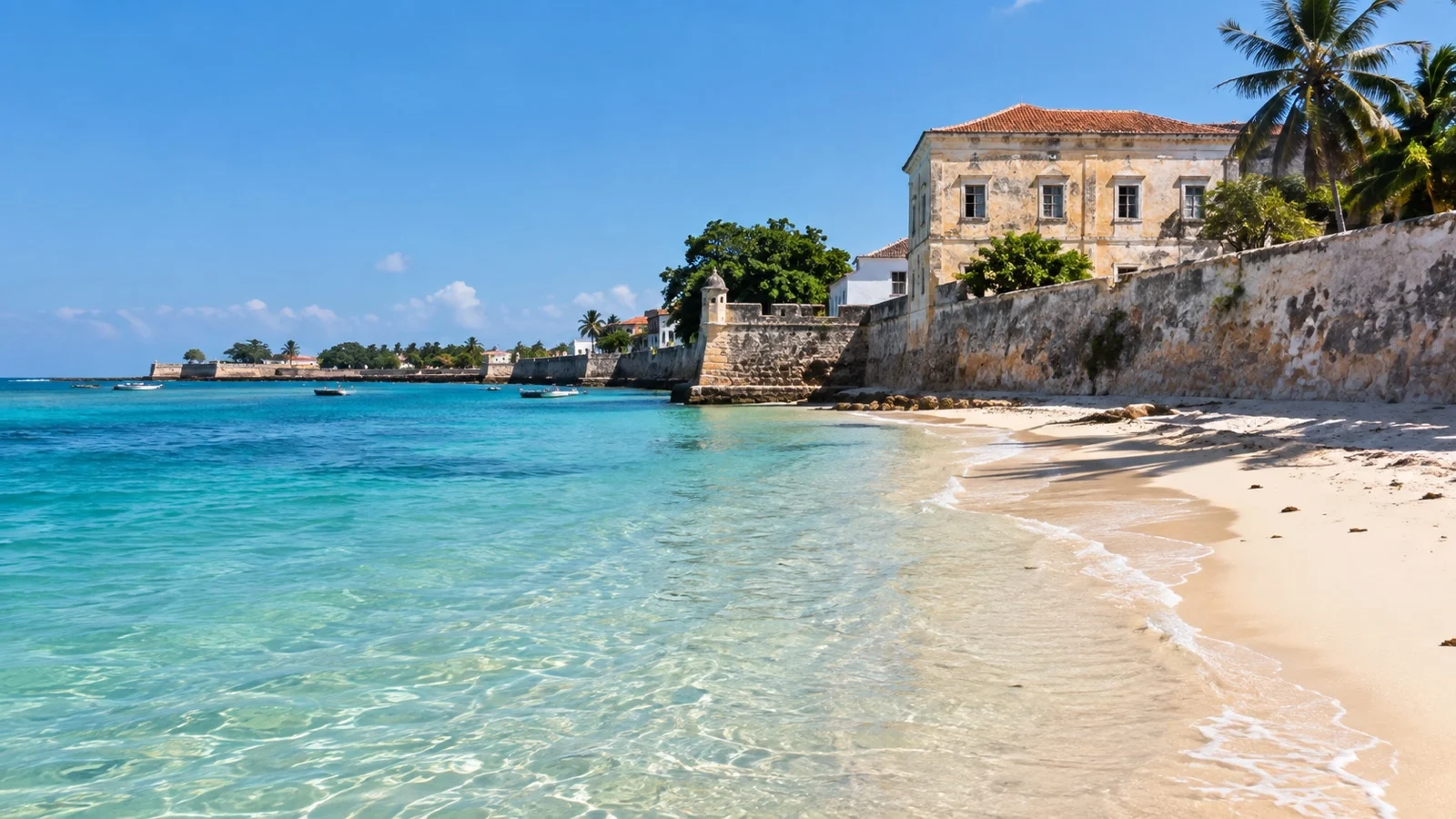
Portuguese Island is a sandbar with umbrellas, and that is the point
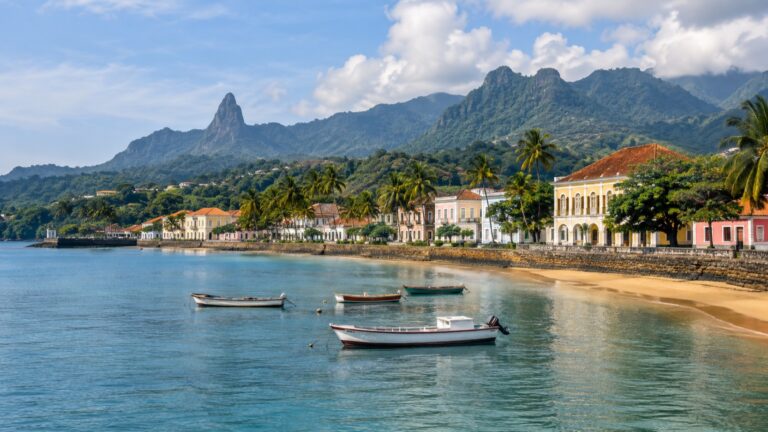
This is an uninhabited sand island at the outer edge of Maputo Bay, used as a beach day by one line and nobody else. The ship anchors off and you go ashore by tender, which means the whole day is weather dependent in a way a docked call never is.
What is there is umbrellas, loungers, drink and food kiosks and a stretch of sand. What is not there is a town, a museum, a shop worth the name or a plan B if the weather turns.
Nearby Inhaca Island has a village, a market, a small museum and a lighthouse, and it is usually sold as a separate boat excursion. If you want anything resembling sightseeing on this day, that is the version to book, and the Portuguese Island guide covers how the two fit together.
Pomene is remote in a way people underestimate
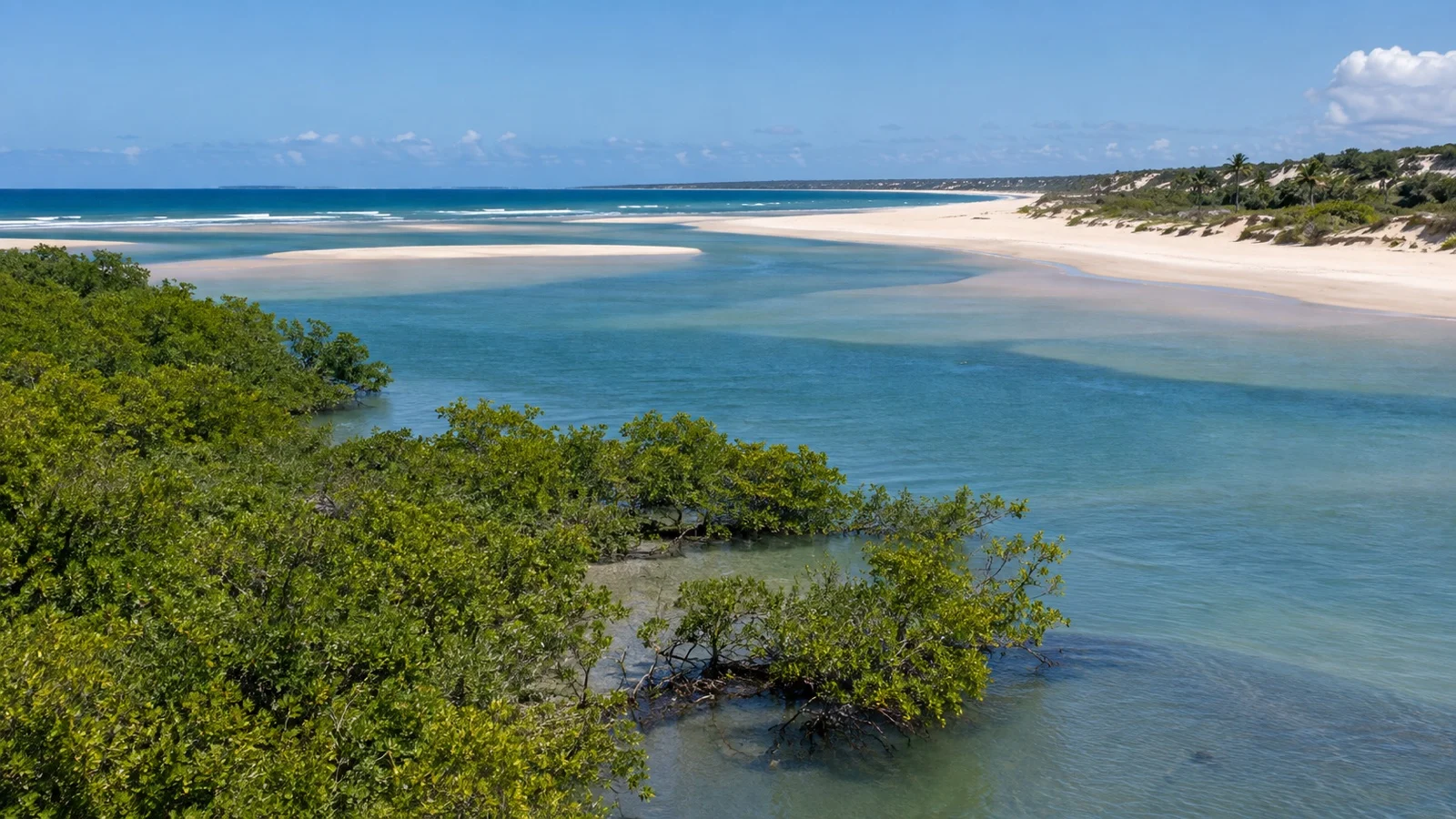
Pomene Bay sits up in Inhambane Province, a long way north of Maputo, and it is a natural setting rather than a place with an address. Expect a protected lagoon, mangroves, sand and open ocean, and expect to reach all of it by tender.
Snorkeling, diving, mangrove trips and horseback riding along the sand are the usual sells. All of them depend on marine conditions on the day, so I would not build a Mozambique itinerary around any one of them.
Bring your own sunscreen, water and snacks. Assuming a vendor will be there with what you forgot is the mistake that turns a nice beach day into a long, thirsty one, and the Pomene guide is blunt about how little infrastructure is ashore.
Nacala has the best harbor and almost none of the ships
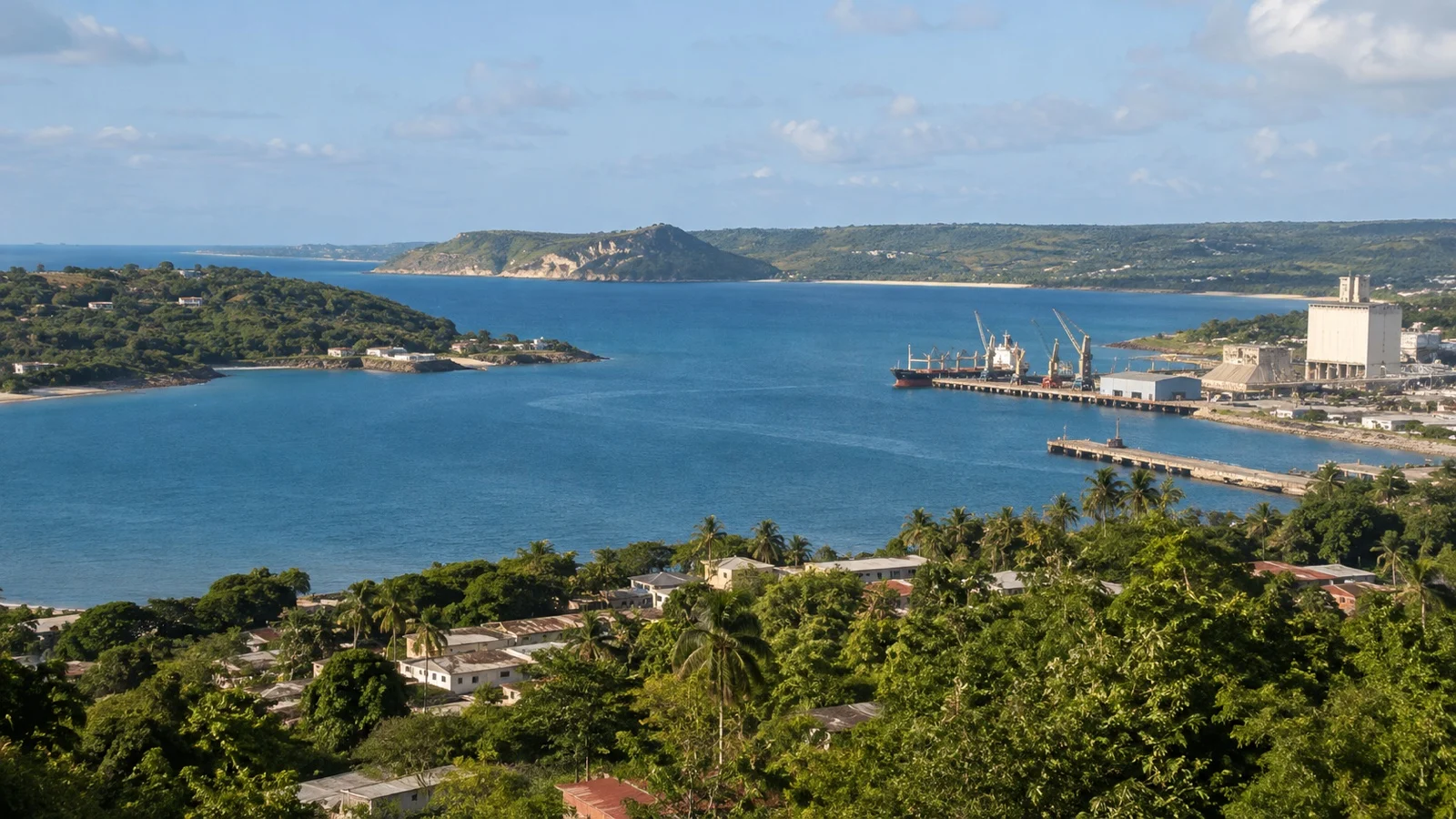
Nacala, in Nampula Province, has the deepest natural harbor in southern Africa and it is used almost entirely for freight. Four general cargo berths, a container berth and a coal terminal across the bay tell you exactly what this port is for.
Cruise calls happen, but they are occasional and they are not on a season schedule you can plan around. If one appears on your itinerary, assume you are on an expedition ship or a repositioning run rather than a mainstream coastal cruise.
The reason to want the call is the fortified island city inscribed as a World Heritage site in 1991, which sits about 2.5 miles (4 km) off the coast and served as the Portuguese colonial capital until 1898. It is not a short hop from the berth, so this is an organized tour with a long road transfer in each direction, not a taxi you found at the gate.
One honest caveat. Parts of northern Nampula Province carry a do not travel warning, so the tour a ship offers may be routed carefully or dropped entirely, and that is a decision made close to the sailing.
Pemba is mostly a name on a map right now
Pemba is the capital of Cabo Delgado, sitting on a peninsula inside one of the largest bays in Africa, and it was once a genuine diving and water sports destination. The insurgency in that province changed the picture, and the current advice for Cabo Delgado is not to travel there at all.
That advice is why cruise traffic here is close to nonexistent. Lines do not build itineraries into a do not travel province, and the port functions mainly as a regional logistics hub.
I am including Pemba because people search for it and because old itinerary listings still float around. If you see it advertised, treat it as a call that is likely to be substituted, and do not pay a premium for the sailing because of it.
Which one I would pick
Maputo, without hesitating. It is the only stop where you step off the ship into a real place with its own history, its own food and its own street life, and where a self directed walk is genuinely on the table.
Portuguese Island is a pleasant beach day and nothing more, which is fine if that is what you booked. Pomene is the same idea with less around it and a longer list of things that can be canceled by the sea state.
Nacala would be the interesting one if the logistics ever lined up, because the island it serves is one of the more remarkable places on this coast. Pemba I would not count on at all for now.
Money, language and the practical layer
The currency is the Mozambican metical and the official language is Portuguese. English turns up in hotels, tour offices and some restaurants, but it is not the default on the street, and a translation app plus a written address does more for you here than confidence does.
Cards work at larger establishments and not much else, so carry cash in small denominations for markets, taxis and drinks. My guide to carrying cash and cards in port explains why small bills matter more than the total amount.
There is a limit on how much local currency you can carry in or out, currently set at 10,000 meticais, which is roughly 150 dollars at typical rates. That is a rule about the local banknotes, not about the dollars in your wallet, and it mainly matters if you are tempted to change a lot at once.
Ride hailing is not something I would count on at a Mozambican port gate. The pattern I write about in my piece on where ride hailing works and where it strands you holds here, so plan on an agreed price taxi or a pre booked driver.
Entry rules and the paperwork question
Mozambique now runs an online immigration portal covering visa exemption, electronic travel authorization and e-visas, and which of the three applies depends on your passport. For US passport holders staying in a hotel or rental for 90 days or less, an electronic travel authorization is the route, and a visa is required if you are staying with family or friends.
Cruise passengers on a day call are a different case, because the ship usually clears the whole manifest with immigration and issues you a shore pass. That is the normal pattern, but it is not a promise, and the only answer that counts is the one your line gives you for your specific sailing.
Passport rules are stricter than most people expect. Six months of validity beyond your arrival date and two blank visa pages is the standard, and blank pages are the one that catches frequent travelers out.
Our roundup of ports where your passport alone is not enough is worth a read before any Africa itinerary.
Health, mosquitoes and the yellow fever question
Yellow fever vaccination is not required for arrival from the United States. It becomes a requirement if you are arriving from or transiting certain countries in Africa or South America, which is exactly the situation a multi country cruise itinerary can create without you noticing.
This is the one I would check early rather than at the pier. If your sailing touches a yellow fever risk country before Mozambique, you want that certificate sorted weeks out, not the week before.
Malaria is present in Mozambique, including at the coast. A single daytime port call is a low exposure situation compared to a week on the ground, but repellent and covered arms toward dusk are cheap insurance, and anything beyond that is a conversation with a travel clinic rather than with me.
What a good day here actually looks like
In Maputo, a good day is unhurried and mostly on foot. Walk the Baixa in the morning while it is cooler, sit down for prawns and a cold drink somewhere with a fan, and be back aboard before the afternoon heat makes you regret your shoes.
At the beach stops, a good day is one where you tender early, claim shade, and accept that the day is exactly what it says on the label. The people who have a bad time at Portuguese Island are the ones who expected a port.
Across all of these, the thing I would prepare hardest for is the tender. If your mobility is limited or the forecast looks unsettled, read how tendering changes the time you actually get ashore before you plan anything ambitious.
Quick answers
Do cruise ships still go to Mozambique?
Yes, but not many and not everywhere. Maputo and the two southern beach stops carry nearly all of the traffic, while the northern ports see very little.
Is Maputo walkable from the cruise berth?
It is, which makes it the exception among Mozambican calls. The central sights sit about 15 to 20 minutes on foot from the port, across flat and legible streets.
Do I need a visa for a Mozambique cruise stop?
Day callers are normally cleared as a group by the ship and go ashore on a shore pass. Confirm the arrangement with your line, because the answer depends on your passport and your itinerary.
Is Pemba safe to visit on a cruise?
The province it sits in currently carries a do not travel warning, and cruise lines have effectively stopped calling there. Treat any listed Pemba call as provisional.
When is the best time to cruise to Mozambique?
For a city day in Maputo, the drier and cooler stretch from about May through September is far more pleasant. For a pure beach stop the water is warm all year, so the limiting factor is sea state rather than season.
Final word
Mozambique is a country I would be delighted to see from a ship and would never choose a cruise specifically to see. The coastline is enormous, the history is real, and the cruise infrastructure covers a tiny fraction of both.
So take Maputo seriously, enjoy the beach days for what they are, and read any northern call as a maybe rather than a promise. If you want a fuller African itinerary around it, our guides to the main South African calls and Durban, the usual base for this coast are the natural next step.
How this guide was researched: Berth locations, walking distances, entry and vaccination rules, currency limits and current travel advice for each Mozambican port were checked against official government and heritage listings in November 2026. Advisory levels, itinerary listings and immigration procedures change frequently, so confirm the details that matter for your own sailing before you book. See our Editorial Policy.