Maldives Cruise Ports: Male, Tenders and the Atoll Reality
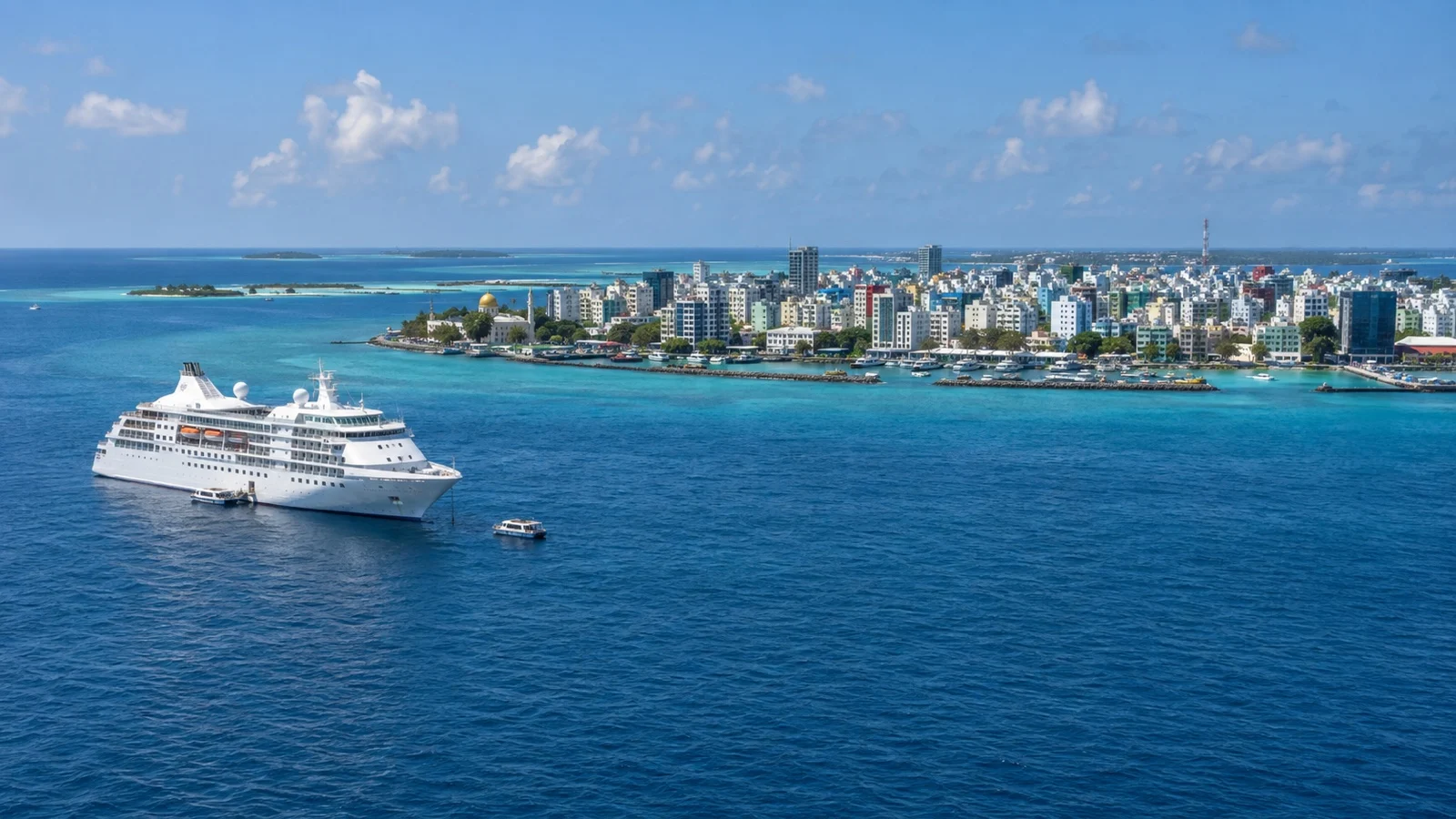
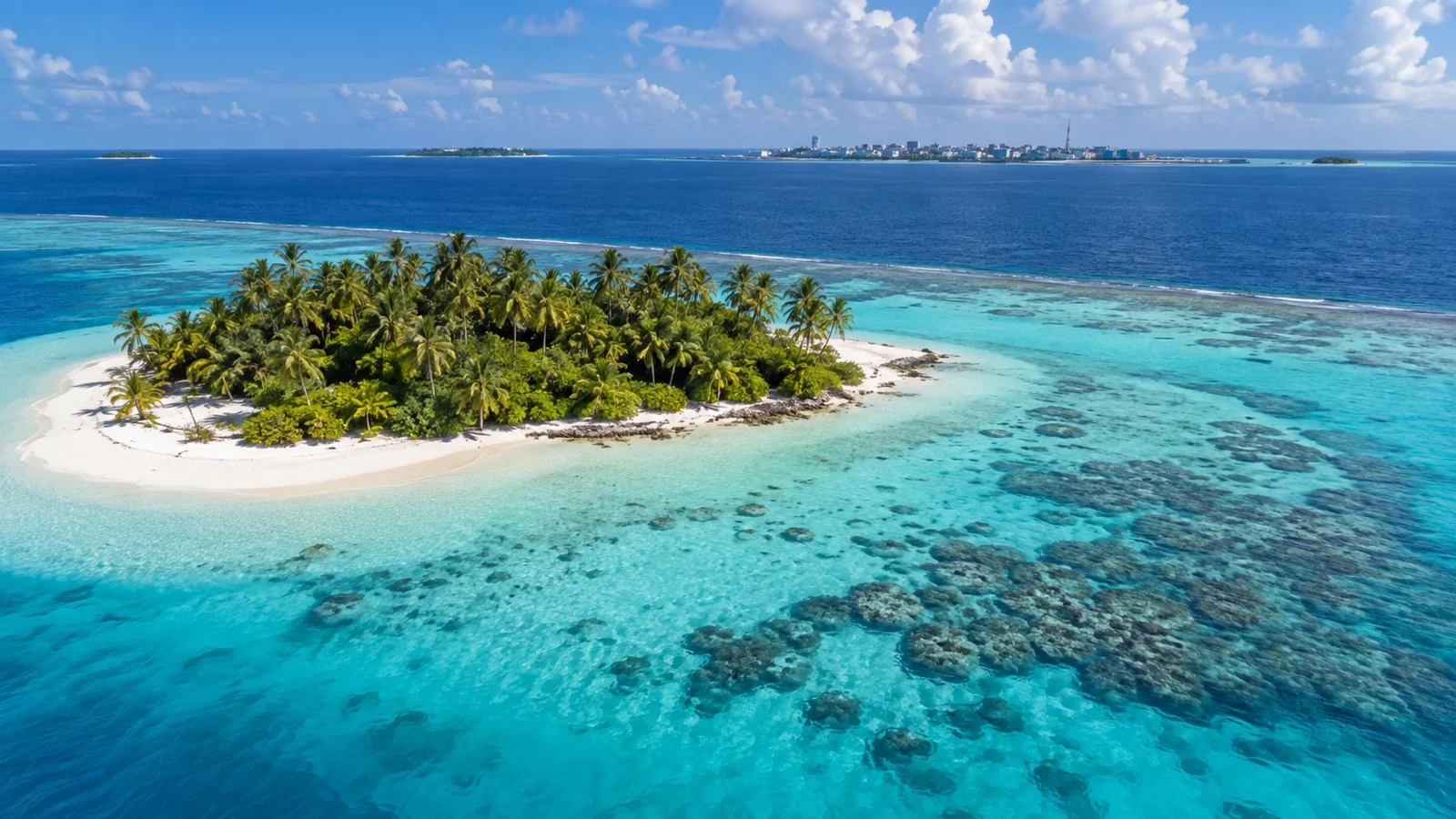
You booked the Maldives and you pictured a wooden jetty over turquoise water. What you get is a tender ride into a dense concrete capital where the beach you imagined is on a private island you are not going to reach.
My quick take
This is the port where expectations do the most damage. The Maldives on a cruise ship is a city day and a boat day, and it is almost never the overwater bungalow day that sold you the itinerary.
Once you accept that, it turns into a genuinely good stop. Malé is compact, strange and interesting, the water really is that color, and there are two or three ways to get onto real sand that work if you set them up before you sail.
The quick facts
- Main port: Malé, and large ships anchor off and run tenders rather than tying up.
- Landing point: Varies by call, sometimes Malé itself and sometimes a Hulhumalé arrangement, so read the daily program.
- Resort islands: Reachable only with a confirmed advance booking that includes the round trip boat.
- Season: Calls cluster from December through April, which is the drier northeast monsoon window.
- Rules ashore: No alcohol on inhabited islands, modest dress away from designated tourist beaches, and vaping devices are banned outright.
What kind of ship stops here, and when
The Maldives is not a mainstream cruise destination the way the Caribbean is. It shows up on world cruises, on repositioning runs between the Gulf and Southeast Asia, and on Indian Ocean itineraries that also touch India and Sri Lanka.
Those routes run in the northern winter, which is why almost every call lands between December and April. If you are also stopping at Colombo or the other Sri Lankan ports on the same sailing, you are on the standard version of this itinerary.
The other kind of ship here is small. Expedition vessels and yacht style ships spend several days moving between atolls, and that is a completely different product from a one day call at the capital.
Malé is a tender call, and that changes everything
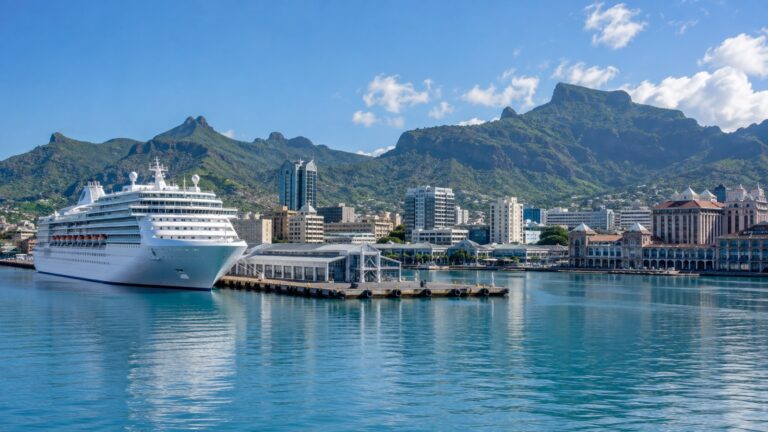
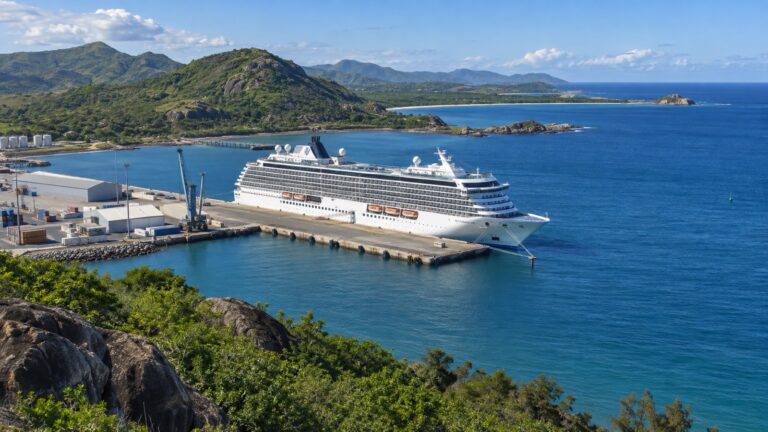
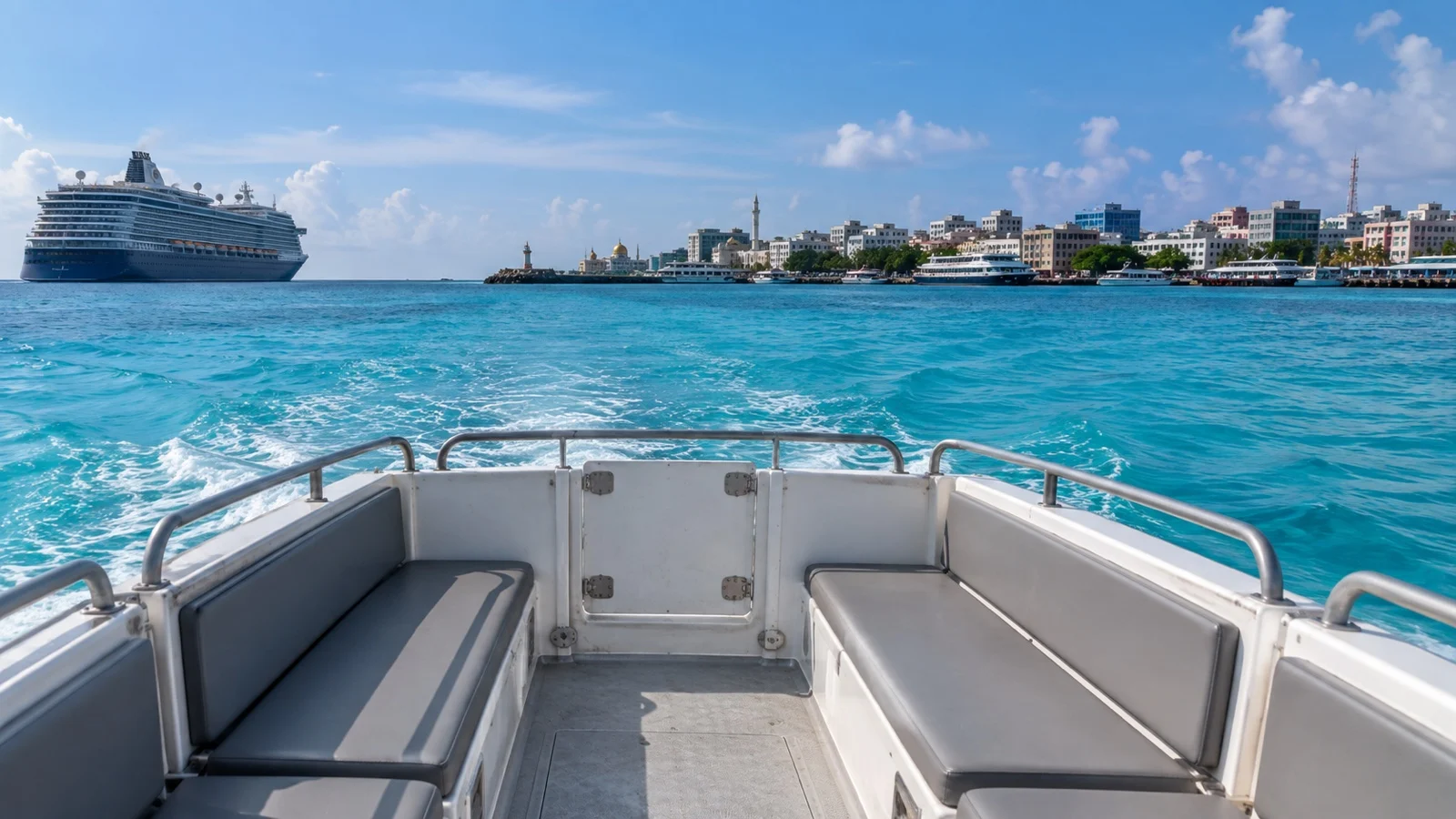
Big ships anchor in the Malé area and move you ashore by tender or a locally arranged boat. There is no long pier for a 900 foot (275 m) ship here, and there is no walking off at your own pace.
That costs you time at both ends. If you have not thought about how much a tender day actually shortens your time ashore, the Maldives is a bad place to learn it, because the good options all involve a second boat after the first one.
It also adds cancellation risk. Wind and swell can stop tender operations even when the city itself is perfectly accessible, and that risk climbs during the wet monsoon.
My habit on any tender port is to photograph the daily program page with the landing point, the return jetty and the last tender time, then treat that last time as forty five minutes earlier than printed. The detailed Malé port guide goes further into how the landing arrangement varies from call to call.
Malé island itself: small, dense and worth a morning
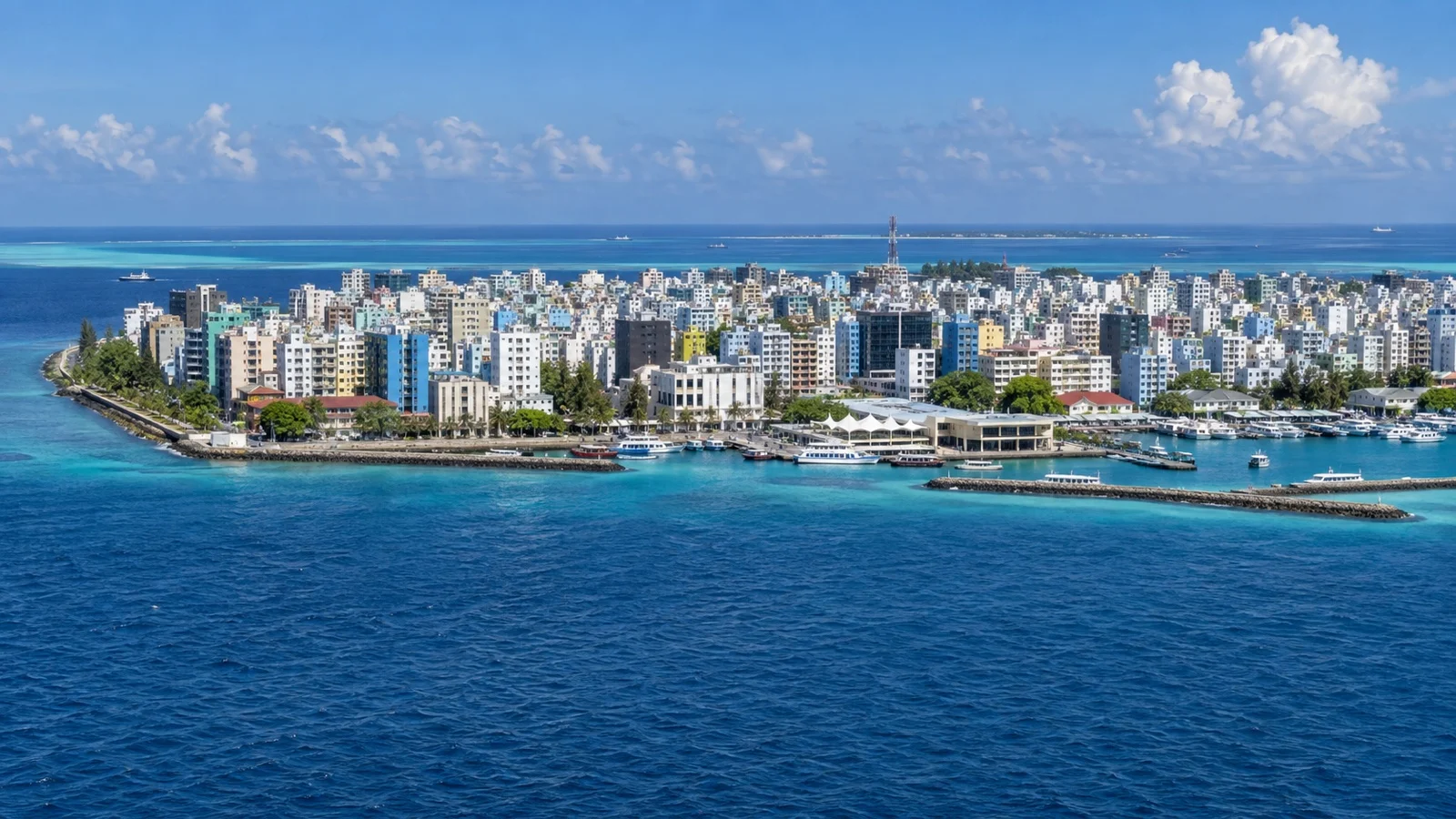
The capital island is tiny and packed. The urban core is under a square mile (about 2 sq km), the greater capital area holds more than two hundred thousand people, and it is one of the most densely populated places on earth.
That density is the appeal, honestly. You can walk the whole thing, and within a few blocks you get a coral stone mosque from the 1600s, a fish market, a produce market and a wall of scooters.
The pieces I would actually walk to are these:
- Hukuru Miskiy: The old Friday Mosque, cut from coral stone, and entry for non-Muslims is not automatic.
- The Grand Friday Mosque: The big gold domed mosque on the waterfront, impossible to miss and the landmark you navigate by.
- The fish and produce markets: On the north waterfront, most alive early, and the most photogenic part of the island.
- The National Museum: In the old royal grounds, small, air conditioned and a reasonable heat escape.
- The waterfront loop: A flat walk around the harbor edge that shows you how the whole country actually functions.
Three hours covers all of that at a slow pace. Mosque access for non-Muslim visitors usually needs permission arranged in advance and never happens during prayer times, so do not build the morning around getting inside one.
Hulhumalé is where the beach you are allowed to use is
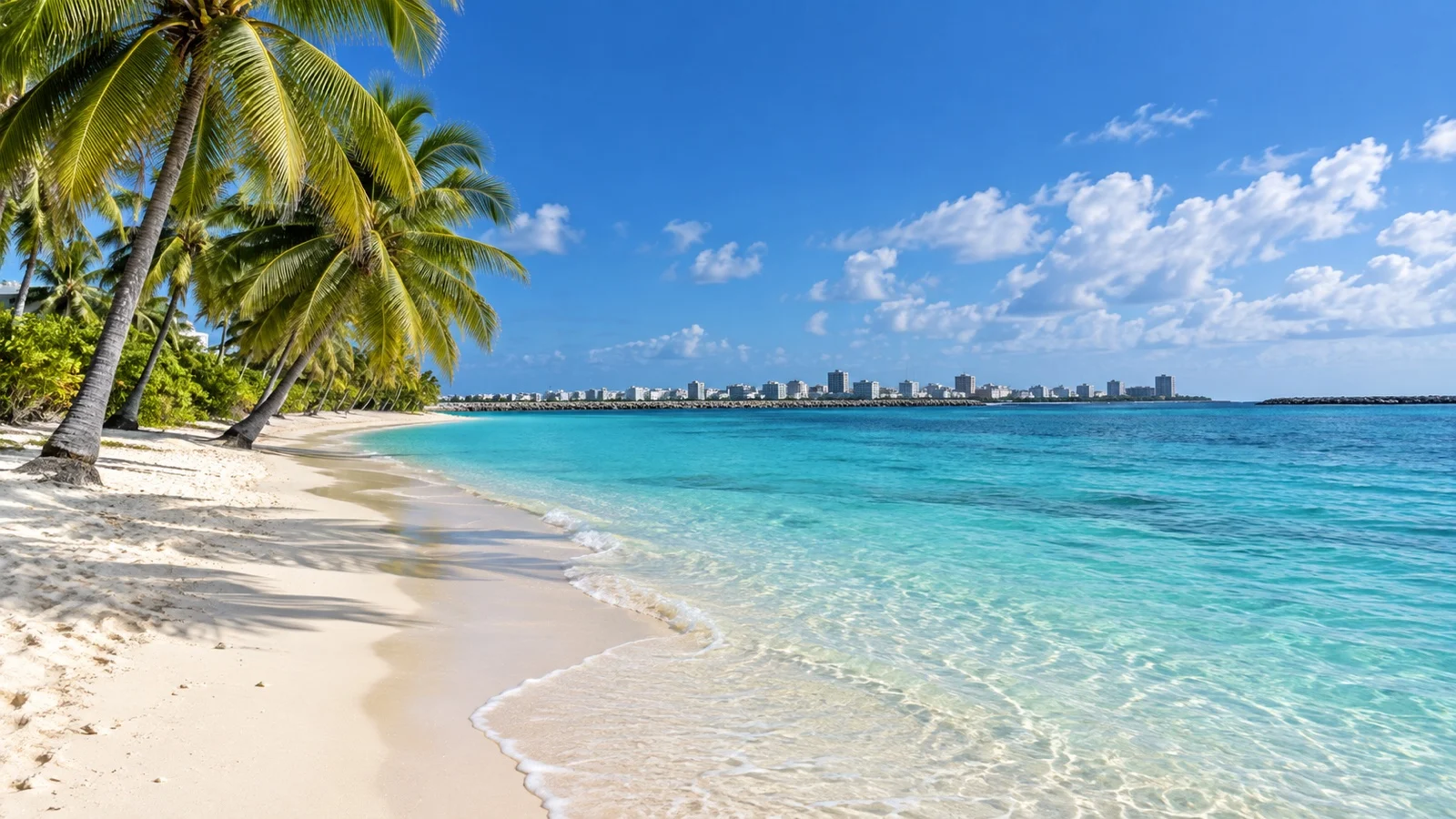
Hulhumalé is a reclaimed island northeast of the capital, and it is the opposite of Malé in almost every way. Wide streets, planned blocks, guesthouses and a long public beach that anybody can walk onto.
It is connected to Malé by road, because a bridge opened in 2018 linking the capital to the airport island, and a causeway carries on from there. That means a taxi or a bus, not a boat, which is a meaningful advantage on a day with a last tender.
If your ship lands you at Hulhumalé instead of Malé, you have quietly been given the easier day. If it lands you at Malé and you want sand, this is the cheapest reliable way to get some.
One caution on swimwear. Local islands often have a designated tourist beach where swimsuits are fine and nowhere else where they are, so look for the signs and cover shoulders and knees the moment you step off that strip.
Villimalé and the ferry option nobody uses
Villimalé sits just west of the capital and is the quiet residential island most visitors never see. Public ferries run from Malé and it is a short crossing.
It is pleasant, low rise and almost car free, and it is a nice hour if you already have Malé covered. What it is not is a beach destination worth risking your tender schedule for.
Public ferry timetables change and are not always posted in a form you can trust from a laptop at home. Confirm the dated schedule locally on the day, and give yourself a fallback that does not involve a boat.
Hulhulé, the airport island, and the seaplane question
Hulhulé is the island the international airport occupies, and it is now connected by road to both Malé and Hulhumalé. It is also where the seaplane terminal is, which is the part people ask about.
Seaplanes are how most far flung resorts move their guests, and they fly in daylight only. They are also expensive, scheduled around resort check in and check out rather than around your ship, and not something you can casually add to a port day.
I would not attempt a seaplane on a cruise call. The failure mode is not a wasted afternoon, it is a missed ship in a country where catching up with it is genuinely hard.
The resort islands, and the honest truth about reaching one
Here is the part nobody wants to hear. There are around 175 resorts spread across the atolls, most of them are a boat or a plane ride from the capital, and most of them are not available to you for the day.
Resort islands are private. You cannot show up at a public jetty and expect a boat to collect you, and a resort with no reservation in your name has no obligation to let you set foot on the sand.
What does work is a day pass booked in advance, in writing, at a resort close enough to the capital for a short speedboat run, with the round trip transfer included in the booking. Get the return boat time confirmed in writing too, and pick one that gets you back with hours to spare rather than minutes.
If your ship sells a resort or sandbank excursion, that is the low stress version of the same thing, and this is one of the ports where I think the markup is defensible. The alternative is a self assembled chain of boats with no one waiting for you at the end.
The outer atolls and the ships that actually see them
The country stretches more than 500 miles (870 km) north to south, with well over a thousand islands scattered along that chain. Small ships can anchor off uninhabited islands and sandbanks, run Zodiacs and snorkel trips, and spend three or four days doing it.
Addu Atoll in the far south is the other end of the country and occasionally sees a call, and there are northern anchorages used for clearance and diving. None of that is available to you on a big ship stopping once at the capital.
If the atolls are the reason you want to come, the ship you want is a small one on a multi day Maldives segment. Booking a 3,000 passenger vessel with one Malé call and hoping for the atolls is the mistake this whole guide exists to prevent.
Which day I would pick, and why
If I had one call at Malé and no advance booking, I would walk the capital in the morning and take a taxi over the bridge to the Hulhumalé beach in the afternoon. That day costs very little, involves no boat except the tender, and it delivers both halves of what you came for.
If I had booked ahead and the weather looked settled, I would take a resort day pass or a ship run sandbank trip instead. That is the version that produces the photograph, and it only works when it was arranged weeks earlier.
What I would not do is improvise a resort visit on the day. That is the single most common way this port goes wrong.
The monsoon split that decides your tender day
The Maldives has two monsoons and they behave very differently. The dry northeast monsoon runs from January into March, and the wet southwest monsoon runs from about the middle of May through November, with December and April acting as transitions.
Cruise season lines up with the dry half, which is not a coincidence. Calmer water means tenders run, and that is worth more here than a few dry hours in the capital.
Rain in the wet season arrives in showers with sun between them rather than as an all day gray sheet. Wind and swell are the real problem, because they are what stops the boats, and there is no appeal process when a captain cancels tendering.
Temperatures sit in the high 70s to around 90 degrees (25 to 32 C) year round, with real humidity and very little shade. The heat management I use for any hot weather port day in this part of the world applies exactly, which mostly means doing the walking before noon.
Money, dress and the rules that have teeth
The currency is the Maldivian rufiyaa, US dollars are widely accepted in visitor facing places, and cards work in hotels and larger shops. Carry some small dollar bills for taxis and market stalls, which is the same cash and card approach I use in most ports.
Alcohol is the rule people misjudge. Licensed resorts may serve it, inhabited islands including the capital do not, and you must never carry alcohol ashore from your ship.
Vaping devices and e-cigarettes are banned, and that ban is enforced at the border rather than ignored. Leave them on the ship, along with anything that could be read as religious material aimed at conversion.
Dress modestly away from designated tourist beaches, keep affection discreet, and be aware that local law here is stricter than a resort brochure suggests. English is widely used in tourism, so none of this is hard to ask about once you are ashore.
Quick answers
Do cruise ships dock in Male or tender?
Large ships anchor off and run tenders or locally arranged boats. The landing point varies by call, so check the daily program rather than assuming last year’s arrangement holds.
Can you visit a Maldives resort island on a cruise port day?
Only with a day pass booked in advance that includes the round trip boat, at a resort close enough for a short speedboat run. Turning up at a jetty and asking will not work.
Is there a beach you can use near Male?
Yes, Hulhumalé has a long public beach and you reach it by road over the bridge rather than by boat. Watch for the designated swimwear area and cover up outside it.
What is the best month to cruise to the Maldives?
January through March is the driest and calmest stretch, which also makes it the safest window for a tender day. December and April are decent transitional months with slightly more variability.
Can you drink alcohol in Male?
No. Alcohol is confined to licensed resort islands, and taking any ashore from your ship is a serious mistake rather than a minor one.
Final word
The Maldives is a fine cruise port and a terrible cruise fantasy. Sold as a city walk, a public beach and a boat ride over impossibly clear water, it delivers every time, and sold as a resort day it disappoints almost everybody.
Book the resort pass weeks out or do not plan on a resort at all. Then walk Malé in the morning, get yourself to sand in the afternoon, and be back at the tender line long before you think you need to be.
How this guide was researched: Tender arrangements at Malé, island connections around the capital, monsoon timing, entry rules and local laws on alcohol and dress were checked in November 2026. Landing points, ferry timetables, resort day pass availability and excursion pricing change often, so confirm the details for your own sailing before you book anything ashore. See our Editorial Policy.