Beagle Channel and Glacier Alley: The Morning Before Ushuaia
Your alarm goes off at 5:40, the deck is wet, and somewhere off the bow a glacier is sliding into view. The Beagle Channel morning is the best two hours at sea in South America, and most people sleep through half of it.
My quick take
This is one of the few scenic cruising mornings I would genuinely set an alarm for. Not because the ice is bigger than Alaska ice, because it is not, but because the glaciers come one after another for a couple of hours and the mountains behind them are absurd.
The part people get wrong is the planning. They wake up when the announcement comes, get dressed, and arrive on deck for glacier number four with cold hands and a dead phone battery.
The quick facts
- Where: A channel about 150 miles (240 km) long separating Tierra del Fuego from the islands to the south.
- When: Glacier Alley is usually an early morning event, often somewhere in the 6am to 10am window.
- Which side: The glaciers are on the north shore, so starboard heading west and port heading east toward Ushuaia.
- Weather: Low cloud and drizzle are the default, and a clear morning is a bonus rather than a plan.
- After: Most ships doing this stretch are alongside in Ushuaia later the same day.
What the Beagle Channel actually is
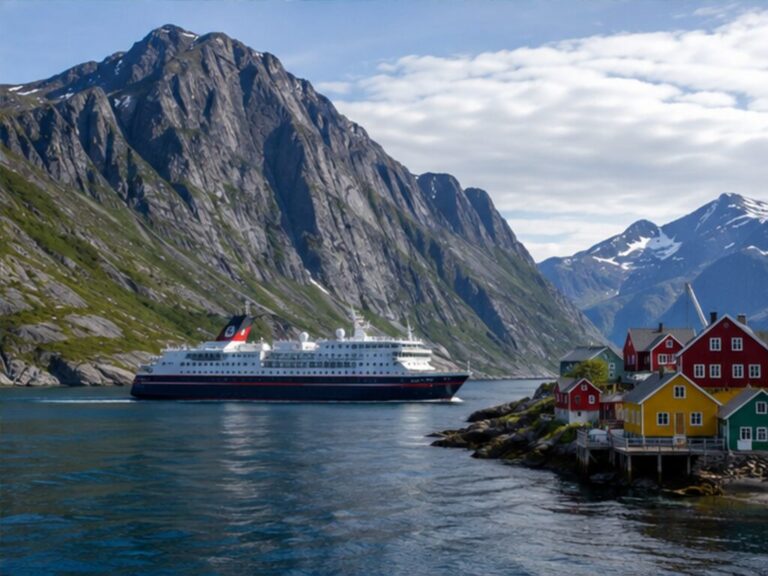
It is a long, narrow saltwater channel cut roughly east to west across the bottom of South America. It separates the big island of Tierra del Fuego from Navarino, Hoste and the smaller islands south of them, and it runs about 150 miles (240 km) end to end.
At its tightest it is only about 3 miles (5 km) across, which is why it feels like a river with mountains instead of an ocean. The eastern part of it is the working border between Chile and Argentina, and the western part sits entirely inside Chile.
Glacier Alley is only one arm of the channel
West of Ushuaia the channel splits around Gordon Island into a northwest arm and a southwest arm. Glacier Alley is the northwest arm, and everything worth getting out of bed for happens along its north shore.
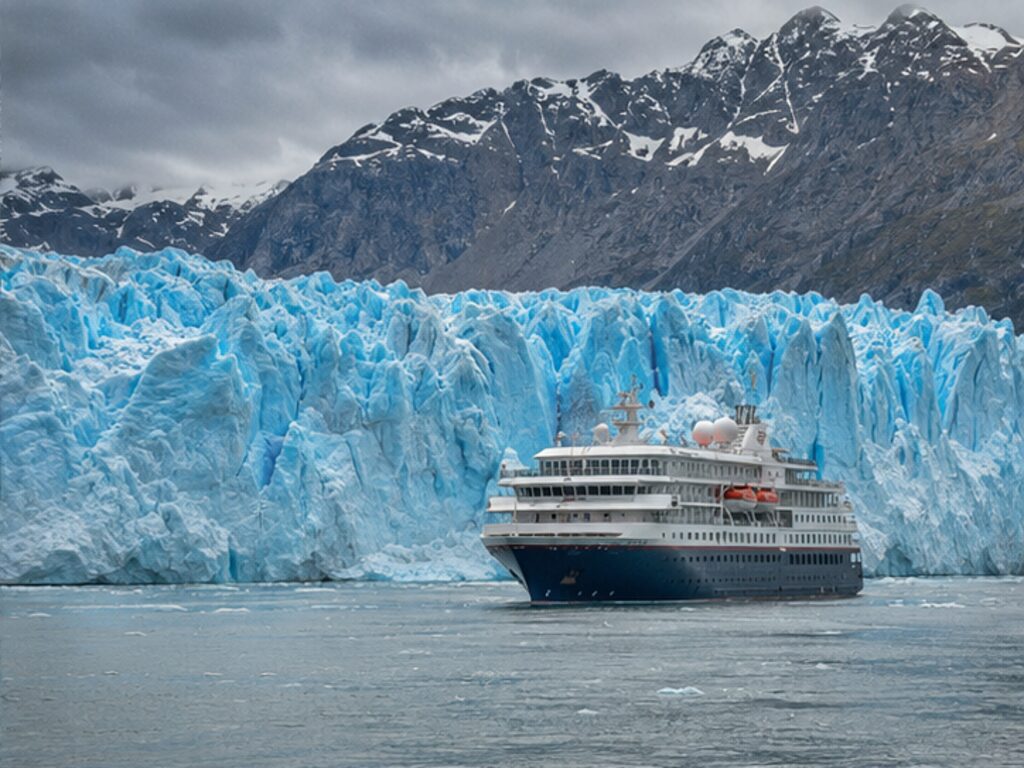
The ice above you is the Cordillera Darwin, a range of peaks topping 7,000 feet (2,100 m) with an icefield sitting on them. It sits inside a Chilean national park you can essentially only reach by sea, which is a polite way of saying nobody is driving here.
The glaciers, in the order they are usually announced
Heading west from the Ushuaia end, the sequence you will see written down most often is this one. Reverse the list if you are sailing the other way.
- Holanda: The eastern end of the run, and the one people miss because they are still getting dressed.
- Italia: Broad and usually the first one that makes the deck go quiet.
- Francia: Steep, often streaked with rock, and close enough to fill a phone frame.
- Alemania: The one most likely to be skipped in the announcements.
- Romanche: Toward the western end, and known for the cascade that drops from it into the channel.
- Espana: Named in some lists and quietly swapped out of others.
Be relaxed about that list. Different operators announce five, some announce six, and the names they choose to skip are not consistent from ship to ship or year to year.
Which side of the ship to stand on
Every glacier in this stretch comes down the north shore. That single fact answers the whole question, because your side depends only on which way the bow is pointed.
Sailing west, away from Ushuaia and toward the Pacific side, north is on your right, so the glaciers are on starboard. Sailing east, toward Ushuaia, north is on your left, so they are on port.
If you booked a balcony and it is on the wrong side, do not sulk in the cabin. Go to the forward observation lounge or an open deck, because the bow gives you both shores and the glaciers open up ahead of you rather than sliding past sideways.
Which itineraries actually include it
The main one is the South America repositioning run, Santiago or Valparaiso to Buenos Aires and the reverse. Those sailings usually string together the Chilean fjords, Punta Arenas, Cape Horn and Ushuaia, and Glacier Alley slots in as a scenic cruising morning somewhere in the middle.
Small expedition ships working between Punta Arenas and Ushuaia do it too, and they can go closer and linger. Antarctica sailings out of Ushuaia touch the Beagle Channel on the way out and back, though many of them only run the eastern stretch and never enter the glacier arm at all.
Direction changes which day it lands on, not whether you get it. Read the itinerary line by line and look for the words Glacier Alley or Avenue of the Glaciers, because plenty of sailings list Beagle Channel scenic cruising and still never turn into the northwest arm.
This is the sort of thing I check before I book, not after. My guide to scenic cruising in the Chilean fjords covers the other glacier mornings on the same run, and the Cape Horn rounding is usually the day either side of this one.
Why this is an alarm clock morning
Ships time the transit so they arrive in Ushuaia in reasonable working hours, which pushes the glacier stretch early. Most people report it starting somewhere between 6am and 10am, and 7am is a fair bet if you want one number to plan against.
It is not universal. Expedition ships running the other direction sometimes hit the alley in the afternoon, and a schedule change or a weather delay can move it by hours.
The light is the real argument for being up early. Low sun in a narrow channel puts a hard edge on the ice and turns the water black, and by mid morning the same view is flat and gray.
The weather, honestly
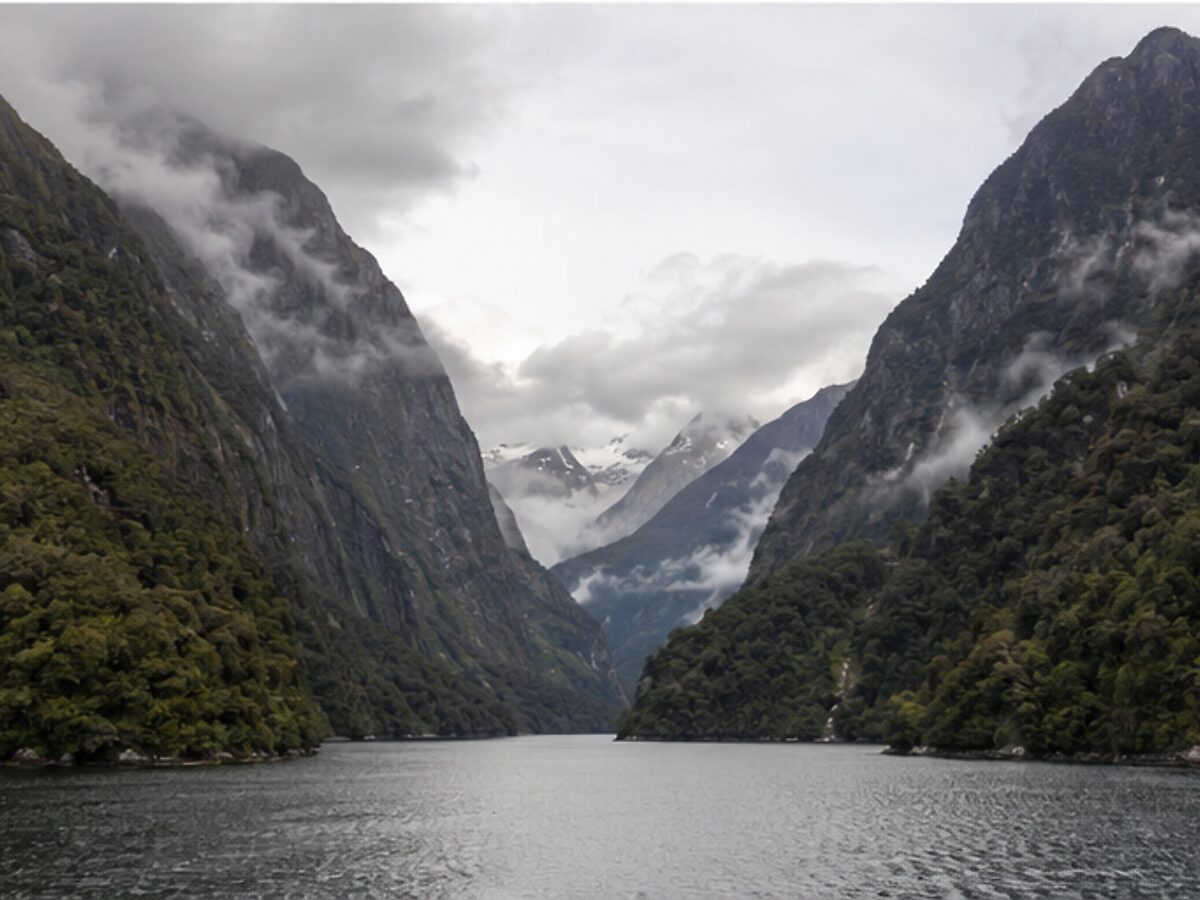
This is one of the cloudiest, windiest corners of the planet that big ships go anywhere near. The westerlies blow across it all year, and the mountains you are looking at exist because they wring the moisture out of that wind.
The rainfall total is not the scary part. Long run monthly averages near the eastern end of the channel sit around 1.5 to 1.9 inches (39 to 47 mm) in the summer months, which sounds mild until you understand it is spread across a lot of separate days.
Summer temperatures average about 48 degrees (9 C) at sea level, and that is before wind and a moving ship. Weather here also turns fast, so a morning that starts closed in can open up by the third glacier.
Here is the useful version. Partial cloud with the glaciers visible under a gray ceiling is the realistic outcome, low cloud that hides the tops is common, and a clear blue morning is genuine luck rather than a normal Tuesday.
What actually works to wear on deck
Forget the packing list language and think about standing still, outdoors, at 45 degrees (7 C), in wind, with wet hands, for two hours. That is the real problem.
- A hooded waterproof shell: Wind is the issue more than rain, and a hood beats an umbrella that will invert immediately.
- A real mid layer: Fleece or a light down piece under the shell, because a shell alone does nothing.
- Thin gloves you can use a phone in: Bare hands on a cold metal rail last about ten minutes.
- A hat that will not blow off: Beanie, not a brim, and I would say that twice.
- Shoes with grip: Open decks in drizzle are slick and the crew will be hosing them.
Skip the heavy parka unless you are also doing Antarctica landings. Layers you can shed indoors are more useful than one enormous coat you end up carrying.
What you might see besides ice
The channel is busy with wildlife, though most of it is at a distance and none of it is guaranteed. South American sea lions haul out on rocks and islets, and cormorants nest on the same rocks in dense black and white colonies.
Dolphins turn up along the ship, usually as a brief flash rather than a bow riding show. Condors are possible over the ridgelines, and if you see one you will know, because nothing else that size soars there.
Nearer Ushuaia you get the red and white Les Eclaireurs lighthouse on its low rock, which is the picture everyone comes home with. It first lit in 1920 and is often called the lighthouse at the end of the world, which is a nice line and also not the lighthouse from the novel of that name.
Does the ship tell you what you are looking at
Usually yes, and the quality varies a lot. On big ships you typically get bridge announcements naming each glacier as it comes abeam, sometimes with a naturalist or a destination host adding context.
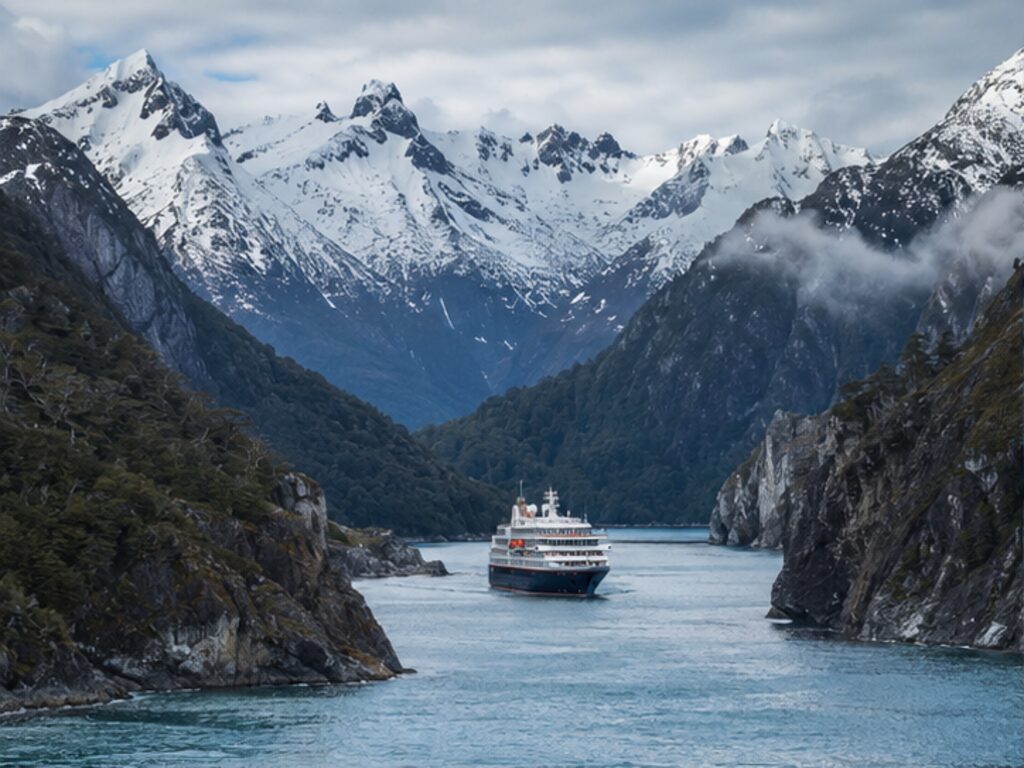
On expedition ships it is closer to a running commentary, and the expedition team will be out on deck with you pointing at things. That is genuinely better, and it is one of the few places where the small ship premium buys something you can measure.
The hot drink on deck, and whether to line up for it
Several lines make a small ceremony of this and hand out hot chocolate, soup, mulled wine or spiked coffee on the open decks during scenic cruising. It is a nice touch and it is not a promise, so I would not choose a sailing over it.
The practical catch is that the cart appears in one spot and the line for it forms right where the good rail space is. My habit is to get a cup from the buffet before I go out and hold my position instead.
Then you arrive in Ushuaia
The glacier arm ends, the channel widens, and a few hours later there is a town on the north shore with mountains directly behind it. Ships berth right at the foot of the main street, which makes this one of the easiest walk off ports anywhere.
It is also the busiest jumping off point for Antarctica, so the pier is often a mix of your ship and small expedition vessels loading for the crossing. If that is your onward plan, my rundown of what the Drake Passage crossing involves is the honest version.
Just west of town is a national park where the last of the Andes runs out into the channel, and it is the standard half day excursion. The full picture of berths, walking distances and what is worth doing is in my Ushuaia cruise port guide.
The mistakes I would plan around
The big one is treating this as a sea day. It is a two hour event inside a sea day, and if you miss the window there is no second showing.
The second is battery. Cold drains phones fast, and people who start the morning on half a battery are dead before Romanche.
The third is booking a spa treatment or a specialty breakfast for that slot because it looked like a quiet morning on the planner. If you are coming up the other way from Chile, the day before is often the Punta Arenas call, which is a genuinely tiring port day and makes the early alarm harder than it sounds.
Quick answers
How long is the Beagle Channel?
About 150 miles (240 km) end to end, and only around 3 miles (5 km) wide at its narrowest point. Your ship will not transit all of it in one go.
What time does Glacier Alley start?
Most commonly early, somewhere in the 6am to 10am range, though some sailings hit it in the afternoon depending on direction. Check the daily program the night before, because the bridge sets the time and it moves.
Which side of the ship for Glacier Alley?
The glaciers are all on the north shore, so starboard if you are sailing west and port if you are sailing east toward Ushuaia. An open forward deck works regardless of which way you are pointed.
How many glaciers are there in Glacier Alley?
Five or six get named depending on who is talking, most often Holanda, Italia, Francia, Alemania, Romanche and Espana. You will see other unnamed ice between them.
Is the Beagle Channel rough?
It is sheltered water and generally far calmer than the open ocean on either end of it. Wind funneling down the channel can still make the open decks unpleasant even when the ship is steady.
Final word
This morning is the reason people book the South America repositioning cruise and then talk about it for years. It costs you one early alarm and a set of layers you were bringing anyway.
Set the alarm, get outside before the announcement, and accept that the weather is going to do whatever it wants. Even the gray version of this channel is better than most things you will see from a ship.
How this guide was researched: Channel geography, glacier names and order, long run climate averages and the lighthouse details were checked against official park, geographic and meteorological records in September 2026. Transit times, which glaciers get announced and whether hot drinks appear on deck vary by ship and by year, so confirm the timing for your own sailing in the daily program onboard. See our Editorial Policy.
More on this topic: browse every guide on expedition and alternative cruises.