Kampong Chhnang River Cruise Port Guide: Landings, Pottery Villages, and Tonle Sap Water Levels
Kampong Chhnang is a small Tonle Sap River call where the landing method, water level, and excursion transport shape the day. The safest plan is to use your ship’s current briefing, then choose one focus: a pottery visit, a short town stop, or an operator-arranged boat outing.
This is not a port for stacking three independent adventures before lunch. A simple plan leaves room for changing river access and the very real logistics of moving between ship, shore, and village.
My quick take
Take the ship’s included or guided pottery excursion if it names the village, transport, walking conditions, and return time. It is the most practical way to reach a working craft area without hunting for a driver or guessing which household receives visitors.
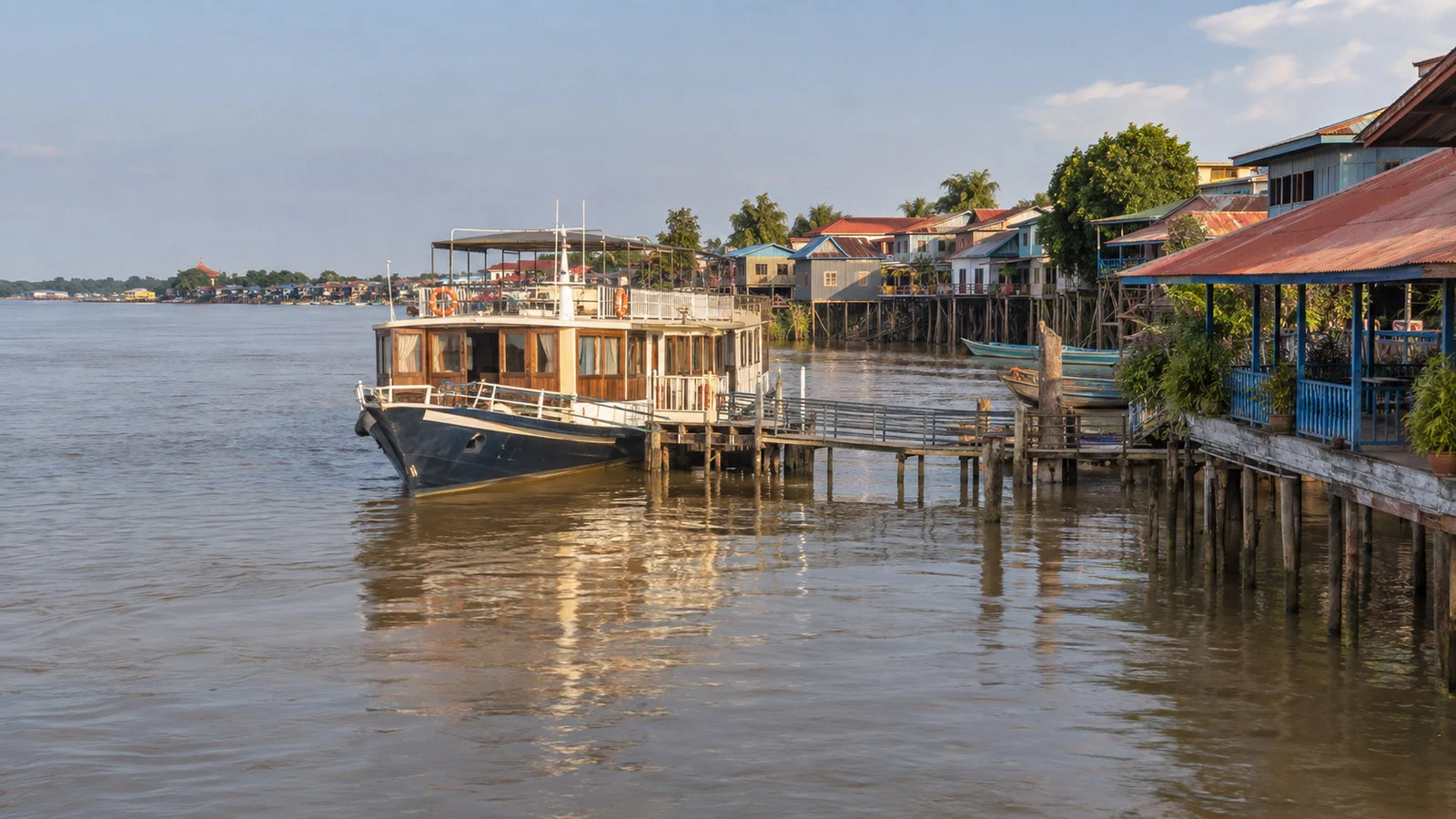
Stay near the waterfront and market if you want the easiest independent option, but first confirm where the ship will collect you. Treat any floating-community visit as a separate boat activity that needs a named operator, life jackets, a clear duration, and respectful photography rules.
Kampong Chhnang quick facts
- Docking: There is no public cruise-terminal schedule to rely on, so get the day’s landing method and pickup point from your ship.
- Into town: Do not assume every landing is the same short walk from the market; use the included transfer or confirm the route with the cruise team.
- Currency: Cambodian riel (KHR) is official, while US dollars are widely used for larger purchases; bring small, clean notes and a payment backup.
- Time zone: Indochina Time, UTC+7 year-round, with no daylight saving time.
- Missed calls: No reliable port-specific percentage is published, and both high and low water or other operating limits can alter the call.
Where the ship stops and how you get ashore
Kampong Chhnang does not publish a dependable cruise-berth calendar or a single terminal address for passengers. Depending on the vessel and conditions, your operator may use a local landing, tender, small boat, gangway, or vehicle connection.
Ask the cruise director whether the ship is alongside, anchored, or using another transfer before you decide to go independent. Also ask whether steps, a moving boat, a steep bank, or a narrow gangway are involved.
Save the ship’s emergency contact and photograph the exact meeting point after landing. A pin from a previous sailing is not reliable enough when river operations can change.
Water levels can change the whole itinerary
The Tonle Sap system has a seasonal flow reversal, but that does not create a simple “high water good, low water bad” rule for cruise access. The Mekong River Commission monitors a complex system affected by Mekong flows, tributary rainfall, and changing lake levels.
A current Pandaw itinerary notice, for example, says high water from September through November may prevent access to Tonle Sap River points and trigger replacements. Other vessels may face different draft, bridge-clearance, current, or landing limits, so your own operator’s update wins.
Do not book a nonrefundable independent tour on the assumption that Kampong Chhnang is guaranteed. If the call changes, the cruise line may substitute another river stop, a coach transfer, or a different program according to its terms.
Getting around without losing the ship
Use ship-arranged transport when the pottery village or another rural stop is the goal. If you hire a car or tuk-tuk independently, agree on the destination, total price, waiting time, and return pickup before leaving.
Keep the ship’s all-aboard time separate from the excursion departure time in your notes. Return to the stated meeting point with a buffer based on the operator’s route, not a generic promise that town is five minutes away.
The Kampong Chhnang provincial administration is the official local-government reference, but its public site is primarily in Khmer and does not provide a visitor-ready cruise transfer timetable. That is another reason to settle transport onboard.
Pottery villages: what to confirm before you go
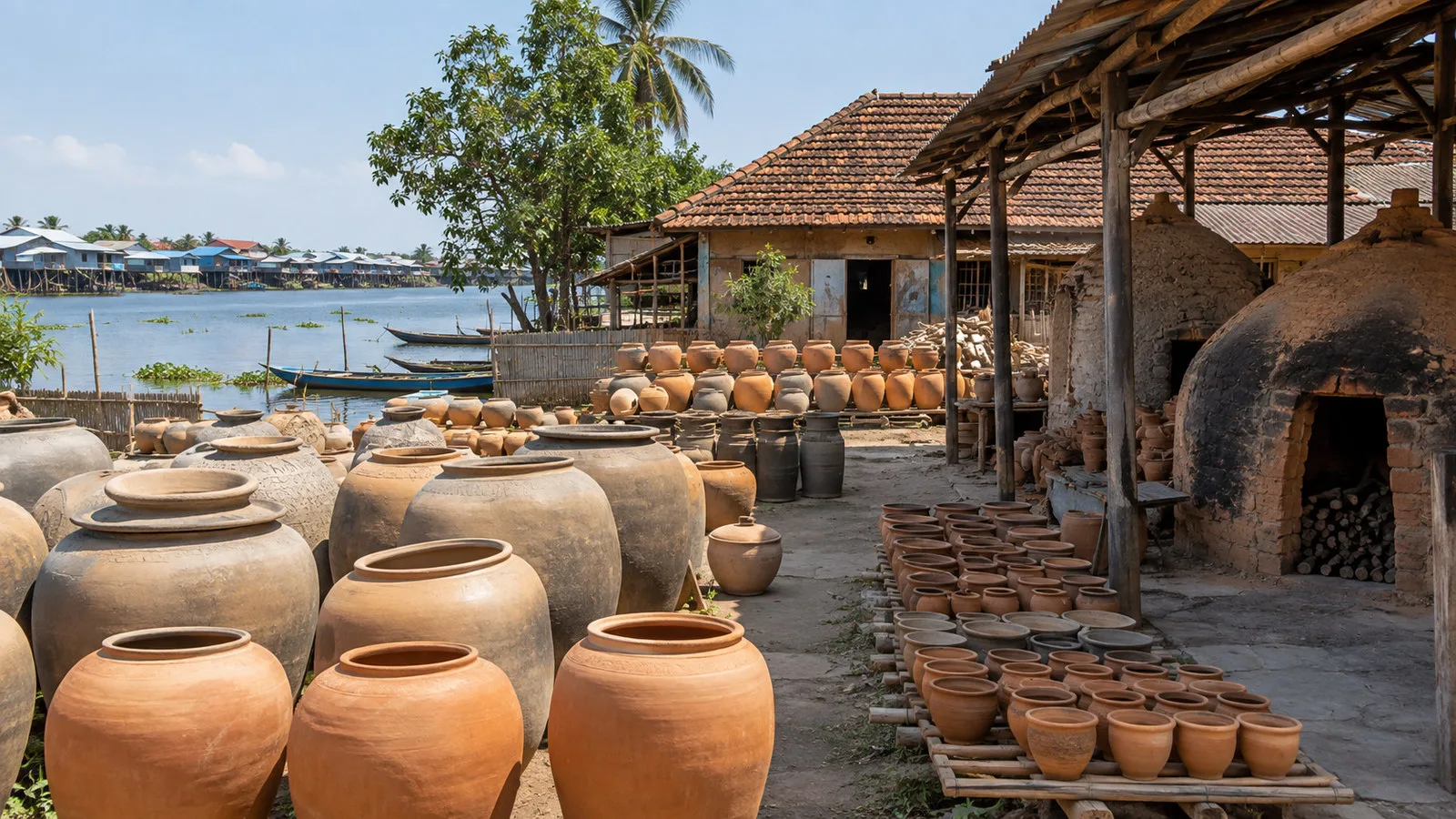
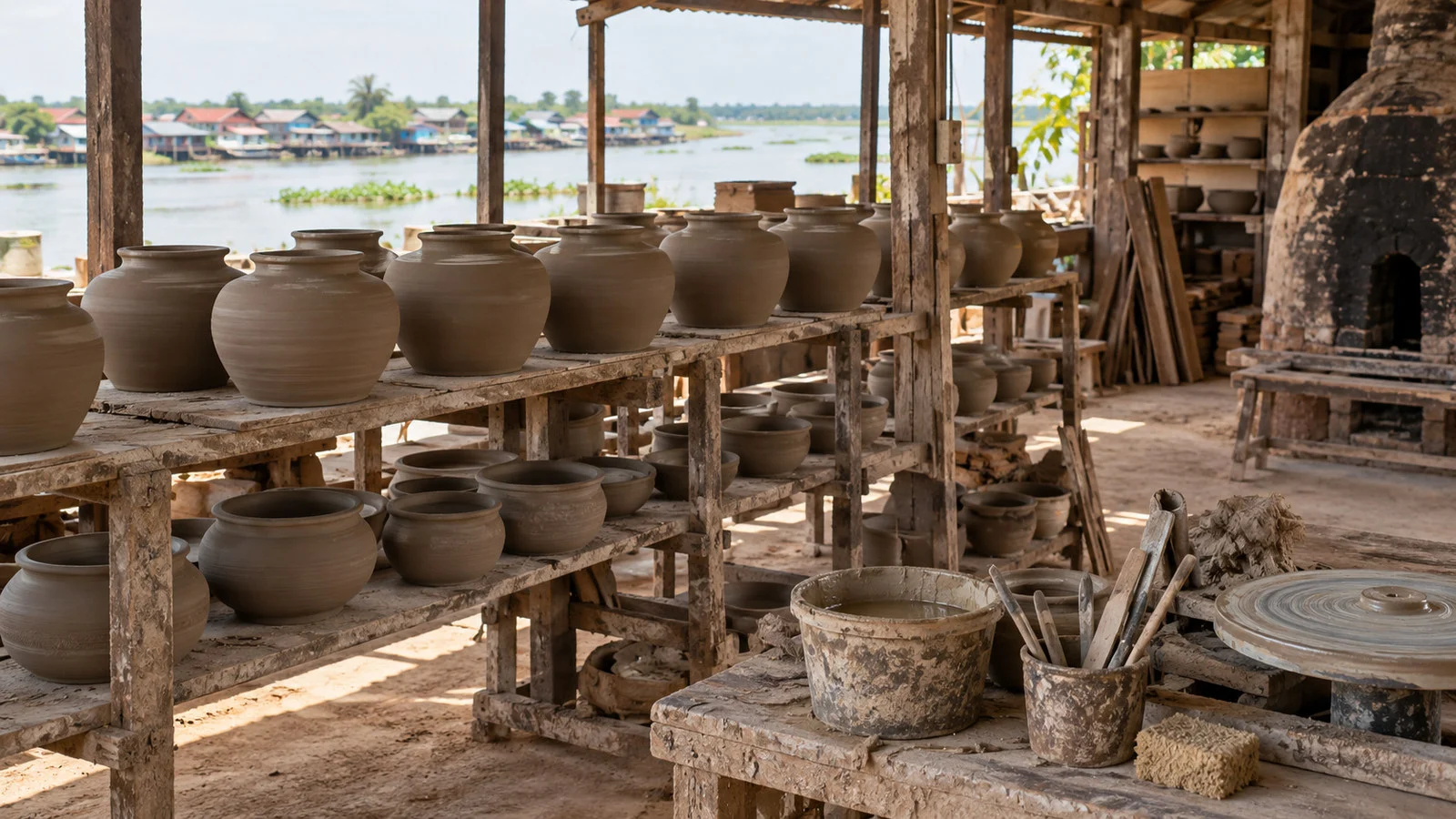
Kampong Chhnang is closely associated with pottery, and cruise programs may include a household workshop or village demonstration outside the waterfront area. Names, hosts, demonstrations, and shopping opportunities can differ by operator and date.
Read the excursion description for the actual village, drive time, walking distance, terrain, restroom access, and whether a demonstration is guaranteed. A working home or kiln is not the same thing as a staffed museum with fixed hours.
If you want to buy a pot, ask whether the maker produced it and whether the ship can safely store a fragile piece. Photograph people, homes, and workspaces only with permission, especially when the visit takes place at a family residence.
Floating and stilted communities
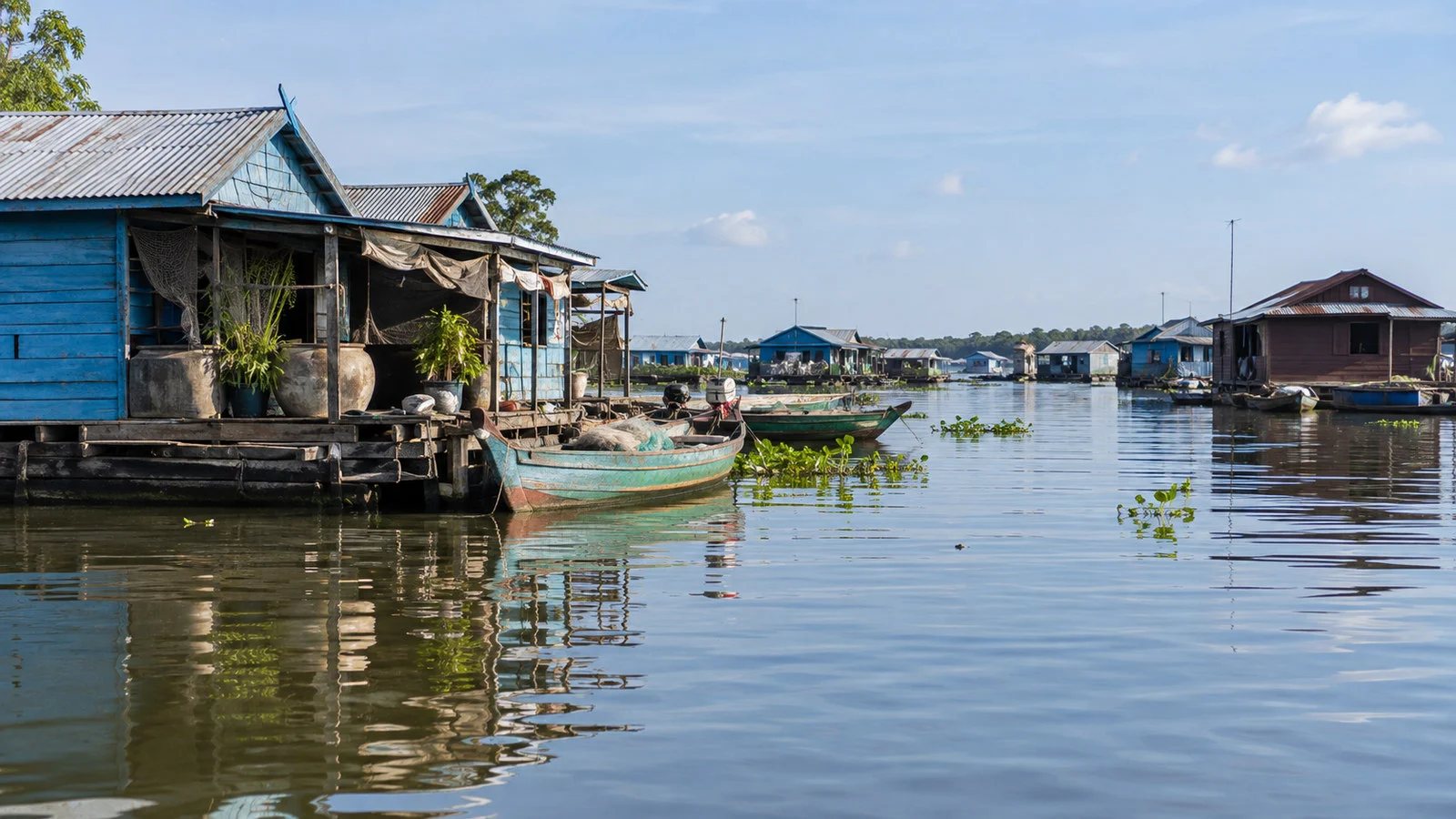
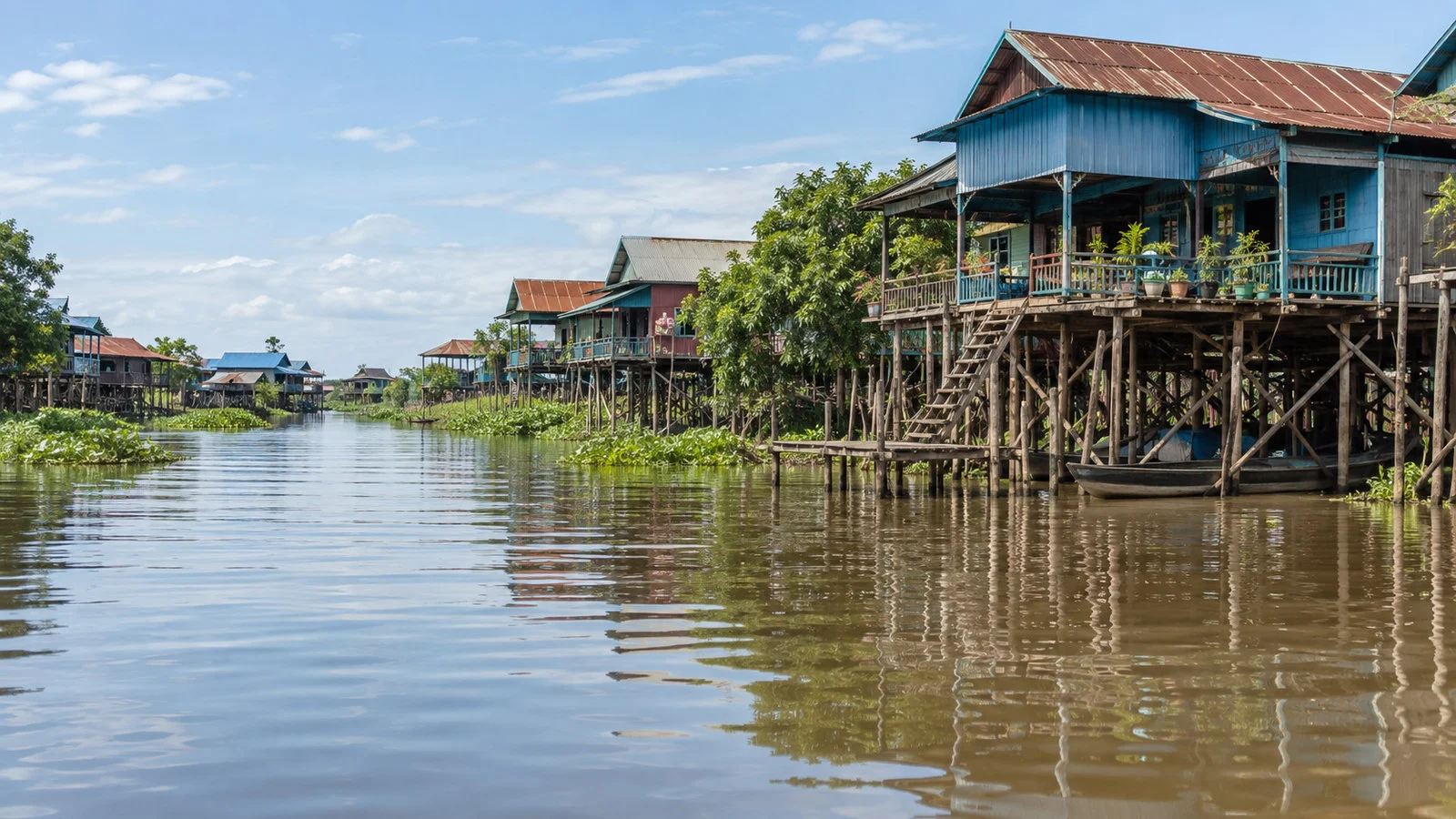
Do not rely on the old claim that the town’s floating homes have mostly disappeared, or on the opposite promise that a large floating village is always waiting. Homes, routes, water depth, and local access can change, while “floating” and “stilted” are not interchangeable descriptions.
If your cruise offers a community boat visit, ask whether it is included, where it operates, how long it lasts, and what kind of boat is used. Confirm that a wearable life jacket is provided for each passenger and ask about boarding steps or transfers between boats.
Remember that these are homes, not scenery arranged for visitors. Keep voices low, follow the guide’s boundaries, and ask before photographing residents or looking inside private spaces.
Ship excursion or independent visit?
Choose the ship excursion for any pottery village or boat-based community visit because it connects the landing, local transport, guide, and return. That bundle is more valuable here than a polished attraction ticket.
Choose independent time only when the cruise team confirms a safe walking route or provides a transfer into town. Keep the plan small, such as a market visit and waterfront walk, and do not assume a waiting tuk-tuk will still be there later.
If the line changes the day’s destination, enjoy the replacement rather than trying to chase Kampong Chhnang by road during a short call. River itineraries are stitched together day by day, and one improvised detour can unravel quickly.
Accessibility and limited-mobility planning
Accessibility begins with the exact ship-to-shore transfer, which can change with the landing. Ask about gangway width and slope, handrails, steps, tender boarding, distance to the vehicle, and whether crew can assist without lifting a passenger.
For a pottery visit, ask about firm paths, thresholds, seating, shade, restrooms, and whether a wheelchair can remain assembled in the vehicle. For a boat outing, confirm transfer steps, seat backs, life-jacket fit, and whether the boat can take a mobility device.
A “short walk” can still be a poor fit in heat or on broken, wet, or unpaved ground. Request a seated alternative or remain aboard if the operator cannot describe the complete access chain.
Three realistic ways to use the call
The pottery plan
Take the organized transfer, focus on one workshop or village, and let the guide manage introductions and timing. Ask in advance whether buying pottery is possible and how purchases will be carried back to the ship.
The gentle town plan
Use the confirmed transfer or walking route to visit the market and waterfront, then return on the next-to-last practical departure. This is the sensible choice when you prefer flexible time and minimal rural transport.
The community boat plan
Book only when the operator specifies the current route, safety equipment, duration, and physical demands. Skip an informal boat offer if the vessel, life jackets, price, or return timing does not feel clear.
Money, heat, and practical safety
The US State Department’s Cambodia guidance says the riel is official, US dollars are widely used for larger transactions, and damaged dollar notes are often refused. It also notes that cards work only at some businesses and ATMs may be unreliable.
Bring small, clean notes and some riel instead of assuming dollars work everywhere. Keep cash and your phone secured, particularly in a market or open-sided vehicle.
Carry drinking water, sun protection, and rain protection that fits in a small bag. During the May through October rainy season, the State Department advises care around water because currents can be extremely strong.
For emergencies in Cambodia, the same official guidance lists 117 for police and 119 for ambulance. Save the ship’s emergency number too, since onboard staff can coordinate local help and protect the sailing schedule.
How Kampong Chhnang fits the wider cruise
Kampong Chhnang belongs to the Tonle Sap side of a Cambodia river itinerary, not the Mekong mainstream itself. The broader Mekong cruise ports guide explains how operators connect this river system with Phnom Penh and other Cambodian calls.
Nearby itinerary names can be confusing, so do not substitute Kampong Cham, Oudong, or Kampong Tralach for Kampong Chhnang on a map. Check the day’s written program before following an old blog, saved pin, or tour listing.
When the full lake corridor is operating, some itineraries continue toward the Tonle Sap Lake crossing and a land connection for Siem Reap. The exact combination is line, vessel, season, and sailing specific.
Quick answers
Does Kampong Chhnang have a cruise terminal?
There is no public passenger-terminal schedule or single berth address you should use without confirmation. Ask the ship for the day’s landing method and meeting point.
Can I visit a pottery village independently?
Possibly, but only with a confirmed driver, host or open workshop, and return plan. The ship excursion is usually the cleaner choice because working households do not keep museum-style visitor hours.
Are floating villages guaranteed?
No. The route, community access, water level, and itinerary can change, so use the current excursion description rather than old photos or resettlement claims.
Should I bring dollars or riel?
Bring some Cambodian riel plus small, undamaged US dollar notes if your ship recommends them. Do not count on every stall accepting a card, QR payment, or a large bill.
Is the call wheelchair accessible?
It depends on the day’s landing, vehicle, and excursion terrain, so a generic yes or no is misleading. Get a component-by-component answer from the cruise line before booking.
What happens if the river route changes?
The cruise operator may substitute a landing, transfer, excursion, or different destination according to conditions and its contract. Follow the onboard update and do not expect automatic compensation unless the booking terms provide it.
The last word
Kampong Chhnang is most rewarding when you stop trying to make it behave like a fixed ocean-cruise terminal. Confirm the landing, choose one well-defined local experience, and leave enough room for the river to edit the plan.
How this guide was researched: Unless a first-hand visit is explicitly identified above, this guide is based on official government, river-monitoring, cruise-operator, safety, and destination sources. Logistics and time-sensitive details were reviewed in September 2026; see the Editorial Policy.