Trier River Cruise Port: Berths, Roman Sights and Day Plans
Trier is the Moselle port where a Roman gate, imperial baths, Germany’s oldest cathedral, and a cheerful amount of Riesling fit into one day. The city calls itself Germany’s oldest, but its historic center feels lively rather than trapped behind museum glass.
Some ships land at Zurlaubener Ufer, some use industrial or regional alternatives, and some visit Trier by coach from Wasserbillig in Luxembourg.
My quick take
Prioritize Porta Nigra, Hauptmarkt, and the cathedral, then choose one deeper Roman site. For other calls in the country, use our Germany cruise ports guide.
Trier river cruise port quick facts
- Into Town: Porta Nigra is about 20-30 minutes walking from Zurlaubener Ufer; a taxi or local bus shortens the trip.
- Currency and Language: Euro. German is official; English is used at major attractions, but simple German greetings are appreciated.
- Time Zone: Central European Time, UTC+1; Central European Summer Time, UTC+2, from late March through late October.
- Schedule risk: Moselle water levels, lock disruptions, berth changes, and other operational issues can alter a call; no authoritative Trier-specific cancellation percentage is published.
Trier remains an active river-cruise destination in 2026, but the day’s landing may differ from a generic map pin. Use the ship’s program for the assigned berth or coach gateway rather than relying on an unofficial miss-rate estimate.
Where do river cruise ships dock in Trier?
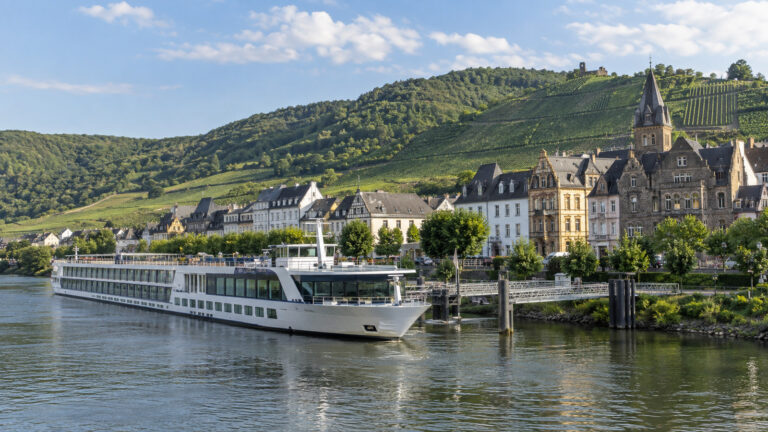
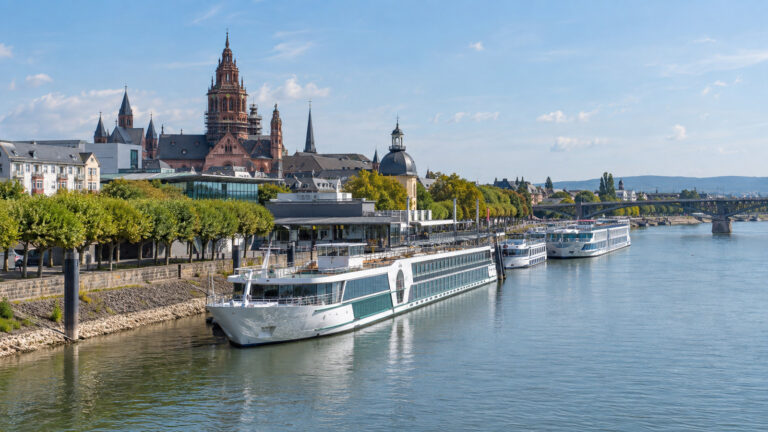
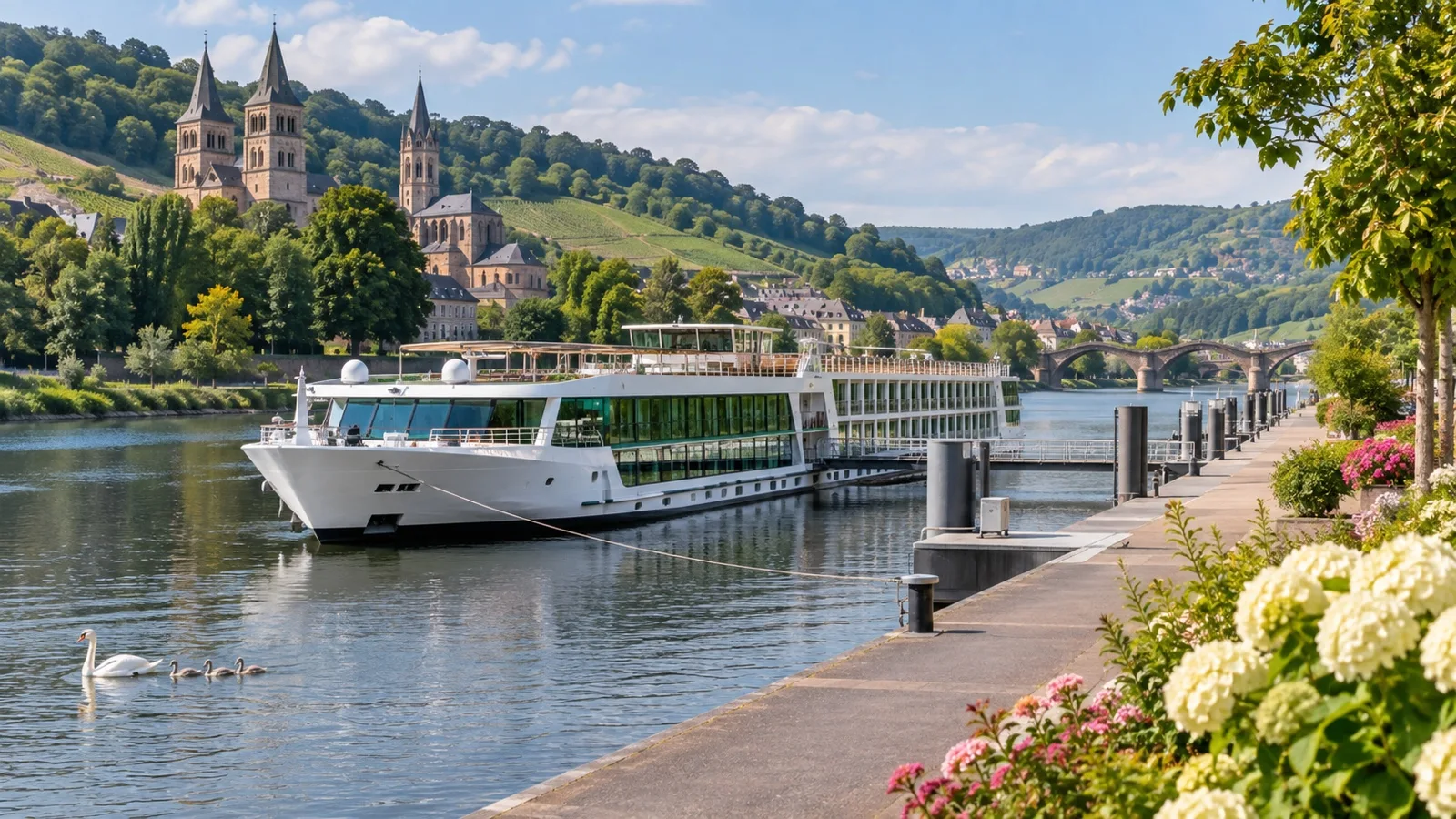
Zurlaubener Ufer is Trier’s most visitor-friendly confirmed landing area, on the east bank of the Moselle near Kaiser-Wilhelm-Brücke. The waterfront includes ship landings, restaurants, a broad riverside path, and a barrier-free ramp linking Georg-Schmitt-Platz with the river.
Trier also has larger-vessel capacity around its northern harbor. A city report gave late 2026 only as a target for planned Zurmaienerstraße facilities, so this guide does not treat them as operationally guaranteed.
Your cruise line may also dock outside Trier. AmaWaterways’ 2026 itineraries, for example, describe Wasserbillig as the gateway for a coached Trier excursion, which means an online pin in Trier could be the wrong meeting point by an entire country.
Always use the location in the ship’s daily program. Photograph the gangway sign and save the ship’s local contact before leaving.
Estimated walking times from Zurlaubener Ufer
- Porta Nigra: Allow about 20 to 30 minutes. The route follows the river south, then turns into the northern Old Town.
- Hauptmarkt: Allow about 25 to 35 minutes. Continue through Porta Nigra and pedestrian Simeonstrasse.
- Trier Cathedral: Allow about 30 to 40 minutes. It is a few minutes east of Hauptmarkt.
- Trier Hauptbahnhof: Allow about 30 to 40 minutes. A bus or taxi is more sensible with luggage.
These are editorial estimates from the mapped landing area, not port-guaranteed transfer times. Exact gangway position, mobility, crowds, construction, and riverfront closures can change them.
Getting from the river to Trier’s center
Walking works well when the weather behaves and your schedule has room. From Zurlaubener Ufer, follow the east bank toward Kaiser-Wilhelm-Brücke, then use signed city streets toward Porta Nigra.
Local buses serve the Zurlaubener Ufer and Porta Nigra areas, but routes change during festivals and road work. Use the VRT journey planner for the sailing day instead of memorizing one bus number.
Check the official VRT journey planner on the sailing day for the correct route and fare. Festival diversions, road work, and temporary stop changes can affect service around Zurlaubener Ufer.
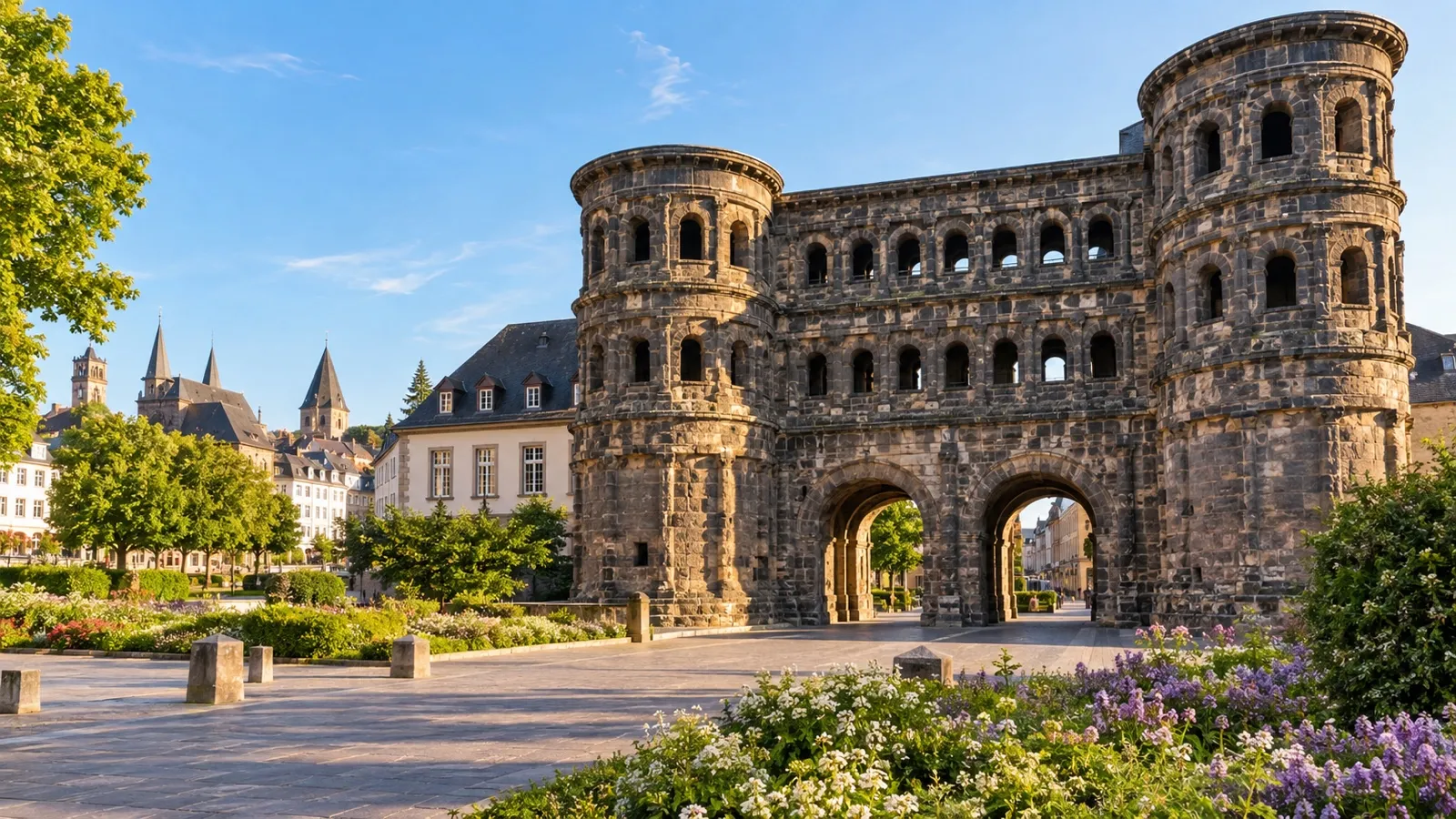
Porta Nigra: start with the Roman giant
Porta Nigra was built around AD 170 as a monumental Roman city gate, then survived partly because it became a church in the Middle Ages. Its name means Black Gate, which is both descriptive and far more dramatic than “very old sandstone entrance.”
The monument remains open during the facade restoration scheduled through 2027, although scaffolding can affect exterior views. Current official visitor information still lists interior access.
From April through September, normal opening is daily from 9 a.m. to 6 p.m.; March and October close at 5 p.m., while winter closes at 4 p.m. The official Porta Nigra page lists adult admission at €6 and reduced admission at €5.
Interior access involves historic surfaces and stairs, although selected lower areas can support a mobility-conscious visit. Do not promise yourself every level if steps are difficult.
Hauptmarkt, cathedral, and Church of Our Lady
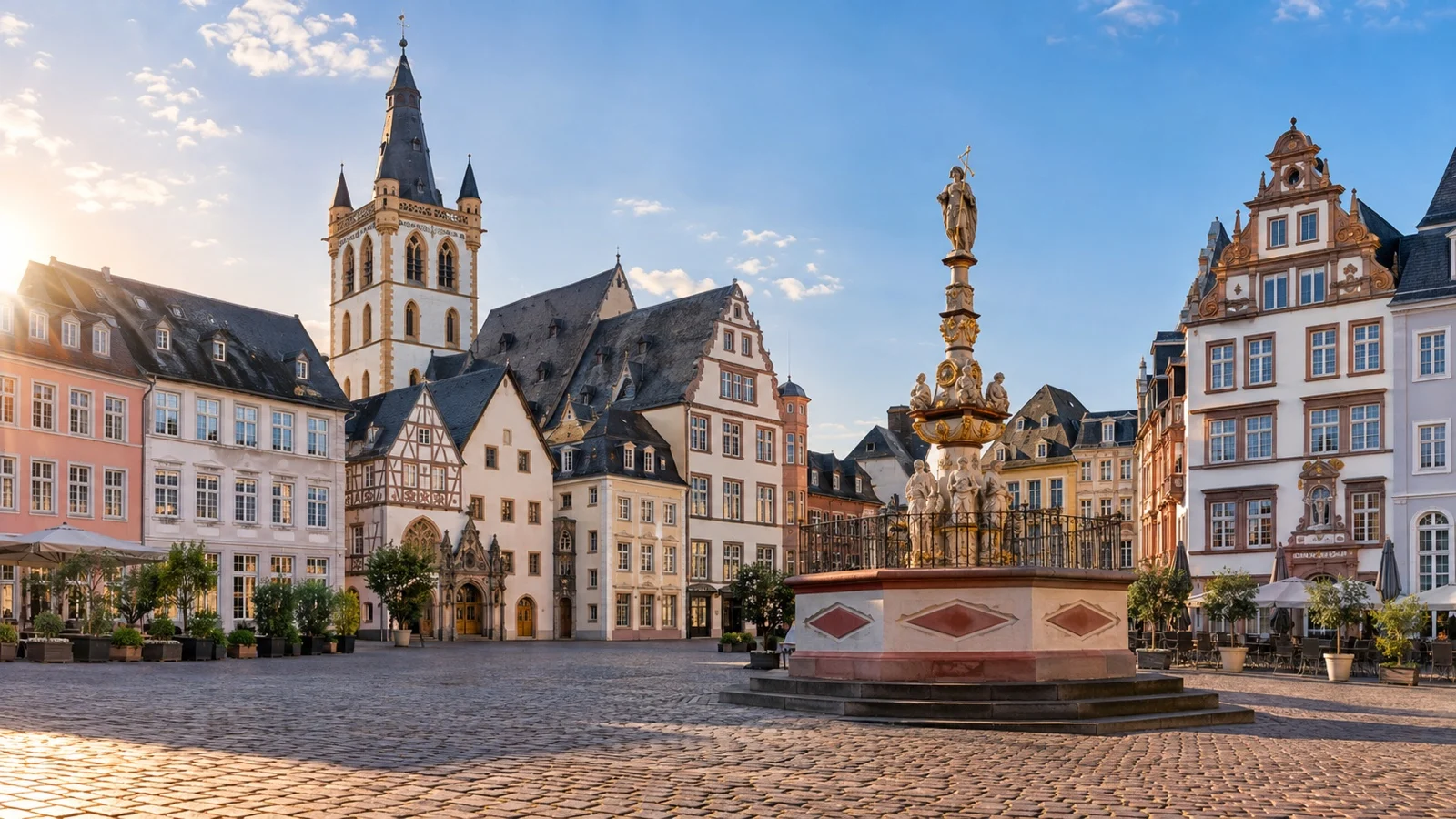
Simeonstrasse leads from Porta Nigra to Hauptmarkt, Trier’s colorful central square. The Market Cross, St. Peter’s Fountain, Steipe building, cafes, and narrow lanes make this the natural pause point between Roman monuments.
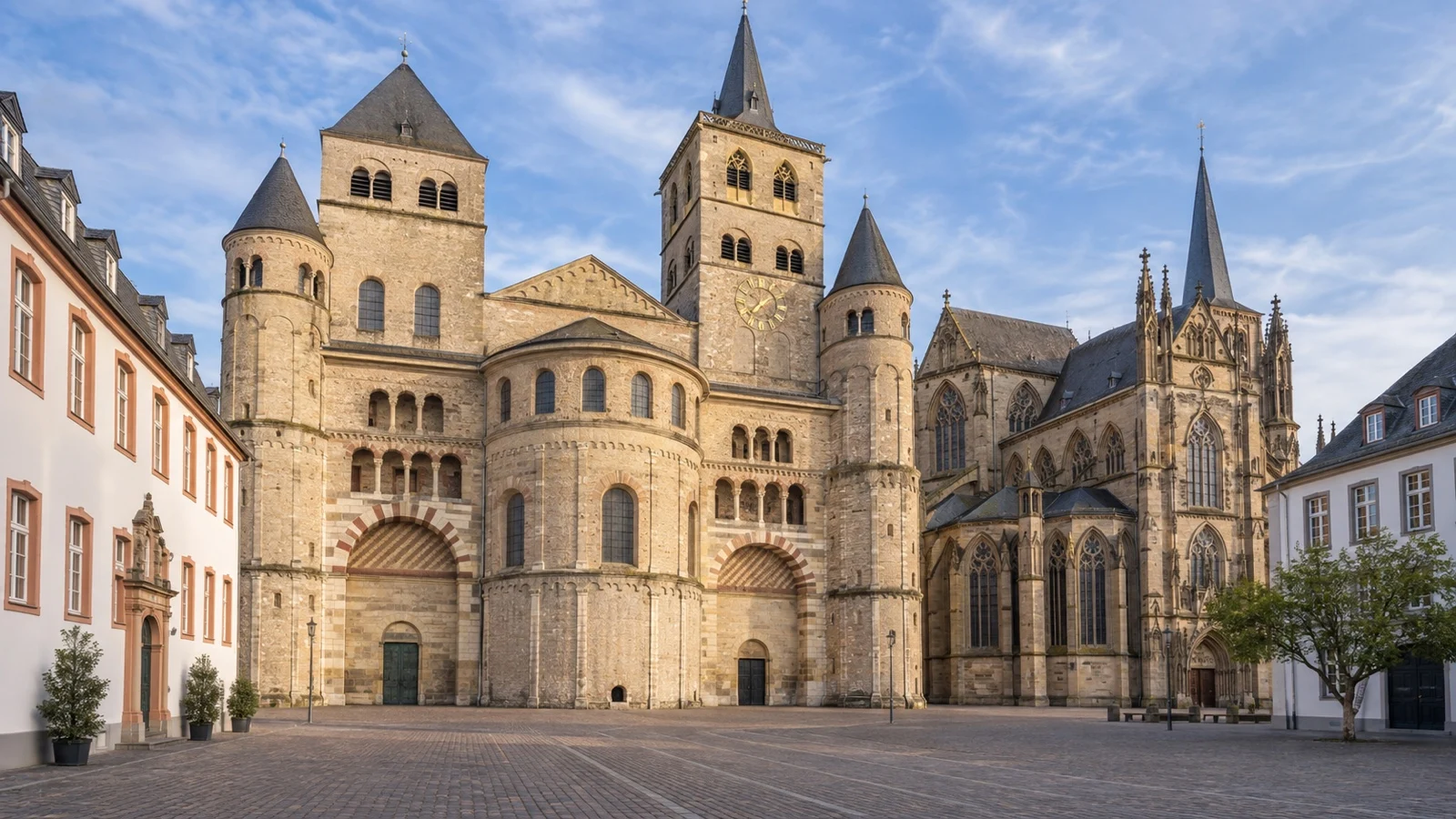
Trier Cathedral stands over part of a vast fourth-century church complex and is described by local tourism authorities as Germany’s oldest episcopal church. Entry is free, but sightseeing is not permitted during services.
Published 2026 visitor hours are generally 6:30 a.m. to 5:30 p.m., although liturgy and special events take priority. The adjacent Gothic Church of Our Lady is part of Trier’s UNESCO ensemble and rewards ten quiet minutes if open.
Ancient masonry, medieval additions, and later restorations sit together like history forgot to clean its desk.
Imperial Baths or Rheinisches Landesmuseum?
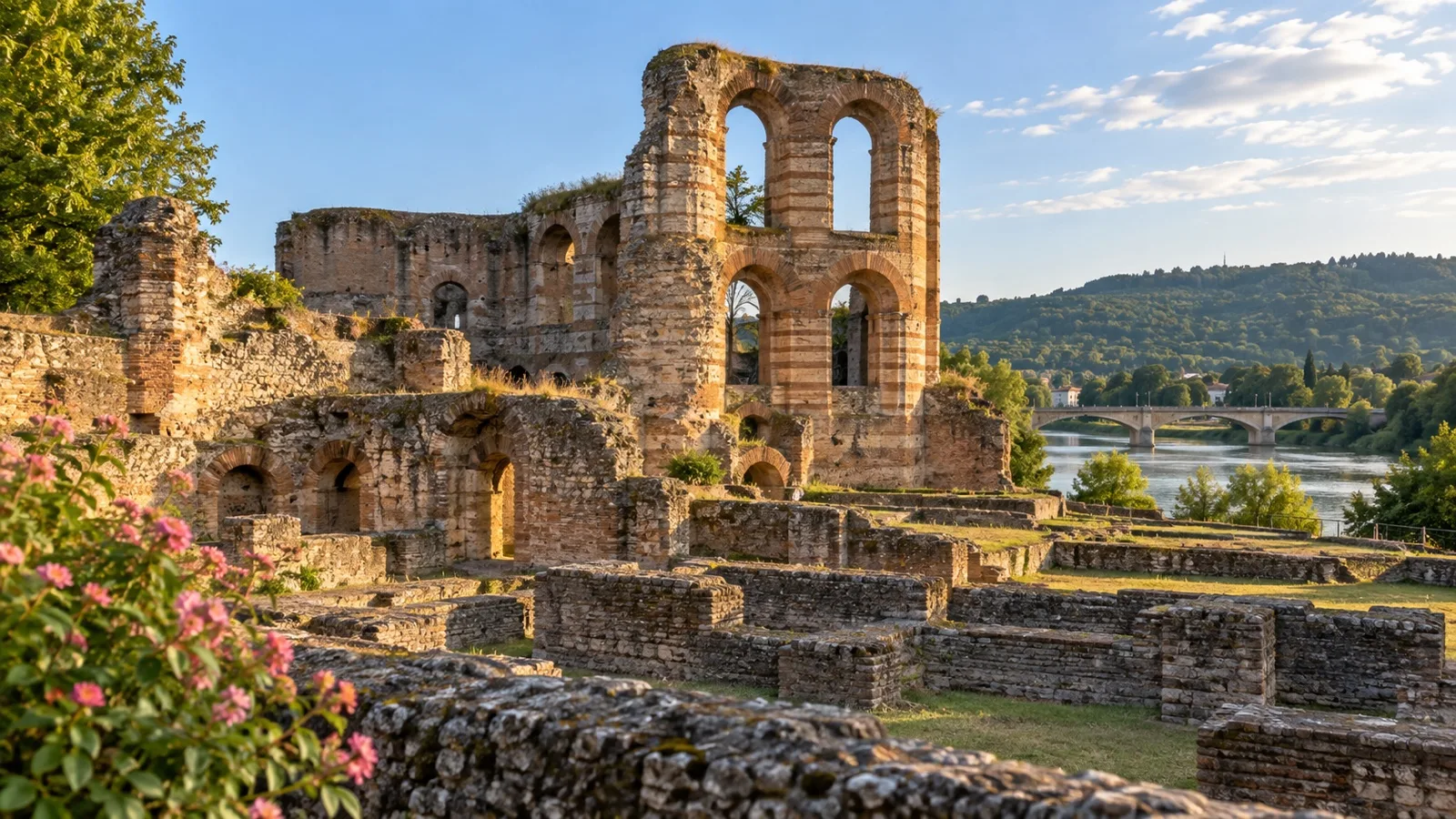
The Imperial Baths are the more physical experience, with towering walls and underground service passages from a late Roman bathing complex. Normal hours match Porta Nigra, including 9 a.m. to 6 p.m. from April through September, with €6 adult admission.
The Rheinisches Landesmuseum is better when you want the objects and story behind Roman Trier. It normally opens Tuesday through Sunday from 10 a.m. to 5 p.m. and closes Monday.
Trying both on a short call can turn archaeology into cardio. Choose the Baths for atmospheric ruins, or the museum for sculpture, mosaics, coins, and historical context.
The official Center of Antiquity visitor guide lists current seasonal hours, prices, and the AntikenCard options. Check the exact combination before buying because admission products can change.
Three realistic Trier port-day plans
Plan 1: Trier essentials
Take a taxi or bus to Porta Nigra, walk Simeonstrasse to Hauptmarkt, then visit the cathedral and Church of Our Lady. Return on foot if time and weather are comfortable.
Plan 2: Roman Trier properly
Start inside Porta Nigra, continue through the center to the Imperial Baths, and return via the Constantine Basilica and Palastgarten. This route is longer, so use a taxi back when the buffer begins looking thin.
Plan 3: Easy history and Riesling
Ride to Porta Nigra, enjoy Hauptmarkt and the cathedral at a gentle pace, then settle into a central cafe or wine bar. A Moselle Riesling tasting adds regional character without requiring a vineyard expedition.
If this is your first independent call, our first-time cruise port guide covers offline maps, return buffers, and the quiet wisdom of knowing your berth.
Accessibility at Trier river cruise port
The city rebuilt Zurlaubener Ufer with a barrier-free ramp and says the paved or asphalt northbound riverside route is suitable for wheelchair users. That does not guarantee the ship’s gangway, whose slope and possible rafting depend on vessel position and river level.
Ask the cruise line for sailing-specific boarding details and accessible transport. Porta Nigra has rollable lower areas but historic constraints, while the cathedral and central pedestrian zone are easier than the monument’s upper levels or the Imperial Baths’ underground passages.
Trier Hauptbahnhof lists accessibility facilities, elevators, a taxi rank, and staffed mobility-service hours. Deutsche Bahn recommends booking assistance in advance for reliable boarding or transfers.
Food, wine, weather, and seasonal issues
Moselle Riesling is the obvious local glass, ranging from dry to richly fruity rather than automatically sweet. Food specialties include Teerdisch, a potato and sauerkraut dish, along with sausage, river fish, and dependable German cake strategy.
Major attractions accept cards, but carry euros for small cafes, market stalls, and minor purchases. Comfortable shoes matter because Trier combines pedestrian lanes, old paving, ramps, and stairs with tremendous enthusiasm.
Spring and fall call for layers and a rain shell, summer can be warm, and winter brings early darkness. Moselle flooding can temporarily close the low river path and landing area, as the city documented at Zurlaubener Ufer in February 2026.
Christmas calls trade daylight for atmosphere around Hauptmarkt and Domfreihof. Use our Christmas market cruise ports guide, then confirm Trier’s official market dates for your sailing.
Safety and the return to your ship
Trier’s center is compact and busy, so ordinary precautions with phones, wallets, and bags are enough for most visitors. At the river, obey barriers and never enter a flooded or muddy path just because the ship appears tantalizingly close.
Germany uses 112 for ambulance and fire, and 110 for police. Return at least 30 minutes before all aboard, with more margin after a long Roman-sites loop or any independent transport.
Trier river cruise port FAQs
Can you walk from Trier’s river dock to Porta Nigra?
Yes, from Zurlaubener Ufer it is an estimated 20-30 minutes. Other assignments may require a shuttle, taxi, or longer transfer.
Do all Trier cruises dock in Trier?
No. Some itineraries use Wasserbillig in Luxembourg as the gateway for a coached Trier visit, while other vessels may use Trier’s harbor area.
Is Porta Nigra open during the 2026 restoration?
Yes, the official authority says the interior remains visitable. Facade work may affect exterior views and access patterns.
What is best on a short Trier call?
See Porta Nigra, Hauptmarkt, and the cathedral. Add the Imperial Baths only when your schedule leaves a comfortable return buffer.
How early should I return?
Aim for at least 30 minutes before the ship’s stated all-aboard time, or earlier if instructed. Confirm whether your return point is Zurlaubener Ufer, Trier harbor, or a coach pickup.
Final take
Trier delivers extraordinary historical range without demanding a long-distance excursion. Get the berth right, choose one deeper Roman site, and leave enough time for the city to feel like a place rather than an exam.
How this guide was researched: This desk-researched guide uses official city, tourism, heritage, transit, rail, and cruise-line sources where available. Facts were reviewed on September 12, 2026, walking times are clearly labeled as estimates, and no firsthand visit is claimed; see the CruisePorts.co Editorial Policy.