Traben-Trarbach River Cruise Port: Two Banks, Wine Cellars and Moselle Views
Traben-Trarbach has one name, two historic halves and a bridge that quietly decides how much walking your port day contains. Traben occupies the left bank of the Moselle when facing downstream, while Trarbach sits across the river on the right bank beneath the Grevenburg hillside.
The town grew wealthy from wine, then spent some of that wealth on wonderfully theatrical villas, warehouses and a bridge gate. Much of the real wine story remains underground in cellars that can stretch beneath several properties.
The river arrival is less simple than the compact map suggests because excursion boats, private hotel-ship berths and marina facilities are different things. Confirm your bank before promising yourself a five-minute walk to anything.
Traben-Trarbach river cruise port quick facts
- Into Town: Hotel ships use privately controlled positions on both banks; confirm which one, since the bridge can add material walking time.
- Currency and Language: Euro (EUR). German is official; English is common in tourism, but scheduled cellar tours may be German-only.
- Time Zone: Central European Time, UTC+1 in winter and UTC+2 during daylight saving time.
- How Often the Call Is Missed: Operational caution: Moselle levels, locks, berth capacity and privately controlled landing arrangements can alter the call.
No audited public missed-call rate was found for Traben-Trarbach. A move between banks, an altered arrival time or a motorcoach transfer does not count as a miss if passengers still visit the town.
My quick take
The best first visit combines the riverfront architecture, Bridge Gate and a reserved underworld cellar tour. That pairing explains both the money above ground and the wine infrastructure below it without requiring a hillside expedition.
Choose Grevenburg for a steep, rewarding view when the weather, footwear and call length cooperate. Choose Mont Royal only as an organized outing or with confirmed transport, because its fortress remains occupy the plateau above Traben rather than the central waterfront.
If your cellar tour is not reserved, do not count on joining one in English at the door. A glass of Riesling is wonderfully multilingual, but the scheduled public commentary may not be.
Which cruises call at Traben-Trarbach?
Traben-Trarbach remains an active hotel-ship call on the Moselle. VIVA Cruises currently publishes a Moselle roundtrip itinerary with a long Traben-Trarbach visit, while current 2026 brochures from other European operators also include the town.
Schedules vary substantially by sailing, from a morning stop to an evening departure or overnight. Use your operator’s final program for arrival, departure, excursion language and gangway because a general itinerary page is not a berth notice.
Local sightseeing boats also run between Traben-Trarbach and Bernkastel-Kues during the season. Their passenger piers should not be treated as the assigned position for your hotel ship.
The landing reality in plain English
Traben-Trarbach’s 2026 public statement says the city has no municipally owned ship landing or harbor. It explains that commercial navigation follows federal waterway rules and needs flexibility around schedules, locks, water levels, safety and operating requirements.
The town’s own landing-time statement therefore does not mean cruise ships never stop here. It means the city cannot regulate privately controlled hotel-ship operations through a municipal harbor ordinance it has no legal basis to issue.
The town’s 2026 visitor calendar lists excursion-boat stages at Traben, Trarbach and Wolf. It identifies advance-booked hotel-ship positions on both central banks, operated respectively through Viking in Traben and Scylla in Trarbach, reinforcing why your operator controls the exact arrival.
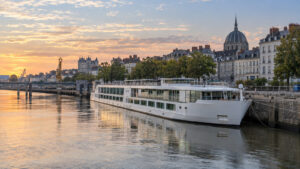
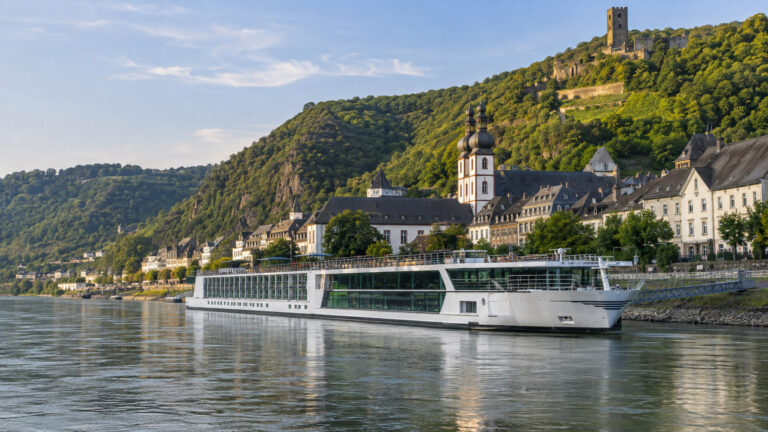
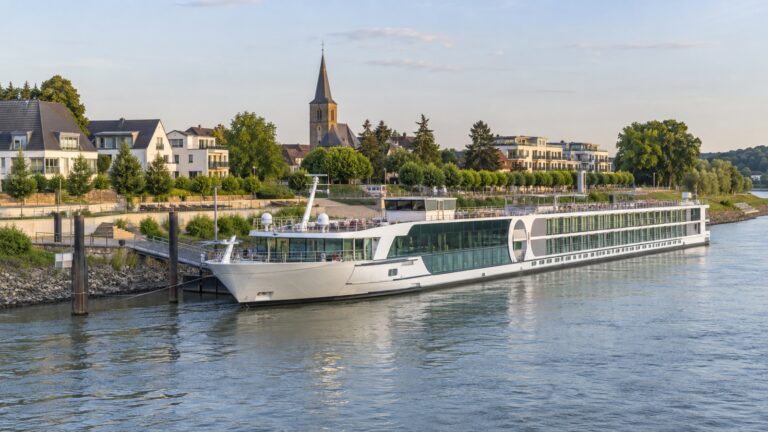
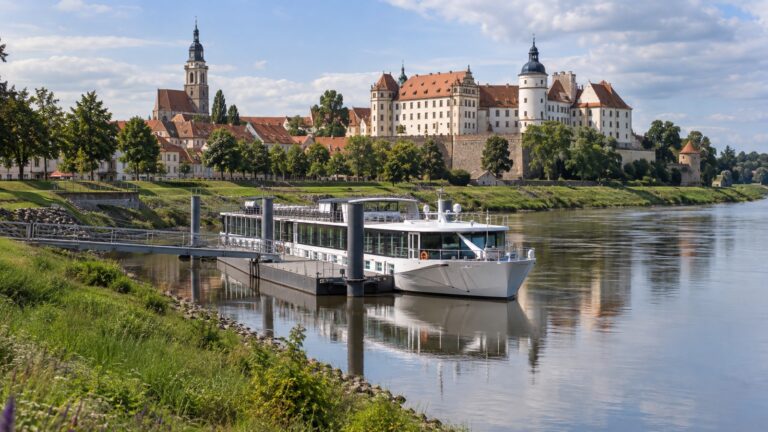
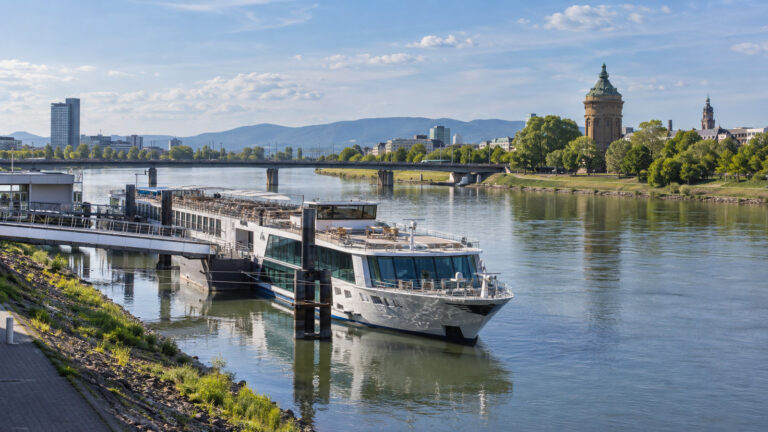
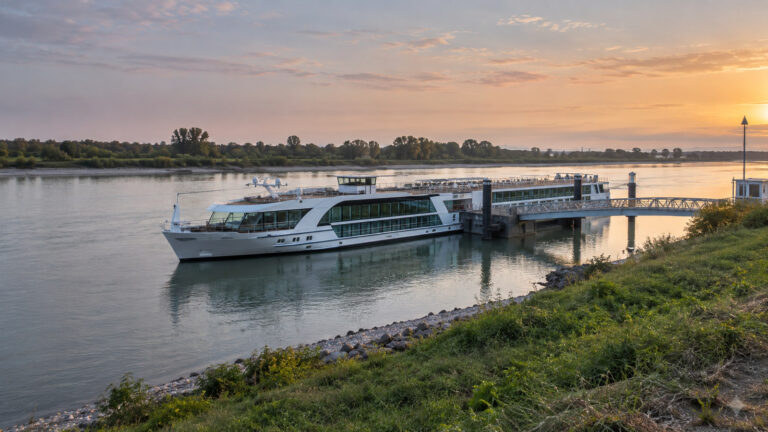
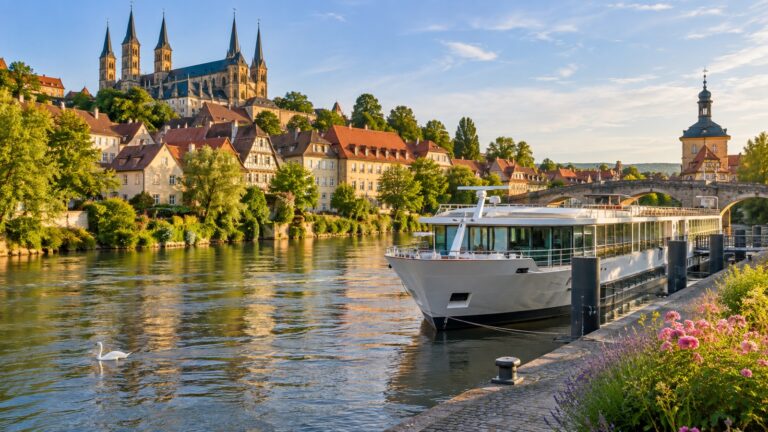
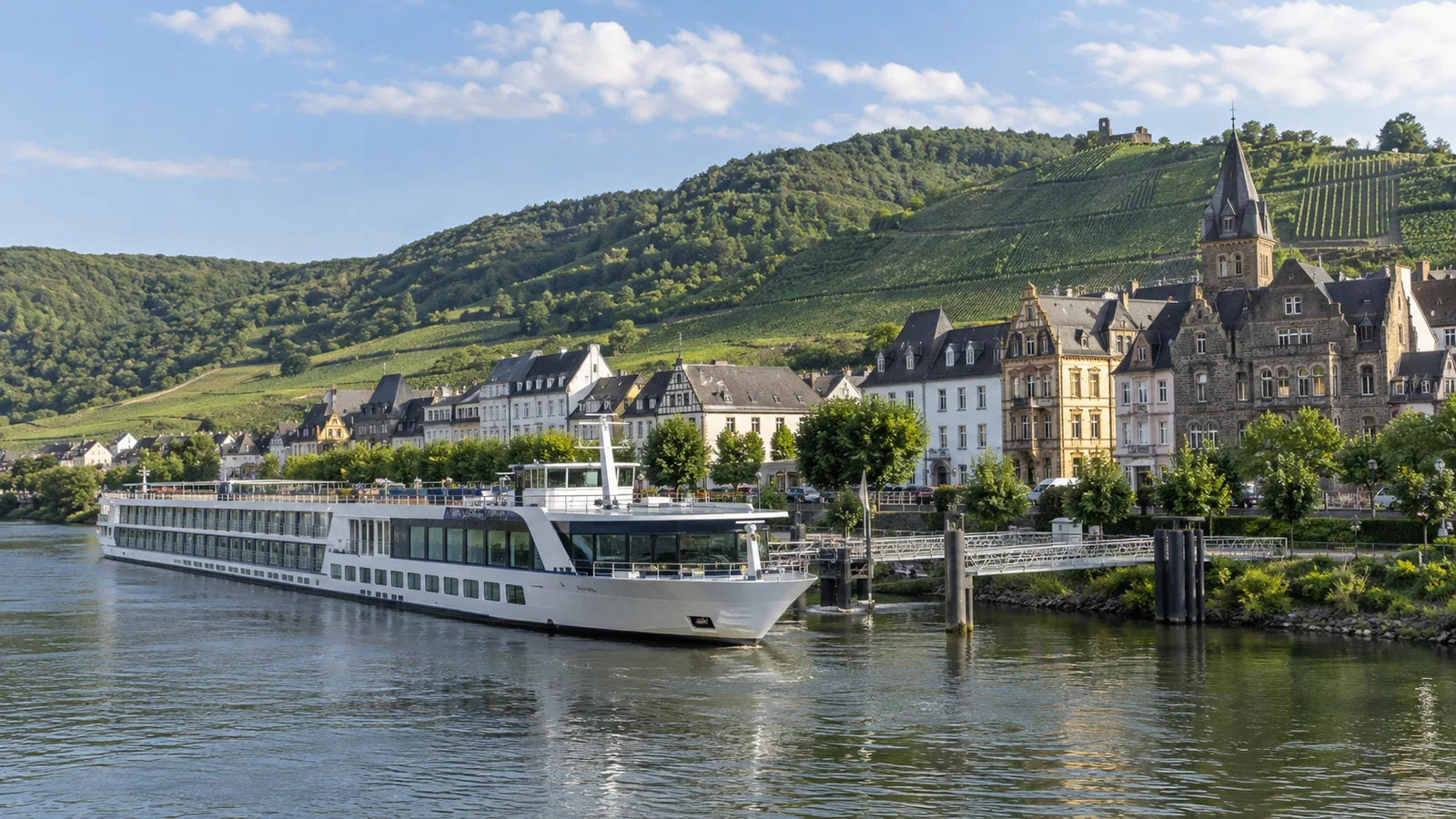
In practical terms, expect a direct riverbank gangway rather than an ocean-style terminal. Facilities at the landing can be minimal, and the nearest public restroom, taxi or shelter depends on the bank and exact position.
Traben bank versus Trarbach bank
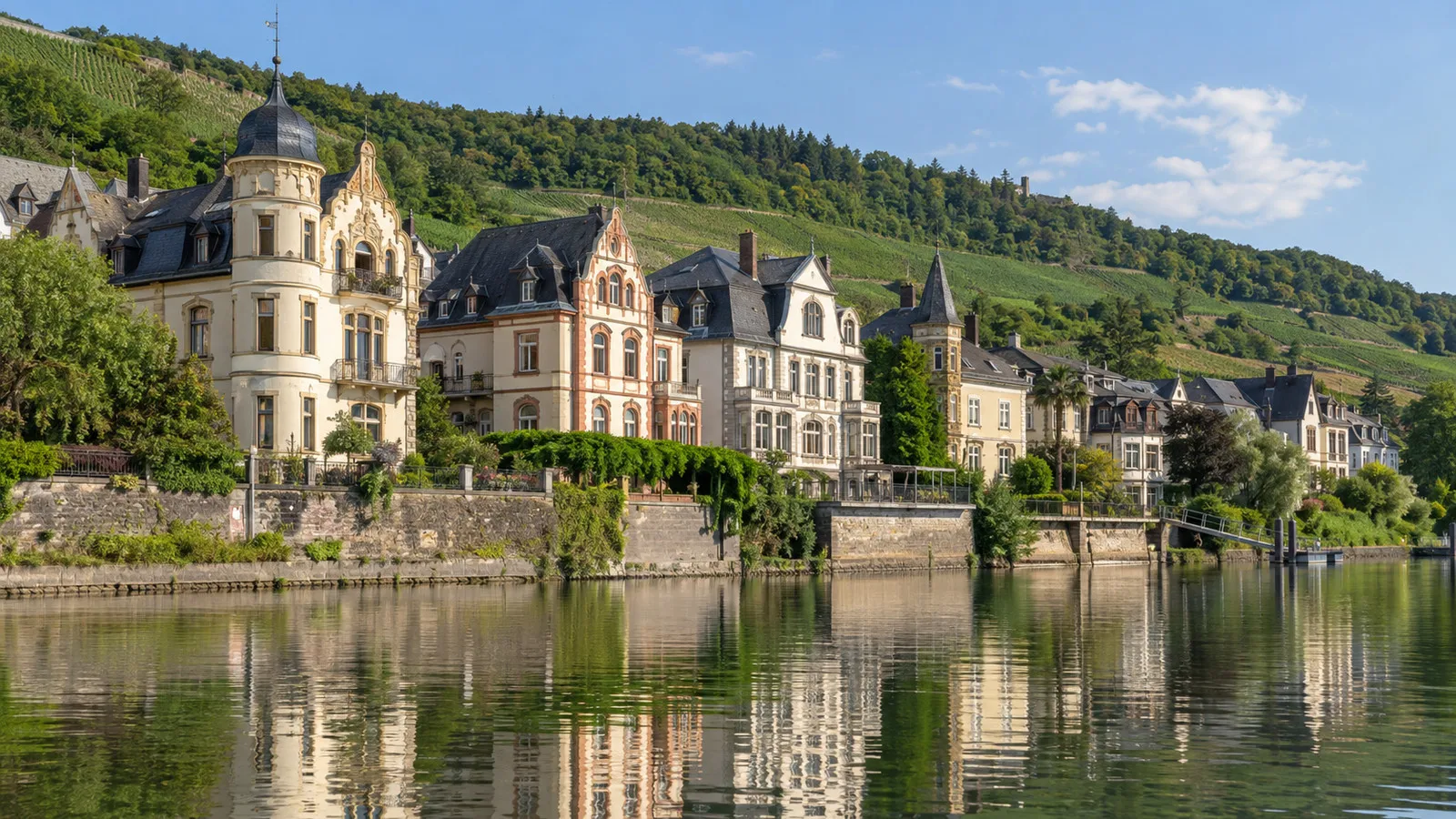
Traben contains the tourist information office in the old station, several major Belle Époque villas and a long riverfront architectural sequence. Current town material places its advance-booked hotel-ship position near the former Hotel zum Anker, while separately listing another operator-controlled position in Trarbach.
Trarbach contains the Bridge Gate, Baroque Villa Böcking and Mittelmosel Museum, Buddha Museum, old town lanes and the path toward Grevenburg. A Traben arrival therefore adds a bridge crossing to most museum plans, while a Trarbach-side position favors those sights.
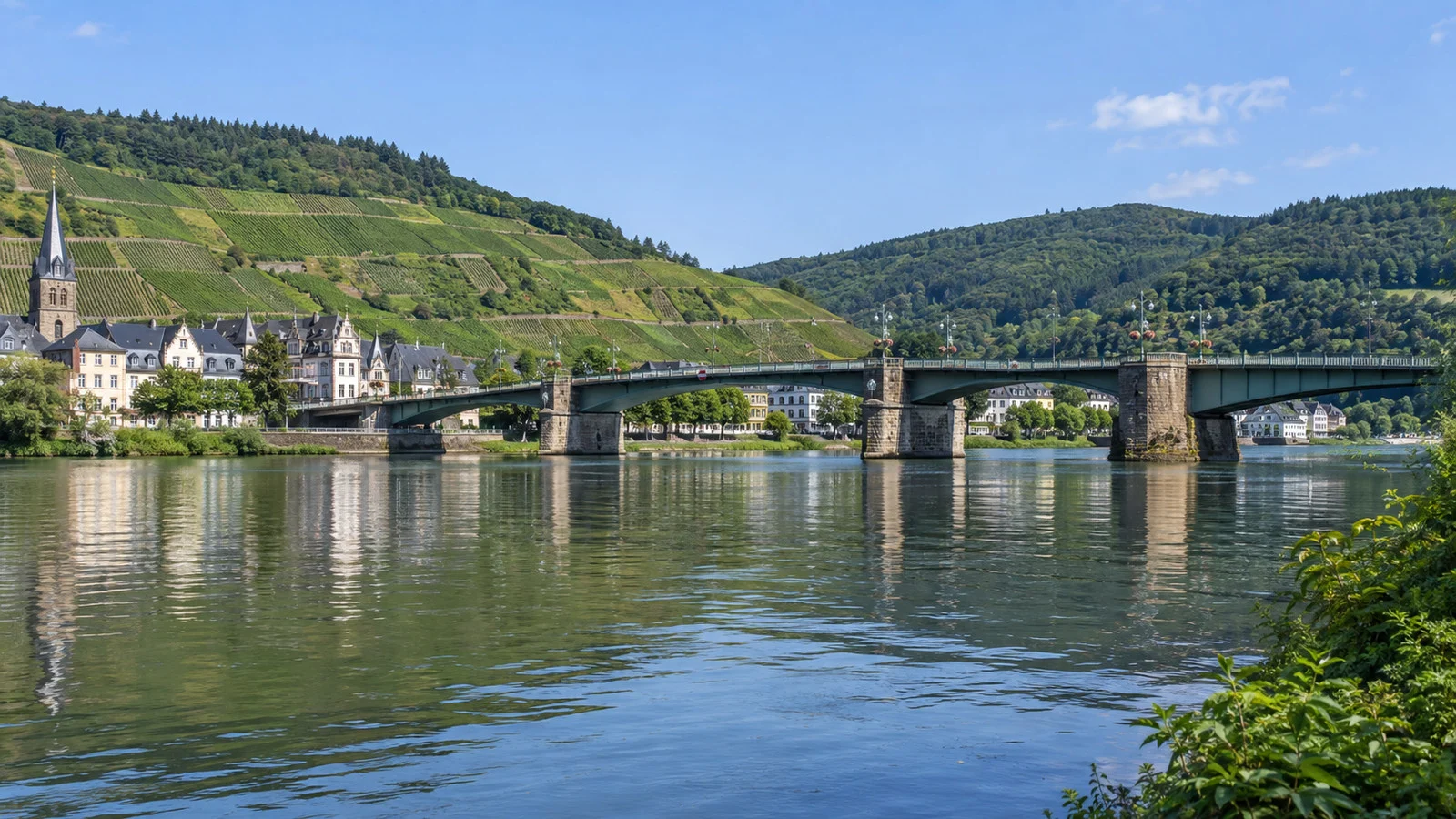
The road bridge is the essential connector and a sight in its own right. Allow roughly 10 to 20 minutes to cross from one central waterfront cluster to the other, an editorial map range that varies with the berth, pace and traffic-control route.
Do not use a schedule for local sightseeing boats to infer which bank your cruise ship will choose. The smaller boats advertise stops on both sides, while hotel-ship access follows separate ownership and reservations.
Why the bridge and architecture matter
Traben and Trarbach remained separate communities until the early 20th century, and their physical union demanded a bridge. Berlin architect Bruno Möhring won the design competition, producing the first bridge and the wonderfully sculptural Bridge Gate at the Trarbach end.
The original iron span did not survive World War II, but the gate remains the twin town’s visual signature. Möhring went on to design villas, hotels and wine-business buildings for merchants whose export success made experimentation affordable.
The town’s official architecture guide identifies Hotel Bellevue, Villa Huesgen and Villa Nollen on the Traben shore, plus the Bridge Gate and former Julius Kayser Winery in Trarbach. The page calls the movement Art Deco in English, but the buildings are generally discussed locally as Jugendstil and Belle Époque architecture.
An independent loop can follow the Traben promenade, cross the bridge through the gate and continue into Trarbach. Allow 60 to 90 minutes, an editorial range that includes stopping to look up instead of merely photographing your own determined stride.
The Traben-Trarbach underworld
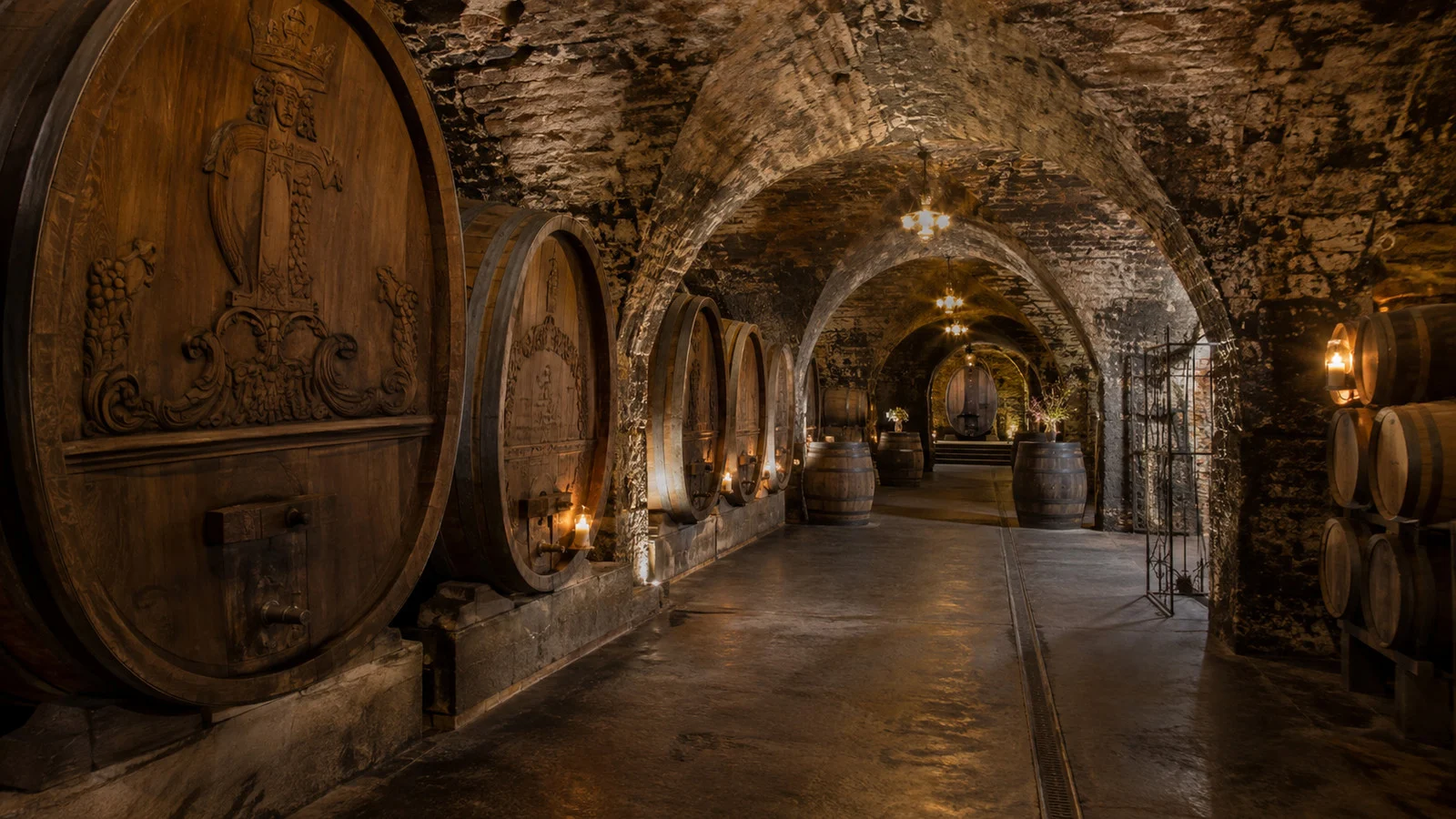
At the height of the wine trade, merchants needed enormous cool storage and handling space. Cellars were excavated below the town in multiple levels, with some vaults extending more than 328 feet.
The official guided-tour page describes a 90-minute underworld visit through several historic wine cellars. Current regular tours are advertised exclusively in German, while private group arrangements can be requested in English or French.
Reserve before the call because the cellars are separate private spaces rather than one museum with continuous entry. The meeting point is supplied with the booking, and it may lie on either side of the bridge depending on the selected vaults.
Many cellar routes use stairs, low or uneven surfaces and cool, dim spaces. The town’s 2026 group form asks organizers to declare mobility restrictions in advance and says several cellars are stair-access only, although customized group tours may sometimes be adapted.
Bring a light layer even on a hot day and wear shoes with grip. Wine cellars have spent centuries perfecting cool humidity and show no desire to accommodate your linen shirt.
Wine tasting without a scheduling hangover
A cellar visit and a tasting are not always the same product. Some public tours include one glass, while premium or group programs add a longer, commented tasting that can push the total experience toward three hours.
Check language, duration, number of wines and meeting point before paying. Also verify whether the program ends near the ship, because a tasting that finishes across the bridge still requires a clear-headed return walk.
Independent winery appointments can work on a long call, but reserve directly and disclose that you are a cruise passenger. Do not arrive with a ship-sized group and expect a family cellar to generate chairs, glasses and English commentary from the power of optimism.
Buddha Museum in a former winery
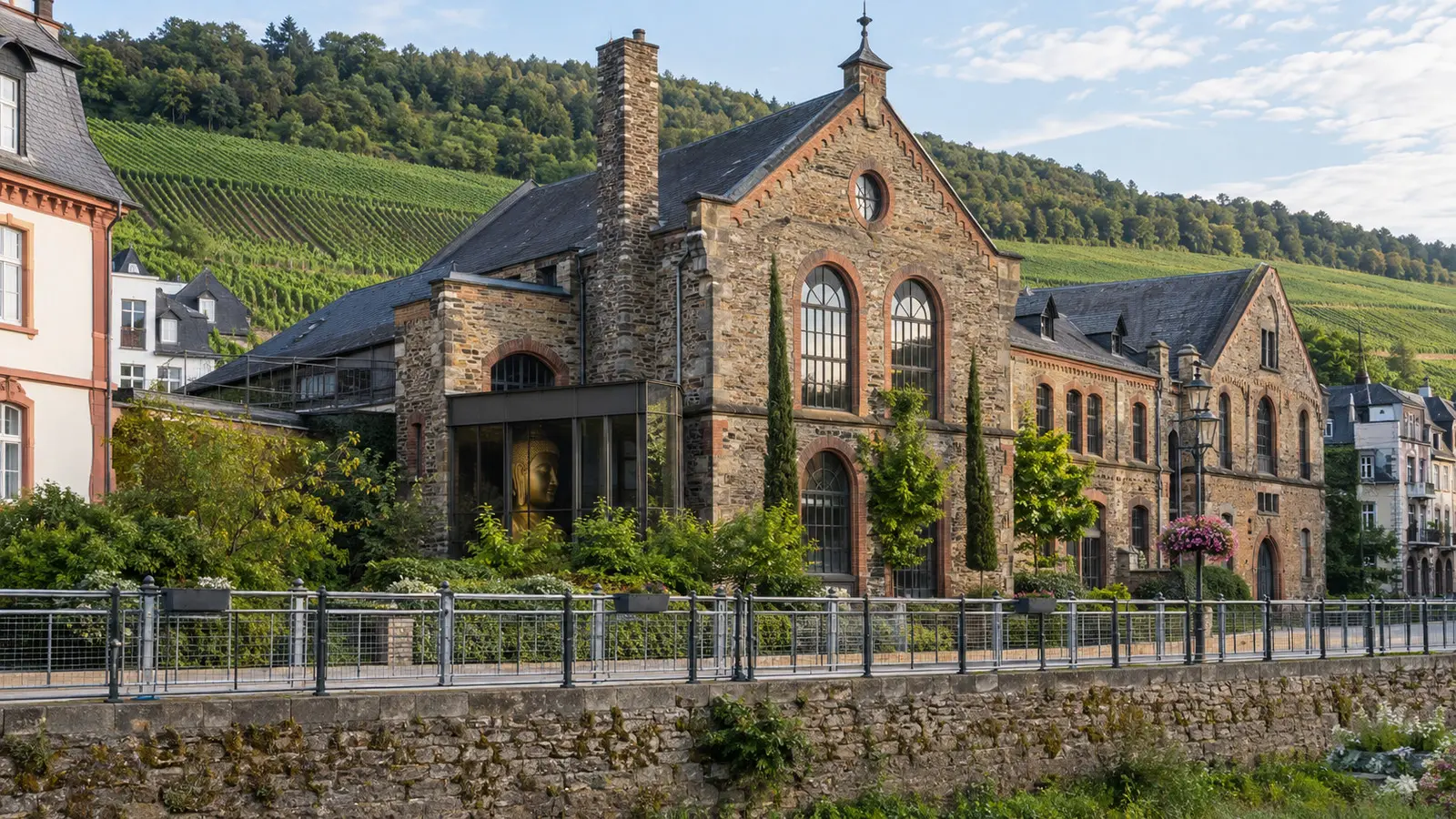
The Buddha Museum occupies Bruno Möhring’s former Julius Kayser winery in Trarbach, creating an unlikely but effective conversation between Asian religious art and Moselle industrial architecture. Its collection spans figures, images and multimedia interpretation across a very large site.
The town’s current museum page lists a roughly 43,000-square-foot exhibition area plus roof garden and outdoor space. For the 2026 season it publishes Tuesday through Sunday opening from 10 a.m. to 6 p.m., with last entry at 5 p.m.
Allow 90 minutes to two hours, an editorial range for a selective visit. The museum can absorb much longer, which is flattering to the collection and dangerous to all-aboard.
Mittelmosel Museum for the local story
Mittelmosel Museum fills more than 20 rooms in Villa Böcking with furniture, art, archaeology and Traben-Trarbach history. Its collections also interpret Mont Royal excavations and preserve a model of Grevenburg.
As of 2026, the official museum page lists Tuesday through Friday hours from 10 a.m. to 5 p.m. and weekend hours from noon to 4 p.m. Verify holidays and seasonal changes before crossing the bridge.
Allow about an hour for highlights or 90 minutes for a fuller visit, both editorial estimates. This is the better choice than the Buddha Museum when your central question is “Why did this specific town become so unusual?”
Grevenburg is the steep view
Grevenburg rose above Trarbach around 1350 as a seat of the Counts of Sponheim and was destroyed after repeated warfare. Its surviving ruins now provide a broad view over the Moselle bend and both halves of town.
The ascent from central Trarbach is a genuine hillside walk with sustained grade, not an atmospheric extension of the flat promenade. Allow roughly 45 to 60 minutes uphill and 30 to 45 minutes down, editorial ranges that do not include a long stop at the top.
Choose sturdy shoes, water and a weather window, then turn back early if the path is slick. A fogged-in summit can be poetic, but the same poetry is available from a wine tavern without the climb.
Mont Royal needs an excursion plan
Louis XIV ordered the vast Mont Royal fortress above Traben in 1687, and Vauban designed it to control the Moselle corridor. French forces dismantled it in 1698, leaving earthworks, masonry, casemates and later archaeological traces across the plateau.
The official explorer tour begins at a parking area near the glider airfield and lasts about 1 hour 45 minutes. That meeting point is the important practical fact because the plateau is not a quick stroll from a central river berth.
Use the ship excursion, a reserved taxi or a prearranged private tour. The town advises sturdy footwear and says the guided route is not suitable for people with walking disabilities.
A realistic independent port day
First, read the daily program and identify Traben or Trarbach. Walk the architecture loop across the bridge, then join a reserved cellar tour whose finish time leaves at least 60 minutes before all-aboard.
Add either Buddha Museum or Mittelmosel Museum, not both, unless the ship stays into the evening. Substitute Grevenburg for the museum only when the weather and your knees agree on the same itinerary.
For a short call, skip the hillside and spend the time between river, bridge, gate and wine architecture. Traben-Trarbach’s best story is visible from street level once you know the vaults are below.
Accessibility in a two-bank town
The central promenades and bridge are more manageable than the cellar and hillside attractions, but gangway slope varies with water level. Cobblestones, bridge approaches and curb transitions can add friction even when the distance is short.
Ask the operator which bank, whether the gangway is step-free and whether the excursion motorcoach accepts your device. For cellar tours, obtain written confirmation of stairs, seating and the exact vaults included because accessibility can differ within the same product name.
The site’s river cruise accessibility guide provides a useful question checklist. Grevenburg and the standard Mont Royal route should not be treated as accessible merely because they appear close on a map.
How reliable is the Traben-Trarbach call?
Moselle navigation depends on river level, locks, bridge clearances, traffic and berth availability. Traben-Trarbach’s privately controlled landing structure adds another operational variable without making the stop inactive.
No public audited missed-call series was found for the town, so this guide does not assign a percentage. Operators can sometimes preserve the visit by shifting the timing, bank or excursion plan.
The site’s river cruise water-level guide explains how itinerary changes work. A motorcoach visit or alternate bank may preserve Traben-Trarbach even when the expected gangway does not.
Choose one bank and reserve the cellar
Hotel ships can use privately controlled positions on either the Traben or Trarbach bank, and the bridge adds real walking time. Get the live landing from the crew before choosing a museum or tour because a generic town pin does not identify the return gangway.
The underground cellar experience is one of the best reasons to call here, but tours are scheduled, capacity-limited, seasonal, and not always in English. Reserve through the official tourism program, confirm the language and fee, and skip a tight slot that leaves no margin for the bridge.
Grevenburg and Mont Royal are separate uphill outings, not quick additions to a two-bank town walk. I would take Grevenburg only in dry conditions with supportive shoes and use an organized vehicle for Mont Royal, since a delayed taxi can leave you on the wrong side of the Moselle schedule.
Germany is in the Schengen Area, while Moselle locks, water levels, and berth capacity can alter the call. Cellar stairs, cobbles, bridge grades, and gangways need separate accessibility checks, so ask for a lower-town alternative and return at least 30 minutes early.
Quick answers
Which bank do river cruises use in Traben-Trarbach?
Current town material identifies privately controlled hotel-ship positions on both Traben and Trarbach banks; final operator instructions determine yours.
Can I walk between Traben and Trarbach?
Yes; the central road bridge connects them, but berth position and mobility determine whether the crossing feels quick.
Can I visit the wine cellars independently?
Only through a scheduled or private booking for participating cellars; they are separate spaces, not a continuously open underground museum.
Are cellar tours offered in English?
Private group tours can be arranged in English, but the town currently says its regular scheduled tours operate only in German.
Can I walk to Grevenburg?
Yes if fit and properly shod, but allow substantial uphill time and skip it in poor weather or on a short call.
Research note
This guide was desk-researched on September 12, 2026 using the City of Traben-Trarbach, official town museum and guided-tour pages, and VIVA Cruises. It does not claim a personal sailing, cellar tour or firsthand landing inspection.
Berths, walking times and missed-call risk are either attributed facts or clearly labeled editorial estimates. Verify the bank, cellar language, museum hours and all-aboard time for your sailing, and see the Editorial Policy for sourcing and corrections.
How this guide was researched: This guide was checked against current official port, waterway, immigration, transit, attraction, operator, and weather information. Operational and time-sensitive details were reviewed September 12, 2026; confirm the live berth, daily program, entry rules, accessibility, and cancellation terms before travel.
See our Editorial Policy.