Ny-Ålesund Cruise Port: Landing Rules and Research Station
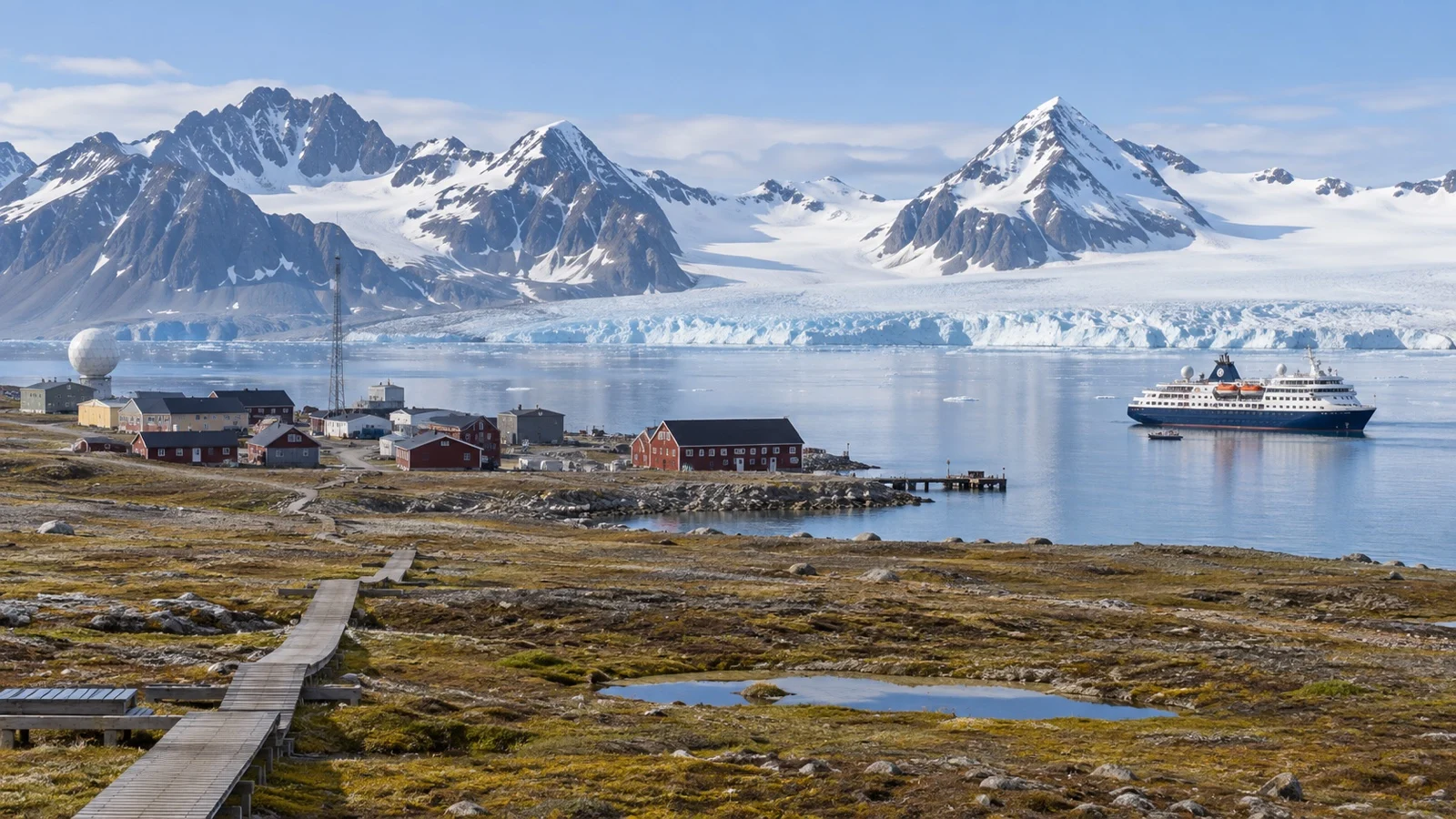
Ny-Ålesund is not a tiny Arctic town designed for independent sightseeing. It is an international research settlement that permits carefully managed expedition visits, and the privilege begins with obeying the landing team’s instructions exactly.
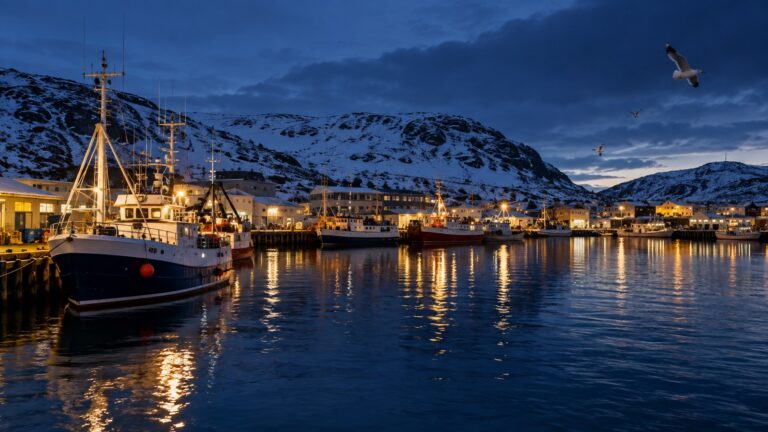
Your ship may berth or use small boats, but neither arrival creates an open port day. Kings Bay, local research needs, wildlife, weather, and the expedition leader determine where you may walk and how long the visit lasts.
Quick facts about Ny-Ålesund cruise port
- Purpose: International Arctic research settlement
- Arrival: Suitable ships may berth, while others anchor and use Zodiacs or tenders
- Independent touring: Not permitted
- Walking: Only on approved roads, boardwalks, and designated routes
- Wireless rule: Wi-Fi and Bluetooth must be switched off within the radio-silence zone
- Currency: Norwegian krone
- Main risks: Polar bears, cold, wind, sea state, fragile terrain, and research interference
- Accessibility: Entirely dependent on ship transfer and the approved route
- Return rule: Board with the assigned group when called
The expedition program is the itinerary
There are no independent taxis, public tours, or ordinary day trips waiting beside the pier. Your expedition leader coordinates the visit with Kings Bay and communicates the approved landing, route, group system, and departure time.
Research activity, wildlife, harbor capacity, visibility, wind, or ice can alter or cancel the call. A change is an operational decision that protects passengers, residents, scientists, and the environment.
Do not book a separate excursion, plan a hike outside the settlement, or expect access to a particular building. The organized landing is the complete experience rather than a starting point for improvisation.
Berth or small-boat landing
Ny-Ålesund harbor has a main pier that can receive a suitable larger vessel and a separate landing for boats from an anchored ship. Harbor bookings and daily operations determine which arrangement is available.
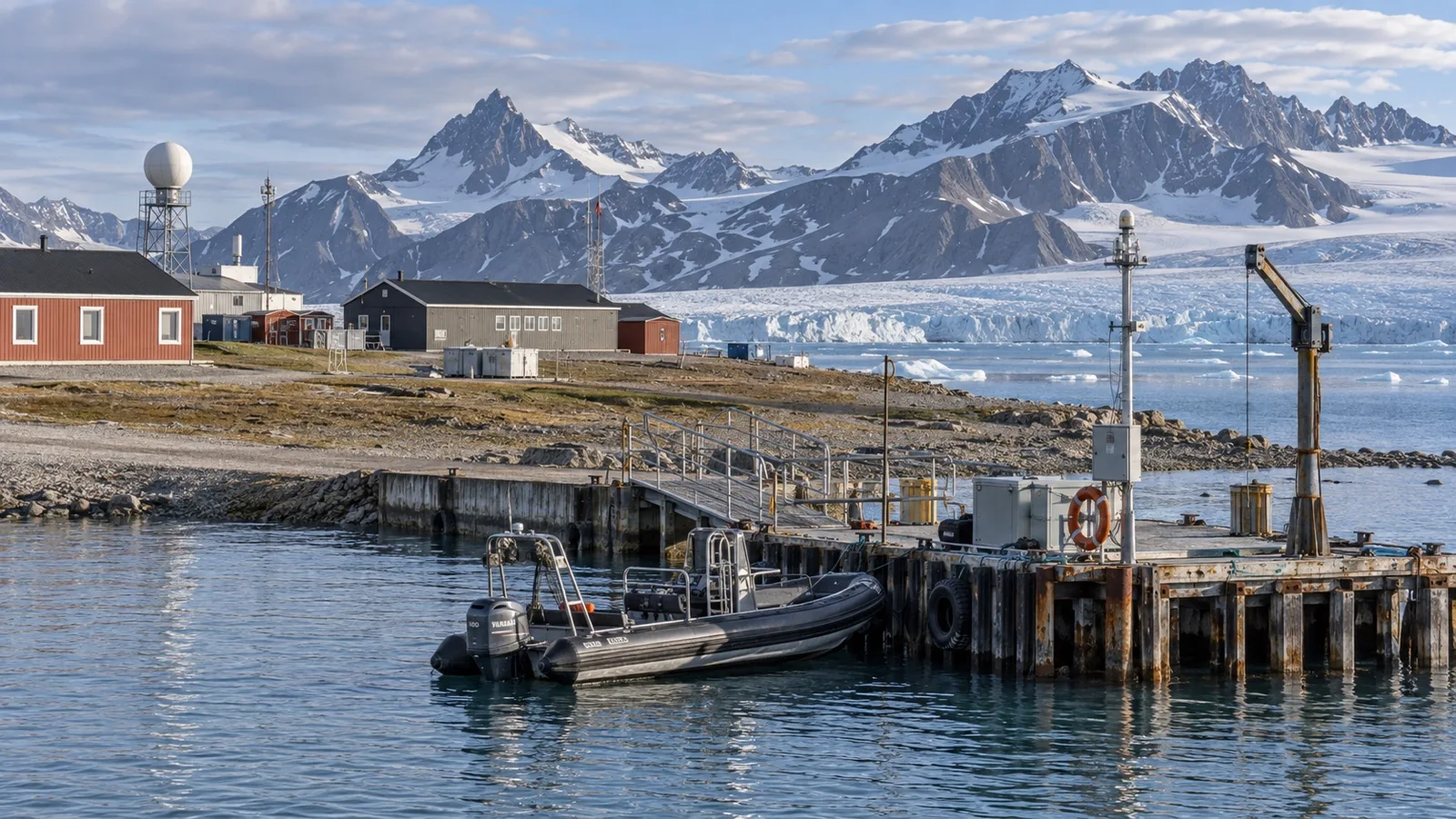
A Zodiac or tender transfer can involve steps, movement, cold spray, and strict loading commands. Keep both hands available, secure loose belongings, and wear the footwear specified at the briefing.
A direct berth avoids the small-boat transfer but does not relax settlement rules. The gangway can still be steep, windy, or slippery, and passengers must remain inside the approved visitor plan.
Radio silence means every transmitter
Ny-Ålesund protects sensitive scientific measurements through strict radio-silence requirements. Wireless searches and transmissions can interfere with instruments even when a traveler is not actively browsing or making a call.
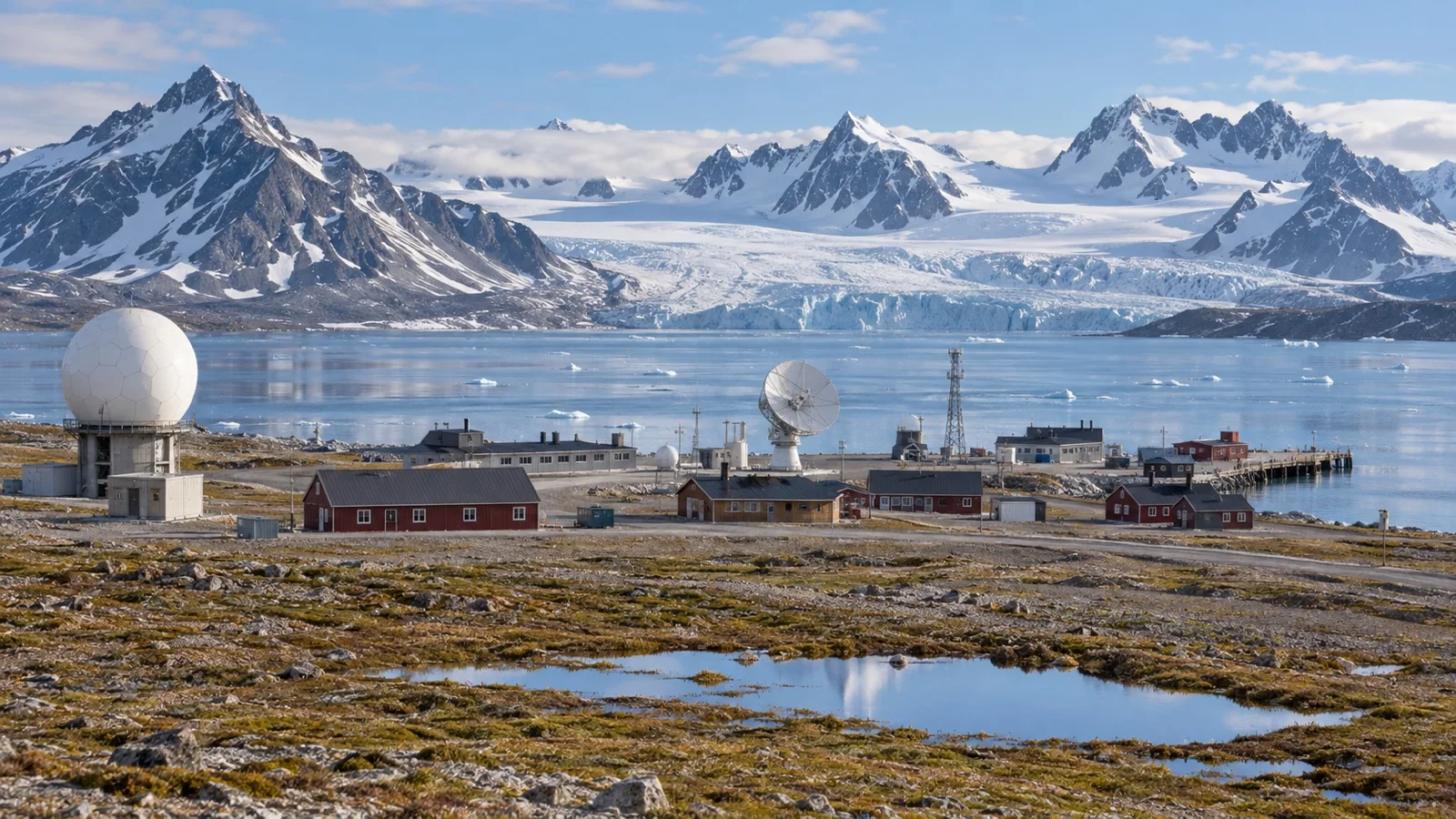
Put phones and tablets into airplane mode, then manually verify that Wi-Fi and Bluetooth remain off. Smartwatches, cameras, headphones, fitness trackers, laptops, and other devices may also transmit.
Airplane mode does not disable every radio on every device, and some equipment reconnects automatically. Follow the expedition team’s device-specific instructions before entering the zone.
Do not use drones, wireless camera transfer, hotspots, or Bluetooth audio. Download background information before arrival and accept that this research settlement has politely dismissed your connected life.
Stay on approved red routes
Kings Bay directs visitors to designated roads, boardwalks, and marked walking routes. Leaving them for tundra, a research area, an airstrip zone, or a better photograph is prohibited.
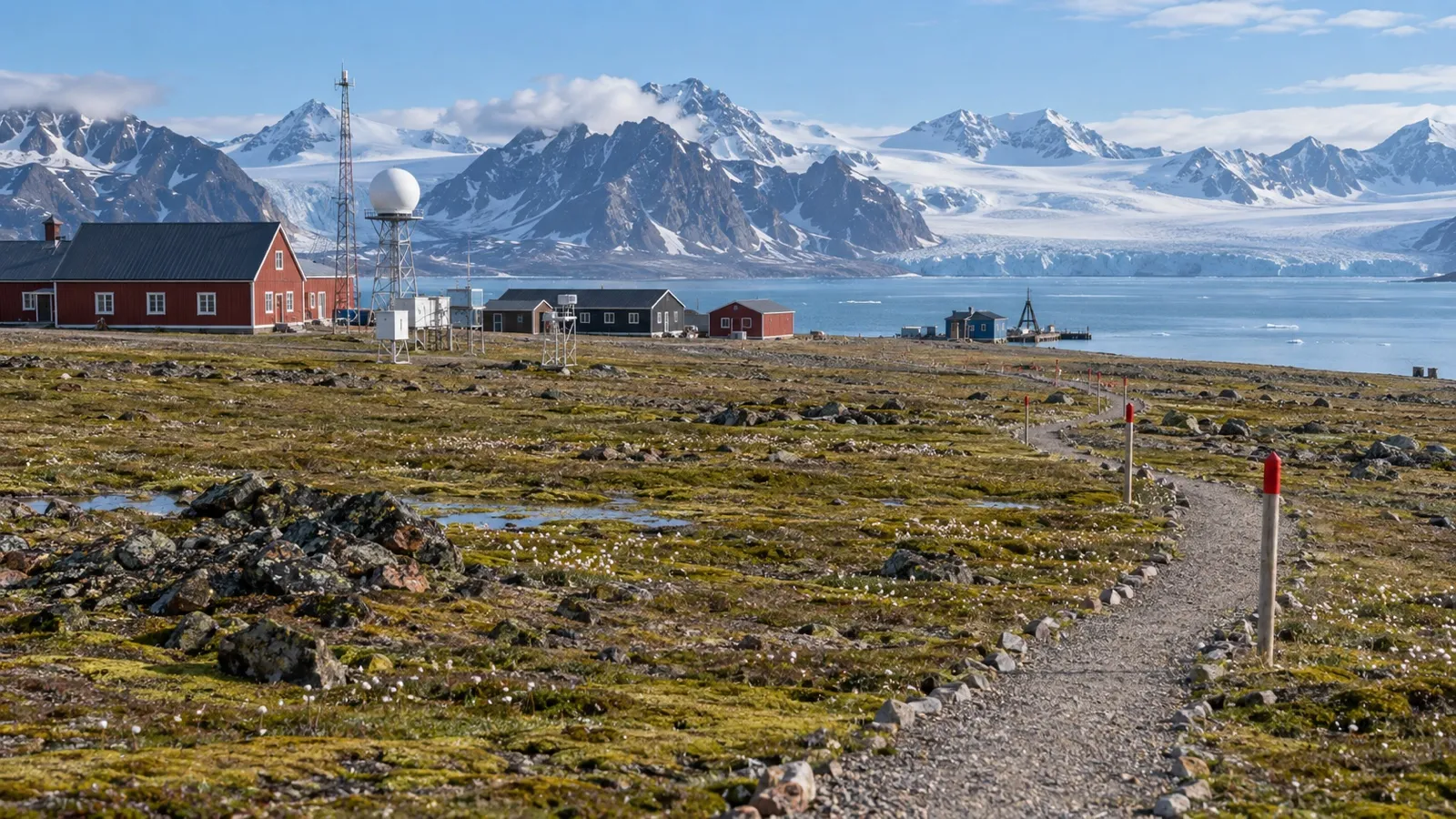
The boundaries protect vegetation, nesting birds, cultural remains, scientific sites, and visitor safety. Tracks in fragile Arctic ground can persist long after the ship has disappeared.
Remain with the assigned group or follow the exact circulation system announced ashore. If a guide closes a route, do not negotiate with the rope or sign.
Respect a working research community
Ny-Ålesund is home and laboratory before it is a visitor destination. Yield on narrow roads, keep groups compact, speak quietly around work areas, and never enter a building or station without an explicit invitation.
Ask before photographing residents or researchers closely. A person carrying equipment is doing their job and is not part of a staged expedition program.
A small shop, museum, or post office may open for a scheduled ship, but access depends on the day’s operations. Do not frame a stamp or souvenir purchase as guaranteed.
Exploration history on the route
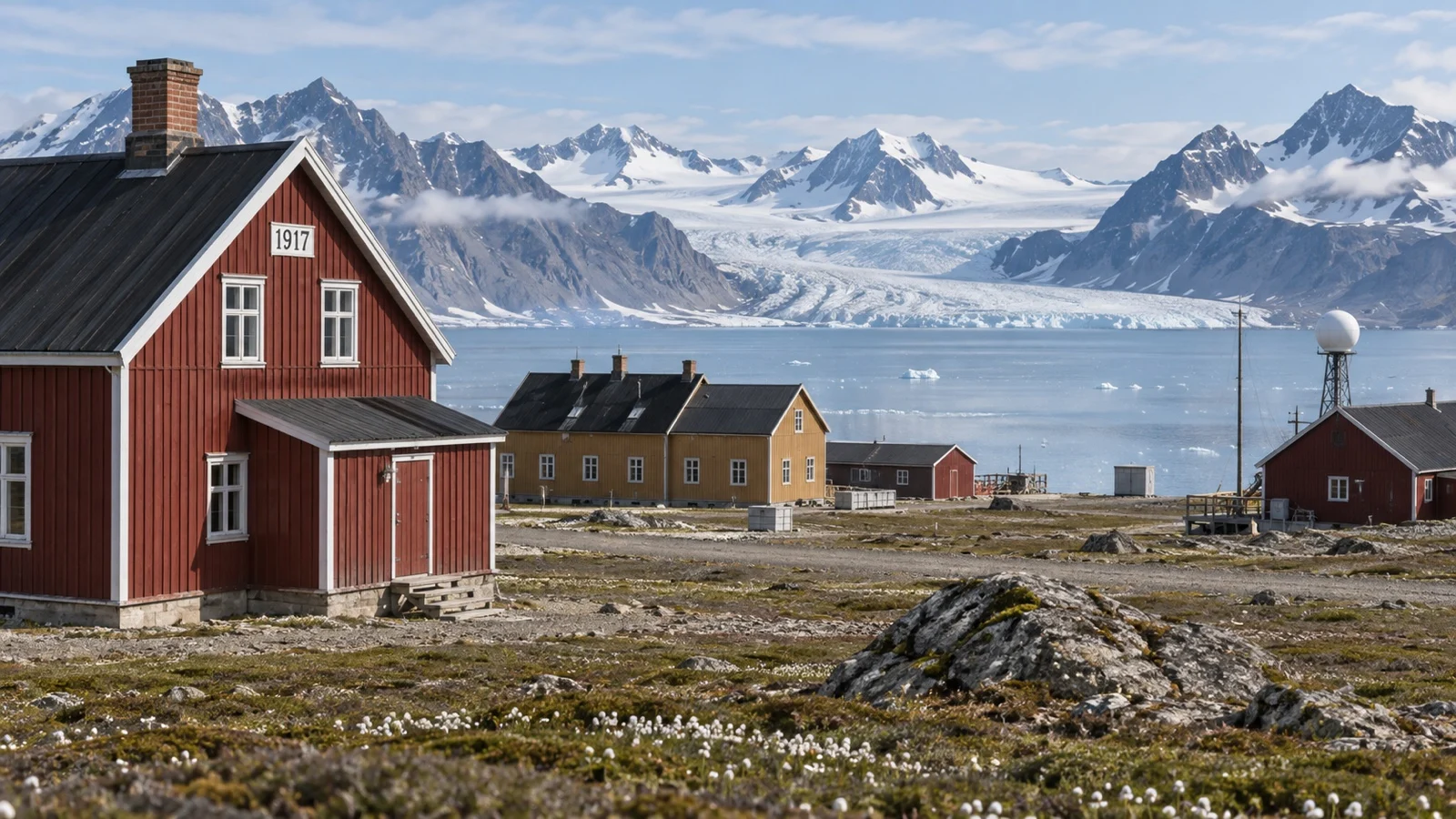
Ny-Ålesund began as a coal-mining settlement and later became closely connected with polar aviation and science. Historic buildings, mining equipment, rails, and memorials remain visible from designated areas.
The airship mast recalls the Norge expedition led by Roald Amundsen, Lincoln Ellsworth, and Umberto Nobile, which crossed the North Pole in 1926. The 2026 centenary gave this history fresh attention without turning the settlement into a conventional heritage park.
Listen to the expedition guide because the visible remains belong to several overlapping stories. Mining, exploration, sovereignty, and present-day research deserve more than one heroic headline.
Wildlife never creates a detour
Arctic terns and other birds may nest near the settlement, while foxes, reindeer, or marine mammals can appear in the region. Never approach, surround, lure, or follow an animal for a photograph.
Polar bears can occur anywhere in Svalbard, which is why movement outside managed areas requires professional safety systems. Visitors do not leave the boundary with a map and personal confidence.
The expedition team may post trained personnel and alter routes after a sighting. Follow every instruction immediately and never move toward a bear, even when other passengers seem curious.
Biosecurity before landing
Expedition operators inspect and clean boots, outerwear, bags, tripod feet, and hook-and-loop fasteners to reduce the spread of seeds and organisms. Attend the session and present every item requested.
Do not take loose food ashore unless explicitly permitted and never leave tissues, crumbs, or other waste. If something falls, retrieve it when safe or alert a guide.
Collecting stones, plants, feathers, bones, or cultural material is not permitted. Leave the settlement exactly as you found it.
Accessibility is expedition-specific
A direct berth can be easier than a Zodiac, but gangway slope, gravel, boardwalk edges, and weather still matter. A small-boat landing may require passengers to step independently between a moving vessel and platform.
Ask whether wheelchairs, scooters, or walkers can be landed, whether equipment can be lifted, and which approved routes are suitable. Only the operator can approve a passenger for the actual transfer and conditions.
No independent accessible taxi or alternate tour waits ashore. If the organized landing cannot safely support the traveler or device, remaining aboard is the responsible outcome.
Dress for cold pauses
Summer temperatures remain cool, and wind from Kongsfjorden can make a briefing feel much colder. Wear insulating layers beneath a waterproof and windproof shell, with gloves, a warm hat, and sturdy closed footwear.
Expedition visits include pauses while groups listen, wait, or observe, which cools the body faster than continuous walking. Carry only what the operator permits and keep both hands available during boat transfers.
Weather, sea ice, fog, and visibility can cancel a landing. Shipboard lectures and views across the fjord remain valuable when the safest port day happens from deck.
What to confirm during the briefing
Listen for the berth or Zodiac assignment, footwear, device procedure, group number, approved route, wildlife restrictions, shop access, and return time. Ask questions before boarding the boat rather than solving them at the landing.
Tell staff about mobility, balance, health, and medication needs before assignment. Medical support and evacuation options are limited and weather dependent.
Return timing is managed
The expedition team assigns boat groups, meeting points, and boarding times. Harbor capacity or changing weather may require an earlier return, so remain within sight and hearing of staff.
Do not linger for a purchase after your group is called. A nearby ship or direct berth does not grant extra time when the gangway must close for safety or operations.
If the landing is canceled, accept the shipboard program because there is no legitimate independent workaround. The decision protects local research and everyone operating on cold Arctic water.
Why a short visit is still complete
Ny-Ålesund’s meaning comes from the unusual coexistence of research, exploration history, wildlife, and a small community at high latitude. A carefully interpreted walk through the approved settlement can reveal all four without leaving the designated route.
Use pauses to notice instruments, historic structures, mountains, glaciers, birds, and the scale of Kongsfjorden. The experience becomes richer when attention replaces the urge to cover distance.
Respect for radio silence and closed ground is also part of understanding the place. The rules show how ordinary visitor habits can affect work that depends on clean signals and minimally disturbed Arctic conditions.
Leave commercial expectations behind and let the expedition team explain what is possible that day. A brief landing completed responsibly is more valuable than a longer visit that disrupts the settlement it came to appreciate.
Before returning, check that every item you carried ashore comes back aboard and that no device has reactivated its wireless connection. Small acts of care protect both science and the landscape.
Final thoughts
Ny-Ålesund offers a rare look at Arctic science, exploration history, and a fragile living environment. The visit succeeds when research remains undisturbed, wildlife stays unpressured, and every footprint falls on an approved route.
CruisePorts.co provides practical, independent planning guidance for cruise travelers. Harbor assignments, landing rules, wildlife, research activity, weather, and access can change, so verify critical details with Kings Bay and your expedition operator before travel.