Can You See Florence and Pisa During One Livorno Port Day?
Florence and Pisa can share a Livorno port day, but they are not equal partners. I give Florence the larger block, keep Pisa focused, and reject any route that wastes time returning to Livorno between them.
The honest verdict

A coordinated road tour or private driver gives the two-city plan its best chance. Independent rail travelers usually have a richer and safer day by choosing Florence or Pisa, because the cruise berth, Livorno station, city stations, and attractions are separate points.
“Seeing both” should mean one meaningful Florence experience plus a deliberate Pisa visit, not a proper exploration of two cities. Florence holds days of art and architecture, while Pisa’s compact monumental square can absorb far more time than a quick tower photograph suggests.
What the map hides about Livorno
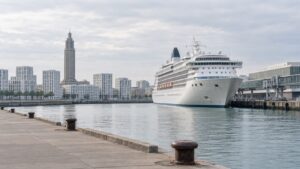
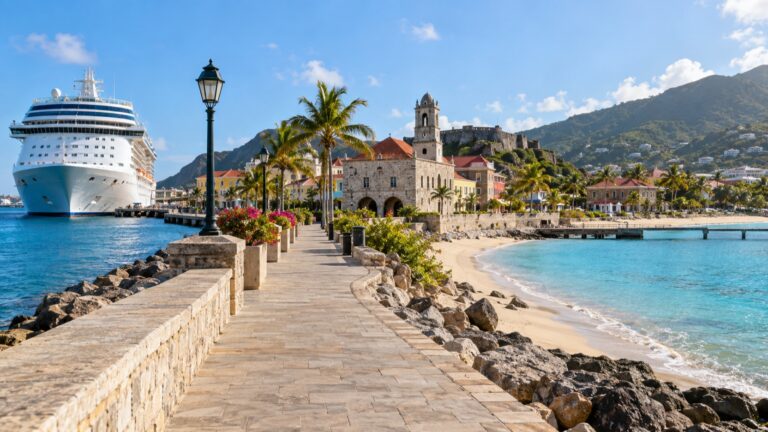
Livorno is a working port, and independent passengers cannot treat the gangway as a train platform. The port exit, authorized shuttle or taxi, Livorno Centrale, platform wait, and same chain on the return all consume time.
Florence also requires movement from Firenze Santa Maria Novella into the historic center, while Pisa Centrale is not inside the Piazza dei Miracoli. Each city adds walking, orientation, ticket collection, and a return to transportation.
That is why a schedule showing manageable train journeys can still produce a fragile cruise plan. Use current dated schedules from Trenitalia, then add every non-rail segment before deciding what is truly possible.
Why a road loop works
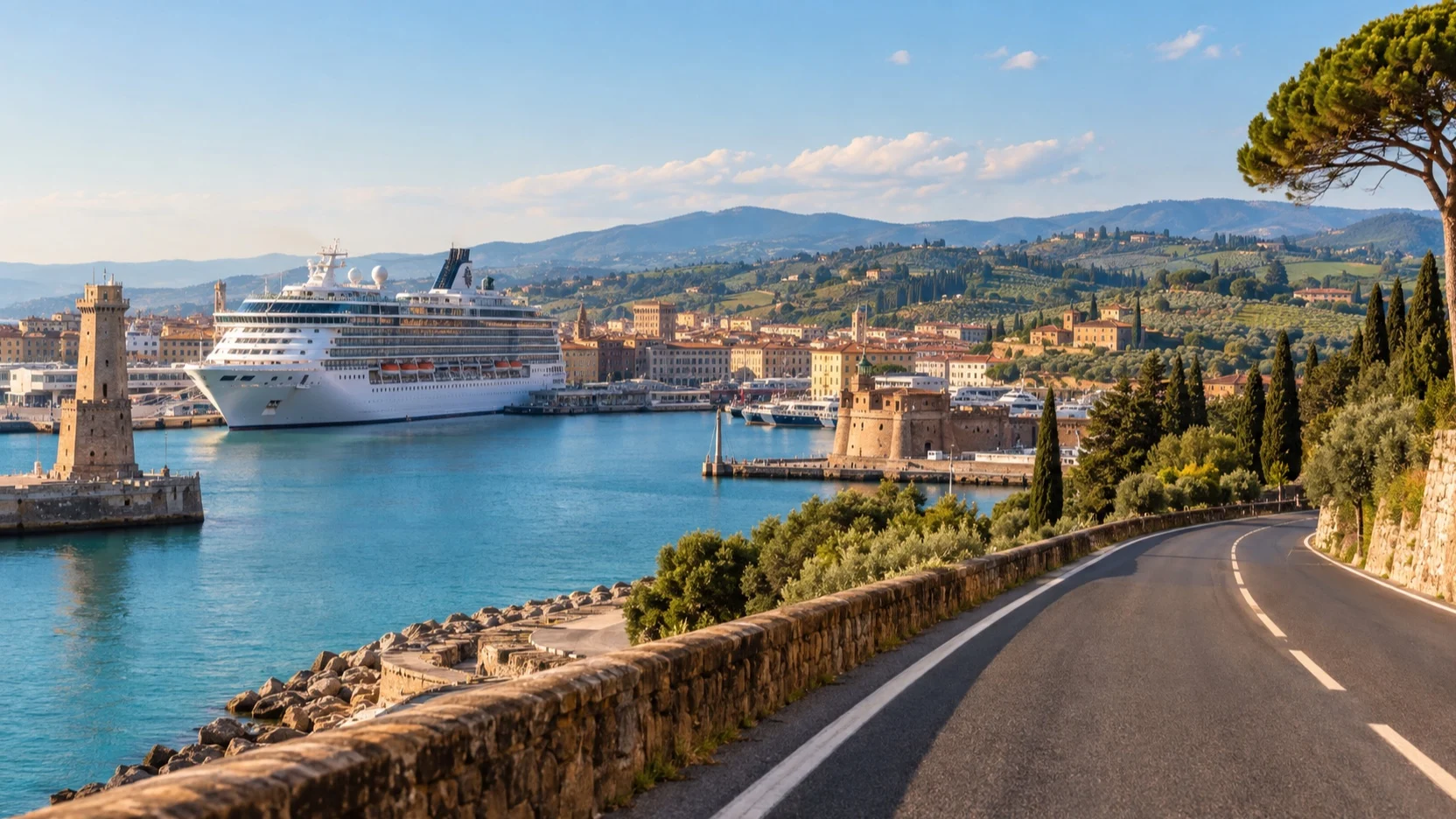
A road itinerary can leave Livorno, spend the larger block in Florence, visit Pisa, and continue directly to the ship. It avoids returning to Livorno between the cities, which is the main efficiency that makes the combination credible.
The order may reverse because of traffic, museum reservations, motorcoach access, or the operator’s route. Ask for protected time in each city rather than becoming attached to which famous skyline appears first.
A ship excursion provides the strongest cruise-specific coordination over this distance. A private driver can create a more flexible pace, but the operator should receive the ship name and deadline, explain restricted drop-off areas, and describe the backup response to congestion or vehicle trouble.
Read the duration carefully because “Florence and Pisa” can describe anything from guided walking to a panoramic motorcoach sampler. Request the planned Florence block, Pisa block, walking distance from vehicle stops, included admissions, meal arrangement, and departure from the final city.
Why DIY rail is better for one city
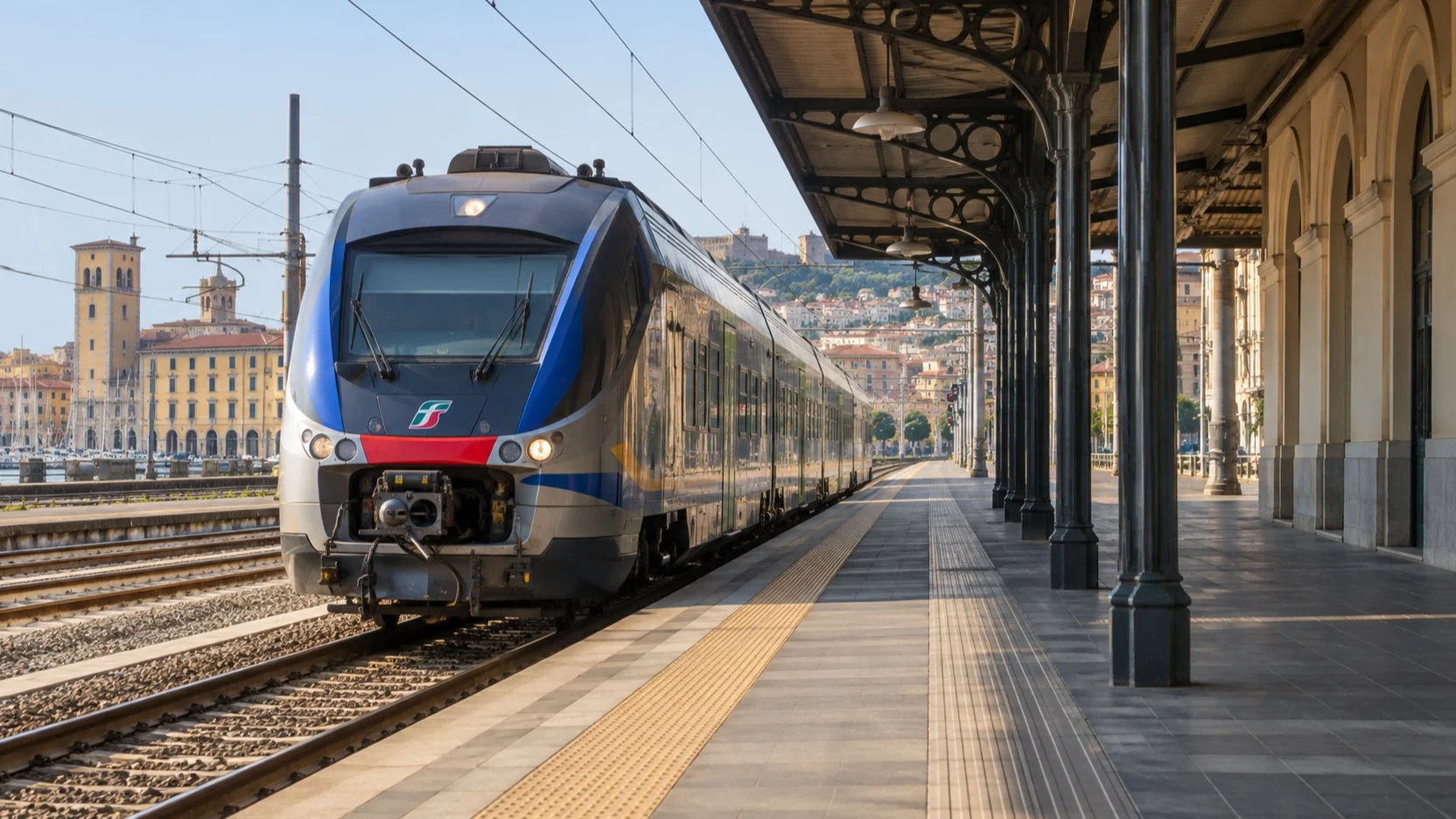
Rail gives independent travelers freedom after arrival, but the two-city version adds multiple departures and more ways to lose time. A late train into Florence can disrupt a museum entry, shorten Pisa, and leave the group depending on a return with little recovery room.
For Florence only, travelers can select a conservative outbound service, enjoy one compact plan, and return on a train with another workable option behind it. For Pisa only, the shorter inland journey can leave room for a relaxed square visit and perhaps time in Livorno.
Do not use the final service that could theoretically reach the ship. The safer choice arrives back in Livorno early enough to complete the station-to-port transfer even if a platform change, missed shuttle, or taxi wait consumes extra minutes.
Our Livorno cruise port guide helps with the starting point, while the separate Florence transport guide is useful for understanding the inland portion. Check both against the dated ship information rather than copying a route from another sailing.
I treat “seeing both” as one Florence plan plus one deliberate Pisa stop, not two city breaks in a trench coat.
Give Florence one real center
Choose one reason to be in Florence: the Accademia, the Uffizi, the cathedral area, or a focused historic-center walk. A fixed museum entry can organize the day, but two major reservations create unnecessary pressure after a long transfer.
The Uffizi Galleries publishes official visitor information and tickets, which should replace third-party summaries when planning admission. Count security, ticket checks, bag rules, galleries, and the walk back to the meeting point, not only the time printed on the ticket.
Travelers who skip museums can still create a substantial Florence experience through architecture, streets, a market area, and lunch. Keep the route geographically tight instead of zigzagging among five headline photographs.
A meal belongs inside the Florence block, not outside it as a delay. Choose something near the anchor, set a clear leave time, and enjoy a simple regional dish without turning the restaurant into another cross-city mission.
Make Pisa the short stop on purpose
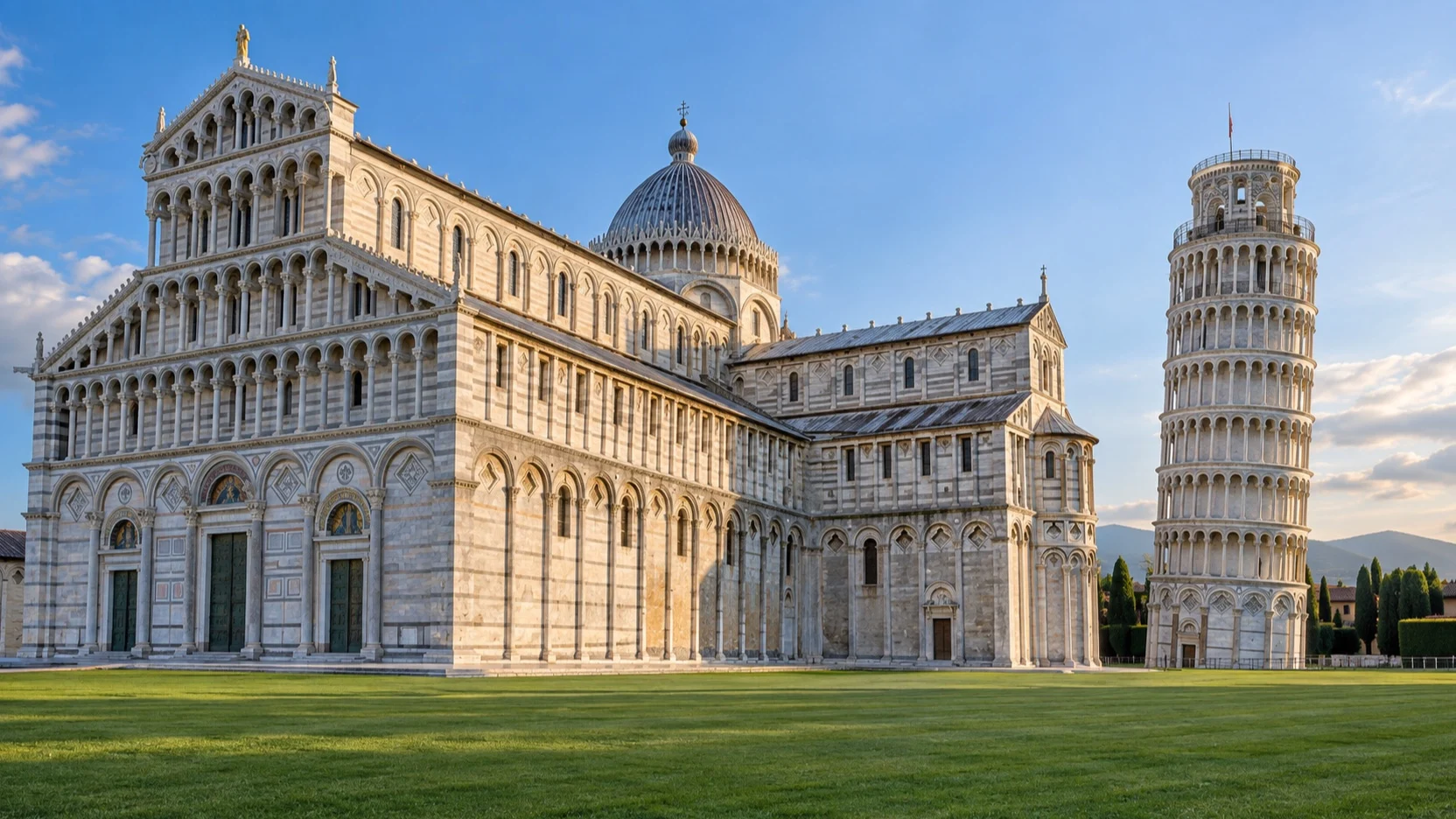
Pisa’s Piazza dei Miracoli contains the Leaning Tower, cathedral, baptistery, and Camposanto in one remarkable complex. The official Opera della Primaziale Pisana site is the correct source for current tickets, access details, and monument rules.
An exterior visit fits a Florence-plus-Pisa day more comfortably than a tower climb. It still needs time to walk from the vehicle stop, enter the square, take in the ensemble, use facilities, gather the group, and return.
A tower ticket introduces controlled timing, security requirements, and physical restrictions. Make the climb the centerpiece of a Pisa-focused day, or accept that it may sharply reduce Florence when included in the combination.
Brief should mean focused, not frantic. Decide whether the family wants architectural context, a guided explanation, a cathedral visit, or simply an unhurried look at the square, then avoid adding shopping that steals from the chosen purpose.
We cover that separately in our guide to Can You Visit Kyoto During a Cruise Stop in Kobe or Osaka.
We cover that separately in our guide to Can You Visit Pompeii Independently From Naples.
Three realistic ways to shape the day
The classic combination uses a long Florence block for one anchor, a walk, and food, followed by a shorter Pisa square stop on the road to Livorno. It suits a long call and travelers who accept that both cities are previews.
A Florence-only day uses the saved Pisa time for a museum, neighborhood walk, meal, and earlier departure. This is usually the stronger first visit for travelers whose mental image of Tuscany centers on Renaissance art and the Florence streetscape.
A Pisa-and-Livorno day keeps the inland journey shorter and lets the group return to the coast for canals, a market area, fortress views, or seafood. It can deliver more variety than the two-city race because transportation consumes less of the call.
La Spezia cruisers face a different starting point and should not reuse a Livorno calculation. Compare our La Spezia guide and Mediterranean ports overview when weighing the region across itineraries.
Walking and accessibility
Historic-center vehicle restrictions mean a motorcoach or private driver may stop well away from the landmark. Ask for the distance and surface from each drop-off to the attraction, plus the location of the return meeting point.
Florence and Pisa can involve cobbles, heat, crowds, station corridors, steps, and long standing periods. “Panoramic” and “easy” are not measurements, so travelers with mobility needs should request route-specific details and current monument accessibility.
The combined day also asks people to reboard and unload repeatedly. A group that moves comfortably for the first city may slow after lunch, which should be reflected in Pisa timing and the final road margin.
Weather, crowds, and a late start
Summer heat can make open squares and historic-center walking exhausting, while rain can slow traffic and create crowded museum entrances. Protect water, shade, restroom breaks, and a less ambitious walking loop before preserving an extra photo stop.
If the schedule starts demanding perfect connections, I choose the city I care about more.
If the ship clears late or an early train is canceled, remove one city immediately. Trying to recover lost time by rushing the same itinerary only pushes the problem toward the ship return.
Decide the backup before embarkation: Florence only if the inland transfer still works, Pisa if the call shrinks substantially, or Livorno when delays make either journey poor value. A prepared smaller day feels intentional rather than disappointing.
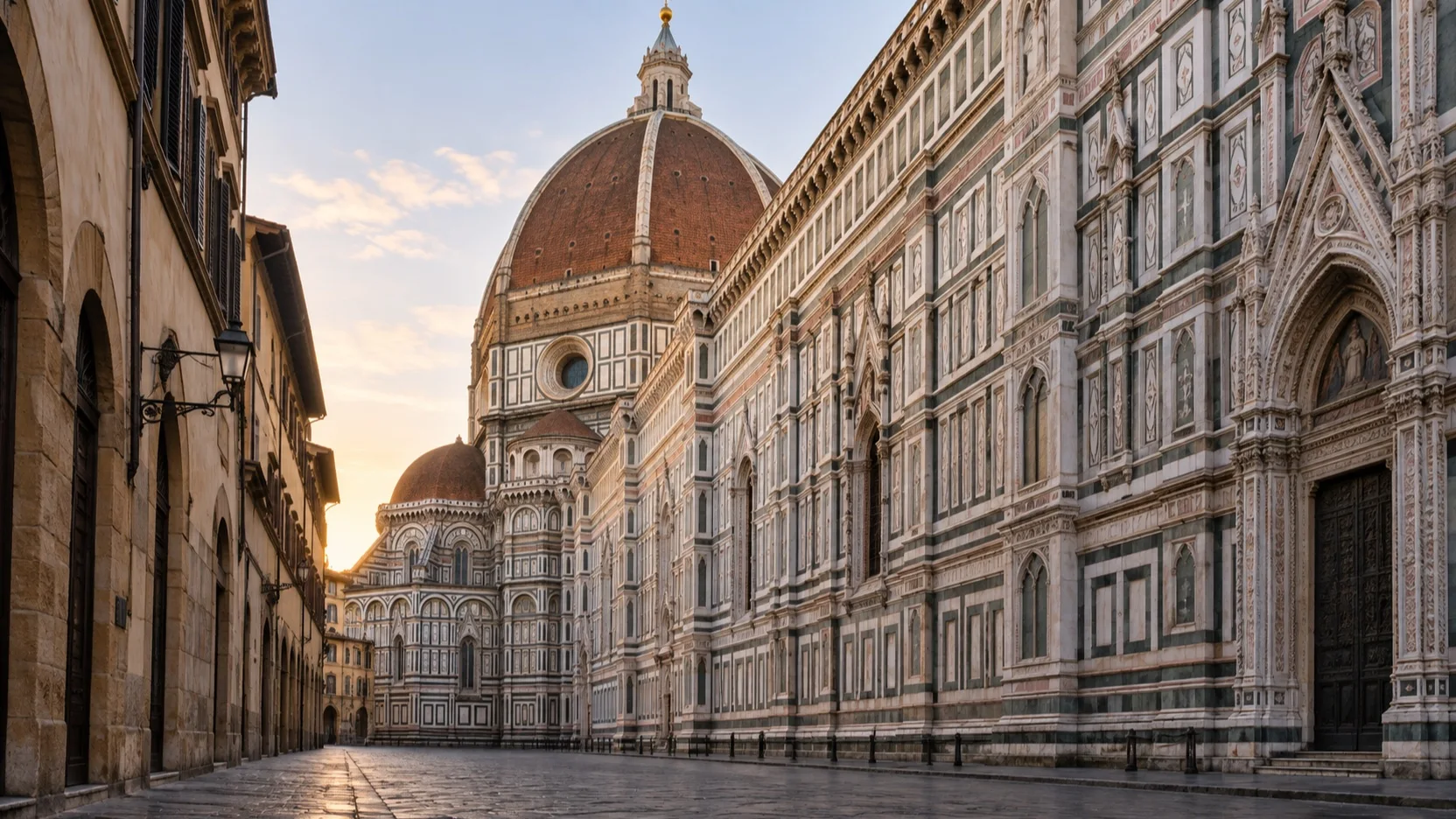
Quick Facts: minimum conditions for doing both
Florence and Pisa can share one port day only when the call is long, the route is coordinated, and you accept a highlights day rather than two complete city visits. If any of those conditions fails, choose one city.
- Transport: use a ship excursion or prearranged road vehicle that meets at the correct Livorno pickup point and explains drop-off restrictions in both cities.
- Florence: reserve no more than one timed interior priority and leave room for the historic-center walk. Check live notices on the Uffizi or the official site for the attraction you choose.
- Pisa: treat Piazza dei Miracoli as the shorter stop; add a tower slot only when its entry rules and timing cannot jeopardize Florence or the return.
- Return: plan to reach the Livorno port process at least 90 minutes before all-aboard, then add any required shuttle or security transfer.
Agree in advance which city will be cut after a late ship clearance or major road delay. That single decision keeps a disappointing morning from becoming a missed-ship emergency.
The final decision test
Choose both only when the call is long, the transportation is coordinated, Florence keeps the larger share, and Pisa has a clearly defined scope. Every adult should understand that the combination buys variety by giving up depth.
Choose Florence only when art, architecture, and atmosphere matter more than the tower photograph. Choose Pisa only when the monumental square is the true priority or the shorter travel profile better matches the day.
Price the complete plan, including port transfer, road tour or trains, admissions, food, and emergency transport capacity. The cheapest itinerary is not automatically the best value when it leaves only fragments of both cities.
Quick answers
Can the tower and Florence fit?
It can fit some long coordinated tours, but the fixed entry makes the day less flexible and reduces Florence time. The climb is better saved for a Pisa-focused visit when it is a major priority.
Which city should receive more time?
Florence should receive the larger block for most first-time visitors. Pisa’s monumental square makes the shorter, more concentrated stop.
Can I do Florence and Pisa by train?
It may be possible on a long call, but port transfers and several rail segments make the itinerary brittle. One city by train is usually more satisfying and leaves a safer return.
Is Florence walkable from the station?
Much of the historic center is walkable from Firenze Santa Maria Novella, but the distance to the chosen attraction, crowds, admission, and walk back still require time.
What if the call is shorter than expected?
Remove Florence or Pisa instead of compressing both. Pisa or Livorno is the more resilient choice when the usable day shrinks sharply.
How this guide was researched
This guide was checked in September 2026 using current information from Trenitalia, the official Piazza dei Miracoli organization, the Uffizi Galleries, and our destination resources. Verify the exact berth arrangements, dated trains, museum tickets, tour scope, weather, and onboard return time for your sailing; see our Editorial Policy for our sourcing, review, and corrections standards.
More on this topic: browse every guide on shore excursions and DIY port days.