Cruise Ports With a Cable Car to the Best View
The best view in port is often the one you can reach in ten minutes and a ticket. A cable car, a funicular or a plain elevator does in six minutes what a bus tour spends four hours pretending to do.
My quick take
These rides are the highest return per hour of anything you can do in port. You get the postcard, you get the geography of the place, and you are back aboard before the excursion buses finish loading.
The catch is that half of them have a line problem and a third of them stop for wind. I plan these for the first hour ashore, not the last, and I always have a plan B that involves a taxi and a hill.
The quick facts
- Walkable winners: Funchal, Santorini, Bergen, Quebec City, Valletta, Istanbul and Koblenz all start within a reasonable walk of where your ship ties up.
- Wind is the real risk: Cape Town, Dubrovnik and Rio all stop running when it blows hard, and none of them warn you the night before.
- Go first, not last: Santorini, Cape Town and the Hong Kong Peak Tram are transformed by arriving in the first ninety minutes ashore.
- Know what you are riding: Some of the famous ones are funiculars on rails, and two of the best are ordinary elevators.
- Independent almost always wins: Buying a ticket at the base station is usually faster and cheaper than the ship version of the same ride.
What a cable car actually buys you on a port day
It buys you elevation without effort, and elevation is what turns a port into a place you understand. From the top you see how the harbor sits and why the ship parked where it did.
It also buys you a short commitment. Most of these take two to four hours door to door, which leaves the rest of your day intact.
What it does not buy you is a guaranteed view. Cloud sits on summits, and the ride still runs when the top is a gray room with a gift shop in it.
Funchal, and the ride down that people actually remember
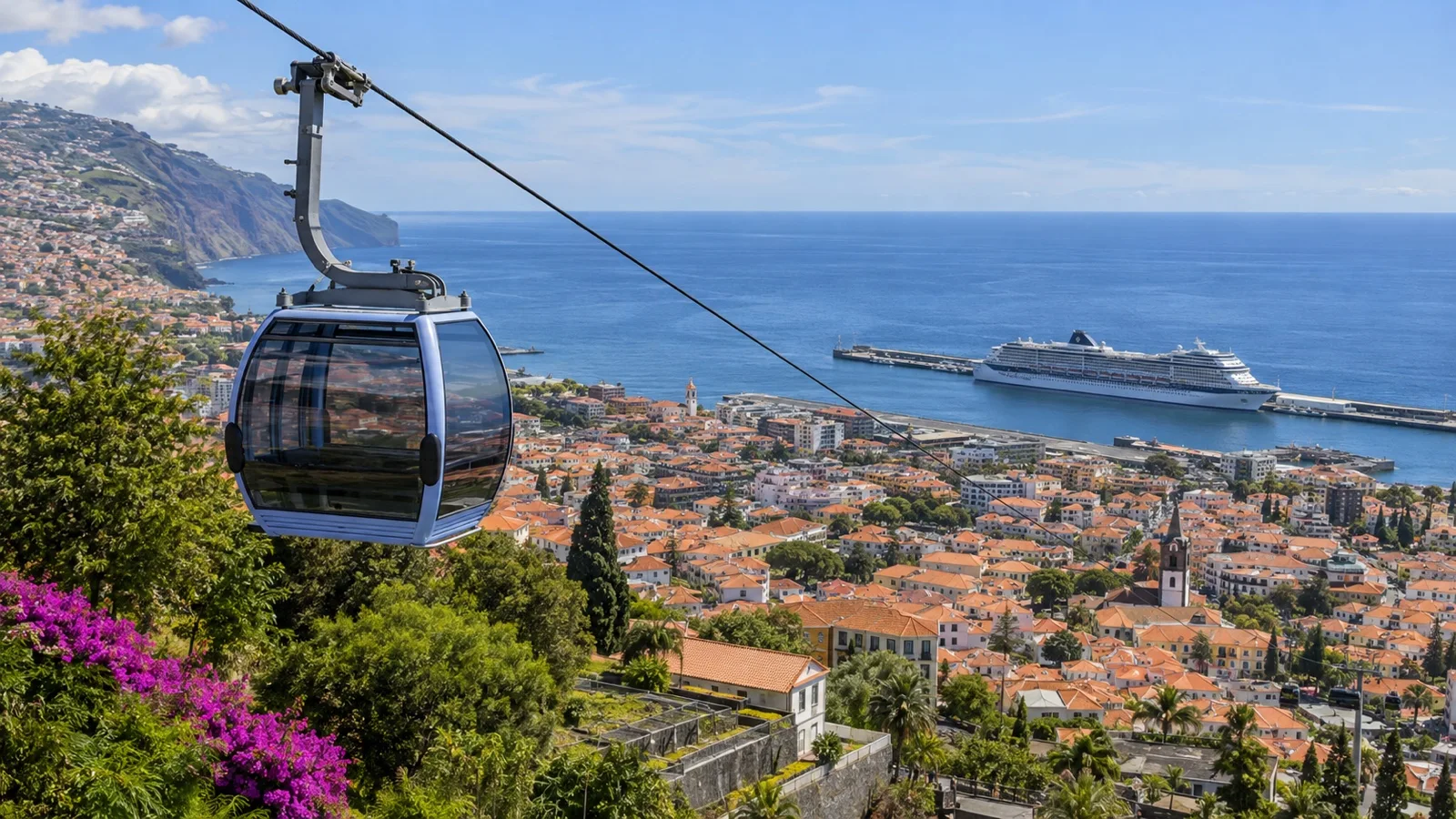
Funchal has the best combination here. A gondola climbs from a park near the waterfront up to Monte, roughly 2 miles (3.2 km) of cable and about 1,840 feet (560 m) of rise, in around fifteen minutes.
Then there is the toboggan. Two men in white push a wicker sled with you in it down a public road, and it is exactly as ridiculous and as fun as it looks.
The base station is a walk of twenty to thirty minutes along the seafront from the pier, or a very short taxi. My guide to the Funchal cruise port covers the walk into town, which is the part people underestimate on a hot day.
Budget three hours for the cable car, the toboggan and a taxi back, or four if you want the gardens at Monte as well.
Santorini, where the cable car is the whole decision
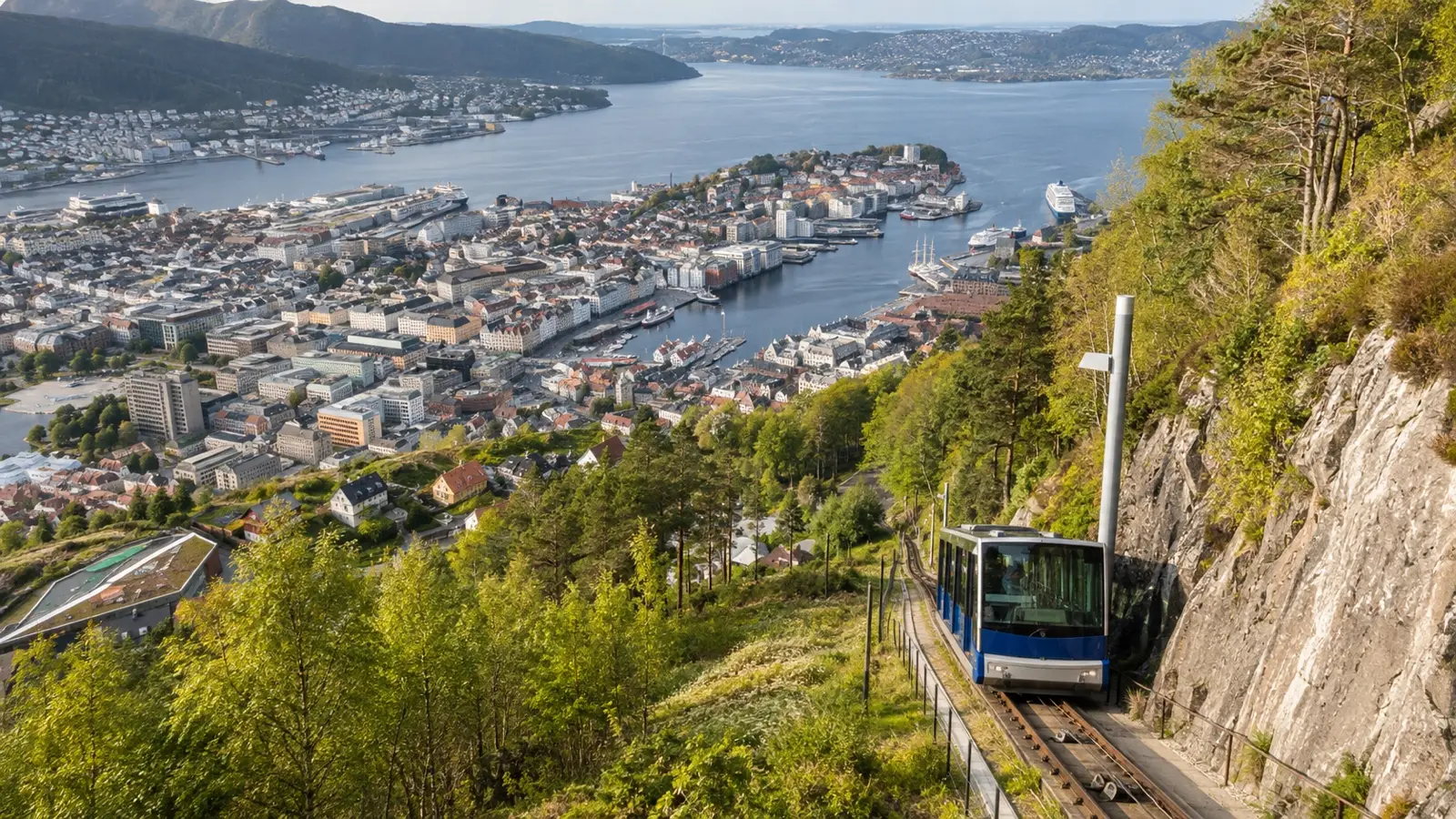
Santorini is a tender port, and you land at the old port at the bottom of the cliff. From there you have three ways up to Fira: the cable car, a donkey, or about 600 steep steps that the donkeys also use.
The ride is three to five minutes and climbs around 720 feet (220 m), six people to a gondola, running continuously. It still cannot keep up when three ships tender at once.
The line is the story here, and it bites in both directions. Twenty minutes going up in the morning, and an hour or more coming down in the late afternoon with everyone watching the clock.
I would take the cable car up, and I would not ride a donkey, which is a working animal on a hot stone staircase. My Santorini tender port guide goes through the timing in more detail, but the short version is to go up early and come down before the crowd decides to.
Cape Town, where the mountain gets a vote
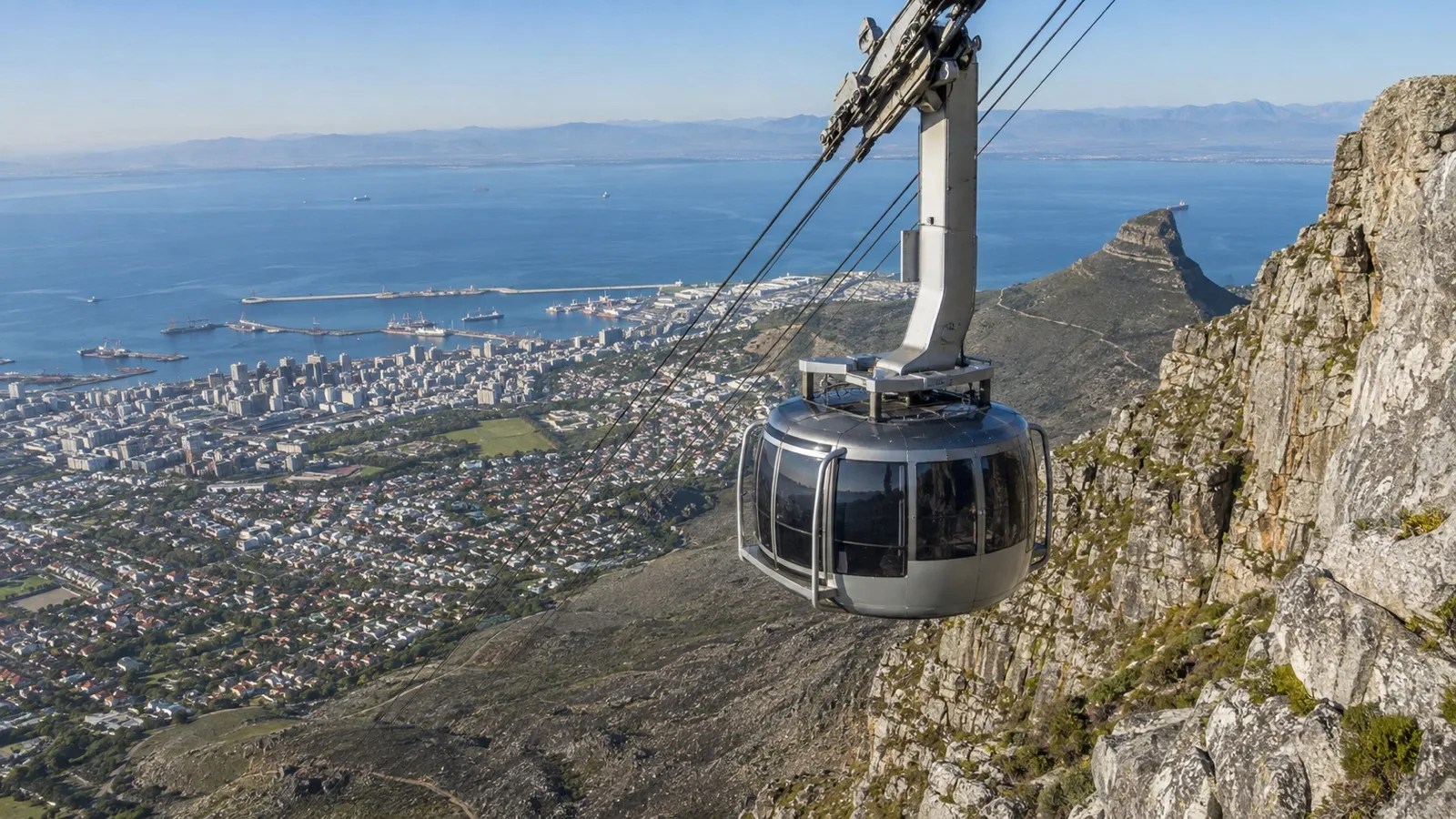
Table Mountain has a rotating cabin, so everyone gets the whole view up without elbowing for a window. The top is a broad plateau with paved paths, which makes it one of the more genuinely step free options here.
It is not walkable from the ship. From the waterfront you are looking at a short taxi ride, and then a security check and a ticket line at the lower station.
The cableway stops for wind, and it stops often. It publishes a live running status and wait time, and I check that from the ship before I commit to the taxi rather than after.
Mornings beat afternoons here. The cloud that sits on the summit builds through the day, and by two you can be paying for the inside of it.
Barcelona has three of these and you want the dull one
Barcelona gives you a choice and most people pick wrong. The glamorous option is the old harbor cable car strung across the port on tall towers, with small cabins, long lines and a price that does not match the short hop you get.
The one I would take is the Montjuic funicular. It runs from a metro station, it is part of the normal transit network, and it costs what a metro ride costs.
From the top a separate gondola continues to the castle, and a bus goes the same way. Ships berth out on the long mole, so factor in the port shuttle before any of this starts.
Bergen and Wellington start where you already are
Bergen’s funicular leaves from a station beside the old wharf, which is a flat walk from the berths closest to town and a longer one from the outer quay. It runs from early morning to late at night, and the departure times are posted through the day, so you can time it around the ship.
The top has a cafe, trails and a view straight down onto your ship. A second, bigger cable car climbs a higher mountain nearby, but that one needs a bus and a plan.
Wellington’s is called a cable car and is really a funicular. It leaves from a lane off the main shopping street, takes three to five minutes, and drops you at the top of the botanic garden.
Most ships in Wellington dock at a cargo quay, so you need the shuttle into town first, and from there it is a five minute walk and a ten minute wait.
Koblenz and Quebec City, the two shortest wins here
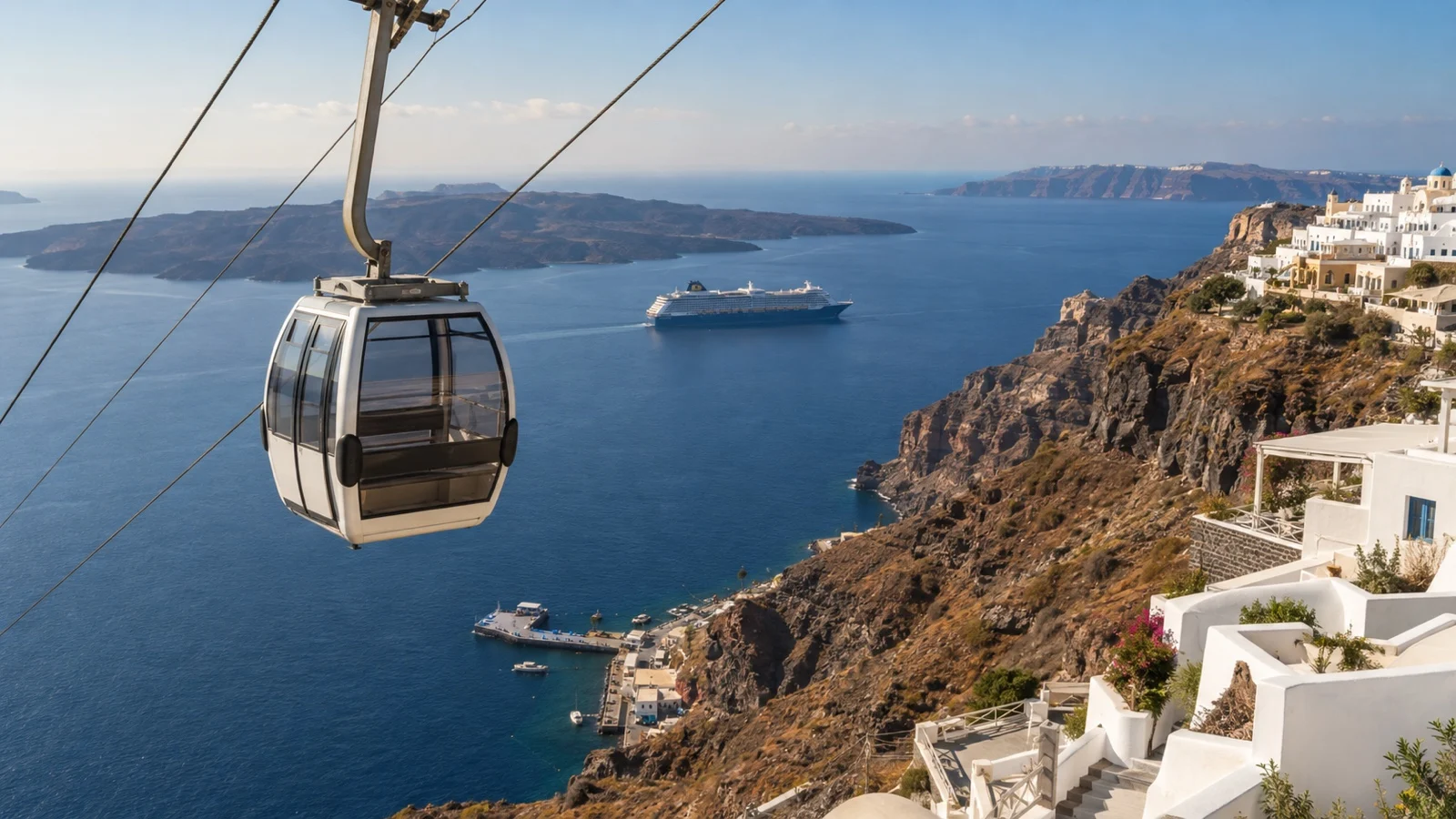
Koblenz is a river cruise stop, and the gondola crosses the Rhine from near the monument at the confluence up to the fortress on the far bank. It is under 3,000 feet (890 m) long, it moves enormous numbers per hour, and it typically runs spring into fall rather than year round.
You can be off the boat, up, around the fortress walls and back in about two hours, which is rare on a river itinerary.
Quebec City’s funicular is even shorter. It climbs 210 feet (64 m) at a 45 degree angle from the lower town up to the terrace beside the big hotel, and it saves you a staircase that is genuinely unpleasant in the heat.
The cruise terminal is a few minutes’ walk from the bottom station. It is a utility rather than an attraction, and it is worth it anyway.
Naples and Capri, where the funicular is just the bus
Naples has four funiculars, run as part of the city transit system and priced like it. Three climb to the Vomero district, where the fortress terrace gives you the bay, the city and the volcano in one frame.
The nearest lower station is fifteen minutes or so on foot from the cruise terminal, through streets that are busy in a way that is fun if you expect it. A normal city ticket covers the ride.
Capri’s is different because you have no real alternative. It climbs about 2,200 feet (670 m) of track from the harbor to the main square, running every fifteen minutes or so.
When it is out of service, and it does go out of service, the fallback is a small bus or a taxi on a narrow road. That is the day a tender port turns into a long wait.
Hong Kong and Singapore have opposite problems
The Peak Tram is a funicular, not a tram, and it was famous for two hour lines before a rebuild roughly doubled how many people each car holds. It is much better than it was and still the busiest thing you will wait in line for that day.
The problem in Hong Kong is not the ride, it is reaching the bottom station. Neither cruise berth is near it, so budget the transport into Central before you budget the tram.
Singapore is the reverse. The cable car station sits above the HarbourFront terminal, so if your ship is there you can be in a cabin over the harbor fifteen minutes after the gangway.
Most large ships in Singapore do not use HarbourFront. They use the newer terminal further east, which makes the cable car a taxi or a train ride away rather than a stroll, and that changes the whole calculation.
Rio and Dubrovnik, where the top is the entire point
Sugarloaf runs in two stages, from a base in a quiet neighborhood up to one hill and then on to the summit. It stays open into the evening, though last boarding is well before the gates close, which catches people chasing sunset.
The cruise pier is downtown, so you need a taxi or a rideshare to the base and back, and two to three hours door to door is realistic.
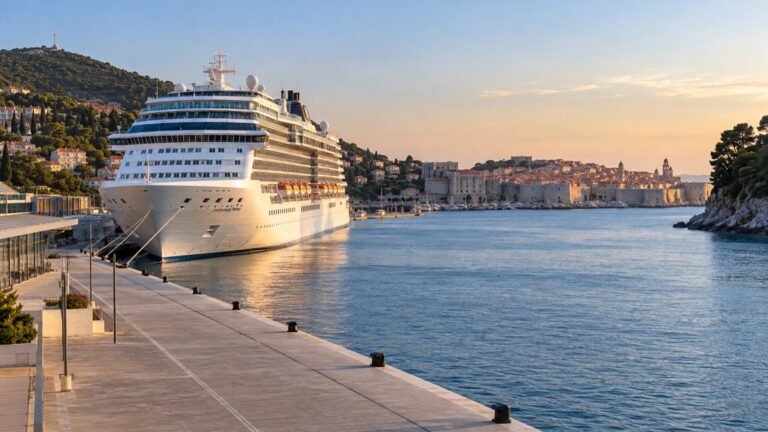
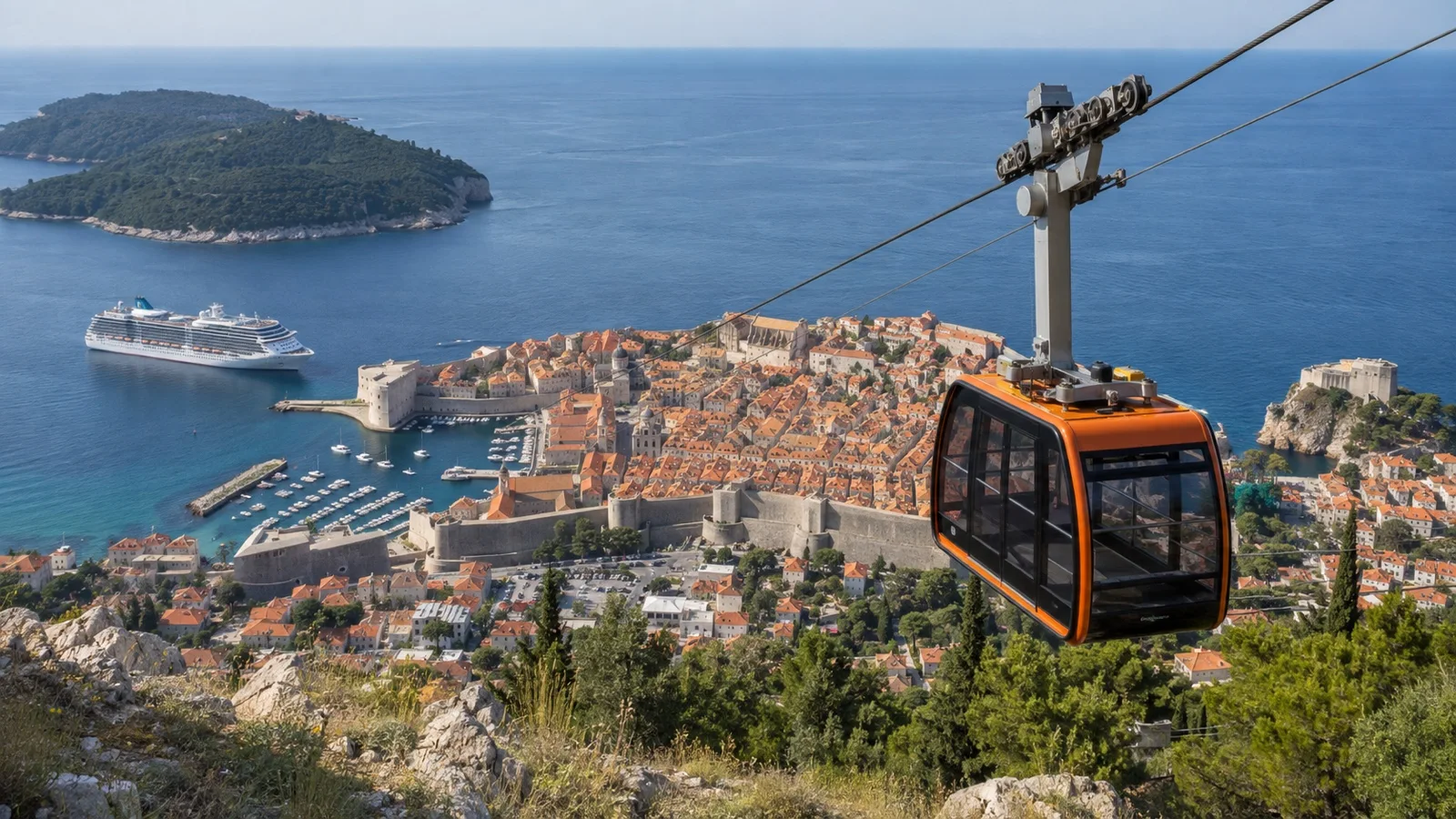
Dubrovnik’s climbs the bare hill behind the old town, and on a clear day you can see something like 37 miles (60 km) of coast and islands. Ships berth at the commercial port a couple of miles away, so the base is a bus or taxi ride and then a short walk uphill.
An exposed cabin on an open hillside stops when the wind gets up, and on that coast it gets up. My full Dubrovnik port guide works through how to sequence the cable car against the city walls, because doing both badly is easy.
Valletta, Lisbon and Istanbul are not cable cars at all
Valletta’s is an elevator, plain and vertical, rising about 190 feet (58 m) from the harbor wharf to the gardens on the bastion in roughly twenty three seconds. That is the best effort to view ratio in the Mediterranean, and it is step free at both ends.
Lisbon’s Santa Justa is also an elevator, the only vertical one left among the city’s old hill machines, and the rest are funiculars. The line is long and the platform on top costs extra, and you can reach almost the same view for nothing by walking around to the square it opens onto.
One of Lisbon’s funiculars has been out of service since a fatal accident, and the city’s other hill railways have been under review since. Treat any specific one as unconfirmed until you are standing in front of it.
Istanbul’s short funicular from the waterfront up to Beyoglu opened in 1875 and takes about ninety seconds. It runs underground, so there is no view from the car, but it saves you a brutal climb from the cruise terminal to the top of the hill.
The line and the wind, which are the two things that ruin this
On a two ship day the line is the price, not the ticket. Santorini, Cape Town and the Peak Tram are the three where an hour of waiting is normal, and all three shrink to a short wait if you go in the first ninety minutes ashore.
Wind closures are worse because you cannot outsmart them. Cape Town, Dubrovnik and Rio all suspend service in strong wind, and that call is made by people watching an anemometer, not by anyone who cares about your all aboard time.
Mechanical closures happen too, and they last longer. The tram at the Juneau docks has been out of service while assessments continue, and Gibraltar’s cable car has been shut for a full rebuild, so both are worth confirming rather than assuming.
Accessibility varies wildly and is not correlated with how modern the ride looks. Cape Town, Valletta and Bergen are broadly step free, while several of the older funiculars have steps at one or both stations, and my notes on port day activities that work with limited mobility go into how to check that before you commit.
Doing it yourself or letting the ship handle it
For almost every ride here, independent wins. You buy the same ticket at the same window, you go when you want, and you skip the part where forty people board a bus for a ten minute drive.
The ship version costs more because it bundles transport and a guide onto a ride that needs neither. What it does buy is the cruise line’s stated late-return assistance if its own tour is delayed, which is worth something in Rio and Cape Town where you are relying on a taxi both ways.
Some ship tours do carry a real advantage, and it is usually a priority boarding component on a ride with a famous line. On a busy Santorini day that can be the difference between two hours and twenty minutes.
My rule is that if the base station is walkable, book nothing. If it needs a taxi in a port where taxis get scarce at 4pm, think harder, and my breakdown of when a ship excursion beats doing it yourself covers where that flips.
The ones I would skip
Cairns has a spectacular rainforest cableway, and it is a full day out rather than a port day view. The terminal is a drive north of the ship, and one direction alone runs about ninety minutes across its 4.7 miles (7.5 km) because you stop at rainforest stations on the way.
Hong Kong’s long cable car out toward the big Buddha has the same problem. It is near the airport rather than the harbor, and it eats a whole day for a view no better than the Peak.
Valparaiso’s hillside funiculars are wonderful and genuinely unreliable. Several of the historic ones are restored and running and several are not, and which is which changes, so treat any specific one as a nice surprise rather than a plan.
A few ports people ask about do not have one at all. Puerto Vallarta and Mazatlán have no cable car or funicular to a viewpoint, Skagway’s big view comes from a railway rather than a tram, and Brest’s cable car is a commuter link across a river, not a trip to a summit.
Quick answers
Which cruise port has the best cable car?
Funchal, because the ride up is long and scenic, the base station is walkable from the pier, and the wicker toboggan down turns a viewpoint into a story. Cape Town is the better view on a clear day and the bigger gamble.
Is the Santorini cable car worth it or should I walk up?
Take the cable car, especially going up. The walk is around 600 steep steps shared with donkeys in full sun, and the time you save is time in Fira instead of on a staircase.
Do cable cars close because of wind?
Yes, and it is common at Cape Town, Dubrovnik and Rio. There is no appeal and no refund fight worth having, so check the operator’s status page the morning of your port day.
Are cruise port cable cars wheelchair accessible?
Some are and some are absolutely not. Cape Town, Valletta and Bergen are the safest bets, while older funiculars in hilly old towns often have steps at one end even when the car itself is level.
Should I book the cable car as a ship excursion?
Usually no, because you can buy the same ticket yourself for less and go on your own schedule. Book it when the ride needs a long taxi transfer or when the tour genuinely includes priority boarding on a line you cannot beat.
Final word
A cable car is the cheapest way to feel like you actually saw a place. It costs an hour or three, it rarely needs a booking, and it gives you the one photograph you will still recognize in five years.
Just go early. Every problem on this list, the line, the cloud, the wind hold, the closure nobody told you about, is smaller at nine in the morning than it is at two in the afternoon.
How this guide was researched: Operator timetables, route lengths, ride types and current service status for every cable car, funicular and elevator named here were checked against official pages in September 2026. Running status, seasonal hours and closures for maintenance change without much notice, so confirm the ride you are counting on before your own sailing; see our Editorial Policy.
More on this topic: browse every guide on shore excursions and DIY port days.