Buzios Cruise Port: Beaches and the Bardot Boardwalk
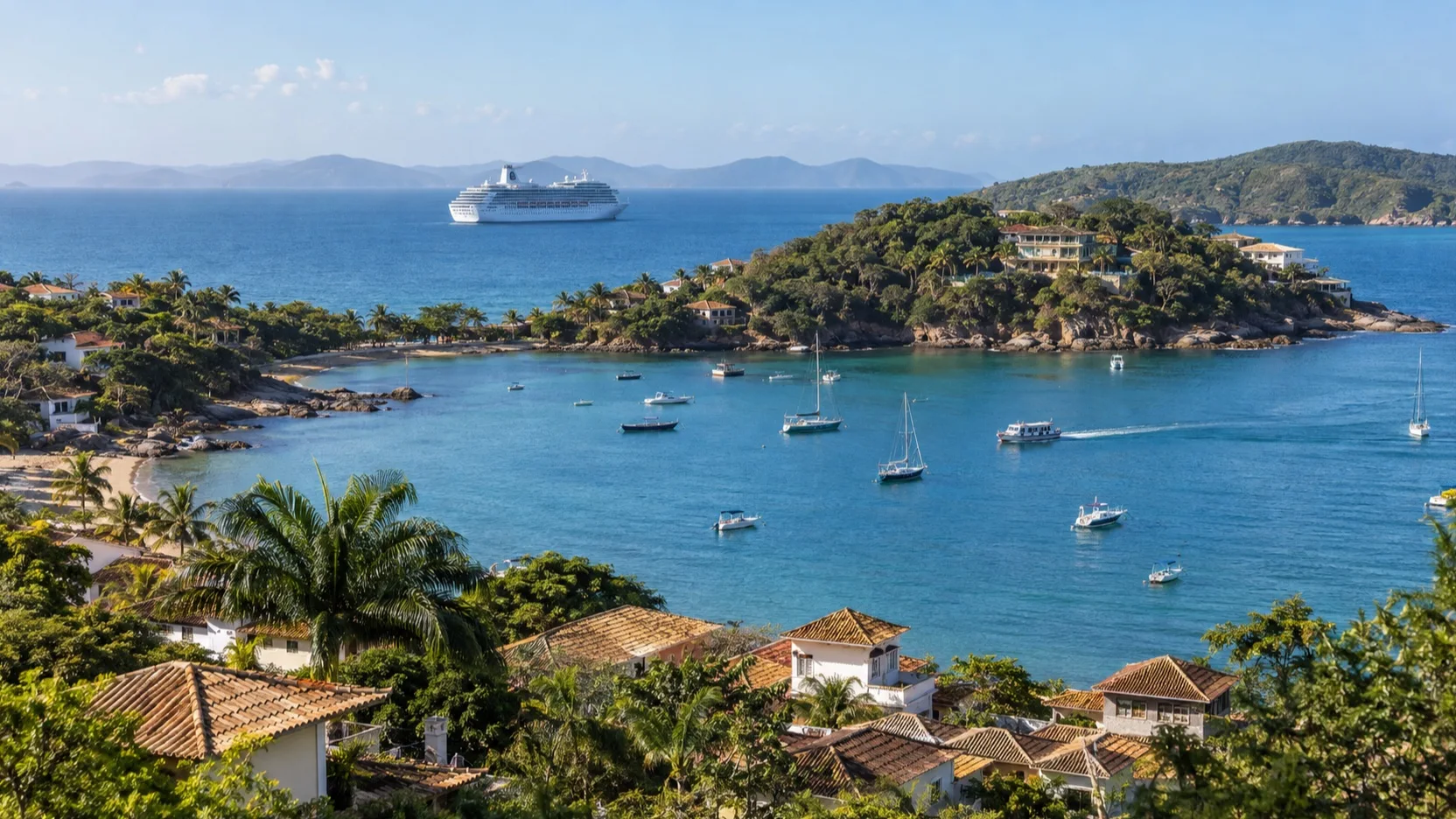
Búzios has the kind of easygoing appeal that once drew Brigitte Bardot here. Your ship anchors offshore and tenders you into a cobblestoned peninsula town with boutiques, a bronze-dotted boardwalk, and more than twenty beaches to choose from.
My quick take
Búzios rewards a slow, beach-first day rather than a sightseeing checklist. If you are weighing it against other calls on a Brazil itinerary, I compare the stops in my Brazil cruise ports guide, and it often pairs with a longer stop in Rio de Janeiro further down the coast.
Quick Facts
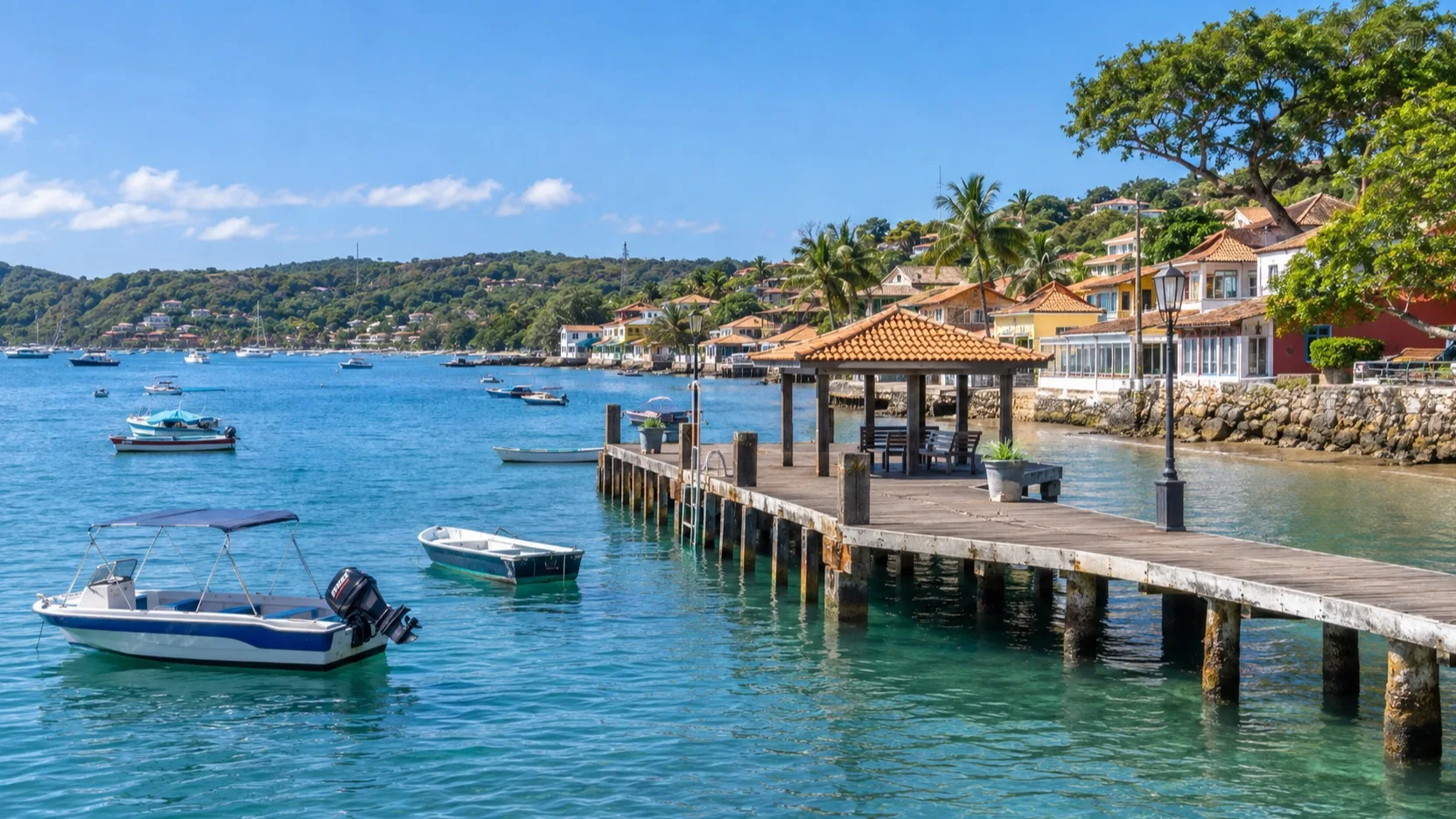
- Where you land: ships anchor offshore from Armação dos Búzios, on the coast about 105 miles east of Rio de Janeiro. Tenders use either the Armação pier near the marina or the pier closer to Orla Bardot, so check which one your call is using.
- Dock or tender: There is no cruise berth at Búzios, and this is an open-water anchorage, so the boats are weather-dependent.
- Into town: You step off into the middle of it.
- Currency and language: The Brazilian real (BRL), and Portuguese.
- Time zone: Brasília Time (BRT, UTC−3).
- Operational caution: Wind, swell, tender safety, and the ship’s operating plan can change or cancel a call.
How I would confirm my own tender plan
Búzios is a small, open-water tender port, so whether the boats run at all, and how smoothly, depends on the wind and swell that day. I always check the ship’s app or ask the excursions desk what time tenders start.
More importantly, I find out when the last tender back to the ship is scheduled. That single deadline is what I build the whole day around.
I also like to confirm which pier the tenders are using for that call. Landing arrangements can use different central piers, so the first walk and independent-tour meeting point change by call.
Getting around
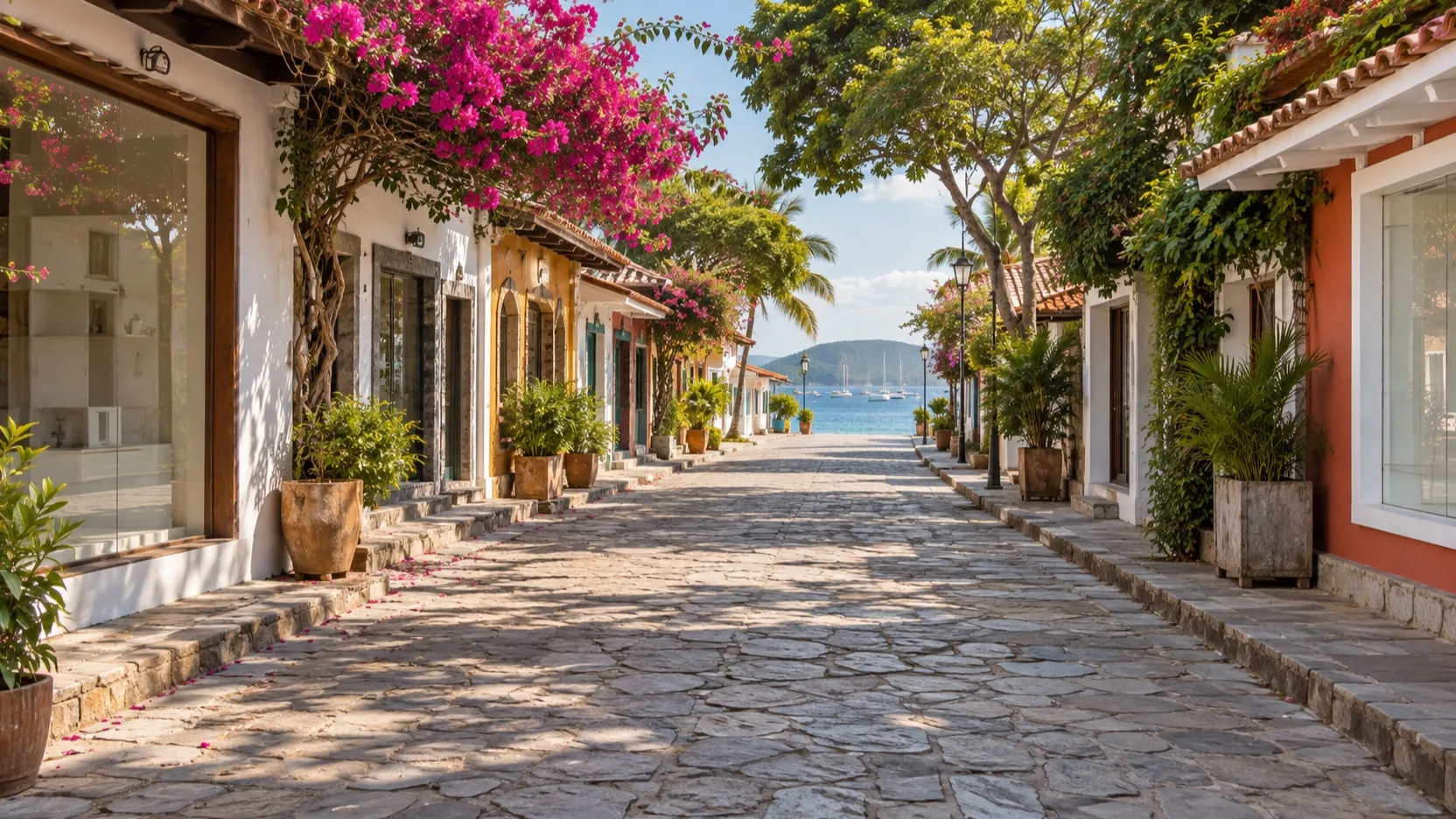
Once ashore, the compact town of Armação dos Búzios is made for walking. Rua das Pedras, the cobbled main street, sits minutes from either tender landing and is lined with boutiques, ice cream stands, and restaurants.
The beaches are a different story. A few, like the stretch off the Orla Bardot boardwalk, are an easy stroll from the center.
Others, including Geribá and Ferradura, sit a few miles around the peninsula. Those are easiest reached by authorized taxi or a guided open-air buggy with a driver rather than on foot in the heat.
The stops I would actually spend time on
Rua das Pedras: The cobblestone spine of the old fishing village is now lined with jewelry shops, boutiques, and restaurants that spill onto the street after dark. The name means “street of stones,” a nod to the rough paving that has never been smoothed over.
Orla Bardot boardwalk and statue: This stone-and-wood boardwalk follows the water and holds a life-size bronze statue of Brigitte Bardot seated on a bench. Bardot visited in 1964, and the press attention that followed helped turn the quiet fishing village into an international destination.
Geribá beach: The peninsula’s biggest and liveliest beach is a long stretch favored by surfers and a younger crowd, with beach bars and restaurants behind the sand. It is the choice for energy and a longer walk on the sand.
Ferradura beach: This nearly enclosed, horseshoe-shaped bay takes its name from the Portuguese word for horseshoe. Its curved bay is often more sheltered than ocean-facing beaches, which can make it a better family choice when flags and local conditions permit.
João Fernandes beach: This small, clear-water cove is popular for snorkeling, though the little strip of sand fills up fast. It is often paired with neighboring João Fernandinho on the same short walk, so you can compare both coves in one stop.
A schooner tour around the peninsula: The classic Búzios outing spends a few hours cruising past the beaches with stops to swim, run by operators out of the marina near Rua das Pedras. Most routes circle the coastline with swim stops at coves you cannot easily reach on foot.
A few more beaches worth knowing
The headline beaches get the crowds, but one of Búzios’s biggest advantages is how many quieter coves sit within a short hop of each other, and the official Visit Brasil guide to Búzios counts more than twenty of them. If Geribá and Ferradura feel busy, these are the ones I would point you toward.
Ossos: The oldest, most historic corner of Búzios is tucked by the harbor at the north end, with calm water and a small chapel nearby. The name means “bones,” a remnant of the town’s whaling past.
Azeda and Azedinha: These two small, sheltered coves with clear, calm water are reached on a short walk or a quick boat hop from the Ossos area. They suit a relaxed swim and a bit of snorkeling.
Tartaruga: This protected, clear-water beach is known for snorkeling and is a common stop on schooner tours. Its name means “turtle,” but the name does not guarantee wildlife and conditions still need checking before beginners enter.
Manguinhos and Armação: These bayside areas are better for sunset, restaurants, and a waterfront walk than for a dedicated swim because marinas, boats, and wind affect the water.
How I would plan the day
Short call, about 3 hours: Tender in, walk Rua das Pedras and the Orla Bardot boardwalk, take a photo with the Bardot statue, and grab lunch by the water.
Full day, 7 to 8 hours: Add a schooner tour around the peninsula in the morning, then take a taxi to Geribá or Ferradura for a few hours on the sand before heading back.
A beach-focused day: Skip the boat and pick one beach instead, choosing Ferradura for calmer family water or Geribá for more energy, then leave a comfortable buffer for the return tender.
Where I would eat
If I want lunch off the ship, Rua das Pedras and the little lanes running off it are where I would head. You will find everything from casual açaí bowls and pizza to proper seafood restaurants with tables near the water.
Grilled fish, moqueca, and cold drinks are easy to find, and most places take cards. I still keep a few reais on hand for a beach kiosk caipirinha later in the afternoon.
A realistic word on accessibility
Búzios is genuinely difficult if mobility is a concern. Rua das Pedras and most of the old town are cobblestoned and uneven underfoot even for confident walkers, and the tender transfer itself depends on calm seas to run safely.
If steps or uneven ground are an issue, I would talk to the ship’s accessibility desk before the day and ask specifically about the tender boarding process. That transfer, not the town itself, is the harder part of a Búzios call.
When to go, and the weather
Most ships call at Búzios during the Brazilian cruise season, roughly October through April, which lines up with the Southern Hemisphere spring and summer. December through February is the hottest, busiest stretch, with temperatures often in the high 80s Fahrenheit and a real chance of an afternoon shower.
If your call lands in the shoulder months of October, November, March, or April, you often get warm beach days with slightly thinner crowds. Calls outside that window are rarer, and the water can feel cool for swimming even when the sun is out.
I would pack reef-safe sunscreen, a hat, and swimwear under my clothes, since the beaches are the whole point of the stop.
Match the beach to the conditions
Ferradura is usually the easiest family choice because its curved bay is more sheltered, but no beach is current-free or safe every day. Geribá suits surfers and confident swimmers when lifeguards and flags permit, while João Fernandes and Azeda suit a short cove-and-lunch outing but get crowded.
Use an authorized taxi or a guided buggy with a driver rather than assuming a rental is the easy option. Agree the fare and pickup point in reais, photograph the vehicle details, and schedule the return to the tender pier before settling onto the beach.
For a schooner, confirm the operator, passenger capacity, life jackets, swim-stop access, restroom, duration, and final return in writing. Boat routes and swim stops change with wind and sea conditions, and a turtle-named beach does not promise turtle sightings.
On a tender call, be near the landing 75 to 90 minutes before all aboard or follow the ship’s earlier cutoff. Keep a town-and-boardwalk plan as the backup because the ship may run tenders even when a small-boat excursion is canceled.
Quick answers
Is Búzios a tender port? Yes, ships anchor offshore Armação dos Búzios and tender passengers to either the Armação pier or the Orla Bardot pier, depending on the call.
How long do ships usually stay? Call lengths vary by itinerary, so use the published gangway and last-tender times rather than a typical duration.
Do I need Brazilian reais? A little helps, because cards are widely accepted on Rua das Pedras but small beach kiosks and taxis are easier with cash on hand.
Can I walk to a beach from the tender? Yes for the boardwalk beaches and Ossos, though the famous surf beaches like Geribá need a short taxi or buggy ride.
Is the Brigitte Bardot statue worth seeing? It is a quick, genuine photo stop on the boardwalk that explains why this fishing village became famous, and it costs nothing to see.
Which beach should I pick if I only have time for one? Ferradura for calm, family-friendly water, or Geribá if you want more energy and a longer stretch of sand.
Is English widely spoken? Portuguese is the local language, and while tourist-facing shops and restaurants often have some English, a few Portuguese words and a translation app go a long way.
Búzios is one of the more relaxed South American calls I plan for, precisely because the goal is a beach chair, not a checklist. If your cruise also stops in Rio de Janeiro, Ilha Grande, or Salvador de Bahia, I would treat this one as the slow day in between.
Rio itself sits about 105 miles down the coast and makes an easy pairing for a longer stay. Its official city tourism resources are a good place to start planning that side of the trip.


How this guide was researched: Unless a first-hand visit is explicitly identified above, this guide is based on independent research using official port, tourism, transit, government, and attraction sources where available. Logistics and time-sensitive details were reviewed on September 10, 2026; see our Editorial Policy.