Ilha Grande Cruise Port: Car-Free Island & Lopes Mendes
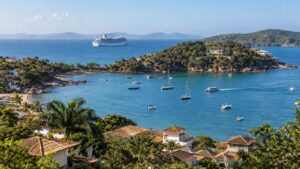
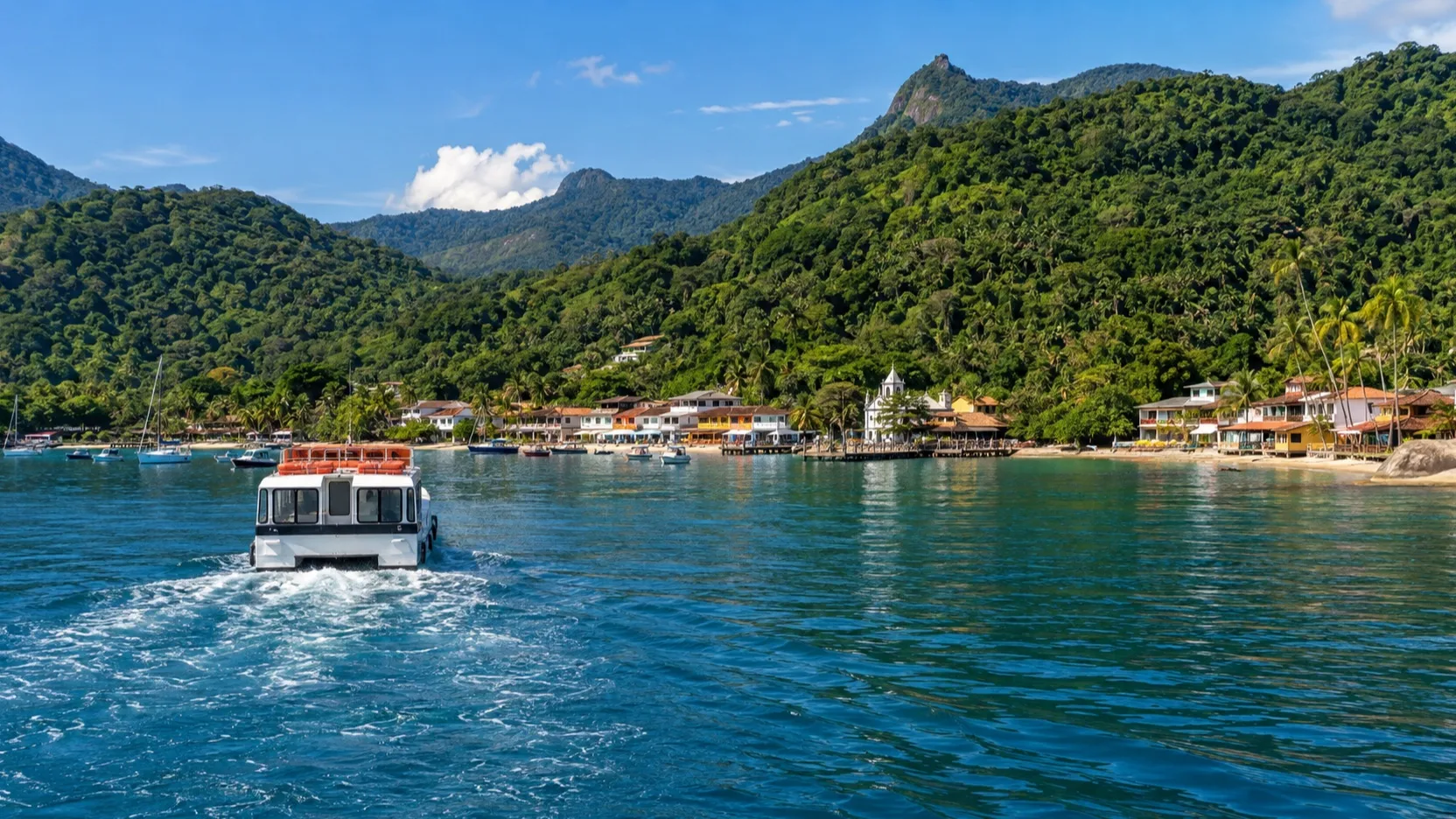
Ilha Grande is the one Brazilian port where the ship can’t reach shore, and that’s the whole point. No cruise pier and no visitor road network, just a rainforest-wrapped village reached by tender and explored mainly on foot or by local boat.
My quick take
If your ship calls here on a run between Rio de Janeiro and Santos, treat it as a beach-and-forest day rather than a sightseeing day. There’s no historic center to check off in Vila do Abraão, and much like Brazil’s national tourism board, I’d frame the day around the walk to a beach, a boat along the coast, or a slow lunch by the water.
Decide before you tender ashore whether you want the effort of Lopes Mendes or an easier stretch of sand close to the village. The island doesn’t leave much room to change your mind once you’re on a trail.
Ilha Grande Cruise Port Quick Facts
- Where you land: ships anchor off Vila do Abraão, the island’s main visitor village, inside the sheltered Baía da Ilha Grande on the Costa Verde between Rio de Janeiro and Santos. Tenders come in to the village waterfront.
- Dock or tender: Cruise calls ordinarily anchor and use ship’s tenders to Vila do Abraão, with the crew’s daily instructions controlling the operation.
- Into town: You land in it.
- Currency and language: The Brazilian real and Portuguese; banking is limited, so bring enough cash ashore for boats.
- Time zone: Brasília Time (BRT, UTC−3).
- Weather watch: Wind, swell, heavy rain, and poor visibility can slow or stop tender and local-boat operations.
How I would confirm my own tender plan
Because Ilha Grande is tender-only and the anchorage sits inside a fairly sheltered bay, delays here are less common than at exposed ports. Swell and wind can still push a call or slow the boats, though.
I’d check the tender schedule the night before, get ashore early if Lopes Mendes is the goal (the round trip alone can eat four-plus hours), and confirm the last tender back with the crew rather than guess. Coming back late from an unmarked forest trail is not how I want to end the day.
Getting around
There is no visitor road network or private-car transport across Ilha Grande, although limited official and service vehicles operate locally. That’s a big part of why it still feels wild.
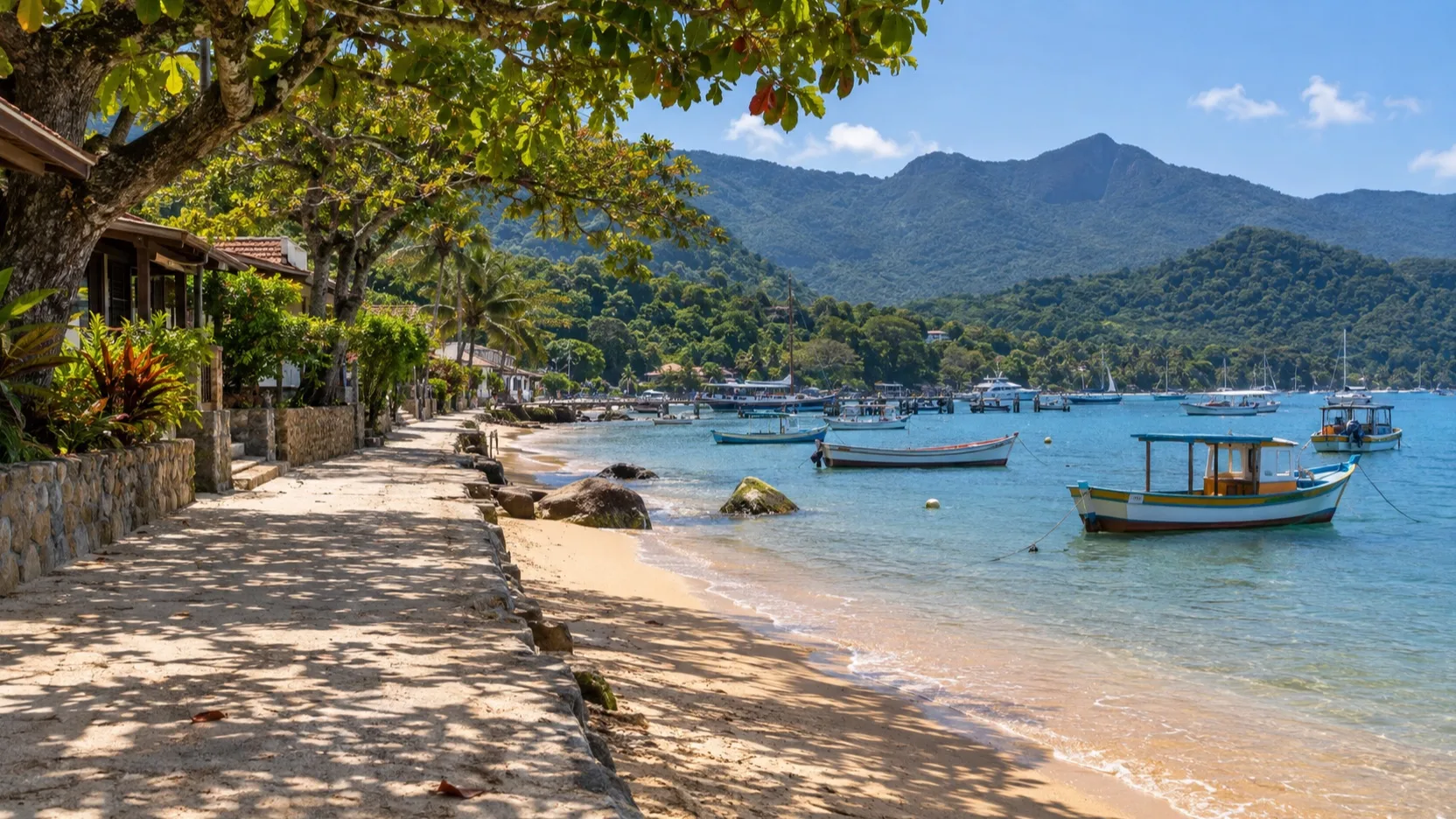
Vila do Abraão itself is small enough to cross on foot in ten minutes. Think sand streets, guesthouses, a church, and a row of restaurants and tour kiosks along the waterfront.
Everything beyond the village is reached on foot or by licensed local boat. The direct route to Lopes Mendes takes several hours over roots, hills, and sometimes mud, while boats shorten the trip to many beaches but do not provide road-style point-to-point service everywhere.
Water-taxis, schooners, and how the boats work
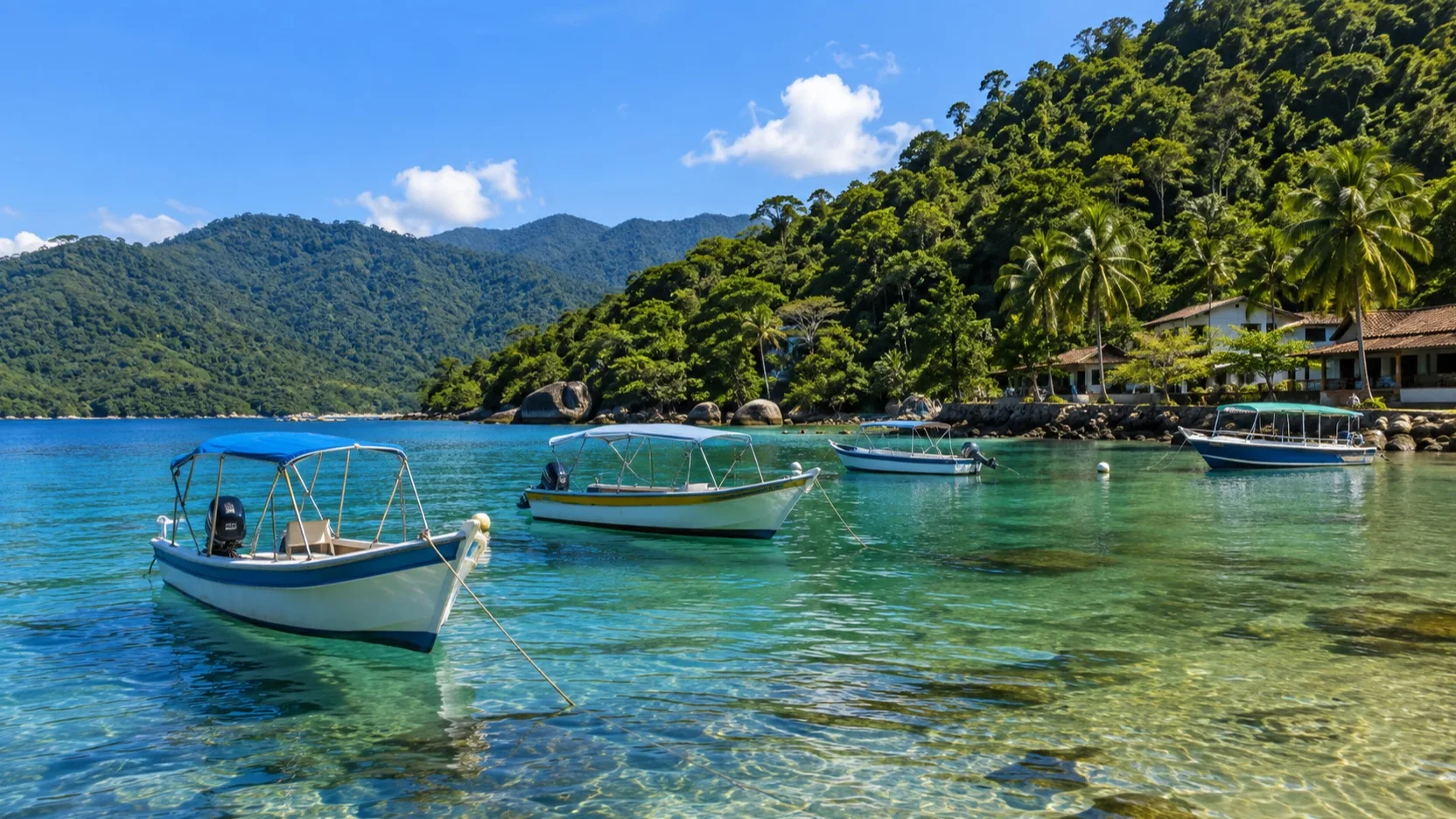
The waterfront in Vila do Abraão is lined with kiosks selling boat trips, and this is how most cruise visitors actually reach the far beaches. A shared schooner (escuna) loops the coast with several beach stops, while a private taxi-boat (lancha) runs point to point and costs more but saves time.
For Lopes Mendes, the usual move is a boat to Praia do Pouso followed by the signed T11 trail over the hill to the beach. I’d sort the boat out within the first fifteen minutes ashore so the timing lines up with the last tender back to the ship.
Prices are quoted in reais, usually per person for a shared schooner and per boat for a private charter. Agree the return pickup time before you pay, because a missed pickup on the far side of the island is a genuine problem on a cruise day.
The stops I would actually spend time on
Vila do Abraão: the village itself, and enough for a shorter call. It has waterfront restaurants, a small church, and access to park information, while multiple conservation areas protect a large share of Ilha Grande’s Atlantic Forest.
Lopes Mendes beach: the reason many people make the trip out here. Hike several hours from Abraão or take a schooner or taxi boat to Praia do Pouso, followed by roughly 20 to 30 minutes on the T11 trail; the nearly 2-mile beach is exposed to ocean swell, so check conditions before swimming.
Cândido Mendes prison ruins, Dois Rios: the remains of the penal complex are now connected with the Ecomuseu Ilha Grande. The roughly 10-mile round-trip trail from Abraão makes it a long-call outing, and the Cândido Mendes prison closed in 1994 before part of it was demolished.
Praia Grande dos Palmas: a quiet swimming stop about 1 hour 40 minutes along the Lopes Mendes trail. It’s a good turnaround point if the full hike is more than you want, with calm, shallow water for a break.
Praia do Aventureiro: a wild, boat-only beach on the island’s far side, famous for its palms and Atlantic swell. It’s a real trip in its own right, not a cruise-day add-on, but worth knowing about if you ever come back to stay overnight.
How I would plan the day
Short on time, with two to three hours ashore: Stay close to the village, walking the Vila do Abraão waterfront and the easy trail to nearby Praia Preta or the Aqueduto area. Praia do Bananal is elsewhere on the island and is not part of this short walk.
Full day ashore: Take the first tender in and go straight for a morning schooner or taxi boat to Praia do Pouso rather than hiking both ways. Budget several hours for the boat, T11 trail, beach time, and return, then add a generous buffer before the last tender.
A realistic word on accessibility
I’ll be straight about this one: Ilha Grande is a hard port for anyone with limited mobility. There is no visitor road network, so taxis, buses, and accessible vans are not a practical option.
Everything runs on sand paths, forest trail, or open boats with no ramps and often a step down from the tender. Vila do Abraão’s waterfront is flat and manageable on foot, though, and a slow stroll there plus a swim at the closest beach is a genuinely good day.
Lopes Mendes and anything past it involve real hiking or an unassisted small-boat transfer. I wouldn’t plan on either without full mobility and a reasonable amount of stamina.
When to go, and the weather
Cruise calls commonly favor the Southern Hemisphere summer, roughly December through March, when conditions are hot, humid, and prone to tropical showers.
Shoulder months, April to June and September to November, bring fewer crowds and milder temperatures, which honestly makes the Lopes Mendes hike more comfortable. Because most of the island is dense Atlantic Forest, part of the UNESCO-listed Paraty and Ilha Grande World Heritage Site, short rain showers are possible in any season.
I’d pack a light rain layer and quick-dry clothes no matter when I sailed.
Treat every boat and trail as a connection
For Lopes Mendes, the practical cruise-day route is a licensed boat from Abraão to Praia do Pouso followed by the signed T11 trail over the hill, commonly about 20 to 30 minutes each way. The direct forest route from Abraão is much longer, hot, rooty, and often muddy, so it is a poor choice unless the call is unusually long.
Confirm the outbound boat, the last scheduled return, the pickup beach, and the cancellation terms before paying. Shared schooners are slower and follow a set route, while a taxi boat costs more but gives a more direct connection; neither waits automatically for a delayed passenger.
Check INEA park notices for trail closures, fire risk, and conservation rules. Carry water, sun protection, insect repellent, and offline directions, and do not expect lifeguards, reliable cell service, or card acceptance at a remote beach.
If the ship has only a few hours ashore, stay with Praia Preta and the Aqueduto area rather than forcing Lopes Mendes. Anyone with limited mobility should make Vila do Abraão the plan because both the tender and the local boats can require steps and an assisted transfer.
Quick answers
Is Ilha Grande a tender port? Cruise calls ordinarily anchor and use ship’s tenders to reach Vila do Abraão, but always follow the landing plan announced onboard.
Can I take a taxi or rent a car to get around? No visitor road network or private-car transport crosses the island, so plan to travel on foot or by licensed local boat.
How far is Lopes Mendes beach from where I land? Allow several hours on foot from Abraão, or take a boat to Praia do Pouso and then walk roughly 20 to 30 minutes on the T11 trail.
Do I need to book a boat trip in advance? Reserve ahead in peak periods or arrange immediately after landing, choosing clear cancellation and return terms or a ship excursion for the strongest late-return protection.
Is there anywhere to eat and buy water? Yes, Vila do Abraão has plenty of restaurants and small shops, but Lopes Mendes has only a few simple beach vendors, so I’d carry water and cash out there.
Are there ATMs on the island? Banking is very limited, so I’d bring enough Brazilian reais ashore for boats, food, and snacks rather than rely on cards or machines.
Is Vila do Abraão worth it if I skip the beaches entirely? Yes, it’s a relaxed, walkable fishing village with good seafood and a genuine sense of place, and it works well as a low-key half-day even without the hike.
If you’re stacking Brazil ports on the same cruise, Ilha Grande sits at the opposite end of the spectrum from a place like Santos, which is all city and container-port bustle, or Búzios, a paved resort town you can shop and dine your way through in sandals. Ilha Grande has none of that infrastructure, and that’s exactly why I’d go.

How this guide was researched: Unless a first-hand visit is explicitly identified above, this guide is based on independent research using official port, tourism, transit, government, and attraction sources where available. Logistics and time-sensitive details were reviewed on September 11, 2026; see our Editorial Policy.