Easter Island Cruise Port: Tenders, Moai and Swell
Rapa Nui is the port call people circle years before the cruise begins, yet the first decision belongs to the Pacific. There is no cruise pier at Hanga Roa, so ships anchor offshore and tender into a small harbor only when wind, swell, and the landing allow it.
If you reach shore, the second decision is yours: arrive with a national park ticket, an accredited guide, and a short route. This is not the island for inventing the plan after breakfast.
My quick take
Treat an Easter Island landing as a privilege, not a promise. Even a calm looking ocean from a high deck can be moving too much at water level for safe tender transfers.
For a first visit, I would choose the eastern circuit with Rano Raraku and Ahu Tongariki. Those two places explain the carving, transport, and ceremonial setting of the moai better than a rushed lap around the island.
A ship excursion makes more sense here than at most ports because it connects tender priority, a qualified guide, park entry planning, and the return deadline. Independent travelers can have an excellent day, but every piece needs to be arranged before sailing.
Quick Facts
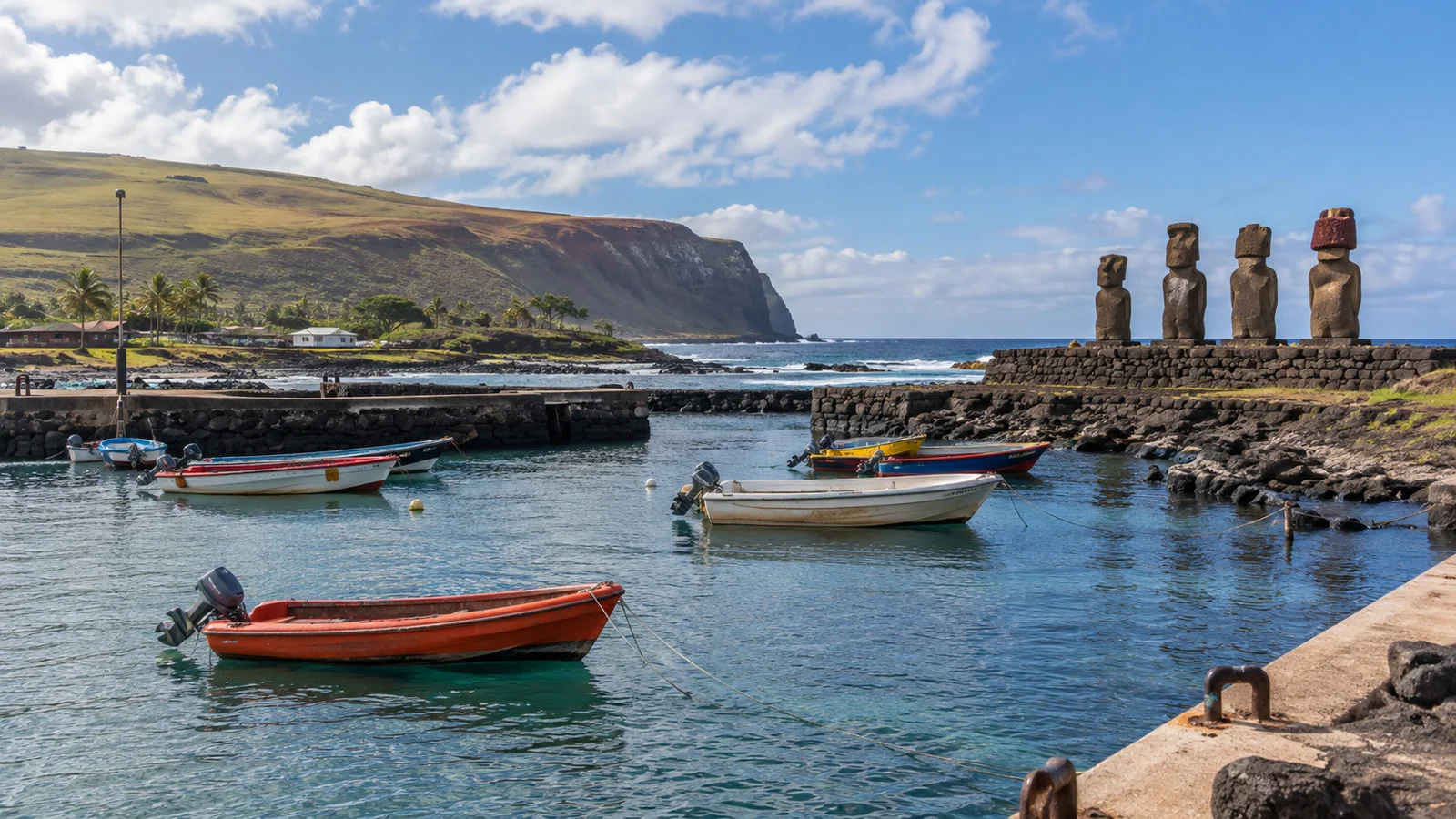
- Where tenders land: Hanga Roa on the island’s southwestern coast, with the exact landing arrangement controlled by local sea conditions.
- Dock or tender: Tender only. There is no cruise ship berth.
- Biggest risk: Pacific swell can delay, interrupt, or cancel tender operations even when the weather looks pleasant.
- Best first route: Rano Raraku and Ahu Tongariki on a guided eastern circuit.
- Park rule: Rapa Nui National Park requires a ticket and a Ma’u Henua accredited guide for entry.
- One visit sites: Rano Raraku and Orongo may each be visited only once per ticket under current park rules.
- Currency: Chilean peso, with cards accepted at many established businesses and cash still useful.
- Languages: Spanish and Rapa Nui, with English common among guides.
- Time zone: Rapa Nui uses its own Chilean time zone with seasonal clock changes, so rely on ship time for the tender deadline.
- Special entry step: Chile requires travelers to complete the official Rapa Nui entry form and meet island specific document conditions. Follow the instructions for your cruise itinerary.
Why the tender decides everything
Cruise ships anchor outside Hanga Roa because the island has no pier built for them. The tender must cross open Pacific water and then enter a compact harbor where local boats, ramps, and changing surge leave little room for error.
The captain and tender team judge more than visible wave height. Swell direction, wave period, wind, ramp movement, and the ability to recover passengers safely all matter.
A call can begin normally and still be shortened if conditions deteriorate. Keep your phone audible, follow guide instructions, and return immediately if the ship issues a recall.
Tender tickets can also shape the day before weather does. Ship excursions often receive organized departure groups, while independent passengers may wait for later boats.
Do not book a private guide for an unrealistically early meeting unless the operator understands cruise tendering. Share the ship name, scheduled arrival, and a working way to contact you after landing.
On the return, aim to be back in Hanga Roa well before the last tender. One road delay or park queue is enough to erase a narrow margin.
What to arrange before the cruise
The Rapa Nui National Park states that every visitor must purchase a ticket and hire a guide accredited by Ma’u Henua. These are entry requirements, not optional upgrades.
Buy the correct ticket through the official park pathway and keep the confirmation available offline. Bring the identification tied to the booking, because connectivity can be unreliable when many passengers arrive together.
Confirm your guide by name, meeting point, vehicle, route, total price, and cancellation terms. The cancellation clause matters because a missed tender landing should not leave you paying for a tour that could not begin.
The park says Rano Raraku and Orongo may each be entered only once per ticket. That rule matters more to travelers staying several days, but it also shows why your guide must scan and manage the ticket correctly.
Stay on marked paths, keep the required distance from moai and ahu, and never touch or lean on archaeological remains. The park also prohibits removing stones, unauthorized drones, graffiti, smoking, alcohol, fires, and off route exploration.
This landscape is sacred ancestral land managed by the Rapa Nui community. The rules protect cultural meaning as well as fragile stone and soil.
Choosing a route that fits a cruise call
Rapa Nui is small enough to cross by road, which tempts visitors into planning too much. The problem is that meaningful stops involve walking, guide interpretation, ticket checks, and photographs rather than quick views through a windshield.
Choose one geographic circuit and protect time for the tender return. The eastern loop is strongest for a first visit, while the southern route suits travelers most interested in Rano Kau and Orongo.
Anakena belongs naturally with a north coast plan, not as an afterthought after two major eastern sites. Hanga Roa and nearby Tahai make the best fallback when tendering starts late.
Rental cars and scooters exist, but a vehicle alone does not satisfy the guide requirement at park sites. On a single cruise day, arranging both a vehicle and accredited guide separately rarely saves enough money to justify the extra coordination.
The essential eastern circuit
Rano Raraku
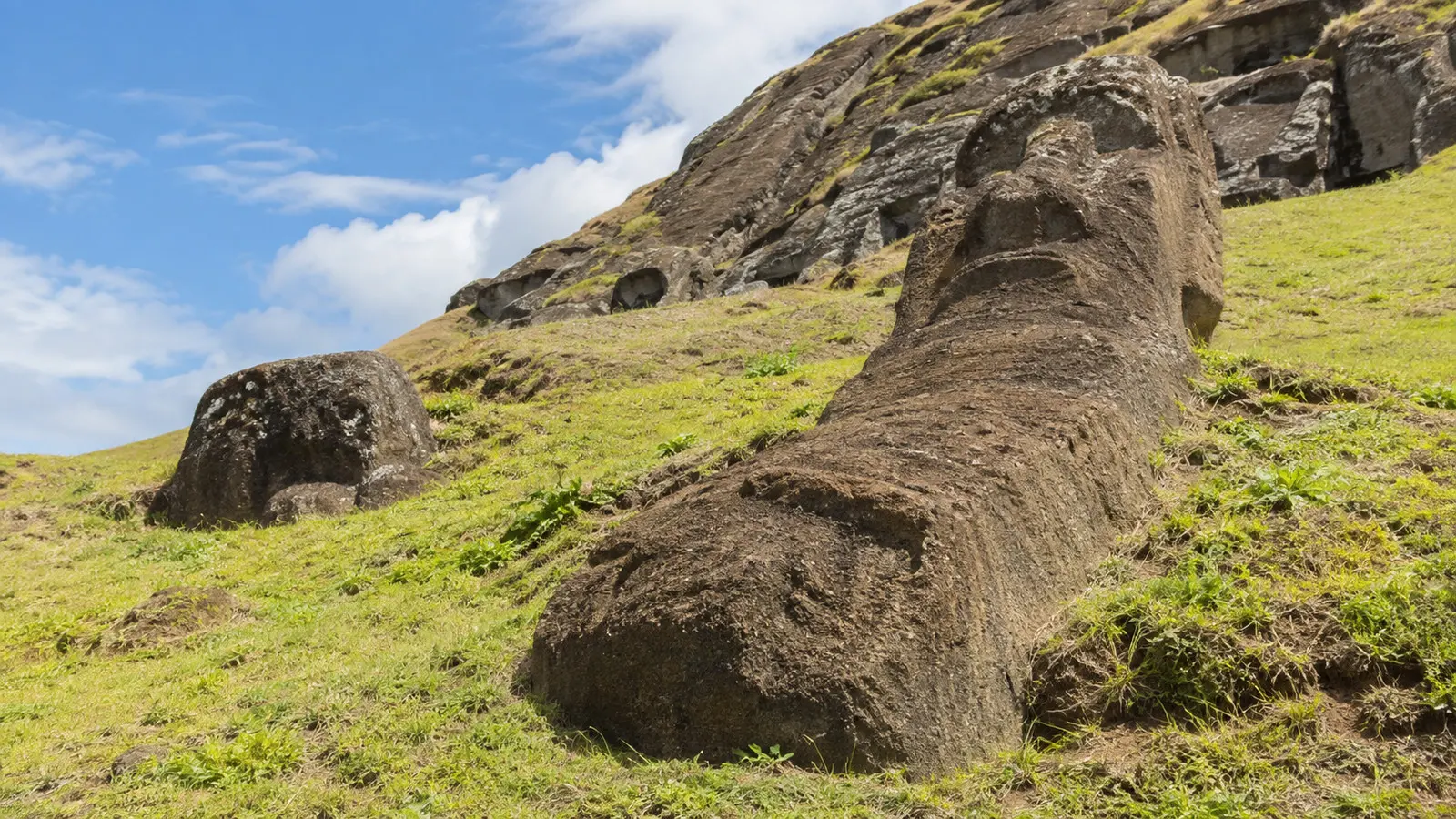
Rano Raraku is the volcanic quarry where most moai were carved. The park describes about 400 figures here in different stages of production, including statues still attached to rock and others standing on the slope.
This is the site that turns the moai from isolated monuments into evidence of a vast creative process. Walk slowly, listen to the guide, and notice unfinished details rather than treating the famous hillside as a photo line.
Paths climb over uneven volcanic ground and are exposed to wind, rain, and sun. Wear shoes with grip and stay inside every marked boundary, even if another visitor steps across it.
Because the park allows only one visit to Rano Raraku per ticket, do not rush the route in hopes of circling back later. Give this stop the largest share of your tour time.
Ahu Tongariki
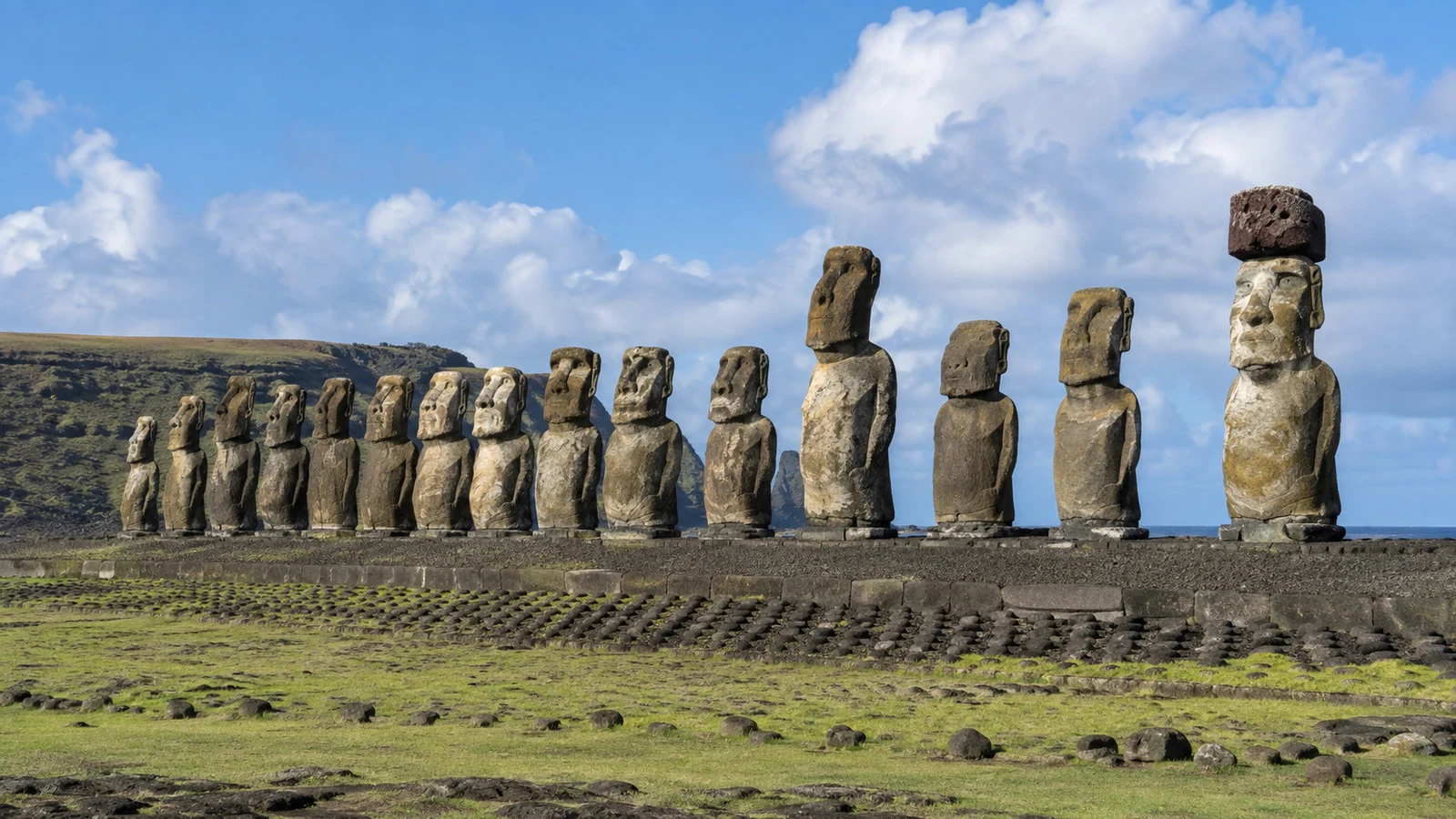
Ahu Tongariki presents fifteen restored moai on the island’s largest ceremonial platform. The figures stand with their backs to the sea, creating the scale and rhythm that no single statue can convey.
Tongariki sits close enough to Rano Raraku that the two form an efficient pair. Your guide can connect the quarry, transport routes, ahu construction, and later restoration without losing an hour in transit.
The site is broad and exposed, so wind can be strong even on a warm day. Bring a secure hat or keep it in the vehicle, because the Pacific has no interest in souvenirs.
Cruise schedules rarely align with the celebrated sunrise view. The platform is still extraordinary in ordinary daylight, and chasing a particular photograph is the least interesting way to experience it.
A short additional stop
If time remains, let the guide choose one smaller site along the route based on access and traffic. Ahu Akahanga, Vaihu, or a coastal viewpoint can add context without turning the day into a race.
Do not demand three extra stops simply because the road passes them. Every unplanned pause reduces the cushion between your group and the tender.
The southern alternative: Rano Kau and Orongo
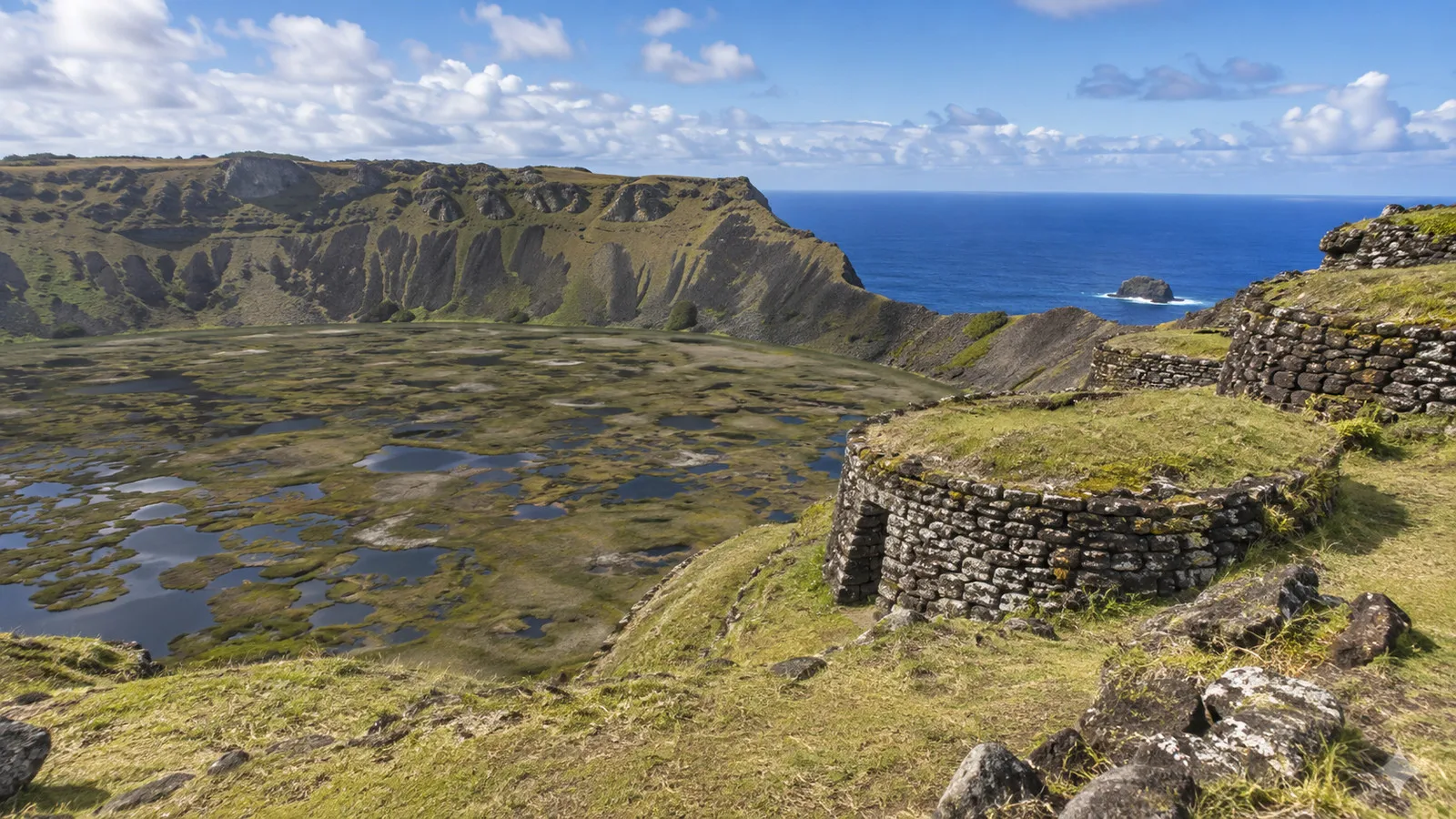
Rano Kau is a vast volcanic crater with a lake filled by reeds and small floating mats of vegetation. The viewpoint is dramatic even before you begin thinking about the ceremonial village on the rim.
Orongo preserves low stone houses and the landscape of the Tangata Manu, or birdman, tradition. The park identifies it as an ancient ceremonial village overlooking the offshore islets Motu Nui, Motu Iti, and Motu Kao Kao.
This route gives you a different story from the moai quarry. It focuses on later ritual life, the crater, the cliffs, and the relationship between the islanders and the sea.
Orongo is another one visit per ticket site and involves exposed, uneven walking near the crater rim. Wind and rain can make the route more demanding than the distance suggests.
Trying to combine Orongo with Rano Raraku and Tongariki on a short tender day usually makes all three feel hurried. Pick the story you most want to understand and save the other for a longer land visit.
Anakena Beach
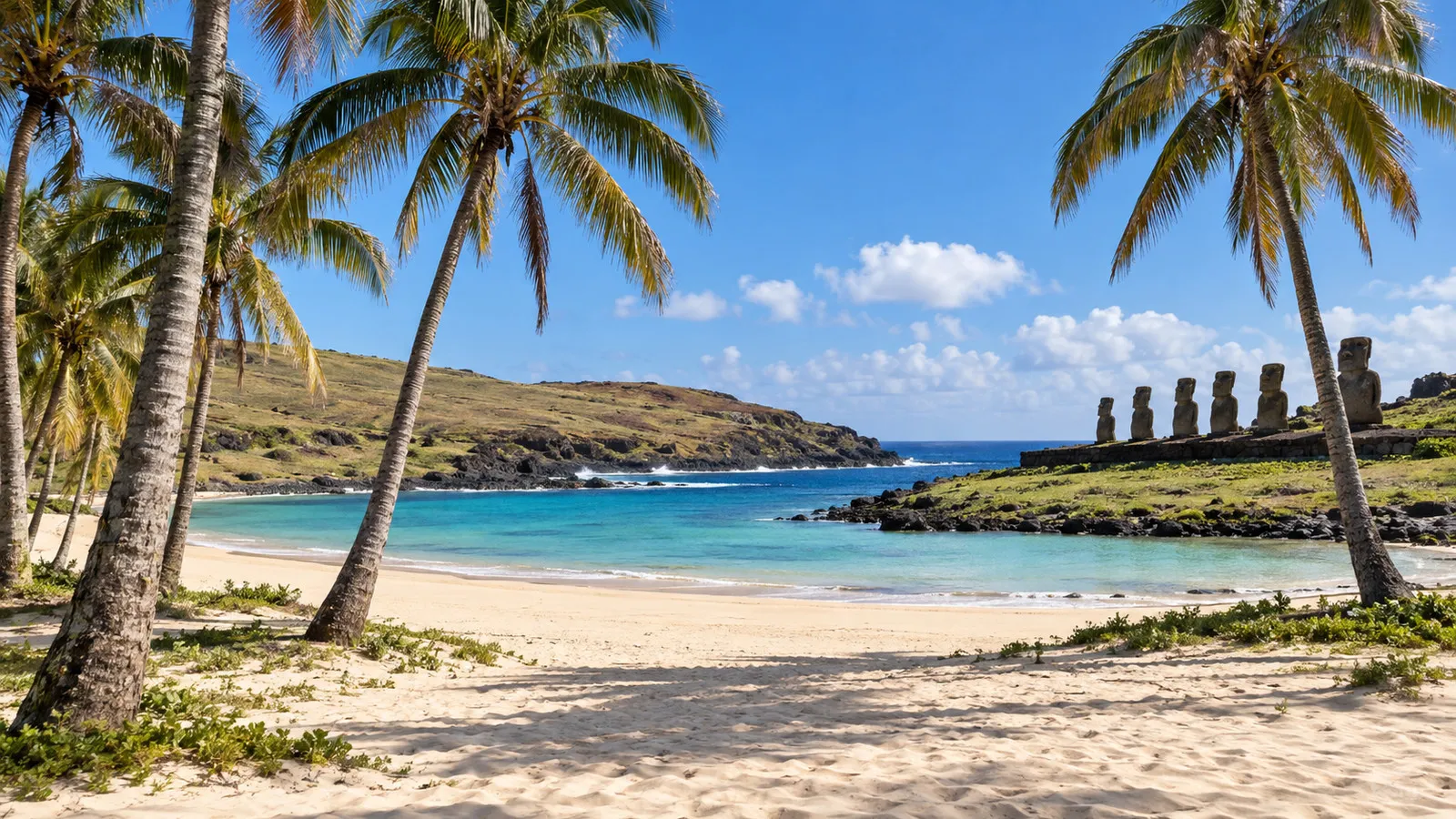
Anakena offers pale sand, palms, swimming, and the restored figures of Ahu Nau Nau. It is the island’s softest landscape and a lovely contrast to the open volcanic coast around Hanga Roa.
The park connects Anakena with the traditional landing of Hotu Matu’a, giving the beach cultural weight beyond its postcard beauty. A guide can explain why the site matters before anyone reaches for a towel.
Swimming conditions still need local judgment, and beach time is vulnerable to a shortened call. I would include Anakena only on a long day or when it matters more to you than the quarry.
Changing facilities, shade, and food service can vary, so carry what you need. Never leave valuables unattended while the group spreads out.
Hanga Roa when the day is shortened
Hanga Roa is not a consolation prize. Its waterfront, church, shops, cafes, craft market, and nearby ceremonial sites can fill a rewarding few hours without risking a distant return.
Tahai sits north of central Hanga Roa and includes restored ahu, village remains, and a broad coastal setting. Confirm with current park information and your guide which areas require ticketed or guided access.
Around the small harbor, watch local boats and the movement of the tender operation. Staying close makes it easier to respond if the ship changes the return schedule.
The main streets have places to buy crafts and try local food, though prices reflect the island’s distance from mainland supply chains. Ask before photographing people or cultural performances.
The Museo Antropologico Padre Sebastian Englert still states that its physical facility has been closed since July 19, 2024. Check the official site for updates, but do not build a cruise day around a museum visit until reopening is confirmed.
The history is bigger than the statues
UNESCO inscribed Rapa Nui National Park in 1995 as a cultural landscape developed by a Polynesian society in isolation. Moai and ahu are its most visible forms, but settlements, quarries, caves, petroglyphs, and ceremonial places tell a much broader story.
A good guide makes that breadth visible. Instead of repeating myths about mysterious builders, the guide can center the knowledge, engineering, genealogy, and living culture of the Rapa Nui people.
Avoid language that treats the island as abandoned or vanished. Rapa Nui is a living community managing its heritage, setting visitor rules, and deciding how sacred places are entered.
Ma’u Henua has managed the national park since 2017 under a long term concession. Its official information emphasizes community governance, conservation, and visitor responsibility.
Entry rules for the island
Chile applies special entry controls to the Rapa Nui territory in addition to normal national entry requirements. Travelers must complete the official island entry form and meet the documentation conditions relevant to their journey.
Use the Chilean Ministry of the Interior’s Rapa Nui entry platform and the cruise line’s instructions. Cruise transit procedures can differ from a visitor arriving by air for a hotel stay, so do not assume a generic travel blog describes your case.
Carry the identification and confirmations requested by the ship when going ashore. Keep copies available offline, because a tender delay is not the moment to search an email account over a weak signal.
If your itinerary begins or ends in Chile, also verify national visa, customs, and reciprocity requirements for your passport. The special island form does not replace any document needed to enter Chile itself.
Money, phones, and practical details
The Chilean peso is the local currency, and established tours or restaurants may accept cards. Cash remains useful for small purchases, tips, and situations where a payment terminal or connection fails.
There is no reason to carry a large amount ashore for a prepaid excursion. Ask whether a quoted tour price is in pesos or another currency before confirming.
Download maps, tickets, guide contact details, and the ship’s port number before arriving. Mobile service exists around Hanga Roa, but coverage and speed can vary away from town or when passenger demand spikes.
Bring water and a snack even if the tour advertises a stop for food. A delayed tender can compress the route and remove that stop without warning.
Accessibility and tender reality
The tender transfer is the first and most important accessibility question. It requires moving between a ship and smaller boat that may both be rising, falling, or rolling in open water.
Cruise lines make their own safety decision for each passenger and sea state. Ask the accessibility team before sailing about transfer rules, mobility equipment, and whether the tender can accommodate the device without unsafe lifting.
A call may operate for some passengers while remaining unsuitable for others. That is frustrating, but the moving platform at the ship and the small landing in Hanga Roa set real limits.
Ashore, tour vehicles are often vans or four wheel drive vehicles without lifts. Confirm door height, steps, storage dimensions, seating transfers, and whether the driver can secure equipment.
Rano Raraku and Orongo use rough, exposed paths with slopes and protected boundaries. Hanga Roa and selected viewpoints may be more realistic, but curb cuts and surfaces are not consistent.
Travelers with limited stamina should request the shortest possible walking route and one major site. A thoughtful guide can provide meaning from viewpoints without pushing past a safe limit.
Weather and what to pack
Rapa Nui has a mild subtropical climate, and rain can arrive in any month. The weather may change quickly between Hanga Roa, the quarry, and the north coast.
January through March tends to be warmer and relatively drier, which overlaps with many cruise itineraries. Warm air does not guarantee a calm anchorage, because ocean swell can arrive from distant weather systems.
Pack a light waterproof shell, sun protection, water, and shoes that grip wet volcanic ground. A small dry bag protects tickets, phones, and medication during the tender ride.
Keep both hands free for boarding and landing. A backpack is far safer than a loose tote when crew members need you to use rails or accept assistance.
A realistic cruise day plan
If you are on a ship excursion, follow the assigned tender group and let the operator handle the guide and route. Confirm whether the park ticket is included or must be purchased separately.
For an independent eastern circuit, meet the guide near the official landing only after you are ashore. Drive directly to Rano Raraku, continue to Tongariki, and add one short coastal stop only if the guide approves the timing.
Return to Hanga Roa with at least ninety minutes before the last tender, more if the ship instructs it. Use any extra time for the waterfront, crafts, or a coffee within easy reach of the harbor.
If tenders begin late, cut the additional stop first and then choose between the quarry and Tongariki if necessary. Two rushed masterpieces are not automatically better than one properly understood site.
Common mistakes to avoid
The biggest mistake is treating the scheduled call as a guaranteed landing. Book refundable plans and accept that the sea may make the final decision.
The second is arriving without the correct park ticket and accredited guide. Both are mandatory under the park’s current rules.
The third is planning a full island circuit because the road distances look short. Tender timing, access checks, walking, and interpretation make a focused route much better.
The fourth is touching a moai, stepping over a boundary, moving a stone, or leaving a marked trail for a photograph. The behavior is disrespectful, prohibited, and subject to penalties.
The fifth is timing the return to the final tender instead of arriving early. A broken down van or sudden recall leaves no comfortable recovery plan.
Quick answers
Do cruise ships dock at Easter Island?
No, ships anchor offshore and use tenders because Hanga Roa has no cruise ship berth.
Why are Easter Island cruise calls canceled?
Wind, swell direction, wave period, and movement at the ship or landing can make tender transfers unsafe.
Do I need a guide to see the moai?
The national park requires a valid ticket and a guide accredited by Ma’u Henua for its archaeological sites.
What should I see on one cruise day?
Rano Raraku and Ahu Tongariki make the strongest first visit, with only a small additional stop if tender timing allows.
Can I visit without taking a ship tour?
Yes, but arrange the park ticket, accredited guide, transportation, meeting point, cancellation terms, and early return before sailing.
The last word
Rapa Nui is one of the rare ports where success begins with accepting uncertainty. You can prepare perfectly and still watch the island from the ship because the Pacific is moving the wrong way.
If the tenders run, use the gift well. Go ashore with the correct ticket, a community accredited guide, and a route short enough to leave room for understanding.
Rano Raraku and Tongariki are enough for a remarkable day. The island does not need to be conquered in six hours, and it should never be treated that way.
How this guide was researched: This guide was desk-researched on September 12, 2026 using Rapa Nui National Park and Ma’u Henua, Chile’s official tourism service, the Chilean Ministry of the Interior, UNESCO World Heritage Centre, the Rapa Nui museum, and Chilean maritime information, and it does not claim a personal sailing, landing, park visit, or island tour. Confirm the tender landing, park entry, guide accreditation, island documents, accessibility, and cancellation terms before travel.
See our Editorial Policy.