Homer Cruise Port Guide: Deep Water Dock, Spit & Bay
Homer is where Alaska’s road system reaches toward a bay that has no interest in behaving like a road. Mountains, glaciers, fishing boats, sea otters, enormous tides, and the narrow Homer Spit all sit in one view, but the day only works when you respect the distance between the cruise landing, Spit businesses, and the town above.
Your first decision is whether to stay on the Spit, ride into Homer for museums and galleries, or cross Kachemak Bay with a professional operator. Choose one as the center of the day, because water taxis, wildlife, weather, and the ship’s return are too important for improvisation.
Homer Cruise Port Quick Facts
- Arrival: Some ships berth at Homer’s Deep Water Dock, while vessels outside the dock’s limits may use tenders or another approved landing plan.
- Dock limits: City documents say the Deep Water Dock can accept a cruise vessel only when both length and displacement fit its operating limits.
- Best first step: Confirm whether you are walking from a berth or arriving by tender, plus the exact return point and all aboard time.
- Homer Spit: The harbor, shops, restaurants, charter boats, and water taxis are concentrated along this long gravel spit.
- Downtown: The Pratt Museum, galleries, visitor services, and central businesses require a shuttle, taxi, or a substantial walk from much of the Spit.
- Nature center: The Alaska Islands and Ocean Visitor Center interprets the Alaska Maritime National Wildlife Refuge and Kachemak Bay.
- Across the bay: Kachemak Bay State Park has no ordinary road access, so visits require a boat or aircraft and a firmly arranged return.
- Tides: Kachemak Bay has large tidal changes that affect beaches, boat landings, and shoreline safety.
- Accessibility: Berth or tender transfer, shuttle equipment, boardwalks, gravel, and small vessel boarding all require separate checks.
- Return rule: Allow for marine weather, boat loading, road traffic, port security, and the gangway or tender queue.
Homer Can Be a Berth or Tender Port
The City of Homer operates a Deep Water Dock on the Spit, and cruise ships that fit the facility can come alongside. City planning documents explain that vessels must remain within both length and displacement limits, while ships that do not fit may lighter passengers ashore under an approved security and harbor plan.
That means an online report about a previous ship may be useless for your call. Read the daily program for the berth or tender landing, gangway hours, shuttle service, accessibility process, and final boarding time.
The Deep Water Dock Is a Working Facility
The Deep Water Dock is also known as the Freight Dock, and Homer’s port supports fishing, cargo, ferries, marine trades, and recreational boats. Follow staff through the secure area and stay on marked passenger paths, even when a shortcut toward the harbor looks obvious.
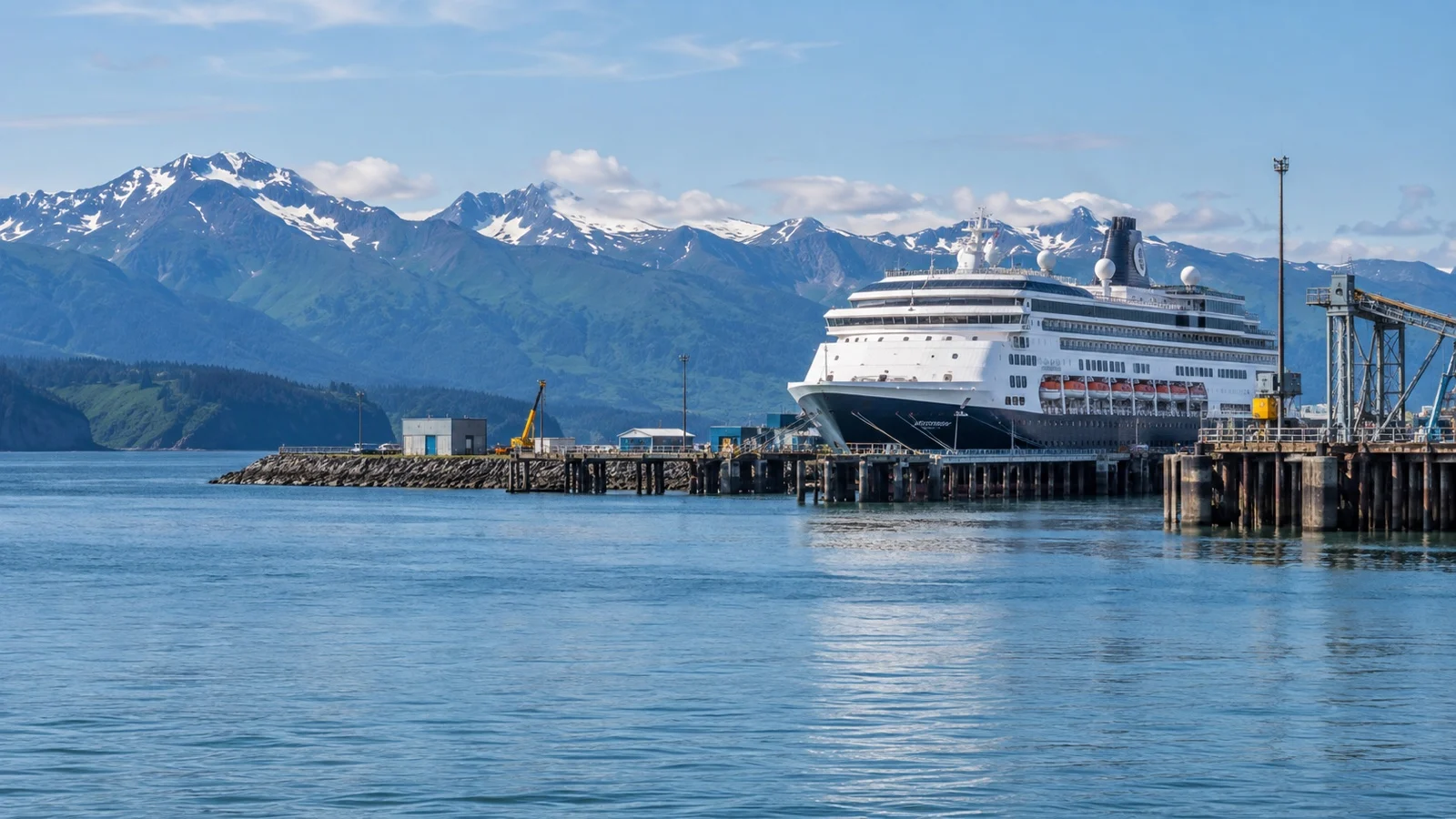
City information lists passenger improvements around the dock area, including restrooms, shelter, bus space, and trail connections. Availability on your day still depends on the ship and port operation, so use the facilities you are directed to rather than assuming every gate is open.
Tender Arrivals Need a Different Plan
A larger ship may anchor and use tenders into the small boat harbor or another controlled landing. Tendering adds tickets, boarding steps, sea conditions, and a final boat cutoff, so the ship’s last tender matters more than its published sailing time.
Note the return ramp before leaving the harbor and ask whether wheelchairs, scooters, or other equipment can be carried. A calm morning does not guarantee an unchanged afternoon, and the captain can suspend tender service when conditions require it.
Start With the Homer Spit
The Homer Spit extends roughly 4.5 miles into Kachemak Bay and carries the small boat harbor, charter fleets, shops, restaurants, campgrounds, and working seafood businesses. It is long enough that the phrase on the Spit does not tell you whether something is a five minute walk or a tiring roadside trek.
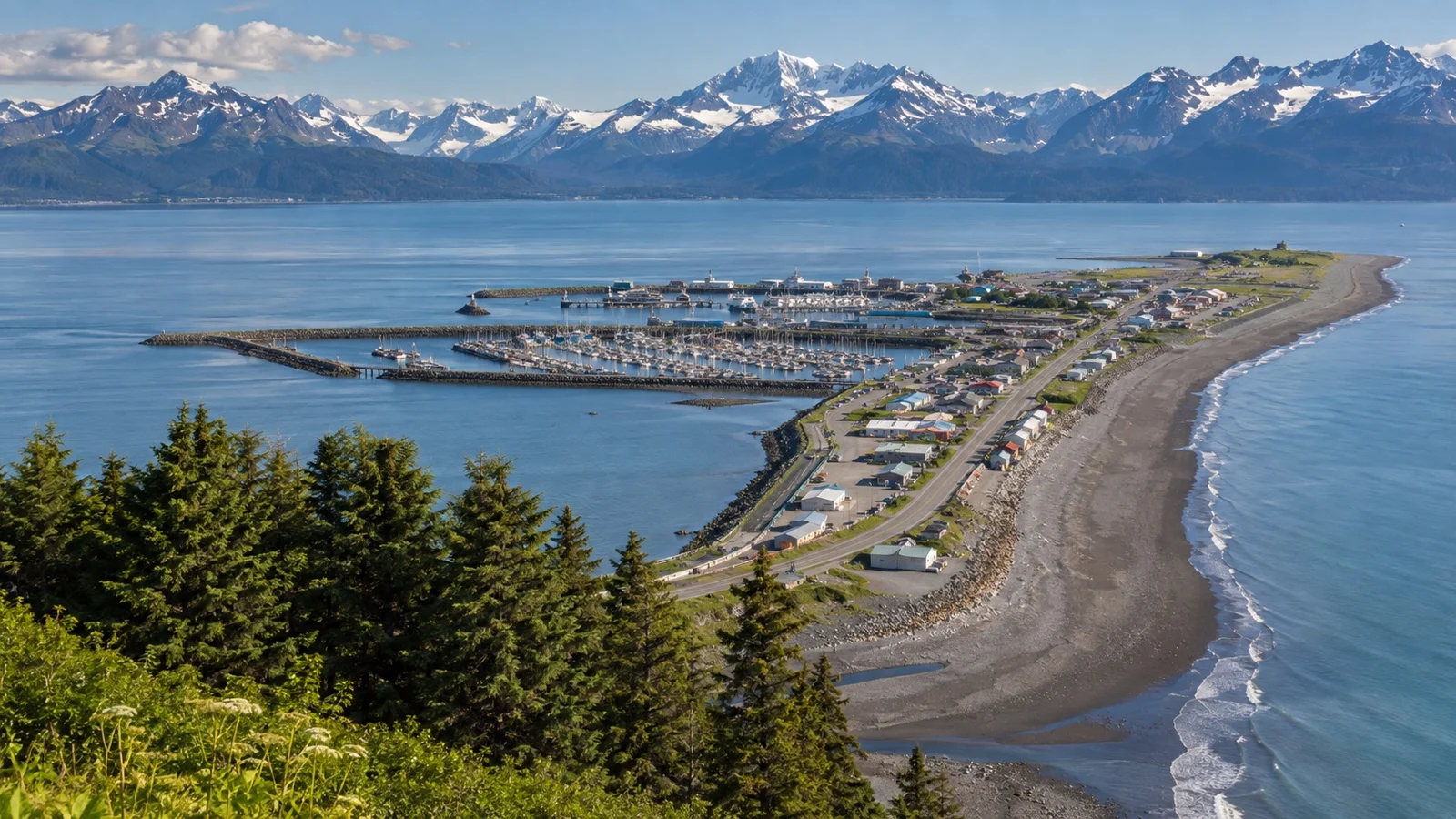
Use the harbor as the practical center and ask where a ship shuttle stops before walking away. Boardwalk sections and clustered shops make some areas easy to explore, while gaps, gravel, traffic, wind, and exposed shoulders make other distances less pleasant.
The Harbor Is the Heartbeat
Homer Harbor is where fishing charters, water taxis, tour boats, commercial crews, and private vessels share a busy basin. Watching the activity is rewarding in its own right, but ramps, floats, forklifts, gear, and slippery edges demand attention.
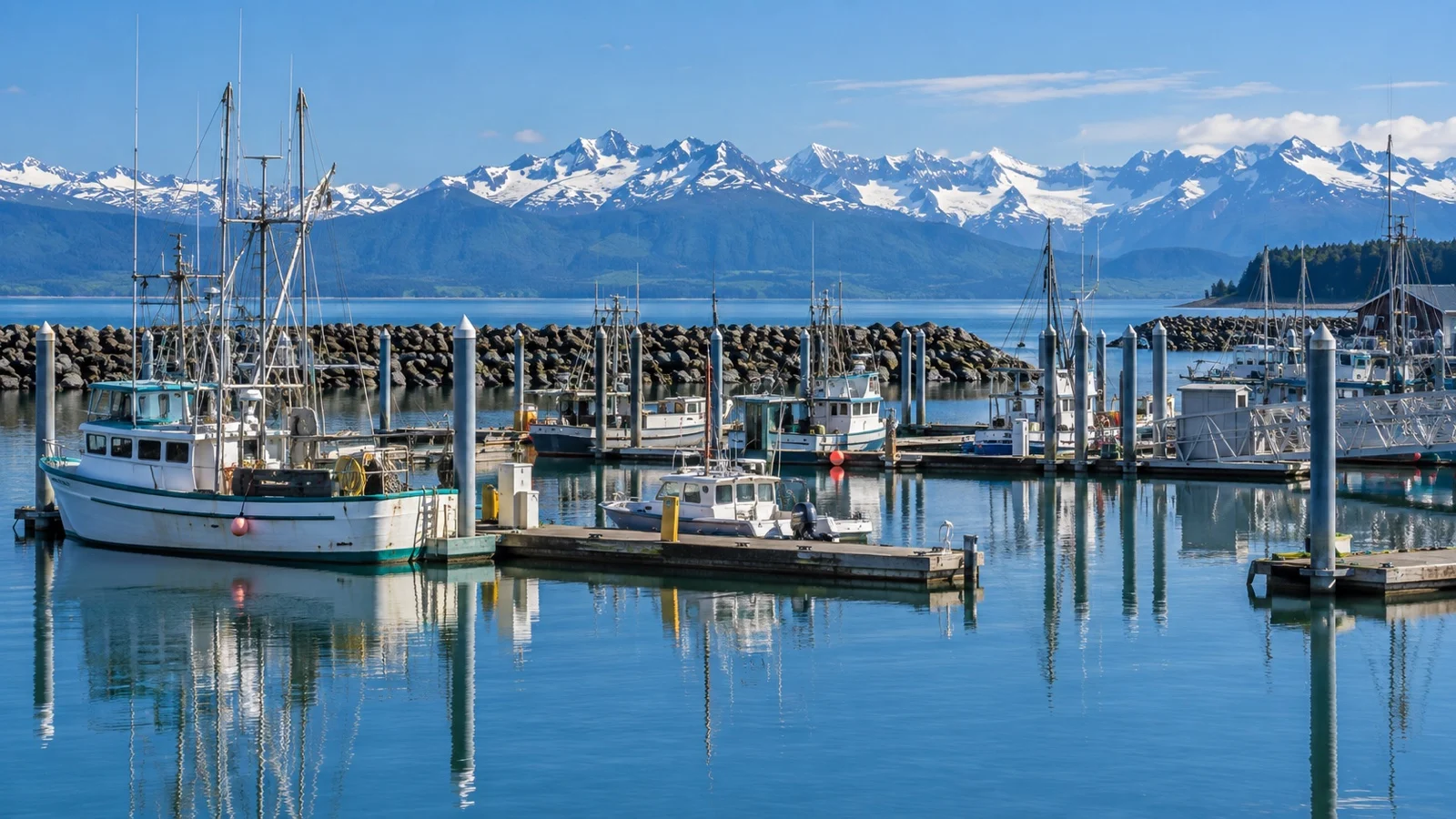
Never step onto a working float or vessel for a photograph without permission. Give crews room to load, keep children close near open water, and treat every wet board as slick.
Fishing Lagoon and Spit Walks
The Nick Dudiak Fishing Lagoon offers a close look at local fishing culture when the seasonal run and regulations align. Anglers need the correct Alaska license and must follow current fish and wildlife rules, while observers should stay clear of lines, hooks, and fish handling areas.
The Spit Trail helps connect parts of the peninsula, but wind can turn an easy outward walk into a harder return. Keep an eye on the ship, distance, and shuttle options, and turn back while you still have more time than energy.
Downtown Homer Is Not Beside the Ship
Homer’s main commercial areas sit off the Spit along the Sterling Highway and Pioneer Avenue, several miles from the harbor end. A ship shuttle, local trolley, taxi, or tour may connect them, but service should be confirmed for the specific call.
If transportation is limited, decide whether the museums and galleries justify leaving the Spit. A taxi number and a firm pickup plan are more useful than assuming another vehicle will appear when the ship is ready to sail.
The Pratt Museum Is Worth the Transfer
The Pratt Museum explores the people, culture, art, and natural history of Kachemak Bay. Its current program includes exhibits on the region’s communities and marine environment, along with outdoor features that can make a focused visit feel broader than the building.
The museum is active in 2026, but hours, admissions, special exhibits, and event access should be checked directly. Ask about current accessible parking, entrances, restrooms, seating, and outdoor trail surfaces if those details affect your visit.
Alaska Islands and Ocean Visitor Center
The Alaska Islands and Ocean Visitor Center is associated with the Alaska Maritime National Wildlife Refuge and Kachemak Bay research and interpretation. It is the best city based choice for understanding seabirds, marine habitats, refuge islands, and the larger ecological system beyond the harbor.
The center sits off the Spit near Old Town, so include transportation or walking distance in the plan. Federal facility schedules can change by season, staffing, or holiday, and the surrounding trails may be wet even when the indoor exhibits are open.
Old Town and Bishop’s Beach
Homer’s Old Town area connects galleries, small businesses, the visitor center, Beluga Slough, and access toward Bishop’s Beach. This is a good pairing for travelers who want nature and art without committing to a boat.
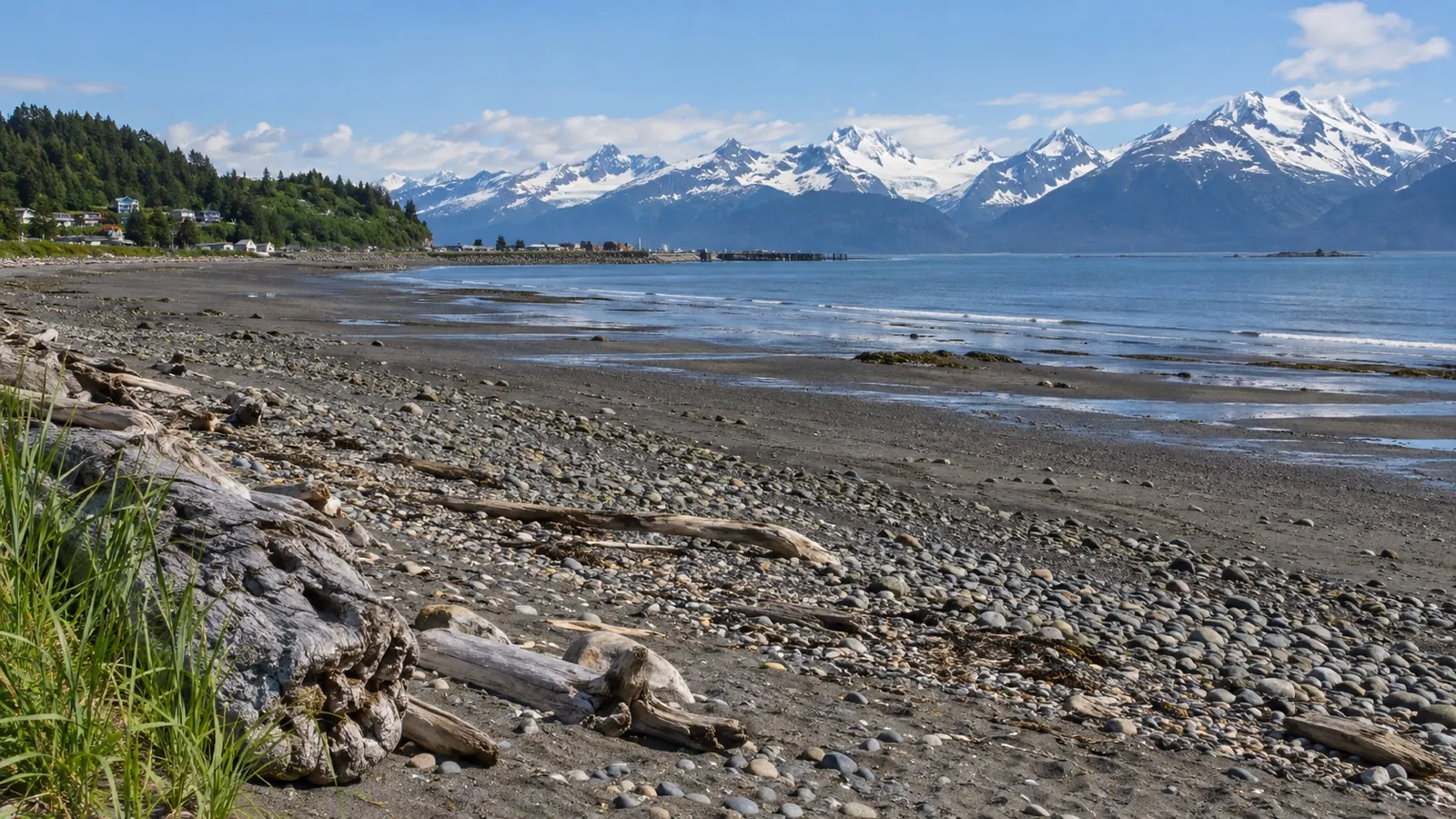
Large tides transform the shoreline, and the route you walk at low water may not remain dry. Check official tide predictions, stay aware of the landward exit, and avoid mud or channels that can cut off a return.
Kachemak Bay Changes the Scale
Across the water, mountains and glaciers make the harbor feel like the edge of a much larger wilderness. Kachemak Bay State Park occupies that landscape without normal road access, so water taxi or aircraft logistics are not an optional detail.
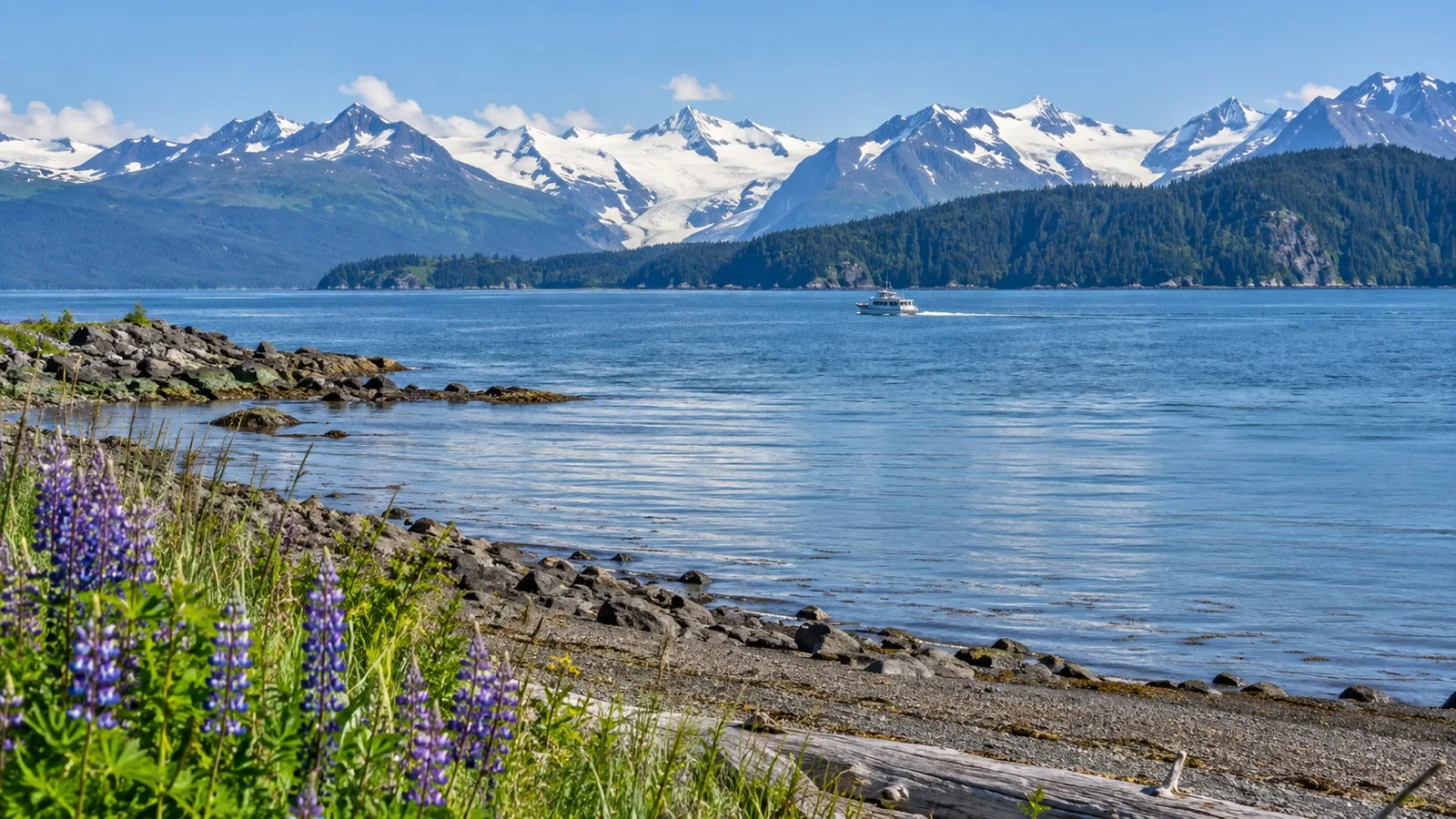
A bay trip can be the highlight of Homer, but only when the operator understands the ship’s deadline and provides a conservative return. Confirm the boat, destination, pickup place, duration, weather policy, clothing requirements, and what happens if the ship arrives late.
Water Taxis Are Transportation, Not a Casual Ferry
Homer has numerous water taxi companies that carry hikers, residents, paddlers, and visitors to different points around the bay. Service is often customized, which means another passenger’s fare or route does not define your own booking.
Agree on both directions before leaving Homer Harbor and keep the operator’s contact information. A drop off across the bay without a reliable pickup is not an adventure plan for a cruise passenger.
Ask about cabin shelter, life jackets, boarding steps, luggage, restrooms, and seasickness exposure. Travelers with mobility limitations need precise information about the vessel and landing, because a stable harbor float can lead to a beach, rock, or remote dock at the far end.
Halibut Cove and Seldovia
Halibut Cove and Seldovia offer distinct community experiences across the bay, and both require marine transportation from Homer. Scheduled vessels and water taxis use different docks and timetables, so confirm exactly which service you have booked.
A visit can work on a long call with a ship connected excursion or an early independent return, but the last possible boat is never the safe choice. Leave time for weather, docking, unloading, and the transfer from the local harbor back to your cruise landing.
Glacier and Hiking Trips Need Discipline
The Grewingk Glacier Lake area is one of Kachemak Bay State Park’s best known hiking objectives, typically reached by water taxi and a trail. Even a route described as easy involves wilderness navigation, variable conditions, boat coordination, and bear awareness.
Do not build this independently from a few map distances on a short call. Use a reputable operator, carry the required gear, understand the full trail and pickup, and choose a turnaround time that protects the water taxi and ship.
Bear Viewing Is a Major Expedition
Homer is a departure point for flight based bear viewing to remote parts of Alaska. These trips are expensive, weather dependent, physically specific, and far beyond the kind of outing you should arrange after stepping off the ship.
Book through the cruise line or an established operator who explicitly accommodates cruise calls, and understand cancellation and weight policies. Aircraft safety and weather decisions belong to the pilot, and a canceled trip is the right outcome when conditions are unsuitable.
Wildlife Comes Without Guarantees
Sea otters, seals, porpoises, whales, eagles, shorebirds, moose, and bears may appear around Homer and Kachemak Bay. No ethical operator can guarantee a particular species, and feeding or crowding wildlife damages the behavior you came to see.
Use binoculars or a zoom lens and follow federal, state, and guide instructions about distance. Stay especially alert around moose, which can move quickly and become defensive when people approach calves or block an escape route.
Tides Are a Safety Issue
Kachemak Bay has substantial tidal variation, affecting harbor ramps, exposed flats, currents, beaches, and remote landings. A beach that looks wide at one hour can narrow dramatically, while a float ramp can become much steeper.
Use NOAA tide predictions for official planning and follow local captains who understand how wind and pressure alter real conditions. Never explore a distant tidal flat without knowing the return route and time of the next rise.
Weather Can Change the Entire Day
Homer often combines cool air, wind, rain, and bright sun in a single call. Dress in breathable layers with a waterproof outer shell, protect hands and ears on boats, and keep dry clothing in a sealed bag for any trip across the bay.
Check the National Weather Service forecast and marine information before leaving the ship. The cruise captain, harbormaster, pilot, or boat operator may make a more conservative decision using live conditions, and that judgment should end the debate.
Accessibility at the Port and Spit
A Deep Water Dock call avoids the tender for some ships, but gangway slope and distance vary with the vessel and tide. Ask the cruise line about assistance, shuttle lift capacity, mobility device storage, and the path from the ship into the public Spit area.
The Spit includes paved trail sections and accessible businesses, but gravel, boardwalk lips, wind, and long distances can still matter. Confirm the restroom, restaurant entrance, and pickup point rather than assuming the whole peninsula has one consistent surface.
Tender calls and water taxis require separate transfer checks. Ask whether the traveler must step down into the boat, whether equipment can remain assembled, how it is secured, and what kind of landing waits across the bay.
Food, Shopping, and Local Work
Homer is known for halibut, salmon, oysters, and other Alaska seafood, with Spit restaurants ranging from casual counters to longer sit down meals. Ask what is local and in season, and tell staff clearly about shellfish, dairy, gluten, or shared fryer concerns.
Local galleries and shops reflect Homer’s strong arts community, but not every item sold in Alaska was made there. Ask the artist or maker, look for clear labeling, and buy wildlife products only when legal provenance is certain.
Service can slow when a ship fills the same compact harbor area. Order early, request the bill before the return rush, and do not let a long food line consume the shuttle margin.
Money, Connectivity, and Practical Details
The United States dollar is used, and cards are common, though small operators may have limited connectivity. Carry a modest backup payment method and understand cancellation terms before booking weather dependent transport.
Mobile service can weaken across the bay, and remote trails should not be planned around a phone signal. Download maps, save operator details, and use marine or wilderness communication provided by the guide rather than improvising with an ordinary handset.
Return Planning for Homer
Work backward from the ship’s all aboard time or final tender. Include water taxi loading, the trip into Homer Harbor, any shuttle across the Spit, port security, and the gangway or tender queue.
From downtown, return on an earlier shuttle or confirmed taxi rather than the final advertised connection. From across the bay, choose an operator’s return that leaves enough daylight and schedule margin for a mechanical delay or weather change.
Finish on the Spit when practical, where you can see harbor conditions and stay close to the ship’s operation. Homer is much easier to enjoy when the last hour belongs to the view instead of a series of fragile connections.
Homer Cruise Port Questions
Do cruise ships dock in Homer?
Some ships fit the Deep Water Dock and come alongside, while vessels outside its limits may tender passengers under a port approved plan. Your cruise line will confirm the arrangement for your sailing.
Can I walk from the ship to Homer Spit attractions?
Many harbor and Spit businesses can be reached on foot from the cruise landing, but the Spit is long and exact distances vary. Confirm the landing point and use a shuttle when the route or weather makes walking impractical.
Is downtown Homer walkable from the dock?
Downtown is several miles from the harbor end of the Spit, so a shuttle, trolley, taxi, or tour is usually the sensible choice. Verify the final return before leaving the waterfront.
Can I take a water taxi across Kachemak Bay?
Yes, but arrange both directions with a reputable operator who understands the ship deadline. Weather, tides, landing surface, and remote pickup are essential parts of the plan.
What is the easiest bad weather day?
Stay on the Spit for harbor views, shops, and food, or use confirmed transport to the Pratt Museum and Alaska Islands and Ocean Visitor Center. This keeps the route flexible if marine excursions are canceled.
Which image of Homer should I carry home?
For me, it is the harbor with mountains layered beyond the masts and weather moving across the bay. You do not need to cross the water to understand that Homer lives at the edge of something immense.
Let the Bay Be Bigger Than the Itinerary
Homer rewards ambition only when it is paired with humility about water, weather, wildlife, and distance. Choose one strong experience, build the return first, and leave enough room for the bay to surprise you.
For current planning, consult the City of Homer Port and Harbor, the Homer Chamber of Commerce visitor site, the Alaska Maritime National Wildlife Refuge, the Pratt Museum, and National Weather Service. Always follow your cruise line’s live berth, tender, shuttle, and all aboard instructions, because ship operations take priority over any general guide.