Ilhabela Cruise Port: Tender, Vila & Island Guide
Ilhabela is one of Brazil’s most appealing cruise calls because the tender normally brings you into Vila, the island’s compact historic center. Cafés, shops, churches, waterfront views, and local transportation begin close to the landing, while beaches and Atlantic Forest scenery stretch north and south.
The smartest day chooses one direction and protects the tender return. Ilhabela’s narrow coastal roads, tropical rain, insects, sea conditions, and long island geography make an overstuffed itinerary far riskier than its relaxed appearance suggests.
Quick facts about Ilhabela cruise port
- Arrival: Tender operation, usually landing at Píer da Vila
- Walkable area: Vila historic center and nearby waterfront
- Best easy day: Vila plus one nearby beach
- Best nature day: A prebooked waterfall or forest excursion
- Best transport: Taxi or licensed tour for a focused island route
- Main nuisance: Borrachudo biting insects
- Weather risk: Rain, wind, and sea state can change tender plans
- Return rule: Be back before the final tender queue builds
Where cruise passengers arrive
Ilhabela has no conventional large-ship cruise berth, so passengers normally transfer ashore in tenders. The operating landing can change, but Píer da Vila is the familiar cruise gateway near the island’s historic center.
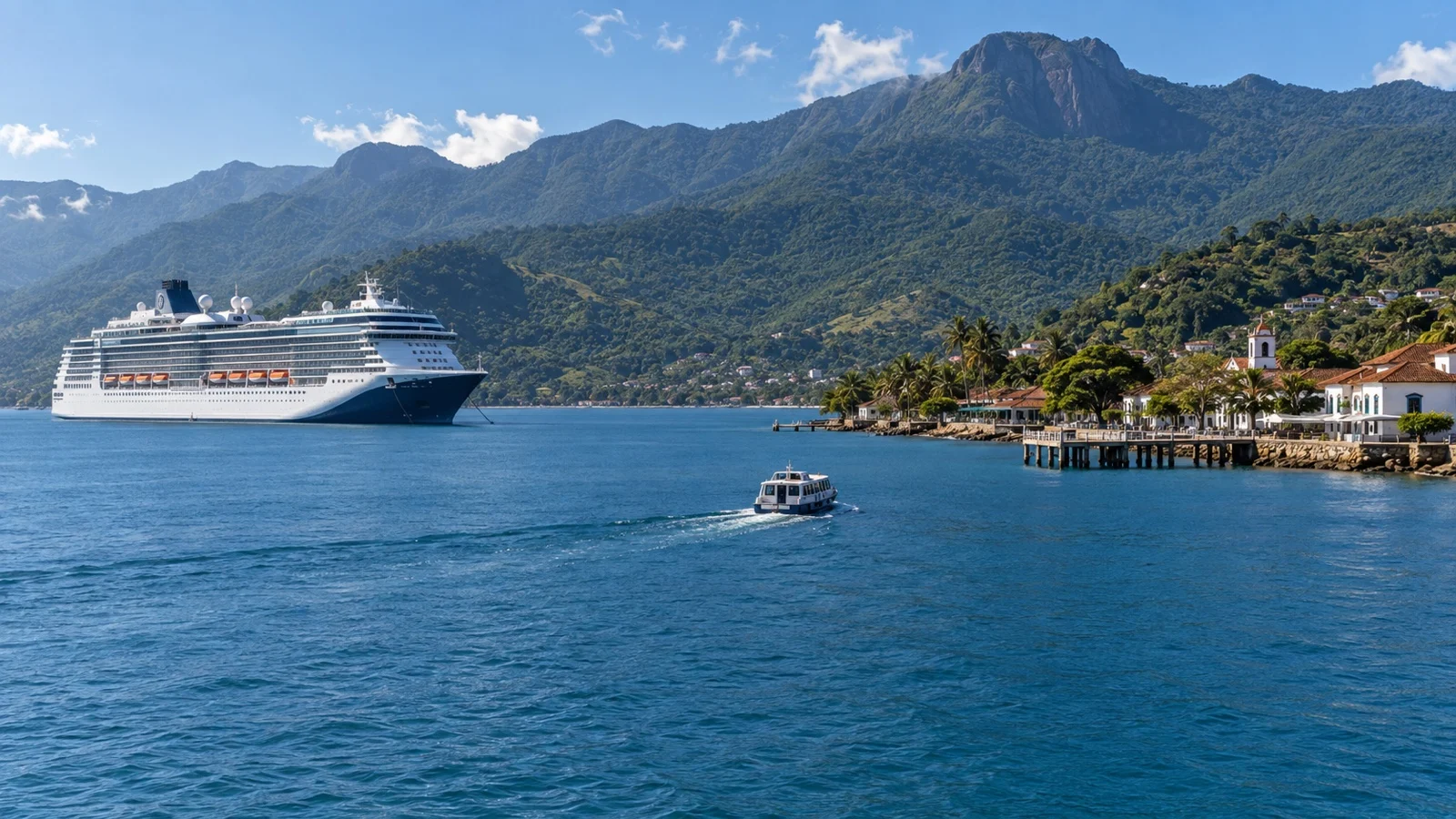
Tender timing depends on ship procedures, port traffic, weather, swell, and the number of passengers going ashore. Priority rules vary by cruise line, making the onboard daily program more reliable than an old port review.
Passengers with mobility limitations should ask the cruise line whether steps, gaps, crew assistance, or the ability to walk independently are required. Even a calm morning can become a different operation if wind and swell increase.
Vila on foot
Vila is the easiest and lowest-risk part of the island to explore independently. You can browse shops, pause at cafés, see churches and public squares, enjoy the waterfront, and absorb island life without arranging a long transfer.
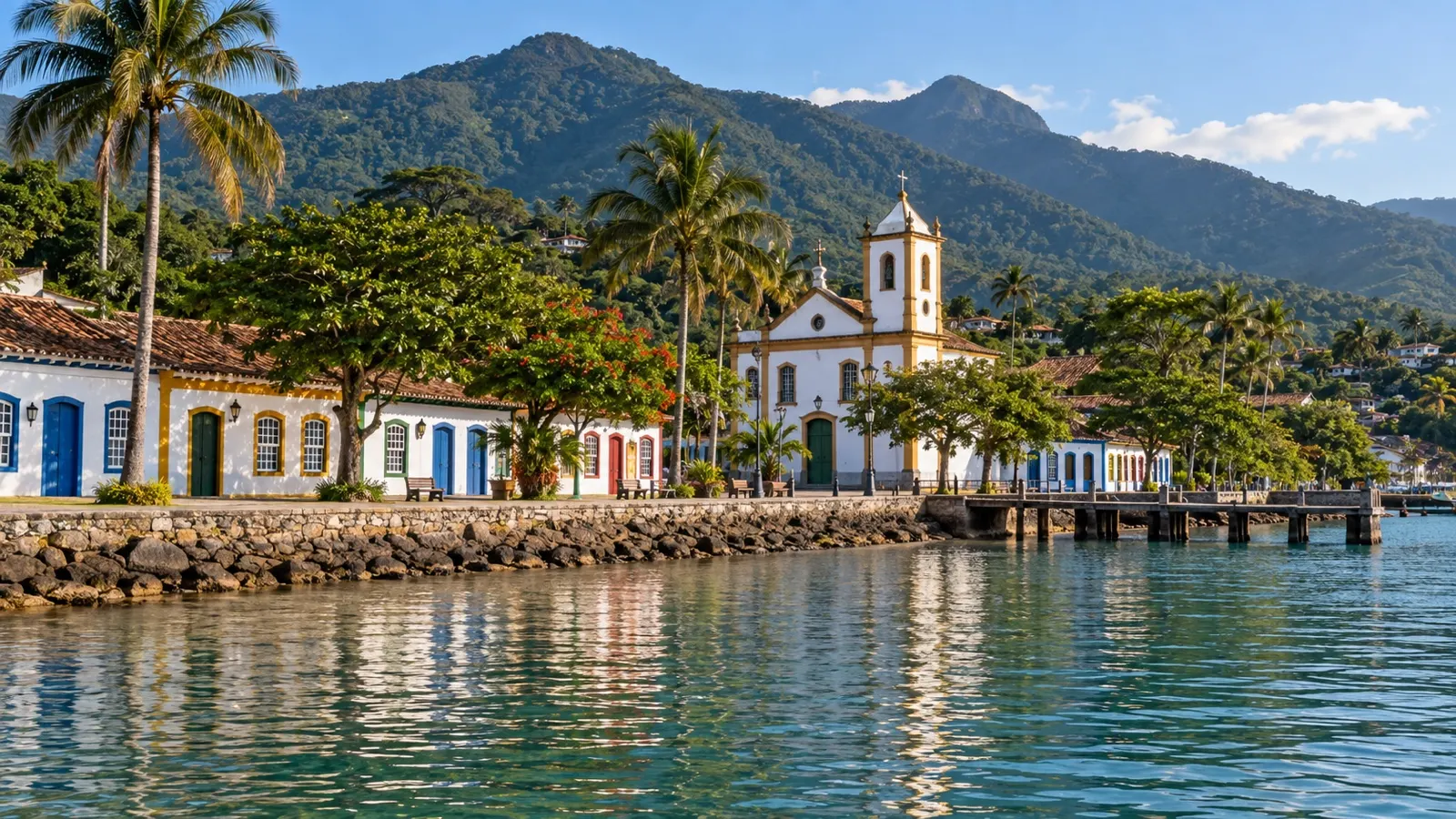
The route includes uneven paving, curbs, heat, and limited shade, so a slow pace still matters. Start with the farthest point you intend to walk, then return through the center with the tender landing always within reach.
Food and shopping in Vila
Seafood, Brazilian snacks, juices, coffee, and desserts can turn a simple town visit into a satisfying port day. Choose a busy established restaurant, check the time needed for service, and ask about ingredients when allergies matter.
Shops sell beachwear, crafts, art, and tourist souvenirs at a range of quality levels. Buy from makers or sellers who can explain an item’s origin, and keep enough Brazilian reais or a working card for small purchases.
Beaches near the cruise landing
Ilhabela’s beaches differ in size, facilities, water conditions, road access, and atmosphere. The best cruise choice is usually not the most distant beach, but the one that delivers swimming, shade, food, and a reliable return within your hours.
Northern beaches
The northern coast offers scenic road views and a sequence of beaches that can be combined with a taxi tour. Choose one main beach and perhaps one viewpoint instead of asking a driver to stop everywhere.
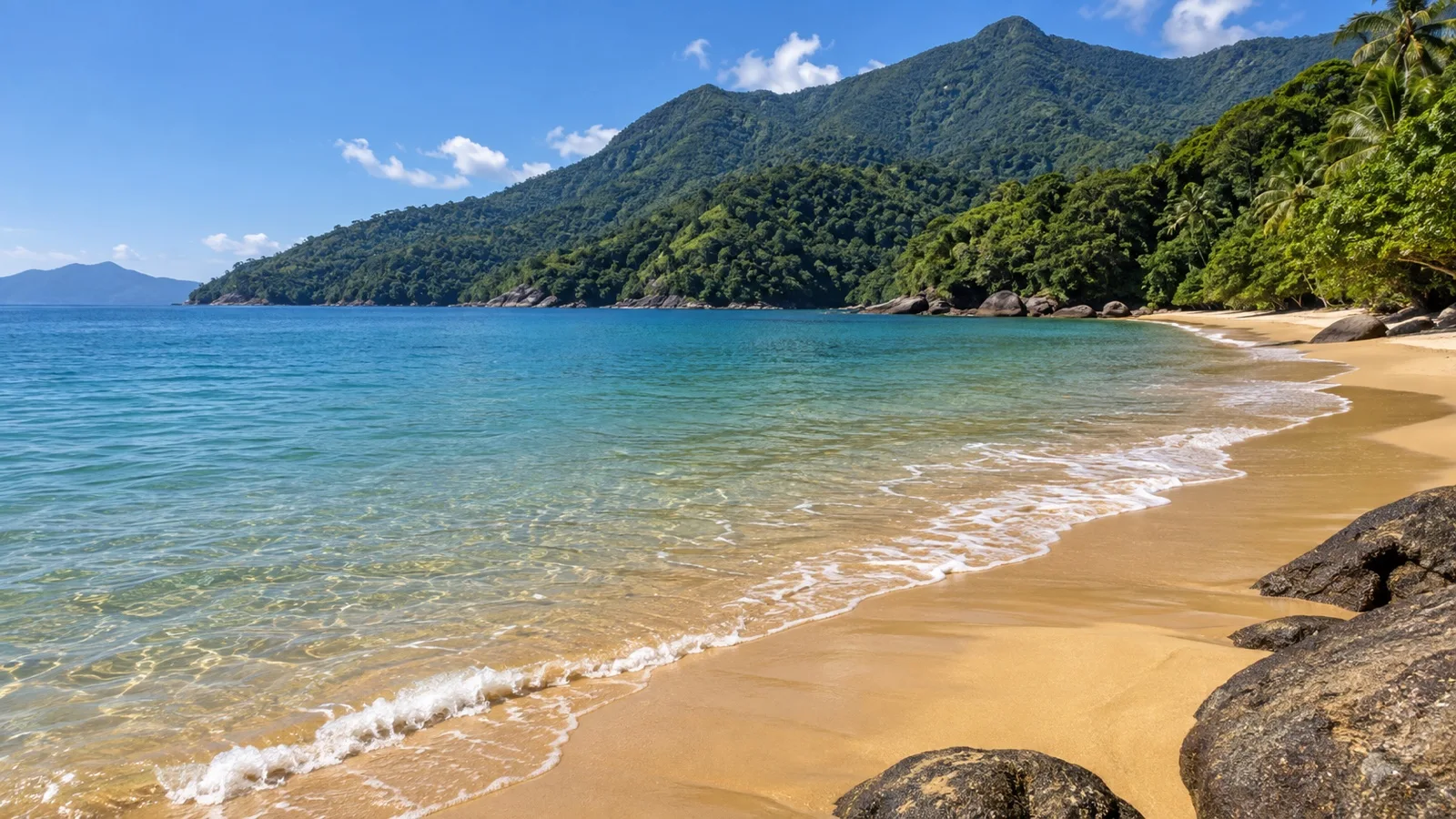
Road traffic can slow when many passengers leave Vila at once. Agree on waiting time, pickup location, and the full fare before setting out.
Southern beaches
The southern route has popular beaches, restaurants, and views but requires passing busier island corridors. It can work well on a longer call with a booked driver who watches conditions.
Do not plan the final tender around an optimistic ride from far south. Finish the beach early enough to absorb traffic, rain, and a delayed pickup.
Waterfalls and Atlantic Forest
Much of Ilhabela is protected Atlantic Forest, and nature excursions can include waterfalls, viewpoints, birdlife, and trails. Access ranges from short roadside walks to rough routes that require local knowledge and appropriate fitness.

Use a reputable guide for any trail beyond the simplest visitor area. Ask about mud, river crossings, elevation, insects, footwear, restrooms, swimming conditions, and the actual time back to Vila.
Borrachudos
Ilhabela is known for borrachudos, small biting black flies that can be particularly bothersome near vegetation and fresh water. Use effective insect repellent, reapply as directed, cover skin when practical, and avoid scratching bites.
Travelers with strong bite reactions should carry their normal treatment and discuss concerns with a medical professional before travel. Forest waterfalls are beautiful, but they are exactly where insect preparation matters most.
Boat trips and water activities
Small-boat tours can reach coves and beaches that road visitors cannot easily access. Vessel quality, sea conditions, shade, restrooms, life jackets, and return timing vary, making operator selection important.
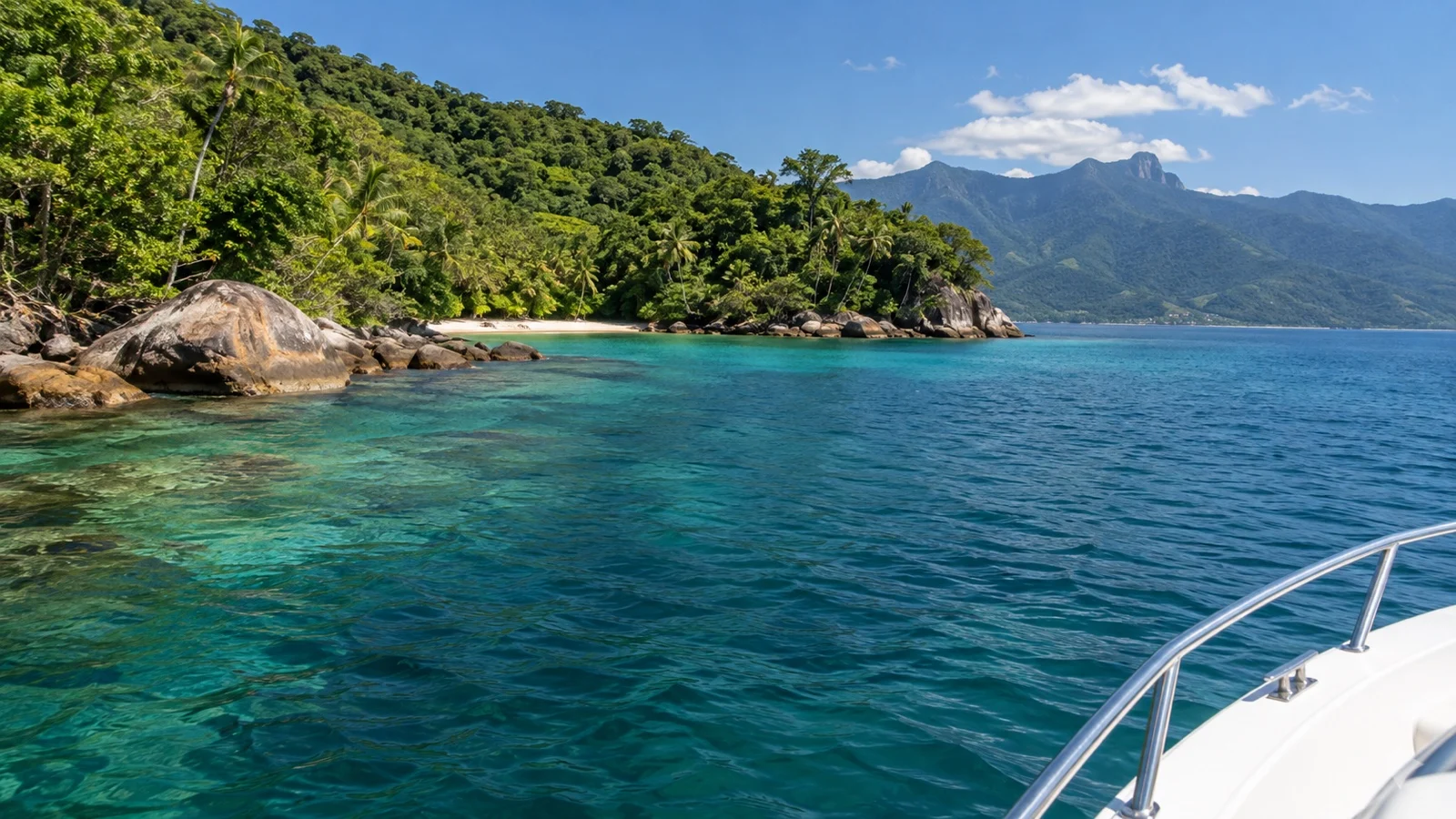
Confirm whether the boat returns to Vila or another dock and how that connects with the ship tender. Avoid any itinerary whose margin disappears if wind, rain, or boarding takes longer than expected.
Taxi, bus, boat, or tour?
A taxi is ideal for one beach, a few viewpoints, or a custom coastal route. A licensed tour adds context and protects coordination, while local buses are inexpensive but less predictable for a short cruise call.
Boat tours make sense for water-centered travelers who accept weather dependence. Whichever option you choose, record the driver’s or operator’s contact information and return point.
What to reserve before arrival
Reserve early if your priority is a private driver, a small boat, an Atlantic Forest guide, or a remote beach. Cruise-call demand can compress the island’s limited supply, especially when more than one ship is in the channel.
Ask the operator to confirm the meeting point in Vila, the vehicle or boat type, cancellation rules, and the realistic return time. A plan that looks generous on a map can become tight when coastal traffic, rain, or tender queues enter the calculation.
For a simple town day, advance booking is usually less important because Vila rewards wandering. Save the operator’s message offline anyway, since cellular coverage can weaken as you travel away from the settled coast.
Three Ilhabela port days that fit
Easy Vila day
Explore Vila, choose a relaxed lunch, browse local shops, and add a nearby waterfront or beach stop. This is the best plan for a short call, uncertain weather, or travelers who dislike tender-day pressure.
Beach and coast day
Prebook a taxi or driver for one section of the coast, select one primary beach, and stop at a viewpoint. Return to Vila early for coffee or shopping before joining the tender line.
Forest and waterfall day
Use a reputable guide, wear proper footwear, apply insect repellent, and accept that rain may change the route. Keep the final stop close to Vila and never treat slippery rock or floodwater casually.
Accessibility and family planning
The tender is the first accessibility question, followed by gangways, steps, floating docks, and the landing surface. Vila itself has uneven paving, while beaches, boats, waterfalls, and forest trails add sand or rough ground.
Families should choose one anchor experience and leave space for food, shade, and the tender return. Children need sun protection, water, insect repellent appropriate for their age, and close supervision around roads and water.
Money, language, and practical comfort
Brazilian reais are the local currency, and cards are widely useful in established restaurants, shops, and tour businesses. Carry some small notes for modest purchases or a vendor whose payment terminal loses its connection, and confirm any taxi price before departure.
Portuguese is the everyday language, while English availability varies outside cruise-focused services. A saved address, map pin, or translated phrase can prevent confusion when arranging the return to Píer da Vila.
Heat and humidity make a water bottle, breathable clothing, a hat, and sunscreen valuable even on a short walk. Closed shoes are better for forest paths, while a light dry bag protects a phone and travel documents during tender spray or sudden rain.
How the season changes your day
Ilhabela is tropical, so no month guarantees a dry port call. Warmer periods can feel humid and stormy, while cooler months may bring more comfortable walking conditions but still require a flexible plan.
Recent rain matters more than a generic monthly average when waterfalls or unpaved approaches are involved. Ask a local operator about same-day trail, surf, and road conditions instead of assuming an excursion will operate exactly as advertised.
Holiday weekends and peak summer dates can also increase road traffic and beach crowds. On a busy date, favor an early outward trip and a deliberately conservative return rather than squeezing in a second distant stop.
Weather, safety, and the return clock
Tropical rain can arrive quickly, making trails slick and roads slower. Carry a compact rain layer, protect electronics, follow swimming flags, and leave exposed areas when lightning threatens.
The ship’s all-aboard deadline is not the time to reach the pier because the final tender normally leaves earlier. Confirm the last-tender time, use ship time, and return before queues and weather become a concern.
Final thoughts
Ilhabela is at its best when you embrace one simple island theme instead of racing between distant stops. Enjoy Vila, choose one beach or forest direction, prepare for insects and rain, and protect the tender return.
CruisePorts.co provides practical, independent planning guidance for cruise travelers. Tender operations, road conditions, weather, and attraction access can change, so verify critical details with the port, operator, and cruise line before travel.