Jamestown Saint Helena Cruise Port: Tender and Island Guide
Jamestown is not a cruise port you simply step into from a gangway. Ships anchor in James Bay, the sea decides whether tenders can operate, and the landing itself can become one of the day’s most memorable moments.
Once ashore, Saint Helena rewards careful planning with dramatic volcanic scenery, a compact historic capital, Napoleon sites, and an island story shaped by extreme remoteness. The best day is not the one that checks every box, but the one that respects tender time and returns with room to spare.
Jamestown cruise port quick facts
- Territory: Saint Helena, a British Overseas Territory
- Arrival: Weather-dependent tender from an anchorage in James Bay
- Usual landing: Jamestown Wharf, with Rupert’s Jetty as a possible alternative
- Town: Historic center begins close to the Jamestown landing
- Top island sites: Longwood House, Napoleon’s Tomb, the Briars, and Plantation House
- Currency: Saint Helena pounds and British pounds
- Critical planning point: Prearrange transport and protect a generous tender return margin
My quick take
If this is your first Saint Helena call and the landing succeeds, I would choose a reserved island tour that includes one or two Napoleon sites and a scenic overlook. Then finish in Jamestown, where you can shorten the walk without risking a distant return.
If you dislike small boats, have significant mobility limitations, or need specialist medical support, this is a port to evaluate carefully before sailing. Remoteness is part of Saint Helena’s magic, but it also magnifies transport, accessibility, and health risks.
Ships anchor in James Bay
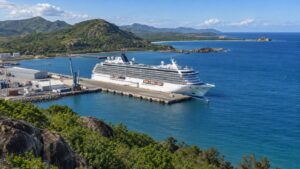
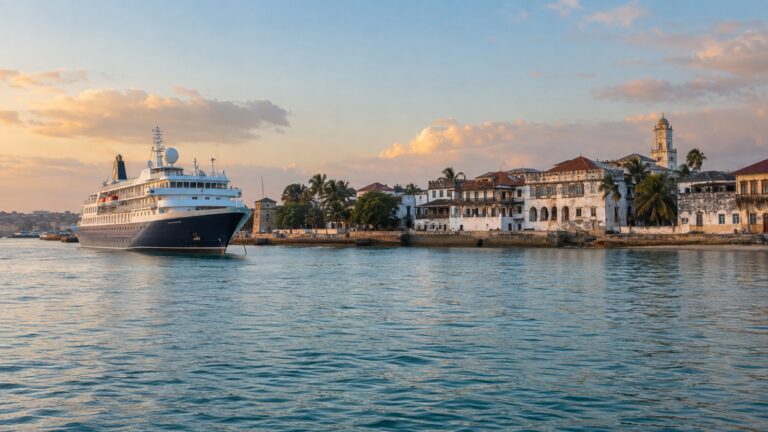
Jamestown has no conventional cruise terminal where a large passenger ship ties up beside a building. Cruise ships normally anchor offshore and transfer guests by tender to the landing at Jamestown Wharf.
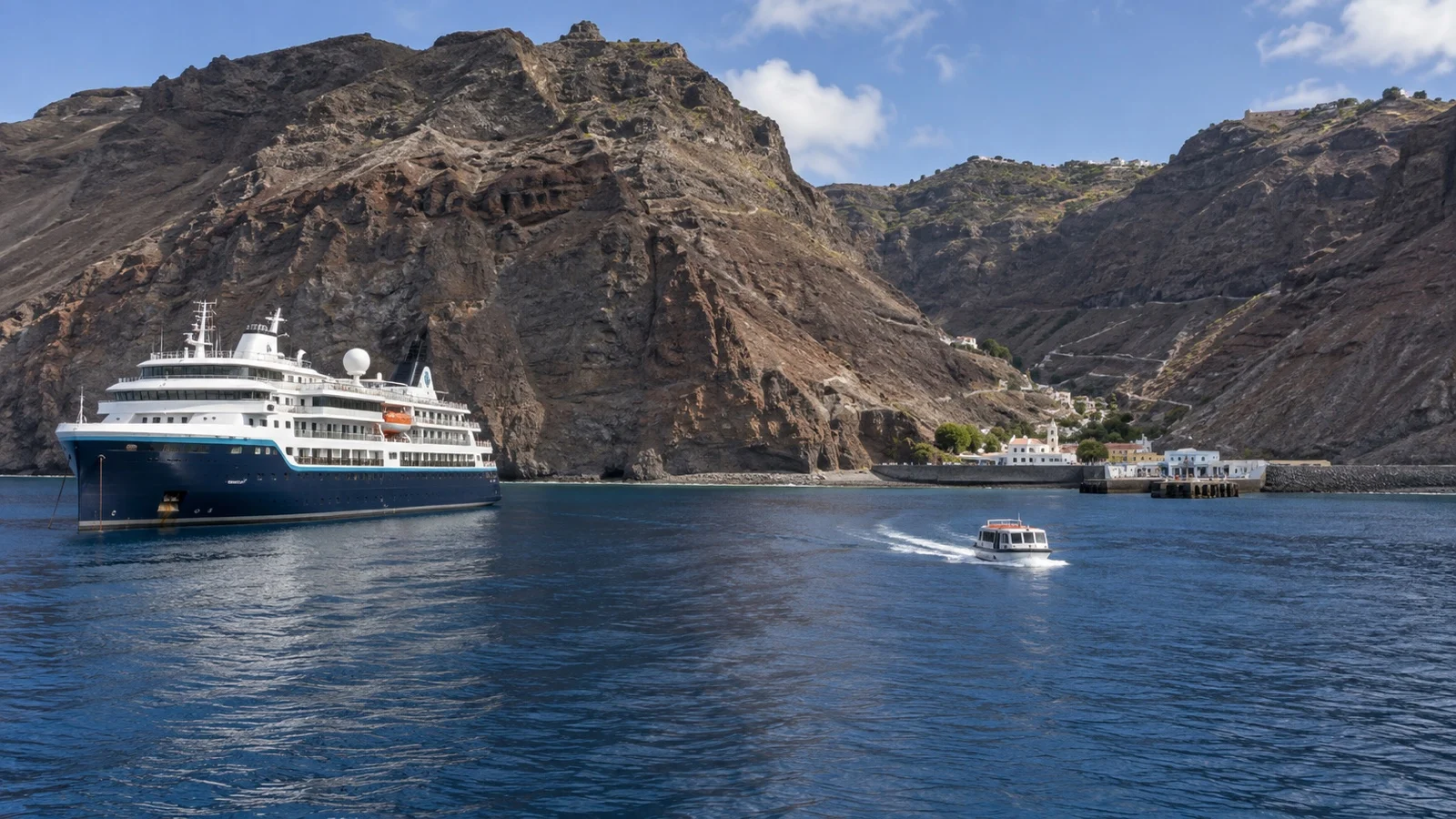
The process depends on swell, wind, visibility, and the captain’s safety assessment. A calm view from an upper deck does not guarantee that the small-boat landing is safe at water level.
Saint Helena Government’s February 2026 notice for the Azamara Journey called the Jamestown Wharf closure weather-dependent and subject to sea conditions on the day. That current official example shows why no guide can promise that passengers will land.
A failed landing is deeply disappointing because the ship has traveled so far, but it is not a decision made casually. Build emotional flexibility into the itinerary and treat every successful call as an achievement rather than an entitlement.
The landing steps are the first challenge
Tender boarding can involve steps, a moving platform, crew assistance, and a gap that changes with the swell. At the wharf, the transfer from boat to shore can be more physical than at a floating marina designed for easy passenger access.
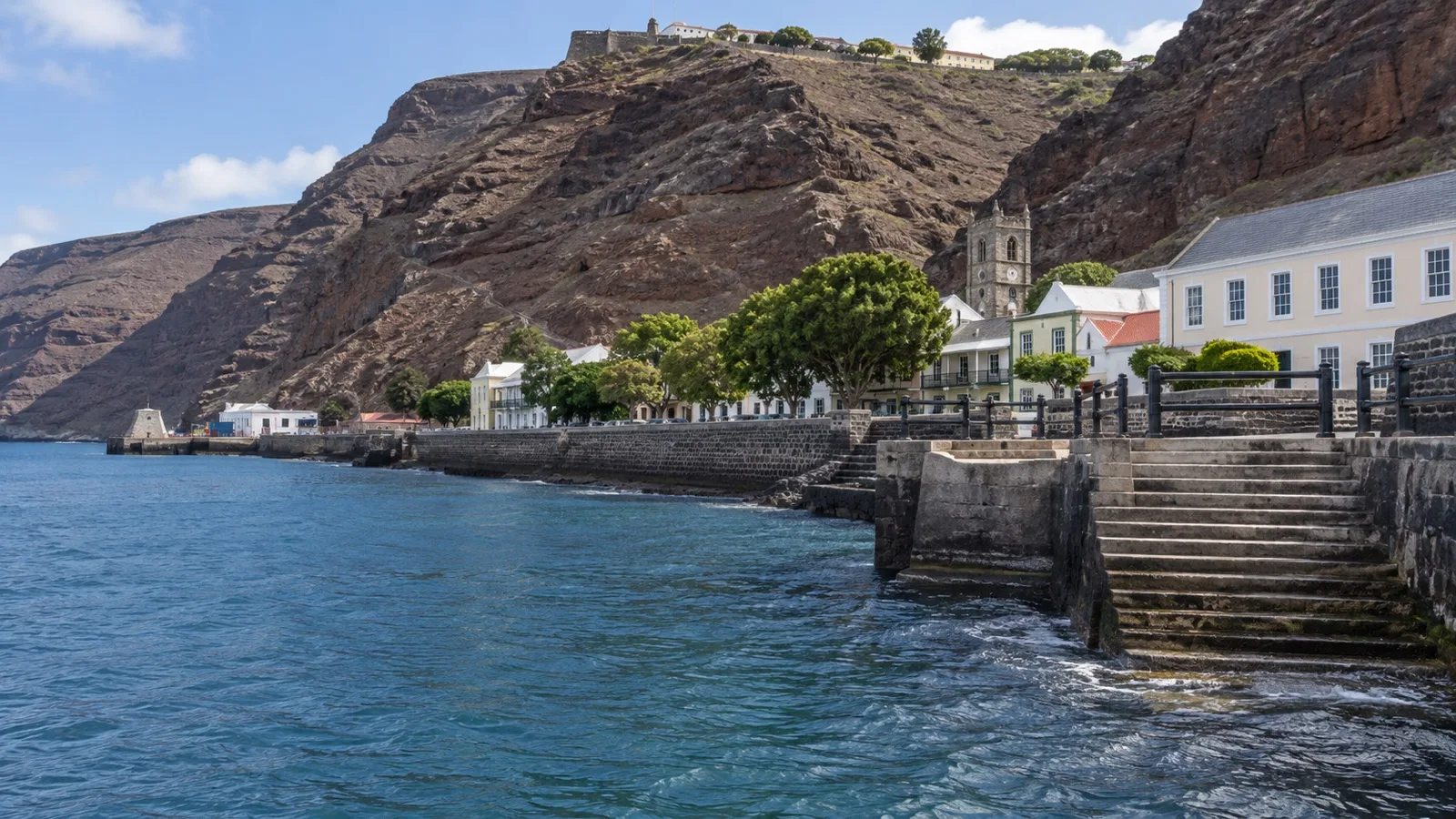
Follow every crew instruction and keep both hands available when asked. A small backpack or crossbody bag is easier than loose shopping bags, and closed shoes with reliable grip are worth wearing even if your plan in town is gentle.
Tender tickets can add time at the start of the day, particularly when cruise-line excursions receive priority. Read our guide to how tendering changes time ashore before committing to an early private pickup.
Rupert’s Jetty is an alternative, not a promise
Rupert’s Bay lies around the headland from Jamestown and has a jetty built primarily to support cargo operations. Saint Helena Government says it has also been used on occasions when cruise tenders considered the James Bay landing too risky.
That does not make Rupert’s an automatic backup for every ship or every sea state. Port Control, the vessel, and local operations decide whether it is available and suitable on the day.
An alternate landing changes your meeting place and consumes road time between Rupert’s and Jamestown. If you book independently, make sure the operator monitors the call and can collect you at either location.
Jamestown works beautifully without a vehicle
The town sits in a narrow valley between steep volcanic walls, so the first view feels theatrical. Historic buildings, the seafront, the museum, shops, and places to eat cluster along a walkable central spine.
Main Street is the natural route inland from the waterfront. The Castle, St James’ Church, old commercial buildings, and the lower end of Jacob’s Ladder create a satisfying port day even if you never leave Jamestown.
Opening hours can be limited, especially when a ship arrives outside the island’s usual rhythm. The official Saint Helena visitor information notes that restaurants and shops may keep variable schedules, so do not assume every door opens just because a cruise ship is offshore.
A town-only plan is ideal when the tender process starts late or weather threatens an early suspension. It also gives you the easiest control over your return time because the landing remains your reference point.
Jacob’s Ladder is steeper than its postcard
Jacob’s Ladder climbs 699 steps from Jamestown toward Ladder Hill. From below it looks almost vertical, and the exposed staircase demands far more effort than an ordinary city viewpoint.
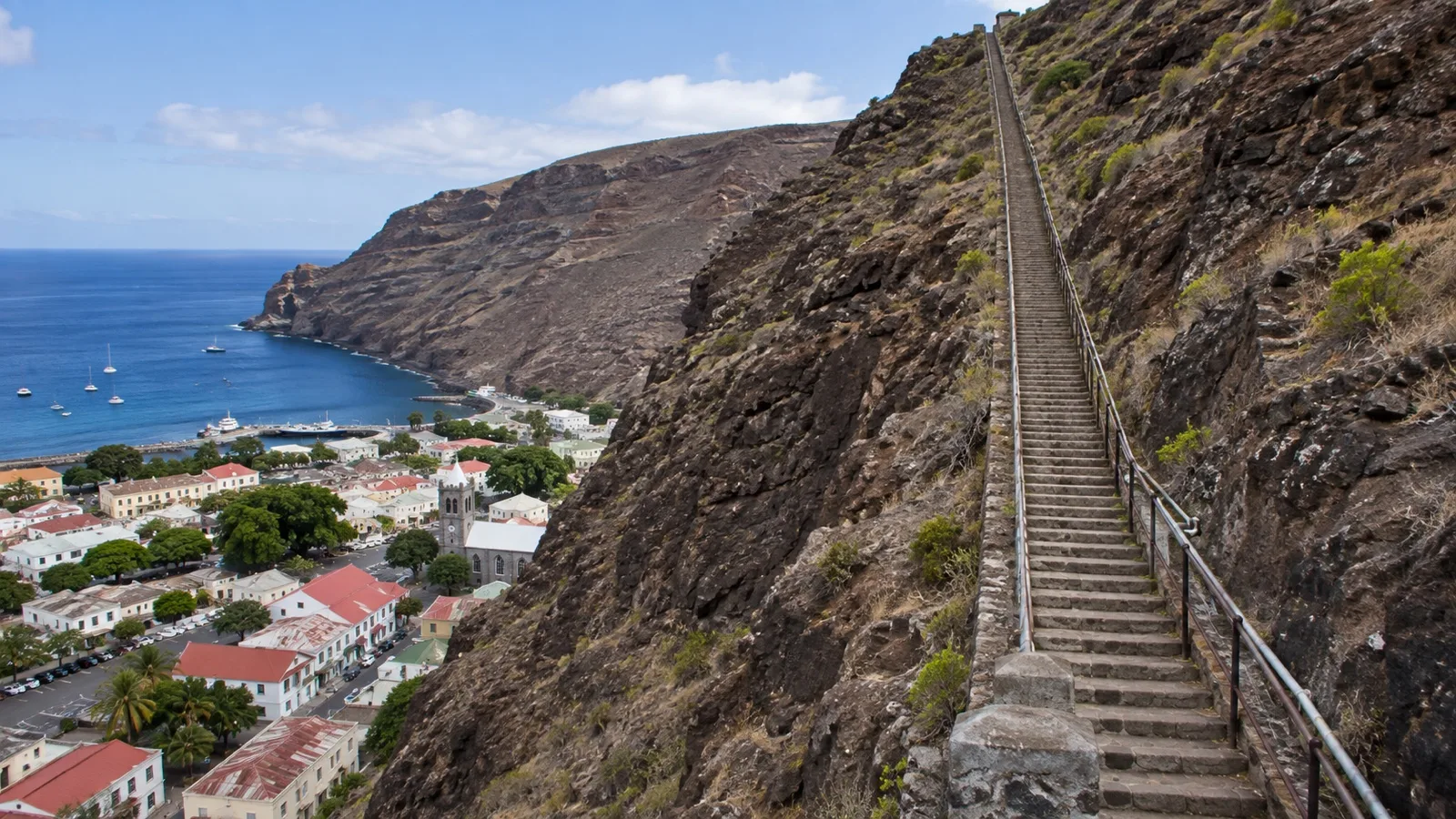
You do not need to climb it to appreciate the landmark. Walk to the base, look up, and decide honestly whether heat, wind, wet steps, time, and your knees make the ascent sensible.
If you climb, keep enough energy for the descent and do not let the challenge consume your tender margin. Anyone with balance, heart, breathing, or joint concerns should admire it from below unless a medical professional has said strenuous stair climbing is appropriate.
Napoleon sites require reserved transport
Napoleon Bonaparte’s exile is the island’s best-known historic story. Longwood House, Napoleon’s Tomb, and the Briars Pavilion are spread beyond Jamestown, so a cruise passenger needs a vehicle and a coordinated plan.
Longwood House is the essential stop for most first-time visitors because it gives the fullest sense of Napoleon’s final residence and daily surroundings. Opening times and admission arrangements can change, so confirm them through official tourism channels or your excursion operator.
Napoleon’s Tomb occupies a quieter valley setting, although his remains were later returned to France. The site adds atmosphere and geographic context, but combining it with Longwood takes more driving than the map’s small scale suggests.
The Briars is associated with Napoleon’s first weeks on the island and is often included only when access and time allow. Do not build a private itinerary around all three without written confirmation of opening, tickets, and a comfortable return buffer.
Plantation House and Jonathan
Plantation House is the governor’s official residence and is associated with Jonathan, the Seychelles giant tortoise whose documented life stretches back into the nineteenth century. This is not a casual open-house stop, and access can depend on official arrangements.
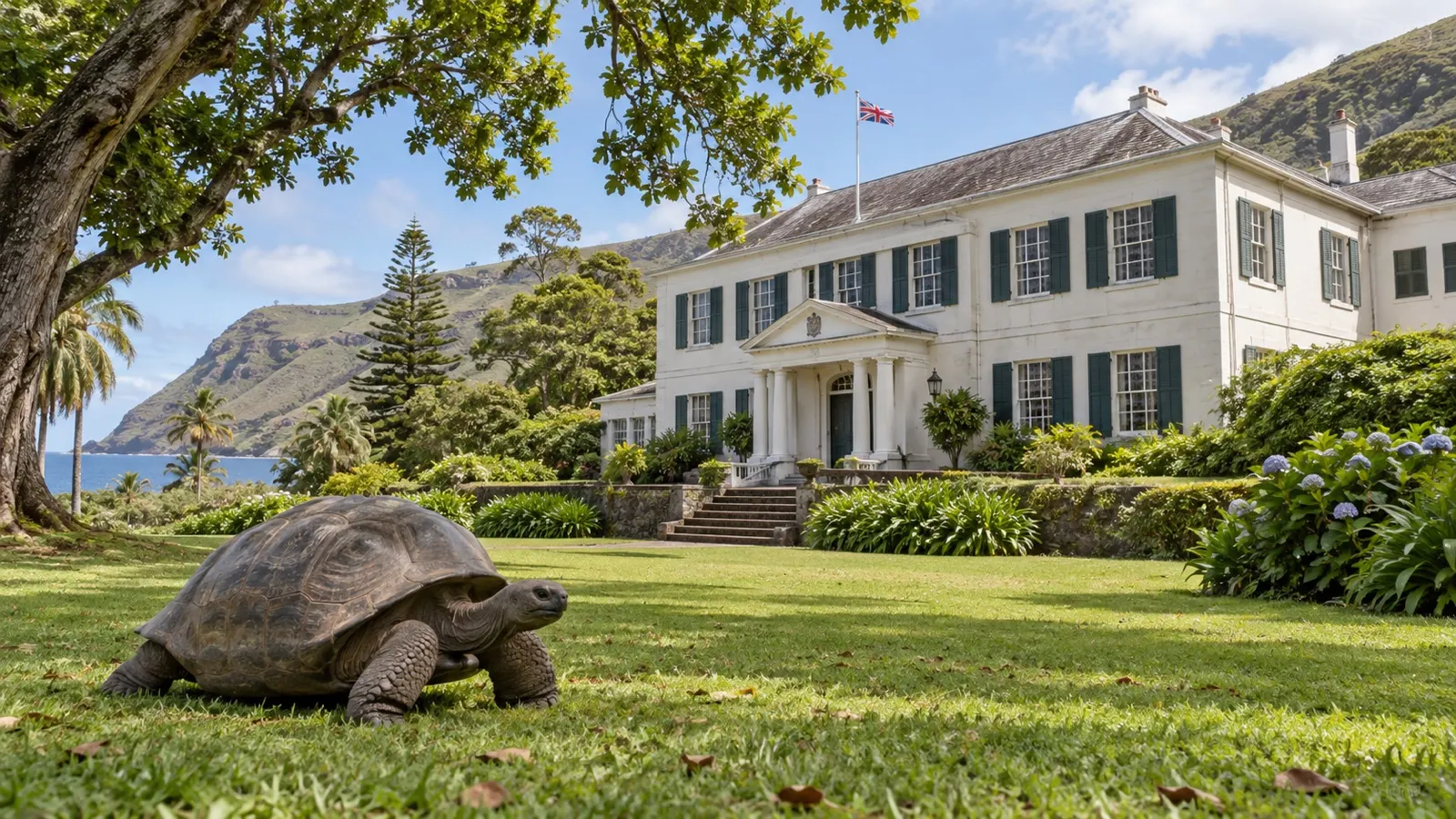
A driver may be able to include an exterior viewpoint or an approved visit, but neither Jonathan nor a particular area can be guaranteed. Treat any wildlife encounter respectfully and follow instructions from staff responsible for the grounds.
Island scenery changes mile by mile
Saint Helena is small on a map but visually varied, with dry coastal cliffs, green highlands, deep valleys, pasture, and cloud-catching ridges. A loop through the interior reveals far more contrast than the rocky harbor approach suggests.
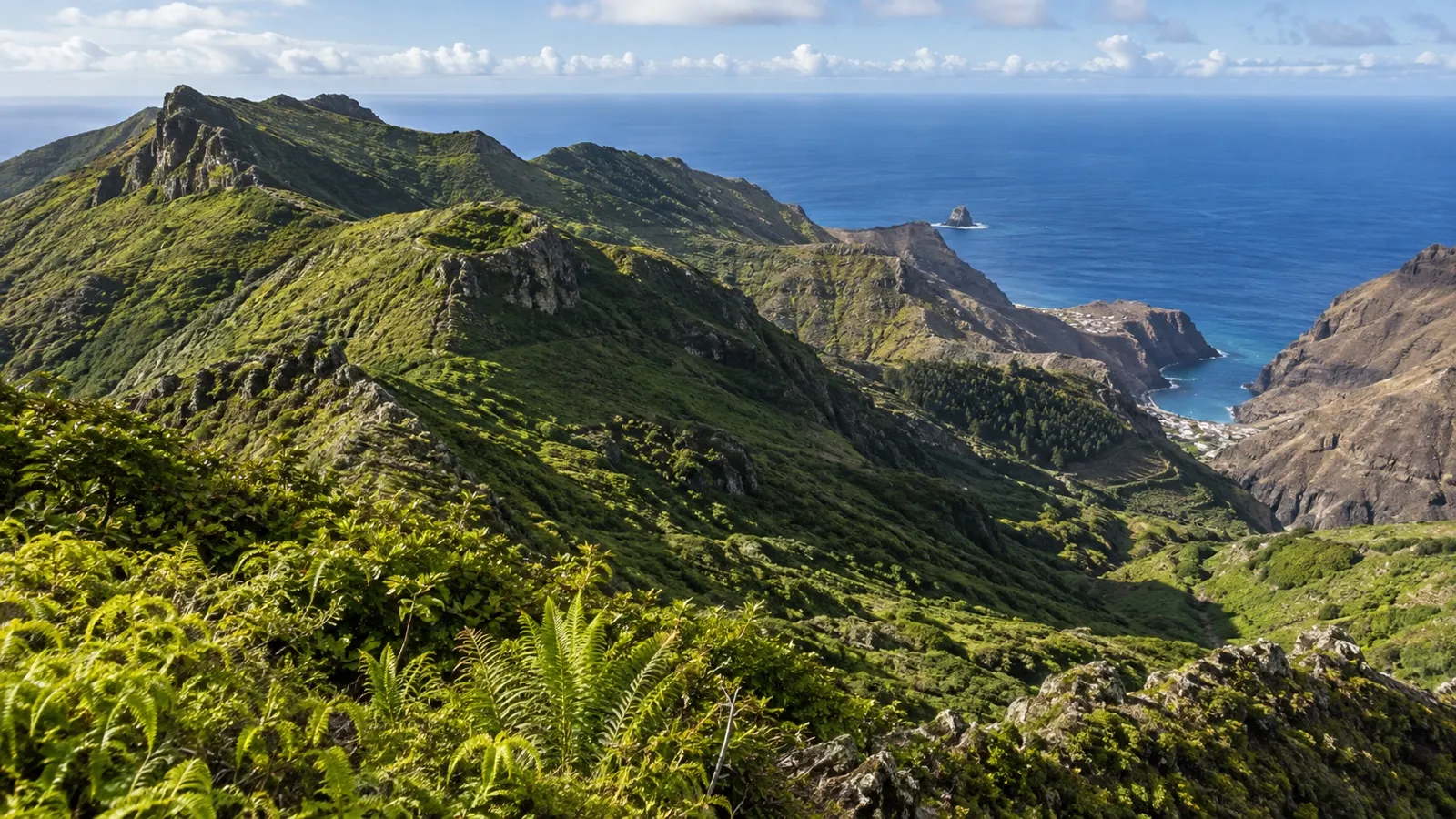
Roads are narrow, winding, and steep, so journey times are longer than distance alone implies. A local driver adds value not just through commentary but by understanding passing places, weather, and the timing of cruise-day traffic.
Do not request a giant island loop simply to collect photographs through a window. Two historic sites, one or two overlooks, and a little Jamestown time usually produce a richer first visit.
Reserve transport before arrival
The island has taxis, rental vehicles, and a public bus system, but cruise-day capacity is limited. Saint Helena Government confirms that public buses and private transport exist, yet that does not mean a bus timetable will align with a short, weather-delayed call.
Reserve a licensed taxi or tour before sailing if Longwood, Plantation House, or the interior matters to you. Confirm passenger count, vehicle access, payment method, pickup point, alternate-landing plan, and cancellation terms.
I would not rent a car for a first cruise call unless the booking, license requirements, insurance, and pickup are all settled in advance. Left-side driving, steep lanes, blind bends, limited time, and an unfamiliar tender schedule make a driver the calmer choice.
Cash matters because there are no ATMs
Saint Helena Government says Saint Helena pounds and British pounds are interchangeable on the island. The local pound is not normally useful beyond Saint Helena and Ascension, so avoid withdrawing or exchanging more than you expect to spend.
The same official visitor page says international card acceptance is growing but is not universal, and there are no ATMs on the island. Carry British pound notes in modest denominations and ask private operators how they want to be paid.
Connectivity should not be your only backup. Save offline copies of the driver’s contact, ship agent details, meeting instructions, and a map before the ship reaches Saint Helena.
Accessibility begins with the tender decision
No shore attraction matters if a passenger cannot safely transfer into the tender. Ask the cruise line’s accessibility team well before sailing about steps, manual assistance, weight limits, mobility devices, and the possibility that approval is withdrawn because of sea conditions.
Jamestown itself has flatter sections near the seafront and Main Street, but steep terrain defines the island. Sidewalks, thresholds, historic buildings, and narrow roads can present barriers even when a vehicle is available.
A private accessible plan needs honest details about transfer ability and equipment, not the vague phrase “limited mobility.” Our overview of wheelchair-friendly cruise ports explains the questions to ask before assuming a tender destination will work.
Remote medicine changes the risk calculation
Saint Helena has a General Hospital, and the government hospital page says its emergency department operates 24 hours a day. The island can provide important urgent care, but its geographic isolation means travelers should not compare it with a large mainland medical center.
Specialist treatment or evacuation may require complex coordination and may be disrupted by weather or transport availability. Carry enough prescribed medicine, keep it in original labeled packaging, and buy insurance that explicitly addresses cruise travel and remote medical evacuation.
The government lists 999 as the ambulance emergency number. Keep the ship informed if a medical issue develops ashore, since the onboard team and port agent may need to coordinate the response.
Weather changes across a small island
Jamestown can be warm and dry while the higher interior is cool, misty, or wet. The official visitor guidance describes a subtropical climate shaped by southeast trade winds, with the coolest period generally between June and September.
Carry a light waterproof layer even when the landing looks sunny, and use sunscreen near the coast. If rain is forecast, our guide to a rainy cruise port day can help you choose a plan that is easy to shorten.
More important than rain is the sea state at the landing. Conditions can worsen during the call, and the ship may ask passengers to return earlier than planned.
Return before the swell writes the ending
For an independent island tour, I would plan to be back near the landing at least 90 minutes before the published final tender. That is a planning buffer, not permission to ignore an earlier deadline announced by the ship.
If tenders pause, follow instructions from Port Control and cruise staff instead of asking a private boat owner for an improvised transfer. Ship operations need an accurate passenger count and a controlled boarding process.
Our guide to how early to return to a cruise ship gives a fuller framework for independent days. On Saint Helena, I would always choose the more conservative margin.
Entry documents and landing permission
Saint Helena has its own entry rules, separate from an ordinary visit to the United Kingdom. The government’s entry requirements distinguish landing permission for stays of up to 24 hours from longer entry permits.
Your cruise line normally coordinates the ship’s clearance, but passengers remain responsible for valid documents and compliance. Check the current official requirements for your nationality and circumstances before sailing, especially if your itinerary also includes other territories or countries.
Frequently asked questions
Does the ship dock at Jamestown?
Large cruise ships normally anchor in James Bay and use tenders. Jamestown Wharf is the usual passenger landing, while Rupert’s Jetty may be used in some circumstances.
Can a Saint Helena cruise call be canceled?
Yes, swell and weather can make tendering unsafe even after the ship arrives offshore. The captain and local authorities make the operational decision based on conditions.
Should I reserve an island tour?
Yes, if you want to visit Longwood House, Napoleon’s Tomb, Plantation House, or multiple viewpoints. Vehicles and guides are limited, so same-day availability cannot be assumed.
Can I explore Jamestown on foot?
Yes, the historic center begins near the usual landing and makes a rewarding independent plan. Expect steep terrain beyond the central corridor, and treat Jacob’s Ladder as a strenuous climb.
Will my bank card work?
Card acceptance is increasing but is not universal, and Saint Helena has no ATMs. Bring British pound notes and confirm payment expectations with a private guide before the call.
The bottom line
A successful landing at Jamestown already feels like an adventure, and the island deserves a plan that honors its remoteness. Reserve scarce transport, choose a few meaningful sites, and keep the end of the day close to the tender.
Travelers combining the island with southern Africa can also read our Cape Town cruise port guide. We research practical details under our editorial policy, but the ship and Saint Helena Port Control always have the final word on landing safety.