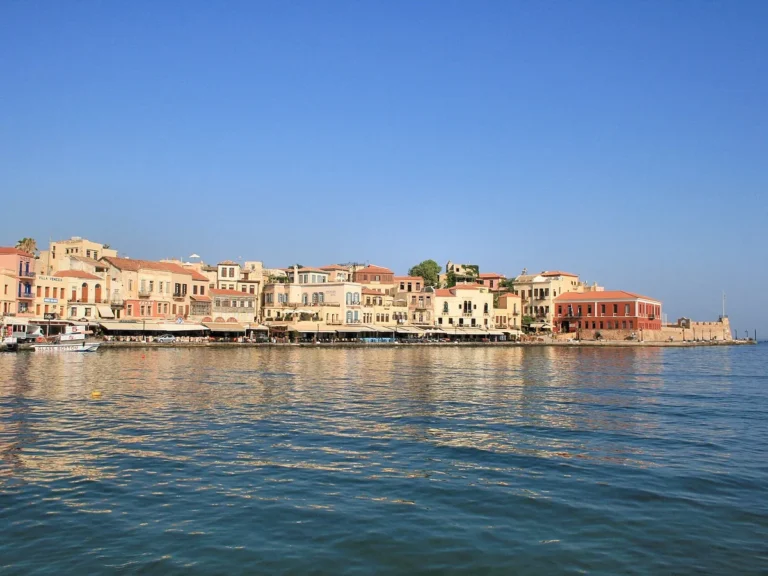
Greek Cruise Ports: A Dock-or-Tender Decision Guide
Greek cruise calls range from major mainland berths to island anchorages where wind controls the day. Choosing well starts with the actual arrival method, not just the island name.
Some let you stroll straight off the ship into an old town. Others make you tender ashore beneath a volcano.
Here is how I would choose, port by port.
My quick take
Most Greek calls fall into three buckets: mainland gateways, Cycladic islands, and the Ionian and Crete. Pair this hub with my detailed guides to Athens (Piraeus) and Santorini before you plan a single excursion.
If it is your first Mediterranean sailing, my first-timer cruise port guide and Mediterranean ports overview are the best places to start.
Dock or tender? Check this first
The single biggest planning question in Greece is whether your ship ties up alongside or anchors offshore and tenders you in.
Santorini uses ship-to-shore boats, while Mykonos, Agios Nikolaos, Argostoli, and smaller islands can vary by ship and berth. Even normally alongside ports can change assignments, so treat the daily program as final.
- Usually dock alongside: Piraeus, Corfu, Katakolon, and Rhodes, subject to berth assignment and port operations.
- Tender (or variable): Santorini uses ship-to-shore boats, while Mykonos, Agios Nikolaos, Argostoli, and smaller islands can dock or tender depending on the call.
Tender ports mean earlier lines and weather-dependent access, so confirm the arrangement with your cruise line before booking a tight independent tour.
The Athens gateway: Piraeus
Piraeus is the port for Athens, and ships dock alongside at Greece’s largest passenger port.
Per the official Visit Greece Piraeus guide, the port sits southwest of central Athens. The cruise terminals are not at the rail platforms, so first take the local bus, taxi, or a substantial walk to a useful Metro stop, then continue into the city.
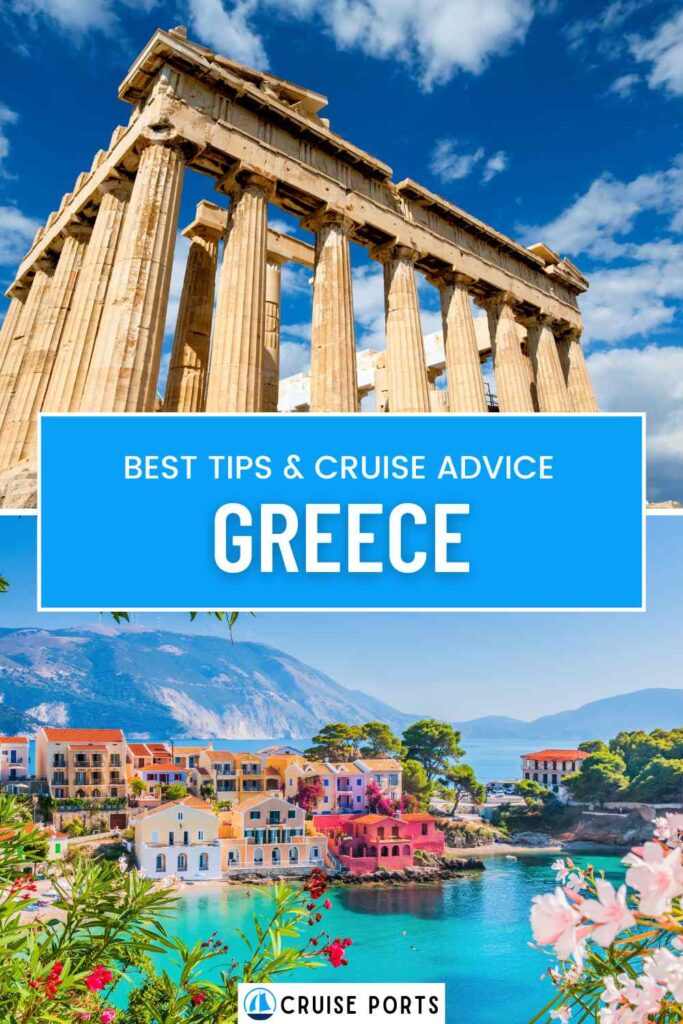
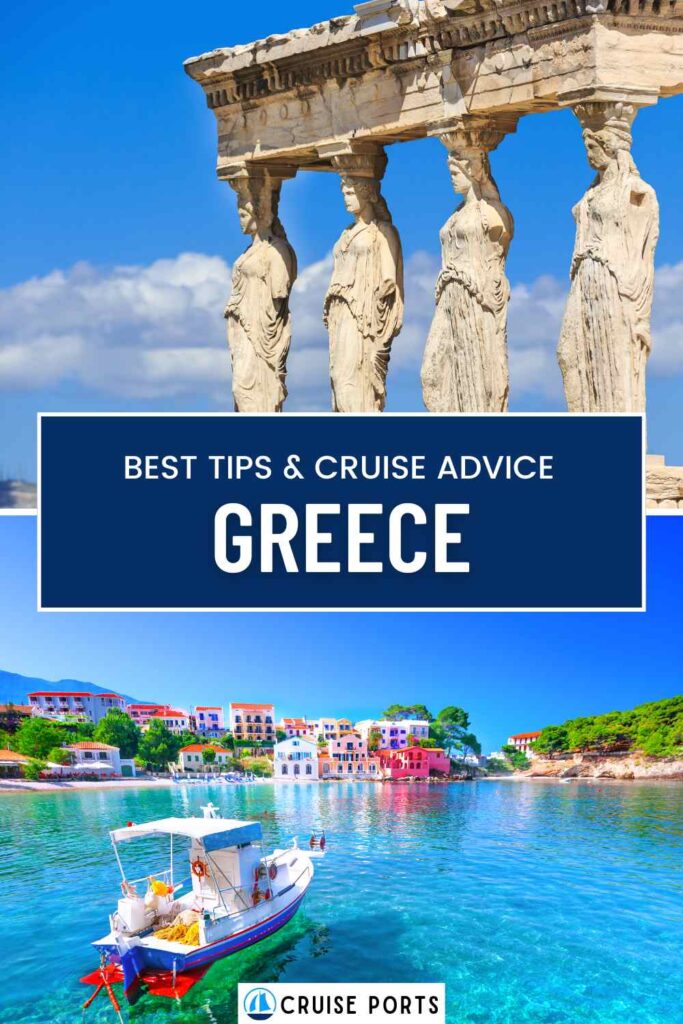
Known for: the Acropolis and Parthenon, the National Archaeological Museum, and Plaka. Allow roughly 45 to 75 minutes each way between ship and central sights, then aim to reach the terminal at least 90 minutes before all-aboard.
The Cyclades: Santorini and Mykonos
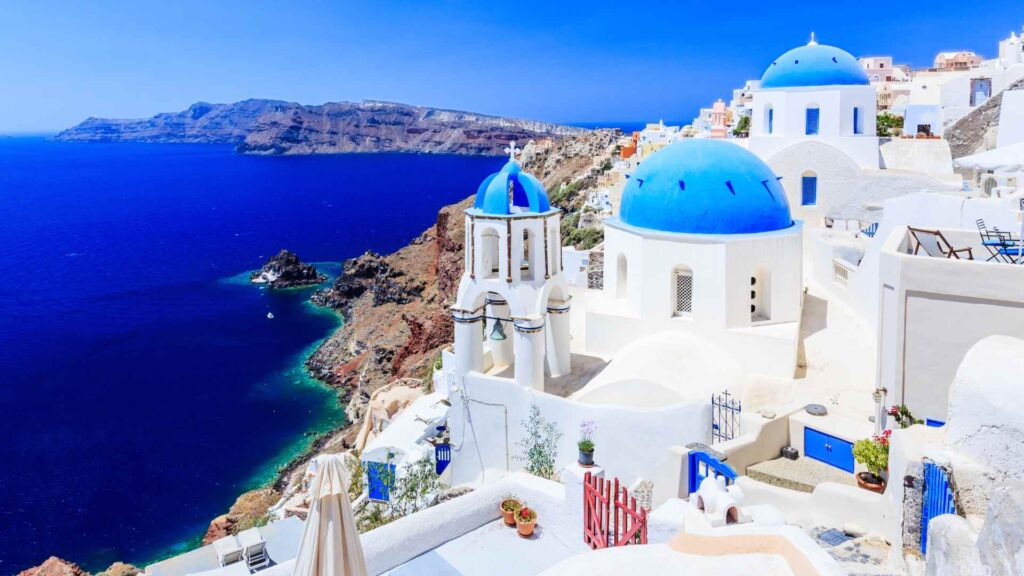
Santorini (tender)
Santorini uses boats between anchored ships and shore. Independent guests normally land at the Old Port below Fira and face the cable car or steep path, while many ship excursions use a separate boat and bus transfer through Athinios.
From there you reach the cliff-top town by cable car, on foot, or by the old mule path. Organized bus tours instead use the road port at Athinios.
Known for: caldera views, Oia, and the Minoan site at Akrotiri. Tender sequencing and cable-car lines are the main constraints, so put your priority first and keep a large return buffer.
Mykonos (usually docks)
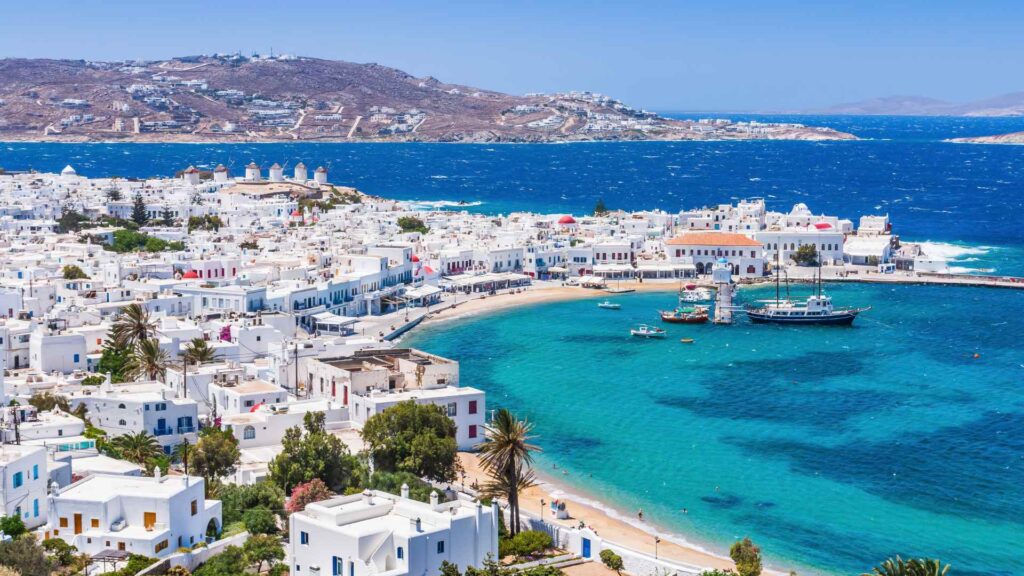
Mykonos normally berths ships at the New Port at Tourlos, a short shuttle or taxi ride from Mykonos Town.
Known for: Little Venice, the windmills, and boat trips to Delos. Ships may berth at Tourlos or tender near Chora, so confirm whether you need the seasonal sea bus, a shuttle, or no transfer at all.
The Ionian: Corfu and Argostoli
Corfu (docks)
Corfu docks at its cruise terminal a short taxi or walk from the Old Town, a UNESCO World Heritage Site.
Known for: the Venetian Old and New Fortresses, the arcaded Liston, and the Achilleion Palace. Its layered Venetian, French, and British past makes it feel unlike anywhere else in Greece.
Argostoli, Kefalonia (variable)
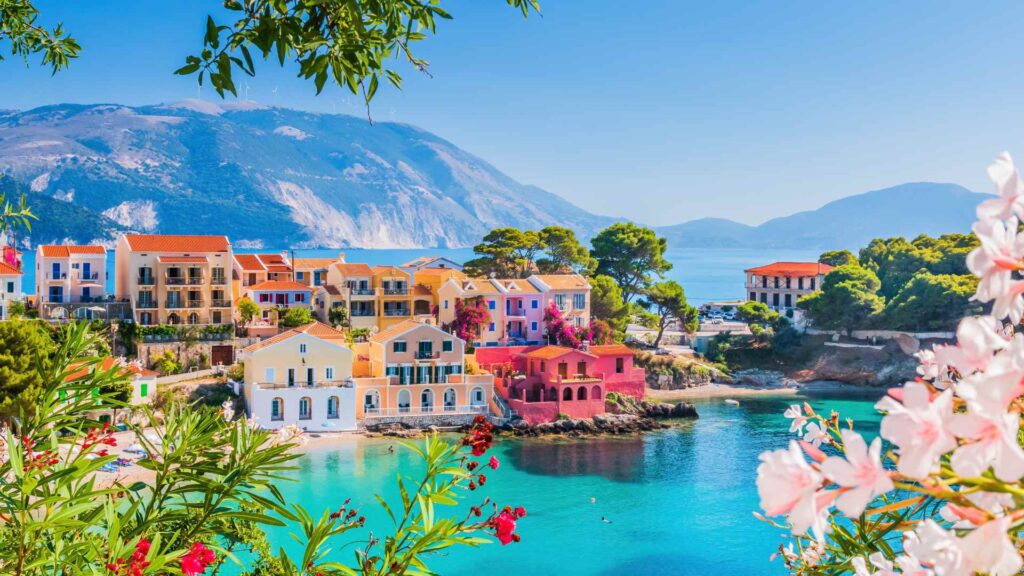
Argostoli can use a waterfront berth or tenders, depending on the ship and assignment. Once ashore, the compact town is easy, while Melissani Cave and Myrtos Beach need timed road transport.
Known for: the underground lake at the Melissani Cave and the dramatic Myrtos Beach. It is one of the more relaxed calls on a Greek itinerary.
Crete: Agios Nikolaos
Agios Nikolaos has a small harbor, so larger ships often anchor and tender while smaller vessels can berth. Confirm which arrangement applies to your ship.
Known for: the pretty Lake Voulismeni in town and boat trips to the fortress islet of Spinalonga. Note that Crete’s other main cruise gateway is Heraklion, near the Minoan palace of Knossos.
Two more worth knowing: Rhodes and Katakolon
Rhodes docks beside the walled Medieval City, another UNESCO site, home to the Palace of the Grand Master and the clifftop Acropolis of Lindos nearby.
Katakolon is a tiny dock-alongside port whose whole reason to call is Ancient Olympia, birthplace of the Olympic Games, reachable by road or a seasonal cruise train.
Match the plan to the call
On a four- to six-hour call, stay with the port city or one direct transfer, such as Rhodes Old Town, Corfu Old Town, or Olympia from Katakolon. On an eight- to ten-hour call, Athens, Lindos, or a single Crete excursion becomes realistic if tickets and transport are confirmed.
Plan to reach the port 60 minutes before all-aboard at a nearby alongside call and 90 minutes before at a tender or long-transfer port. Add more margin in Athens traffic or when a ferry, cable car, or ship tender controls the final leg.
Accessibility and disruption
Piraeus and several major quays can support step-free gangways, but the terminal-to-transit gap may still require an accessible taxi or arranged transfer. Tender boats, steep island lanes, cable-car queues, and ancient sites with broken stone are the bigger obstacles.
Strong meltemi winds can affect tenders and small excursion boats even on a sunny day. Confirm whether your ship can carry your specific mobility device ashore, and keep a close-in alternative for any island plan that depends on the sea.
When to sail the Greek isles
The season runs roughly April to October. May, June, or September are strong choices for warm, settled weather without the peak-summer heat and crowds.
- Spring (April to June): mild days, green islands, and lighter crowds ashore.
- Summer (July to August): hottest and busiest, with the tightest tender lines on Santorini.
- Autumn (September to October): warm seas and softer crowds, with a growing chance of wind or rain affecting boats later in the season.
Quick answers
Which Greek ports are tender ports?
Santorini uses boats, while Mykonos, Agios Nikolaos, Argostoli, and smaller islands can vary; Piraeus, Corfu, Katakolon, and Rhodes usually berth ships alongside.
How do I get from Piraeus to the Acropolis?
First connect from your cruise terminal to a useful Metro stop by bus, taxi, or a substantial walk, then continue to central Athens and allow 45 to 75 minutes each way.
What currency do Greek ports use?
The euro, with cards widely accepted and small cash still handy for tavernas and island shops.
Whichever islands your itinerary strings together, a little homework on dock versus tender is what turns a rushed call into a great day ashore. Browse my Europe cruise ports hub for the wider picture.
How this guide was researched: Unless a first-hand visit is explicitly identified above, this guide is based on independent research using official port, tourism, transit, government, and attraction sources where available. Logistics and time-sensitive details were reviewed in September 2026; see our Editorial Policy.